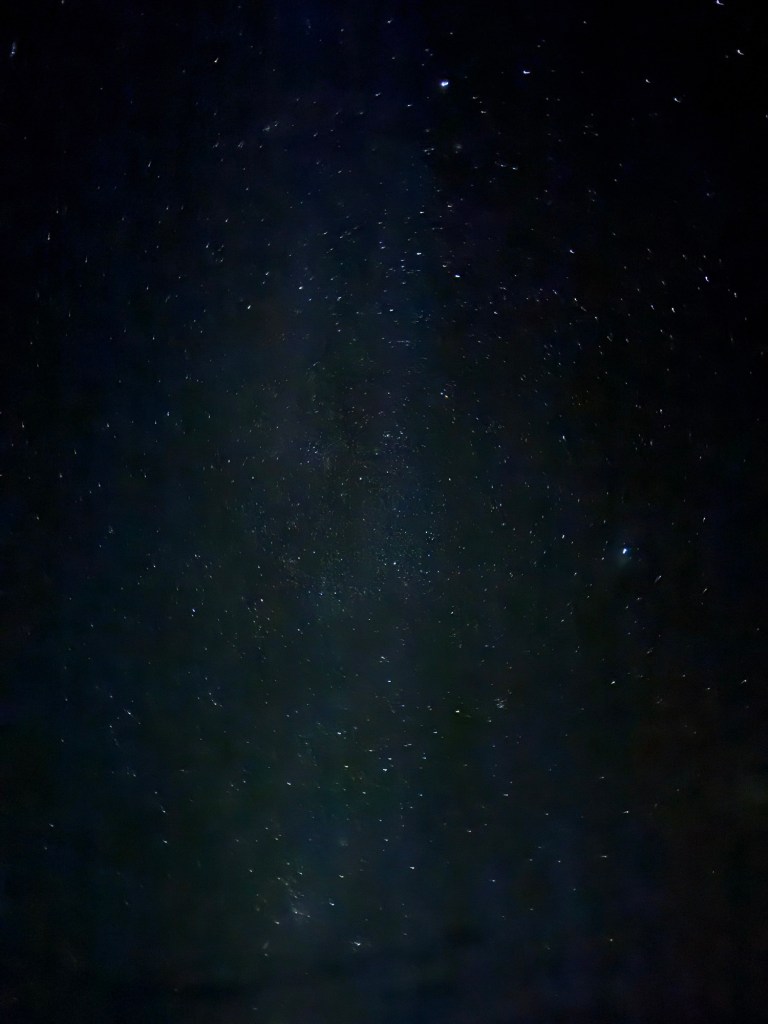
Stars: Two nights ago I woke up in the middle of the night, looked outside and the clouds cleared. It was time to get up and head to the “stargazing deck” on the top of the ship. We brought up our pillows and from 2:30am to 4am enjoyed the night sky. Of course, the stars are different here at the equator, but we saw Orion and Beattlejuice, Saturn, Mars, the Milky Way and several shooting stars.
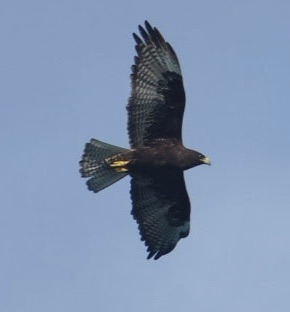
Hawks: Hawks are the apex predator in the Galapagos and they have adapted in interesting ways. On the food rich southern islands, the hawks raise chicks in a typical monogamous relationship. But on the volcanic and food poor western and northern island, the hawks are polyamorous, with one female hawk and a harem of males breeding and raising many chicks as a group project. I was lucky enough to see a few solo hawks and photograph one.
Penguins, Baby Sharks and a Mess of Iguanas: Yes there are penguins in the Galapagos and we saw more on our zodiac exploration yesterday afternoon. The afternoon excursion was a bit rough but our zodiac driver maneuvered through the surf and waves remarkably well. When we first entered the mango groves we looked for baby white-tipped sharks in the “shark nursery” around us. Of course, many of us sang “Baby shark do do do do do do!”
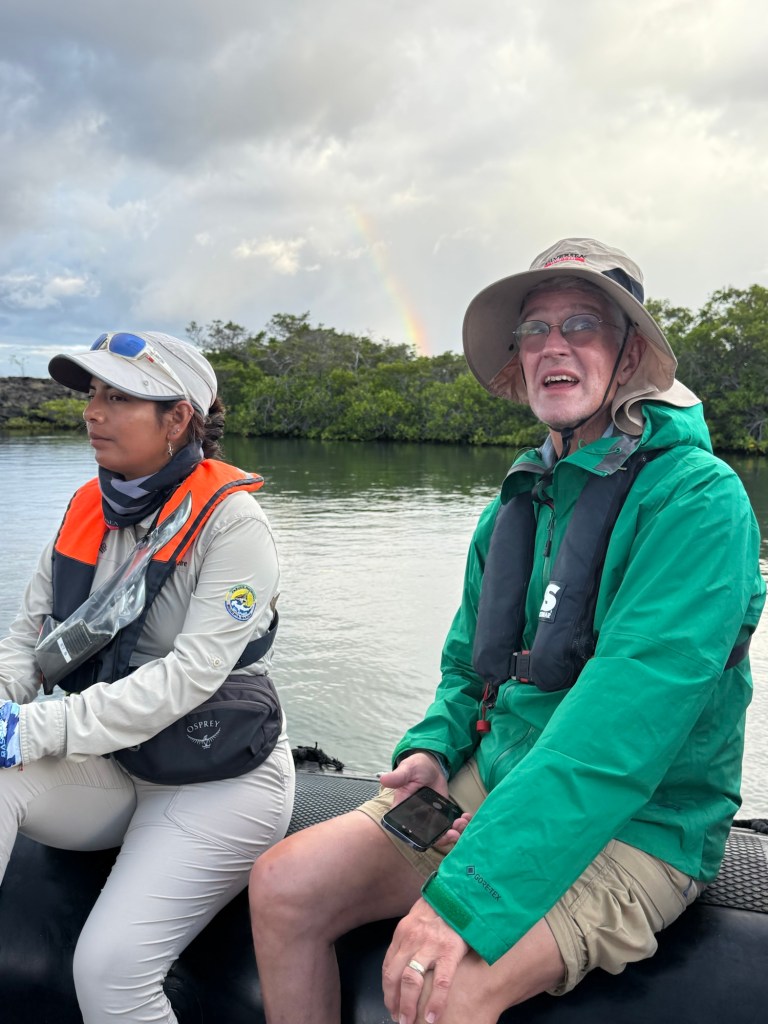
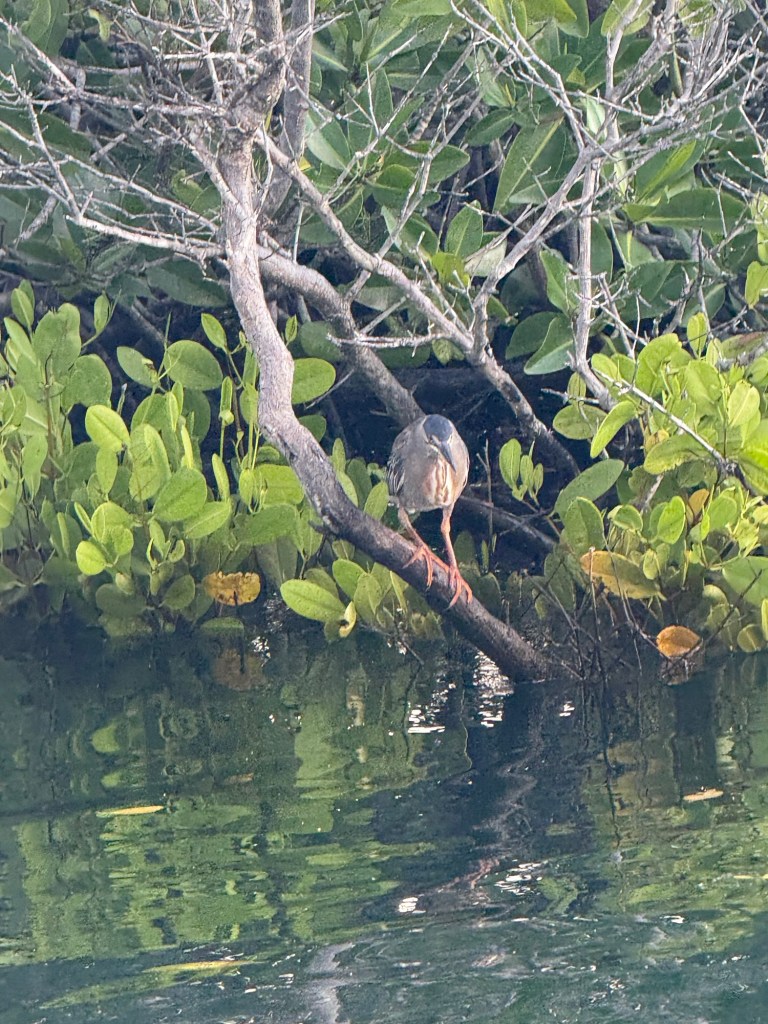
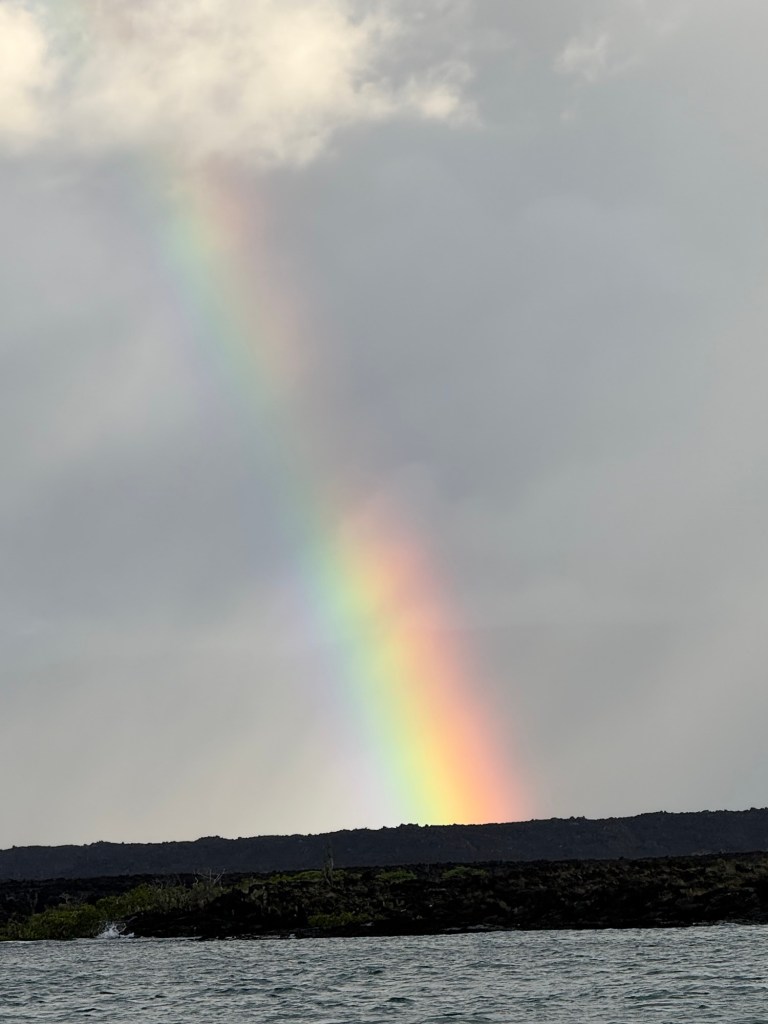
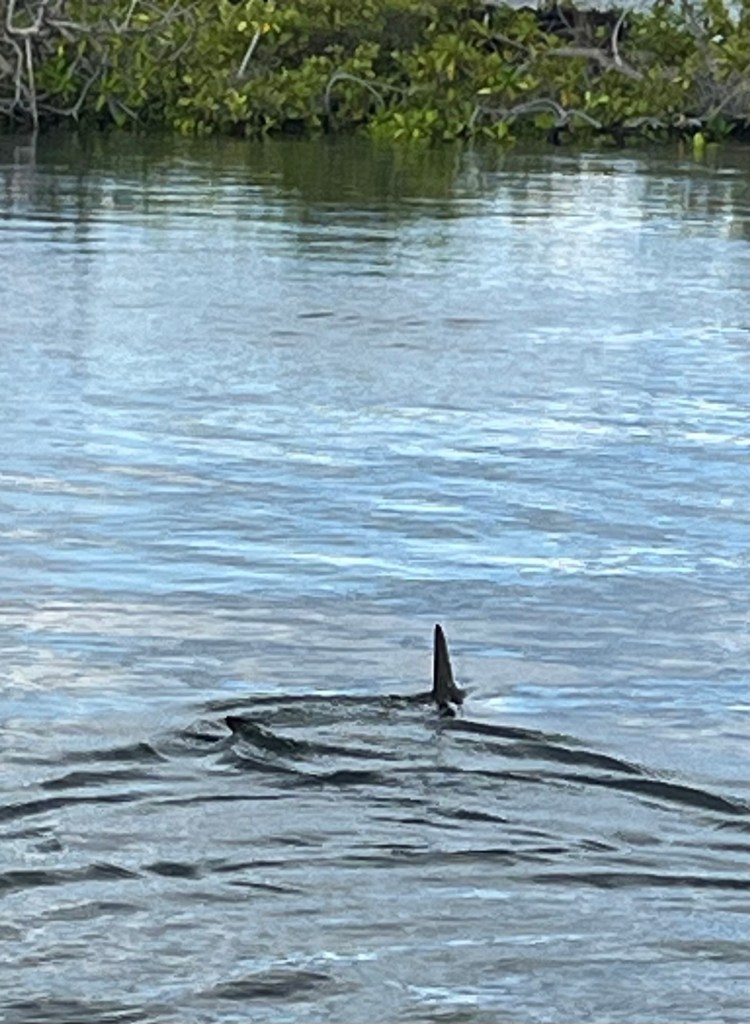
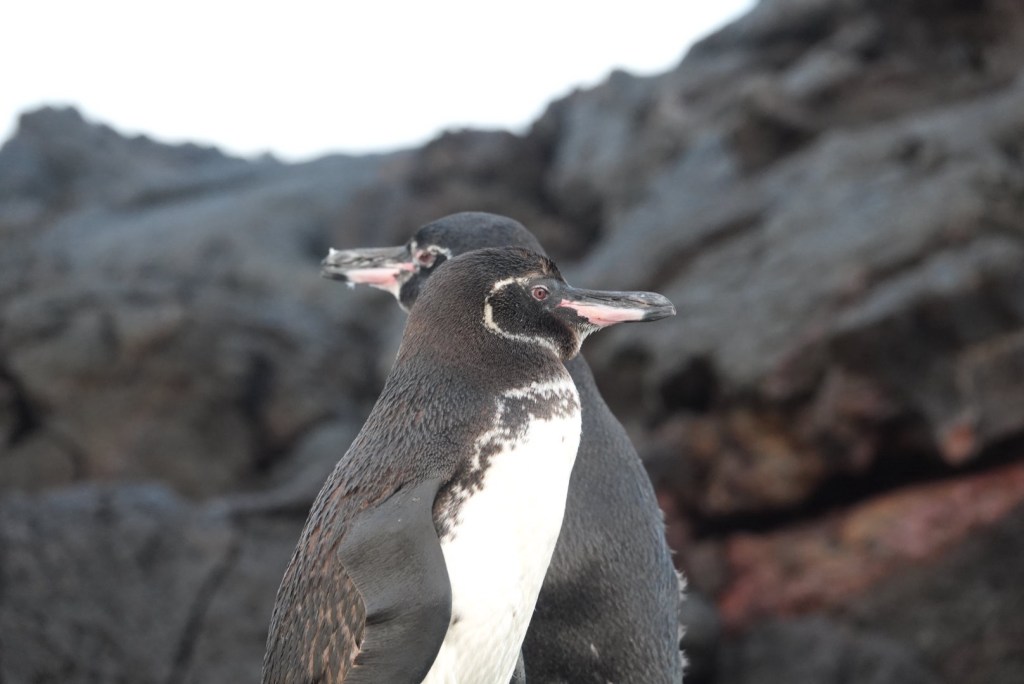
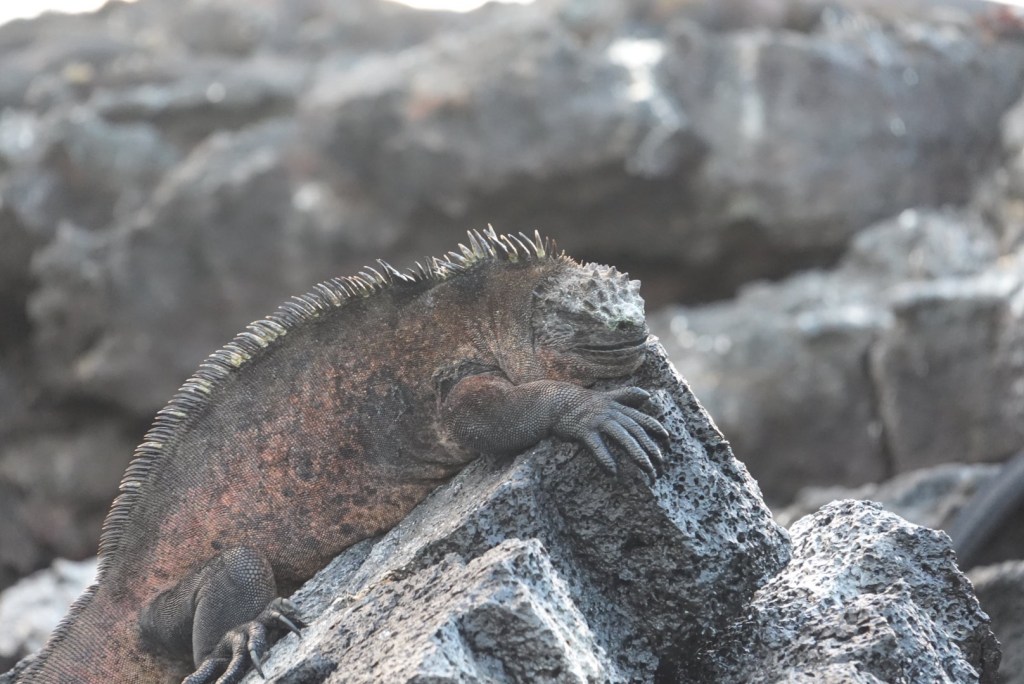
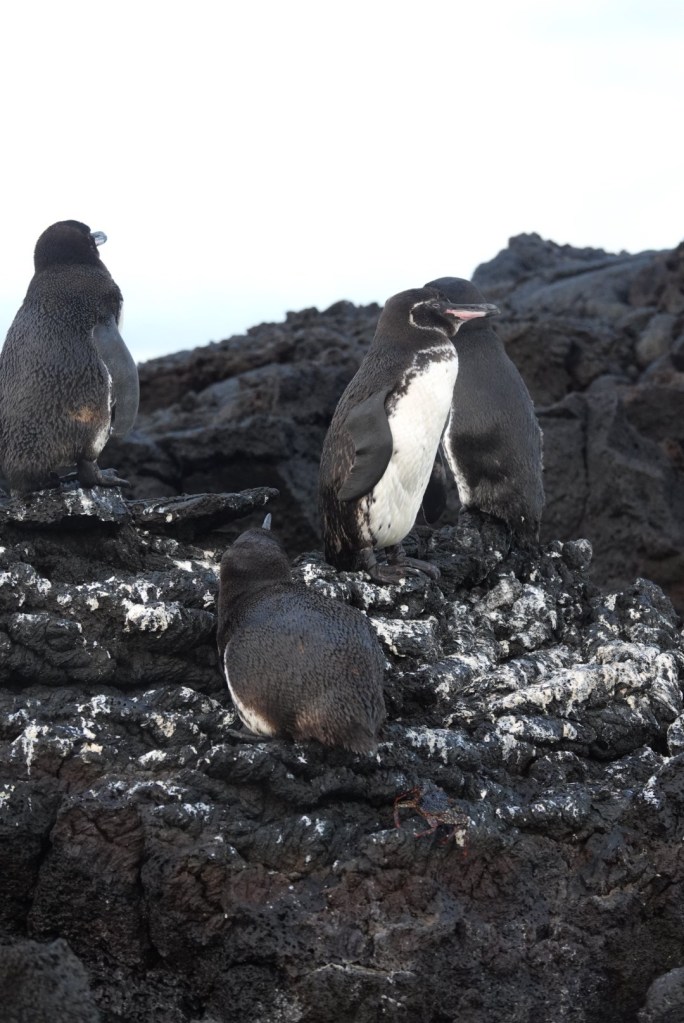
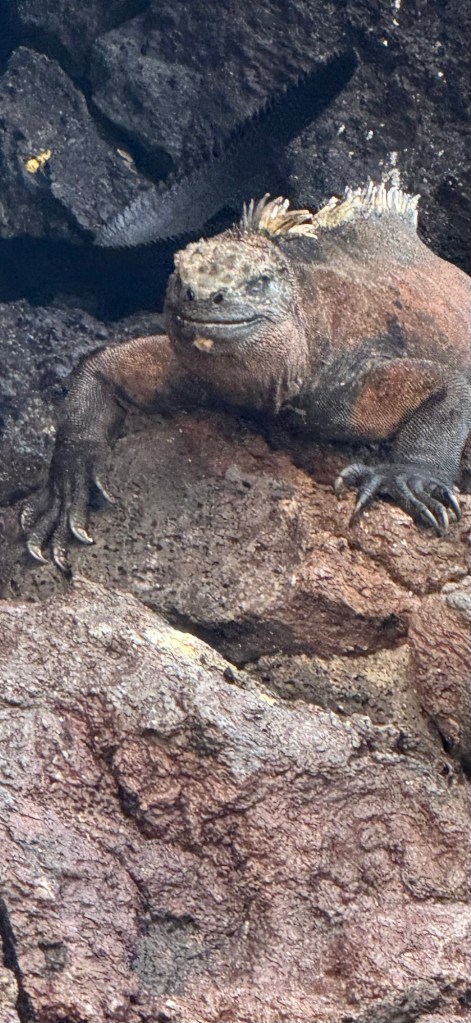
From there we headed to the spot where there were more penguins and a lots of iguanas. To top it off the rain and sunset treated us to a beautiful rainbow.
Galapagos Giant Tortoises. These huge tortoises are a “Keystone” species because without the tortoises many other animal populations collapse. Tortoise poop pollinates mango trees when their seeds pass through the tortoise digestive track, and without mango trees many birds species and bee species cannot survive here, and their populations crashed when the tortoises’ population crashed before the conservation efforts that began in the late 1950’s.
Last night we raised the anchor, began our cruise to the westernmost islands and experienced the roughest seas of our voyage so far. Remarkably, I didn’t feel sick at all and slept super well. The rolling seas do make walking around the ship a bit challenging but we have adapted. The Silver Origin ship is smaller than many cruise ships and we like the smaller size except that it is definitely less stable, both at anchor and when underway. Like all of the other cruise ships in the Galapagos, it is never allowed to dock, so all excursions to or from shore are by 10-passenger zodiac inflatable boats, and getting on and off the zodiacs can be tricky if the rolling waves are over 3 feet. This morning the waves were at least 5 feet, which made boarding the zodiacs a bit of a challenge, but the helpful ship’s crew made it easier than we expected.
From the zodiacs we transferred to buses on Santa Cruz Island for the drive part way up the mountain to the Giant Tortoise Ranch. All the Tortoises are wild and protected. Walking slowly and quietly around them felt very meditative and peaceful.
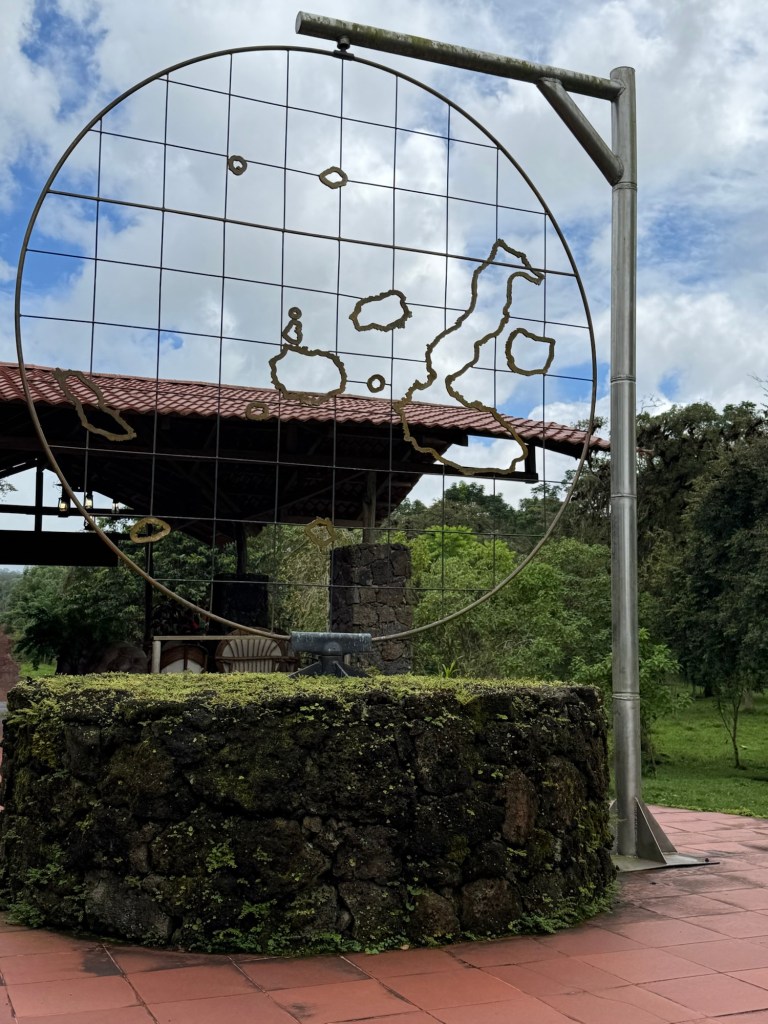
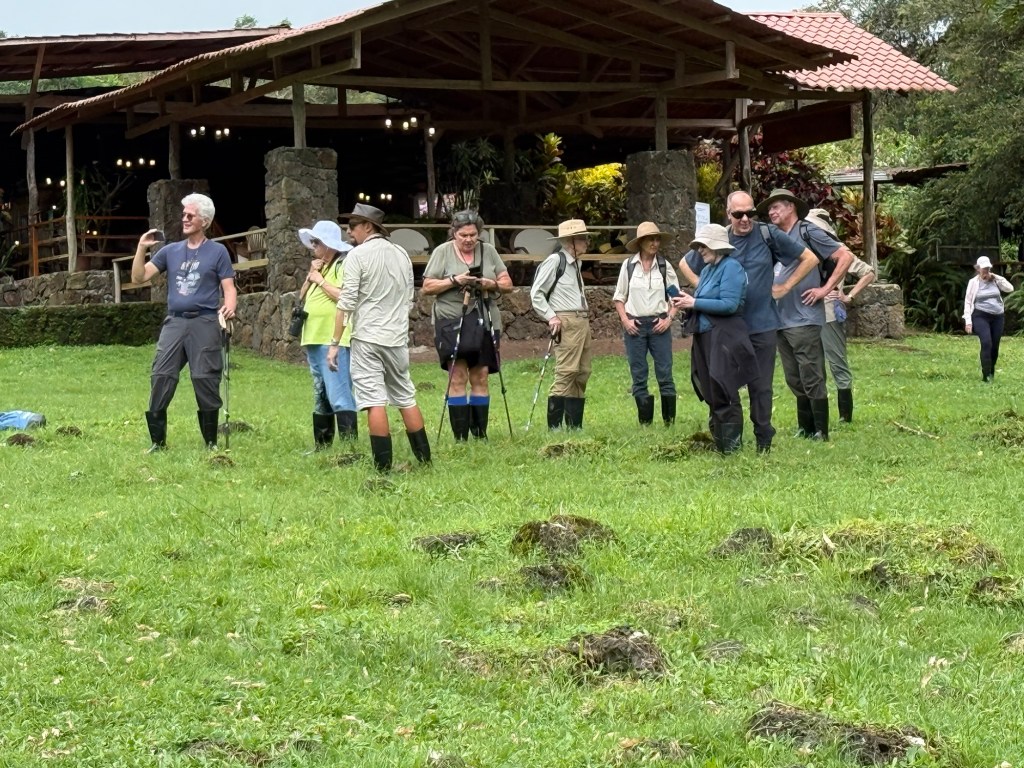
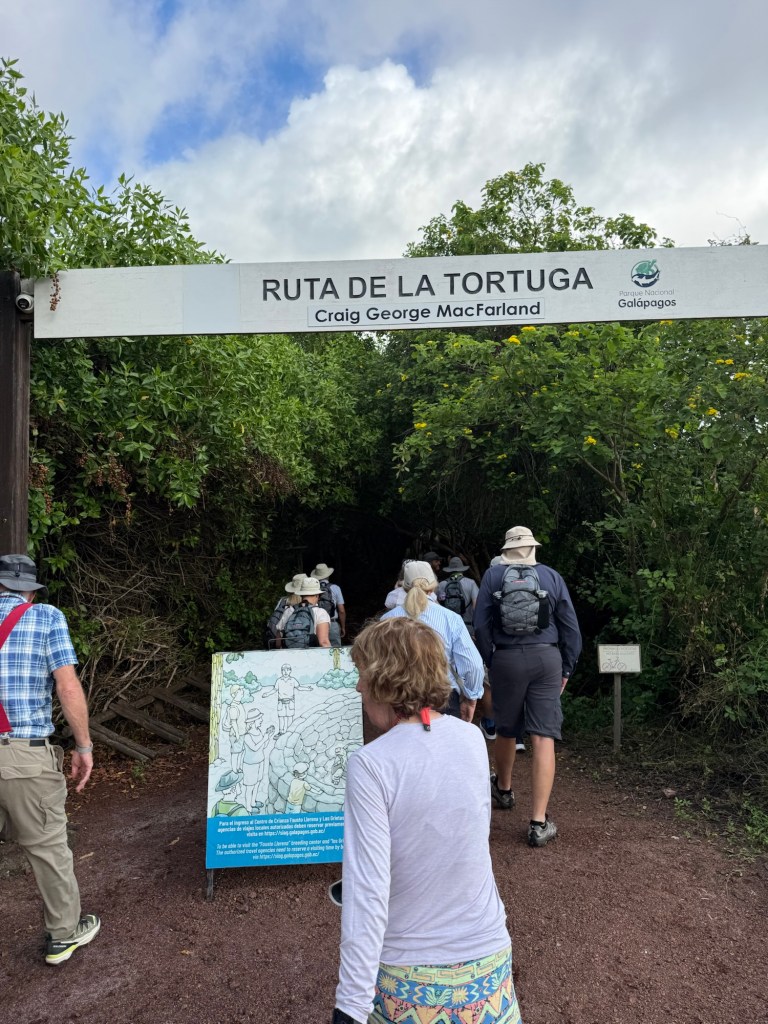
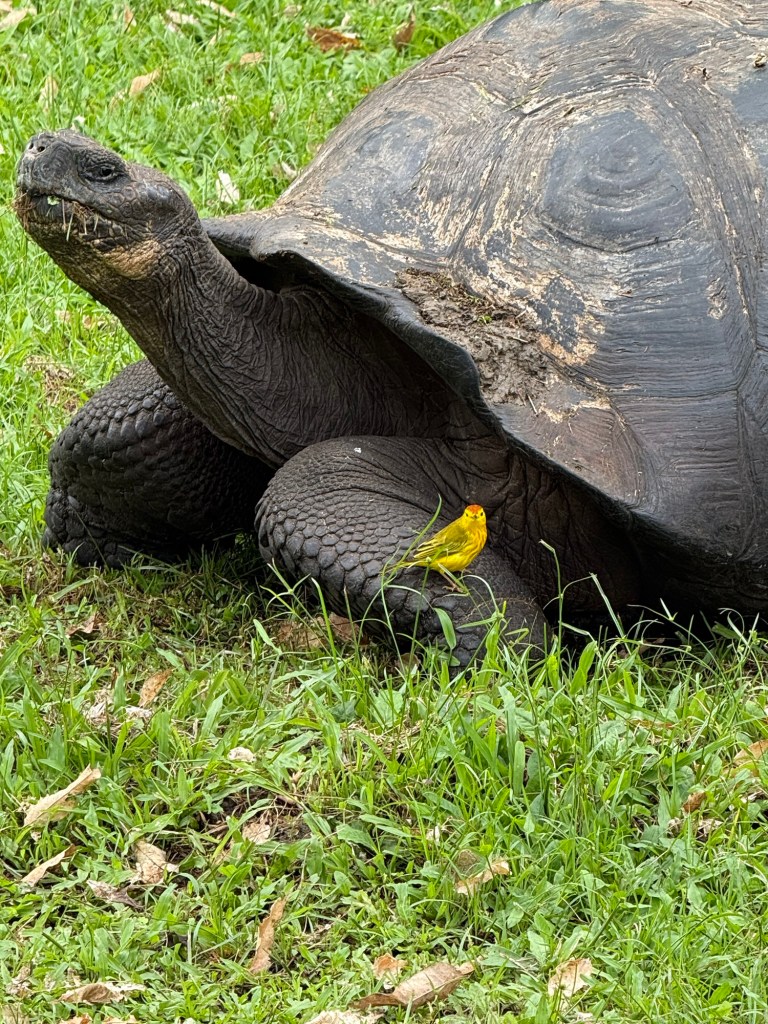
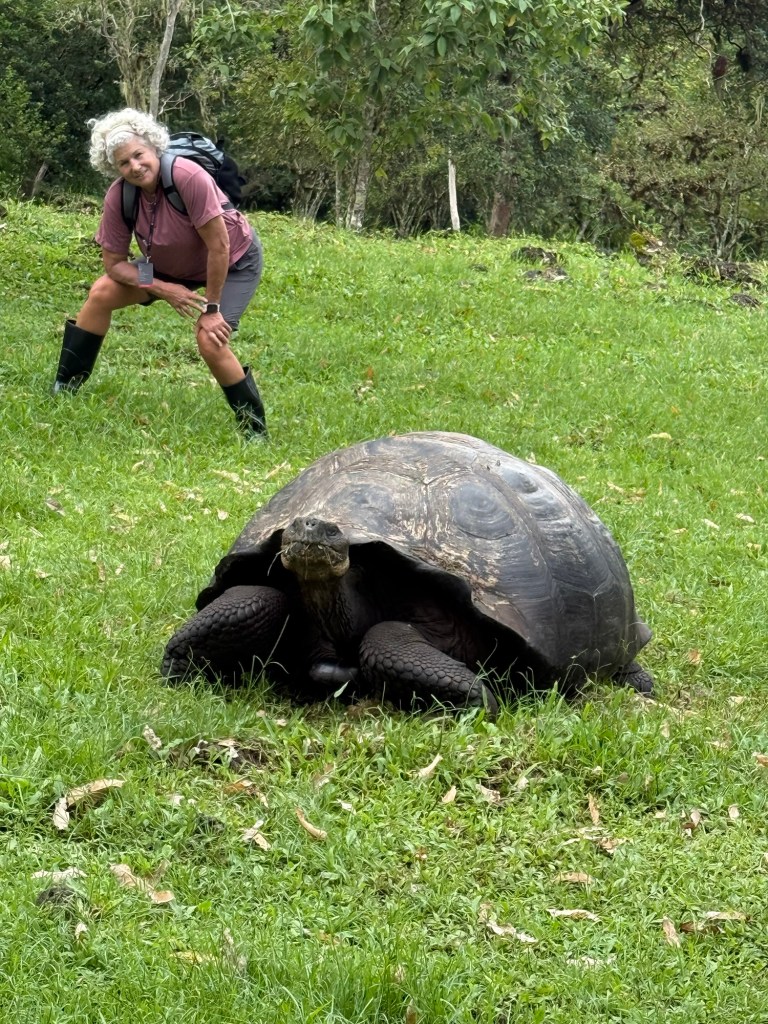
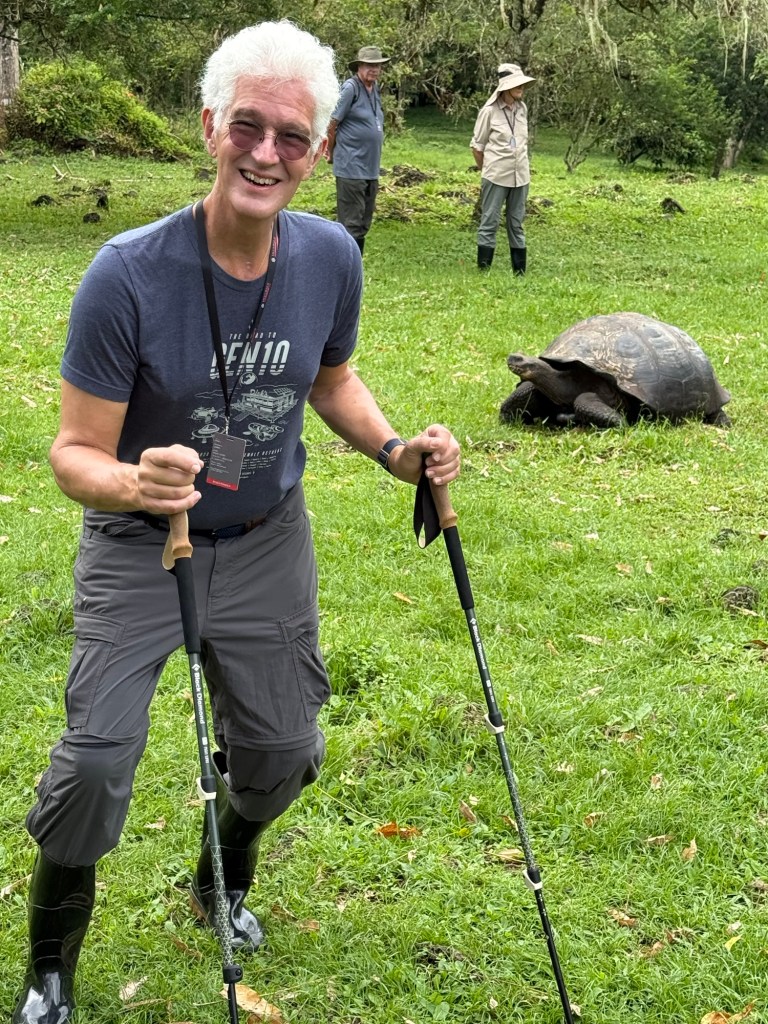
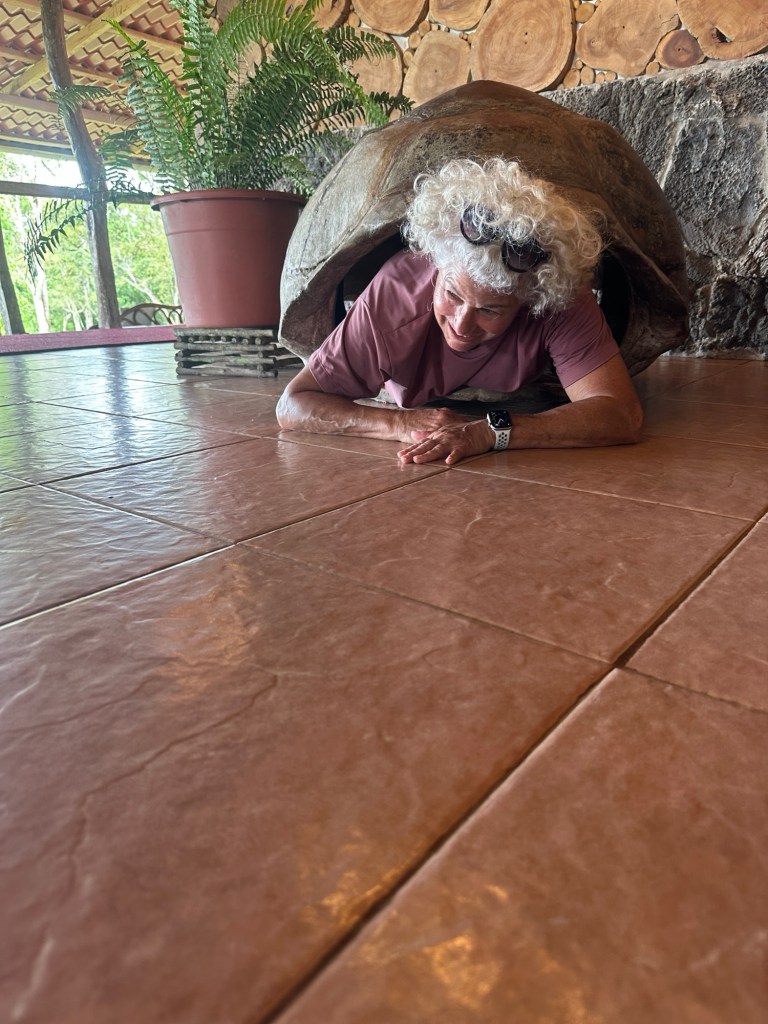
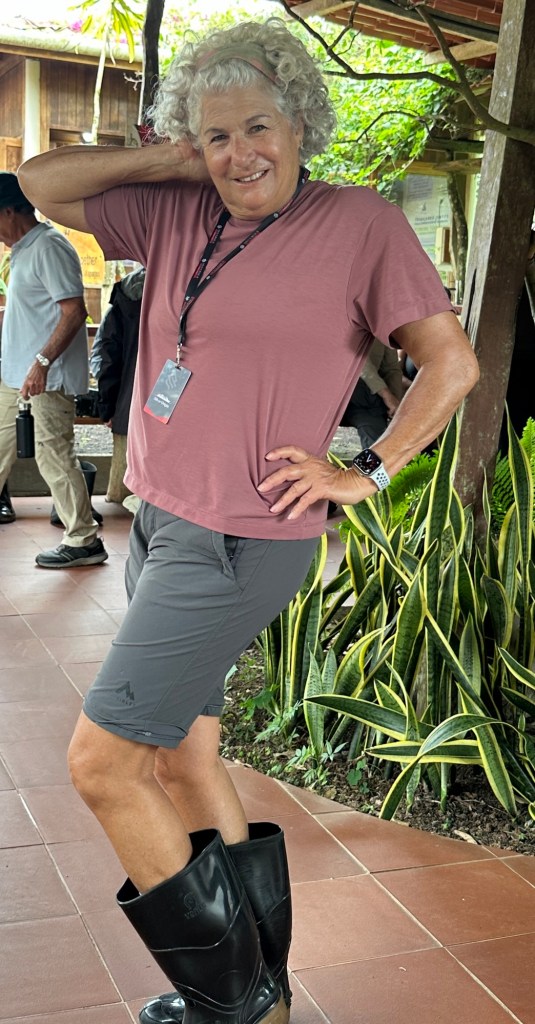
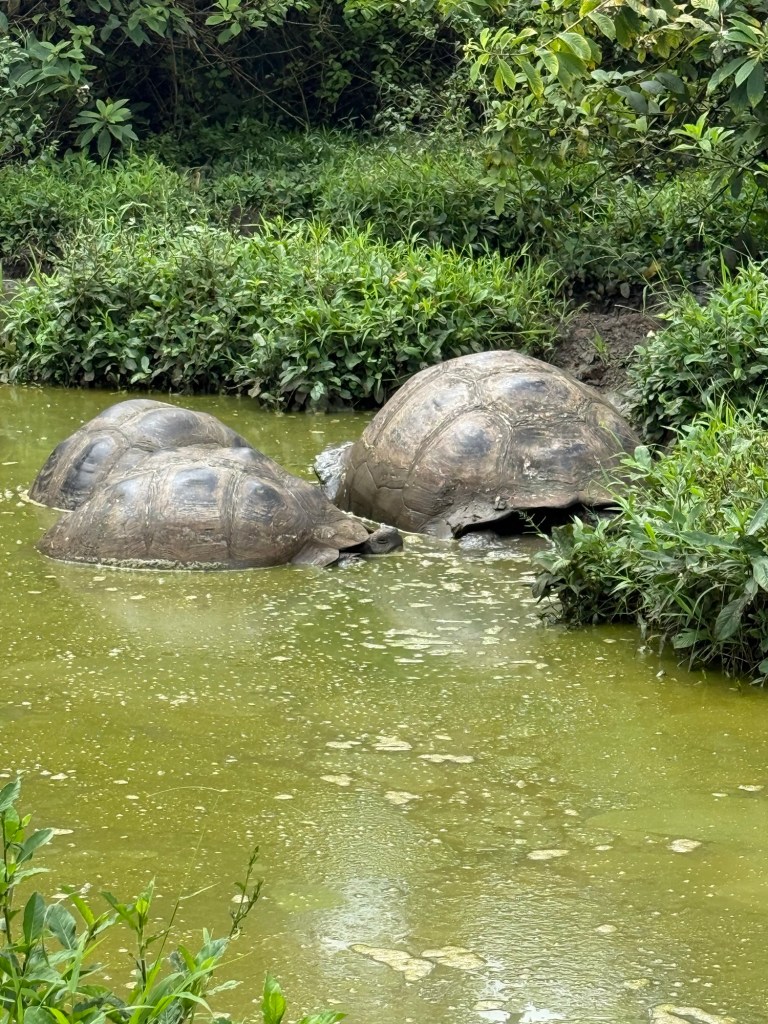
The biggest ones weigh in at over 700 pounds. Their movements are slow and steady with lots of eating as they go. When it’s time to mate, which is soon, the males will often travel up to 6 miles to find the females, who usually prefer the warmer, lower altitudes closer to the ocean. The pheromones released by the females and carried by the wind create an irresistible impulse for the males, who abandon the greener highlands to look for females in the lowlands. Interestingly, the temperature of the eggs affects the proportion of tortoise eggs that become male or female. The eggs at the bottom of the nest dug into the ground are colder and the cone shaped nets gets larger near the top where the warmer temperatures produce more females. As a result, there are always more females than males in every clutch of eggs. Because of the higher temperatures associated with this year’s Super El Niño, the naturalists are expecting even more females than usual this breeding season.
This afternoon we headed to the national park’s Tortoise Breeding Center (similar to a Salmon Hatchery) to learn more about the program that began in the 1950’s to repopulate and protect the Giant Tortoises throughout the Galapagos. The tortoise population was seriously endangered in the 1950’s because rats, feral dogs and feral pigs escaping from ships became endemic to most of the Galápagos Islands and devoured most of the young tortoises. Before that, the tortoises had no natural predators after reaching 2 years of age. Afterwards, however, the tortoises were vulnerable until they were 7 years old, and by the 1960’s fewer than 1% of them made it that far. By bringing most of the tortoise eggs to the Breeding Center, where they are protected from predators until they can be safely released back into the wild, now over 85% of tortoise eggs reach 7 years of age, and the tortoise population has increased to over 30,000 individuals.
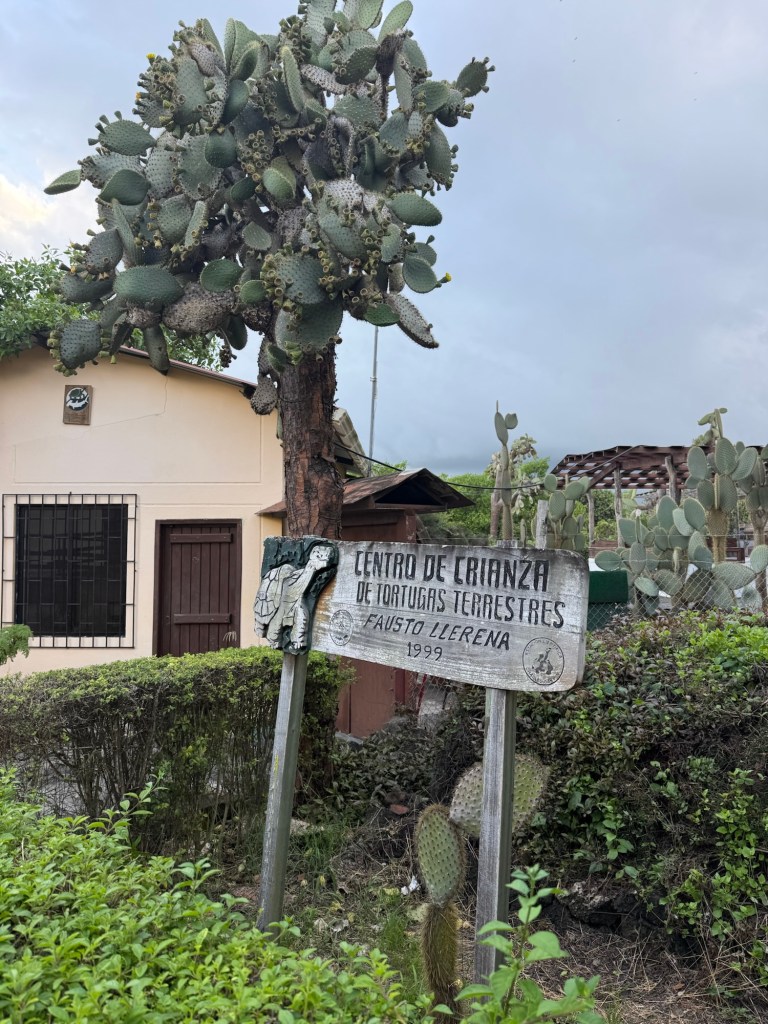
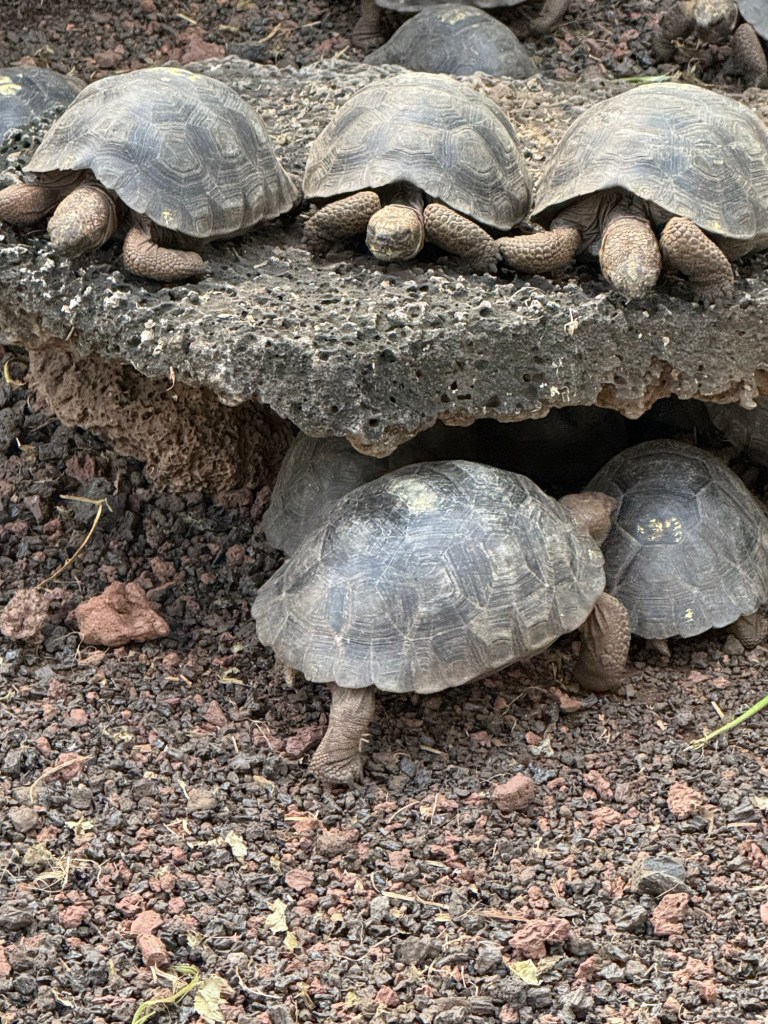
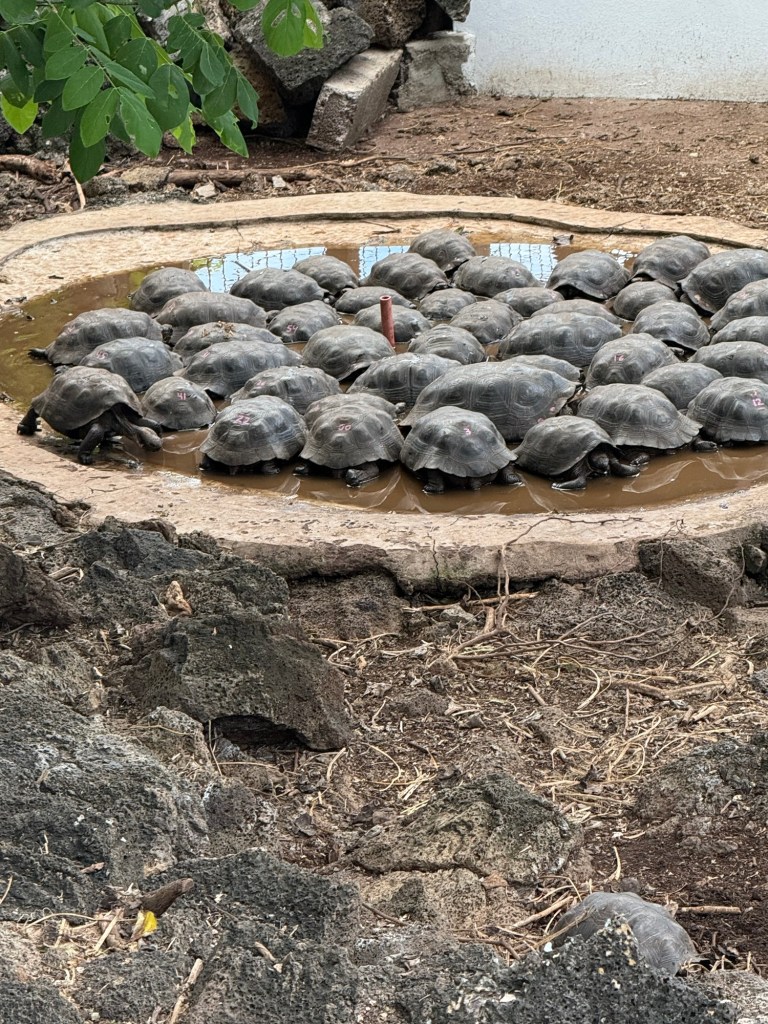
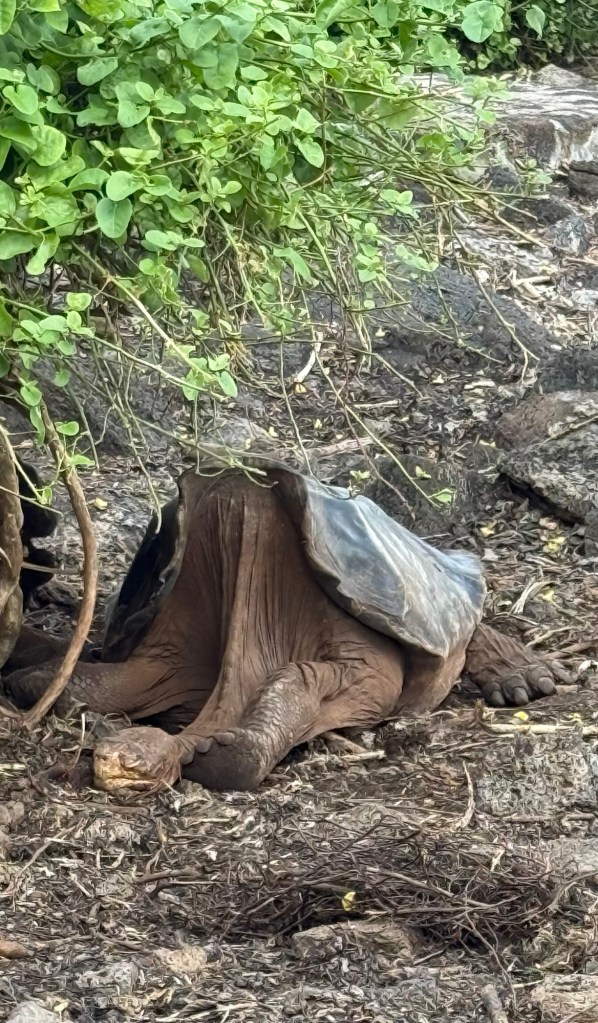
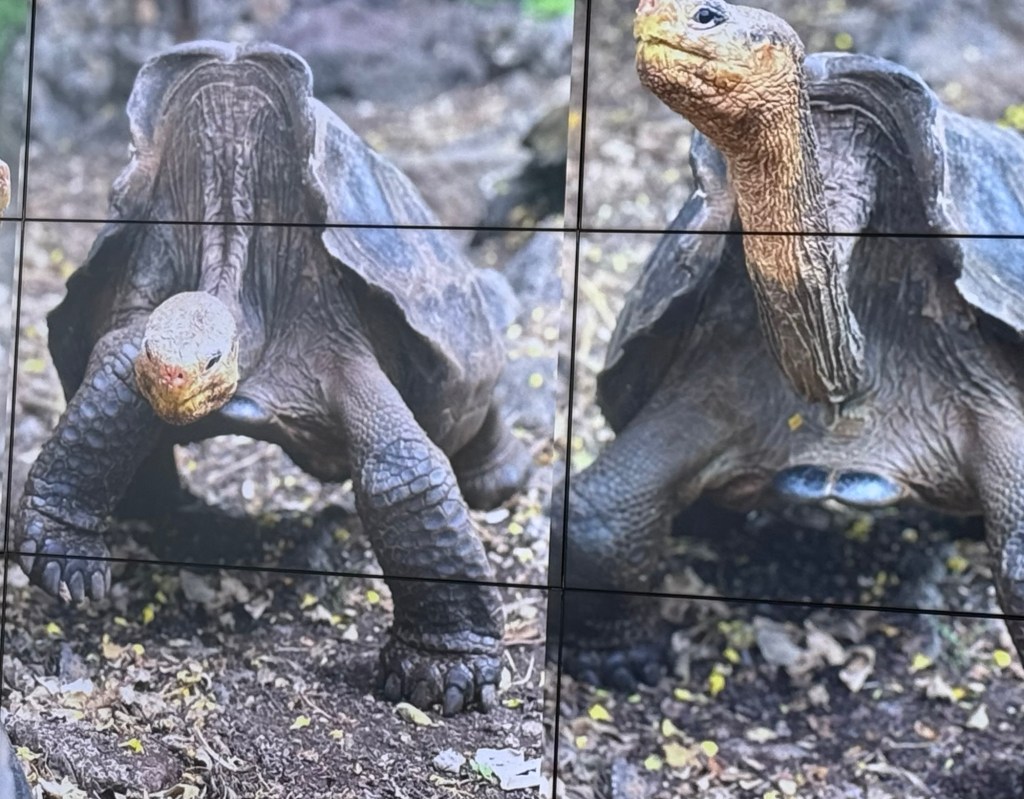
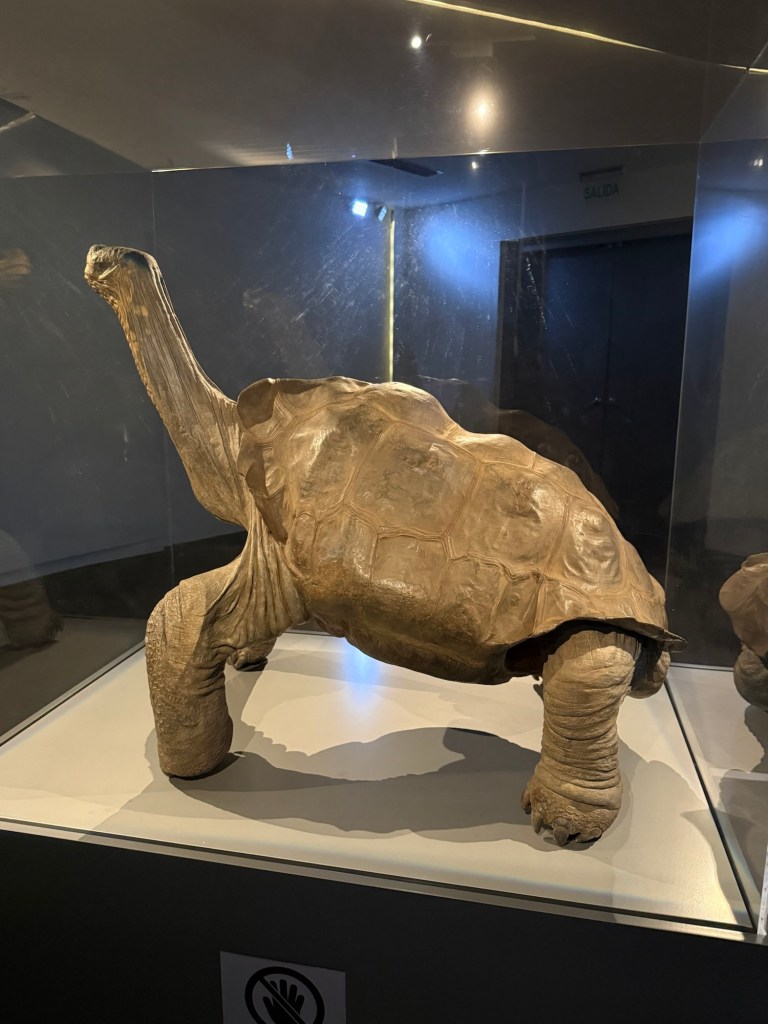
A very strange sub-species of Galapagos Tortoise is the “Saddleback” tortoise. They are found on the dryer, western islands that are rocky, not grassy. So they adapted by growing long necks to reach the cactus. When we saw them at the Breeding Center it was near the end of the day so they were relaxing, with their necks down.
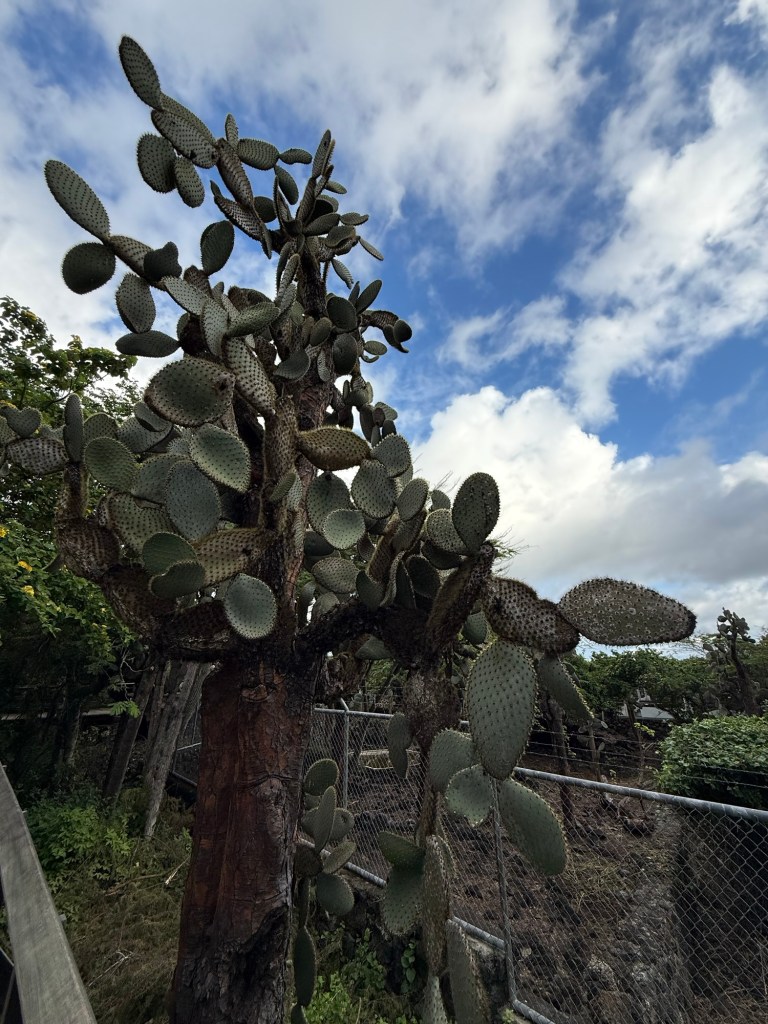
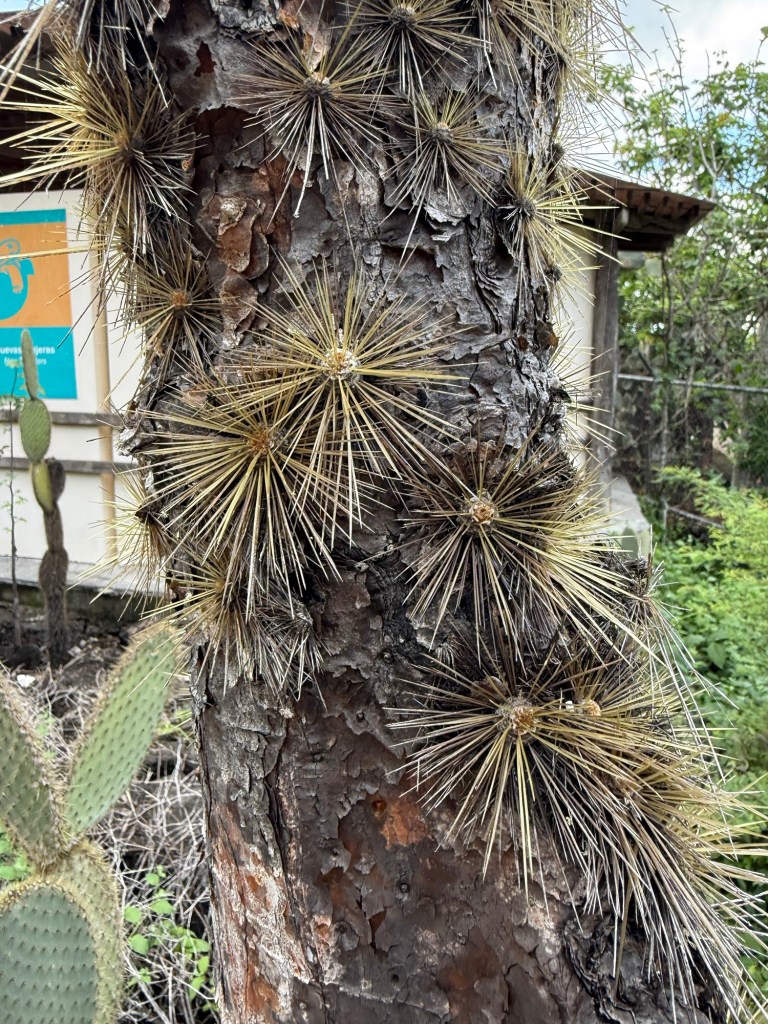
On our way to the center we also learned about the crazy Galapagos Prickly Pear Cactus. They grow tall and as they age and the base gets a protected tree-like bark. As it grows it looses the needles and then becomes smooth, like a tree, but the top of the “tree” continues to look like a normal cactus.
The Adventure Continues,
Fawn (writer photographer) & Jim (editor)
“Standing in the present, on the highest part of the curve, you can look back and see the past, or forward and see the future”, M. Wylie Blanchet
TrueLoveAdventures.com & CurveOfTimePodcast.com

