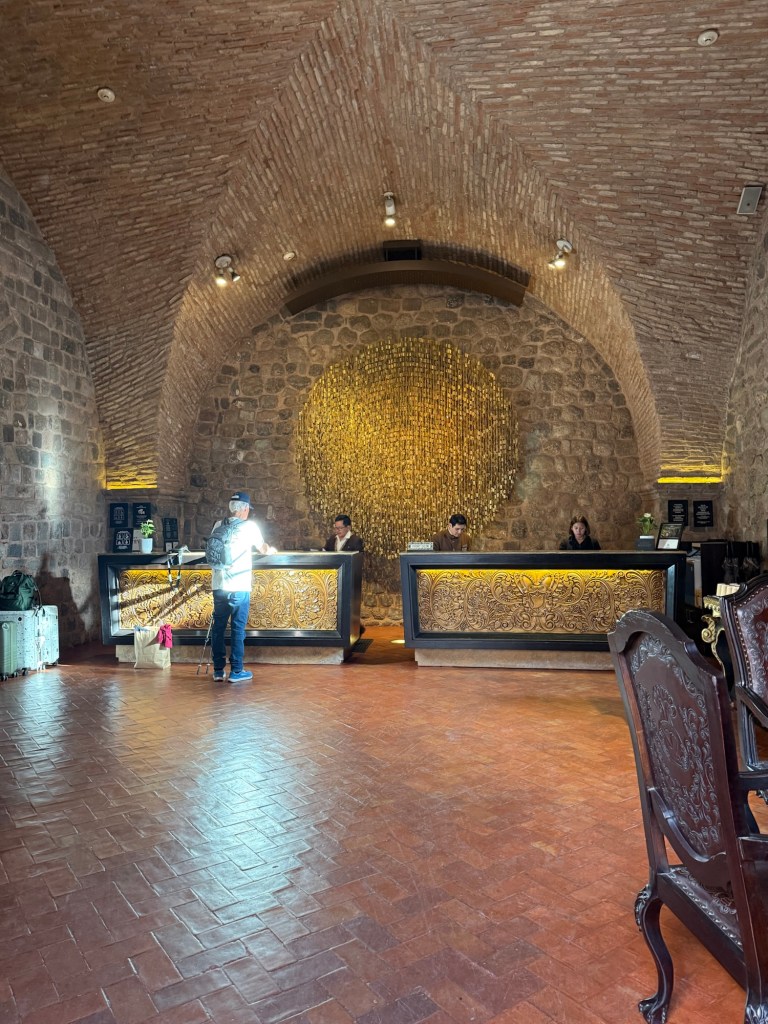
By the time we got to our hotel in Cusco we were pretty tired and very appreciative of the lovely Marriott located just off the central town square. A former convent, the entrance was dramatic and welcoming.
Our day began pretty early in Quito and once again, thanks to our airport spirit guides, we navigated all of the computer outages plaguing baggage check and got on and off our plane to Lima and our connection to Cusco with remarkable ease despite the airport chaos that surrounded us.
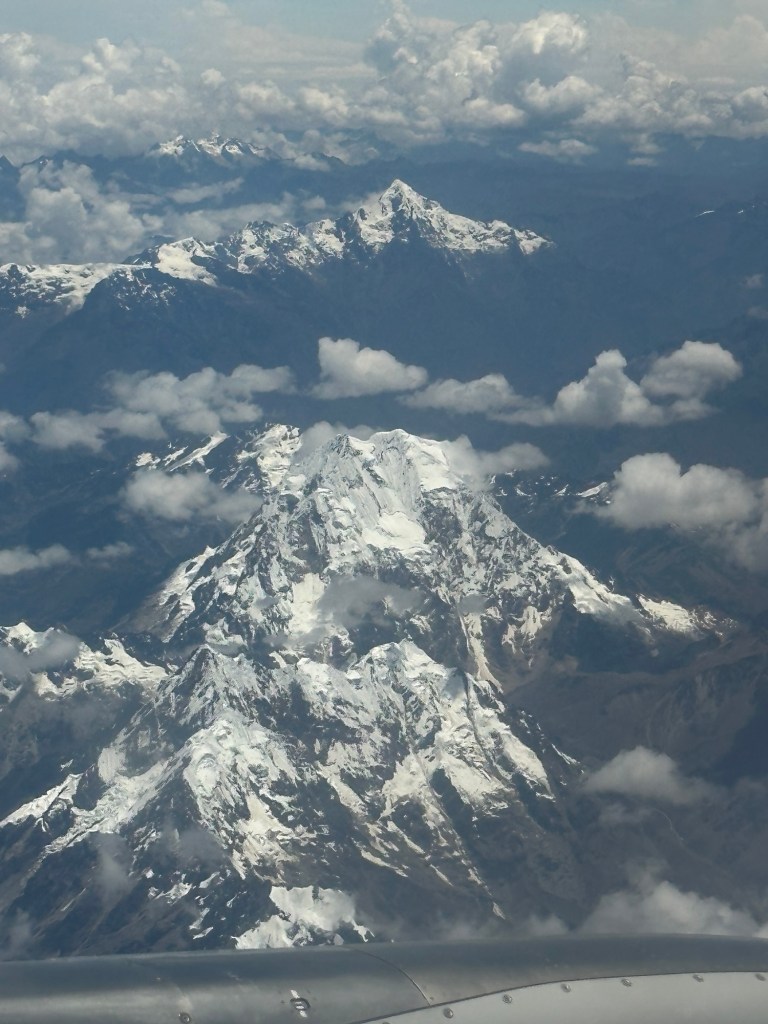
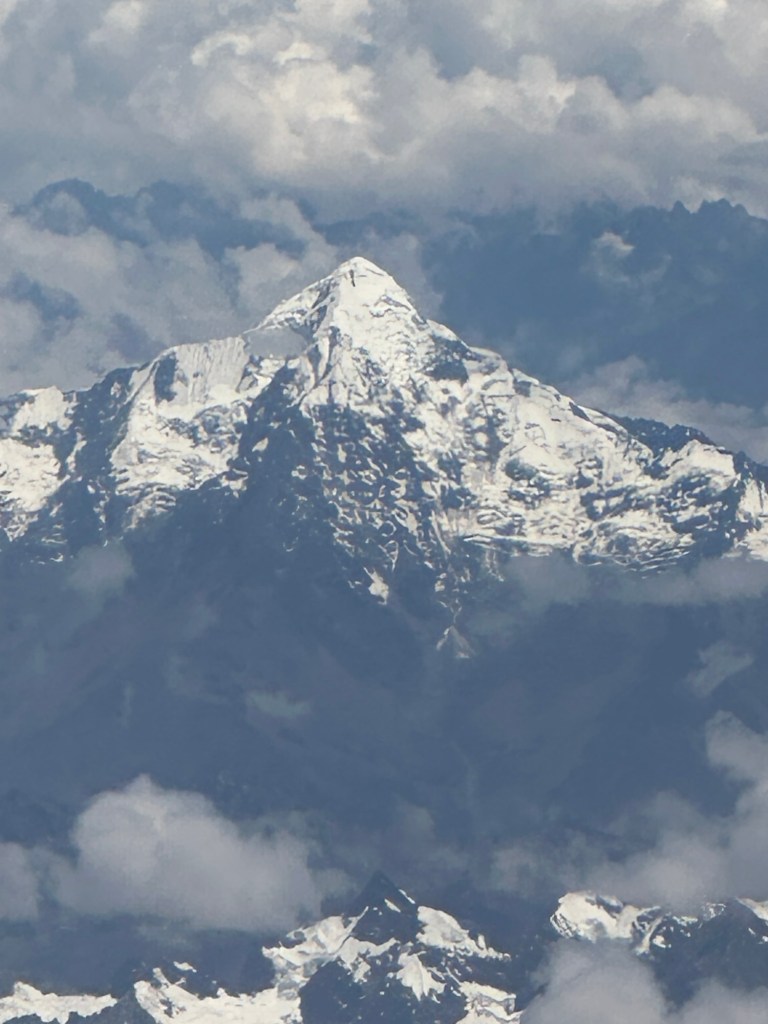
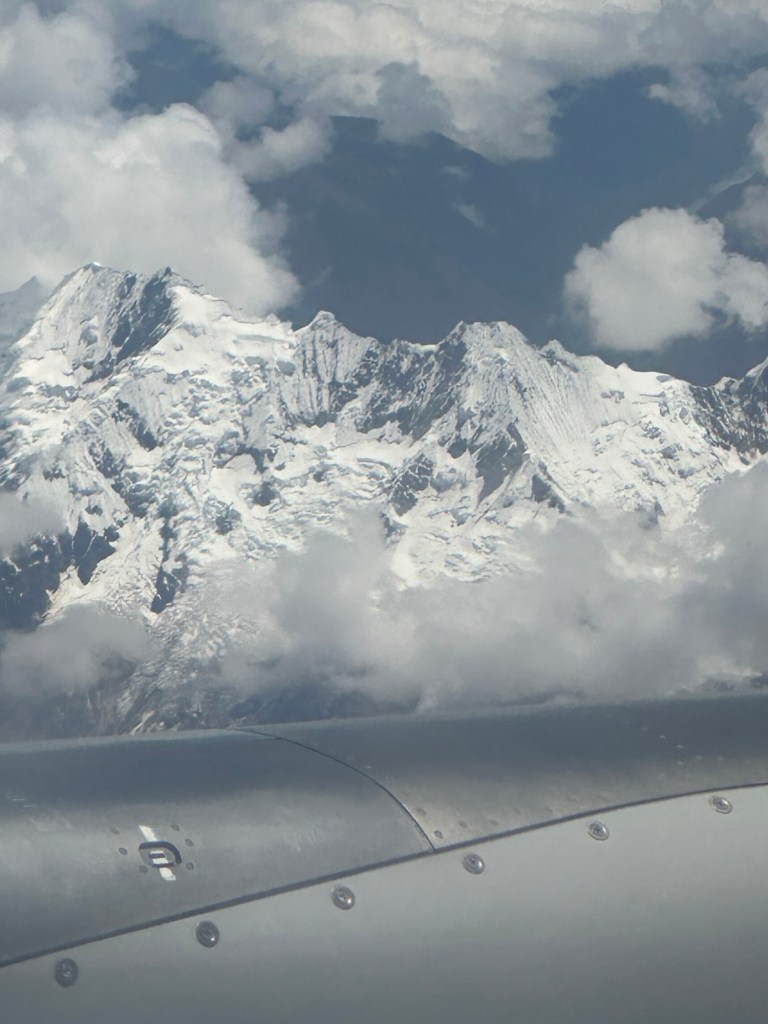
The flight offered beautiful views of the stunning mountains.
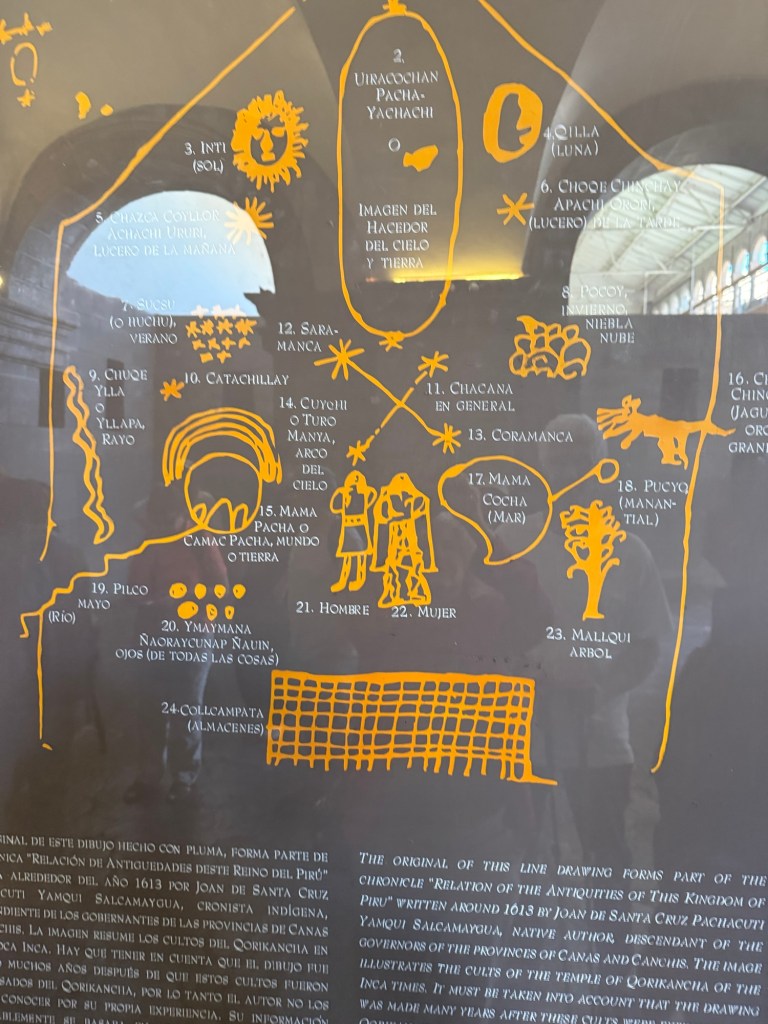
Marco, our Cusco guide, met us at the airport and wit Caesar (pronounced “Sayzar”), our superhuman driver, we got our first taste of Cusco’s old cobblestone streets and heavy traffic as we made our way to our first stop: the old cathedral built on top of the original Inca Temple (which was built on top of the religious sites of the many civilizations that predated the Incas in Cusco. The exhibits we looked at showed how the Incas viewed the Milky Way differently than us. They didn’t look at the patterns of the stars they looked at the shapes of the “shadows”. There is an interesting chart that showed all the 60+ Inca temples on various lines of spiritual Inca energy emanating from Cusco’s original Inca Temple.
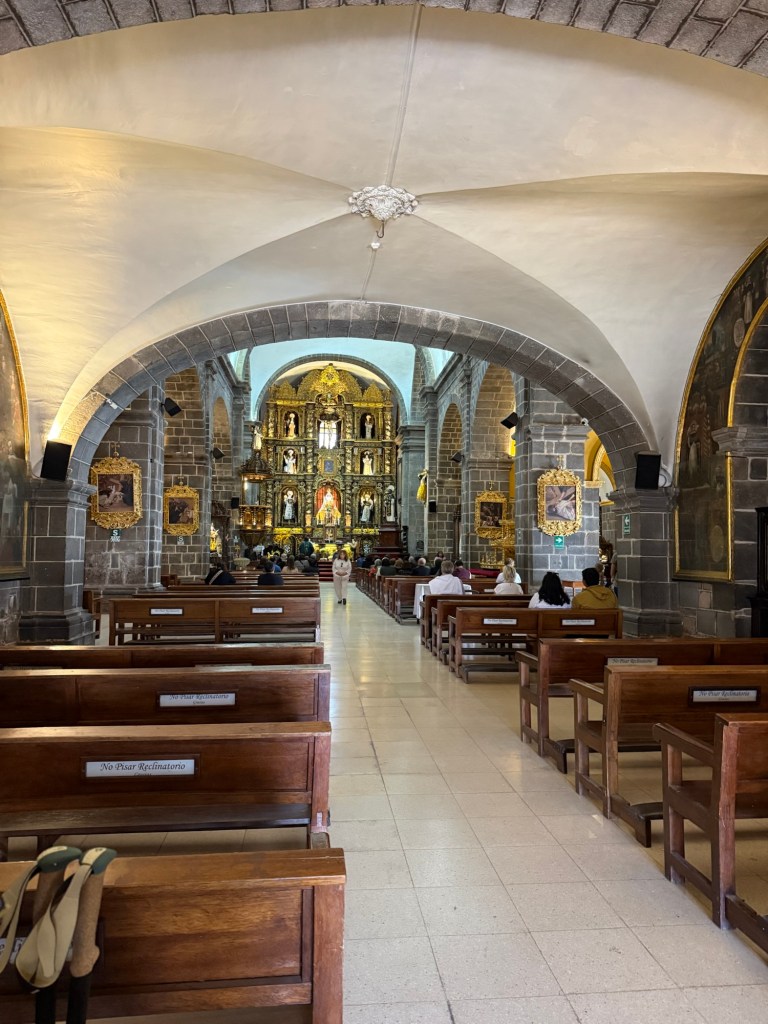
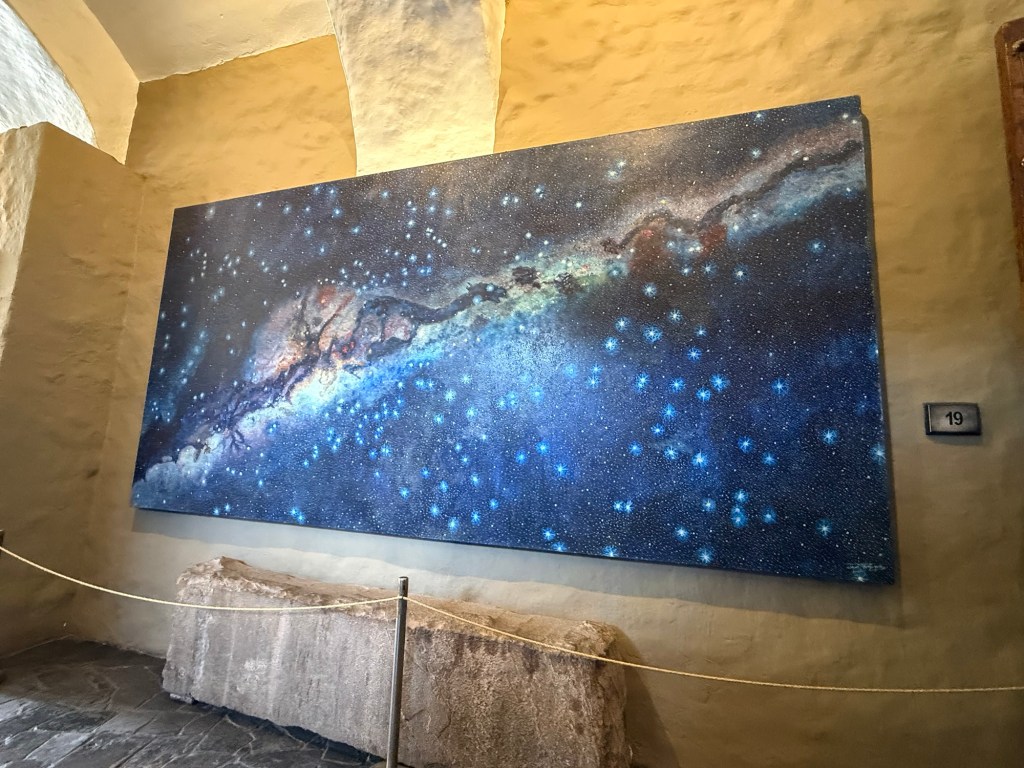
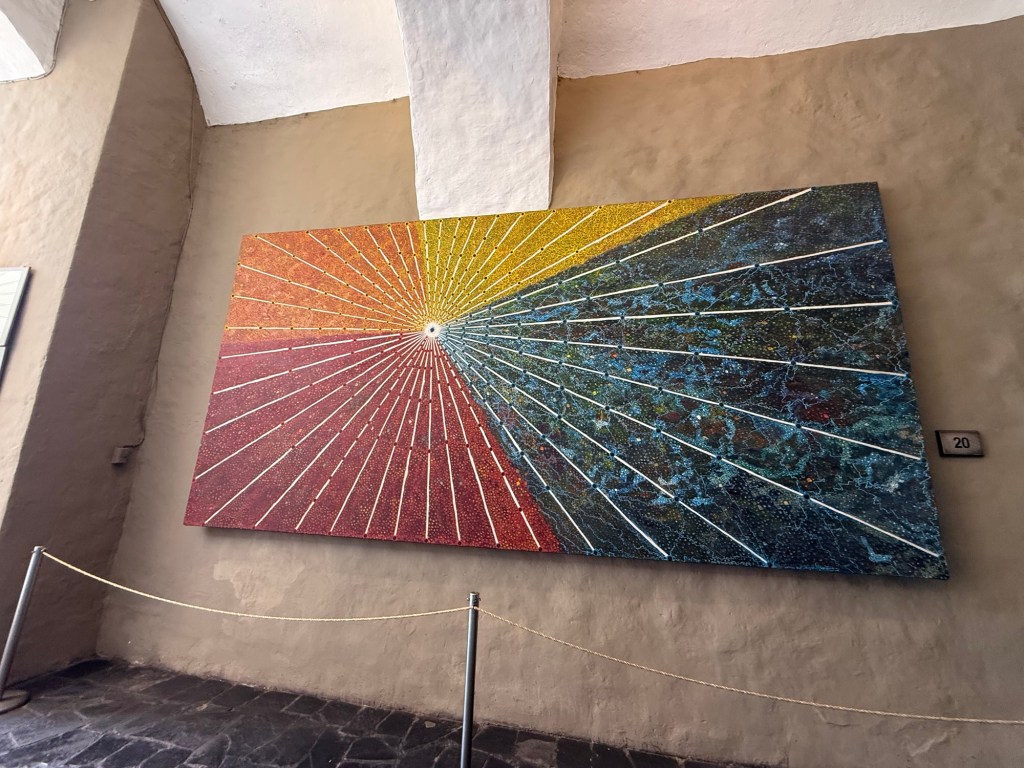
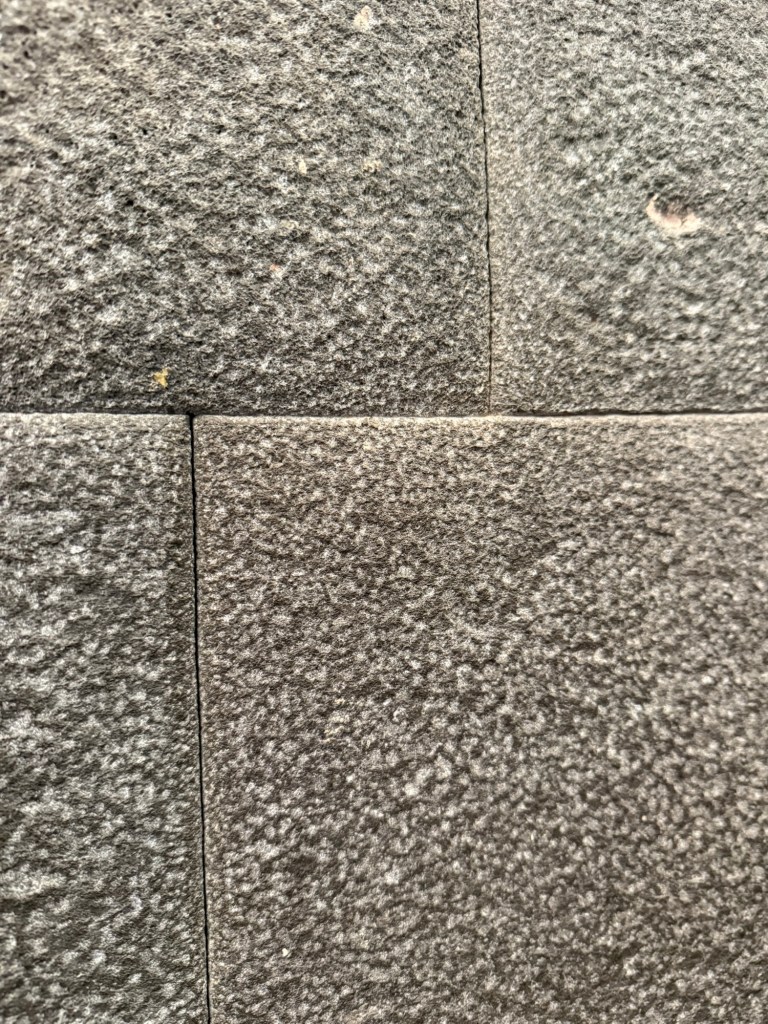
From there we headed up the hill to the large area surrounding the Inca ruins of “Saqsaywaman”. The Pope spoke there to 50,000 people the day before. It’s a dramatic “rock concert” style outdoor venue. Jim stayed low in the shade with Marco while I made my way to the top and got my first glimpse of Mt. Veronica, the 19,000’+ high mountain in the distance.
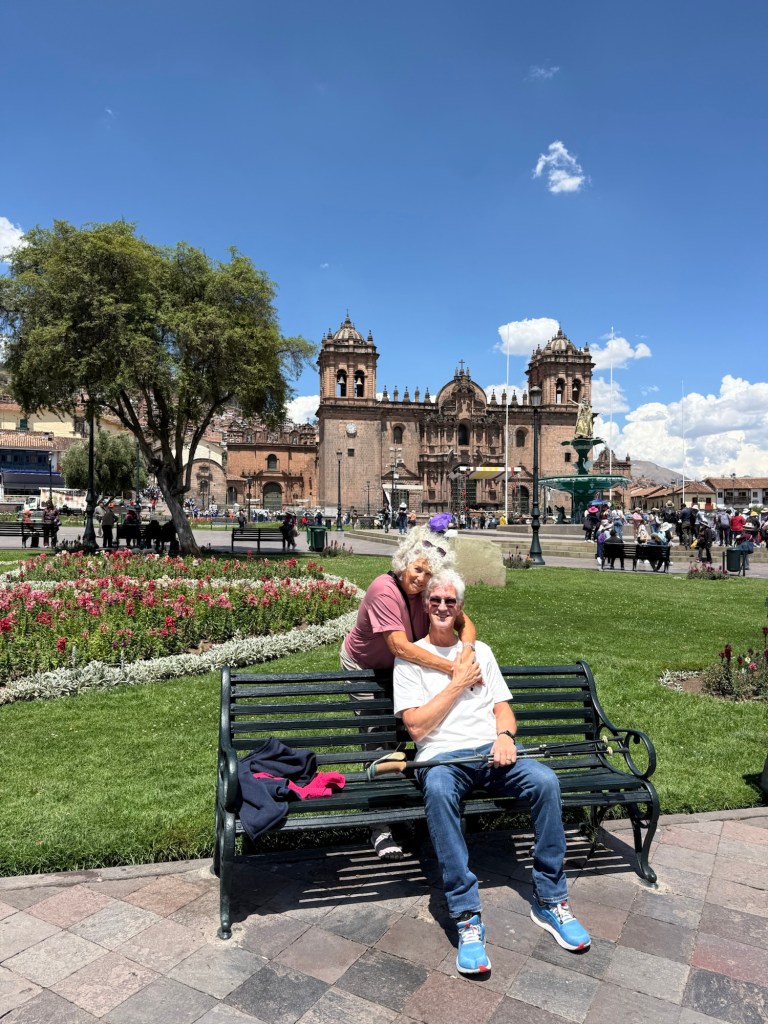
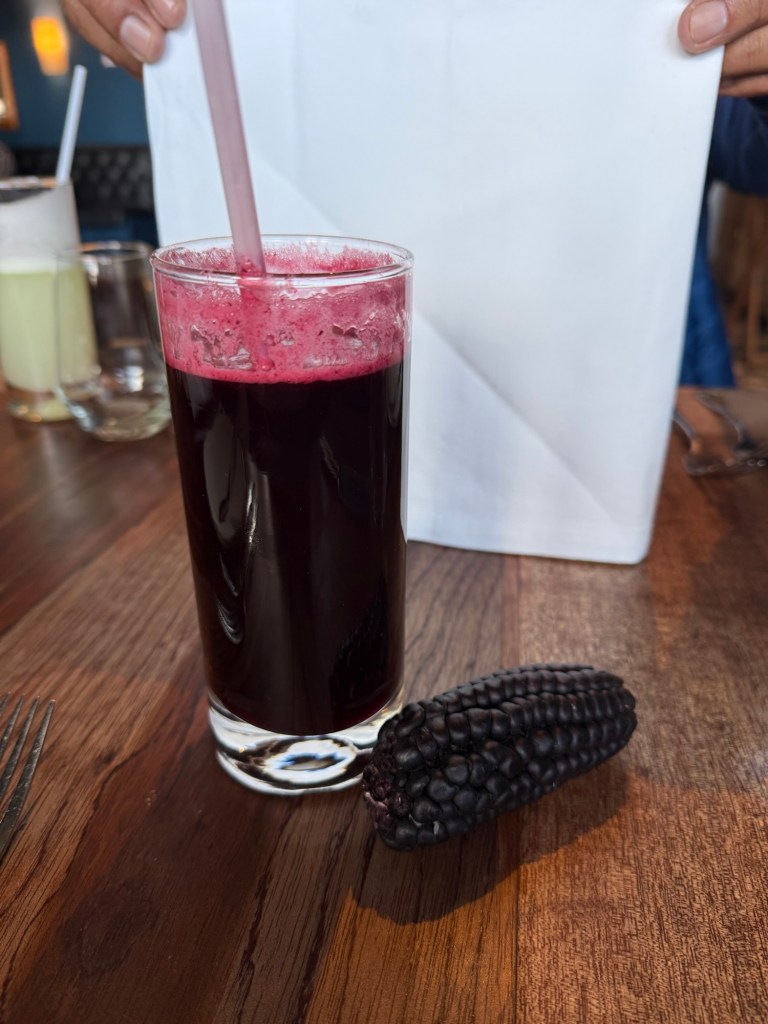
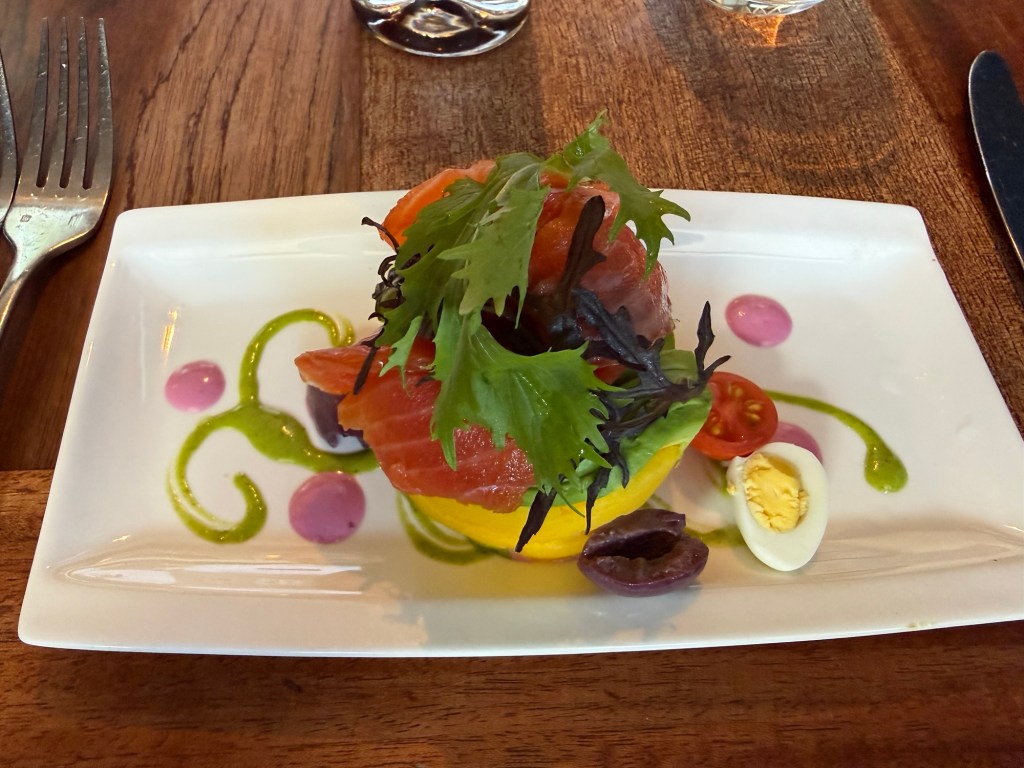
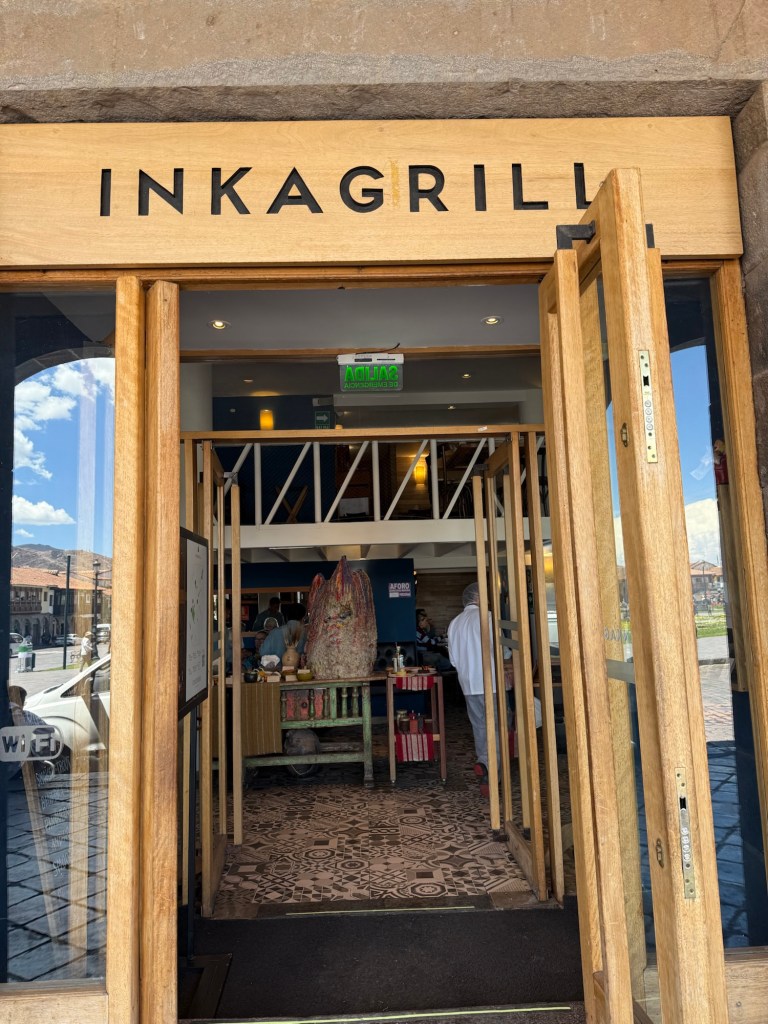
We returned to the central square and enjoyed a delicious lunch at the “Inka Grill” including “Chicha Morada”, a yummy purple-colored, non-alcoholic local drink made from purple corn simmered with pineapple peel and cinnamon cloves.
After lunch we visited the nearby Alpaca sanctuary farther up one of the big hills that surround Cusco, where I did some shopping for authentic “baby” alpaca wool sweaters (made with wool from the first shearing of adult alpacas) and some gifts.
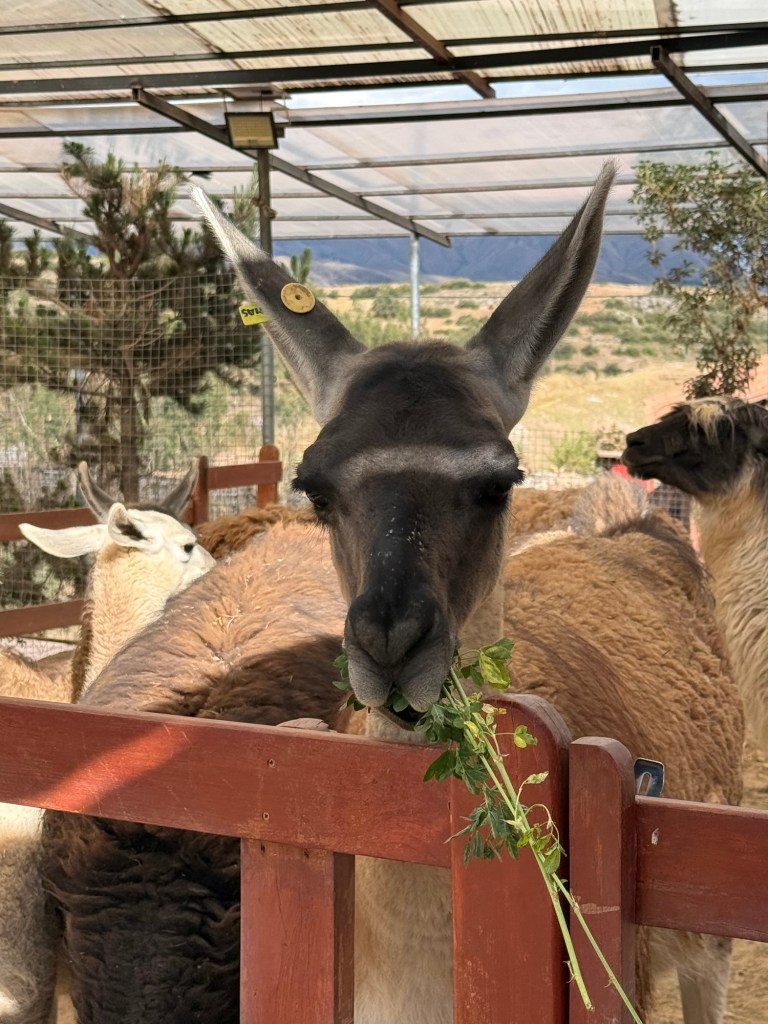
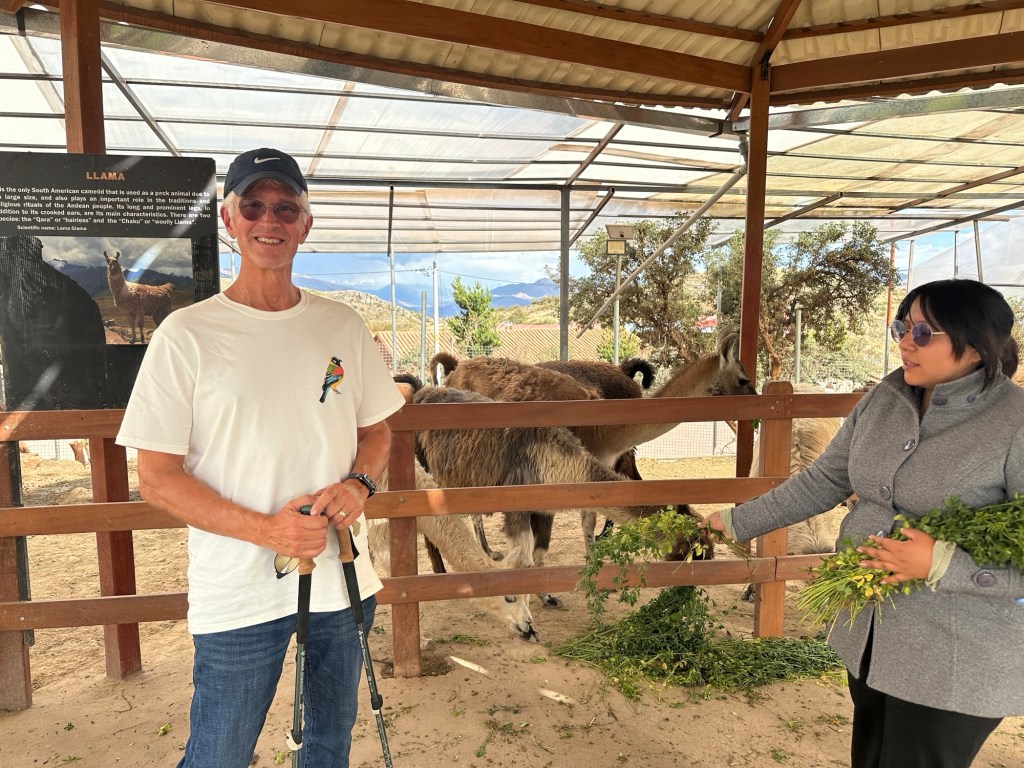
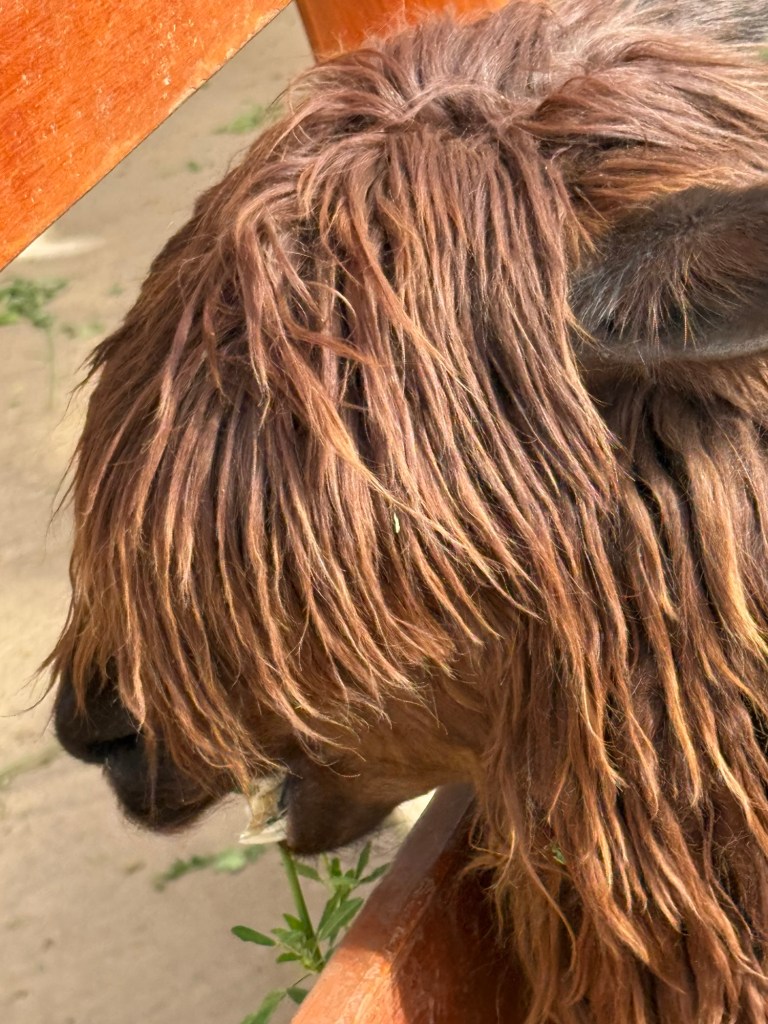
At that point we were ready for a bit of downtime at our hotel and a light meal. The Marriott has a lovely spa area with a pool and steam room and we used that before succumbing to the 12,000 elevation and getting a good night’s sleep in our very quiet hotel room.
Machu Picchu Day:
The industry and job creator for Cusco is tourism to hike the surrounding mountains, Inca trails and of course Machu Picchu. Most people take the four-hour train ride starting in Cusco. It follows a little stream that becomes a river as it runs from the mountains, through the “sacred valley” to a very touristy town where you can get a bus that climbs many switchbacks into the mountains to the entrance of Machu Picchu. To get there and back is a big journey, with a long train ride each way, but it’s absolutely worth it.
Our hotel pick-up was at 7:30 AM for the 30-minute ride to the train station for the “Hiram Bingham” luxury train (which was modeled after the old “Orient Express”). We didn’t really know what to expect, but from the moment we arrived at the train station our experience was first class and exceptional with drinks and entertainment the whole way. The seats, the food, the music and the scenery through the different environments between Cusco and the Amazon jungle really is hard to explain. We just had so much fun! It didn’t hurt that the weather was perfect.
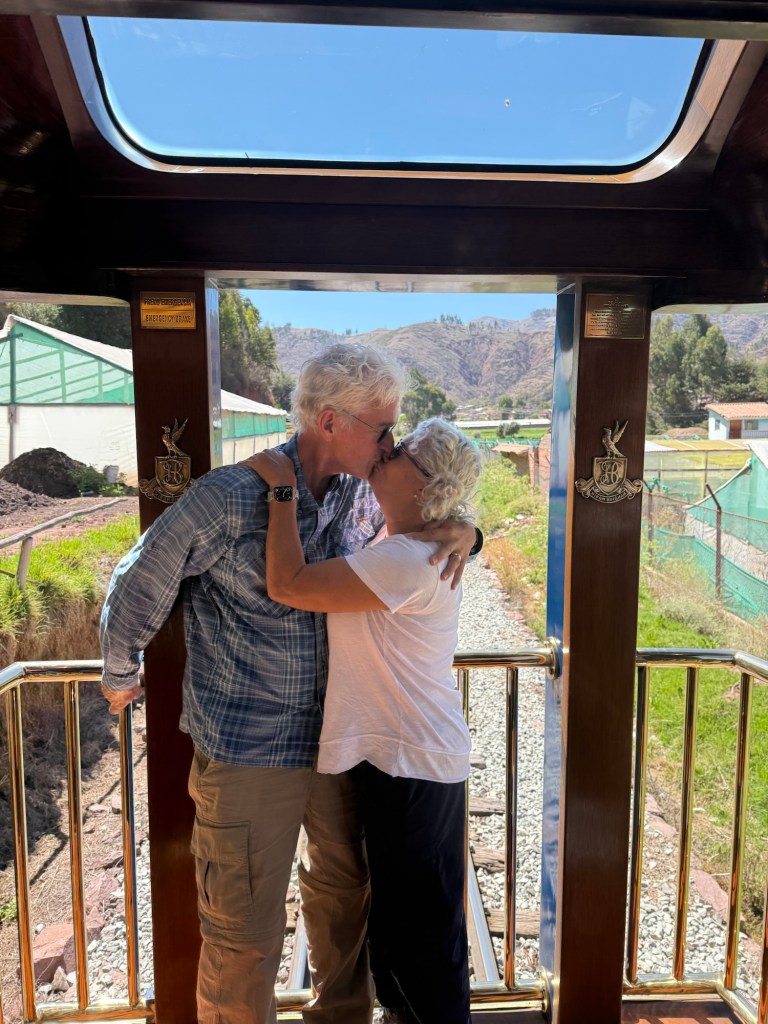
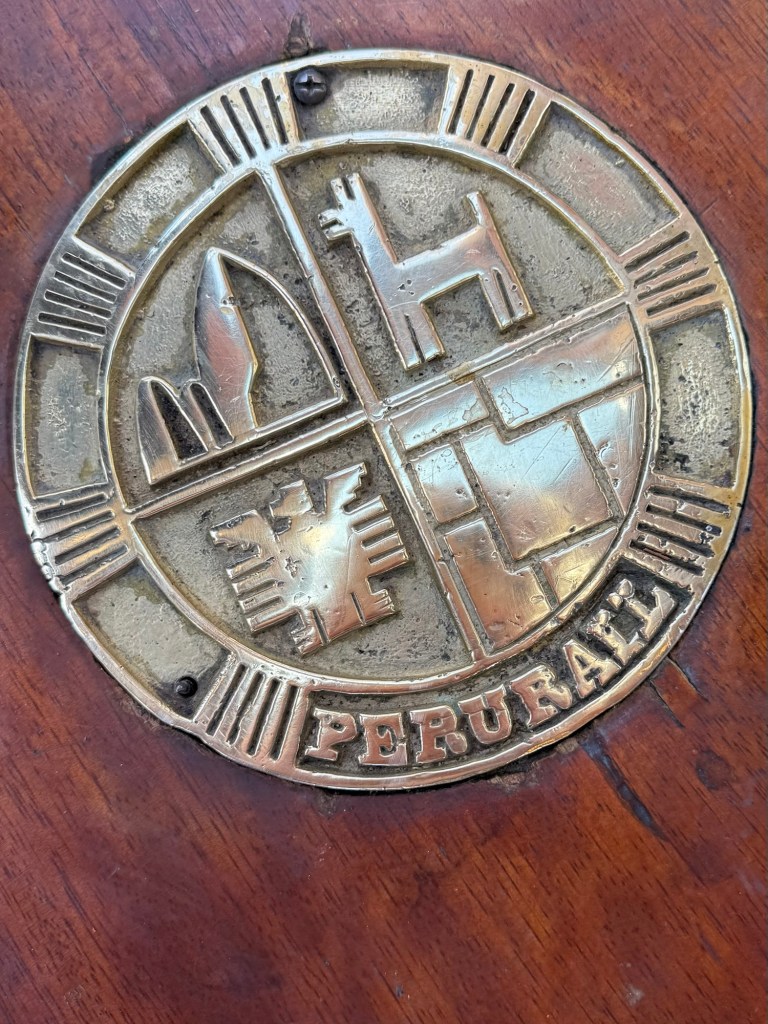
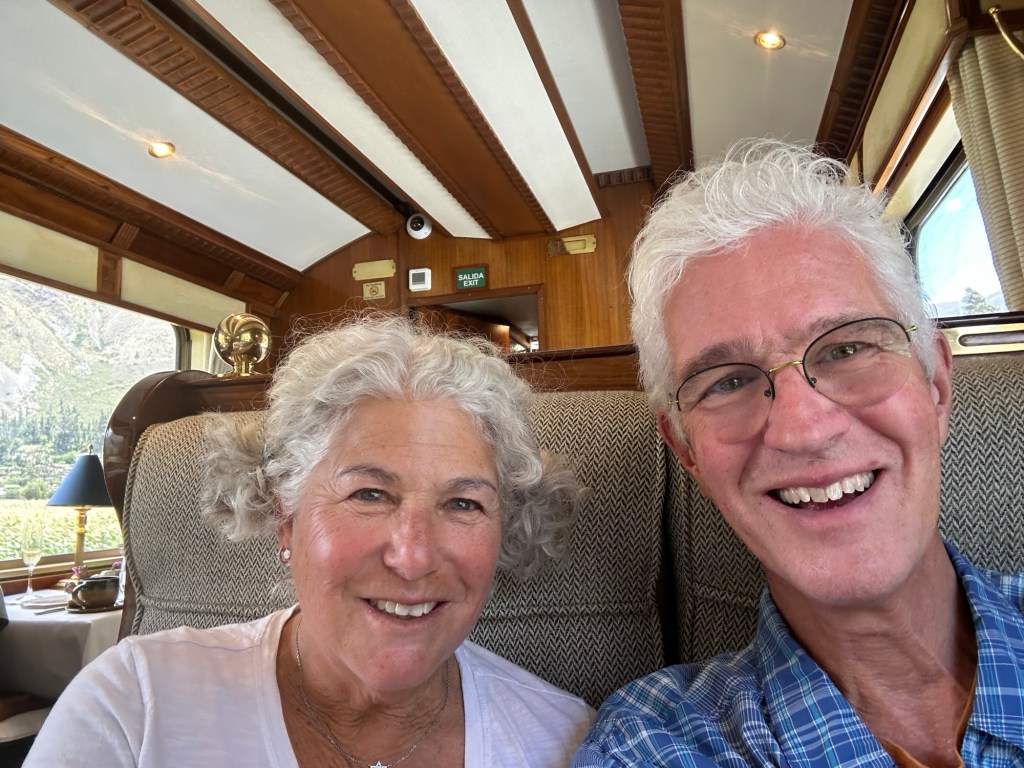
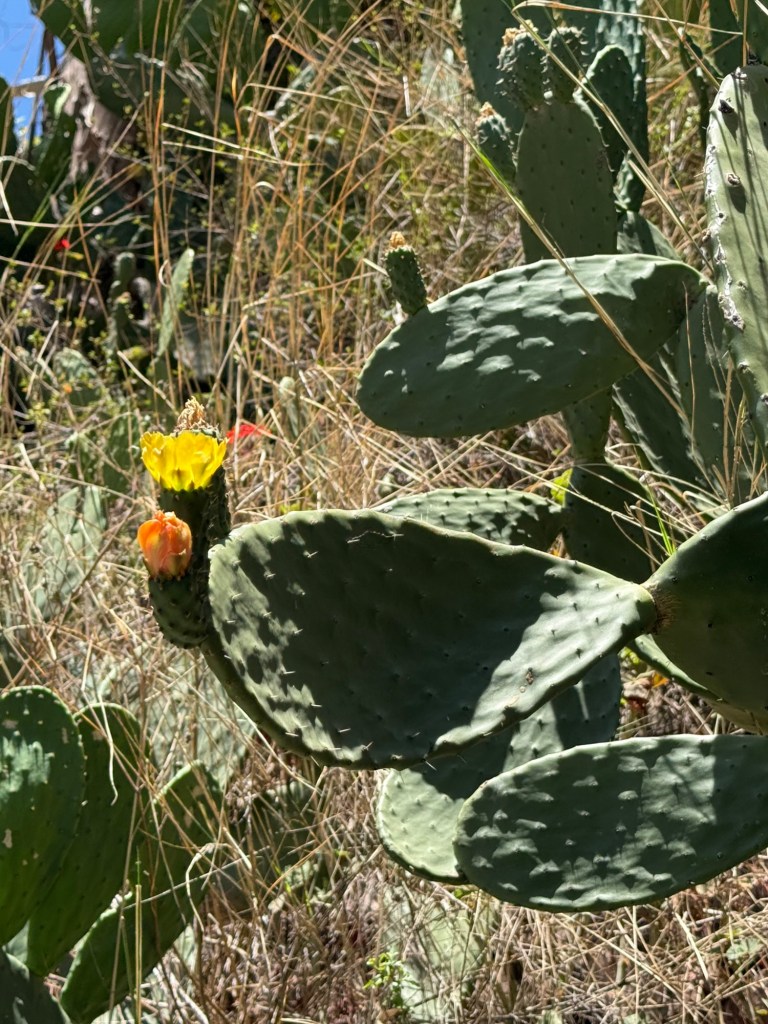
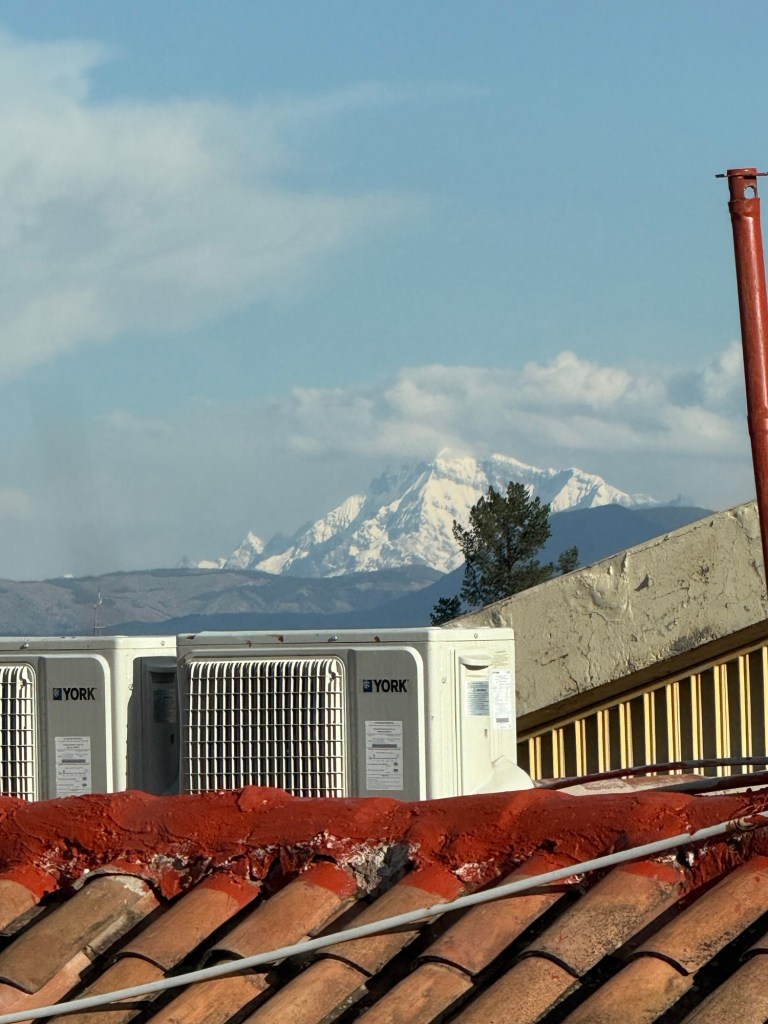
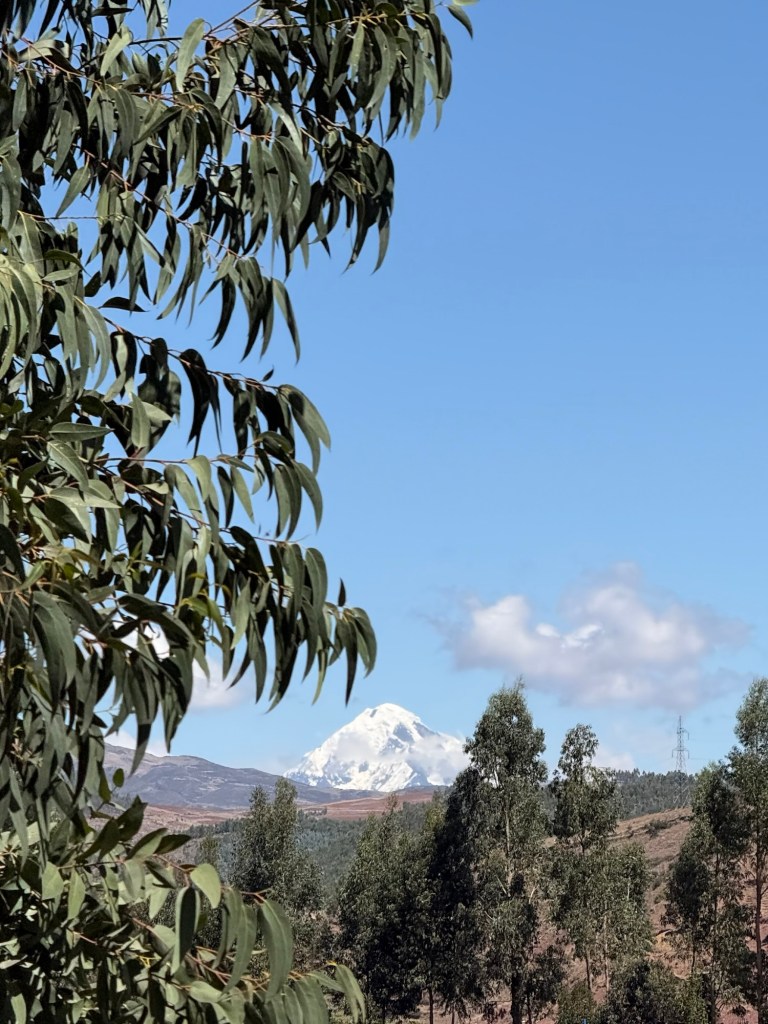
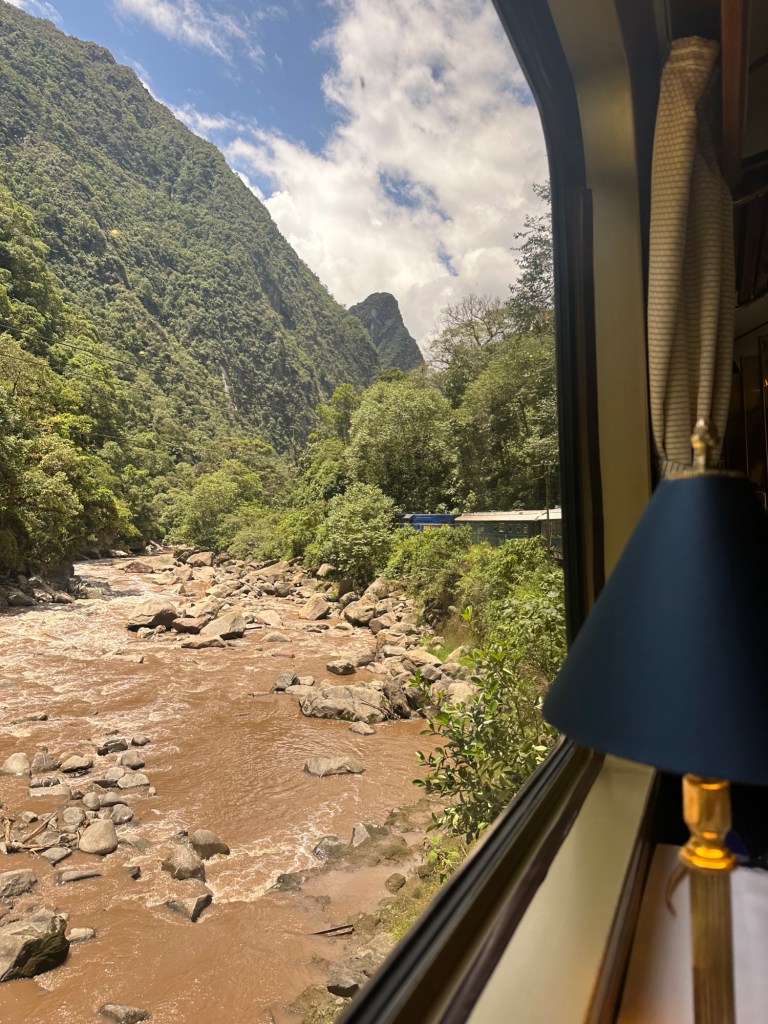
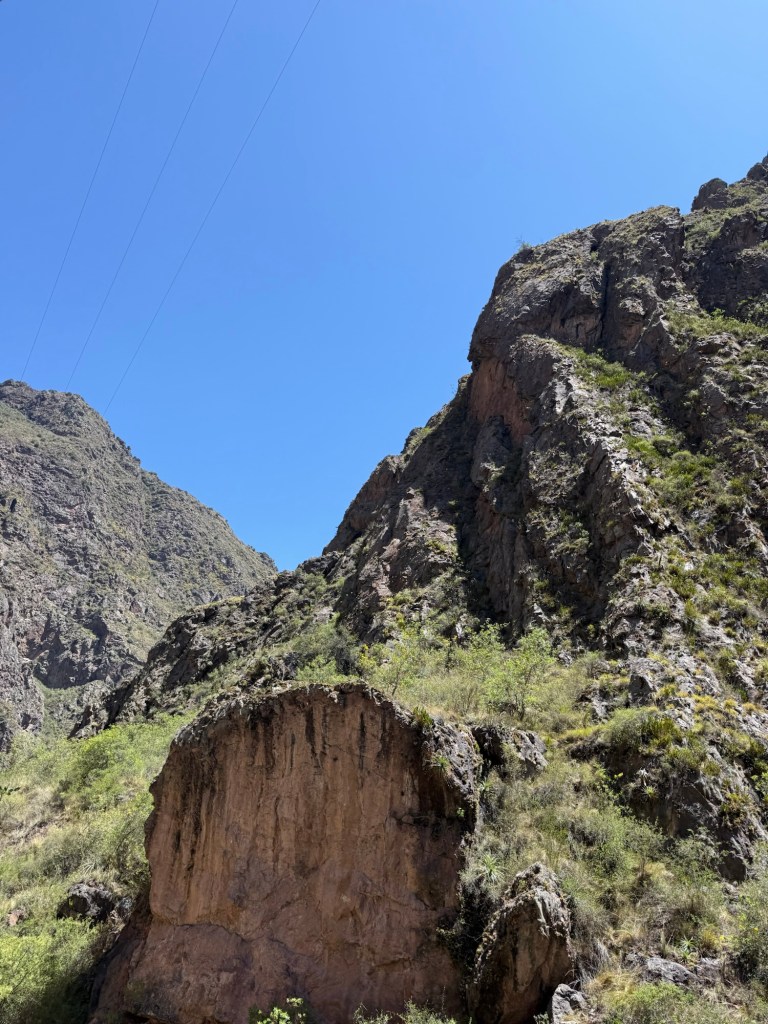
Hopefully, the photos do it justice.
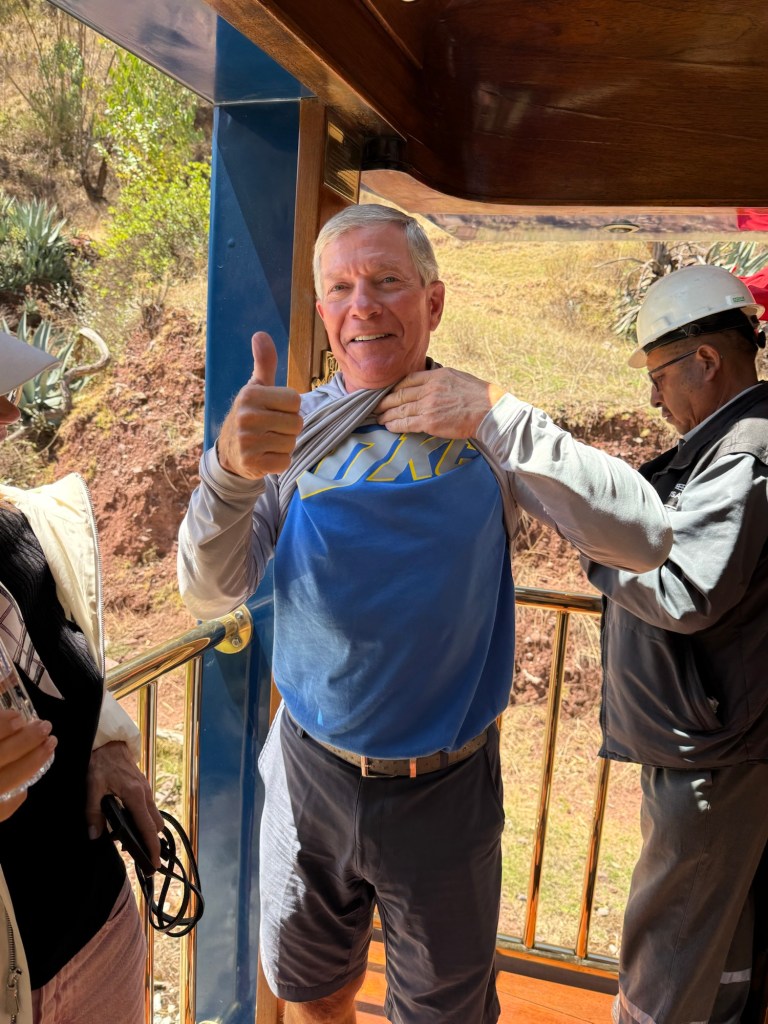
We met a group at the party bar at the back of the train from the Scottsdale area and began chatting with Carlin. His kids went to the UW and live in Wallingford. Of course he knew about Dick’s and we were thrilled to meet each other. Carlin was the team physician for the OKC Thunder before being promoted to the top NBA physician. After expressing our sadness about OKC “stealing the Sonics,” we agreed it was really just Howard Schultz’s fault and had a blast. We hope to meet up again in Seattle with Carlin, his wife Debby and their family.
At the end of train ride we exited through the very touristy town of Agua Caliente (“Hot Springs”) where we boarded buses to climb the winding, narrow, no-guard-rail, dirt road up to the entrance of Machu Picchu. At this point you just have to let go of your fears and just enjoy the edge-of-the-road views from the crazy switchbacks.
Getting from the train to the buses to the entrance of Machu Picchu is all done on a very tight schedule and we couldn’t have done it without Marco looking after us.
After showing our passports to prove that our names matched the reservations, it was time to enter the archelogical area. There are several routes (or “circuits”) through the ruins, and we always assumed we would take the easiest route along the bottom. But Marco thought we had come too far to do that so he asked for and got tickets to “circuit 2”, plus special permission to take detours as needed through some of the restricted parts of the trail to make it more manageable for Jim.
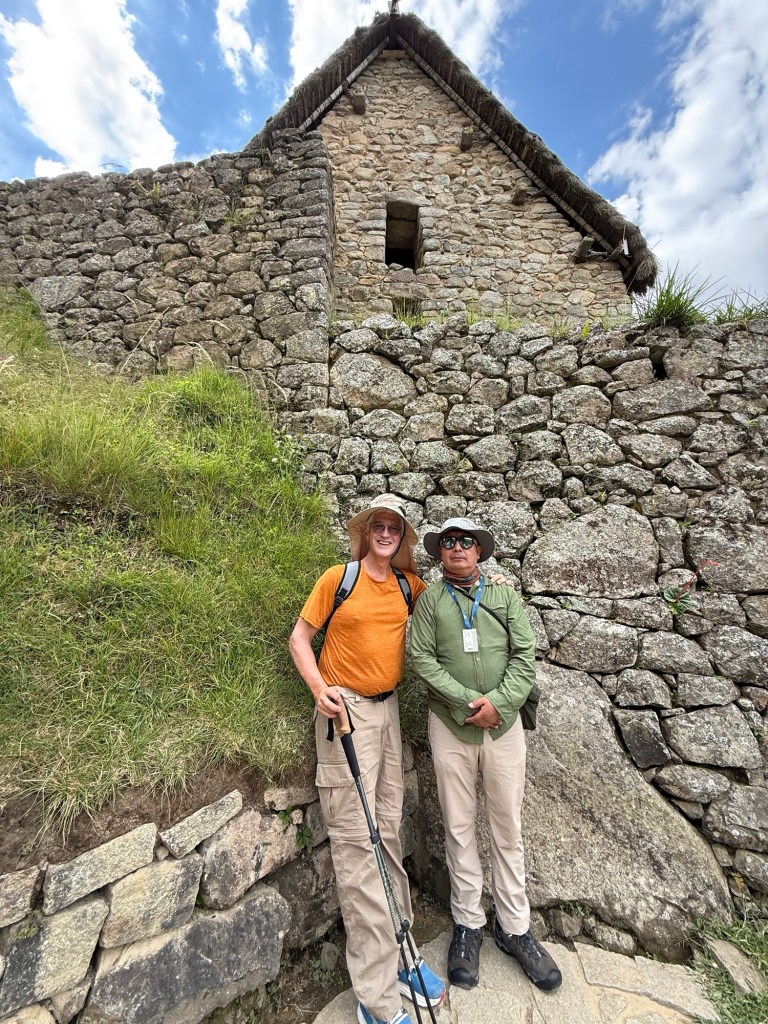
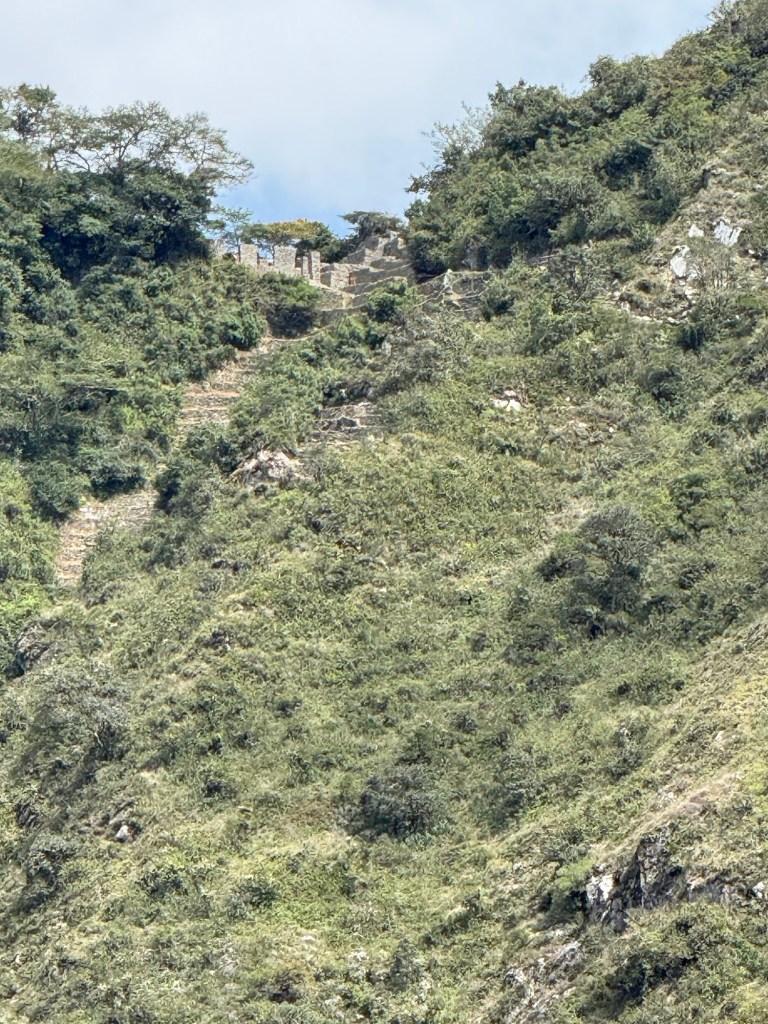
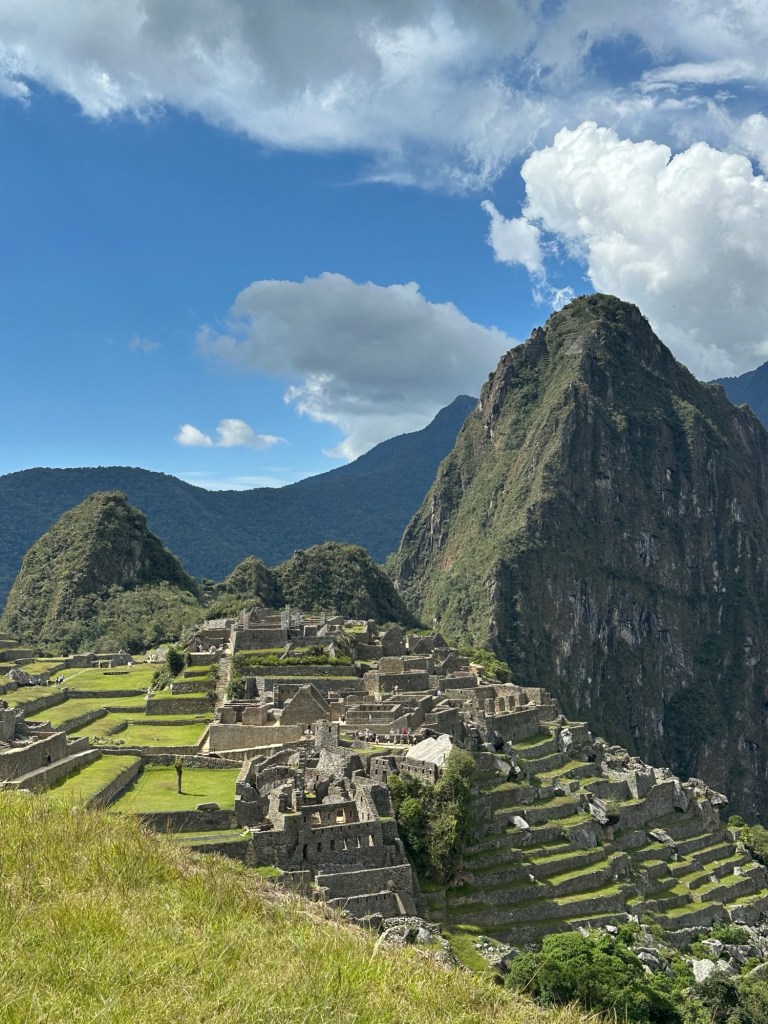
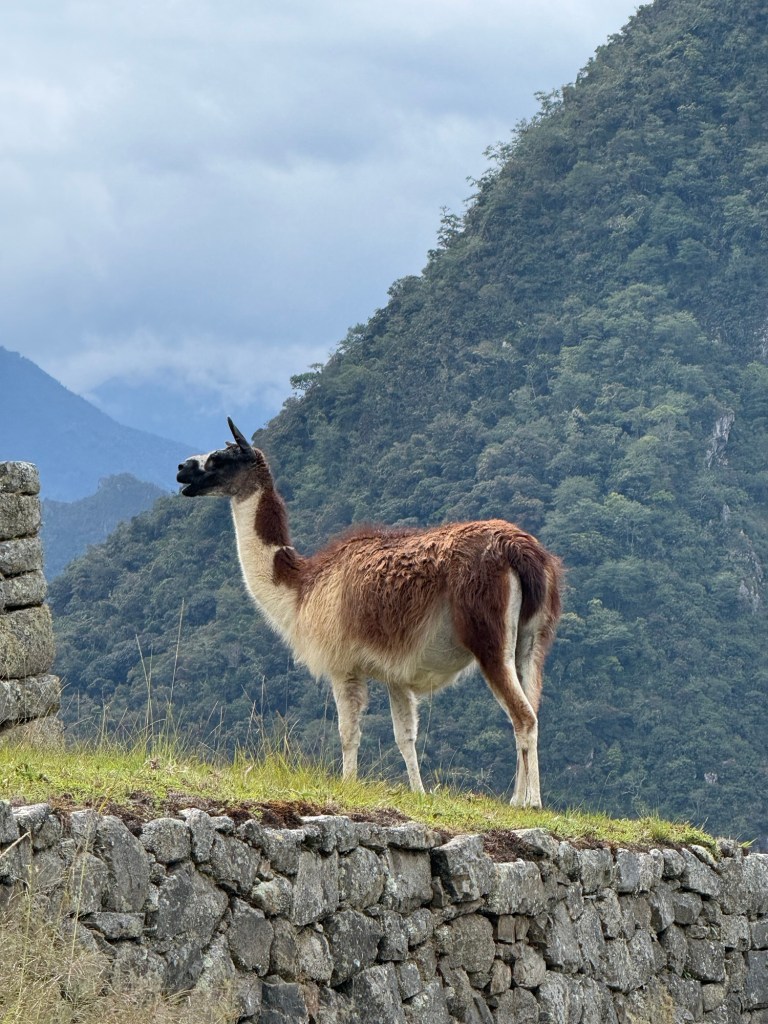
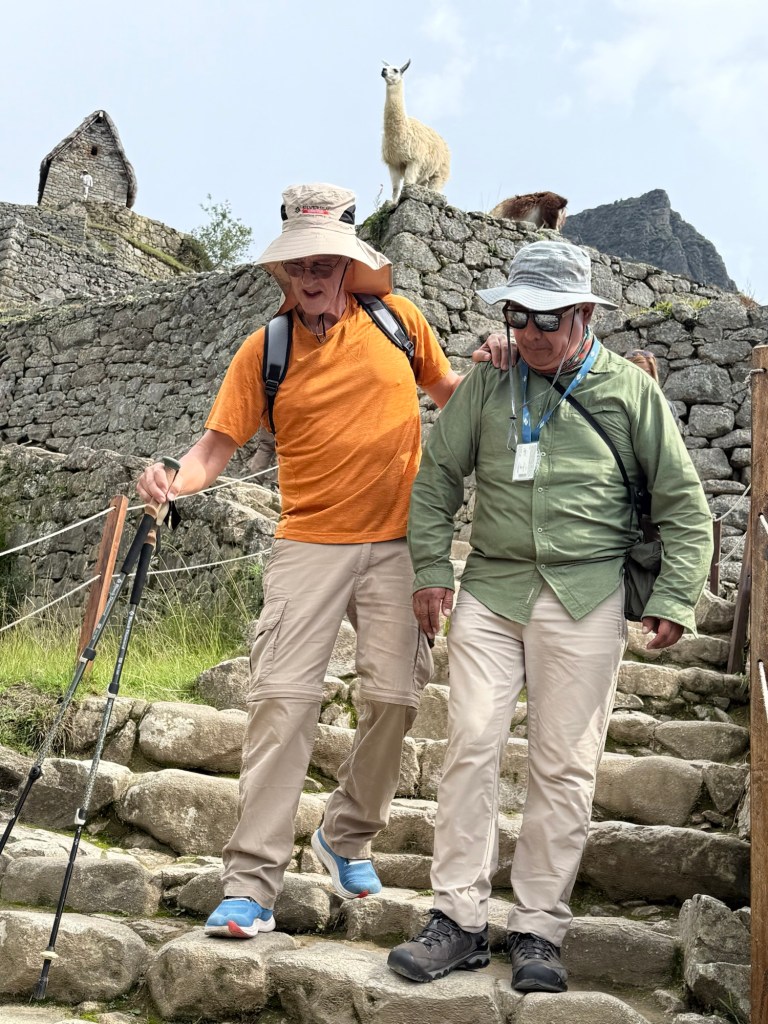
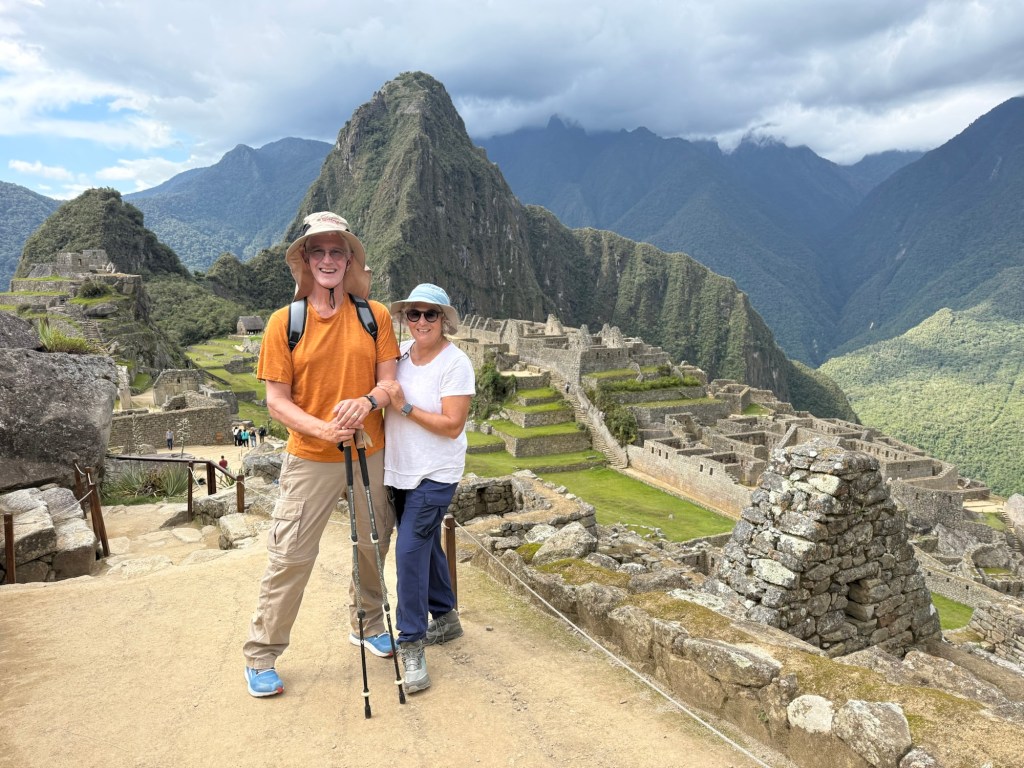
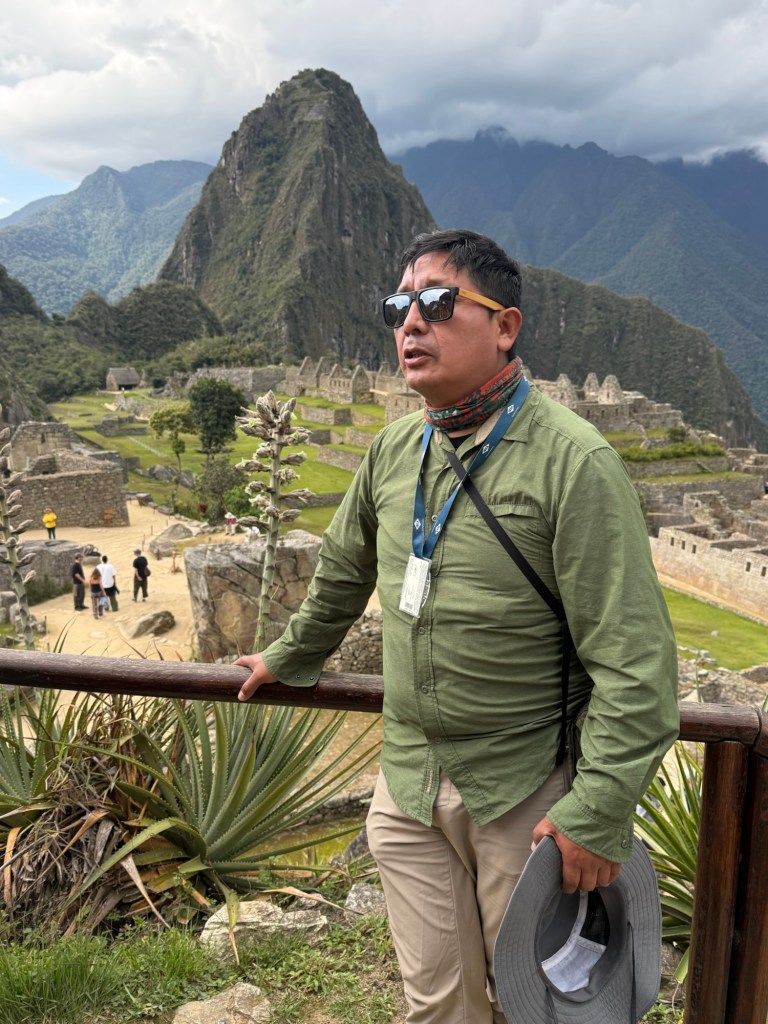
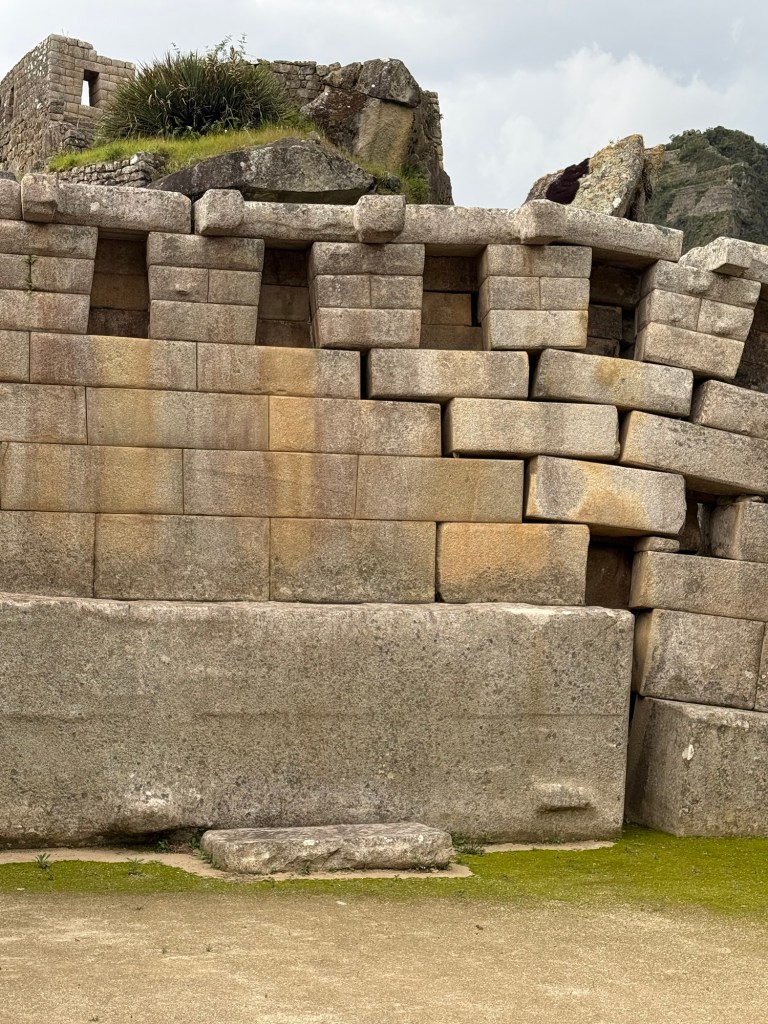
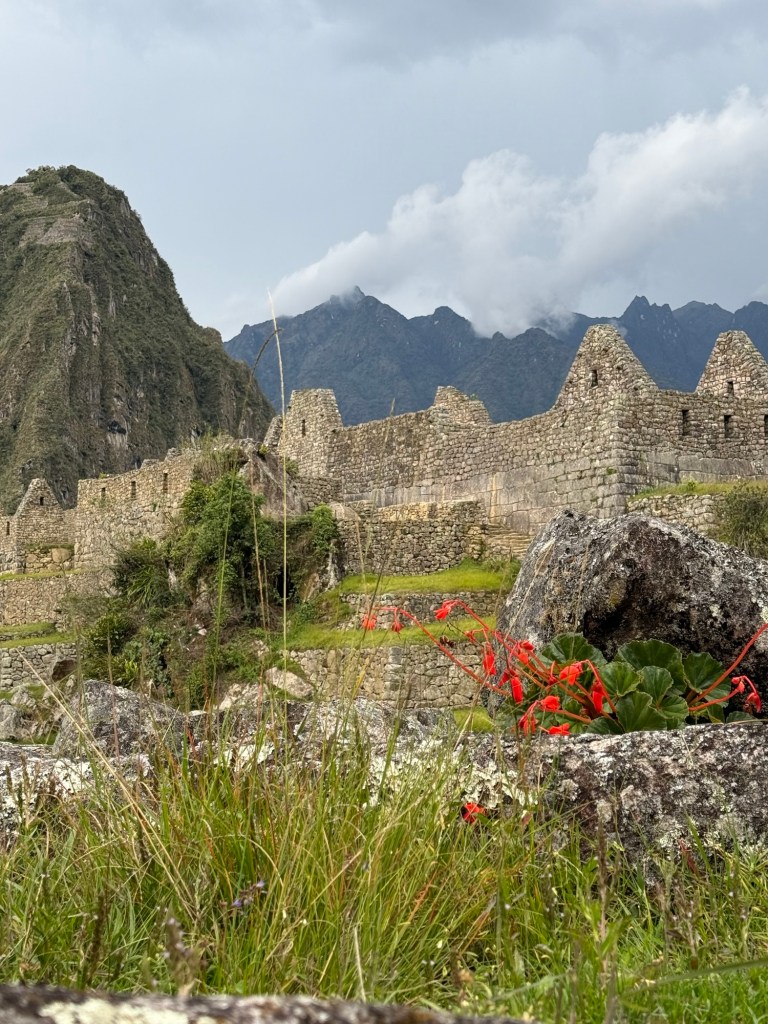
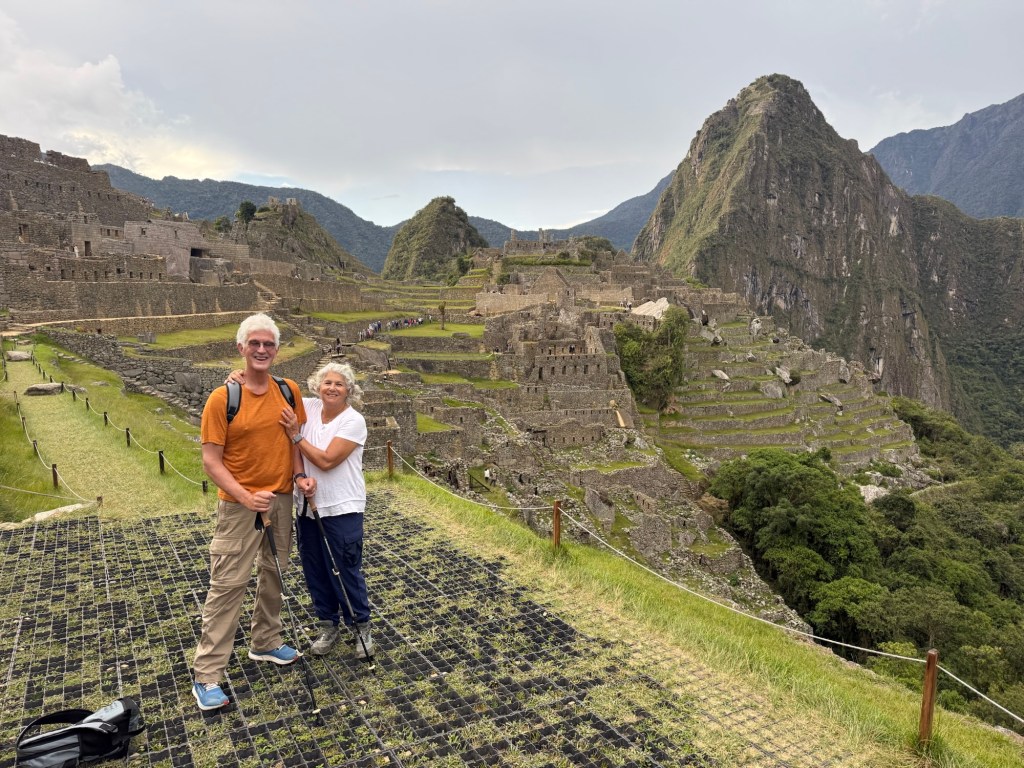
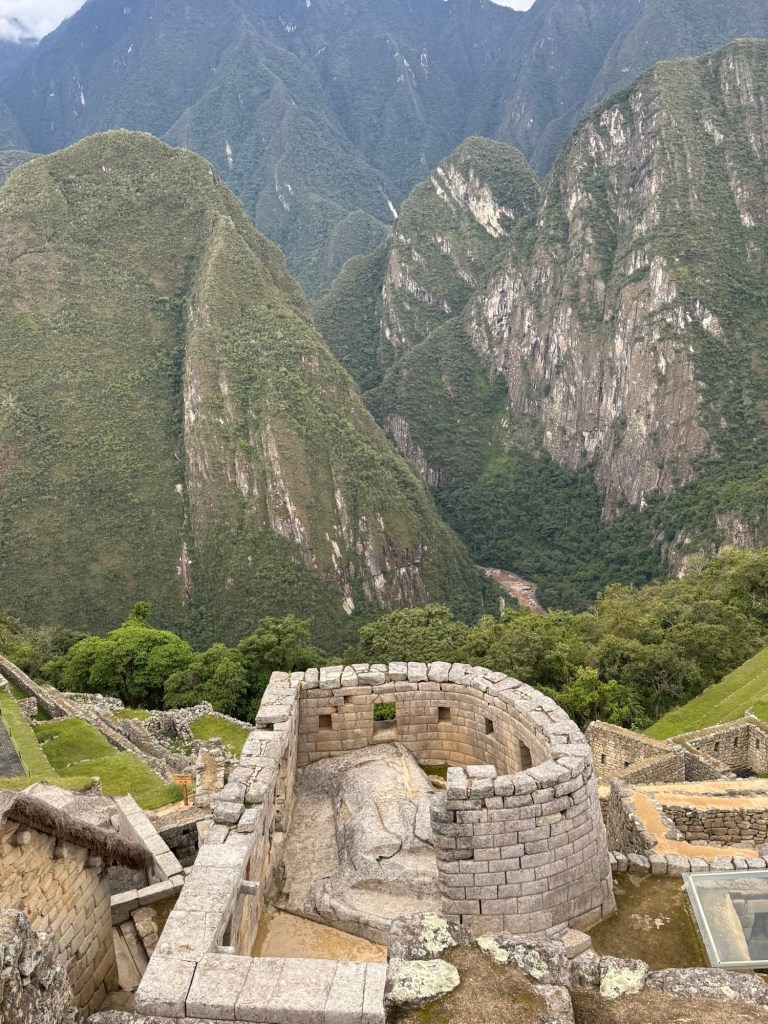
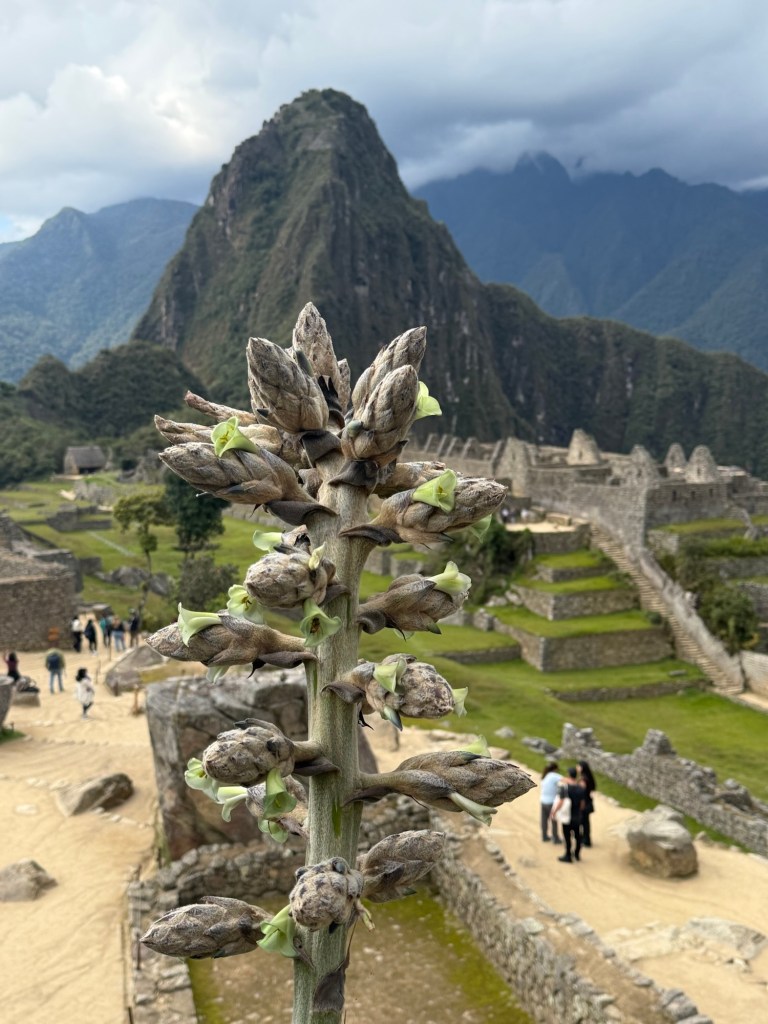
Circuit 2 begins with a LOT of stairs that take you to the “flatter areas” that overlook the ruins. Jim was determined to reach the overlook and with Marco and my help he climbed higher and higher until we reached the first overlook and the ones beyond that. There was rain, lightning and thunder in the nearby mountains, but it never rained on us and the ruins and surrounding mountains were very dramatic.
In some ways coming down was more difficult because Jim’s legs were tired and there were no railings on the long stone stairways, but, as I titled this blog: With the Right Team You Can Accomplish Anything! And we had the right team. We completed most of Circuit 2, then used our special permission to take a shortcut down a long stone stairway to reach the exit of Circuit 3 instead of walking all of the lower part of Circuit 2. After seeing almost everything we made it back to the bus on time to catch the four hour train back to Cusco.
The Time of Great Adventure and Discovery:
In preparation for this part of the trip I’ve been reading Turn Right at Machu Picchu by Mark Adams. He teamed with super guide and renowned explorer, John Leviers, to follow in the footsteps of Hiram Bingham, who officially “discovered” Maccu Picchu in the early 1900’s. The story is very interesting. Hiram Bingham was a Yale Professor and the inspiration for the lead character in the “Indiana Jones” movies. But at the time there were many adventurers who were competing for the honor of climbing the highest peaks that had not yet been climbed or crossing the center of Antartica. That was also when National Geographic evolved from a scientific journal to a magazine for the masses under the leadership of a Gilbert Grosvenor, its young editor.
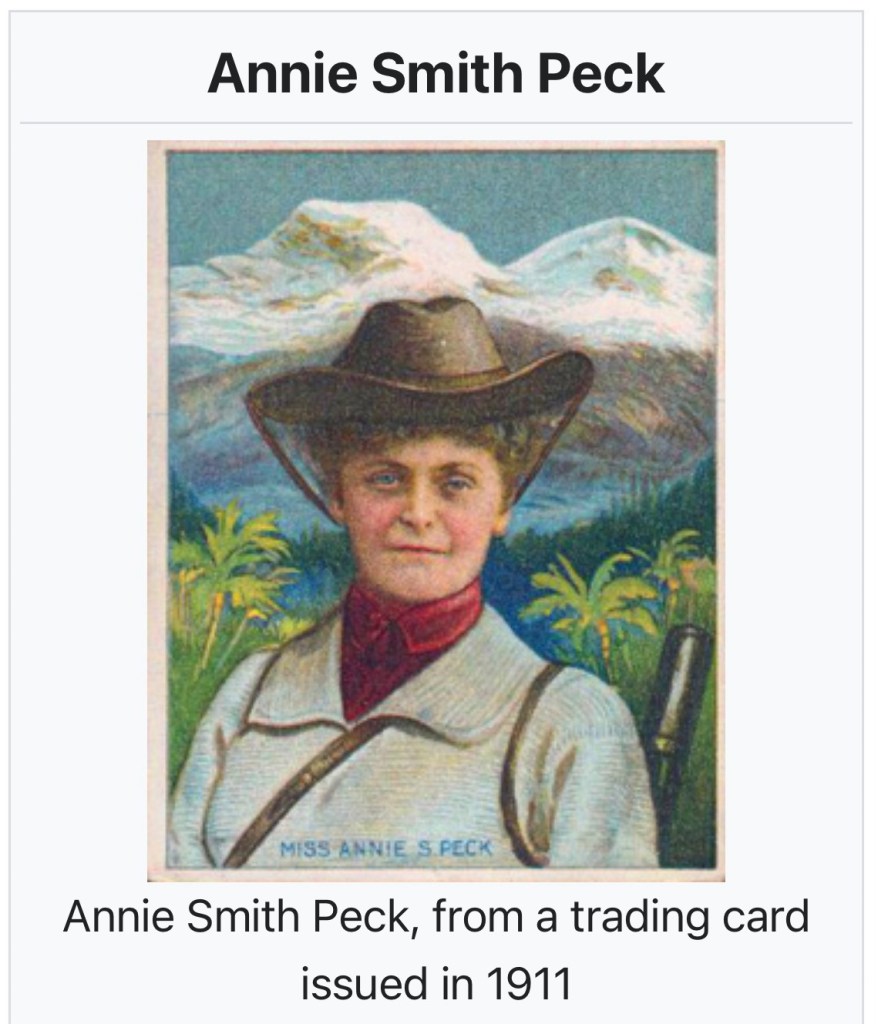
Through all of this an amazing American woman mountaineer and suffragette, Annie Peck, climbed Huasscaran in 1909, before Bingham. For a time most thought it was the highest peak, in South America. When she reached the summit she planted a flag saying “Give Women the Vote.” Bingham who was also intrigued by the idea of conquering a “virgin peak” had to look for something else. Peck publicly taunted Bingham in the papers and personally. She continued to climb and travel well into her 80’s. Why have I never heard of her?
Bingham descended from a family of missionaries that first lived in Hawaii. After growing up in Hawaii, Bingham left, graduated from Yale, became a professor there and married into a wealthy family. But Bingham wasn’t satisfied with that. He was driven to climb mountains and discover lost civilizations. His peers in the early 1900’s were in a race to find the last undiscovered ruins, to climb the highest peaks that had not yet been climbed, and to thereby earn the immortality given explorers. But exploring costs a lot of money. Bingham created his Yale Peruvian Expedition plan in 1911. He needed to raise $12,000 to sail to Peru and hire the team. But raising the funds was just the first step for Bingham. He wanted to lead expeditions of discovery that succeeded before his competitors: the “right stuff” of heroes and adventurers. He measured and photographed methodically as he made his way along an unforgiving trail of mountains and valleys. Persistence was one of his greatest attributes.
When Bingham finally arrived at Machu Picchu, all of the ruins were covered by the jungle. But with the help of local tribes he uncovered the giant rocks comprising the Main Temple, took photographs and shared his discovery with the world. In future visits he helped clear and photograph Machu Piccu as the jungle was cleared away. An entire issue of National Geographic was dedicated to his explorations and photographs. Bingham finally succeeded in becoming a famous explorer. He went back two other times.
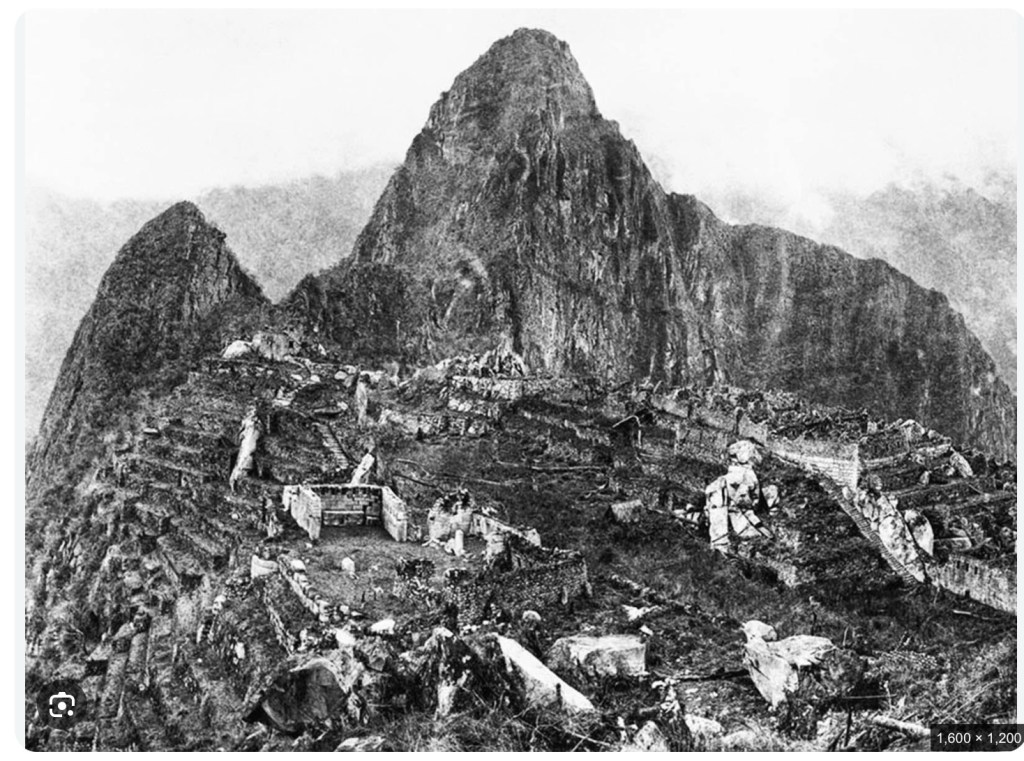
Machu Piccu is an architectural, engineering and archeoastronomy marvel. Ancient people believed in the sacred power of the mountains, rivers, lakes, the sun, the moon and stars and paraphrasing Ghost Busters, Machu Picchu is spiritual central.
Mark Adams says in his book, “the Incas revered two peaks above all others . . . Ausangate which stands above Cusco and it’s glaciers that feed the Urubamba river surrounding Machu Picchu and the other is Salcantay, which overlooks Machu Picchu.” The archeology, the direction of the windows and ceremonial areas all reflect the sun in different seasons and the southern cross. This combined with the Inca worship of the stars and the Milky Way make it remarkable. It truly would be amazing to be there on a clear night.
Of course it is impossible to absorb all of Machu Picchu in one, two hour visit.
Retracing our route we made our way back to the train station and boarded the regular train (which was running late) for the four-hour journey back to Cusco. Ounce again Caesar met us and took us back to the hotel, where we showered and slept very soundly.
The Salt Mines and the Sacred Valley:
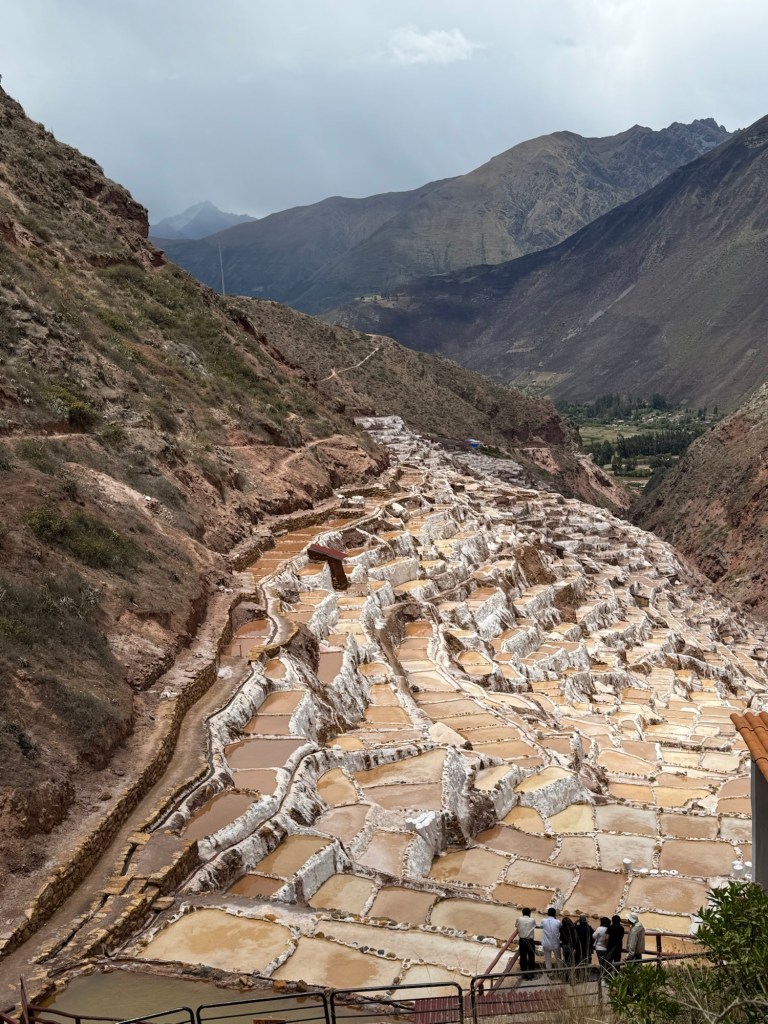
For our last day in Cusco, Marco and Cesar picked us up for another wonderful experience at Marasal, the 3,500 year salt evaporation ponds in the Sacred Valley. The locals there continue to make salt by diverting mountain salty water to evaporate in elaborate, irrigated pools during the dry season. Although this ancient process is much more expensive than modern salt manufacturing that use seawater in coastal areas, the tourist revenue from people wanting to see how “mountain salt” is made is enough to keep this ancient operation going.
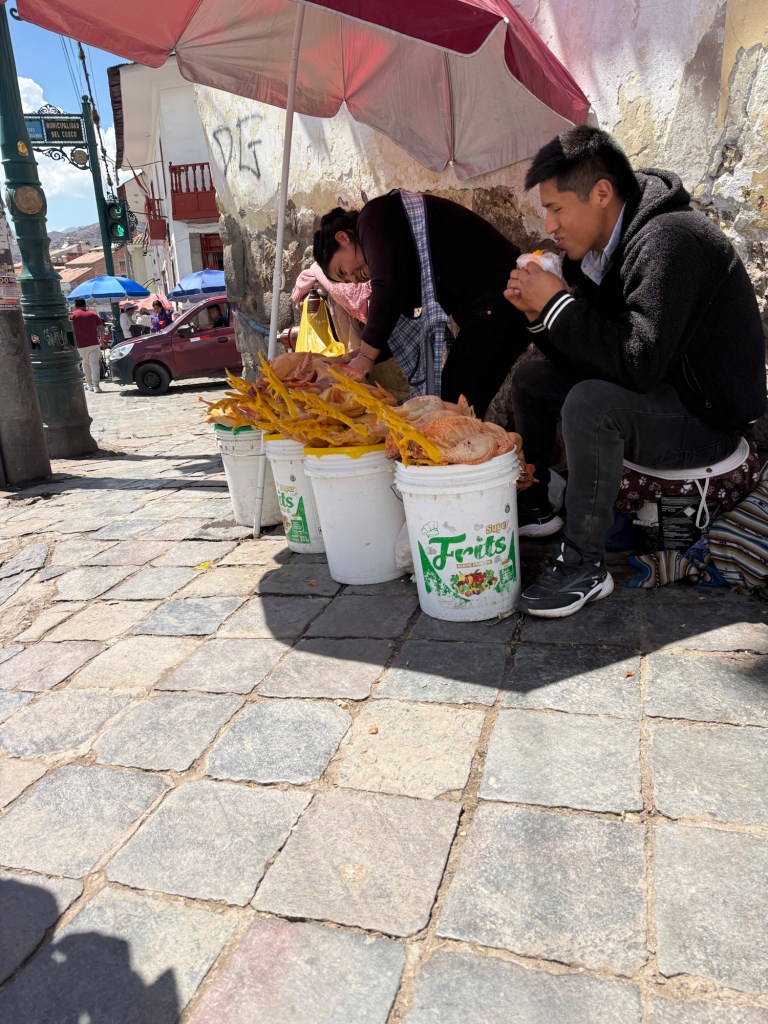
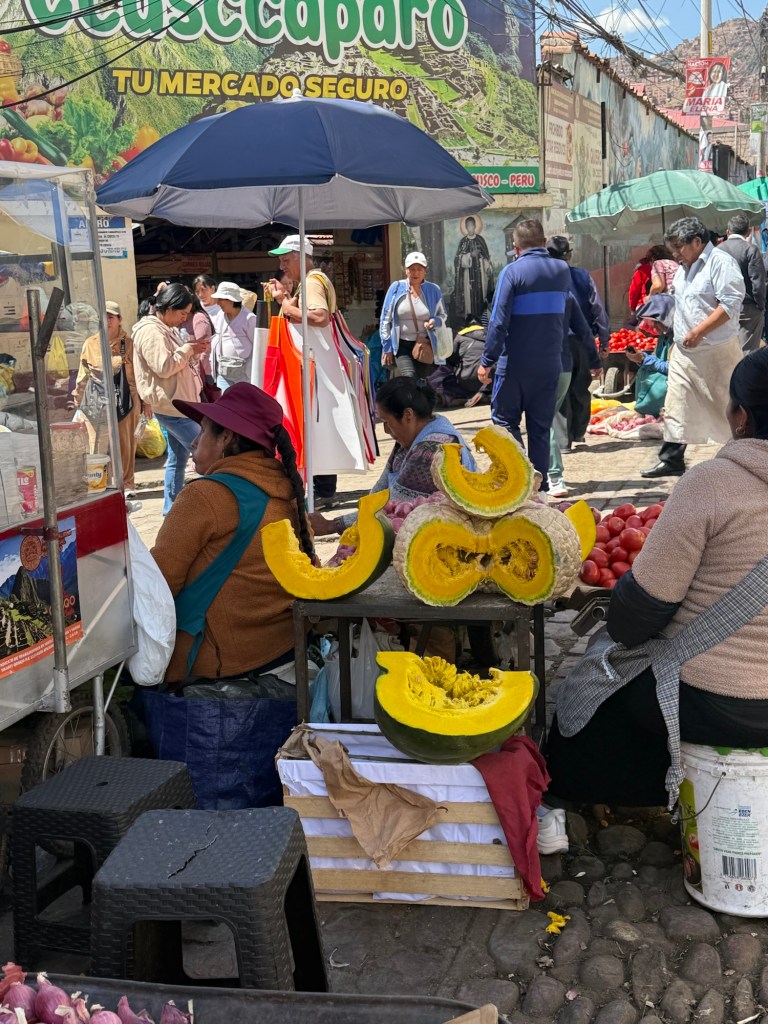
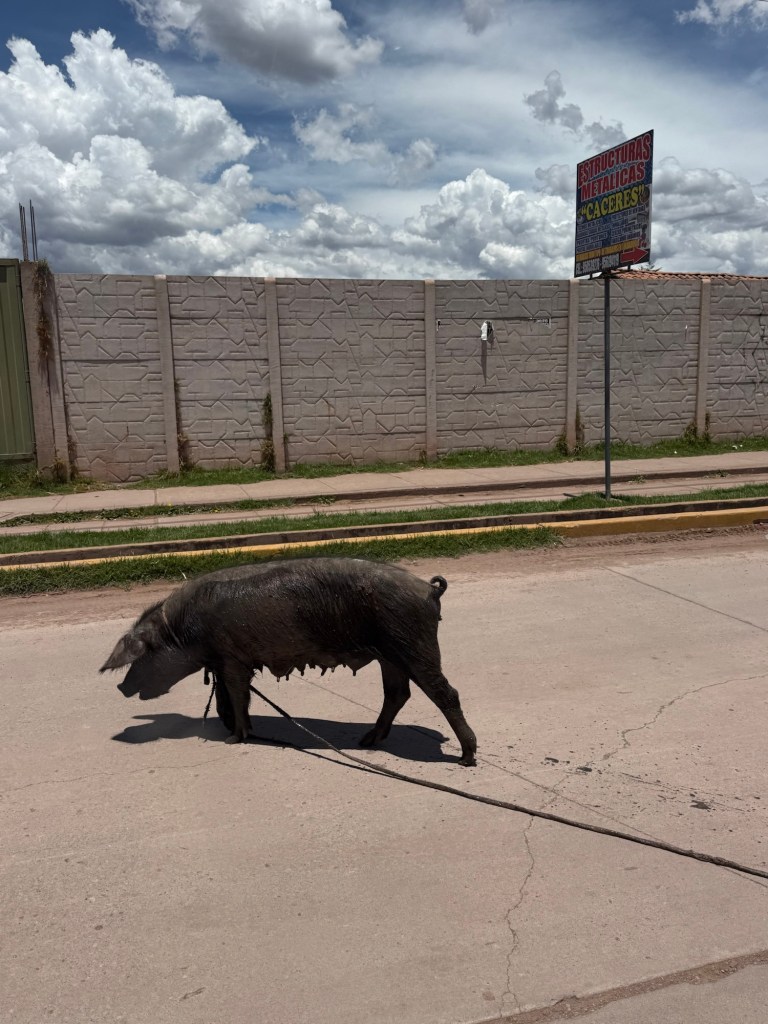
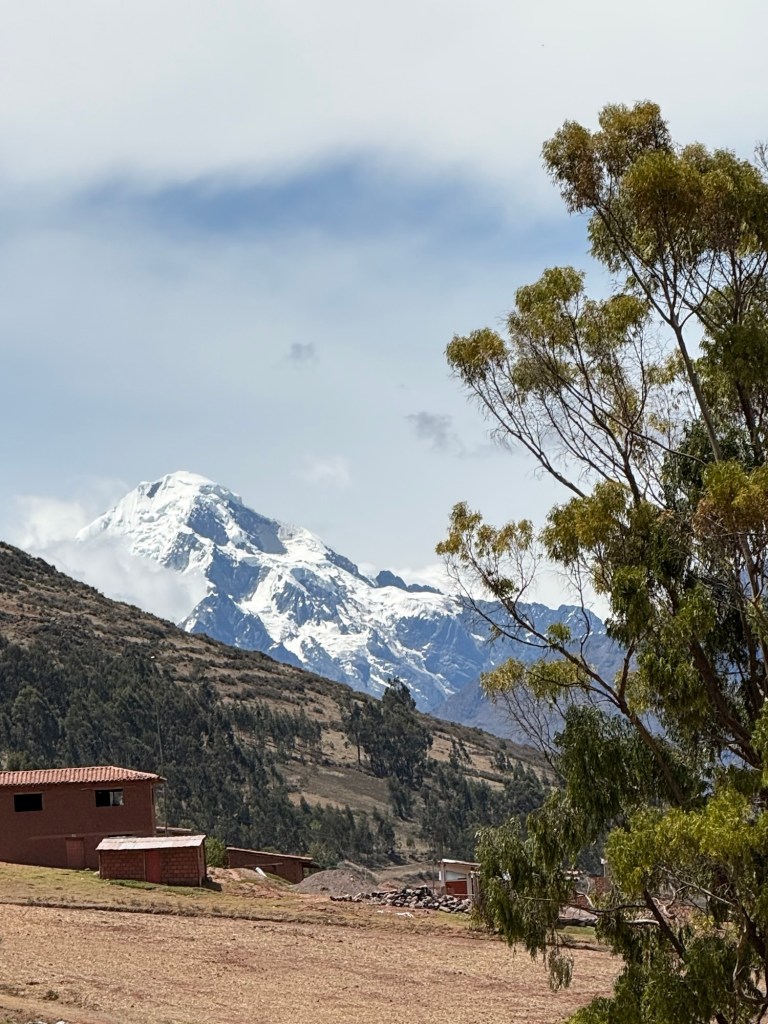
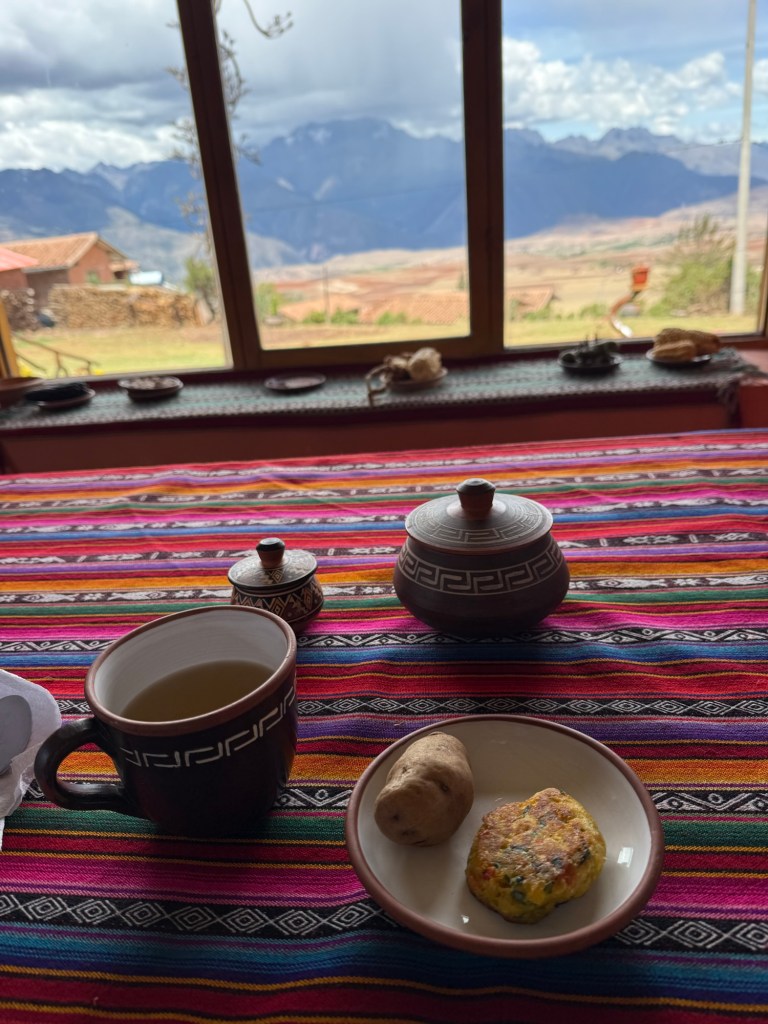
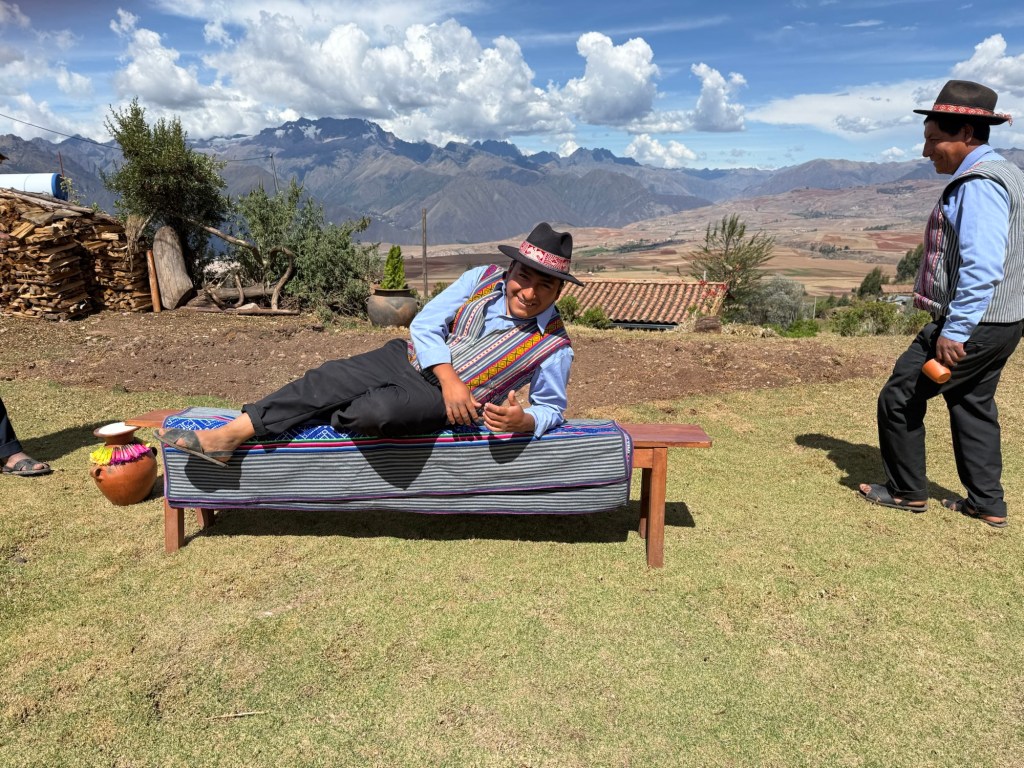
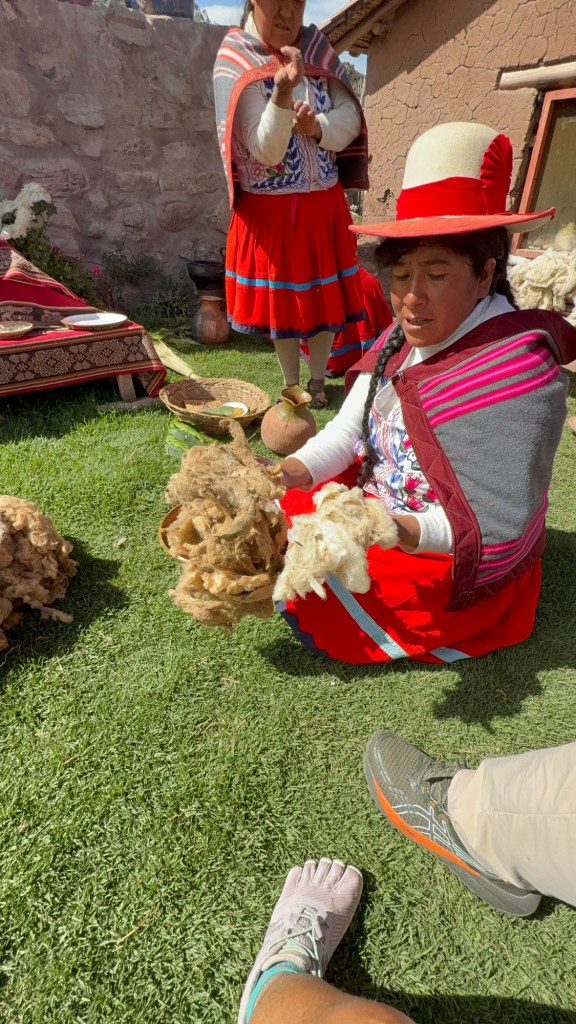
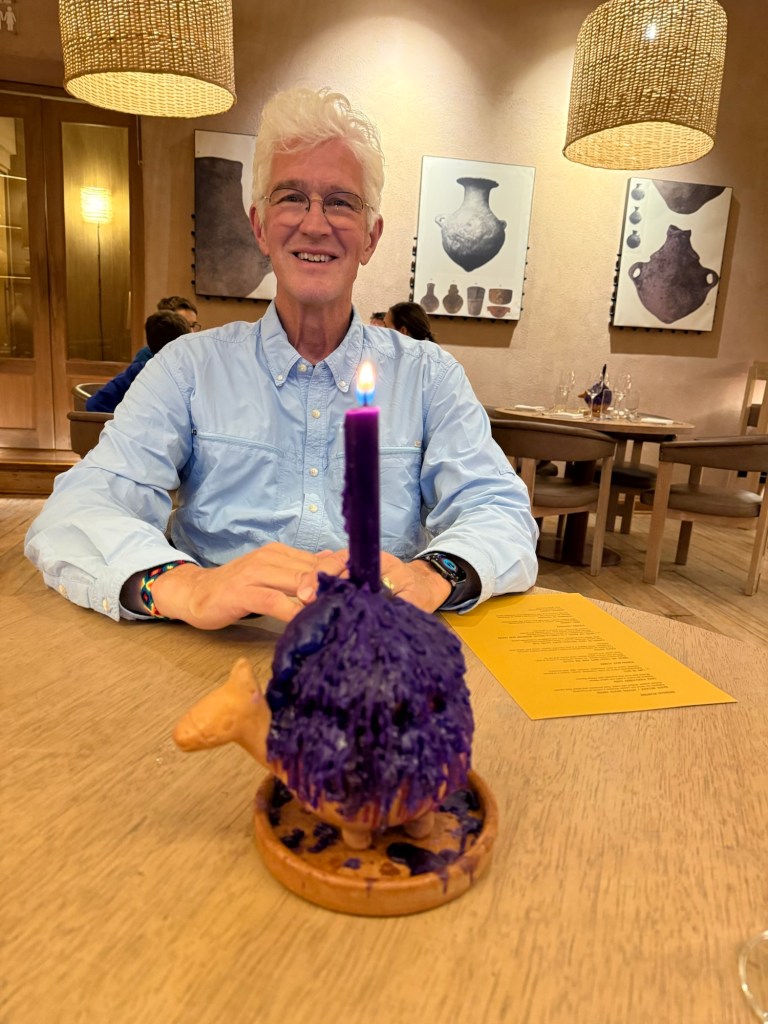
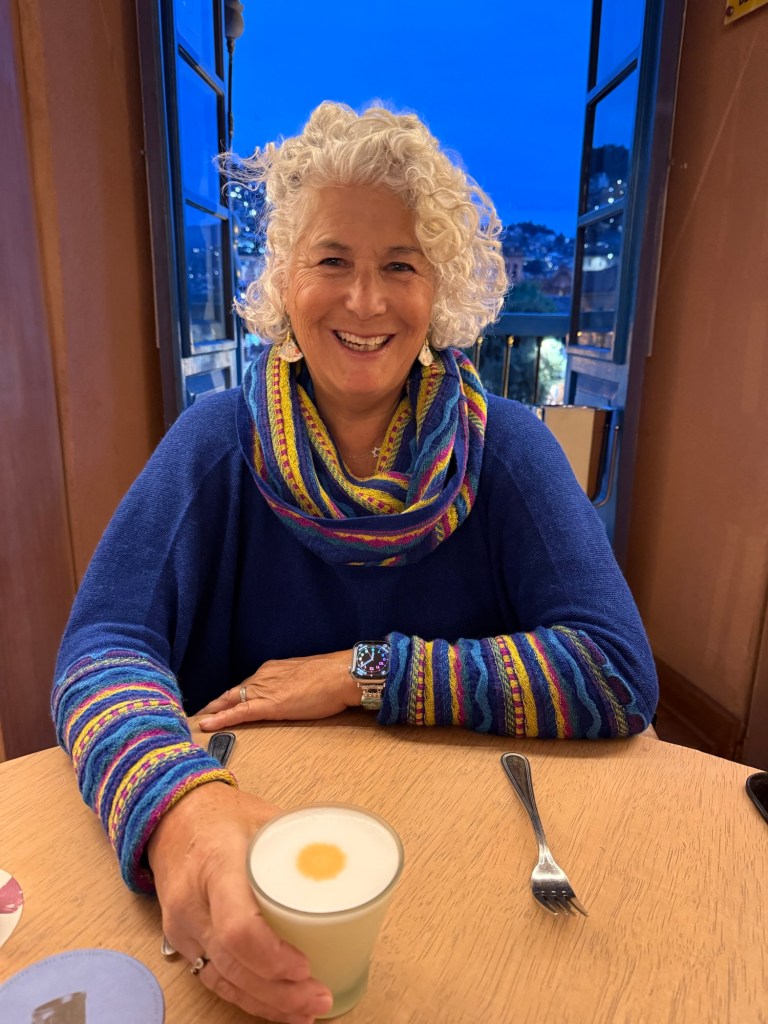
After that, we headed to an authentic Peruvian lunch in the home of local tribespeople where we learned the old ways of farming in the Sacred Valley and creating beautiful garments and fabrics from sheep’s wool. Their simple home and property had spectacular views. The local soup and other food we ate was delicious. I tried my hand at some spinning thread from raw wool. The people who live here are very small in stature because it is an adaption to the high elevation (greater than 12,000’).
Elevation Issues:
Spending four days at elevation was definitely affecting my body. Despite our busy schedule and activity my blood vessels were expanding and making me feel bigger and heavier every day. I was never really hungry. It turns out this is a real thing. We got to chat with some woman from Norway who were doing similar and harder activities and although they are used to higher elevations they were also experiencing the same bloating issues.
When we ended our Cusco journey yesterday and descended to sea level my body truly began shedding liquids immediately. Today, I feel much more normal and lighter.
The Journey Home:
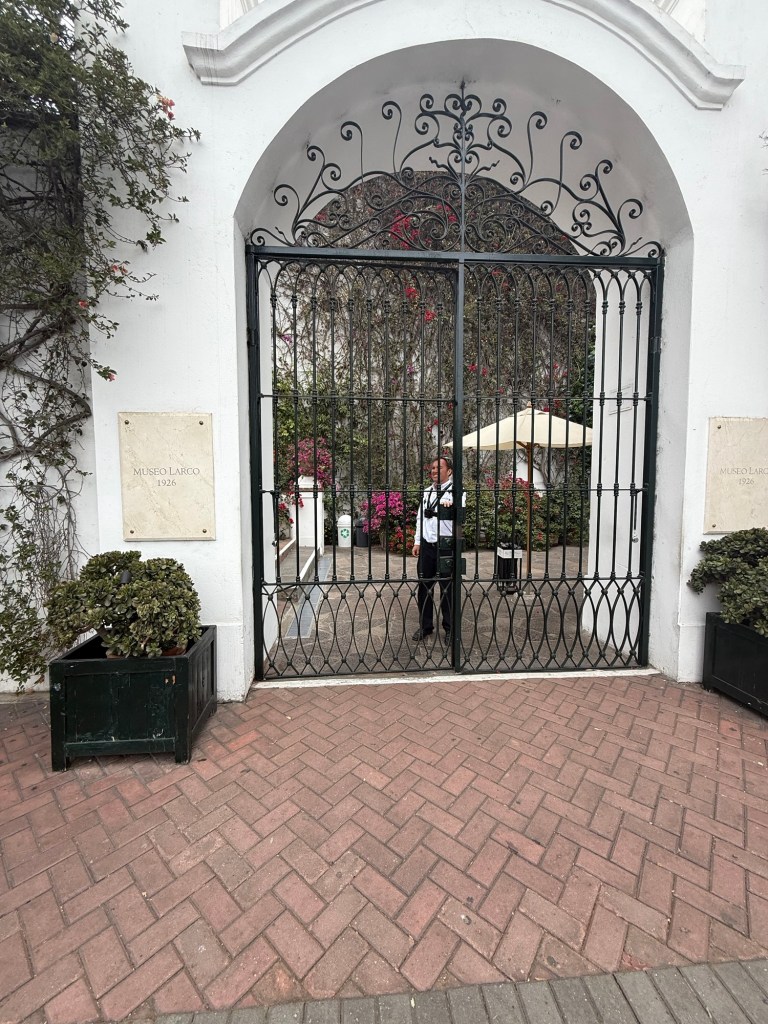
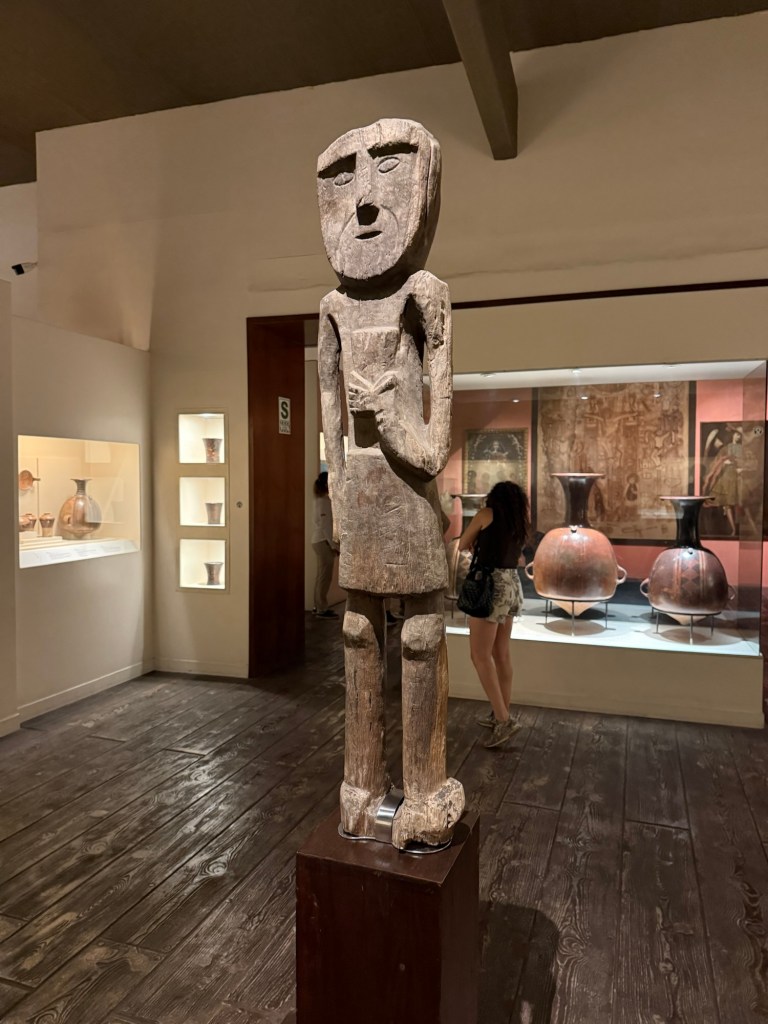
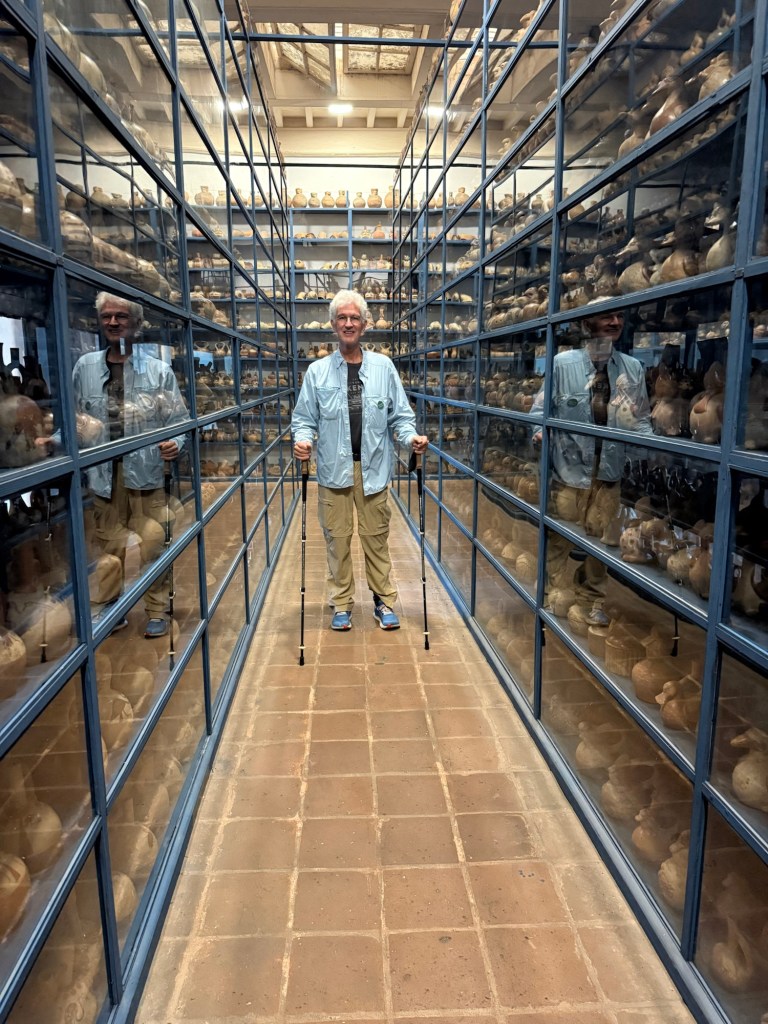
Originally, we were supposed to spend a night in Lima before going to Cusco, at the Intercontinental Hotel, which is on the coast in the southwest quarter of the city. Of course, that didn’t happen because of the crazy travel delays. However, we did get a chance to do that last night. After flying from Cusco to Lima in the morning, Mariela, our Lima travel spirit guide, took us to Museo Larco, a 100 year old museum of Inca and pre-Inca artifacts, where we also enjoyed a lovely garden and a delicious lunch. I read today that a typical El Niño creates a long humid and grey season for Lima and that was the case for us.
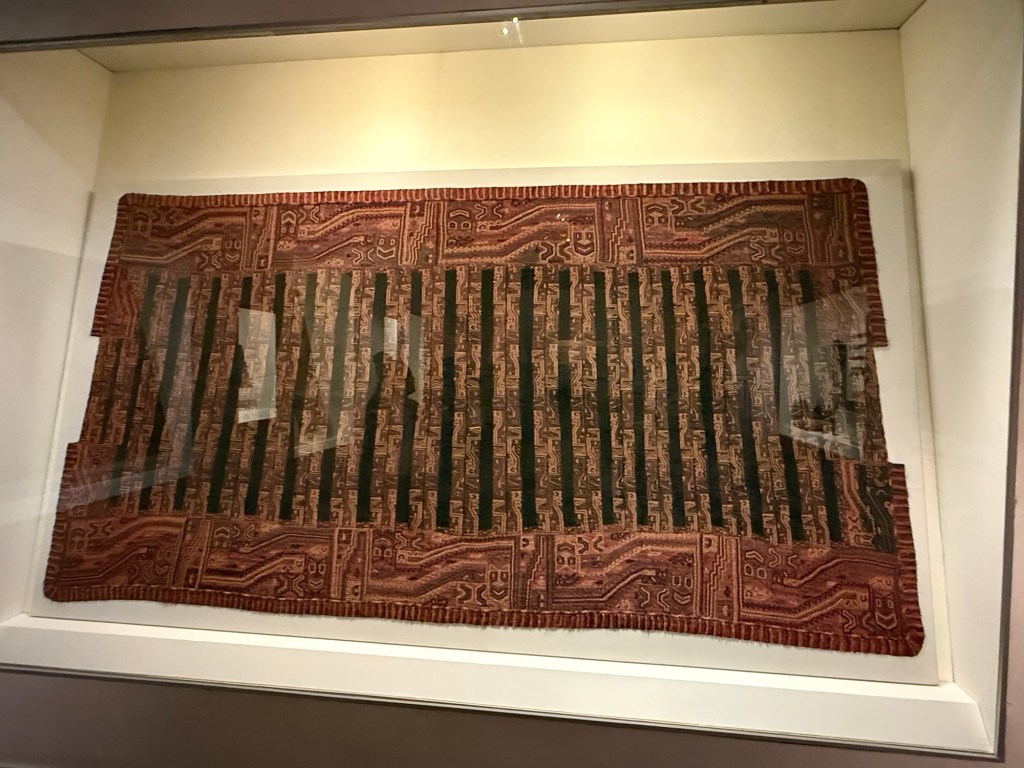
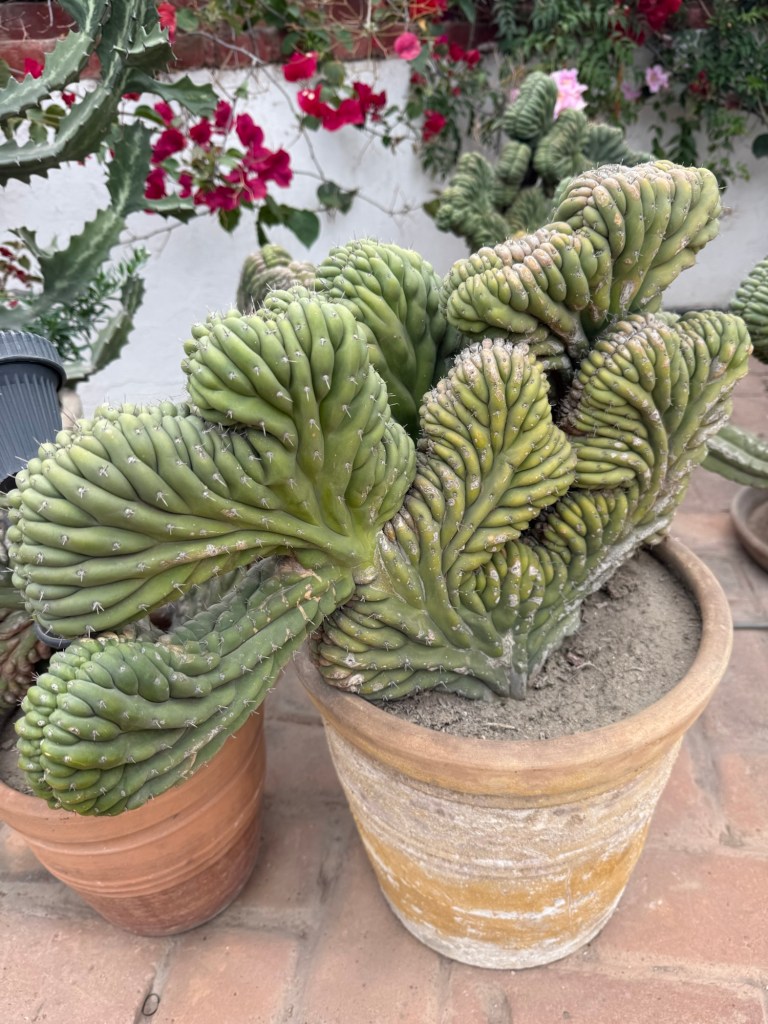
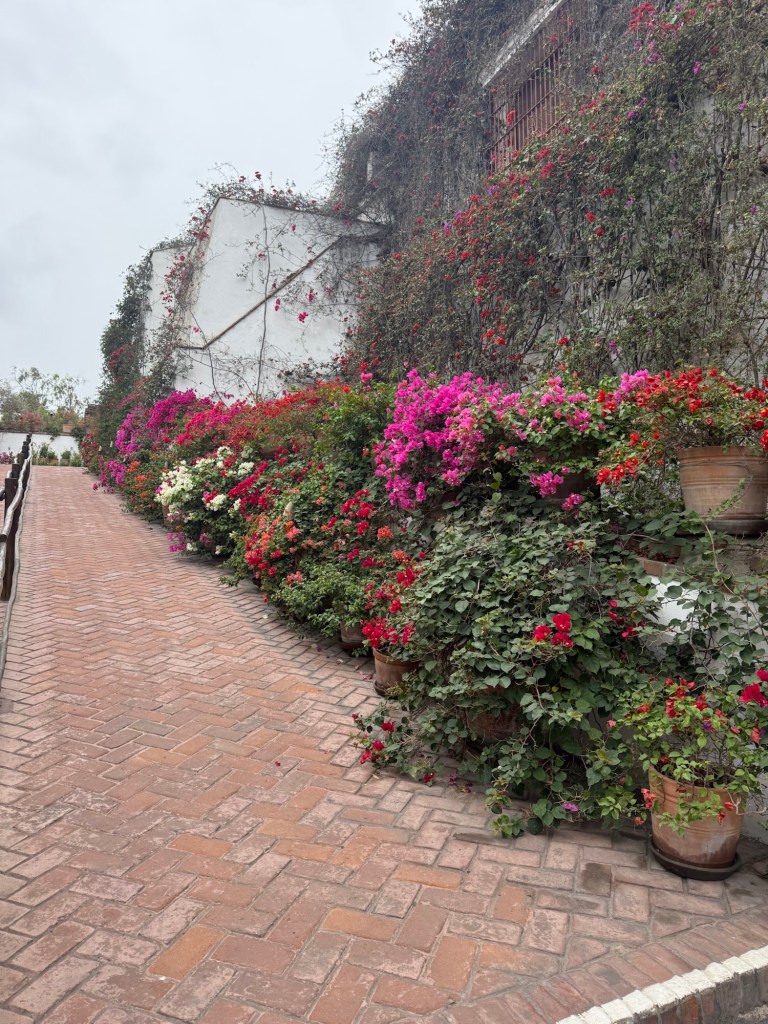
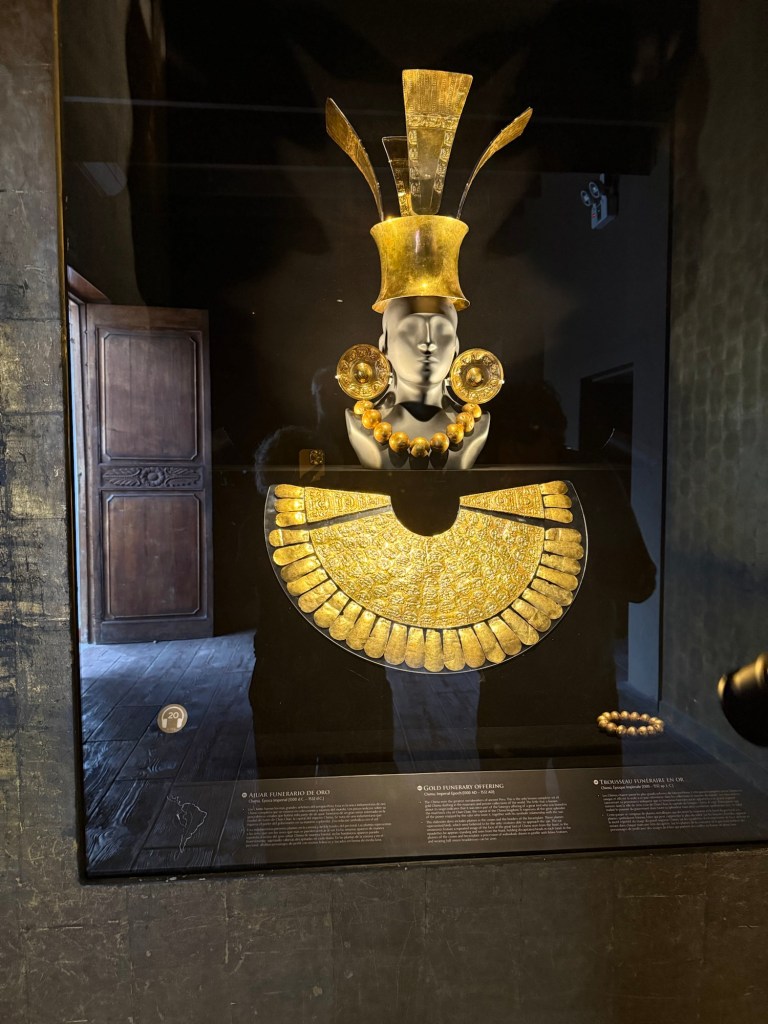
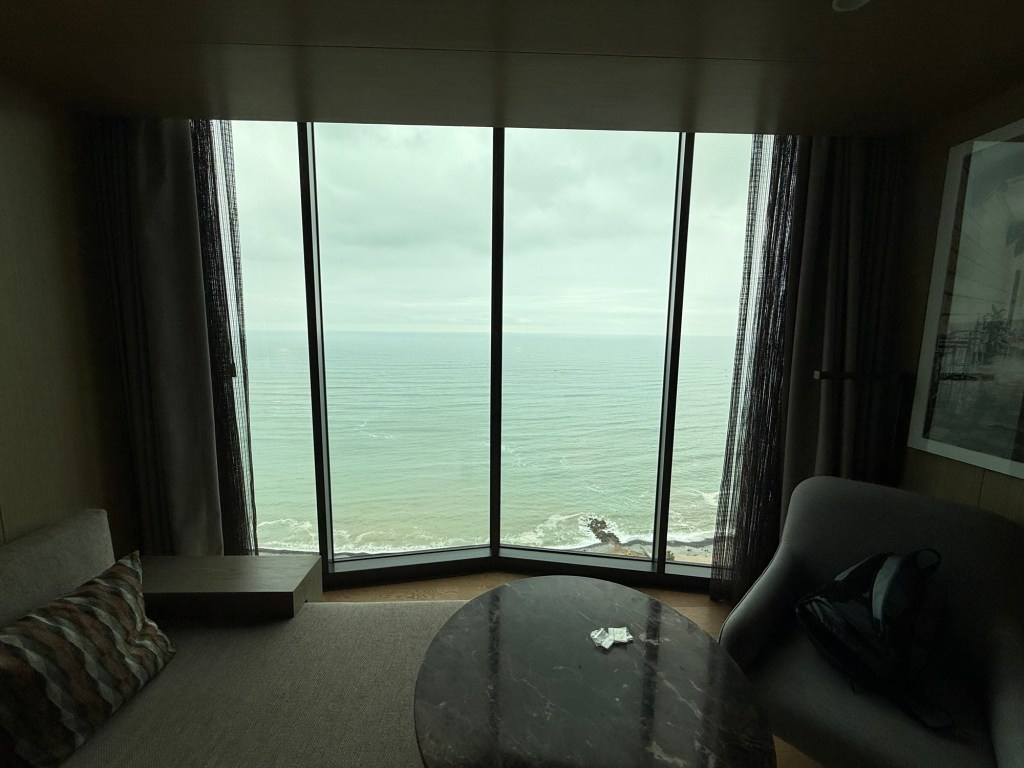
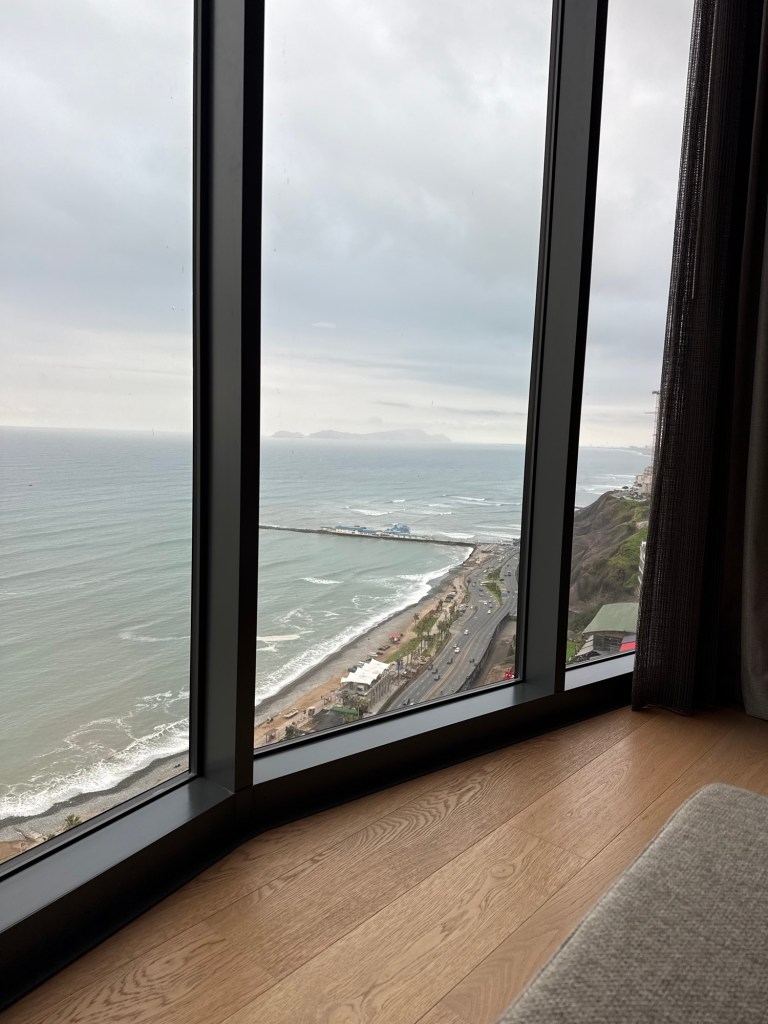
Afterwards, we were ready for some downtime. While Jim rested I explored the neighborhood and the hotel and procured two massages at the hotel spa. Boy did our bodies need that! We were both soothed and giddy after the massages and downtime. Although we planned to venture out for a late snack, we were too relaxed and so instead decided to just go to sleep.
This morning we awoke ready for the long flight home (9 hours from Lima to Los Angeles, then another 3 hours from there to Seattle).
Our adventure to South American really couldn’t have gone any better. Twenty-six days ago we left for a family business conference near LA, then visited my parents in San Francisco before continuing to Mexico City, the Galapagos and Machu Picchu. Crazy stuff happens when you travel like this, but as we learned from our cruising in the Galapagos, everything works out as long as you adapt as needed and enjoy the journey.
Thank you for reading this blog and joining us on our journey.
The Adventure Continues,
Fawn (writer & photographer) & Jim (editor)
“Standing in the present, on the highest part of the curve, you can look back and see the past, or forward and see the future”, M. Wylie Blanchet
TrueLoveAdventures.com & CurveOfTimePodcast.com

