TLA South America: “With the right team, you can accomplish anything”, including Machu Picchu

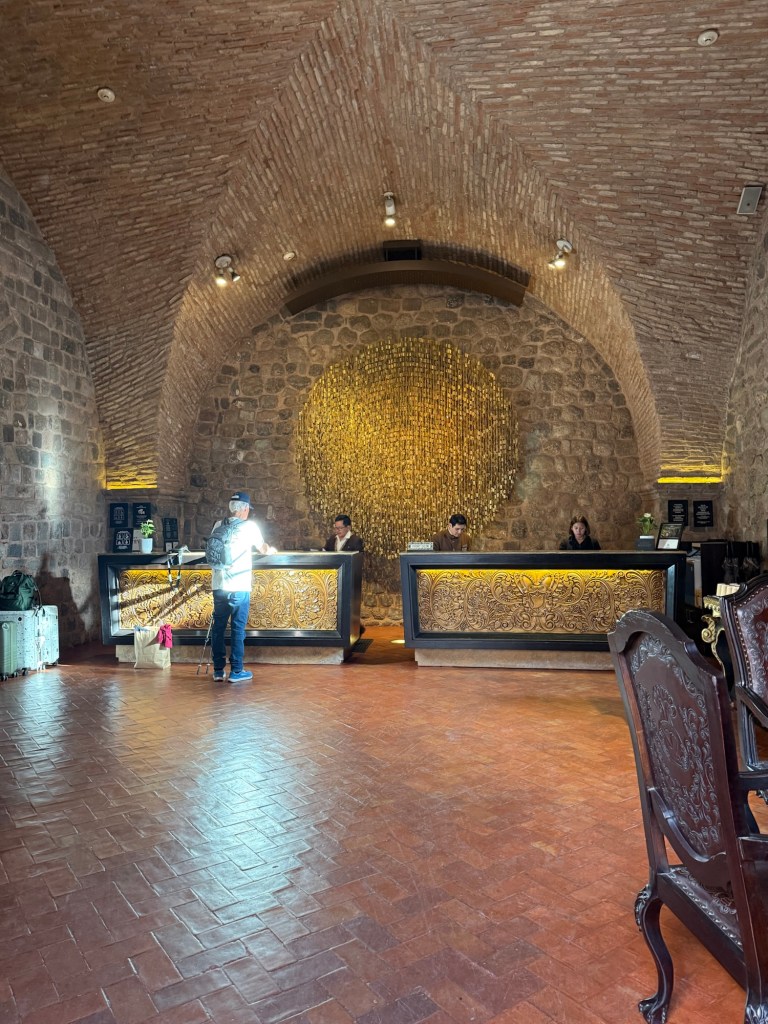
By the time we got to our hotel in Cusco we were pretty tired and very appreciative of the lovely Marriott located just off the central town square. A former convent, the entrance was dramatic and welcoming.

Our day began pretty early in Quito and once again, thanks to our airport spirit guides, we navigated all of the computer outages plaguing baggage check and got on and off our plane to Lima and our connection to Cusco with remarkable ease despite the airport chaos that surrounded us.

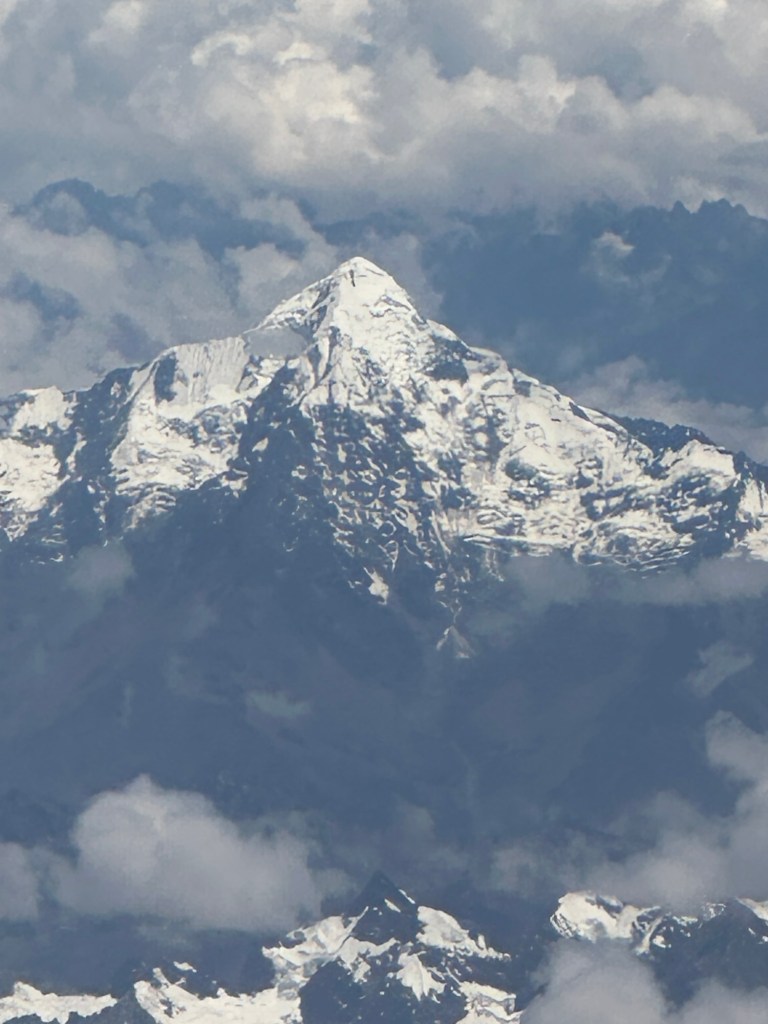
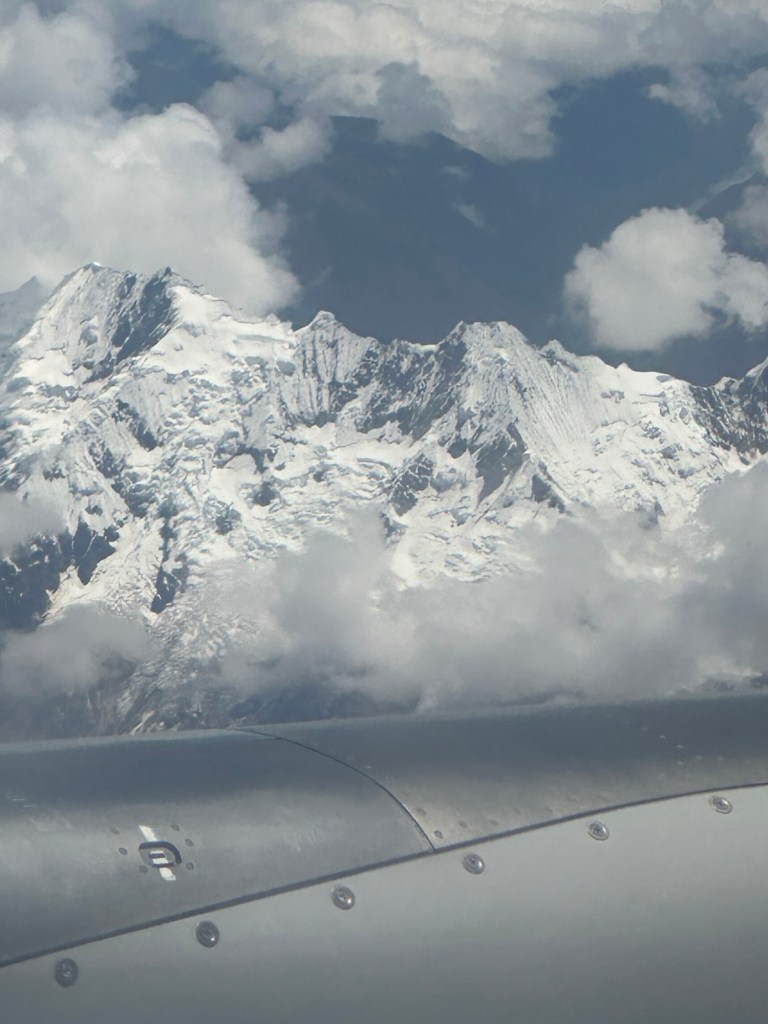
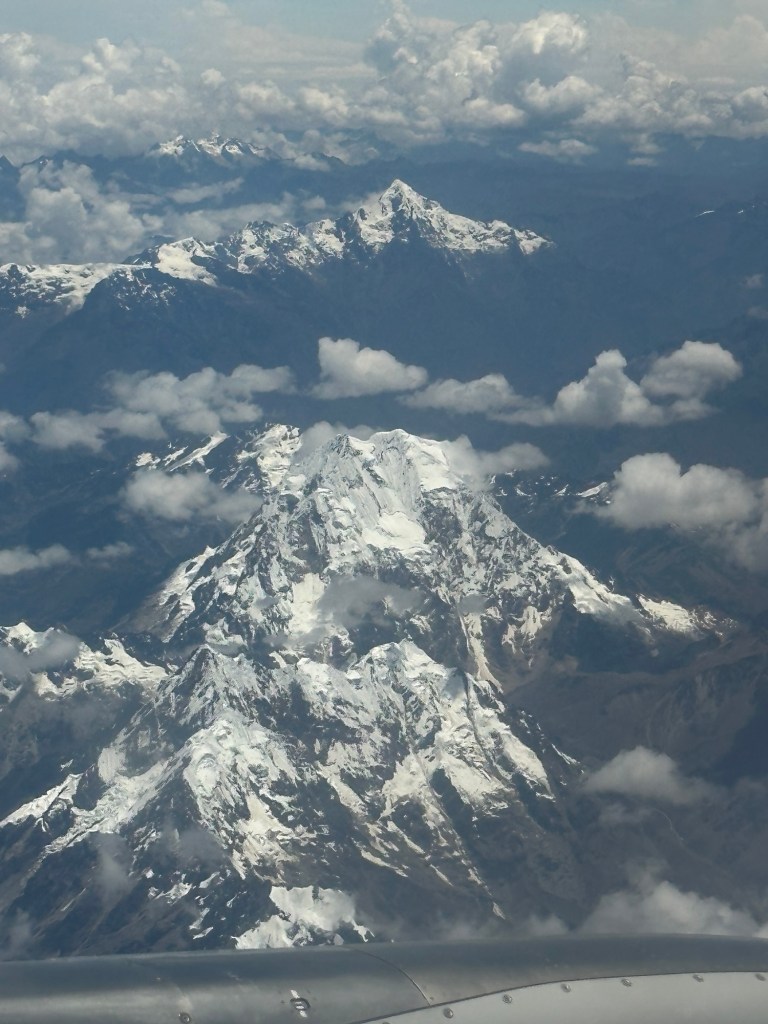
The flight offered beautiful views of the stunning mountains.
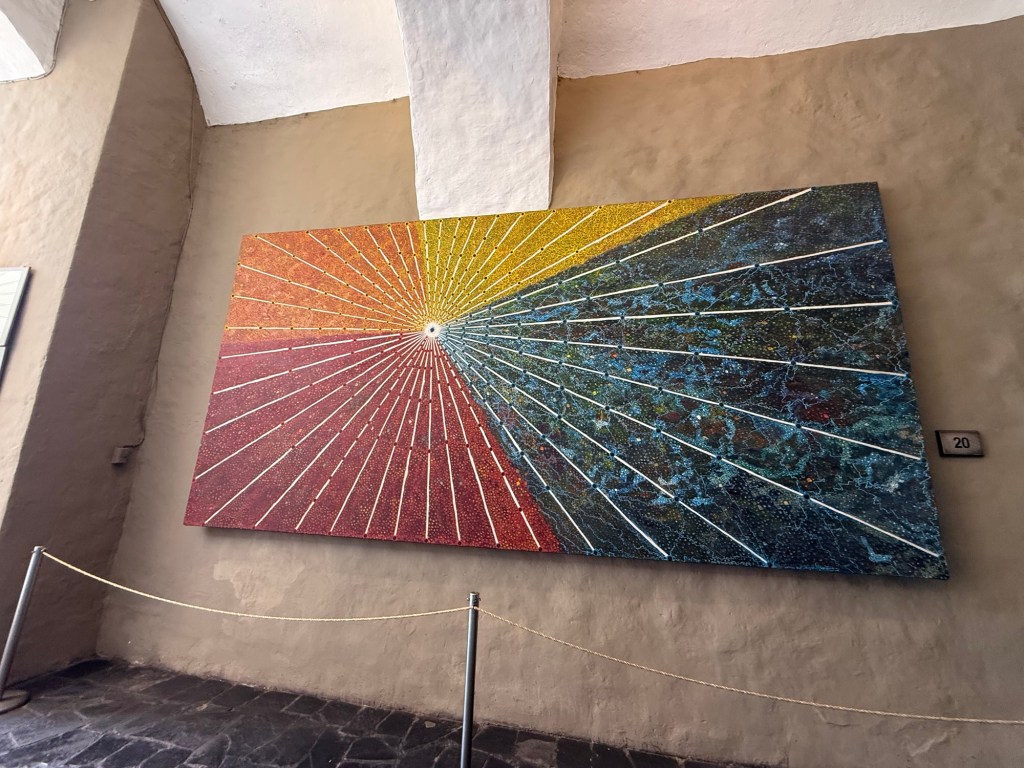
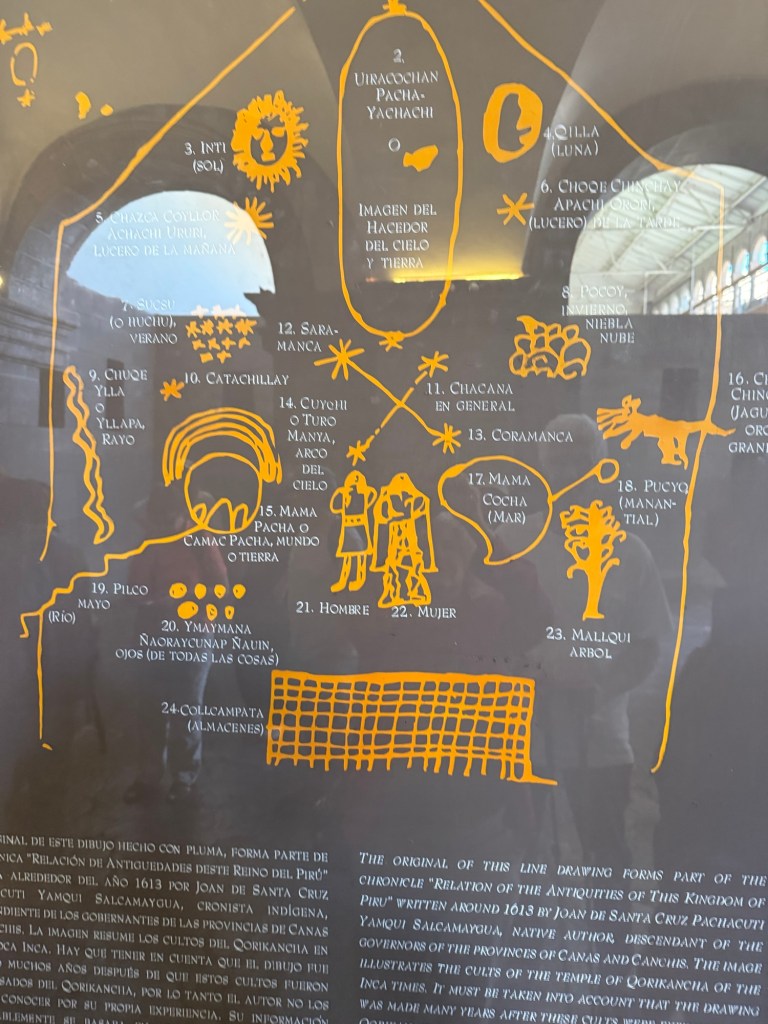
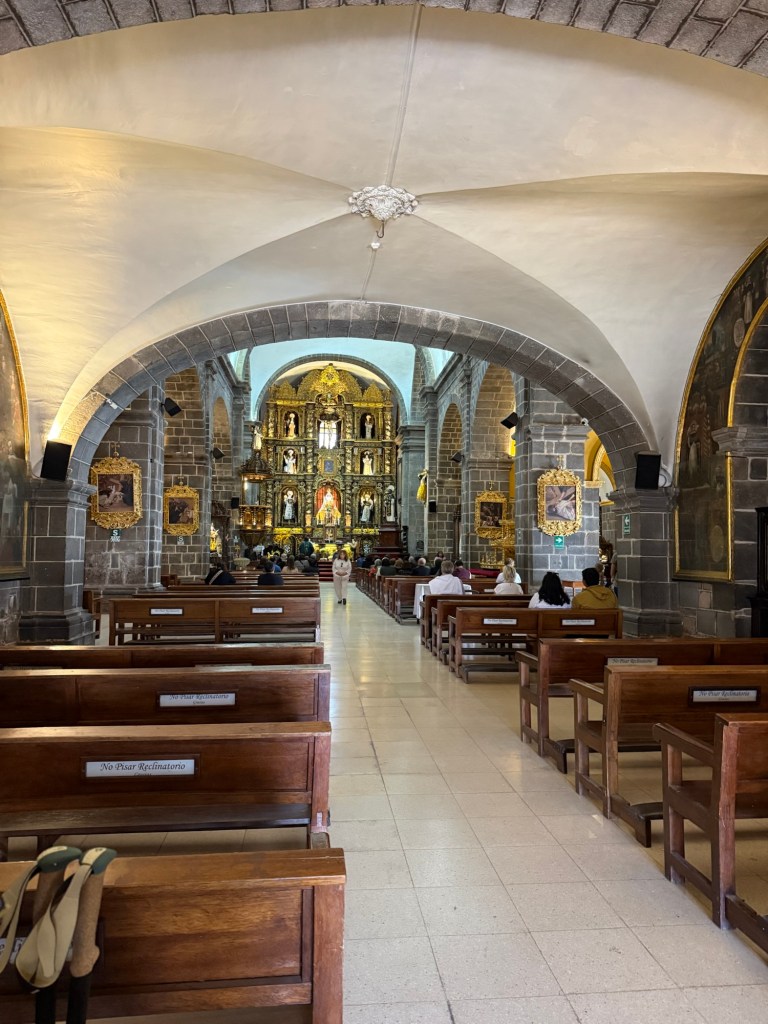
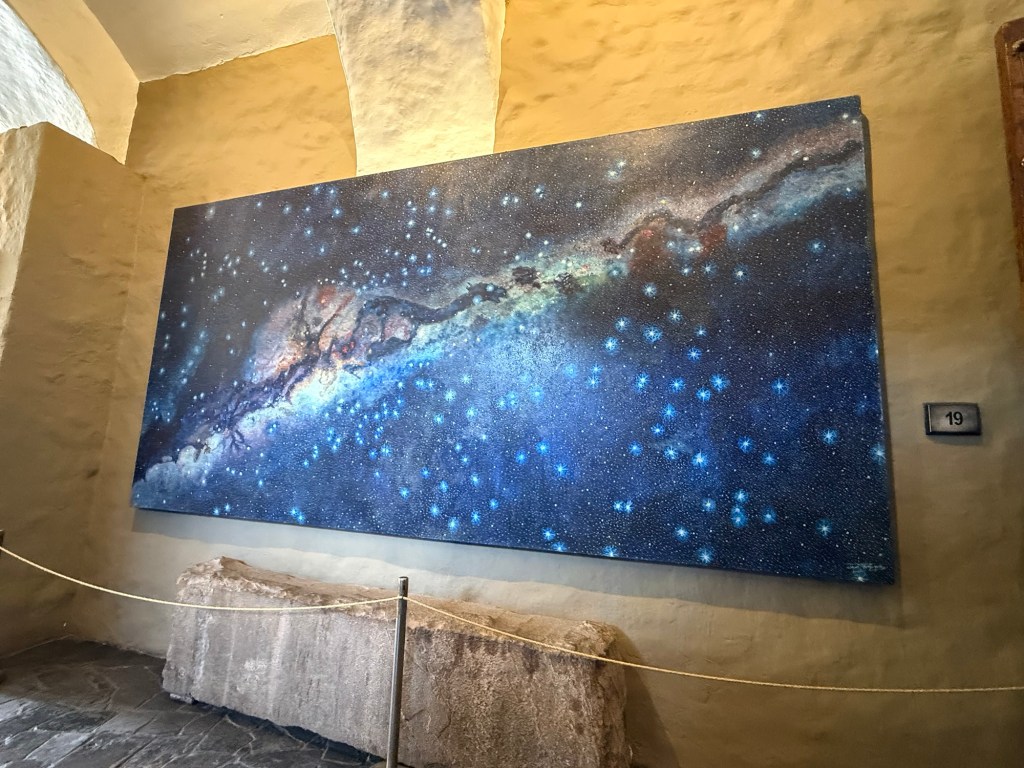
Marco, our Cusco guide, met us at the airport and wit Caesar (pronounced “Sayzar”), our superhuman driver, we got our first taste of Cusco’s old cobblestone streets and heavy traffic as we made our way to our first stop: the old cathedral built on top of the original Inca Temple (which was built on top of the religious sites of the many civilizations that predated the Incas in Cusco. The exhibits we looked at showed how the Incas viewed the Milky Way differently than us. They didn’t look at the patterns of the stars they looked at the shapes of the “shadows”. There is an interesting chart that showed all the 60+ Inca temples on various lines of spiritual Inca energy emanating from Cusco’s original Inca Temple.
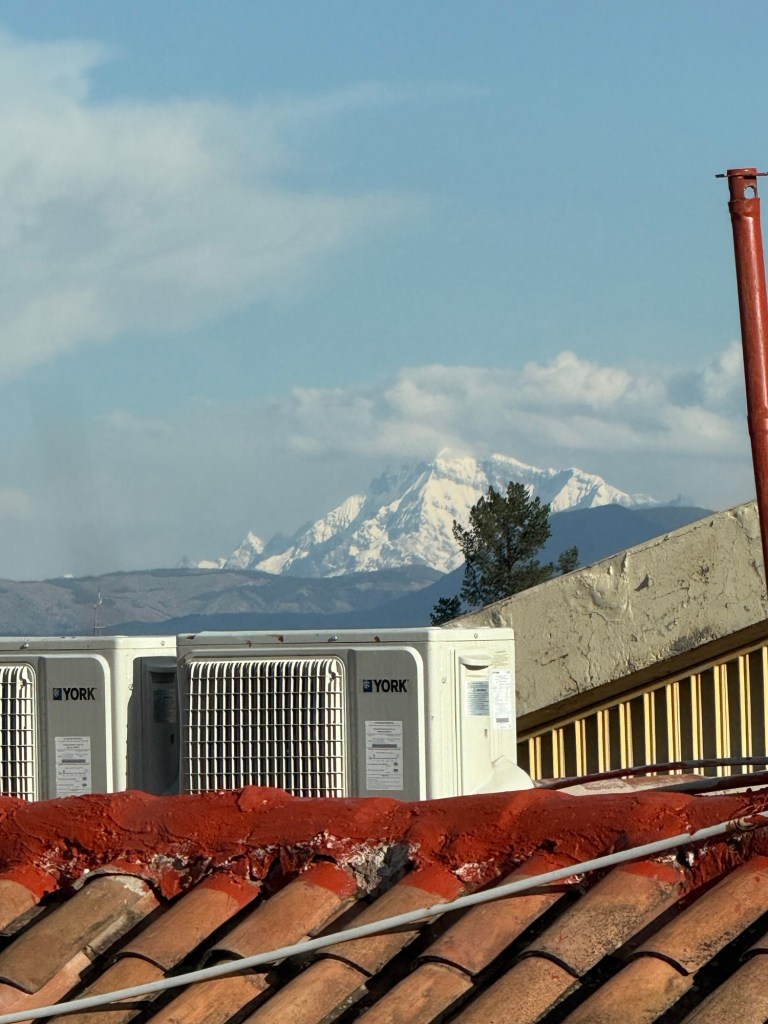
From there we headed up the hill to the large area surrounding the Inca ruins of “Saqsaywaman”. The Pope spoke there to 50,000 people the day before. It’s a dramatic “rock concert” style outdoor venue. Jim stayed low in the shade with Marco while I made my way to the top and got my first glimpse of Mt. Veronica, the 19,000’+ high mountain in the distance.
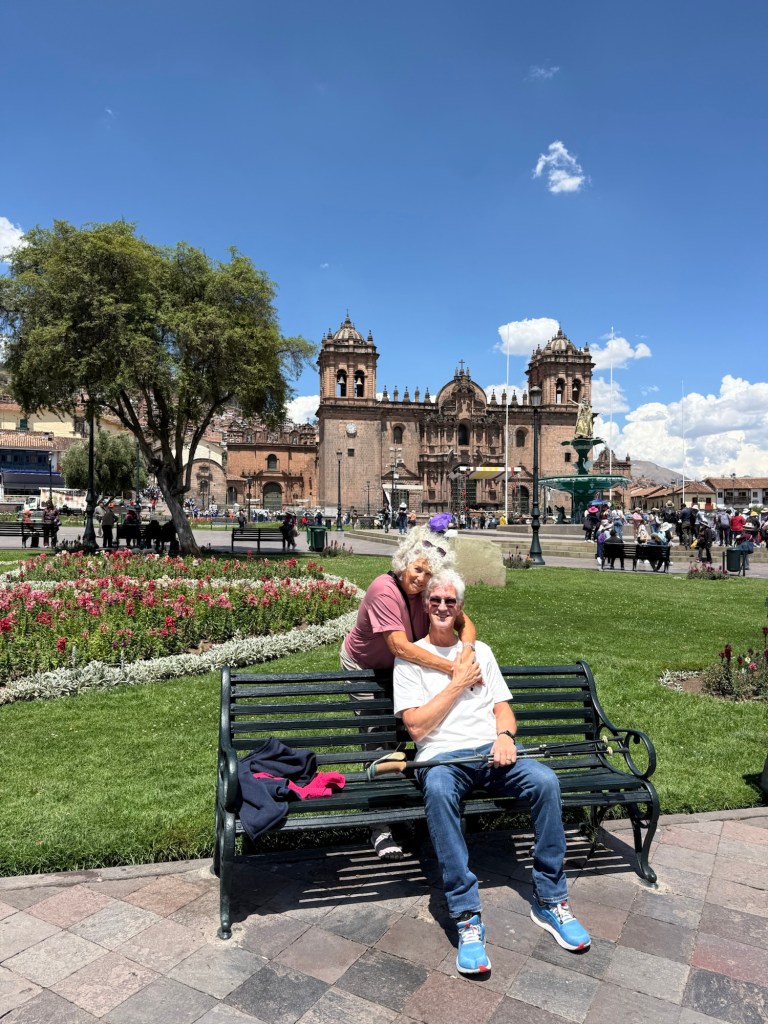
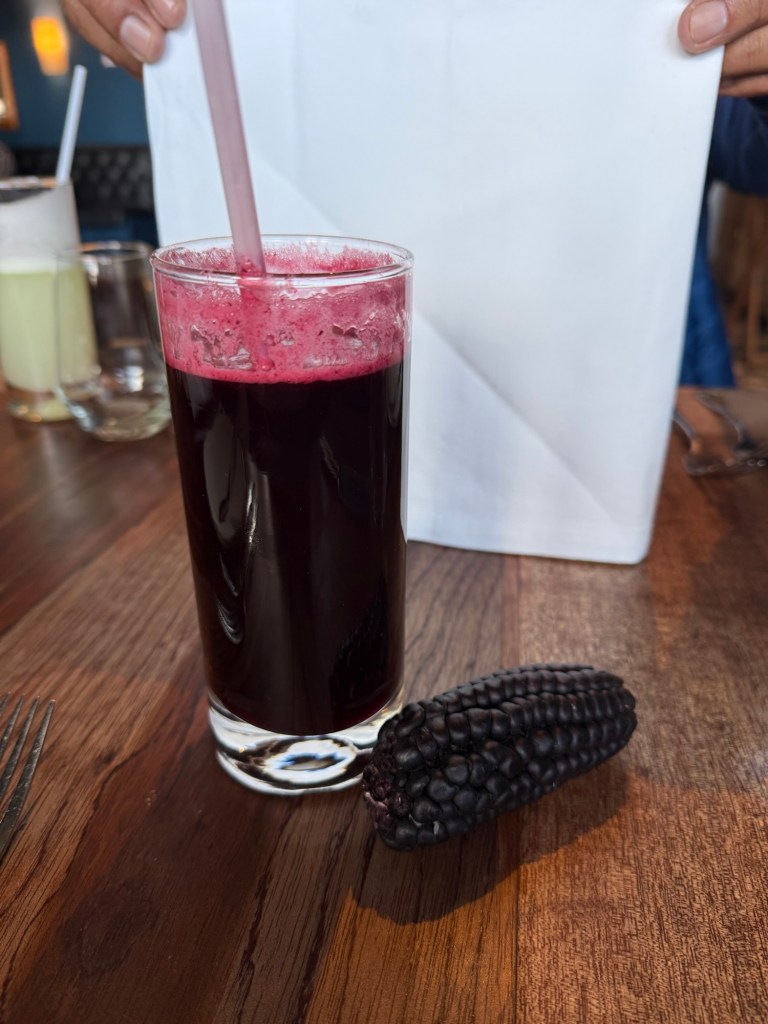
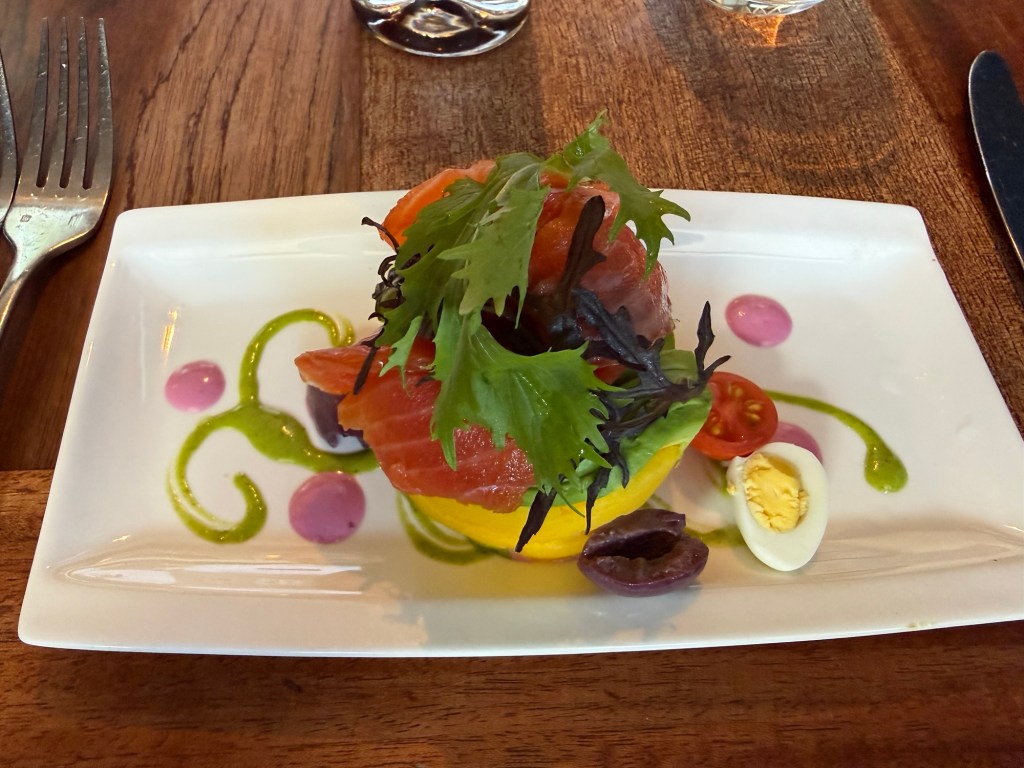
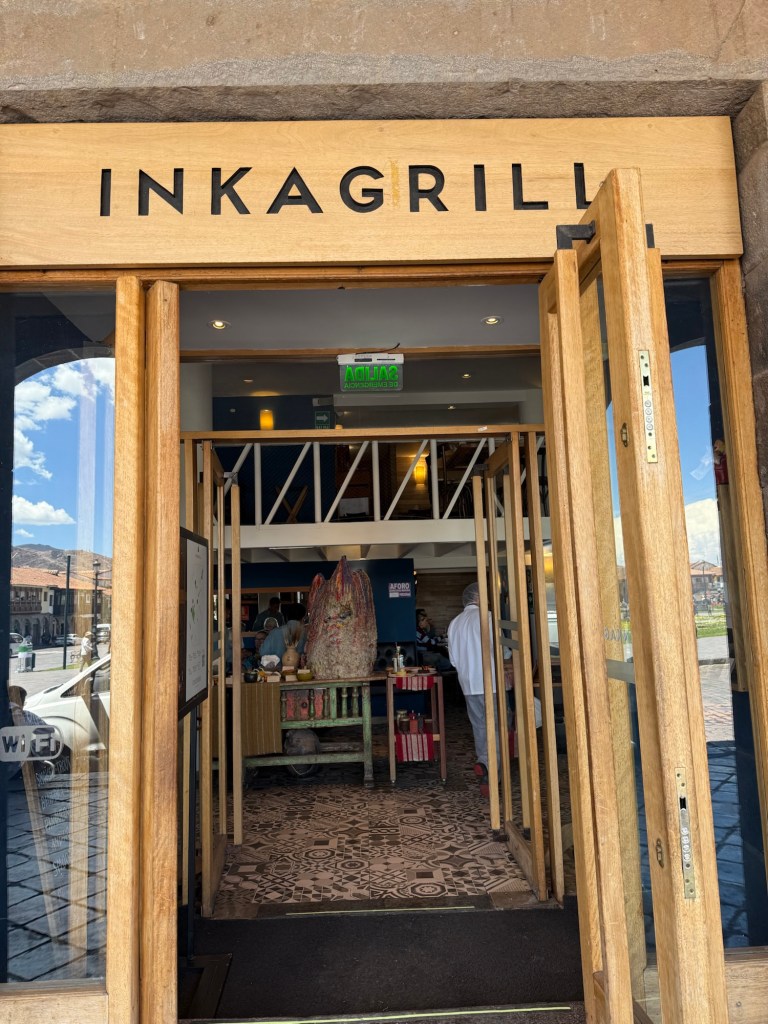
We returned to the central square and enjoyed a delicious lunch at the “Inka Grill” including “Chicha Morada”, a yummy purple-colored, non-alcoholic local drink made from purple corn simmered with pineapple peel and cinnamon cloves.

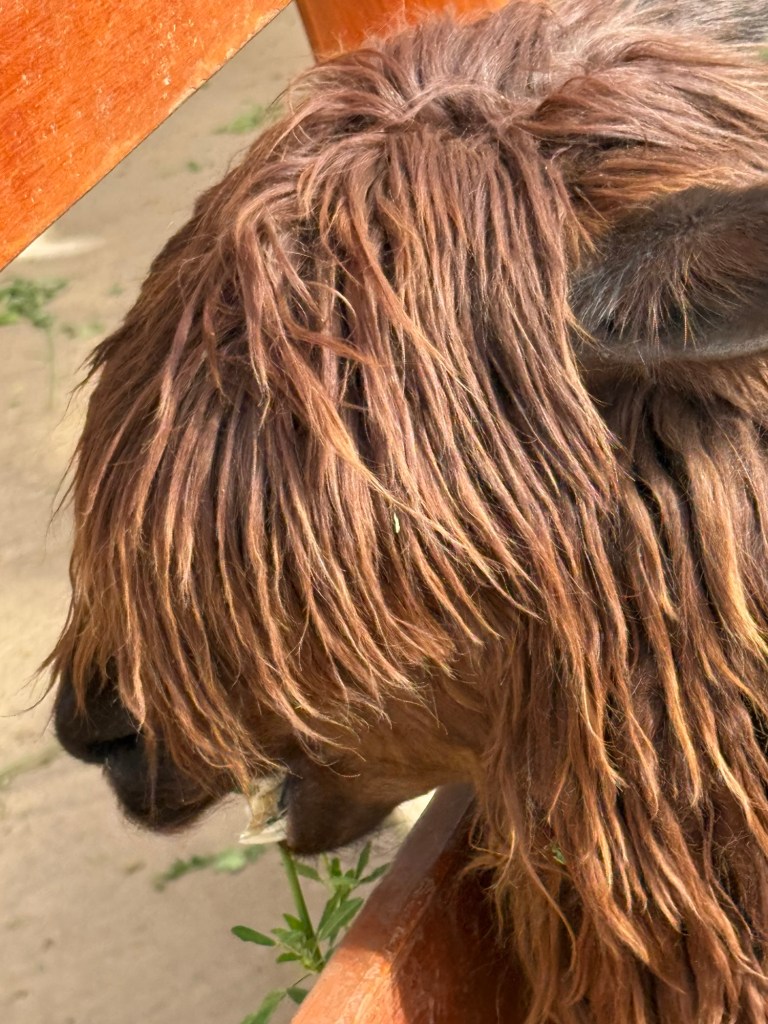
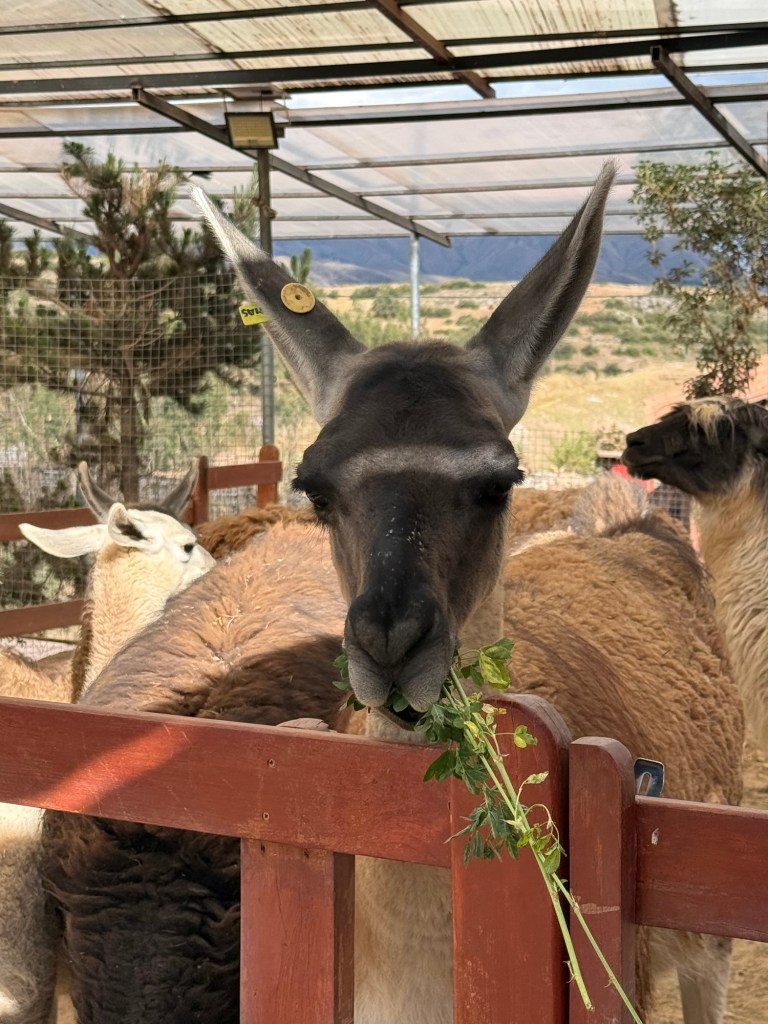
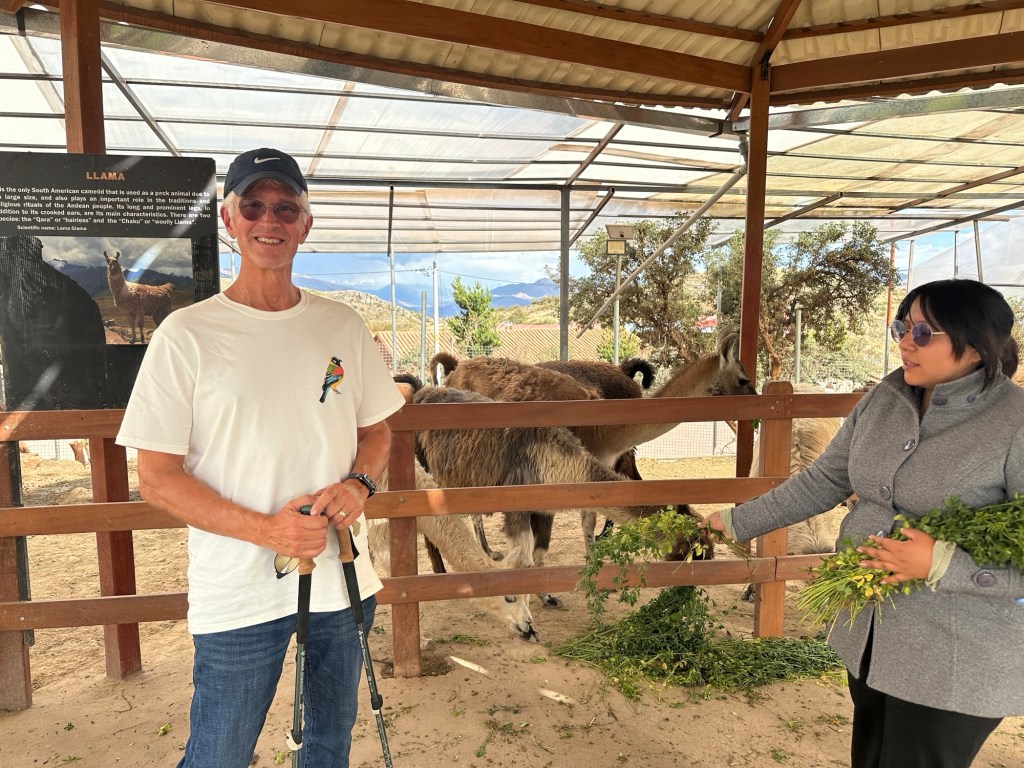
After lunch we visited the nearby Alpaca sanctuary farther up one of the big hills that surround Cusco, where I did some shopping for authentic “baby” alpaca wool sweaters (made with wool from the first shearing of adult alpacas) and some gifts.
At that point we were ready for a bit of downtime at our hotel and a light meal. The Marriott has a lovely spa area with a pool and steam room and we used that before succumbing to the 12,000 elevation and getting a good night’s sleep in our very quiet hotel room.

Machu Picchu Day:

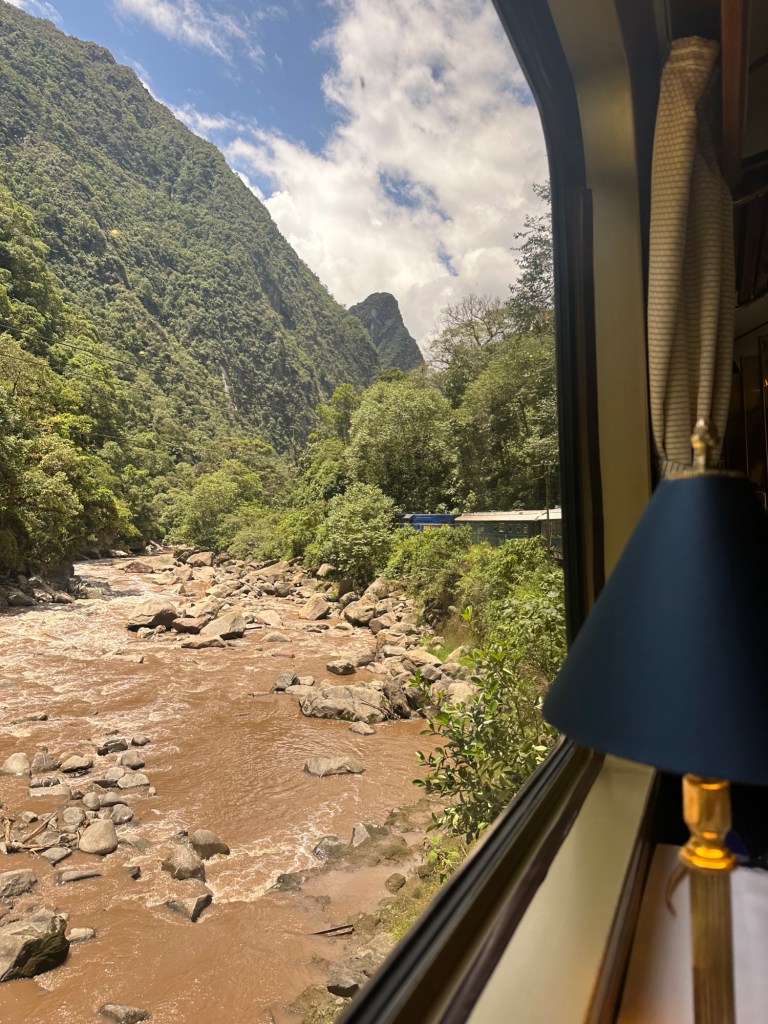
The industry and job creator for Cusco is tourism to hike the surrounding mountains, Inca trails and of course Machu Picchu. Most people take the four-hour train ride starting in Cusco. It follows a little stream that becomes a river as it runs from the mountains, through the “sacred valley” to a very touristy town where you can get a bus that climbs many switchbacks into the mountains to the entrance of Machu Picchu. To get there and back is a big journey, with a long train ride each way, but it’s absolutely worth it.

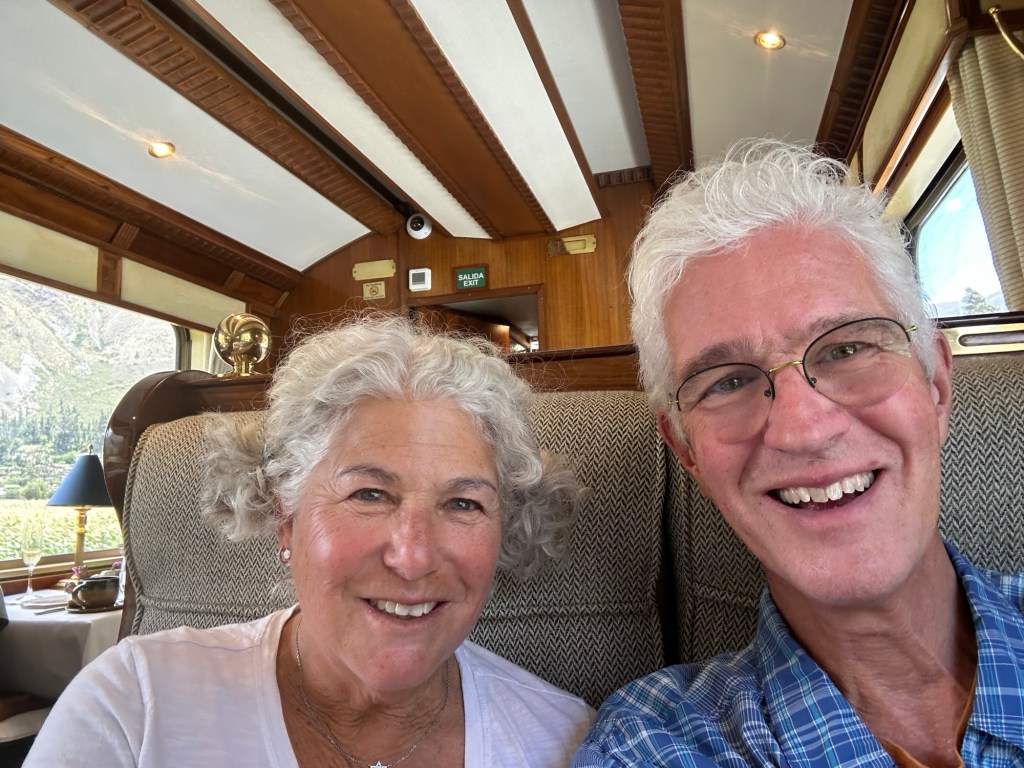
Our hotel pick-up was at 7:30 AM for the 30-minute ride to the train station for the “Hiram Bingham” luxury train (which was modeled after the old “Orient Express”). We didn’t really know what to expect, but from the moment we arrived at the train station our experience was first class and exceptional with drinks and entertainment the whole way. The seats, the food, the music and the scenery through the different environments between Cusco and the Amazon jungle really is hard to explain. We just had so much fun! It didn’t hurt that the weather was perfect.
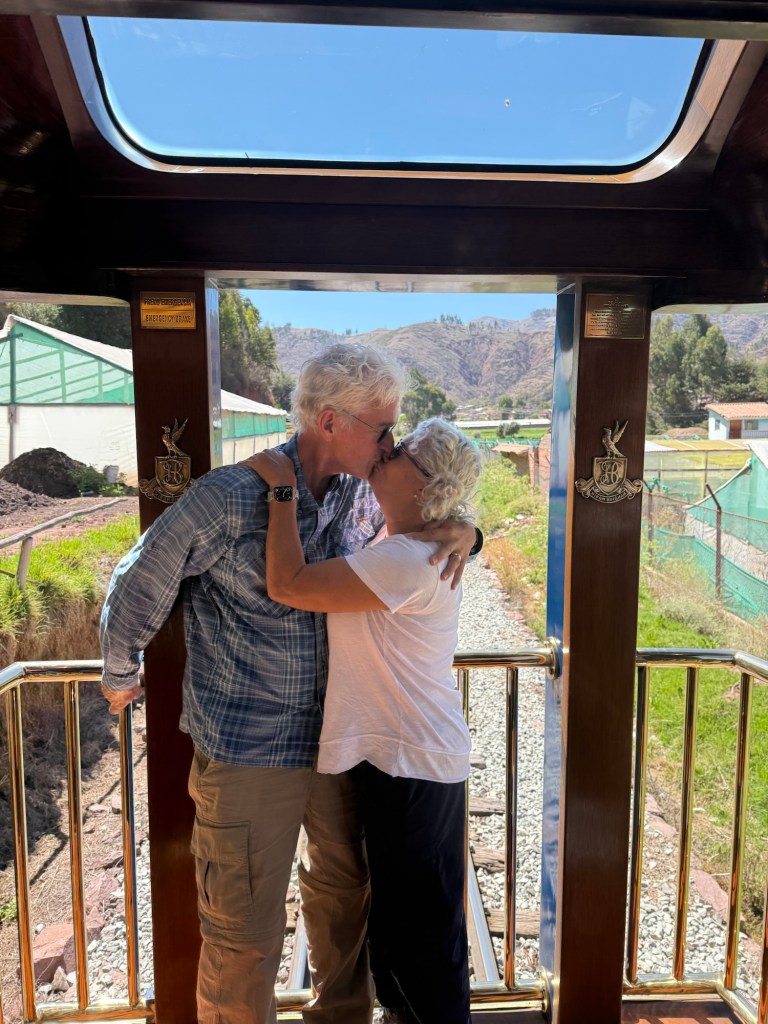
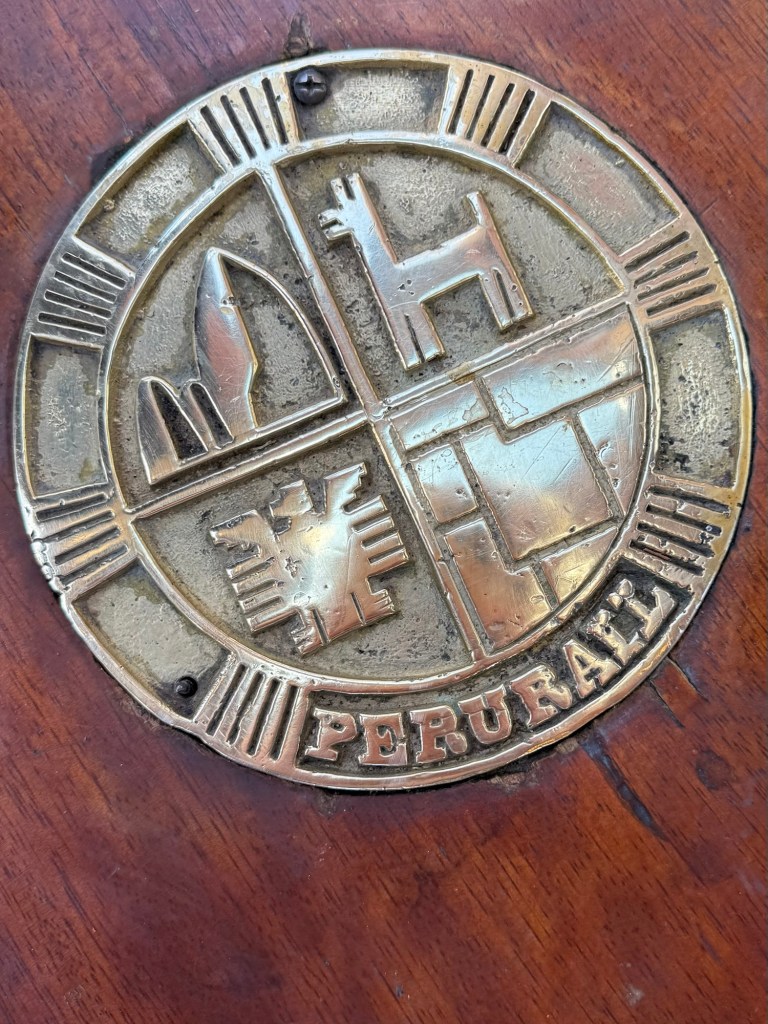
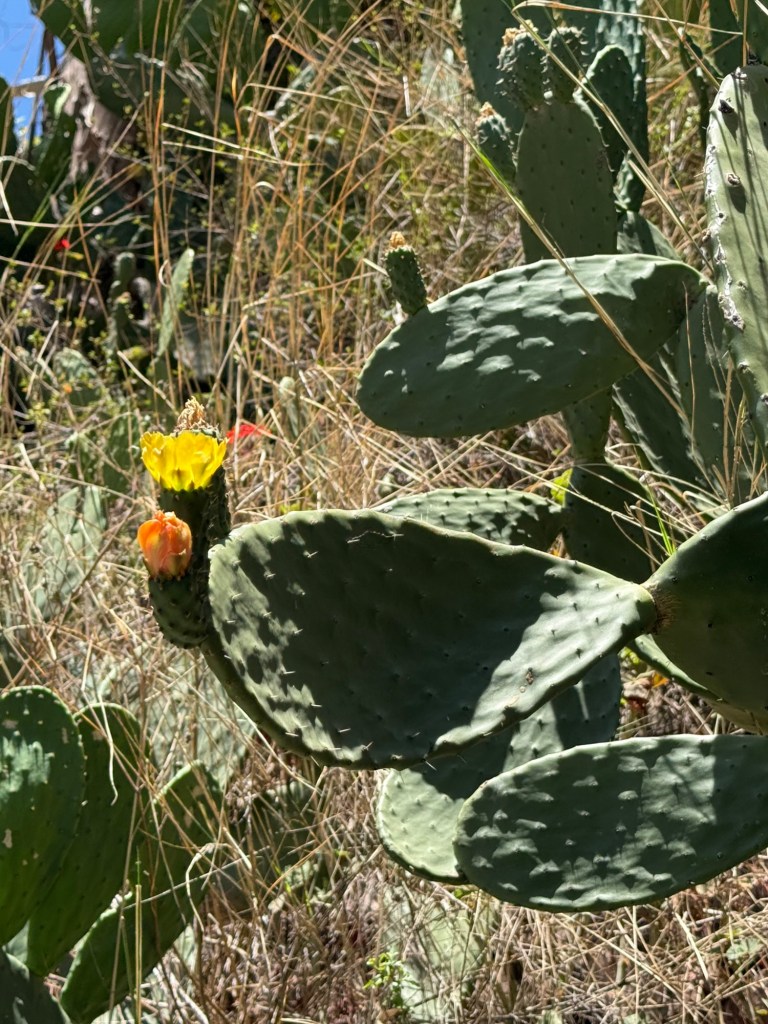
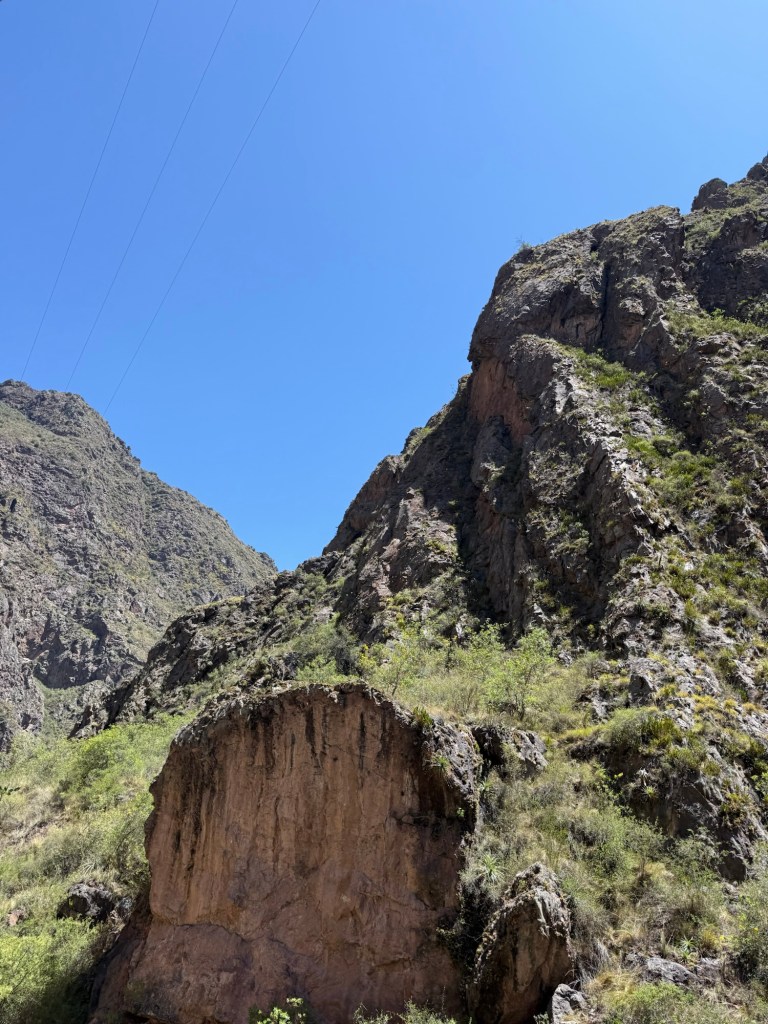
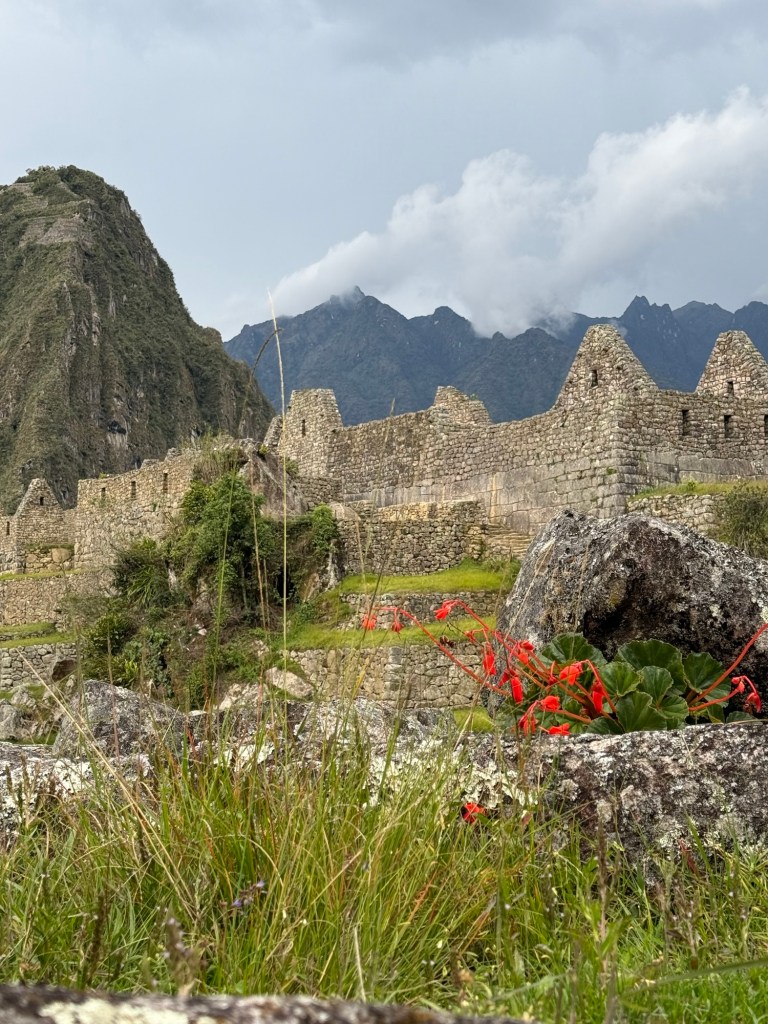
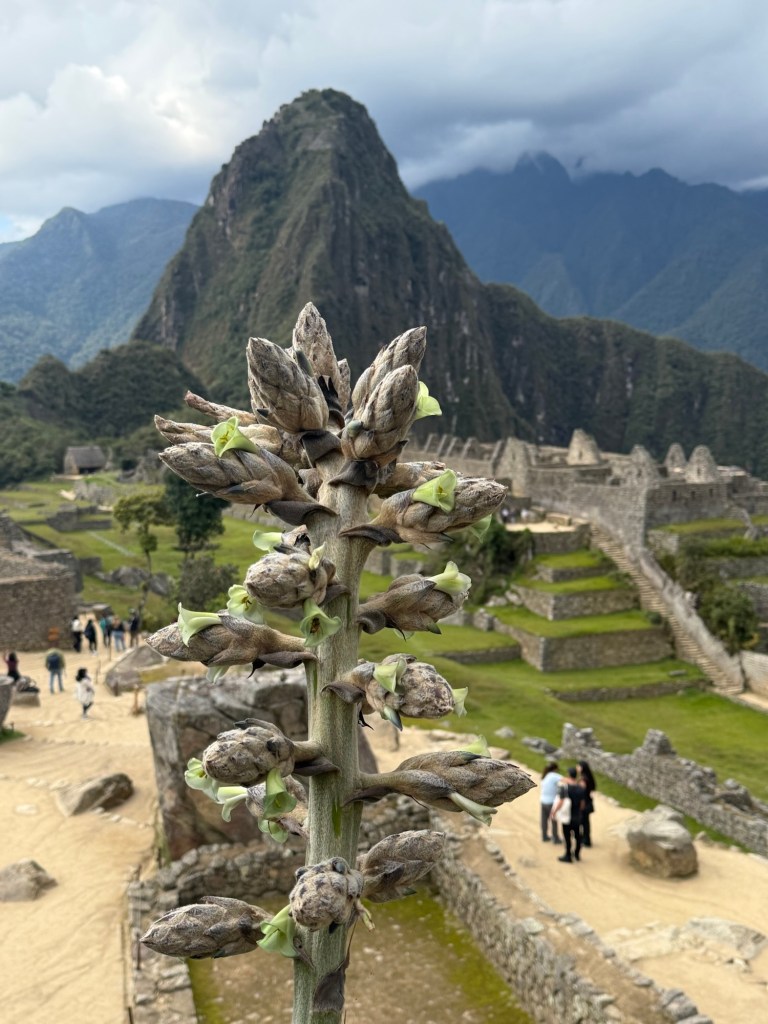
Hopefully, the photos do it justice.
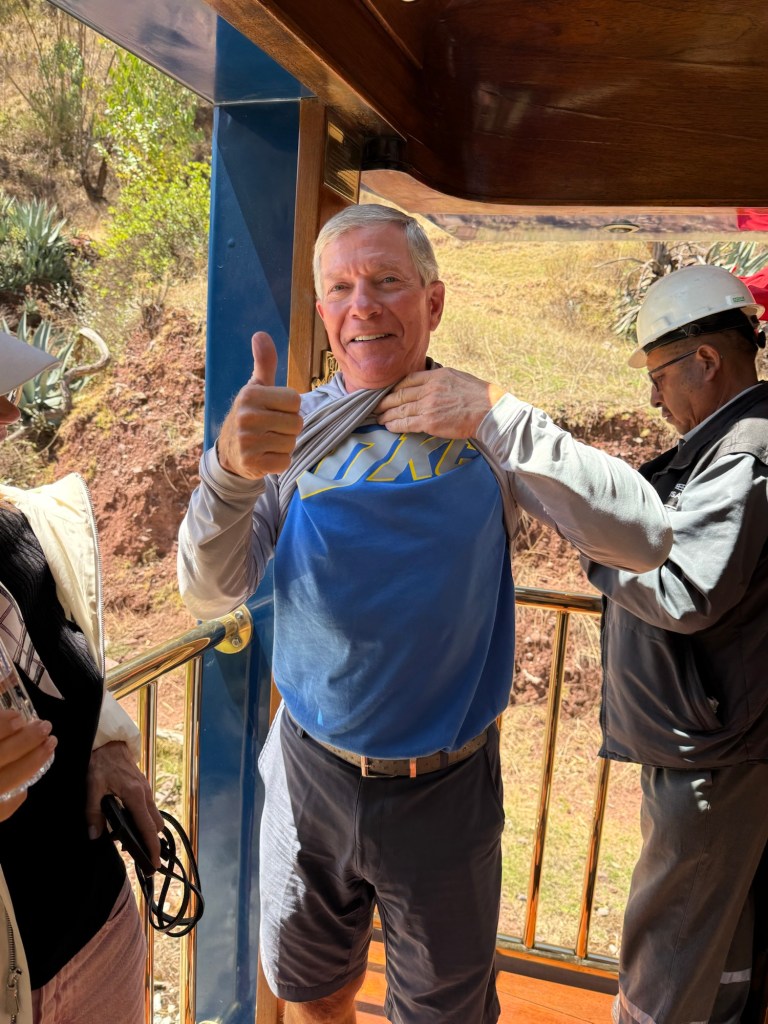
We met a group at the party bar at the back of the train from the Scottsdale area and began chatting with Carlin. His kids went to the UW and live in Wallingford. Of course he knew about Dick’s and we were thrilled to meet each other. Carlin was the team physician for the OKC Thunder before being promoted to the top NBA physician. After expressing our sadness about OKC “stealing the Sonics,” we agreed it was really just Howard Schultz’s fault and had a blast. We hope to meet up again in Seattle with Carlin, his wife Debby and their family.

At the end of train ride we exited through the very touristy town of Agua Caliente (“Hot Springs”) where we boarded buses to climb the winding, narrow, no-guard-rail, dirt road up to the entrance of Machu Picchu. At this point you just have to let go of your fears and just enjoy the edge-of-the-road views from the crazy switchbacks.

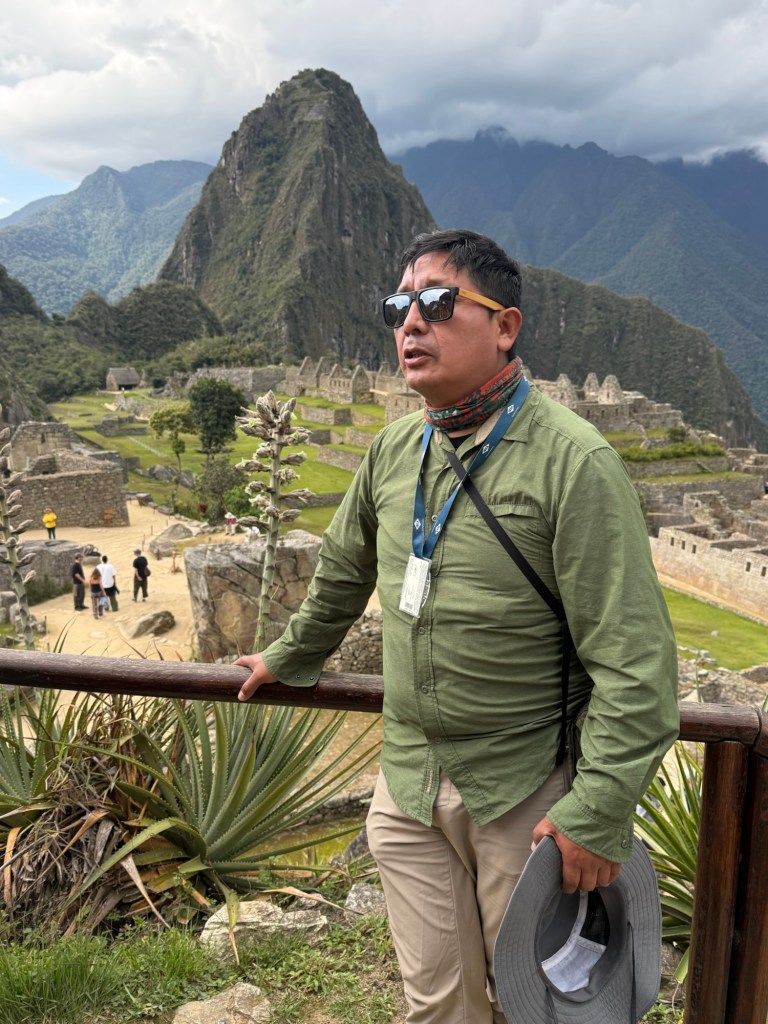
Getting from the train to the buses to the entrance of Machu Picchu is all done on a very tight schedule and we couldn’t have done it without Marco looking after us.

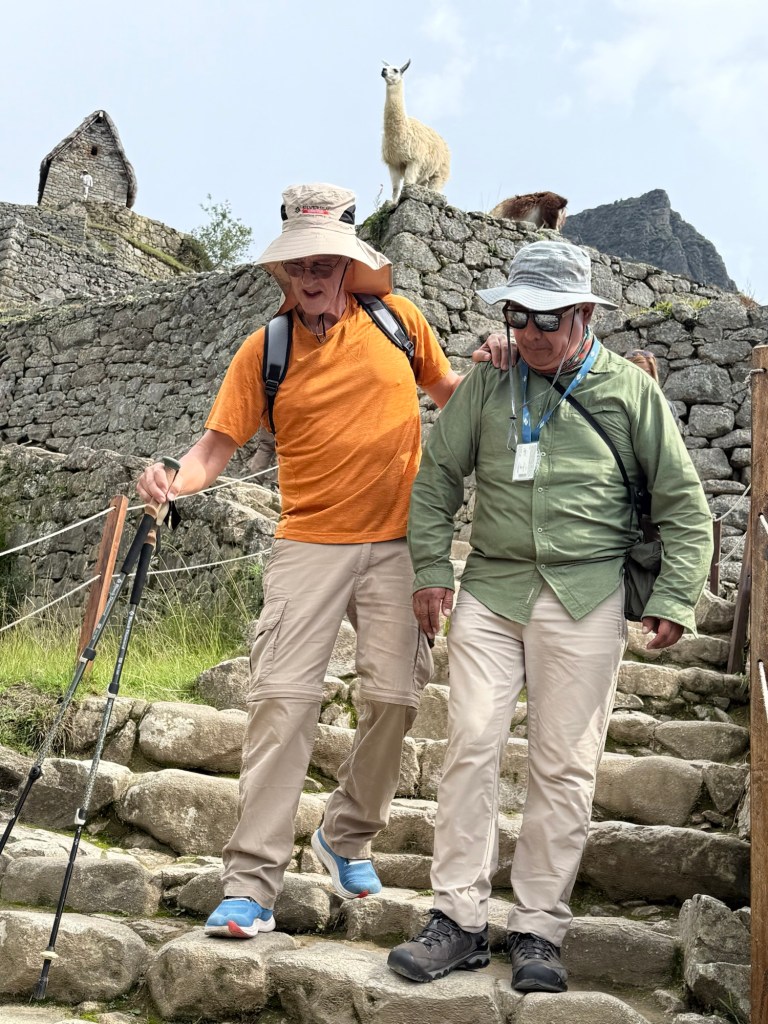
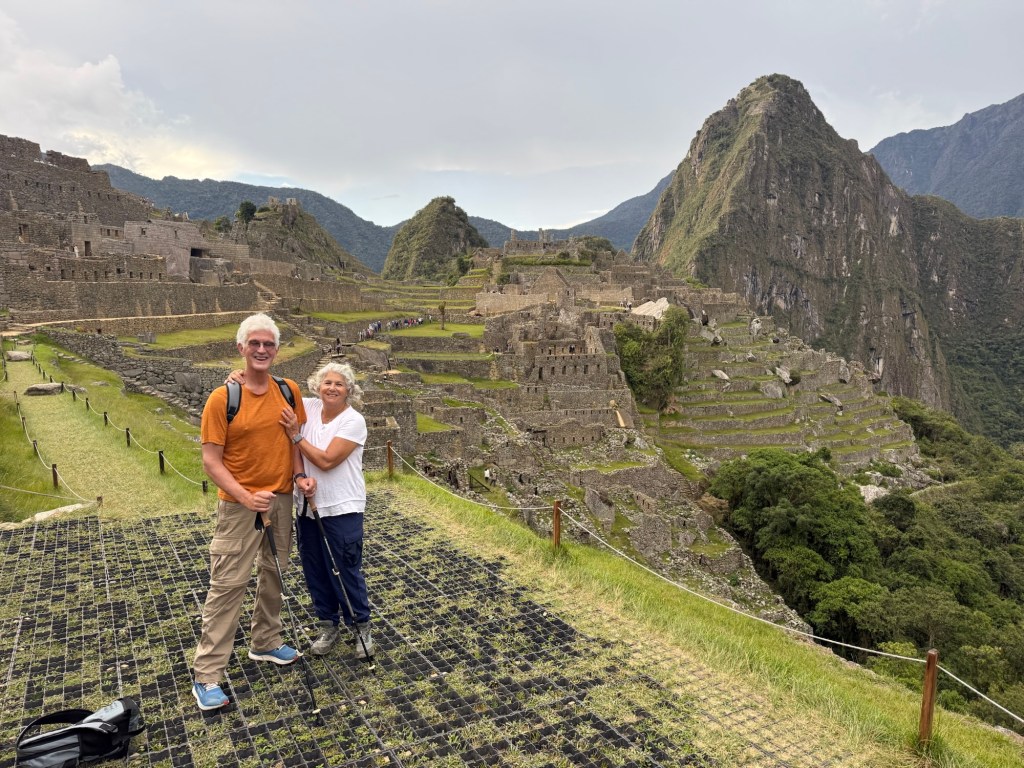
After showing our passports to prove that our names matched the reservations, it was time to enter the archelogical area. There are several routes (or “circuits”) through the ruins, and we always assumed we would take the easiest route along the bottom. But Marco thought we had come too far to do that so he asked for and got tickets to “circuit 2”, plus special permission to take detours as needed through some of the restricted parts of the trail to make it more manageable for Jim.
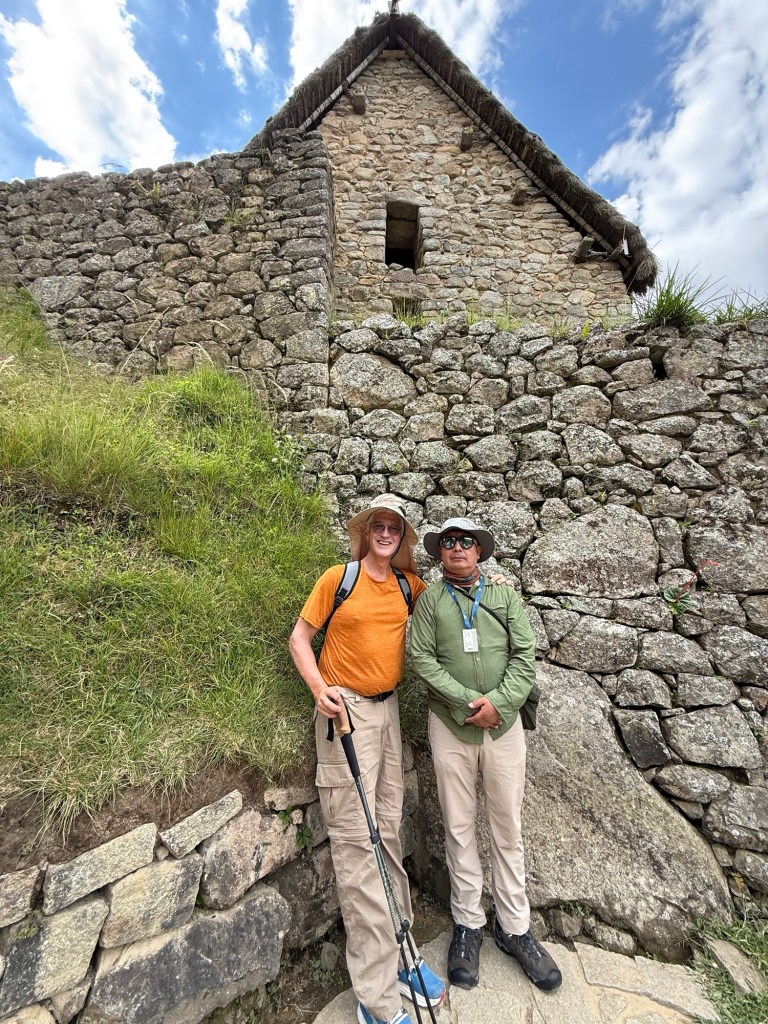
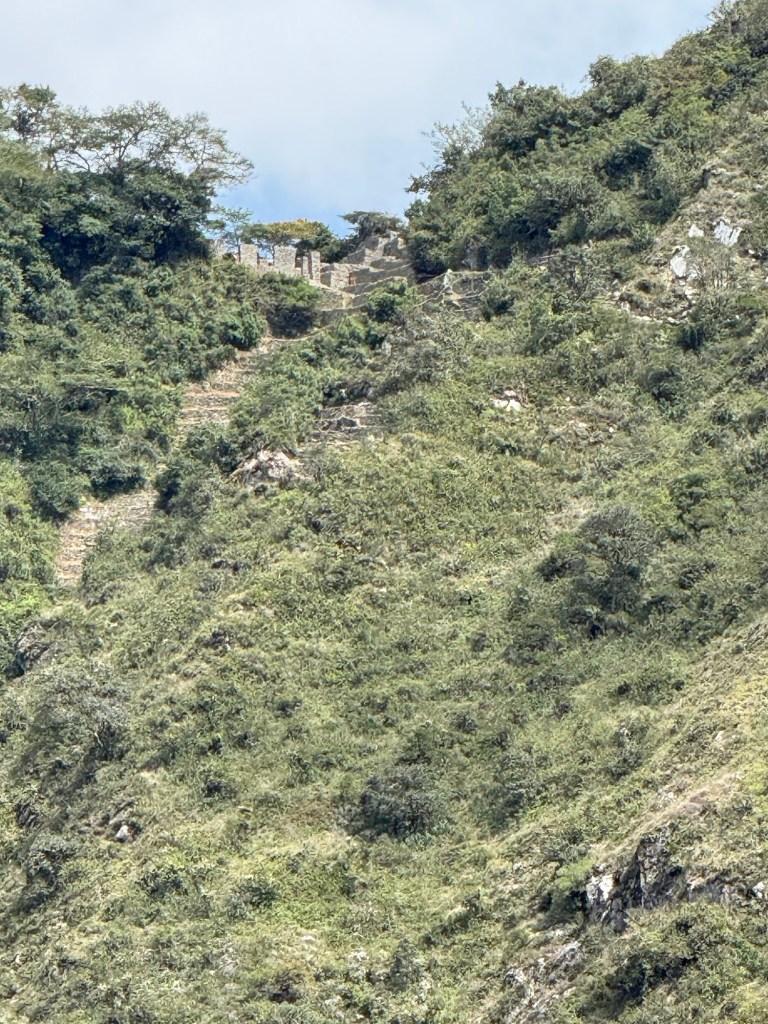
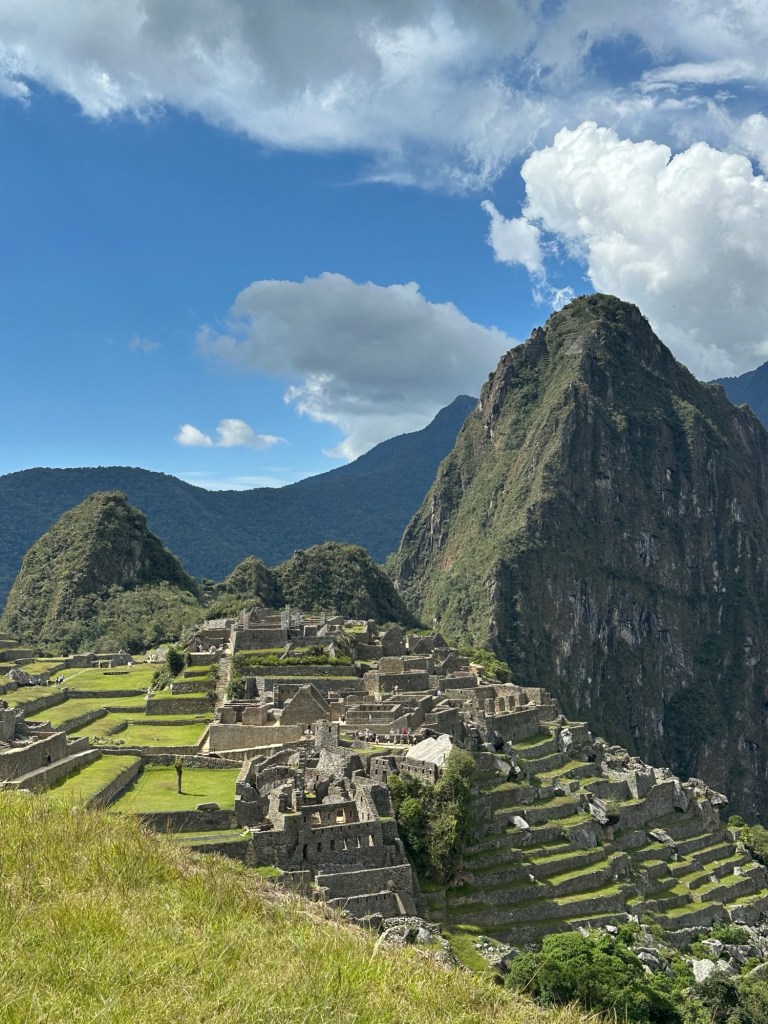
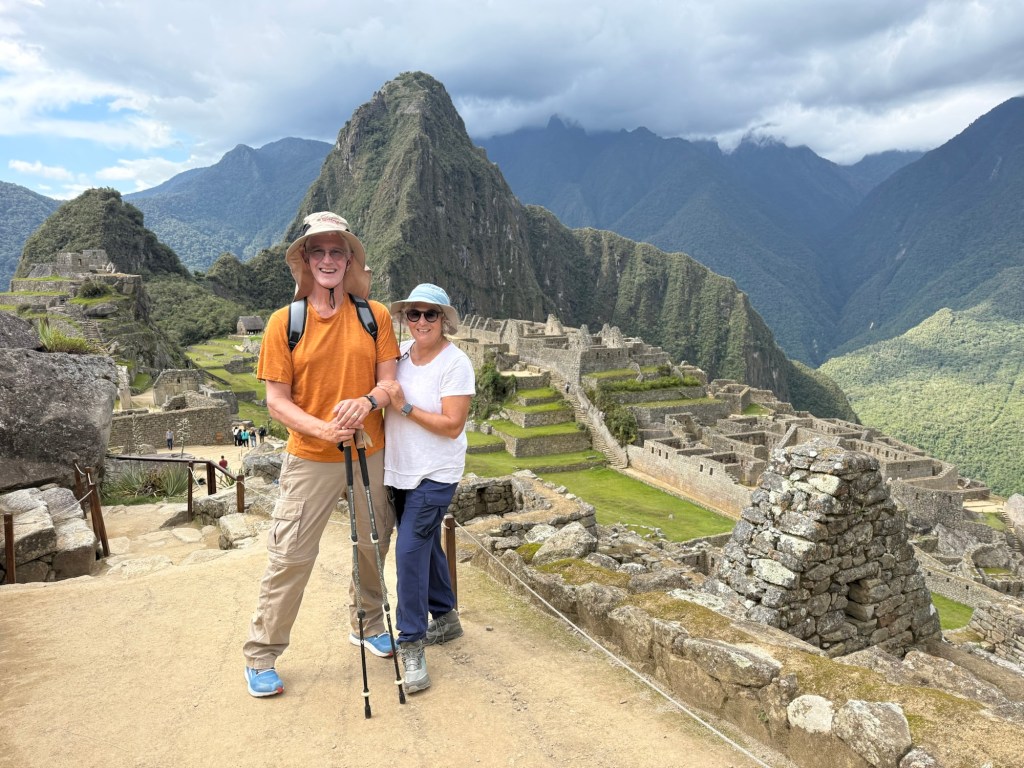
Circuit 2 begins with a LOT of stairs that take you to the “flatter areas” that overlook the ruins. Jim was determined to reach the overlook and with Marco and my help he climbed higher and higher until we reached the first overlook and the ones beyond that. There was rain, lightning and thunder in the nearby mountains, but it never rained on us and the ruins and surrounding mountains were very dramatic.

In some ways coming down was more difficult because Jim’s legs were tired and there were no railings on the long stone stairways, but, as I titled this blog: With the Right Team You Can Accomplish Anything! And we had the right team. We completed most of Circuit 2, then used our special permission to take a shortcut down a long stone stairway to reach the exit of Circuit 3 instead of walking all of the lower part of Circuit 2. After seeing almost everything we made it back to the bus on time to catch the four hour train back to Cusco.

The Time of Great Adventure and Discovery:

In preparation for this part of the trip I’ve been reading Turn Right at Machu Picchu by Mark Adams. He teamed with super guide and renowned explorer, John Leviers, to follow in the footsteps of Hiram Bingham, who officially “discovered” Maccu Picchu in the early 1900’s. The story is very interesting. Hiram Bingham was a Yale Professor and the inspiration for the lead character in the “Indiana Jones” movies. But at the time there were many adventurers who were competing for the honor of climbing the highest peaks that had not yet been climbed or crossing the center of Antartica. That was also when National Geographic evolved from a scientific journal to a magazine for the masses under the leadership of a Gilbert Grosvenor, its young editor.
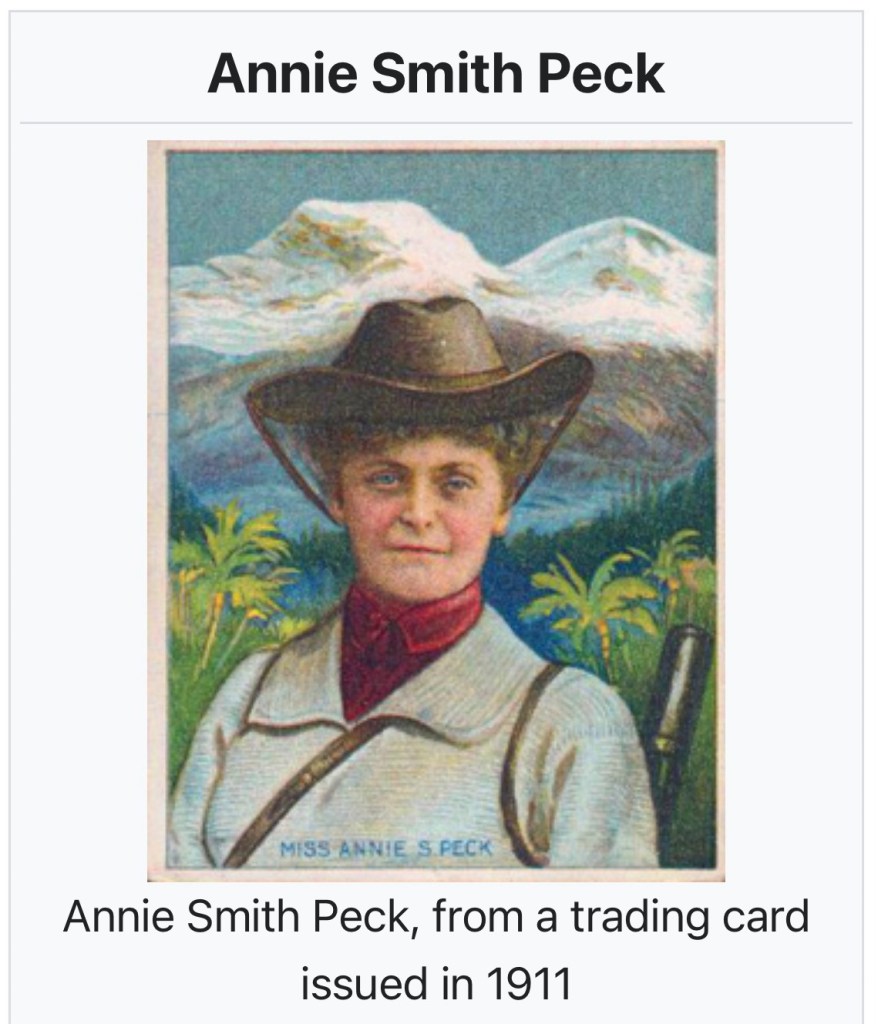
Through all of this an amazing American woman mountaineer and suffragette, Annie Peck, climbed Huasscaran in 1909, before Bingham. For a time most thought it was the highest peak, in South America. When she reached the summit she planted a flag saying “Give Women the Vote.” Bingham who was also intrigued by the idea of conquering a “virgin peak” had to look for something else. Peck publicly taunted Bingham in the papers and personally. She continued to climb and travel well into her 80’s. Why have I never heard of her?

Bingham descended from a family of missionaries that first lived in Hawaii. After growing up in Hawaii, Bingham left, graduated from Yale, became a professor there and married into a wealthy family. But Bingham wasn’t satisfied with that. He was driven to climb mountains and discover lost civilizations. His peers in the early 1900’s were in a race to find the last undiscovered ruins, to climb the highest peaks that had not yet been climbed, and to thereby earn the immortality given explorers. But exploring costs a lot of money. Bingham created his Yale Peruvian Expedition plan in 1911. He needed to raise $12,000 to sail to Peru and hire the team. But raising the funds was just the first step for Bingham. He wanted to lead expeditions of discovery that succeeded before his competitors: the “right stuff” of heroes and adventurers. He measured and photographed methodically as he made his way along an unforgiving trail of mountains and valleys. Persistence was one of his greatest attributes.

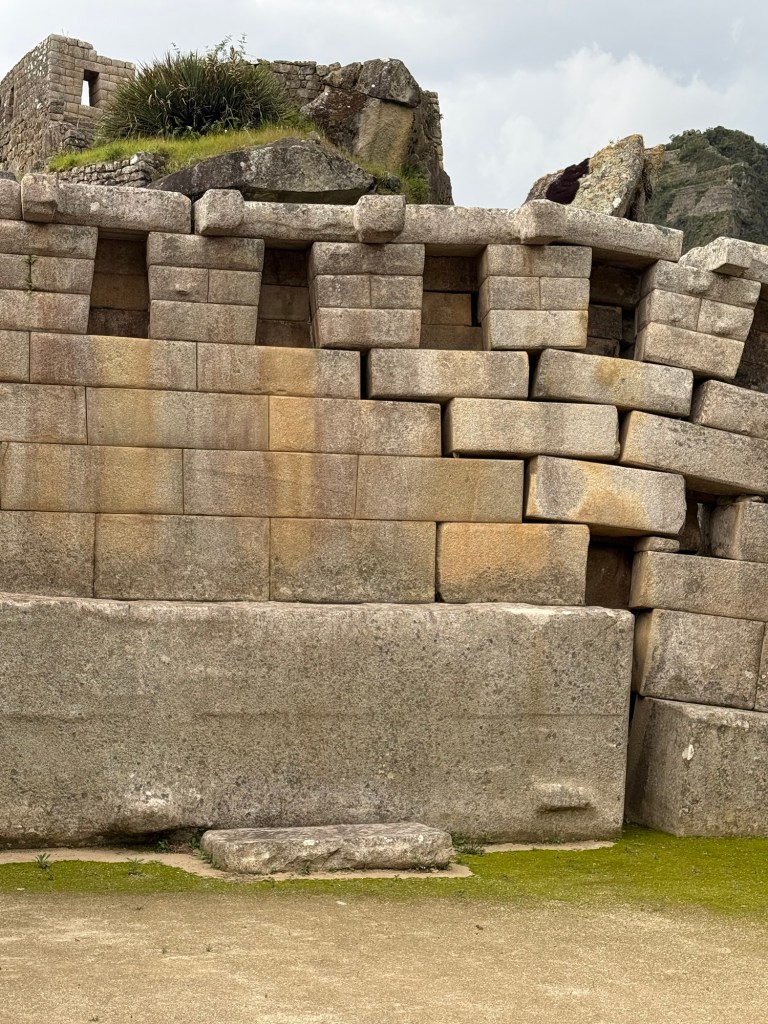
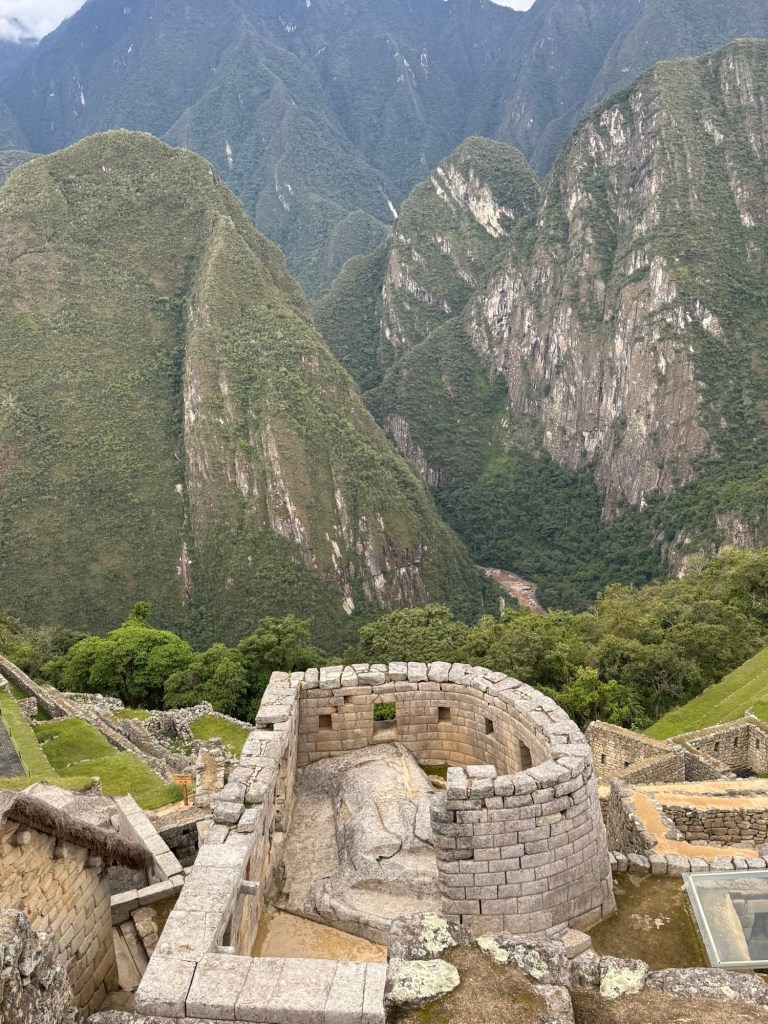
When Bingham finally arrived at Machu Picchu, all of the ruins were covered by the jungle. But with the help of local tribes he uncovered the giant rocks comprising the Main Temple, took photographs and shared his discovery with the world. In future visits he helped clear and photograph Machu Piccu as the jungle was cleared away. An entire issue of National Geographic was dedicated to his explorations and photographs. Bingham finally succeeded in becoming a famous explorer. He went back two other times.
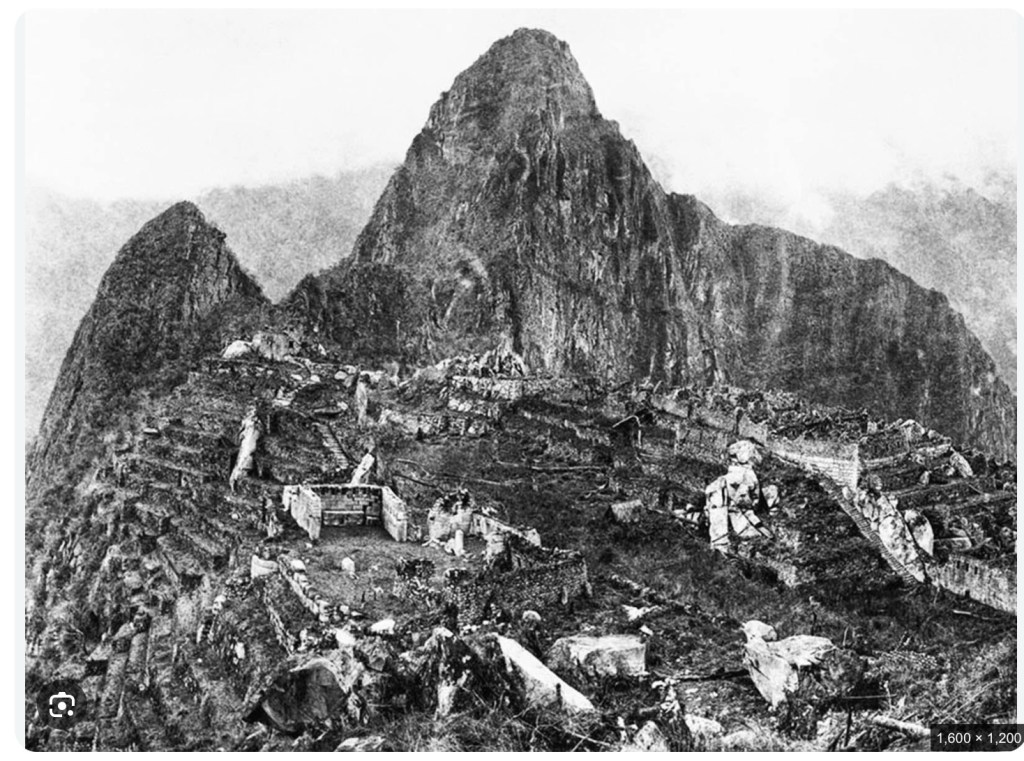
Bingham photo

Machu Piccu is an architectural, engineering and archeoastronomy marvel. Ancient people believed in the sacred power of the mountains, rivers, lakes, the sun, the moon and stars and paraphrasing Ghost Busters, Machu Picchu is spiritual central.

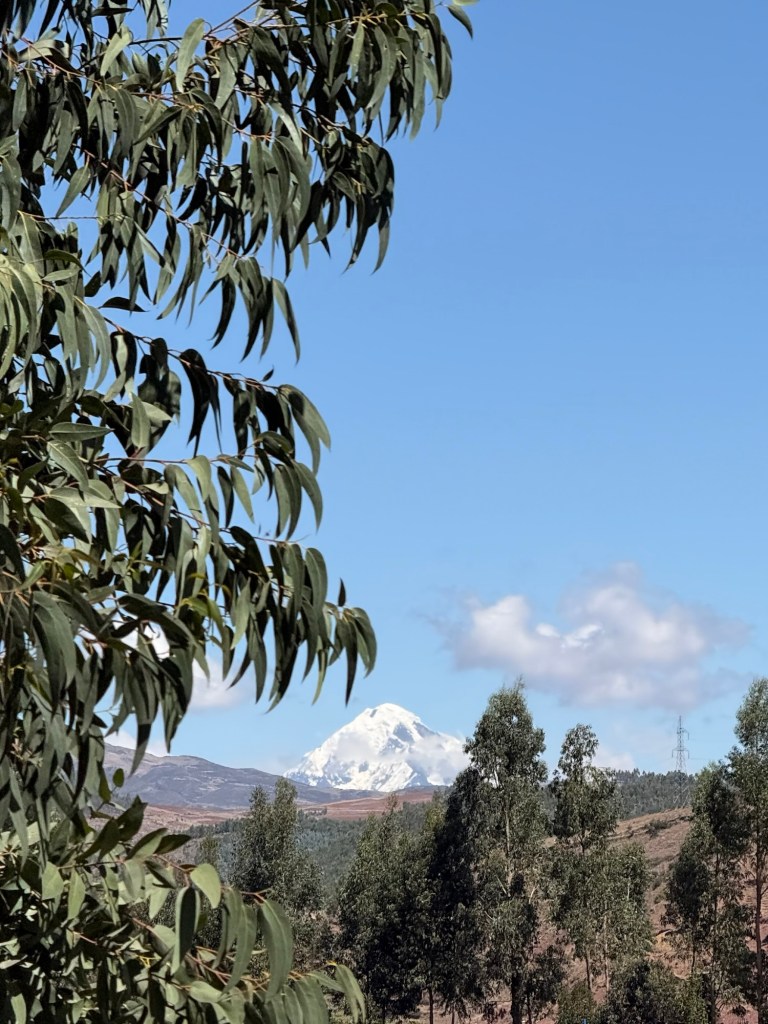
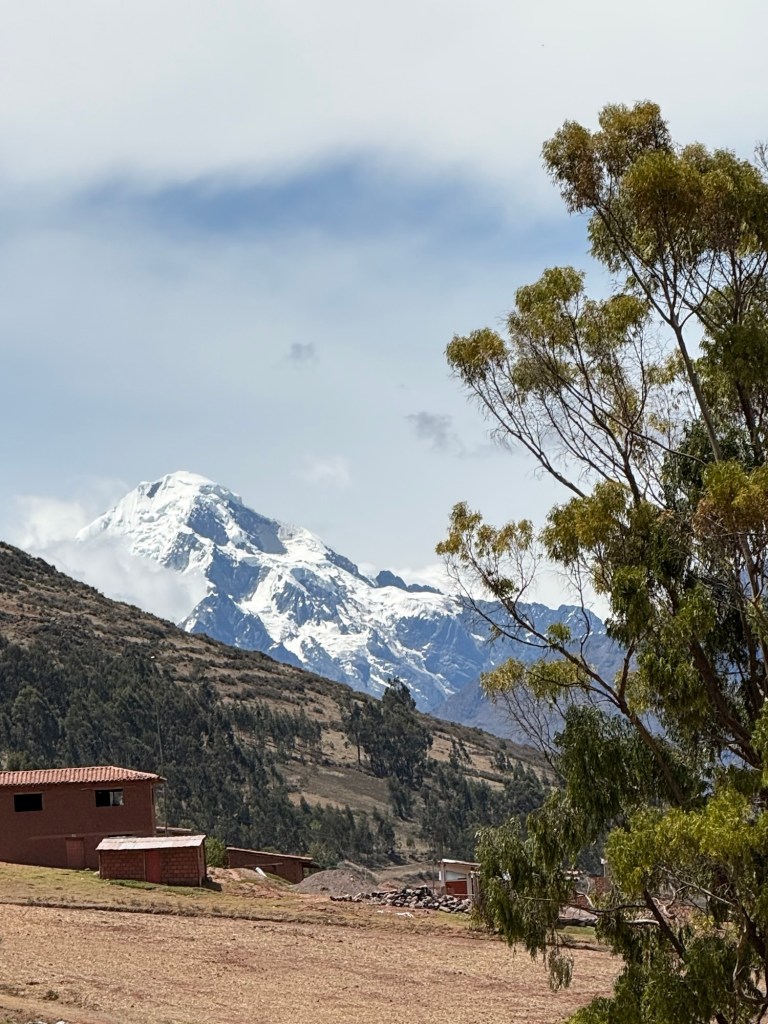
Mark Adams says in his book, “the Incas revered two peaks above all others . . . Ausangate which stands above Cusco and it’s glaciers that feed the Urubamba river surrounding Machu Picchu and the other is Salcantay, which overlooks Machu Picchu.” The archeology, the direction of the windows and ceremonial areas all reflect the sun in different seasons and the southern cross. This combined with the Inca worship of the stars and the Milky Way make it remarkable. It truly would be amazing to be there on a clear night.

Of course it is impossible to absorb all of Machu Picchu in one, two hour visit.

Retracing our route we made our way back to the train station and boarded the regular train (which was running late) for the four-hour journey back to Cusco. Ounce again Caesar met us and took us back to the hotel, where we showered and slept very soundly.

The Salt Mines and the Sacred Valley:

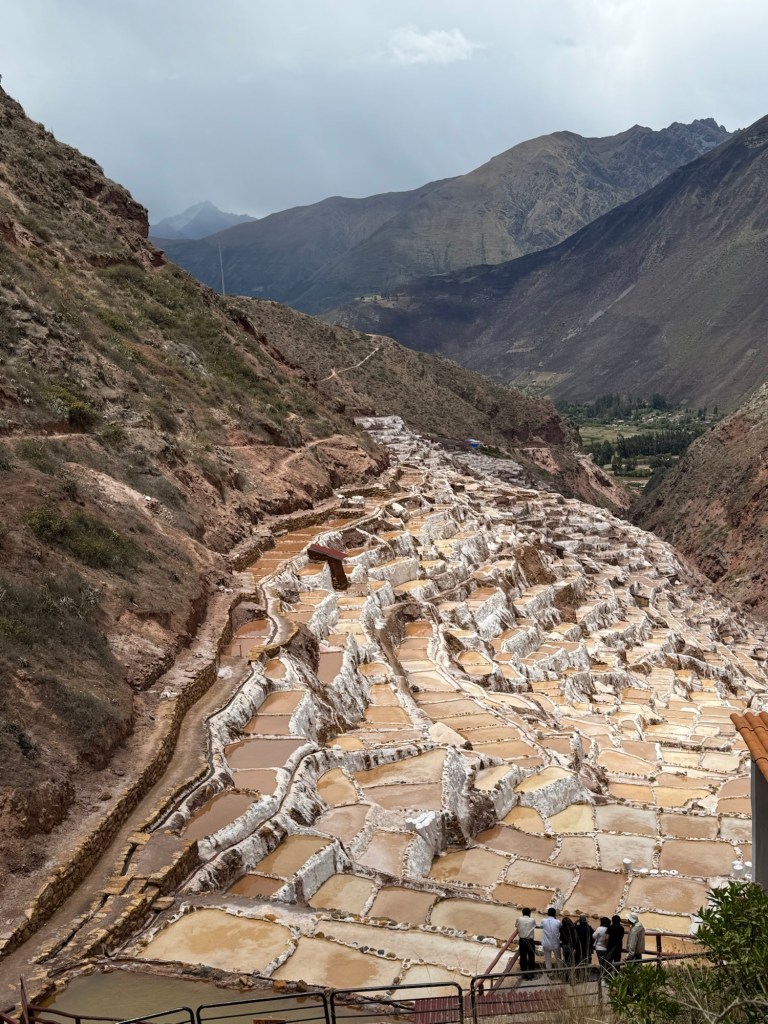
For our last day in Cusco, Marco and Cesar picked us up for another wonderful experience at Marasal, the 3,500 year salt evaporation ponds in the Sacred Valley. The locals there continue to make salt by diverting mountain salty water to evaporate in elaborate, irrigated pools during the dry season. Although this ancient process is much more expensive than modern salt manufacturing that use seawater in coastal areas, the tourist revenue from people wanting to see how “mountain salt” is made is enough to keep this ancient operation going.

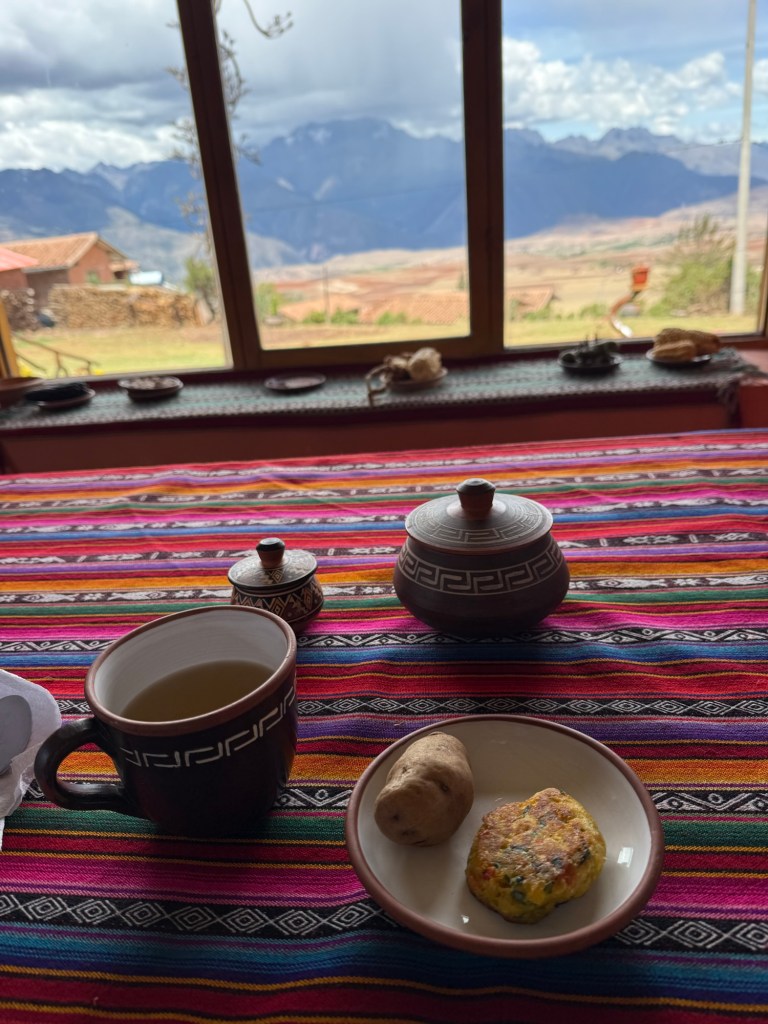
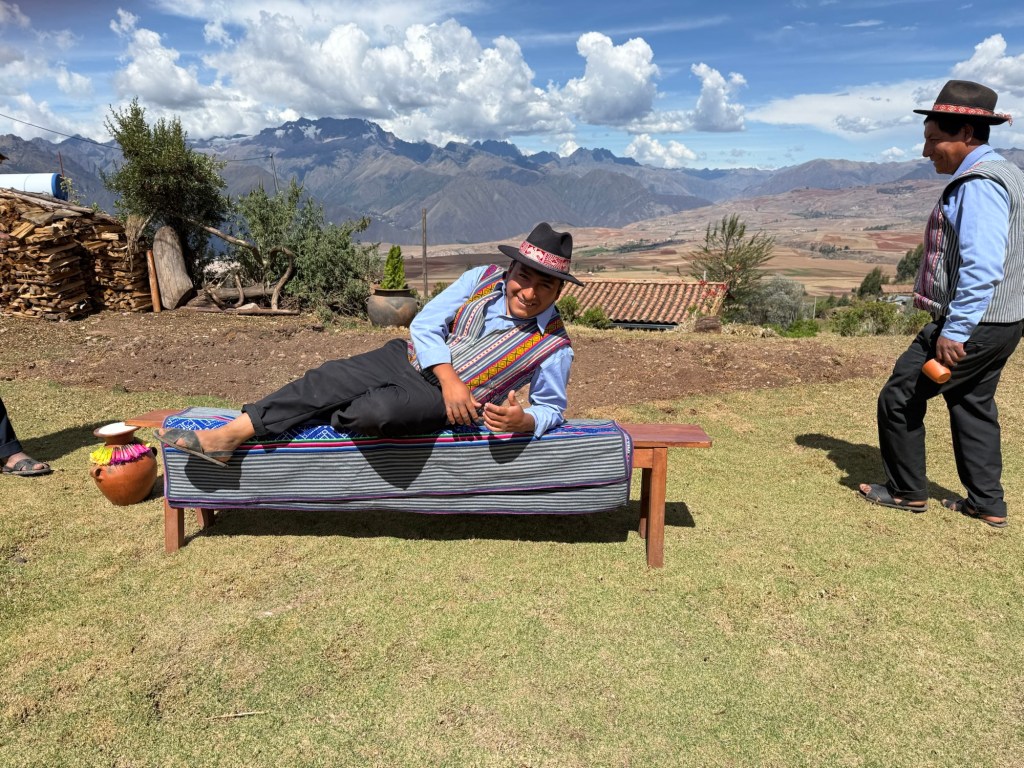
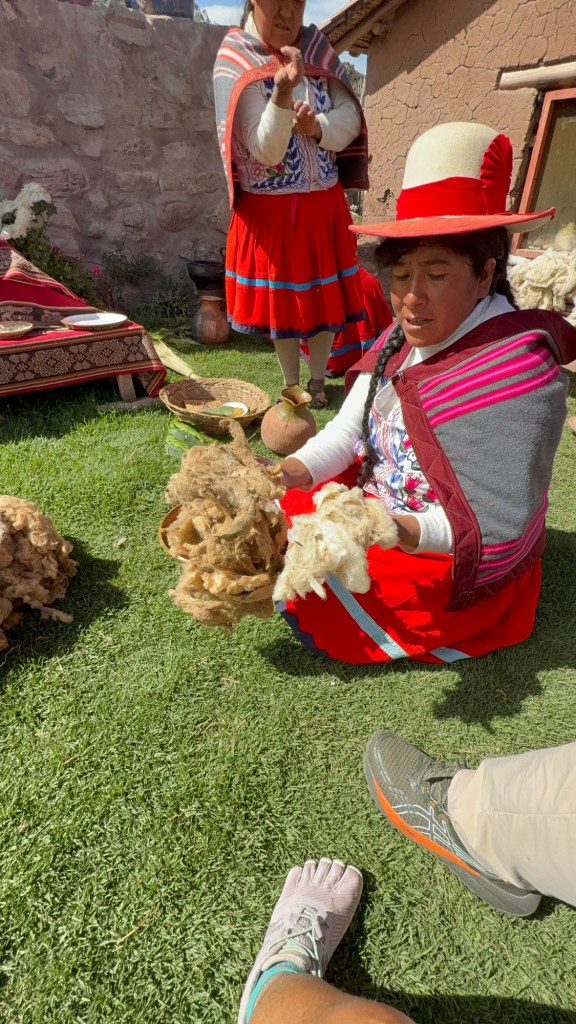
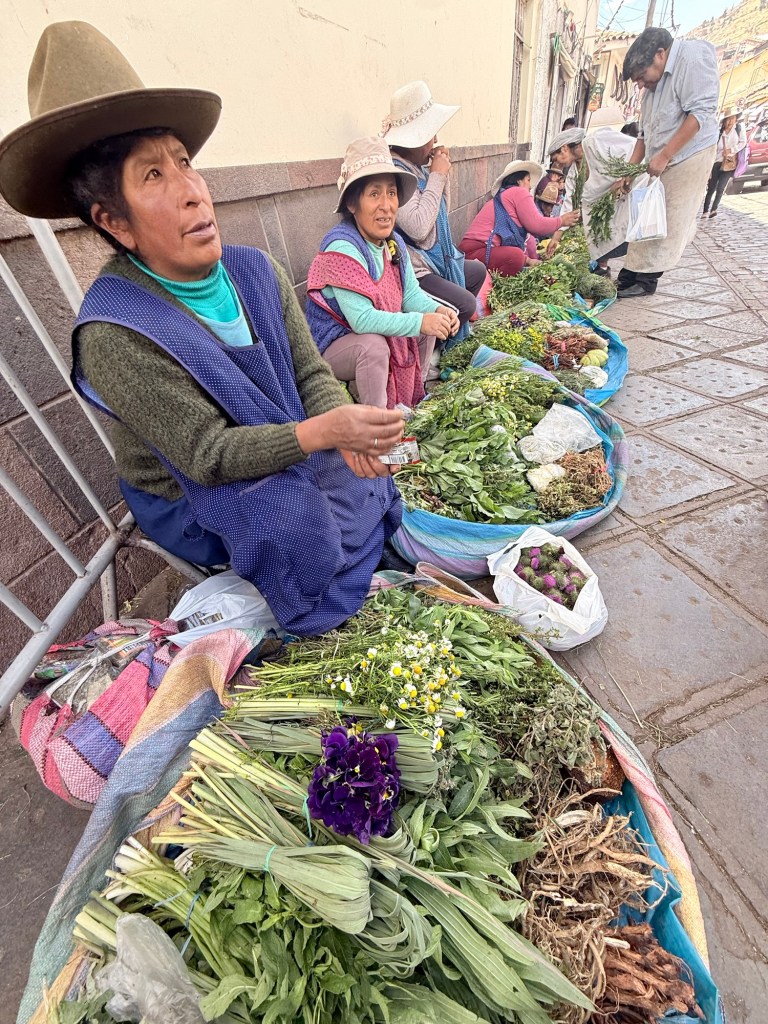
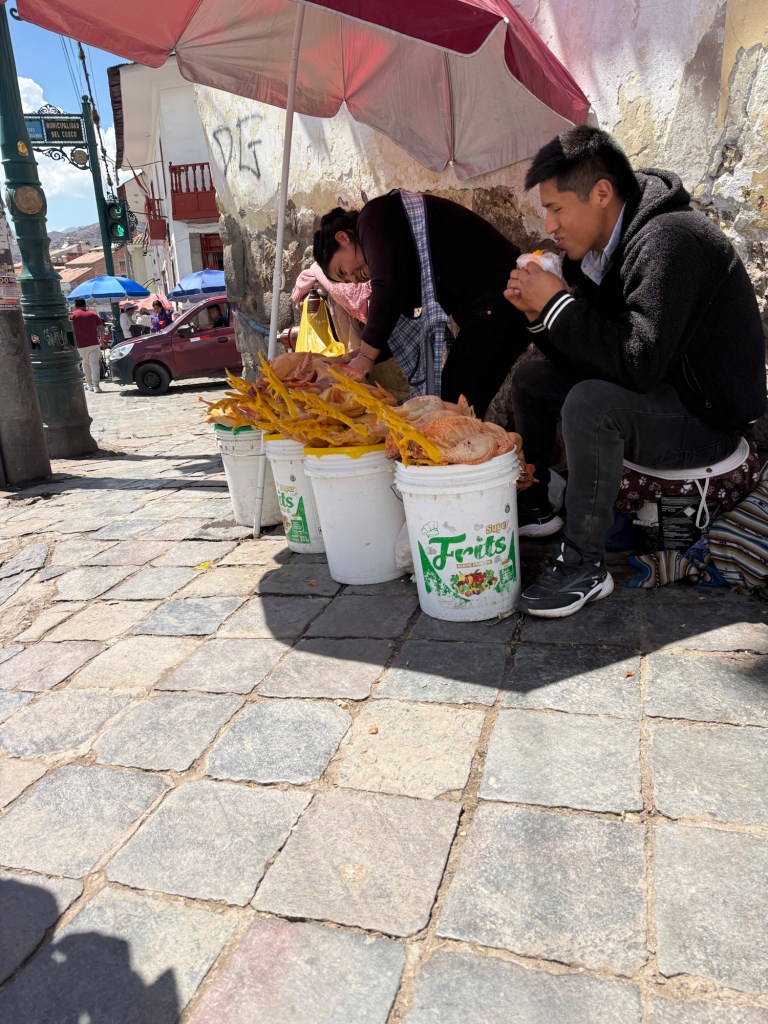
After that, we headed to an authentic Peruvian lunch in the home of local tribespeople where we learned the old ways of farming in the Sacred Valley and creating beautiful garments and fabrics from sheep’s wool. Their simple home and property had spectacular views. The local soup and other food we ate was delicious. I tried my hand at some spinning thread from raw wool. The people who live here are very small in stature because it is an adaption to the high elevation (greater than 12,000’).
Elevation Issues:

Spending four days at elevation was definitely affecting my body. Despite our busy schedule and activity my blood vessels were expanding and making me feel bigger and heavier every day. I was never really hungry. It turns out this is a real thing. We got to chat with some woman from Norway who were doing similar and harder activities and although they are used to higher elevations they were also experiencing the same bloating issues.

When we ended our Cusco journey yesterday and descended to sea level my body truly began shedding liquids immediately. Today, I feel much more normal and lighter.

The Journey Home:

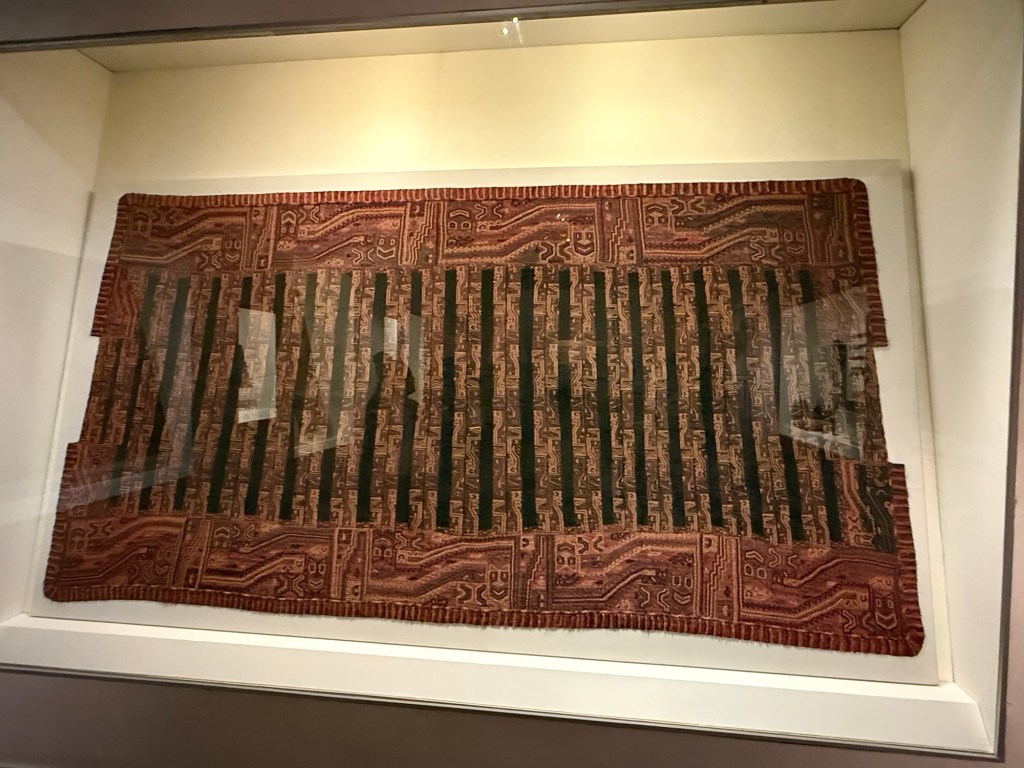
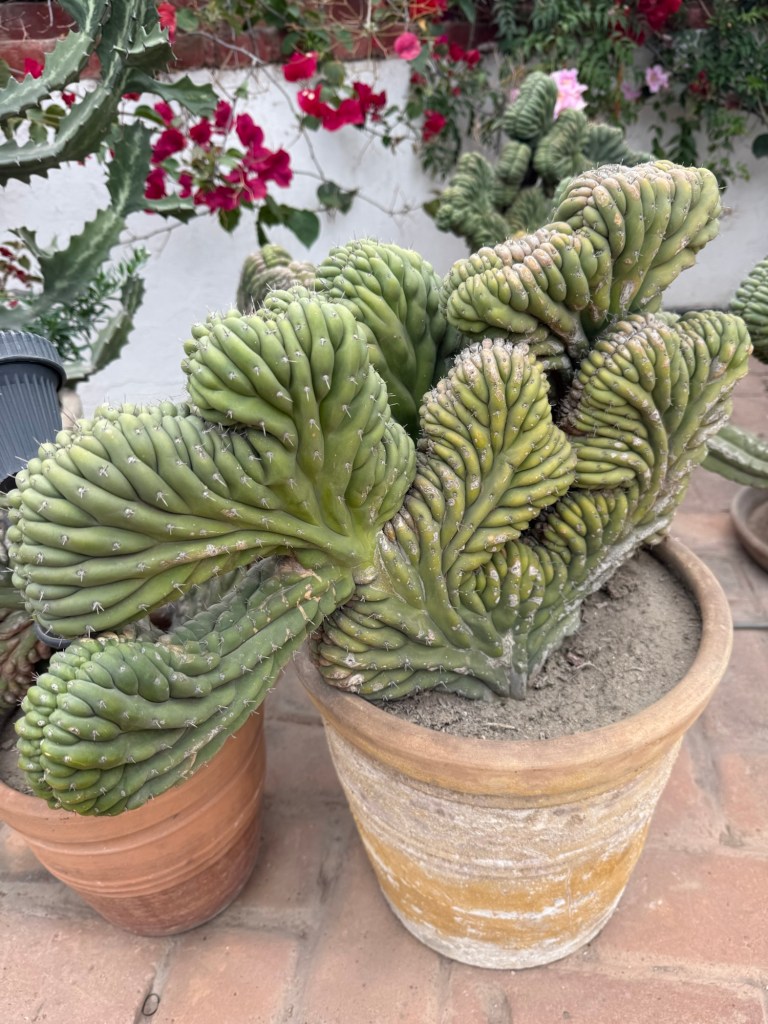
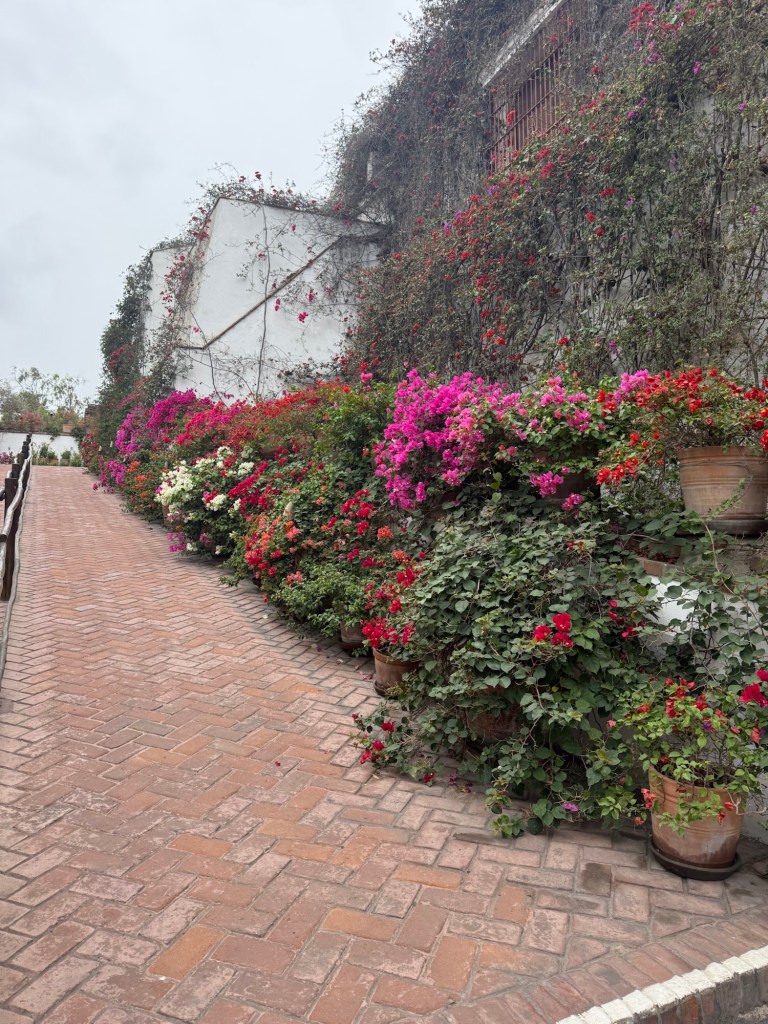
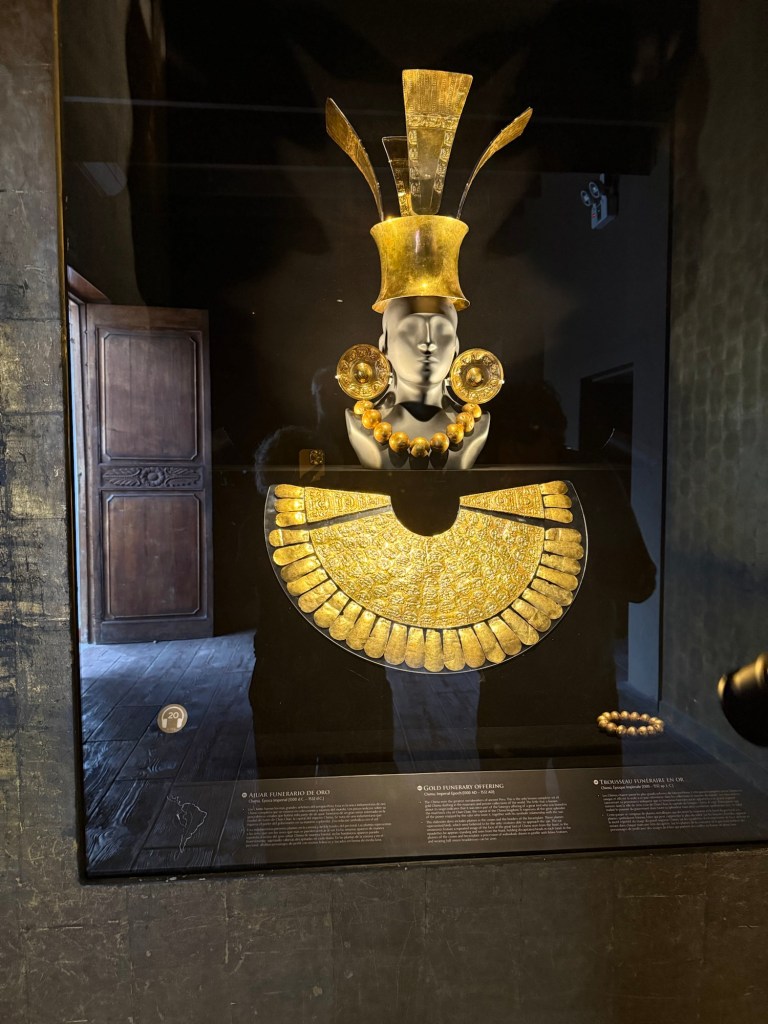
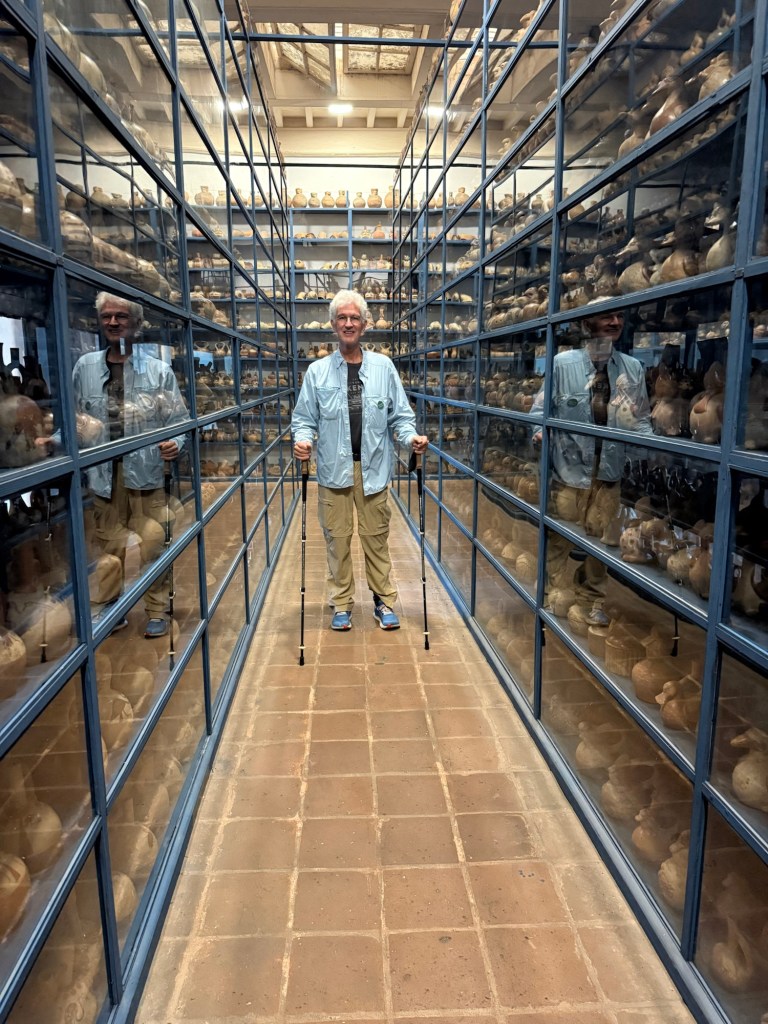
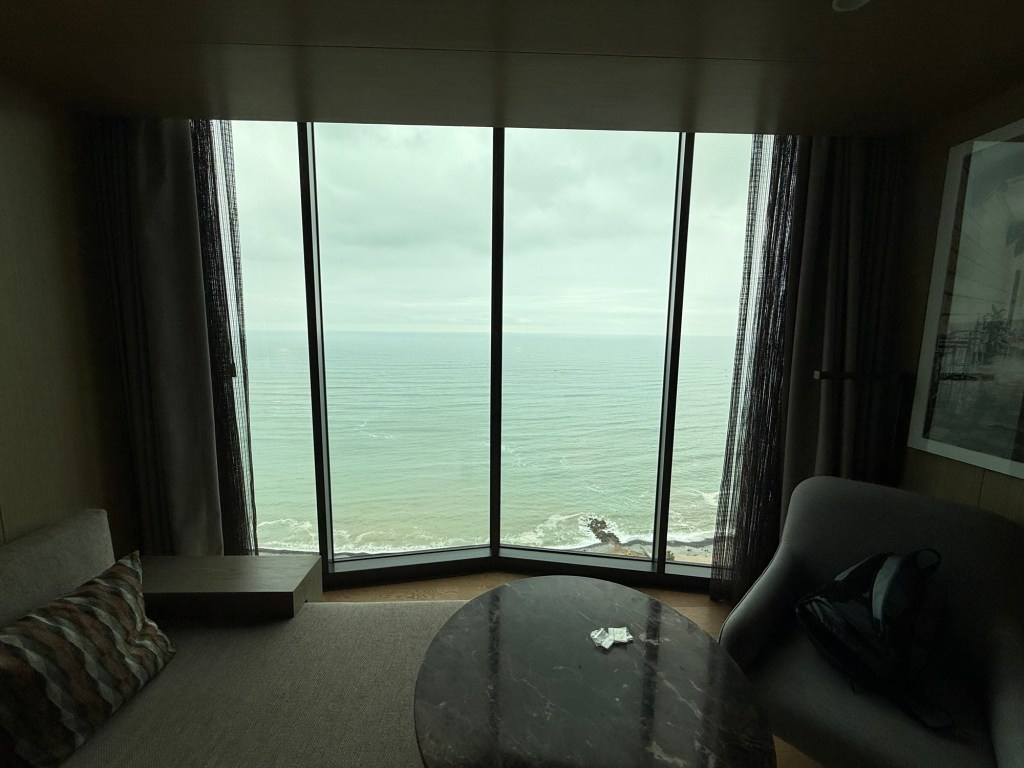
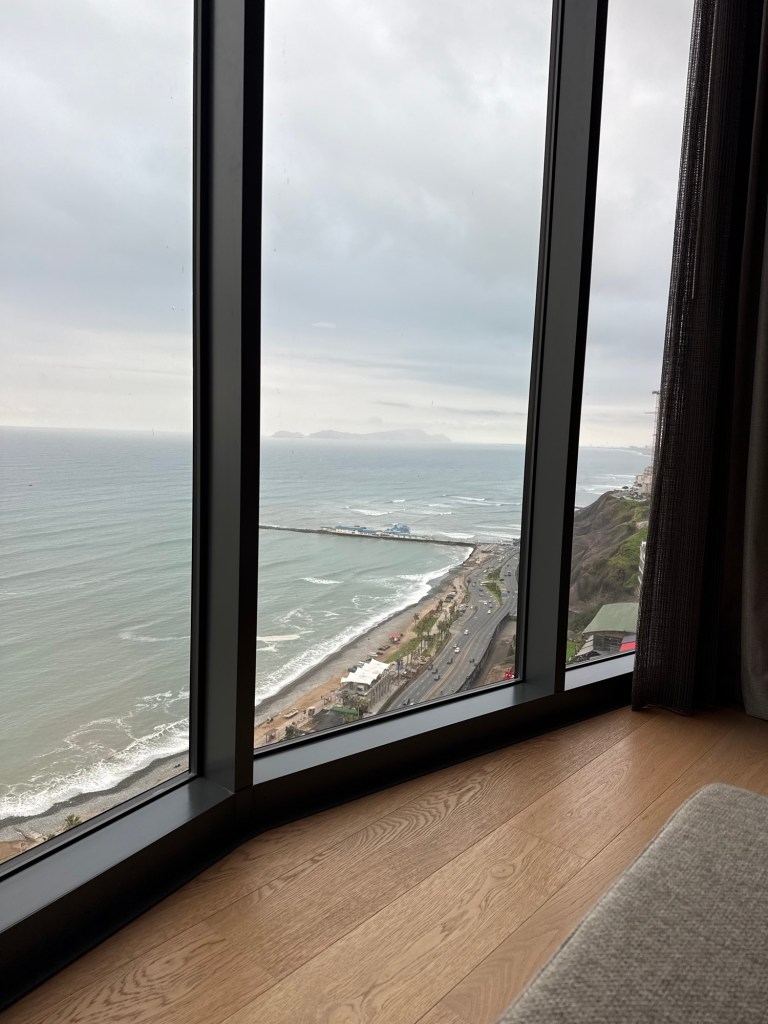
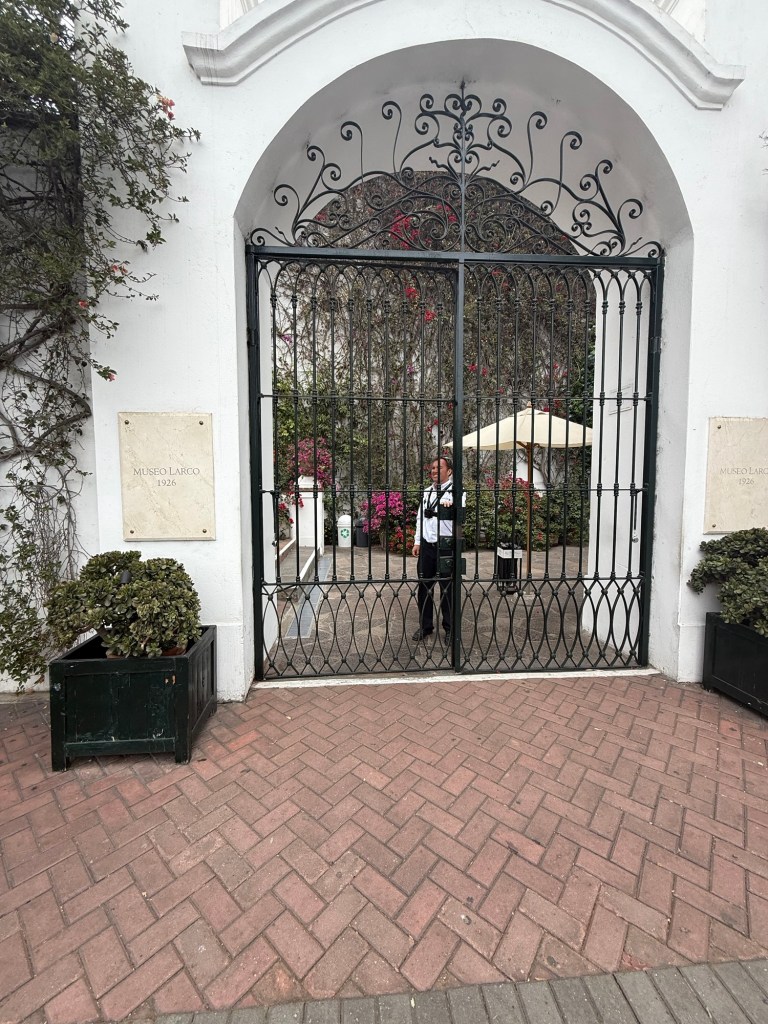
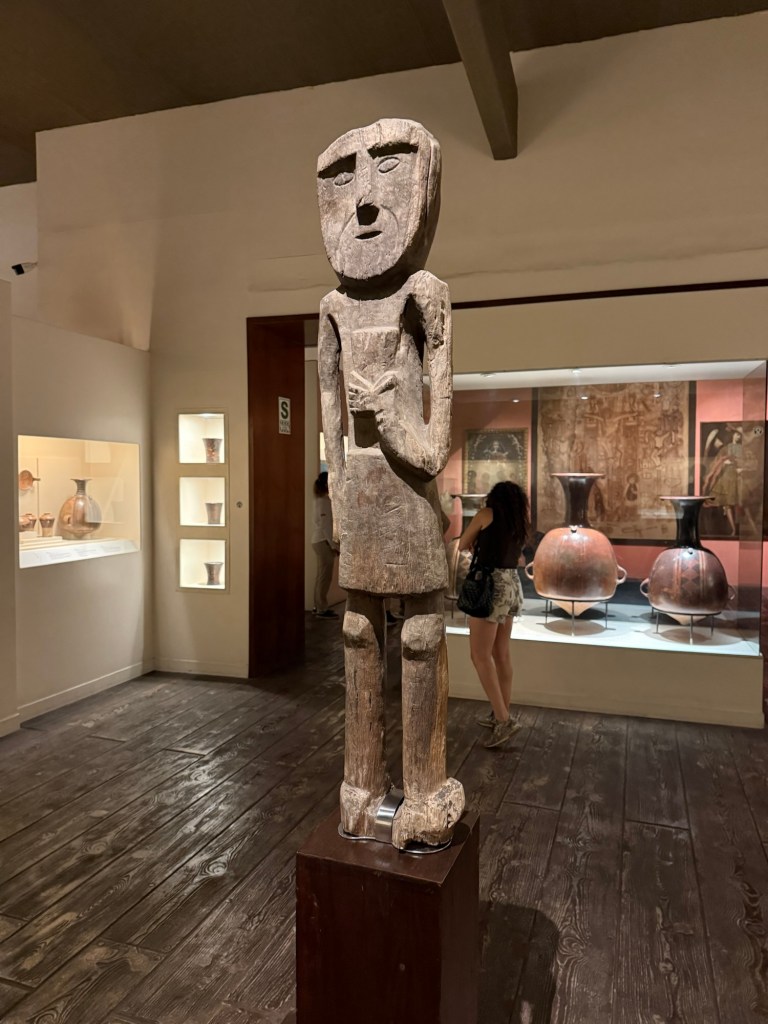
Originally, we were supposed to spend a night in Lima before going to Cusco, at the Intercontinental Hotel, which is on the coast in the southwest quarter of the city. Of course, that didn’t happen because of the crazy travel delays. However, we did get a chance to do that last night. After flying from Cusco to Lima in the morning, Mariela, our Lima travel spirit guide, took us to Museo Larco, a 100 year old museum of Inca and pre-Inca artifacts, where we also enjoyed a lovely garden and a delicious lunch. I read today that a typical El Niño creates a long humid and grey season for Lima and that was the case for us.
Afterwards, we were ready for some downtime. While Jim rested I explored the neighborhood and the hotel and procured two massages at the hotel spa. Boy did our bodies need that! We were both soothed and giddy after the massages and downtime. Although we planned to venture out for a late snack, we were too relaxed and so instead decided to just go to sleep.

This morning we awoke ready for the long flight home (9 hours from Lima to Los Angeles, then another 3 hours from there to Seattle).

Our adventure to South American really couldn’t have gone any better. Twenty-six days ago we left for a family business conference near LA, then visited my parents in San Francisco before continuing to Mexico City, the Galapagos and Machu Picchu. Crazy stuff happens when you travel like this, but as we learned from our cruising in the Galapagos, everything works out as long as you adapt as needed and enjoy the journey.

Thank you for reading this blog and joining us on our journey.

The Adventure Continues,

Fawn (writer & photographer) & Jim (editor)

“Standing in the present, on the highest part of the curve, you can look back and see the past, or forward and see the future”, M. Wylie Blanchet

TrueLoveAdventures.com & CurveOfTimePodcast.com
TLA in South America: And then the Rains Came, and so did the FAA flight stoppage

We were so lucky last week in the Galapagos. Although the dark clouds often surrounded us, we really never got rained on until yesterday. And boy did it rain!

We began what we thought would be a long day of travel leading us to Lima with a relatively easy first flight back to Quito. Not so fast. The charter plane heading to drop off the next group of cruise passengers and take us back to Quito couldn’t land because the heavy rain obscured and flooded the runway. It aborted the landing 3 times before running low on fuel and then returning to Quito to refuel. This would lead to at least a 4-hour delay and possibly more because the Galapagos airport does not operate after dark.

The good news for many of us is that we could use the Premier+ lounge in the very modest airport. It had air conditioning (!) some food and a nice bathroom. By this time everyone was also getting concerned about the FAA flight shut down in the USA. Most people on our ship were planning to fly home immediately after returning to Quito, and everyone knew that the longer we were delayed, the more likely most of us were going to miss our various connecting flights to our next destinations. Jim and I felt lucky because we were going next to Peru and thought our travel plans were less at risk than those hoping to fly back to the USA.

The Silversea ship staff started working like superhumans, coming up with contingency plans. They got the buses to come back to take us to the little hotel we stopped at before boarding our cruise ship a week earlier, hoping that this would be a quick respite before heading back to the airport. But when the delay became longer, they offered to transport everyone by zodiacs back to the ship for lunch.

Jim and I and a few other people decided not to go back to the ship and to instead wait it out in town. We weren’t interested in another wet, bumpy, zodiac ride to the swaying ship. This would create so much work for the crew who were madly cleaning and preparing the ship for the next group of passengers. No one really knew if we would be able to leave at all before it got dark.

Then we got the news that the flight was coming back and the weather looked hopeful for a Galapagos landing and exit before dark. Despite another menacing, but thankfully short heavy rain, our plane landed, deplaned the next group of cruise passengers, and loaded us up and took off about an hour before dark.

The flap of the butterfly’s wings in the USA can cause a tornado in South America. Metaphorically, that is what happened to travel world wide. The realization hit us that the long delay, coupled with the flight stoppage in the USA, was going to create a huge mess for everyone when we got to Quito, which is exactly what happened. Most connecting flights were missed, and all of the hotels near the airport were full. Luckily, we used Silversea for our subsequent land excursion to Machu Piccu so they were in charge of booking downtown hotels and new flights for us 24 hours later. We were lucky. Many of our new cruise friends found out they couldn’t get a new flight for days.

The Silver Lining:

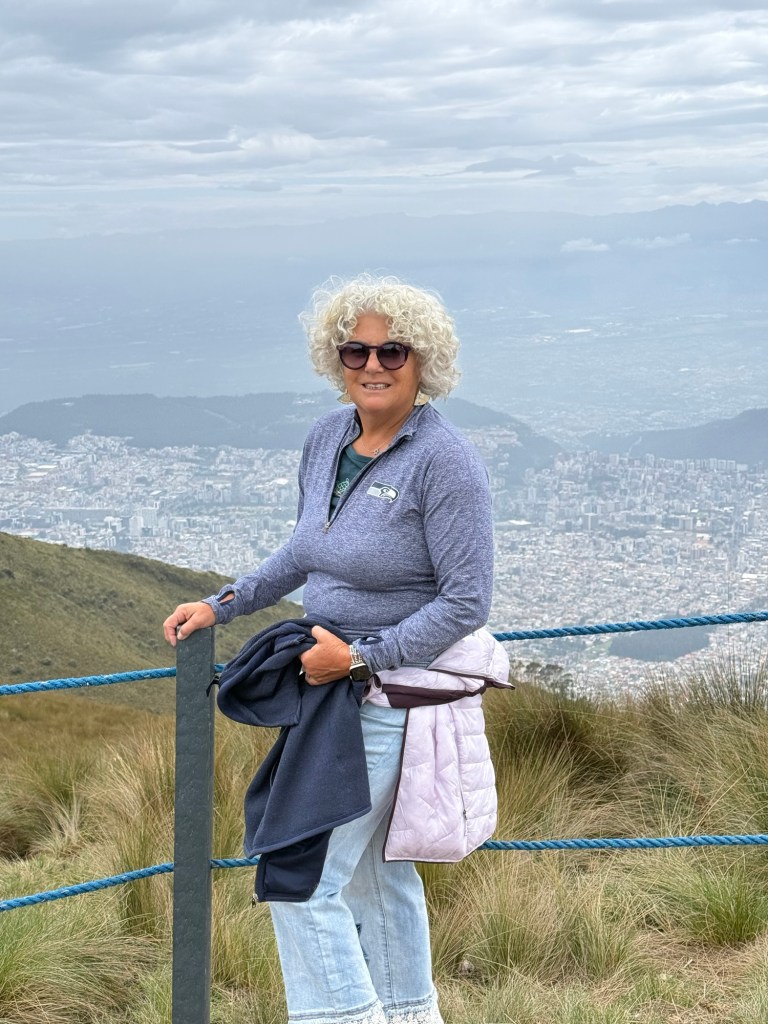
After missing our connection to Lima last night we were met by our airport guides and told our next stop was to drive back to the Marriott in downtown Quito. Our tour to Machu Piccu was supposed to start today in Lima. Instead we woke up pretty refreshed in Quito. After a lovely breakfast instead of touring Lima (most people told us we weren’t missing much), we headed out to take the gondola to the top of the 12,000’ high “look out” mountain towering above downtown Quoito. It only cost $8 to take an Uber, and $12 to buy 2 tickets on the gondola.

Ecuador had terrible inflation 25 years ago but solved it quickly by adopting the USA dollar as their currency. So, all of the prices are in dollars, but the price of almost everything is a lot cheaper than in the USA. For example, a gallon of gas costs only $3.20.

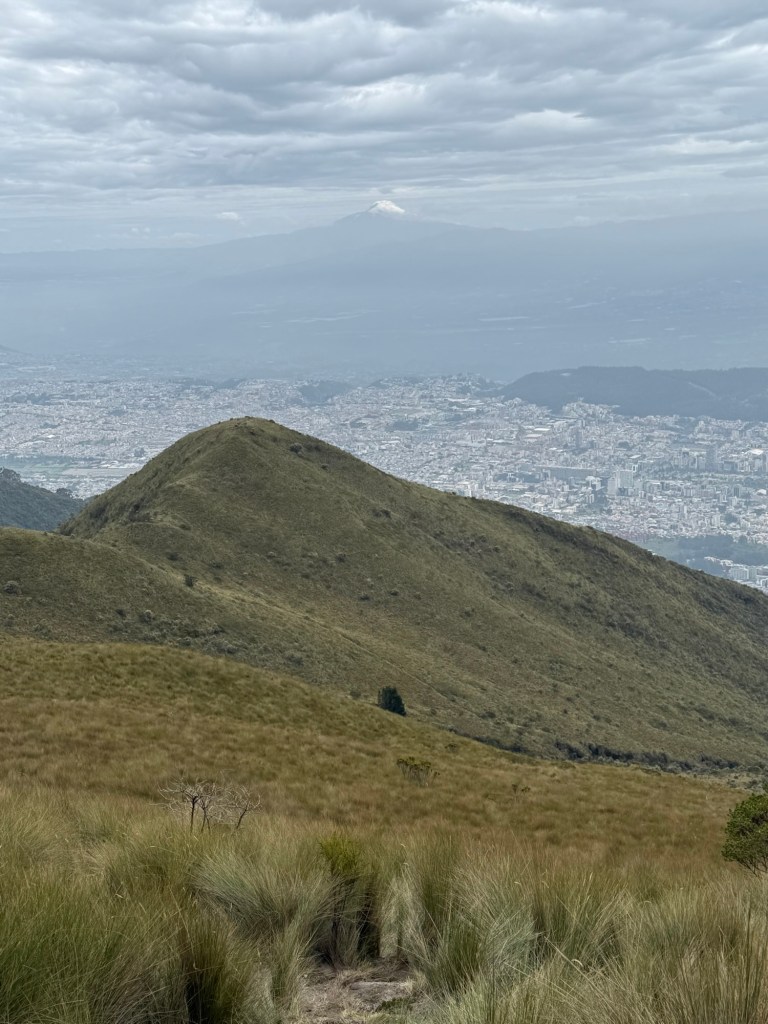
Quito is on the equator so there aren’t any seasons. The temperature changes are minimal. Today was pretty sunny and warm creating the perfect opportunity to see this beautiful city from 12,000 feet up and helping us acclimate to our visit to Cusco (about 11,300 feet high) and Machu Piccu (a bit lower). We even saw one of the 5 volcanoes surrounding Quito, including one that is 18,000 feet high.

Quito closes a main street on Sunday so the community can bike and run. People were out and about enjoying the beautiful day including lots of people with dogs going up the gondola. There was even a dog park with a challenging dog trick course up there.

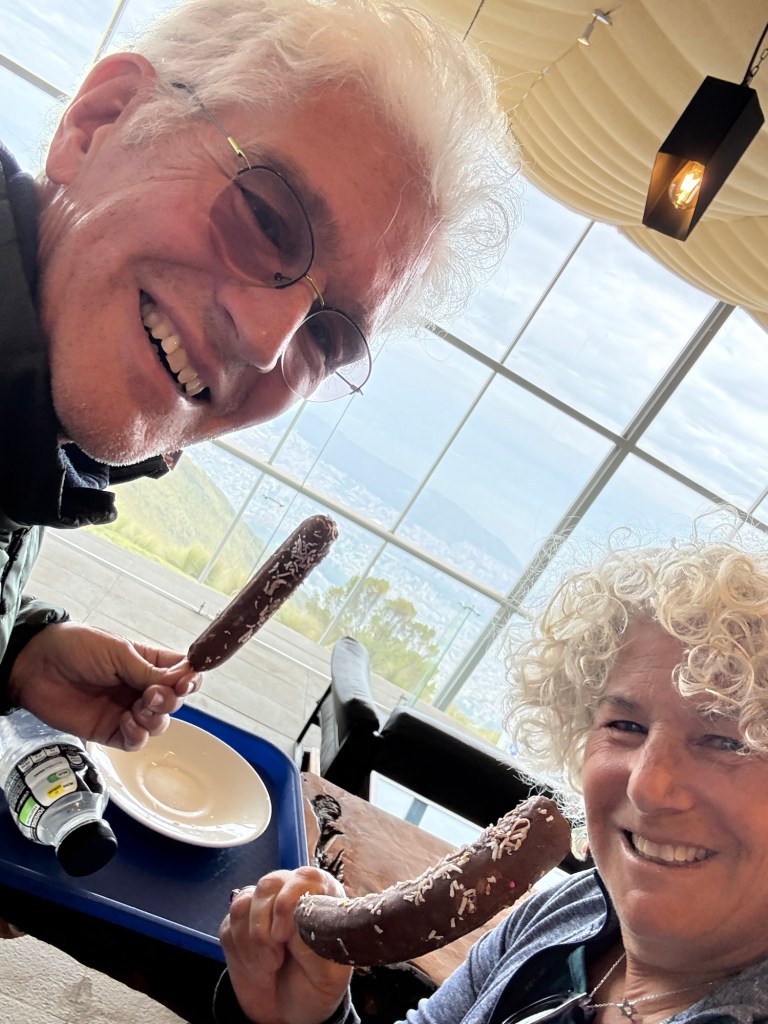
At the top we certainly felt the effects of the elevation and walked around slowly before heading to the pretty café area with a spectacular view. This gave us a wonderful spot to rest and eat some delicious frozen chocolate-dipped bananas.

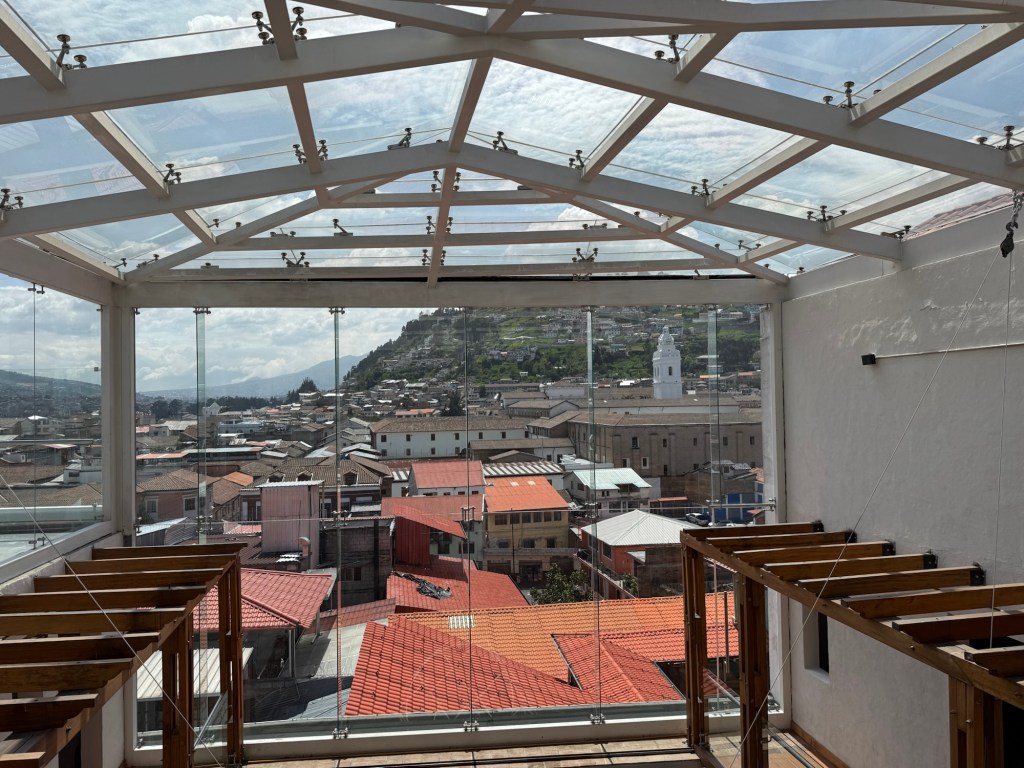
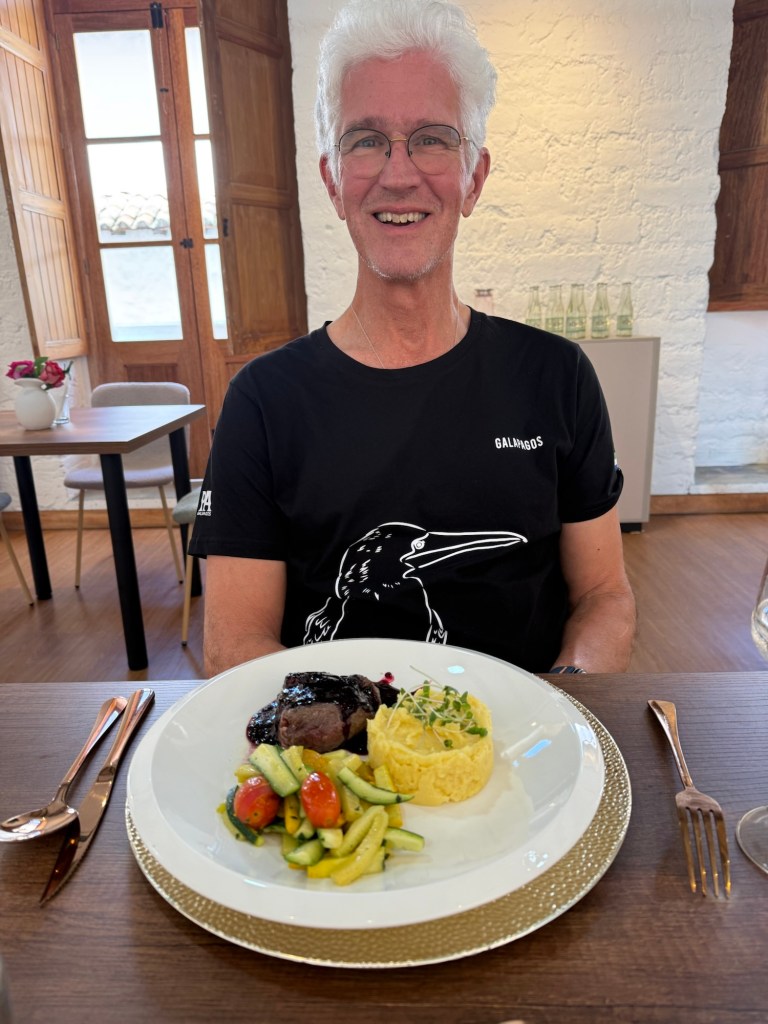
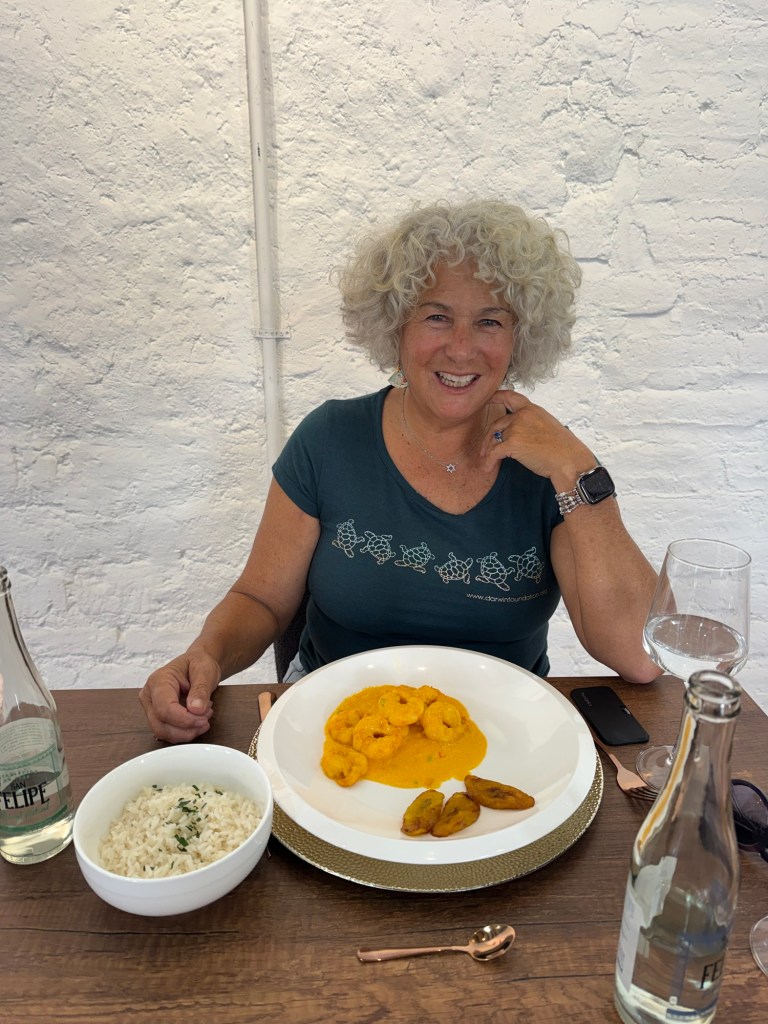
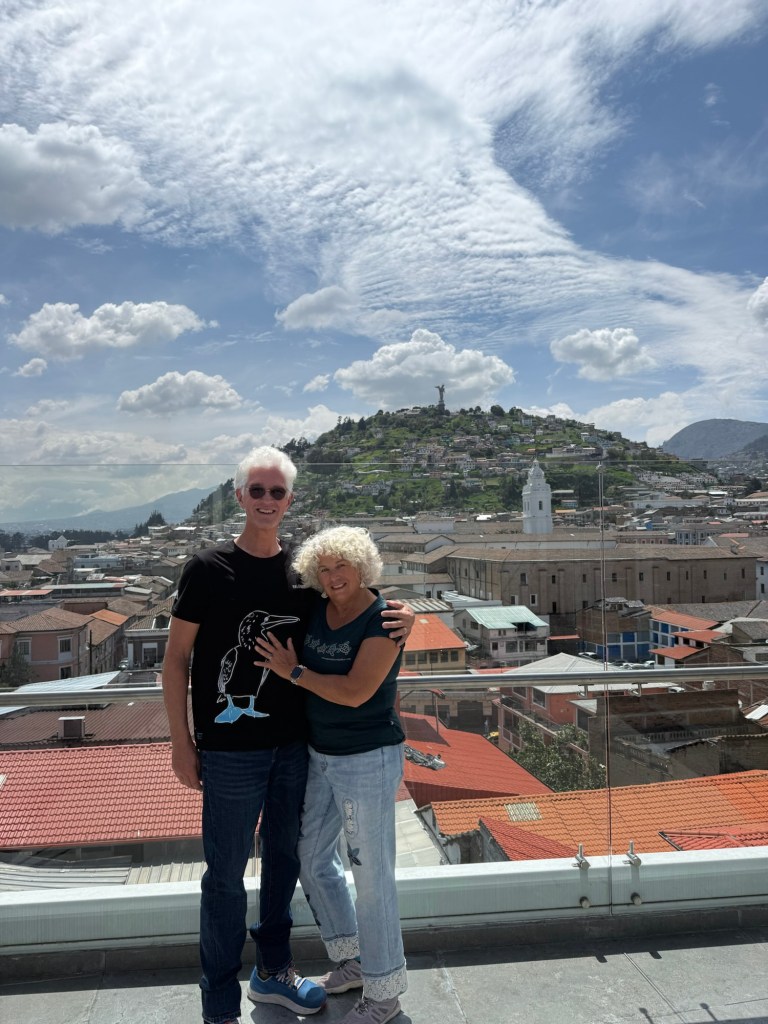
The local Silversea staff scheduled a perfect late lunch for us at a stunning new restaurant in the old town. The owners repurposed an old large colonial with clean architectural touches and a glass ceiling, which bathed the inner courtyard with sunlight and opened the building to spectacular views. The building and the soft jazz music formed the perfect ambiance for the artistically presented and delicious food.

There is more we would like to experience in Quito. We didn’t get to visit the Equator Museum or the Hummingbird sanctuary. I’m sure we will return.

After lunch we packed up and headed to the airport once again for our flight to Lima. We got a last minute reservation at the Wyndham next to the airport, or so we thought. With our super helpful local Silversea representative, Mariela, who met us at the airport as we exited, we thought we had an easy and smart solution to the expected traffic jam tomorrow morning because of the Pope’s visit to Lima. Again not so fast. Our hotel was the “old” Wyndham Airport Hotel. Still only 5 miles away and a stones throw as the crow flys, but 20 minutes away with the antiquated roads around the airport. Combine that with the fact that the hotel couldn’t find our reservation, we weren’t in our room until 1 am. But a free Pisco Sour and a cool shower and we fell asleep quickly and slept 5 hours before Mariela met up with us in the morning. And thank goodness that she did. The airport was once again crazy. The Latam automated check in system was down. But she navigated the issues like a perfect airport spirit guide and we got to our gate with 20 minutes to spare before boarding. I’m finishing this blog on the plane to Cusco, and we will meet up with our next guide, Marco, for a lunch before heading to the hotel and the rest of our tour. Next stop is at 12,000 feet.

Our thanks and appreciation go out to the team that helped us maneuver through a difficult situation and create a great day for us in Quito and navigated our complex situation at the Lima airport.

The theme of the Galapagos continues: adaptation is the key to surviving whatever life throws at you

The Adventure Continues,

Fawn (writer photographer) & Jim (editor)

“Standing in the present, on the highest part of the curve, you can look back and see the past, or forward and see the future”, M. Wylie Blanchet

TrueLoveAdventures.com & CurveOfTimePodcast.com
Galapagos Adventure Part 3: Amazing Snorkel and the Great Mosquito Hike.

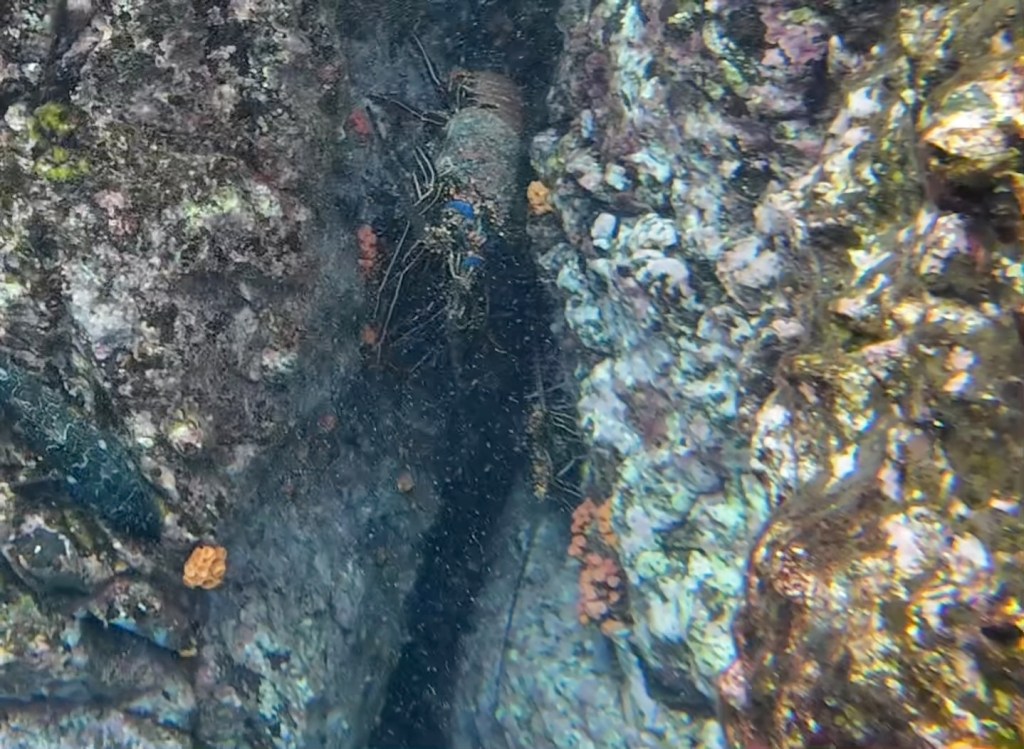
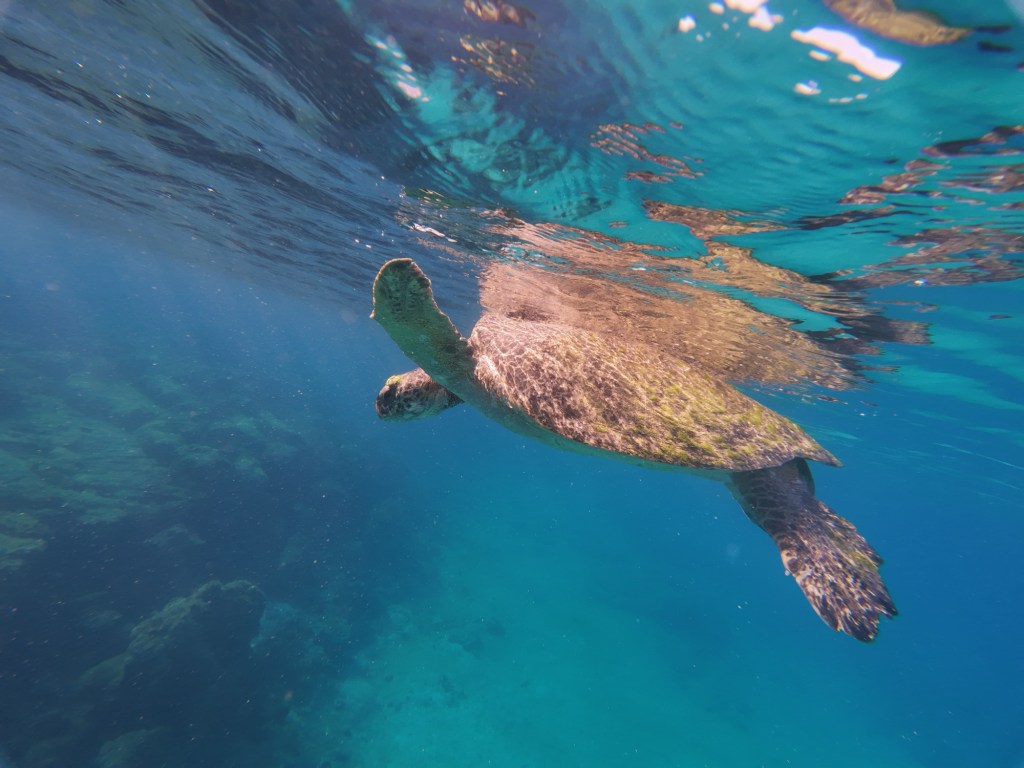
Tourquise water, white-sugar-sandy beach and perfect clarity for snorkeling began our day on Wednesday. Who could ask for more? After a wonderful walk on the beach we swam and then headed out on the zodiac from the beach for a perfect snorkel where we saw young sharks, lots of turtles, huge lobsters, schools of tropical fish and caves. We relaxed the rest of the day which leads me to yesterday and the Great Mosquito Hike.

So clear. See the turtle?
One of my favorite fish.

Super El Niño affects the Galápagos Islands in many ways. Some animals thrive, some don’t. We have been treated to the amazing experience of unusually warm water for this time of year. But it also leads to a very early and robust wet season. The wet season leads to plush green vegetation, lots of fresh water flooding and, lots and lots of mosquitos.

Lobsters!

Yesterday we planned to skip the very challenging “lava” hike and instead go on the newly added “photography” hike. The goal: first photograph the abundant and easily accessible seals, iguanas, and boobies, and then hike across the island to see the Albatross airport”. There were three big problems. Despite the very windy conditions, the wet conditions created clouds of hungry mosquitoes, more than any of us had ever seen before.

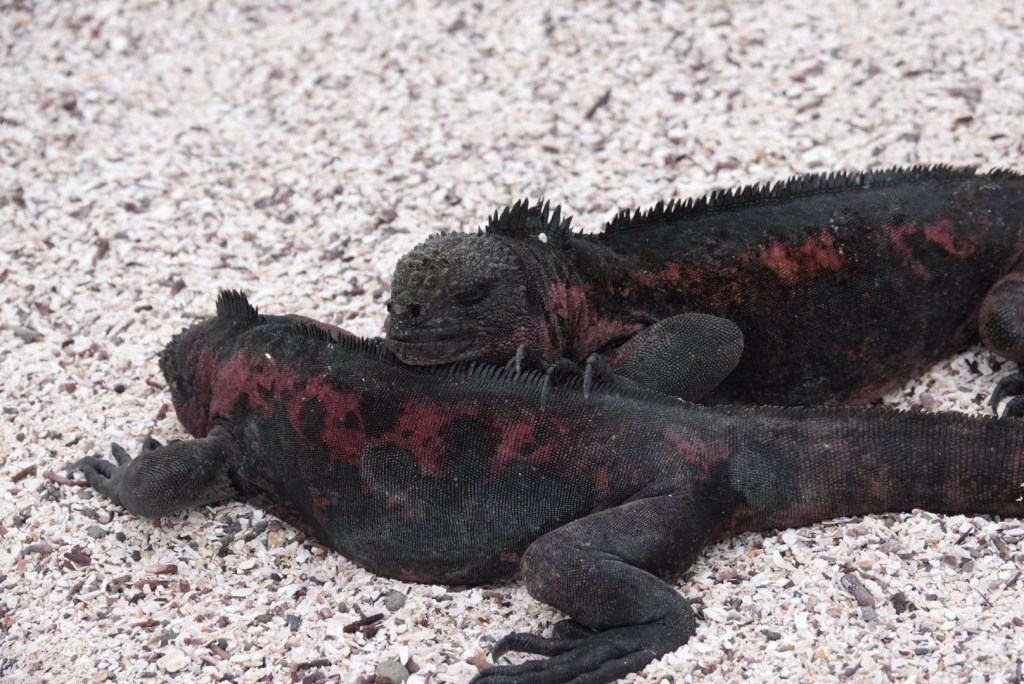
And although the “lava” hike group was the first to encounter them, they didn’t radio a warning back to the ship so no one in the “photography” group were prepared for what we encountered. We could have, but didn’t have, our long pants, socks, mosquito nets or hiking shoes. The wind and large waves created an extremely challenging landing because the usual landing was overrun by the surf, but the amazing crew helped Jim and the rest of us off get off the boat, over the lava shore, and to the beach, which was teaming with barking sea lion pups, marine iguanas in motion, birds of all kinds and mosquitos.

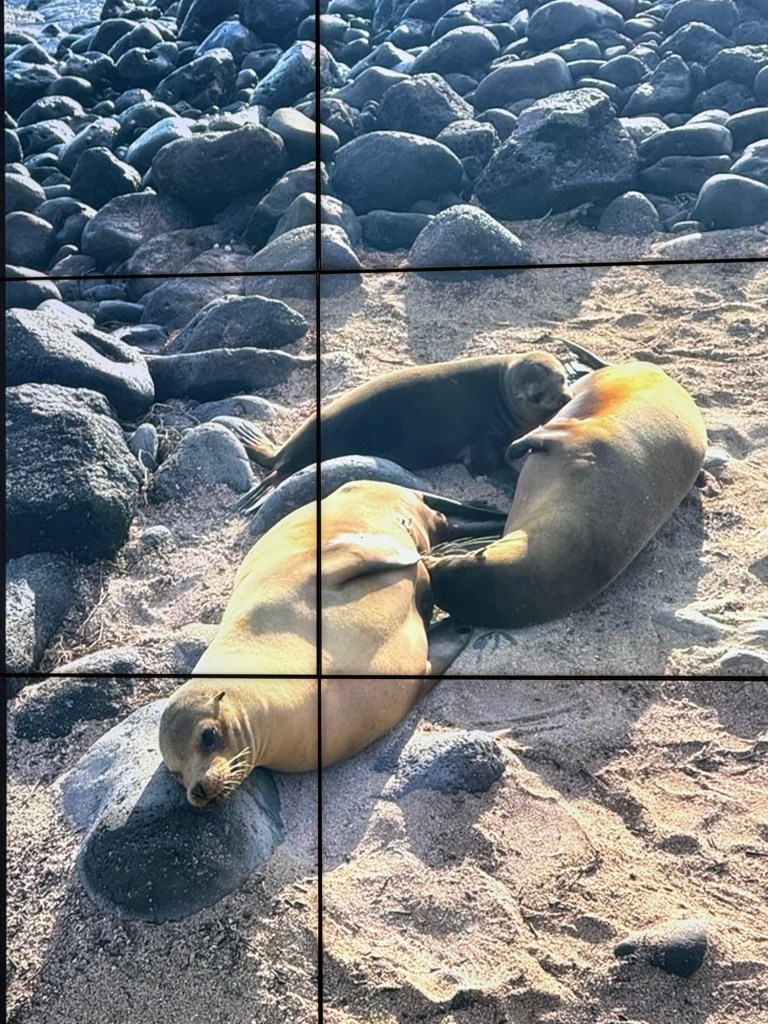
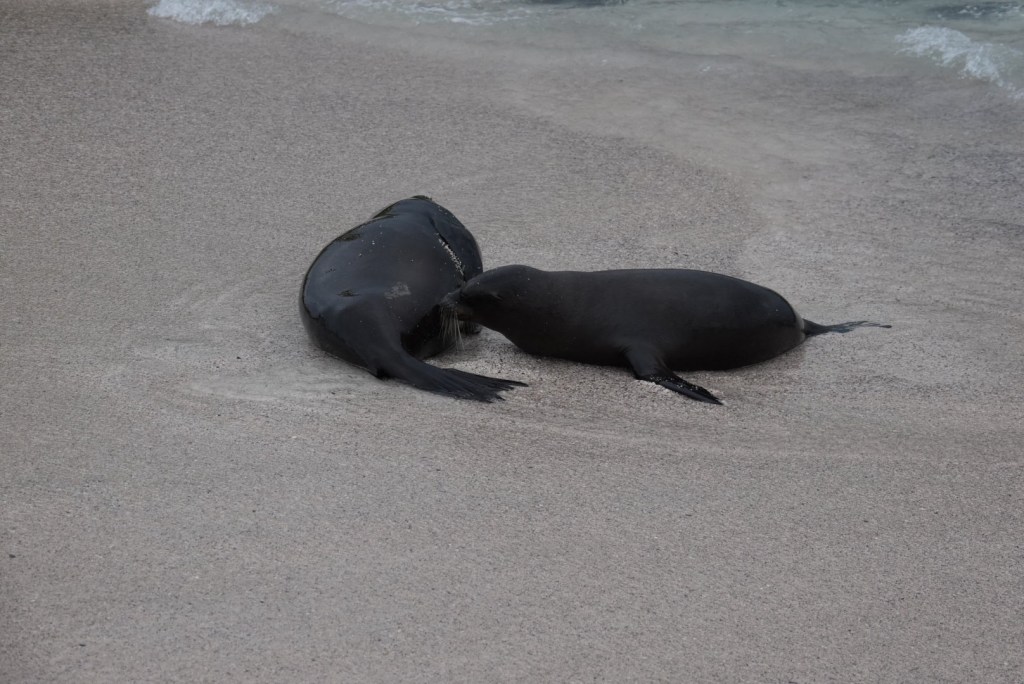
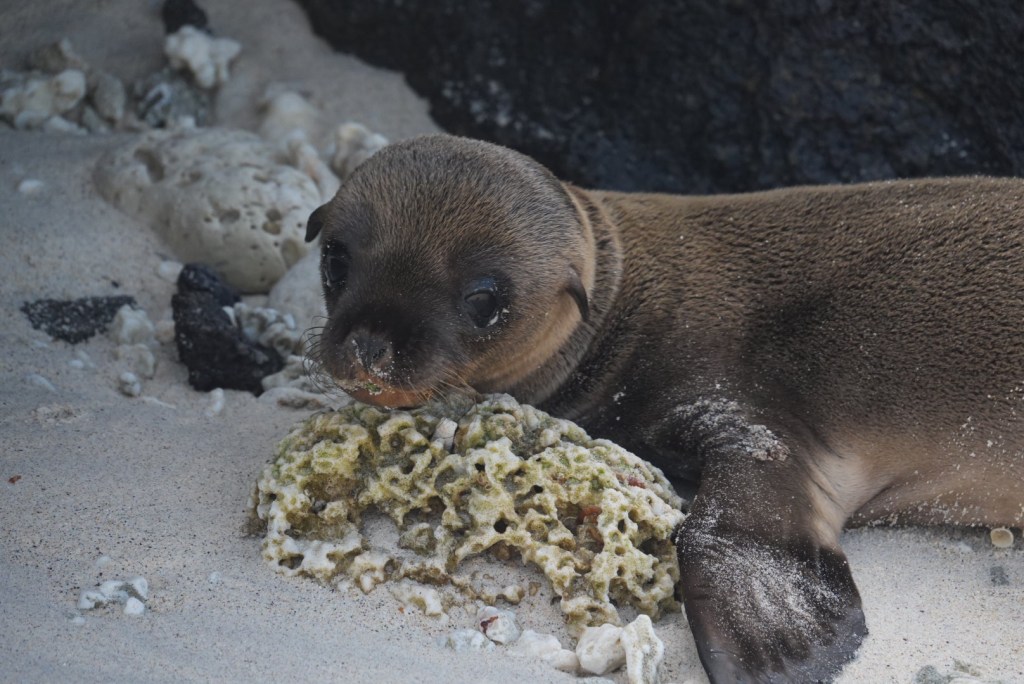
We had just had a great lecture on the Galapagos Sea Lions and how they are “super sucklers” getting milk from their mothers for years after its needed. Sometimes 3 generations will suckle all at once. I photographed exactly that at the beach.

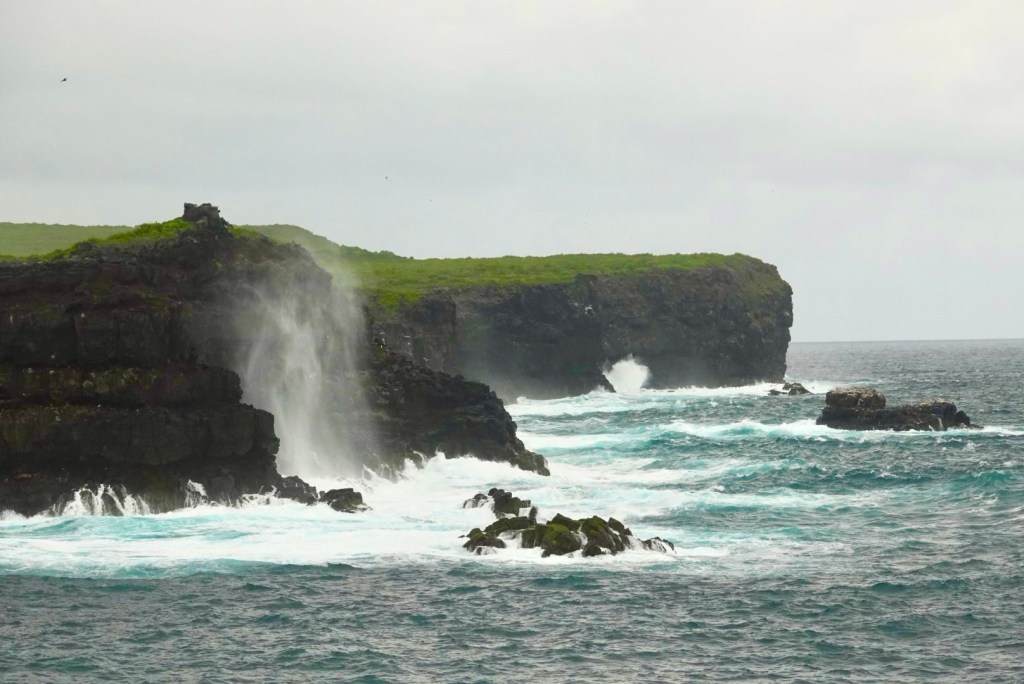
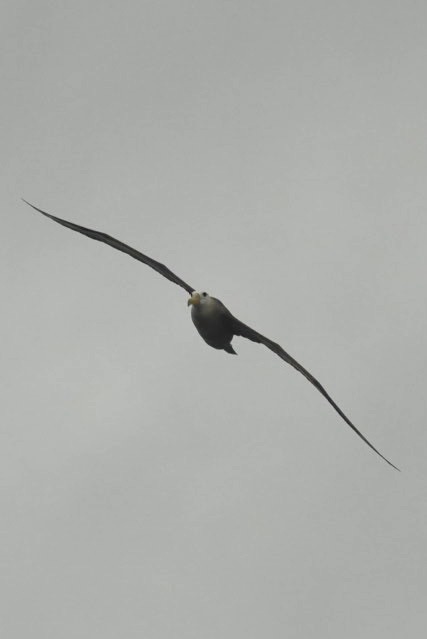
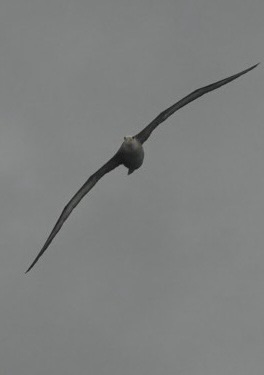
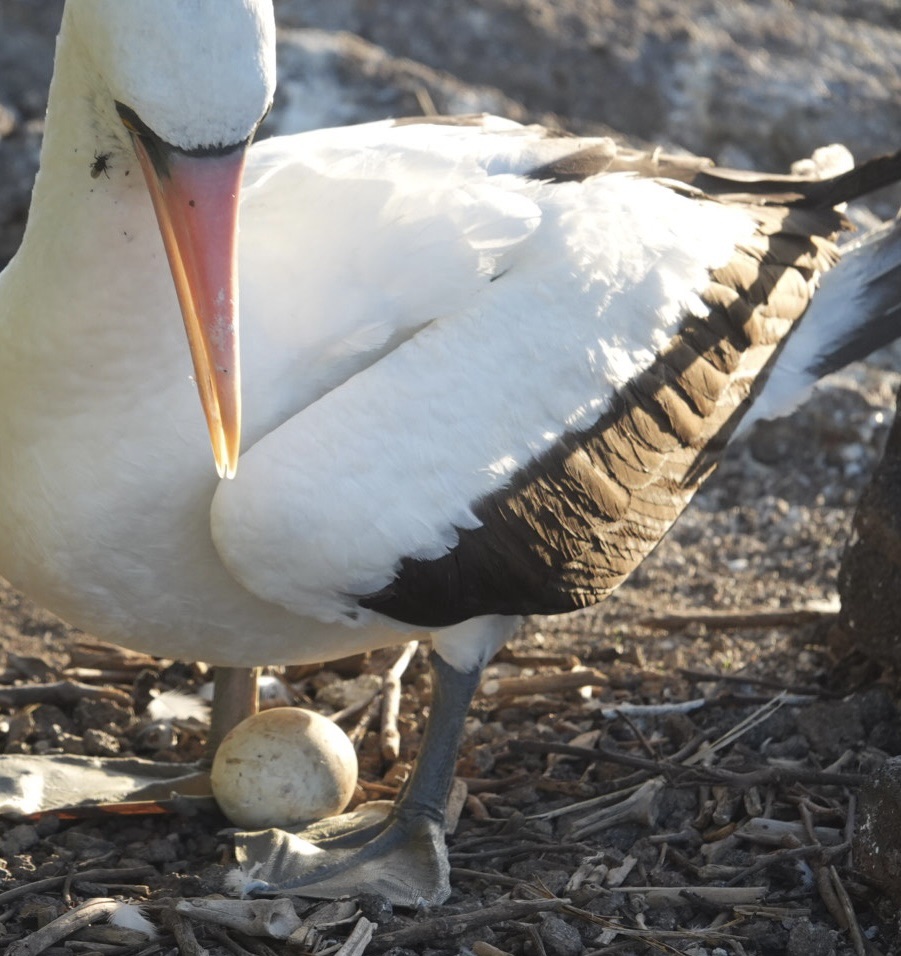
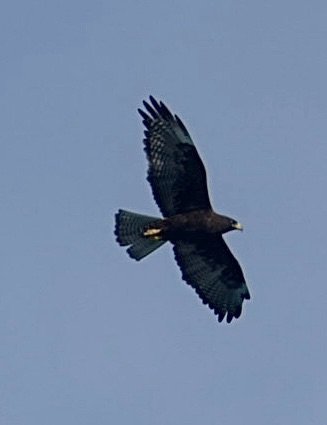
Unfortunately, despite not being prepared properly, the photography group left the beach for a fast hike to try to escape the cloud of mosquitos. It didn’t work. And, when we got to the Albatross Runway there were virtually no albatross. They are clearly being affected by the El Niño and flying to better places with more food to nest and feed. I did photograph one albatross, one hawk, a giant sea lion, blue footed boobies, and a big blow hole before we pressed on back towards through mosquitos towards the beach.

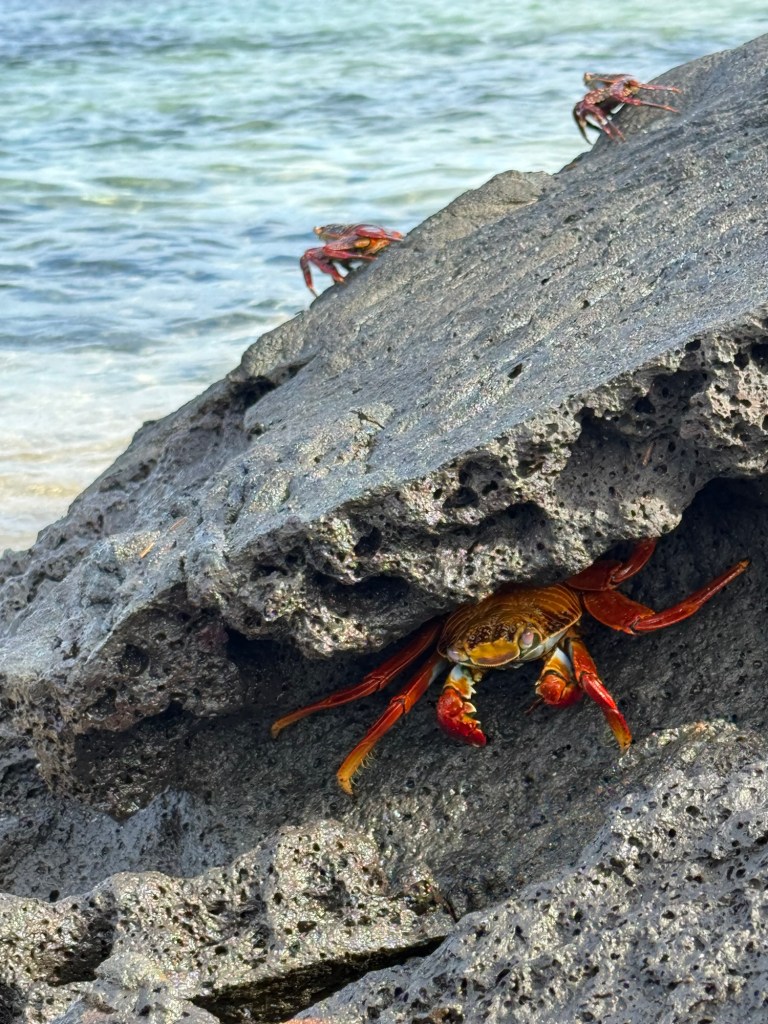
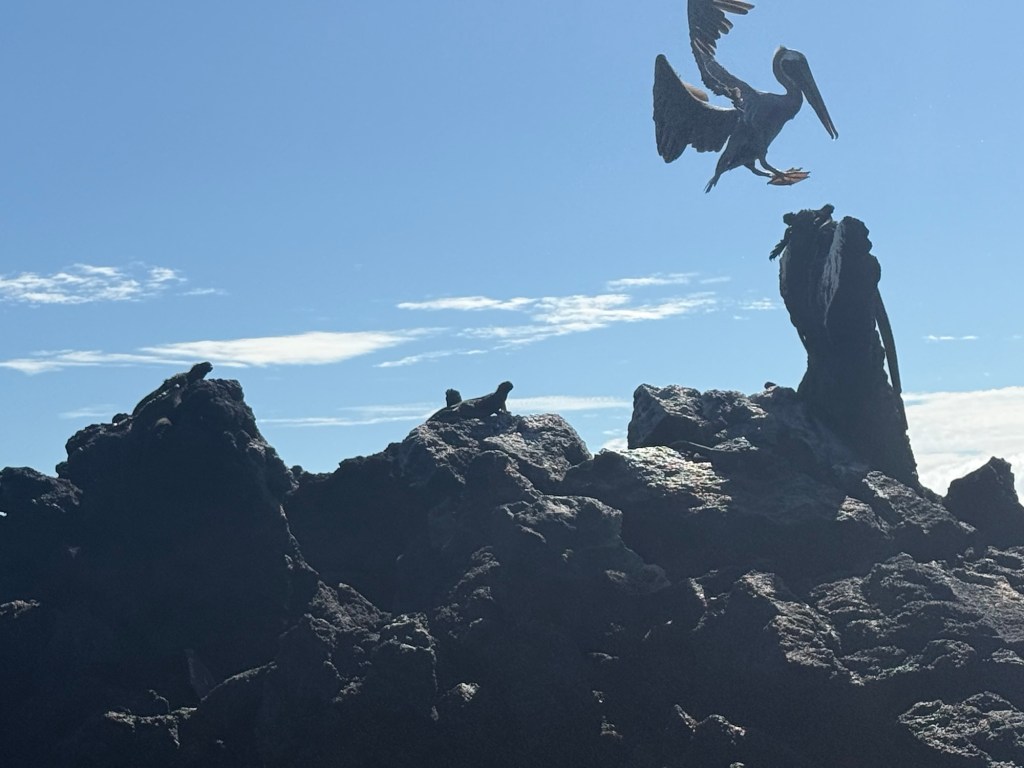
Galapagos Magpie, lizards and Sea Lions

When we finally made it to the zodiacs, Jim had already made the decision (along with everyone else he was with) to abandon all of the animals on mosquito beach and return to the ship.

By the time I got back to the ship I really didn’t want to move, but I had to take a shower.

If we hadn’t already scheduled dinner with Jorge, the trip photographer, I wouldn’t have gotten out of bed. But, we rallied and I’m so glad we did.

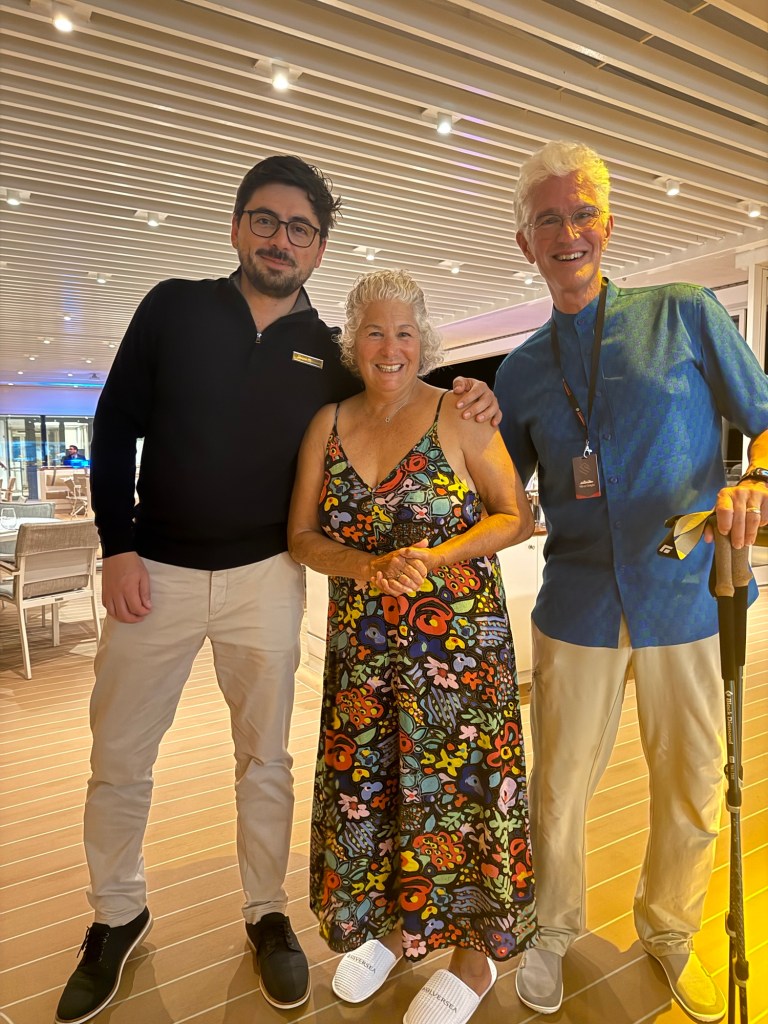
Jorge has worked for Silversea for 12 year. He’s a photographer, videographer, artist and entrepreneur (who has built and opened 6 AirBnB’s) and loves to travel. He helps take care of his family financially after his father died several years ago from cancer and we shared stories about travels, photography and life. The people you meet while traveling really bring the sweetness to life. We hope Jorge visits us when he visits the PNW in 2027.

Today is our last full day on the ship and we are not planning to do much. We’ve skipped the morning activities, but we are still planning to go to the nearby sandy beach and swim there this afternoon. Of course we must pack and organize for the next part of our South American Adventure: Peru and Machu Piccu. Tomorrow will be a long travel day as we make our way from sea level to Quito (9,000’), then to Lima (sea level), where we’ll spend 2 nights before flying to to Cusco (over 11,000 feet), our “base camp” before continuing to Machu Piccu and the Sacred Valley.

What does conservation mean in the Galapagos?

The animals in the Galapagos are experts at adaptation to the currents and weather. Their enemies are the creatures and plants that can use humans to sneak on the island. Humans brought goats and in a very short time they destroyed the grasslands the tortoises eat. The removal of 100,000+ goats from the Galapagos took years and was quite a story. Certain aphids kill plants that other bugs need to thrive so they tested and brought ladybugs to eat them and that worked without harming other parts of the ecosystem. Feral cats and dogs are also devastating to the marine iguanas and other lizards and birds. The rats brought by ships since Darwin devastated the eggs of local animals. Blackberries are a menace everywhere, including the Galapagos, overwhelming other local flora. But the government and the people here are working so hard to keep this place as pure and clean as possible eradicating everything they can that doesn’t belong. And they are working hard to improve the education system.

The Adventure Continues,

Fawn (writer photographer) & Jim (editor)

“Standing in the present, on the highest part of the curve, you can look back and see the past, or forward and see the future”, M. Wylie Blanchet

TrueLoveAdventures.com & CurveOfTimePodcast.com
Galapagos, Part 2: Stars, Hawks, Penguins, Iguanas, Baby Sharks and Giant Tortoises

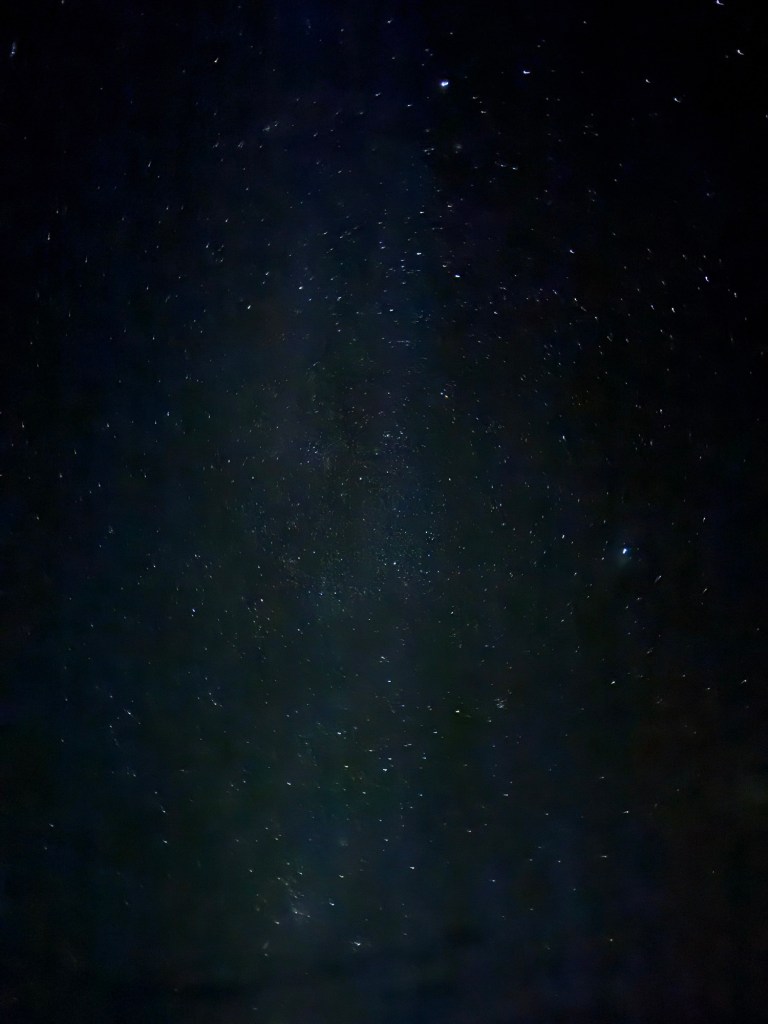
Stars: Two nights ago I woke up in the middle of the night, looked outside and the clouds cleared. It was time to get up and head to the “stargazing deck” on the top of the ship. We brought up our pillows and from 2:30am to 4am enjoyed the night sky. Of course, the stars are different here at the equator, but we saw Orion and Beattlejuice, Saturn, Mars, the Milky Way and several shooting stars.

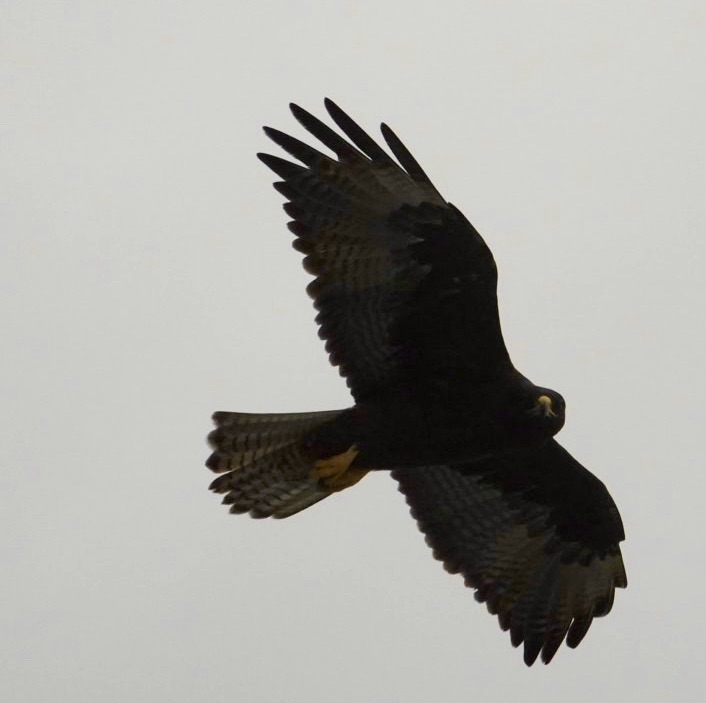
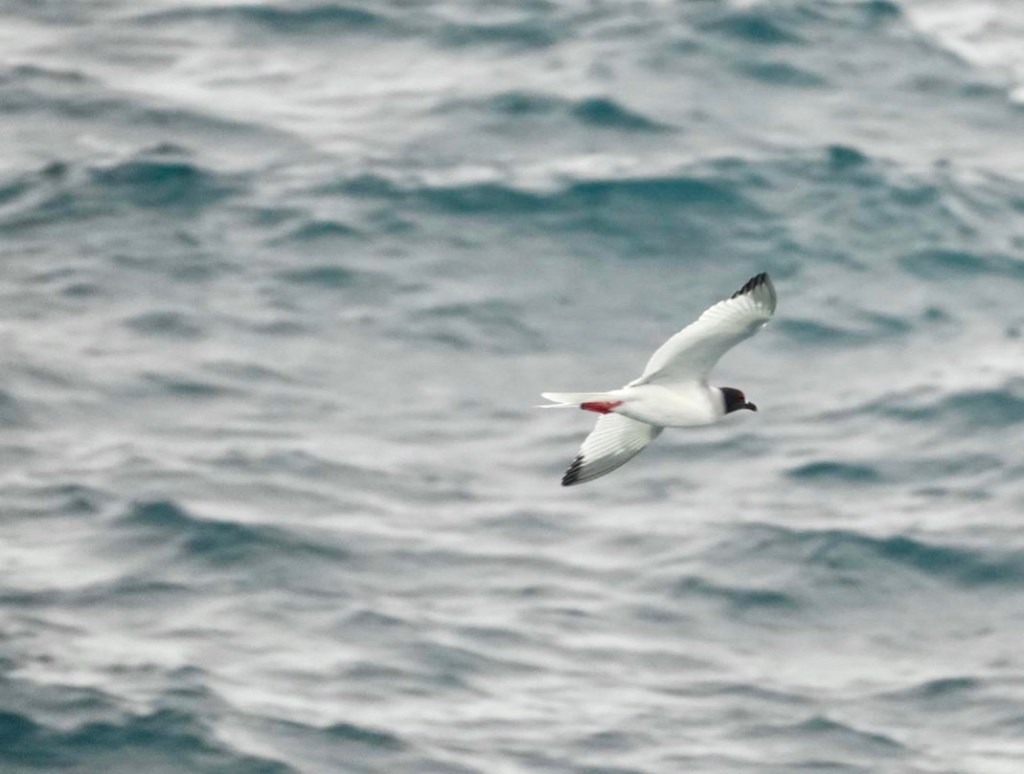
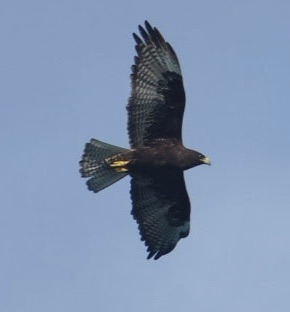
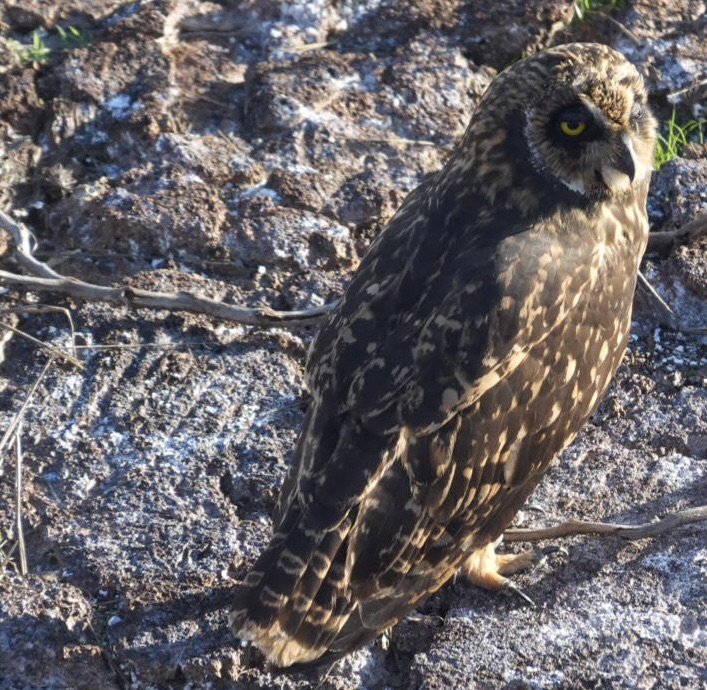
Hawks: Hawks are the apex predator in the Galapagos and they have adapted in interesting ways. On the food rich southern islands, the hawks raise chicks in a typical monogamous relationship. But on the volcanic and food poor western and northern island, the hawks are polyamorous, with one female hawk and a harem of males breeding and raising many chicks as a group project. I was lucky enough to see a few solo hawks and photograph one.

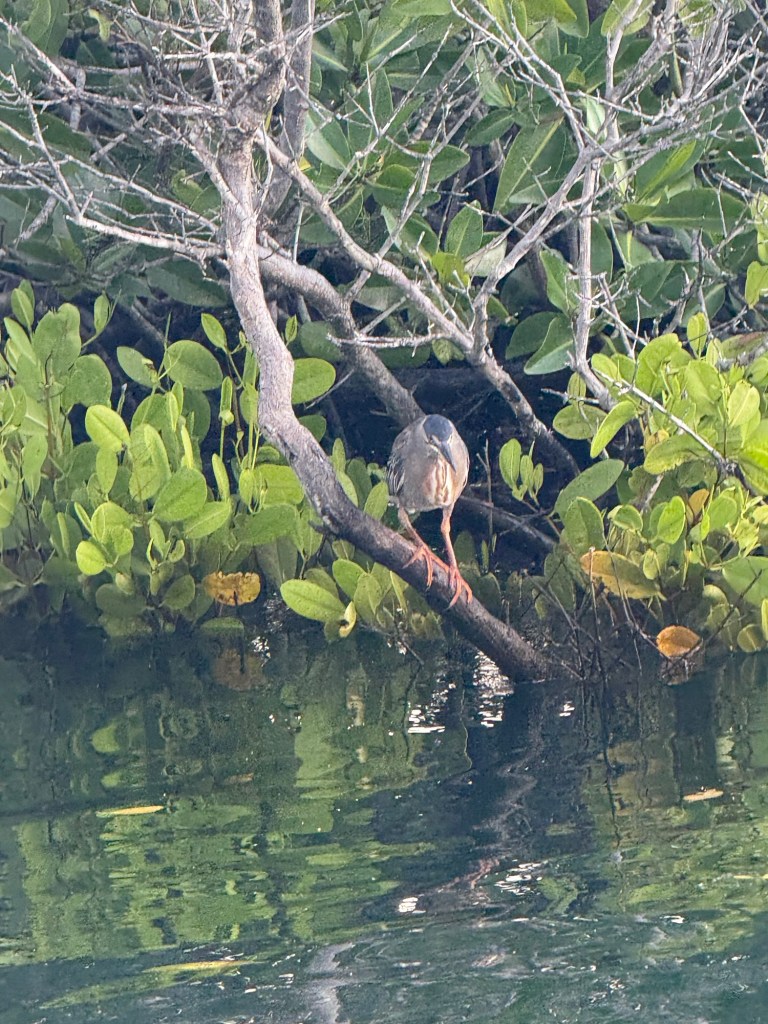
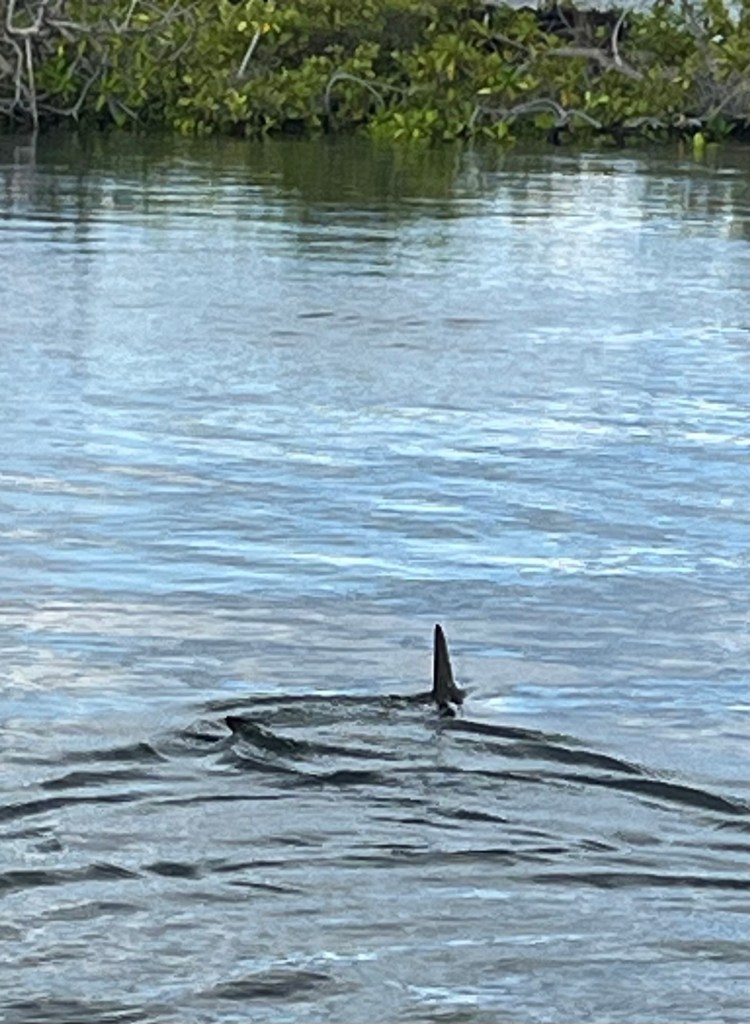
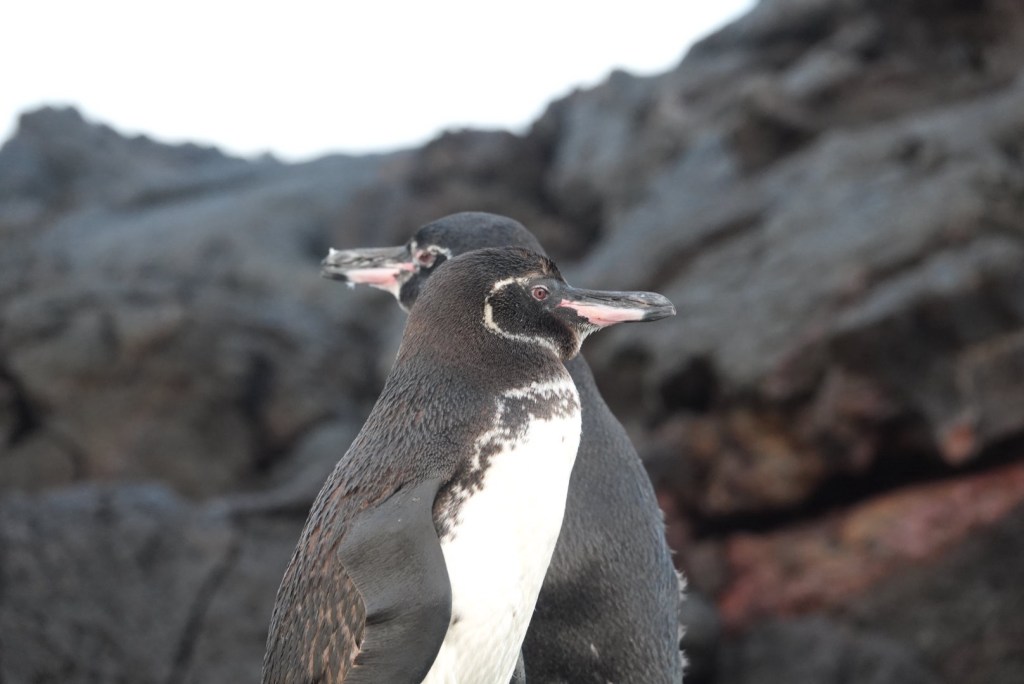
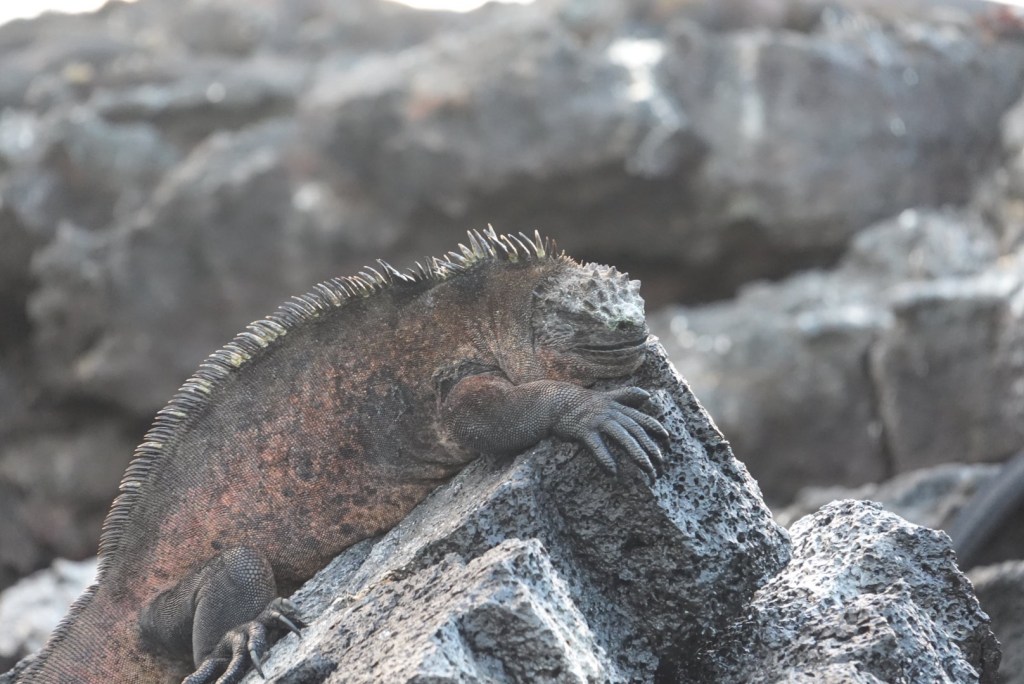
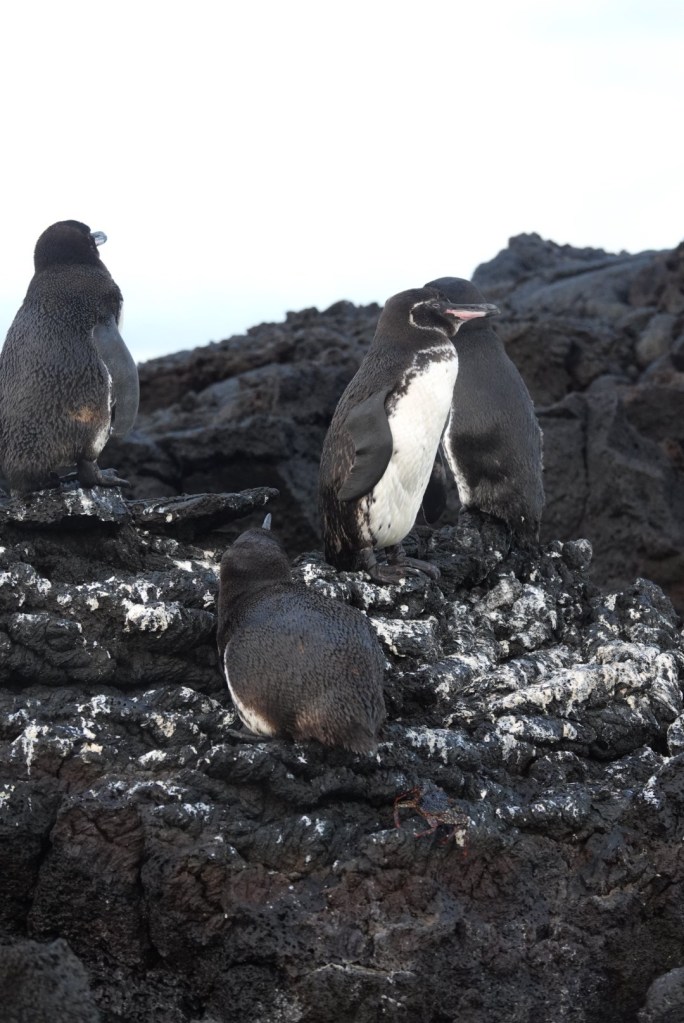
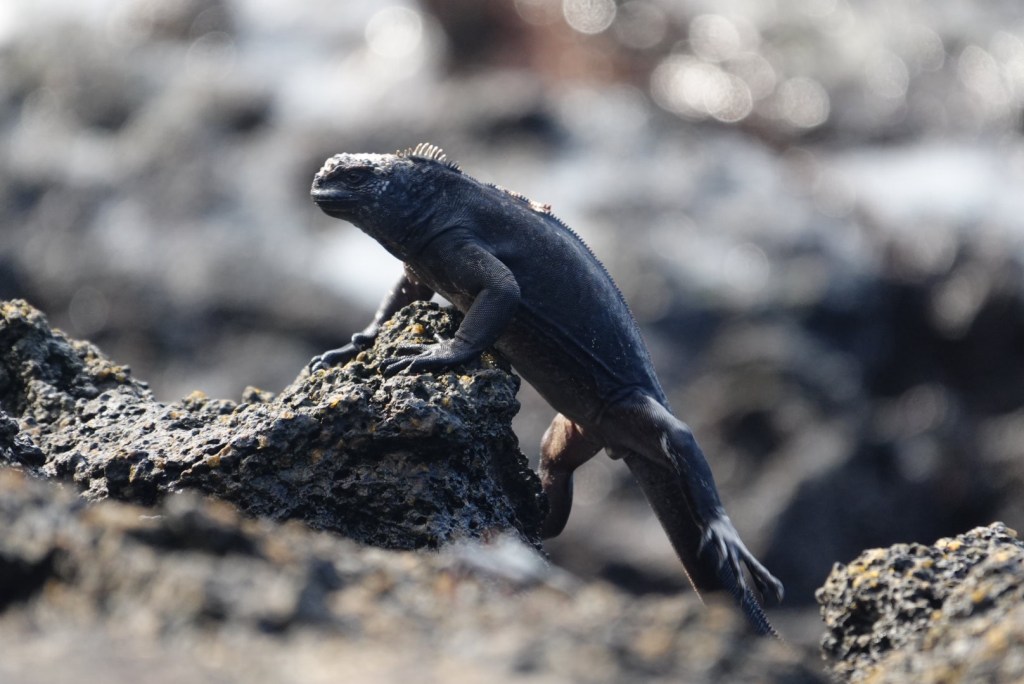
Penguins, Baby Sharks and a Mess of Iguanas: Yes there are penguins in the Galapagos and we saw more on our zodiac exploration yesterday afternoon. The afternoon excursion was a bit rough but our zodiac driver maneuvered through the surf and waves remarkably well. When we first entered the mango groves we looked for baby white-tipped sharks in the “shark nursery” around us. Of course, many of us sang “Baby shark do do do do do do!”

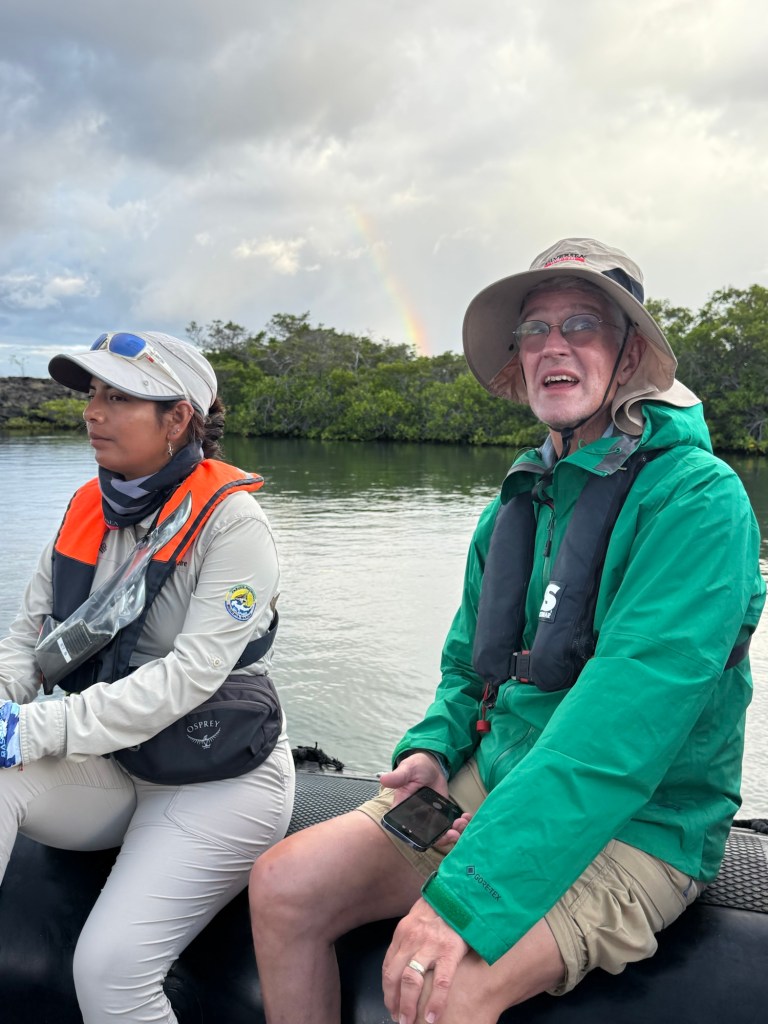
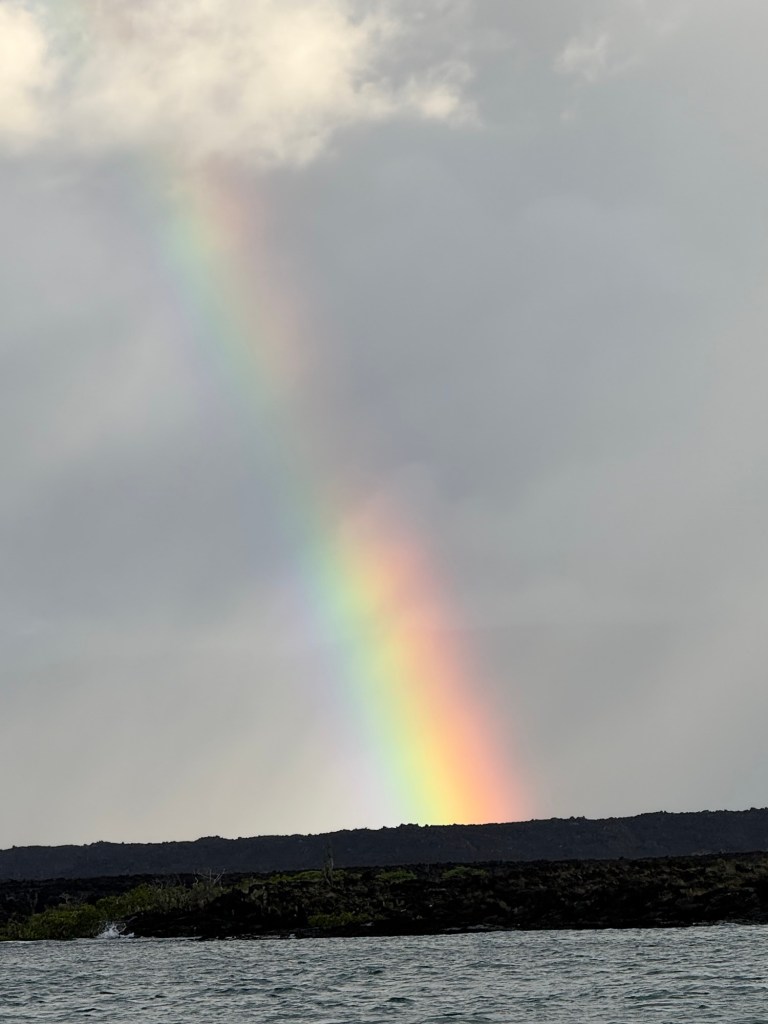
From there we headed to the spot where there were more penguins and a lots of iguanas. To top it off the rain and sunset treated us to a beautiful rainbow.

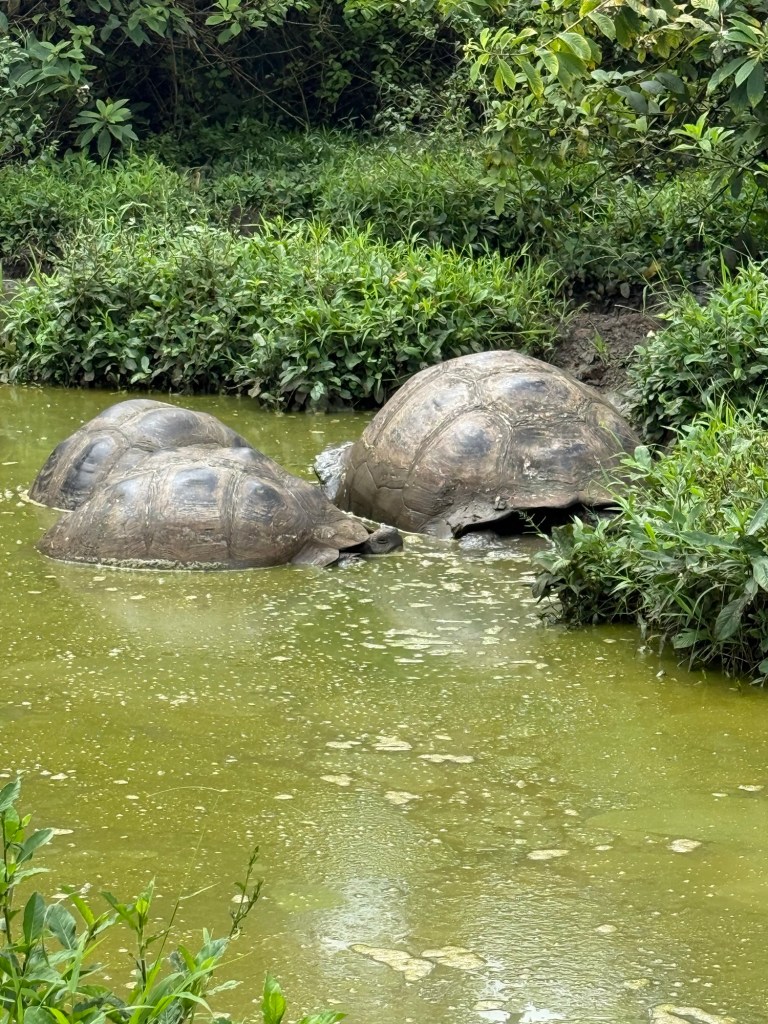
Galapagos Giant Tortoises. These huge tortoises are a “Keystone” species because without the tortoises many other animal populations collapse. Tortoise poop pollinates mango trees when their seeds pass through the tortoise digestive track, and without mango trees many birds species and bee species cannot survive here, and their populations crashed when the tortoises’ population crashed before the conservation efforts that began in the late 1950’s.

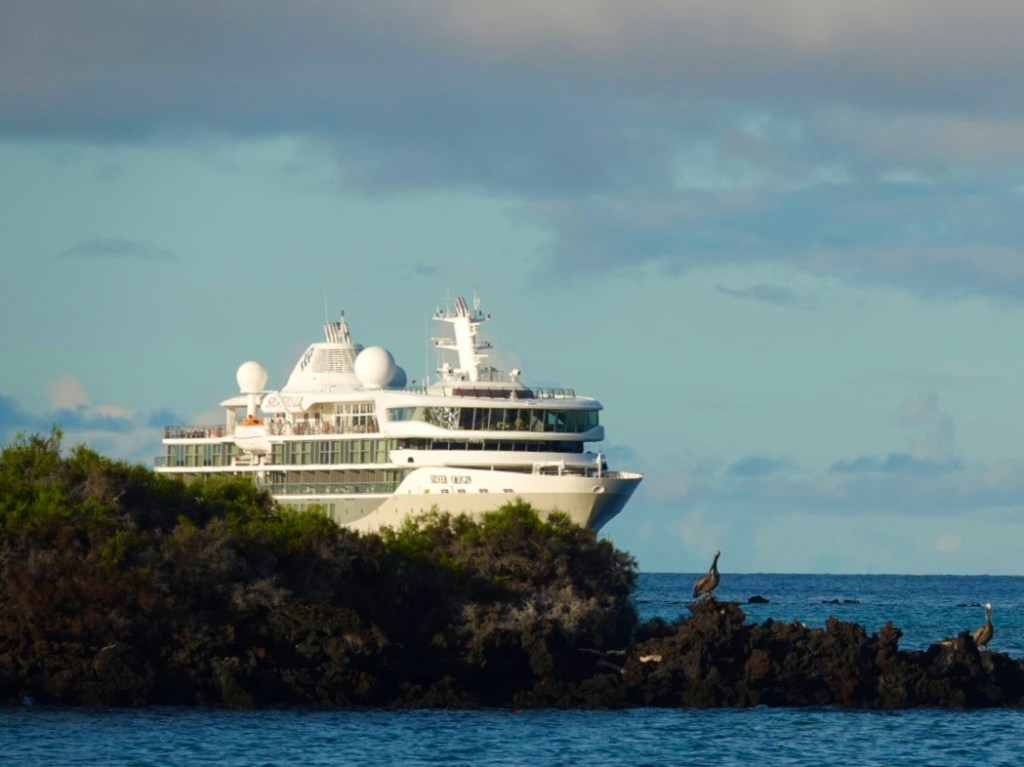
Last night we raised the anchor, began our cruise to the westernmost islands and experienced the roughest seas of our voyage so far. Remarkably, I didn’t feel sick at all and slept super well. The rolling seas do make walking around the ship a bit challenging but we have adapted. The Silver Origin ship is smaller than many cruise ships and we like the smaller size except that it is definitely less stable, both at anchor and when underway. Like all of the other cruise ships in the Galapagos, it is never allowed to dock, so all excursions to or from shore are by 10-passenger zodiac inflatable boats, and getting on and off the zodiacs can be tricky if the rolling waves are over 3 feet. This morning the waves were at least 5 feet, which made boarding the zodiacs a bit of a challenge, but the helpful ship’s crew made it easier than we expected.

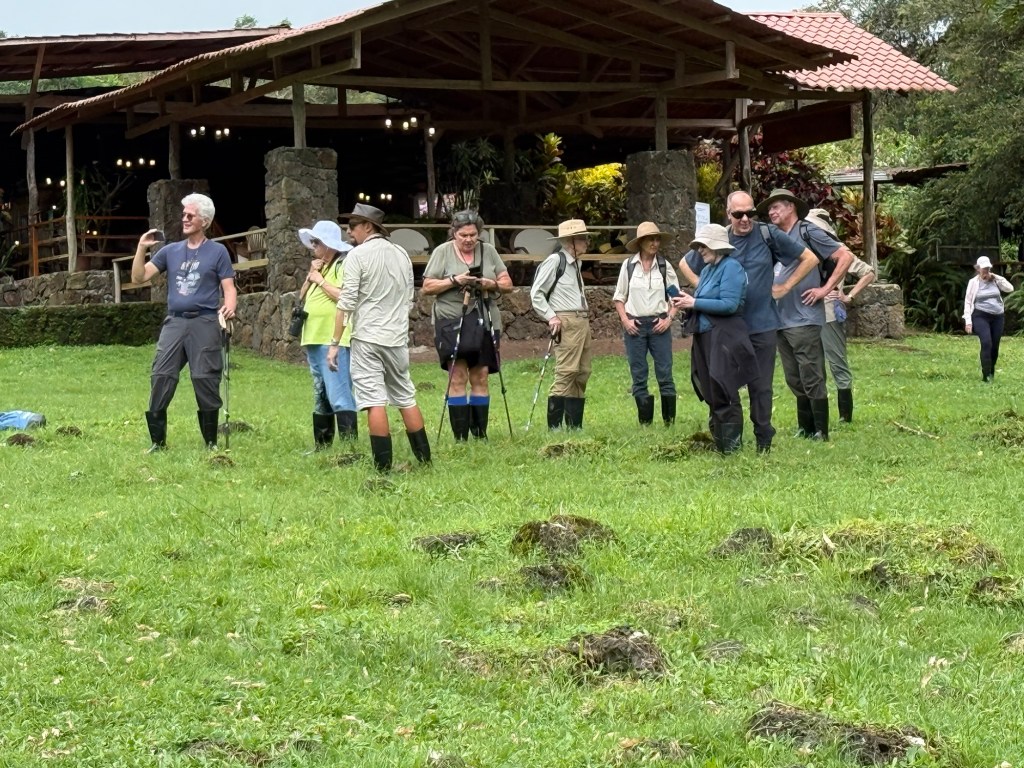
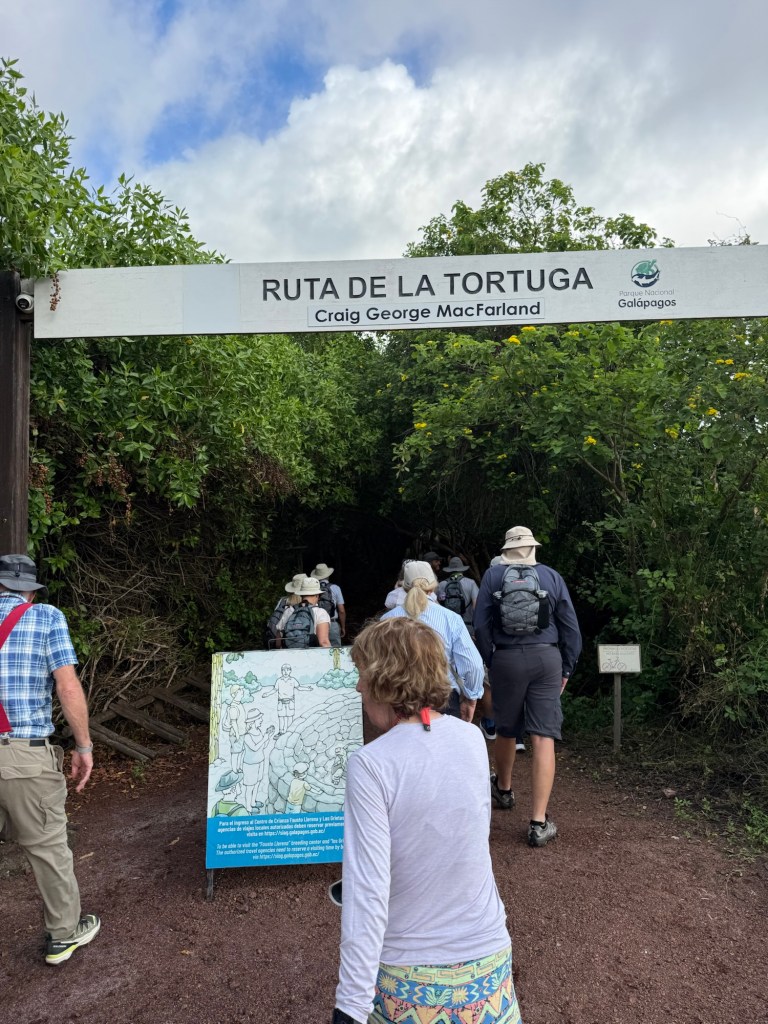
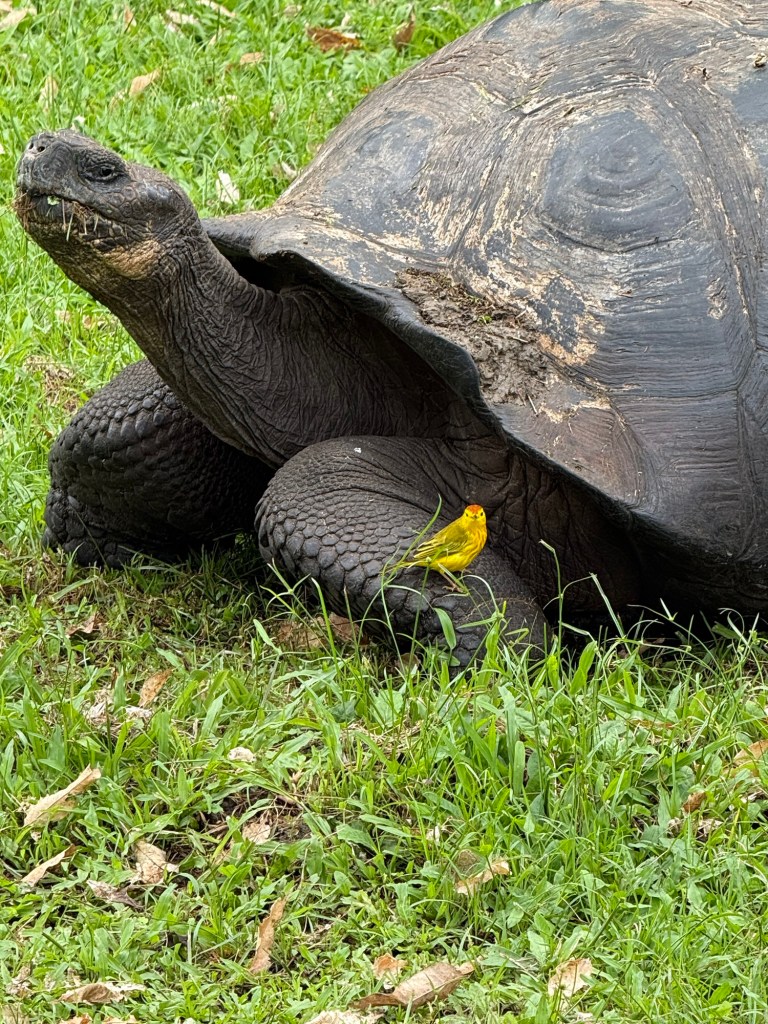
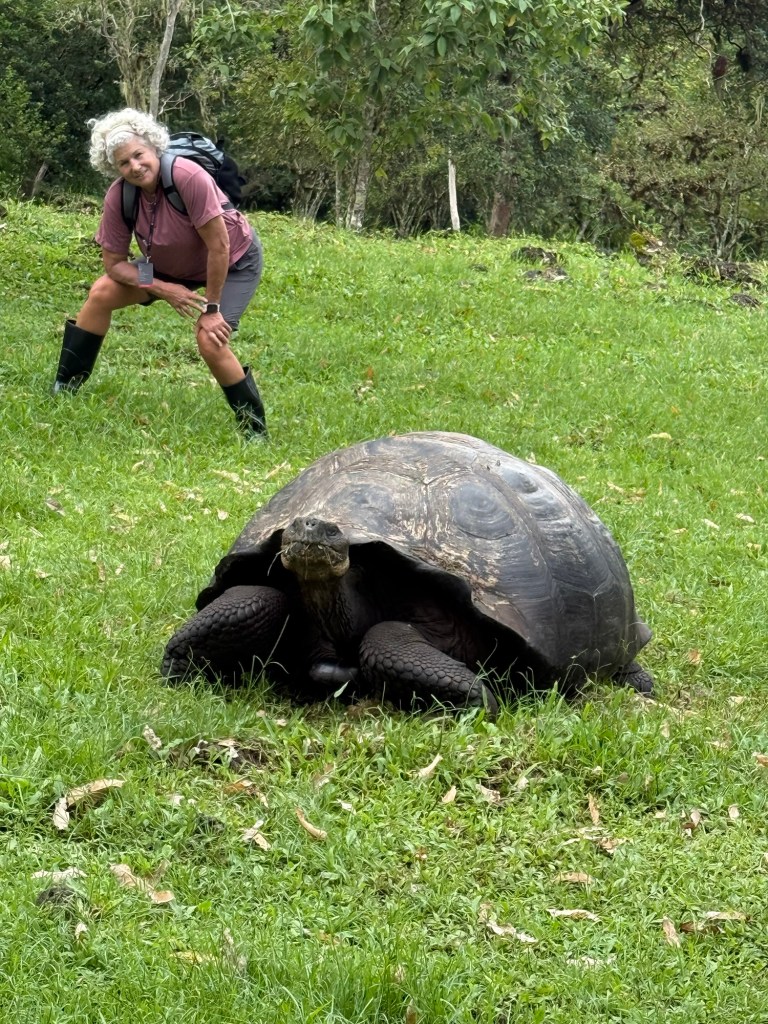
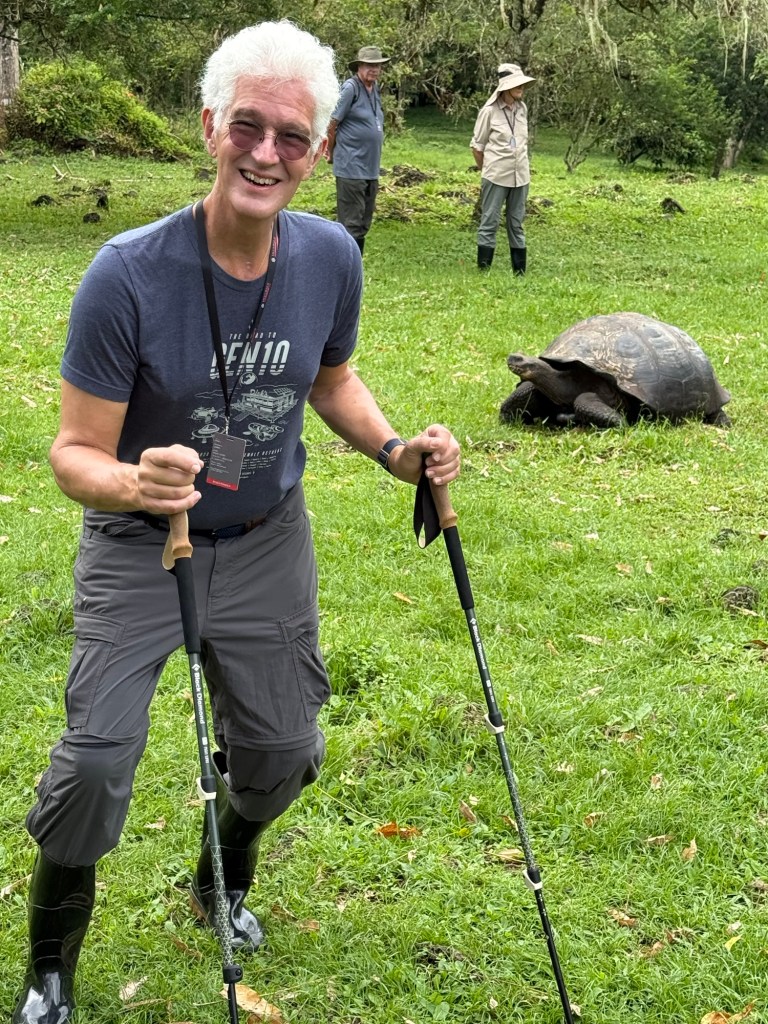
From the zodiacs we transferred to buses on Santa Cruz Island for the drive part way up the mountain to the Giant Tortoise Ranch. All the Tortoises are wild and protected. Walking slowly and quietly around them felt very meditative and peaceful.

The biggest ones weigh in at over 700 pounds. Their movements are slow and steady with lots of eating as they go. When it’s time to mate, which is soon, the males will often travel up to 6 miles to find the females, who usually prefer the warmer, lower altitudes closer to the ocean. The pheromones released by the females and carried by the wind create an irresistible impulse for the males, who abandon the greener highlands to look for females in the lowlands. Interestingly, the temperature of the eggs affects the proportion of tortoise eggs that become male or female. The eggs at the bottom of the nest dug into the ground are colder and the cone shaped nets gets larger near the top where the warmer temperatures produce more females. As a result, there are always more females than males in every clutch of eggs. Because of the higher temperatures associated with this year’s Super El Niño, the naturalists are expecting even more females than usual this breeding season.

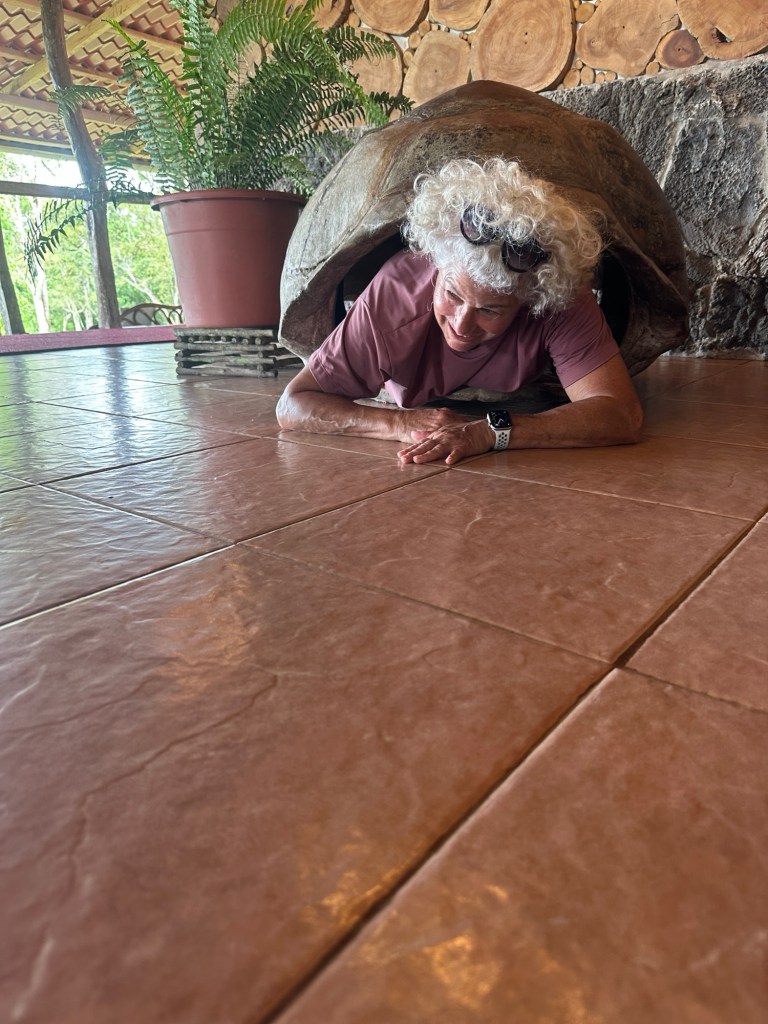
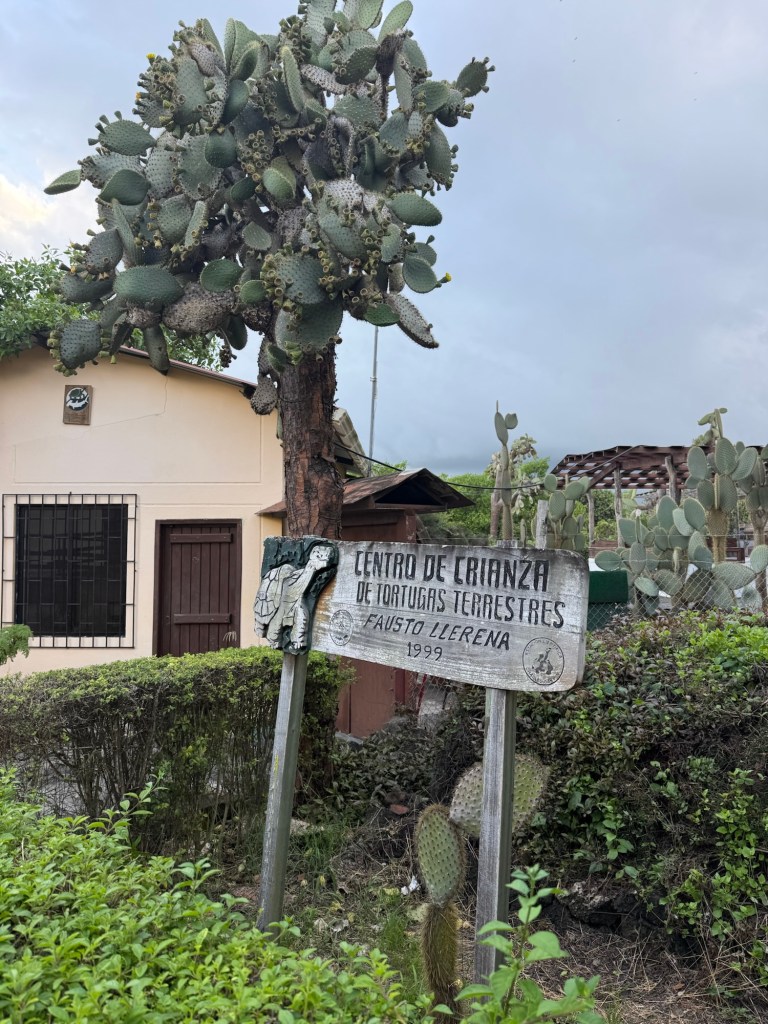
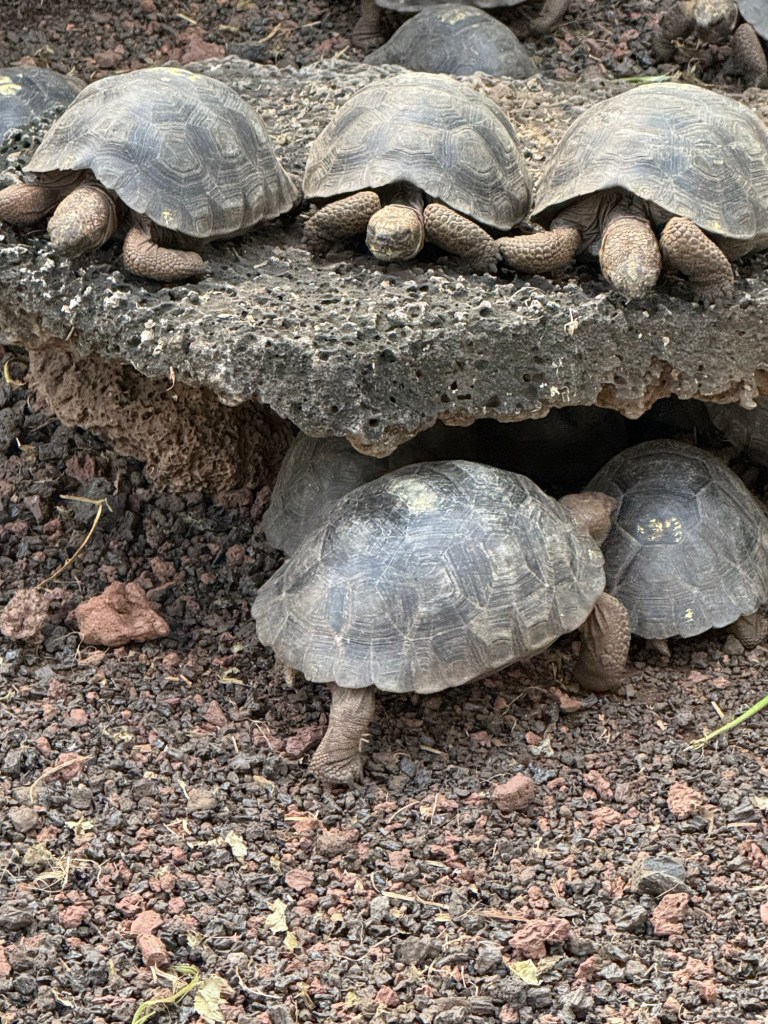
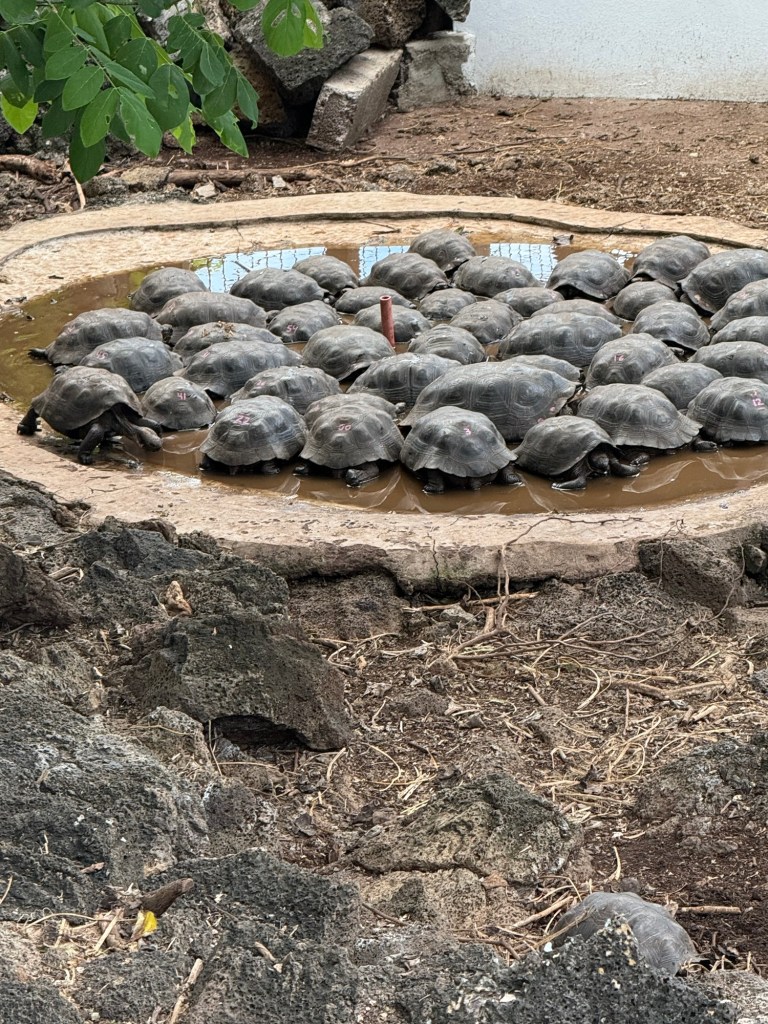
This afternoon we headed to the national park’s Tortoise Breeding Center (similar to a Salmon Hatchery) to learn more about the program that began in the 1950’s to repopulate and protect the Giant Tortoises throughout the Galapagos. The tortoise population was seriously endangered in the 1950’s because rats, feral dogs and feral pigs escaping from ships became endemic to most of the Galápagos Islands and devoured most of the young tortoises. Before that, the tortoises had no natural predators after reaching 2 years of age. Afterwards, however, the tortoises were vulnerable until they were 7 years old, and by the 1960’s fewer than 1% of them made it that far. By bringing most of the tortoise eggs to the Breeding Center, where they are protected from predators until they can be safely released back into the wild, now over 85% of tortoise eggs reach 7 years of age, and the tortoise population has increased to over 30,000 individuals.

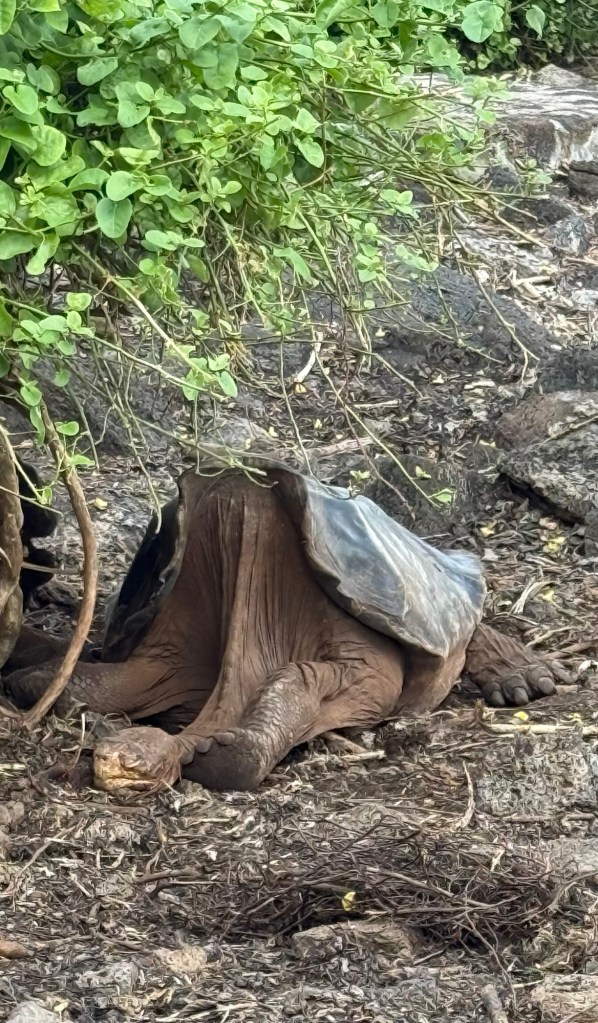
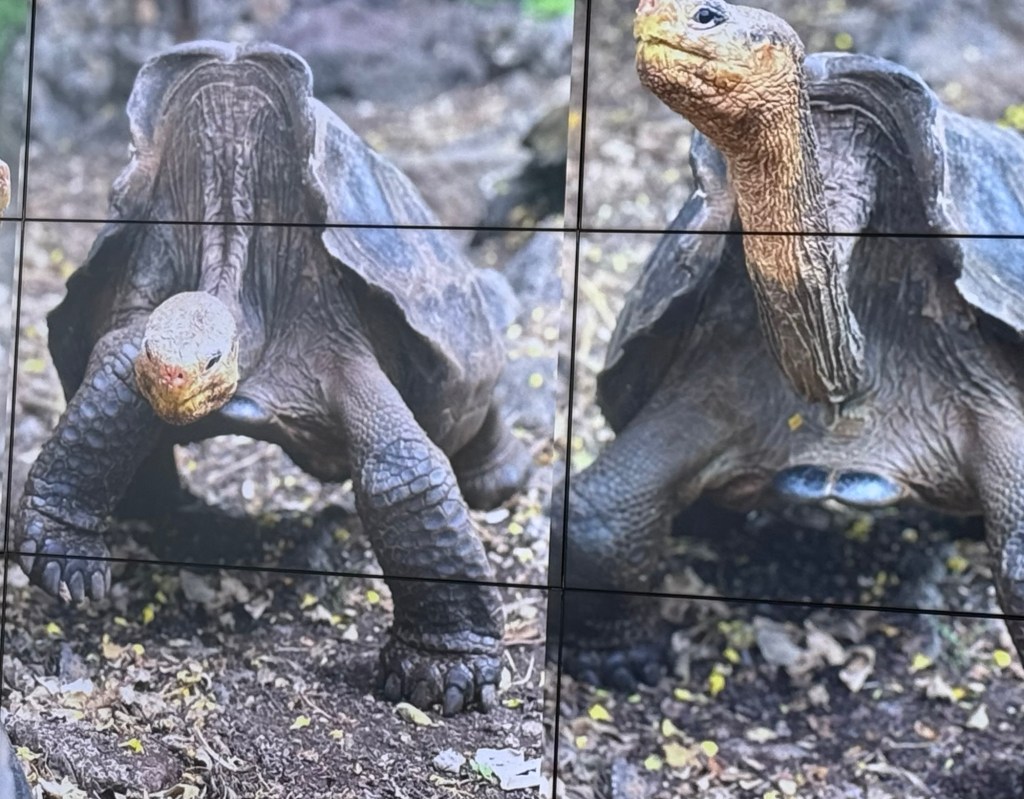
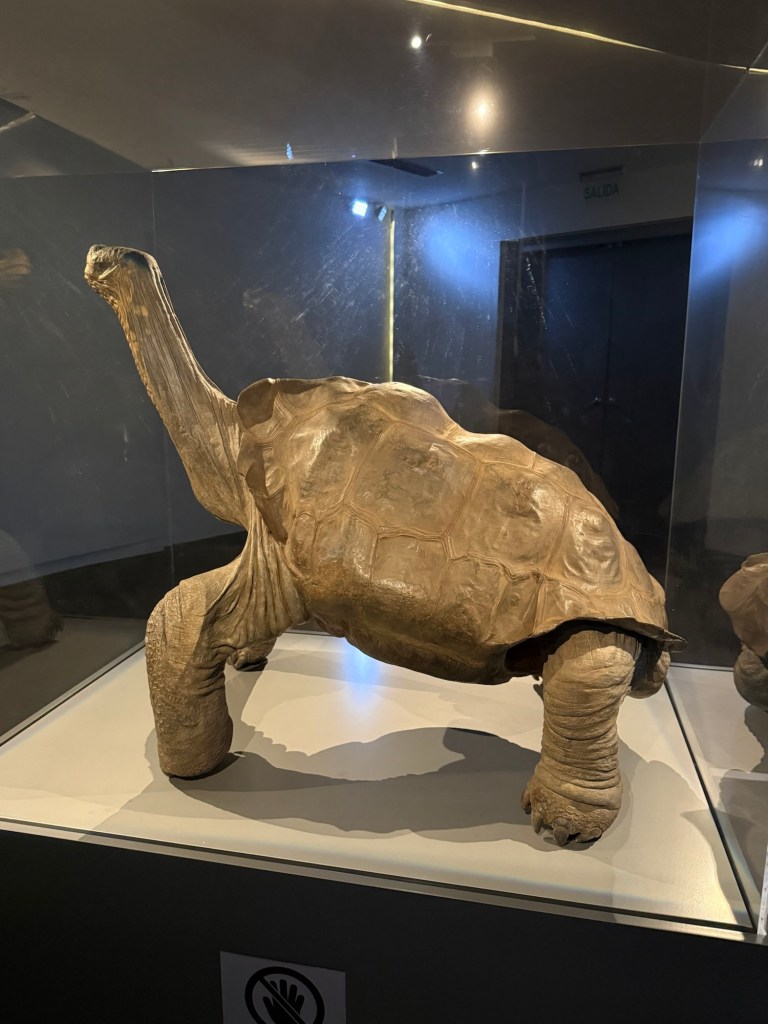
A very strange sub-species of Galapagos Tortoise is the “Saddleback” tortoise. They are found on the dryer, western islands that are rocky, not grassy. So they adapted by growing long necks to reach the cactus. When we saw them at the Breeding Center it was near the end of the day so they were relaxing, with their necks down.

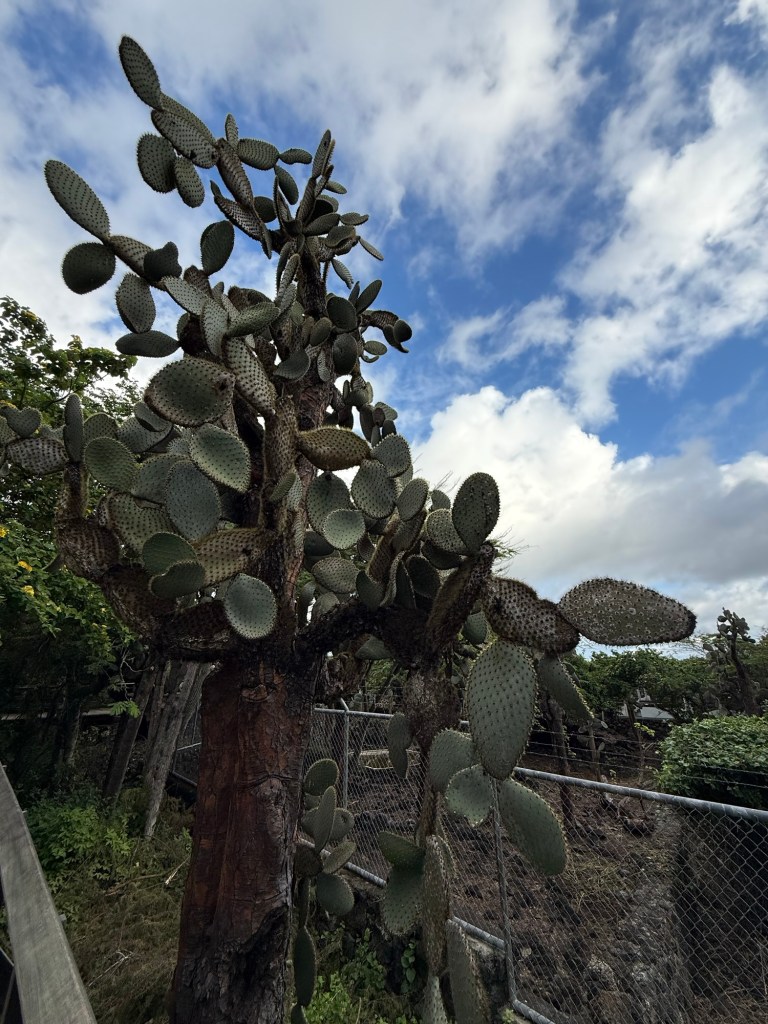
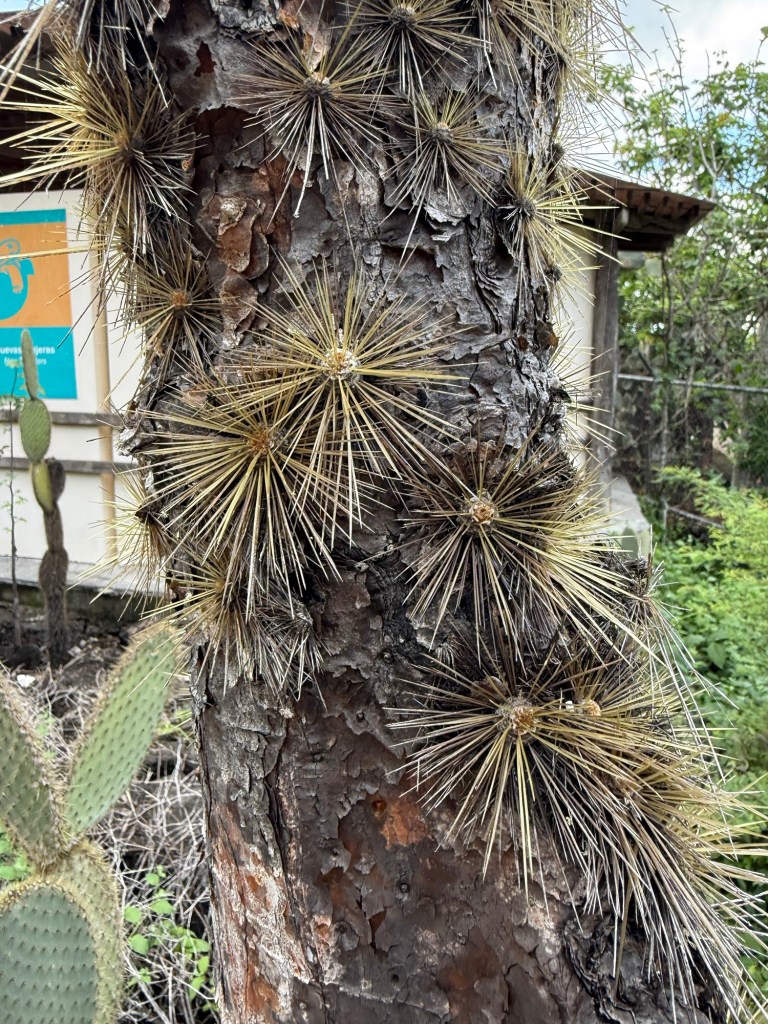
On our way to the center we also learned about the crazy Galapagos Prickly Pear Cactus. They grow tall and as they age and the base gets a protected tree-like bark. As it grows it looses the needles and then becomes smooth, like a tree, but the top of the “tree” continues to look like a normal cactus.

The Adventure Continues,

Fawn (writer photographer) & Jim (editor)

“Standing in the present, on the highest part of the curve, you can look back and see the past, or forward and see the future”, M. Wylie Blanchet

TrueLoveAdventures.com & CurveOfTimePodcast.com
The Galapagos Part 1:

It’s almost impossible to capture the last three days. Three days of an expedition cruise in the Galapagos is unlike anything we have experienced before.

We left Quito early in the morning to head to the airport by bus before boarding our plane for the 90 minute charter flight to the single runway at the capitol of the Galapagos: St. Cristobal. After claiming our luggage and going through customs, we boarded the bus for a little seaside hotel to chill a bit while the crew worked hard to clean the Silver Origin. The previous passengers left earlier that morning and took our plane back to Quito. From one set of passengers to another, it’s quite a quick change over.

At the hotel we got tropical fruit drinks and acclimated to the heat while we waited for the 10-person zodiacs to take us to our ship, anchored about 1/2 mile away.

While the crew deposited our luggage in our rooms we had lunch and waited. The travel caught up with us. Jim unfortunately had a stomach issue, probably from some ice that was in his lunch drink on our last afternoon in Mexico City and I had a UTI (which is very rare for me). We heard from one of the other guests on board that the ship doctors are amazing so our first stop was a call to the Dr. With the right meds, pain pills, and a good night’s sleep we both felt much better the next day.

I attended our first excursion briefing that first night while Jim rested and boy was it something! The list of the first full day’s activities included two hikes (easy and advanced) and two snorkels (easy and advanced) and a lecture. I’m not easily overwhelmed, but it was seriously overwhelming!

Fortunately, we both got a good night’s sleep and I was raring to go in the morning. I did the easy beach hike and the advanced afternoon hike and Jim joined me for the deep water snorkel. It’s a project getting everyone their wet suits with masks & snorkels, all organized by room number. But the crew does an amazing job. We are split into Green and Blue group to make sure everyone gets an opportunity to experience everything.

It’s not survival of the fittest, it’s adaptation: That is the key to the flora and fauna of the Galapagos and of course a great mantra for life in general. One never knows what life will throw at you, whether extreme hot, cold, drought, flood, illness, health, success or failure.

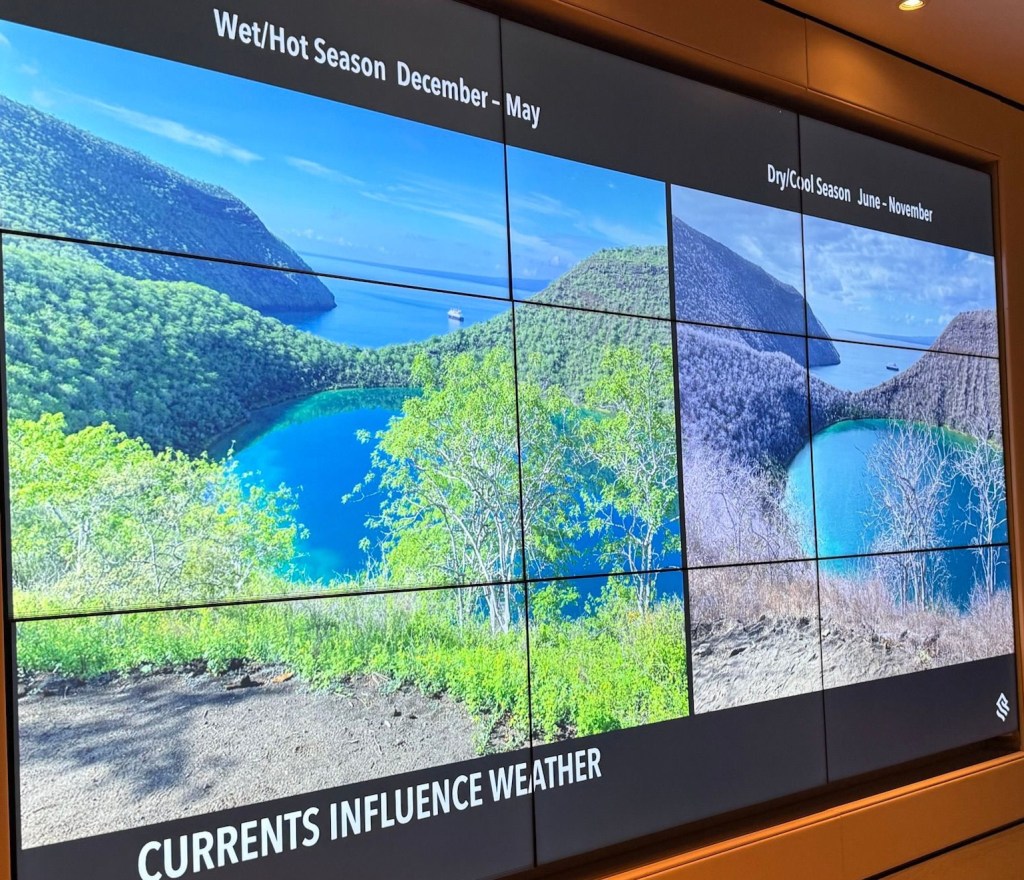
Weather extremes in the Galapagos

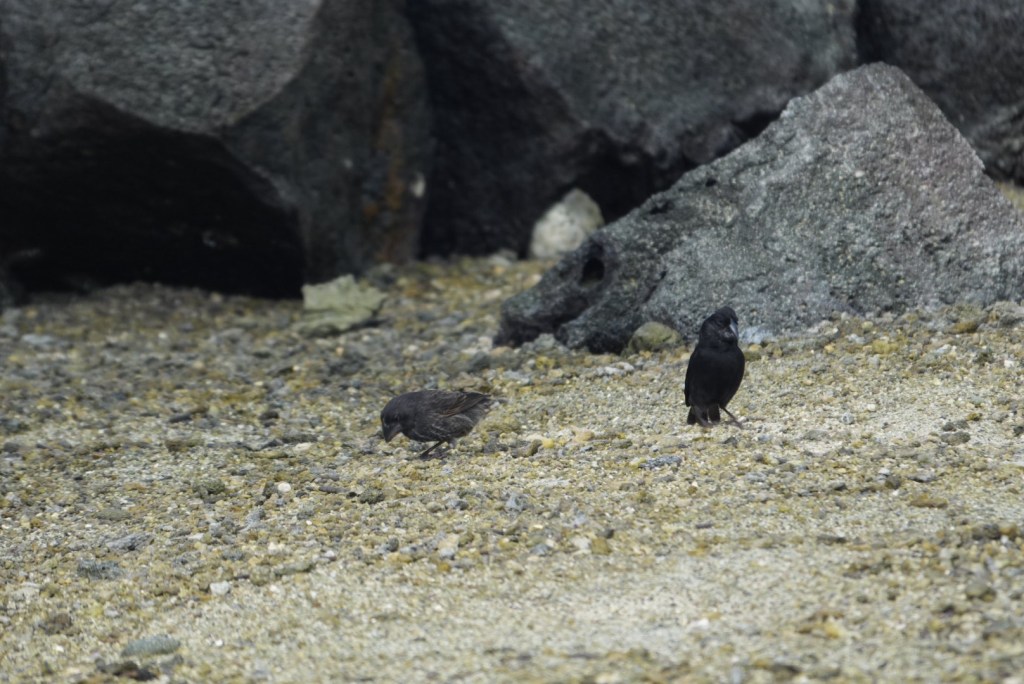
Before heading on the cruise I had read two books: The Beak of the Finch and Kurt Vonnegut’s Galapagos. The Beak of the Finch is the seminal modern telling of the scientists who documented the evidence of finch adaptation to drought and floods by observing, tagging and tracking all the finches on one desolate Island over 20 years. Interestingly the big breakthrough occurred before and after the last “super El Niño”. Some animals and plants thrive during the super El Niño, while others struggle.

We are thriving in the warm waters. Because of the El Niño, the water here is much warmer than usual for this time of year. We were expecting water temperatures in the 60’s, instead it’s 84! So far we have not observed a steep decline in the animal populations, but that’s expected by the end of the Equitorial summer.

Mating Mobala Mantas

The perspective of our team of nature guide scientists is to focus on adaptation. Their love for the area and the animal life is infectious. All the guides live in the Galapagos, many were born here. They make classroom presentations every night to share a little of their scientific knowledge about the flora, fauna and geology of this amazing equatorial archipelago.

The Wildlife:

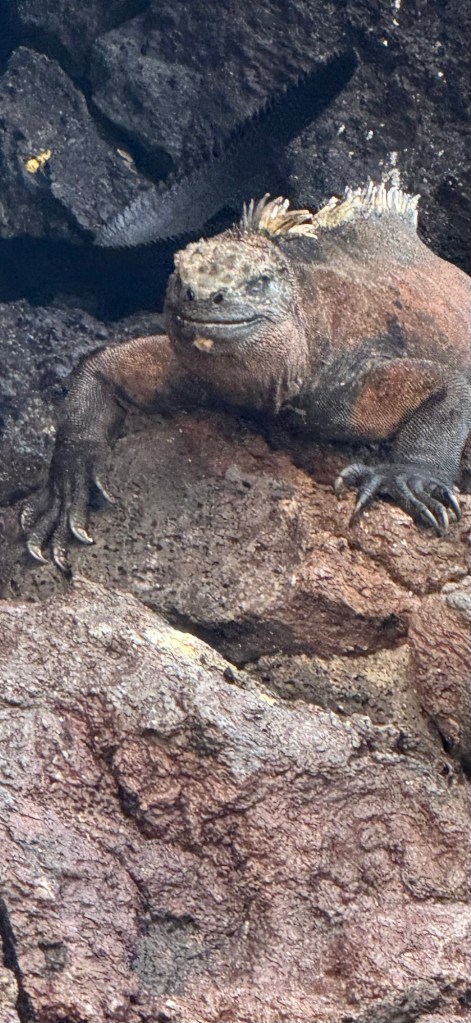
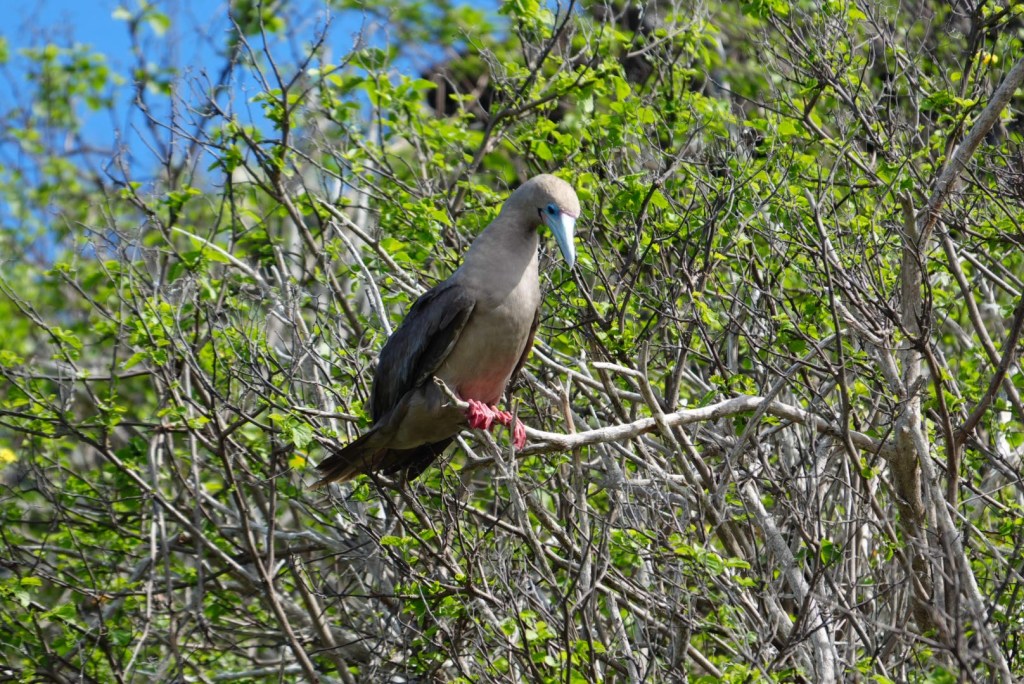
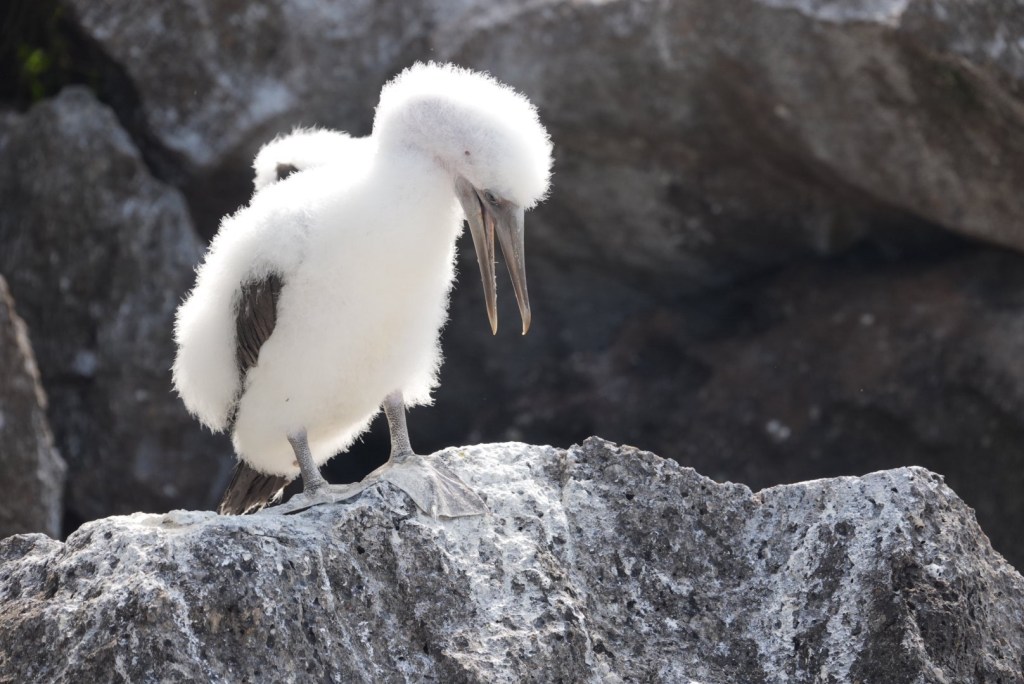
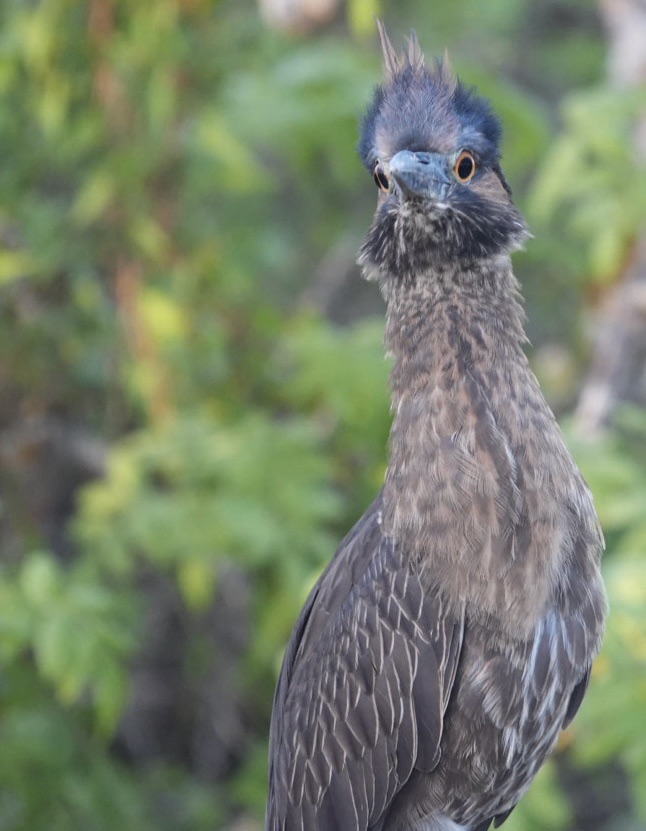
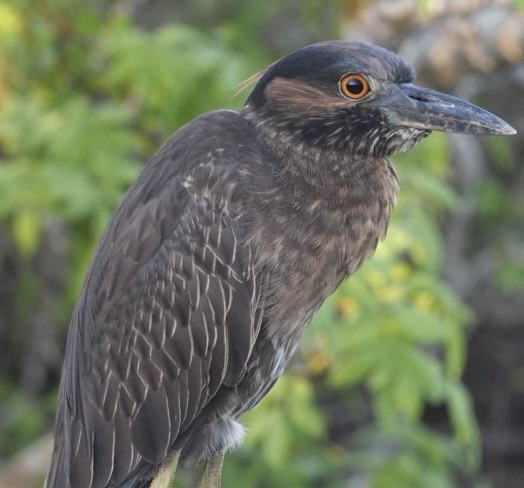
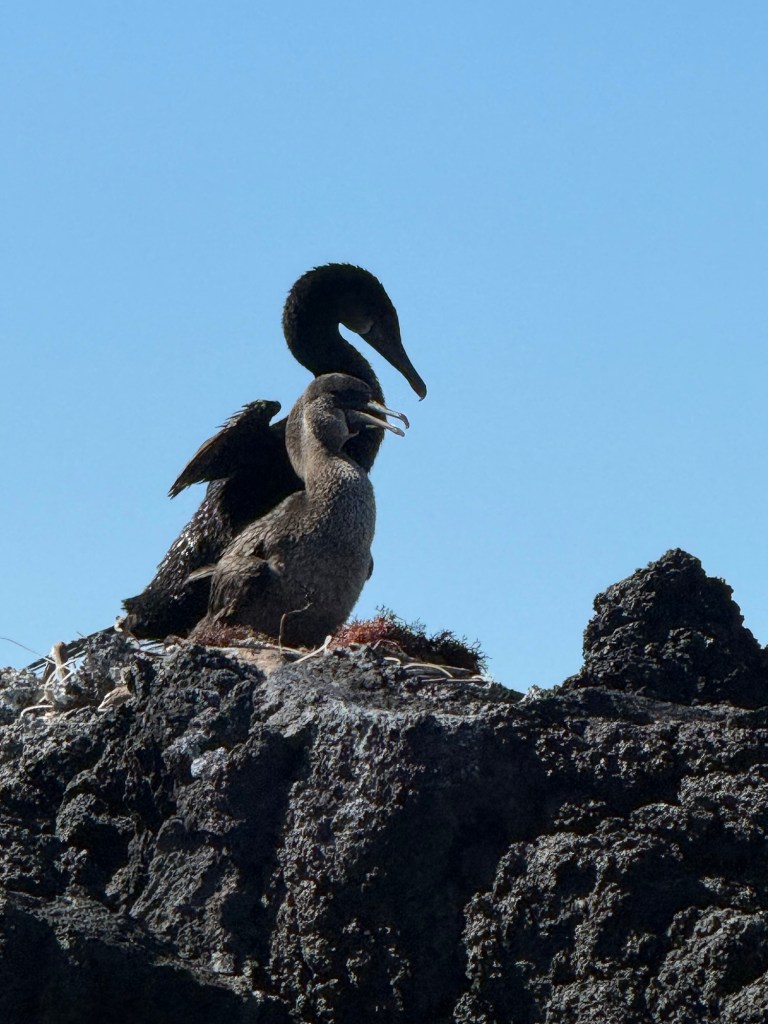
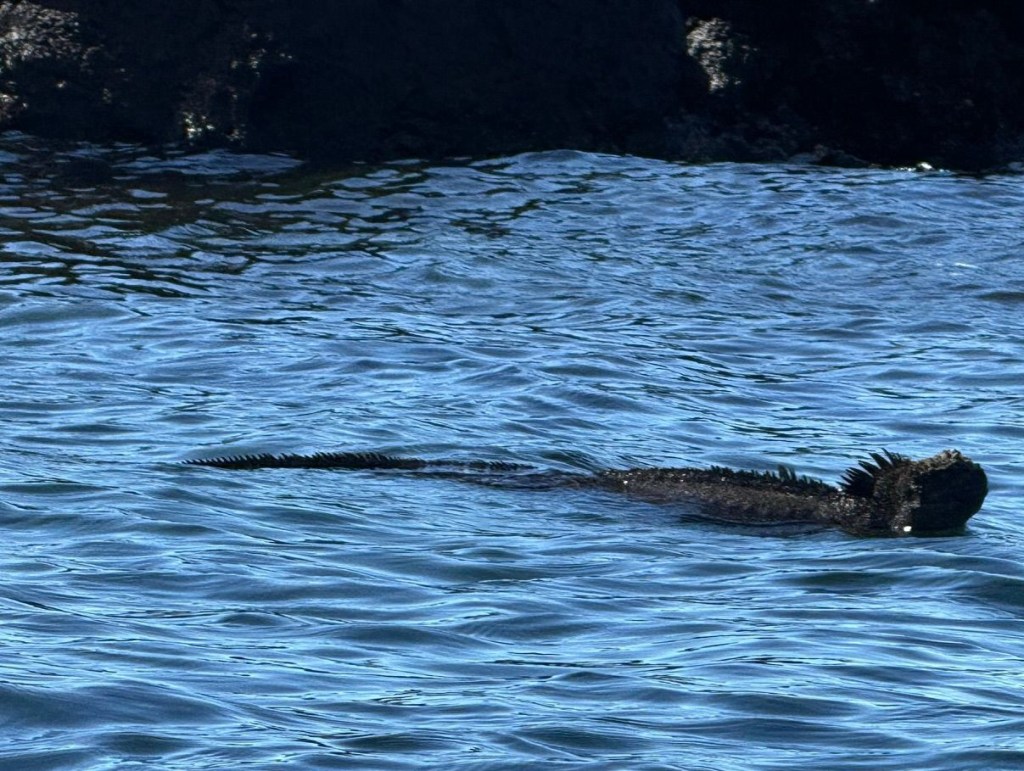
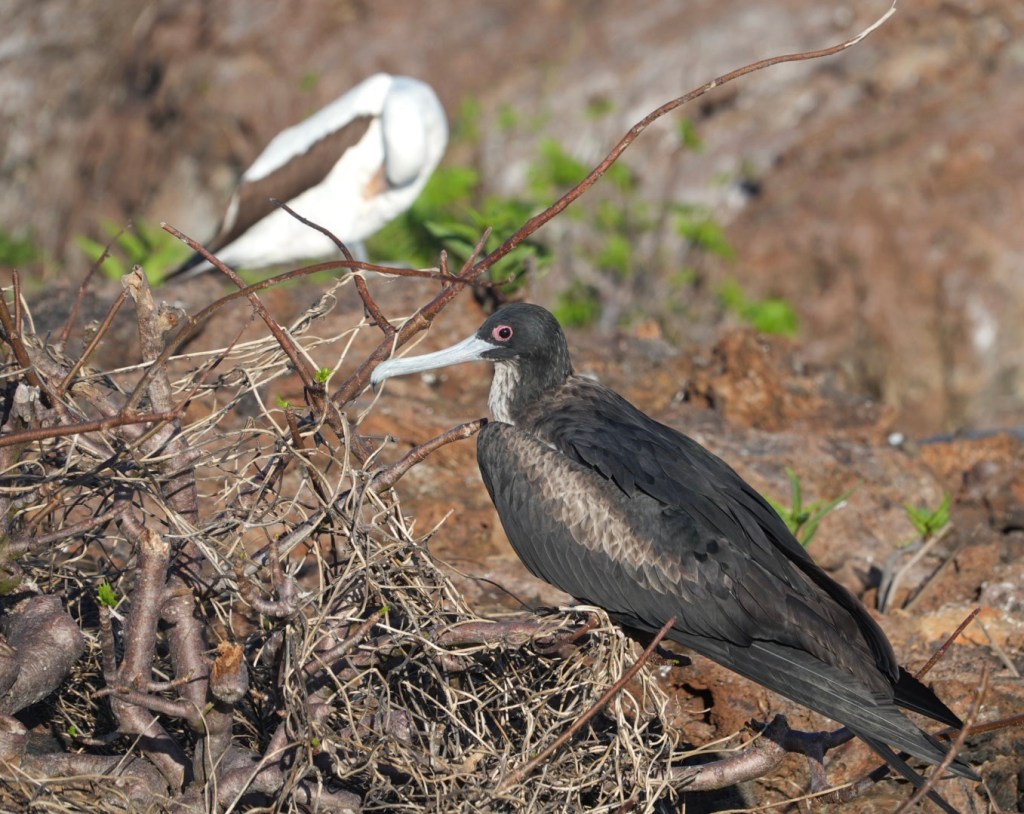
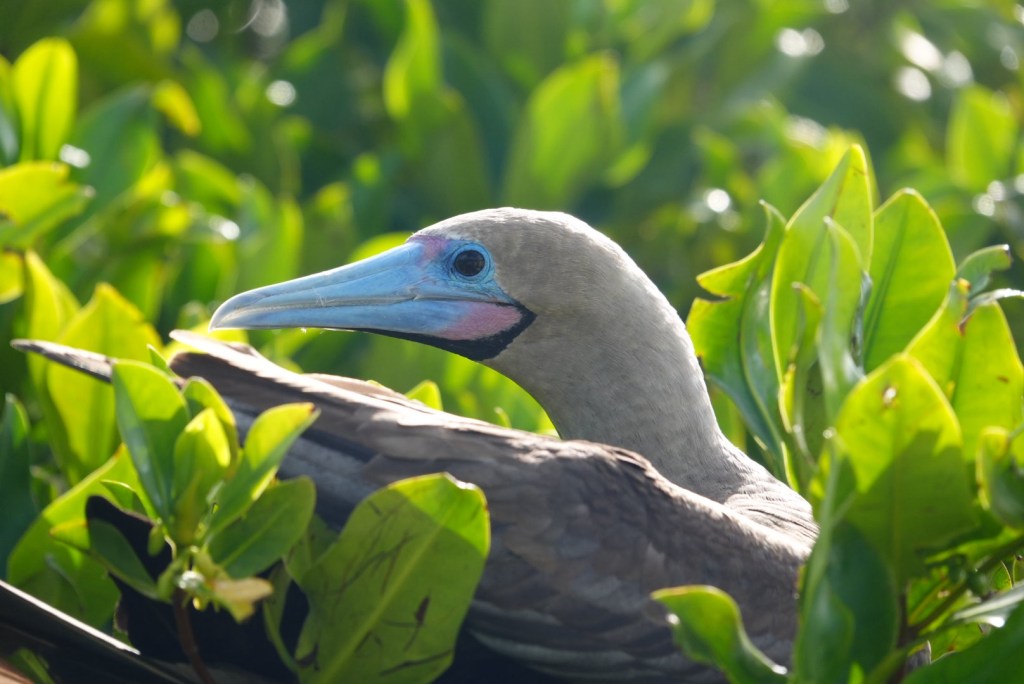
Wow. Volcanic action, currents and winds formed the Galápagos Islands and its isolation from humans has created the environment that is home to some of the most interesting animals on Earth. In the last three days we’ve seen so many birds, many of which are only found here. All of which have no fear of humans. We’ve swam and kayaked with Galapagos penguins, marine iguanas, flightless cormorants, sea lions, fur seals, sea turtles and lots of tropical fish similar to those found in Hawaii and elsewhere. Darwin never saw a Galapagos penguin, but if we did, he would have been blown away. No other penguin can live in the warm waters of the Galapagos for more than a few hours, let alone make a home here. We were lucky to see several today.

Next Stop:

The cruise is now underway from Fernandina (the youngest and most active volcanic island, erupting every 2 years or so) to Santa Cruise Island (also volcanic, but less active, and the largest island but less protected and pristine). The crew is feeding us again, then we get a Darwin lecture before the next feature: the Galapagos Giant Tortoise.

The Seals are so playful.

The Adventure Continues,

Fawn (writer photographer) & Jim (editor)

“Standing in the present, on the highest part of the curve, you can look back and see the past, or forward and see the future”, M. Wylie Blanchet

TrueLoveAdventures.com & CurveOfTimePodcast.com
True Love Adventures: South America

Our journey to South America came about quickly. In mid-August, after our cruising season in British Columbia, I had shoulder surgery to repair tendons in my right shoulder. Surgery was planned before our summer cruise and I delayed it so we could enjoy at least part of the summer on the boat. My surgeon said I really couldn’t hurt it more.

My shoulder responded beautifully to the hands of my talented surgeon Dr. Sailor and after 6 weeks of gentle movement, PT and healing I expected to get the go ahead to start the strength training. But, I was told that although I was healing well I couldn’t do strength training, or play golf, pickleball or most importantly swim in the ocean for at least another 7 weeks. Apparently, although my mobility was exceptional and my pain minimal (actually a problem) the very strong sutures that attached the tendons to the shoulder muscles needed more time or the tendon and muscles could tear leaving the good-for-nothing sutures just hanging there.

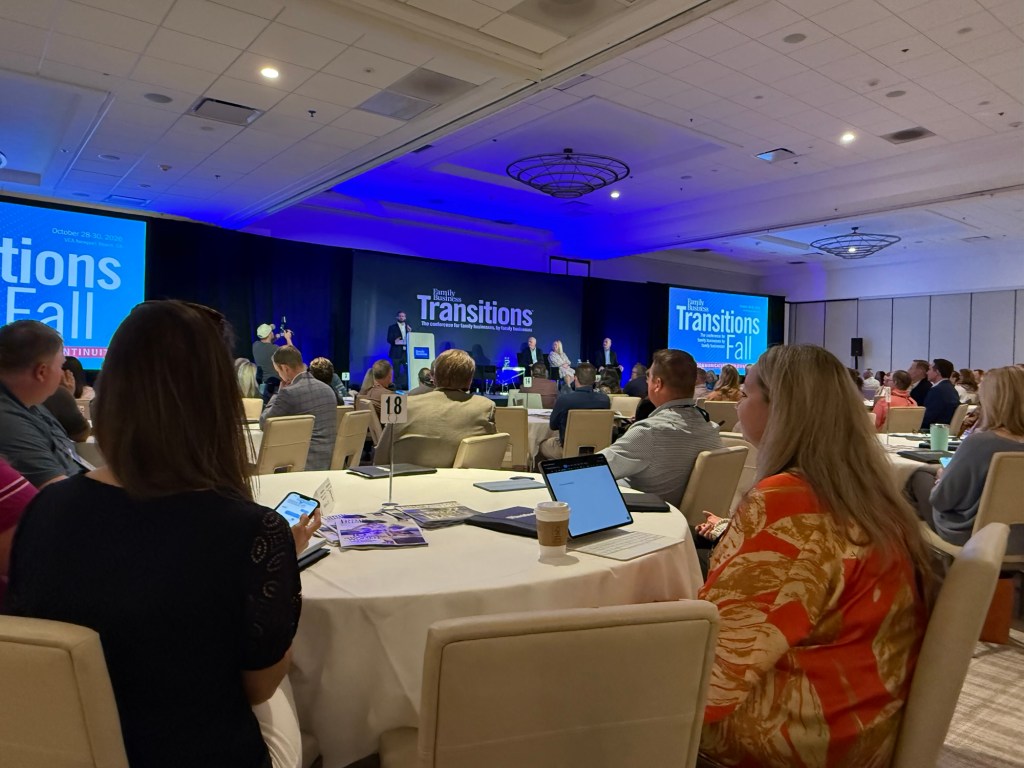
Needless to say I was very disappointed! We were asked to speak at the Family Business conference in Newport Beach and we assumed we would fly to Hawaii from there on Oct. 31.
I spent the weekend being pretty depressed. I didn’t want to go to HI if I couldn’t swim. And Jim was pretty depressed because he did not want to spend November in the wet cold mountains.
Time for a creative pivot! The next day we already had a planned call with Silversea cruise line about a cruise in spring 2027. But instead we asked if there was any last minute openings for almost anywhere in the world during November. And guess what? There was a small suite open on a cruise around the Galapagos. The Galapagos had been on our bucket list for over 10 years so we booked it immediately.

Now for rearranging our flights and itinerary. Thanks to Jim’s hard work, our air travel consolidator, ChatGPT and some creativity we created an itinerary for an another True Love Adventure.

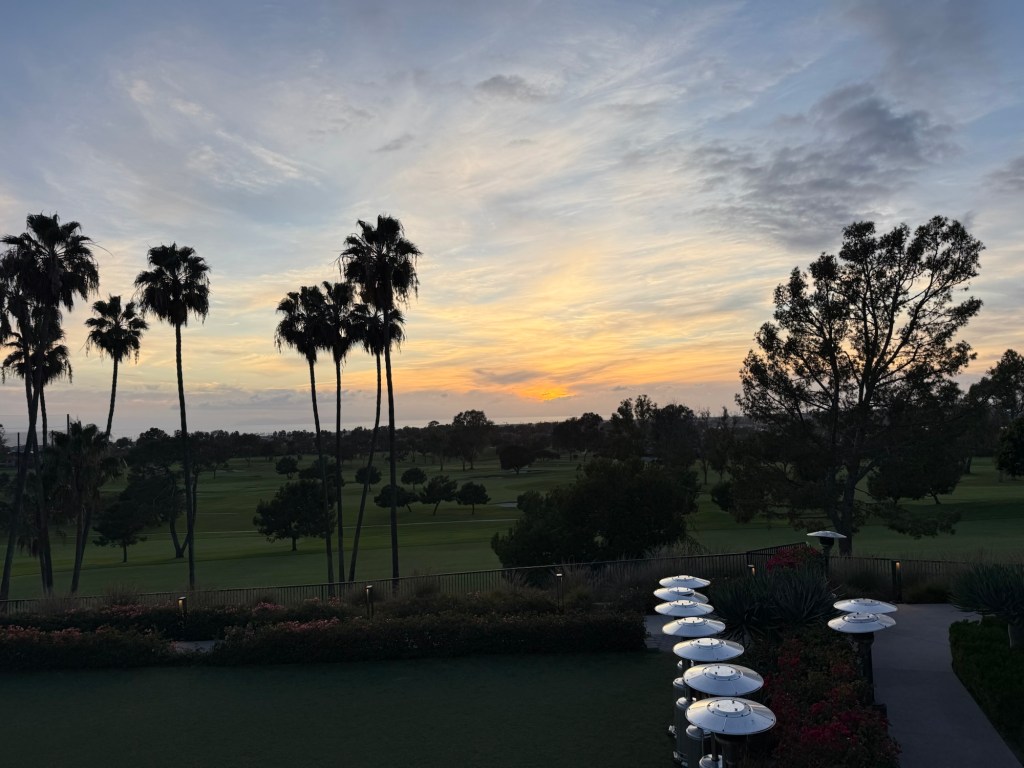
I’m writing this on our flight to Quito from Mexico City after a quick stop in Panama City. Last week we attended the family business conference in southern California, then visited my parents in San Francisco before flying from there to Mexico City.
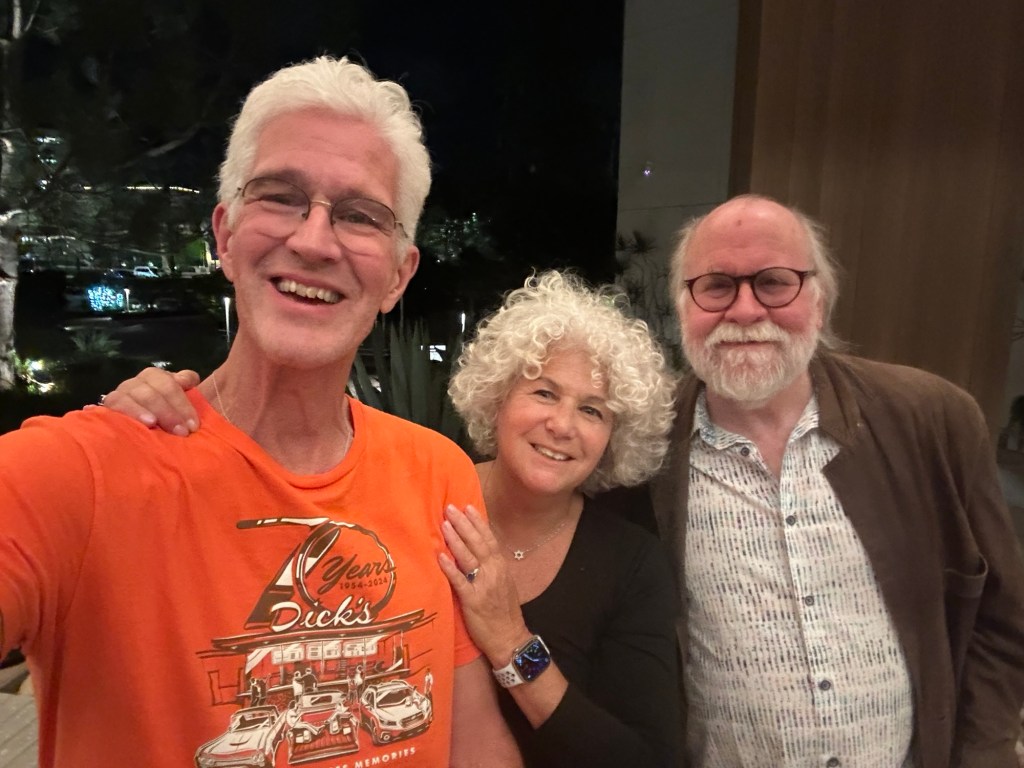
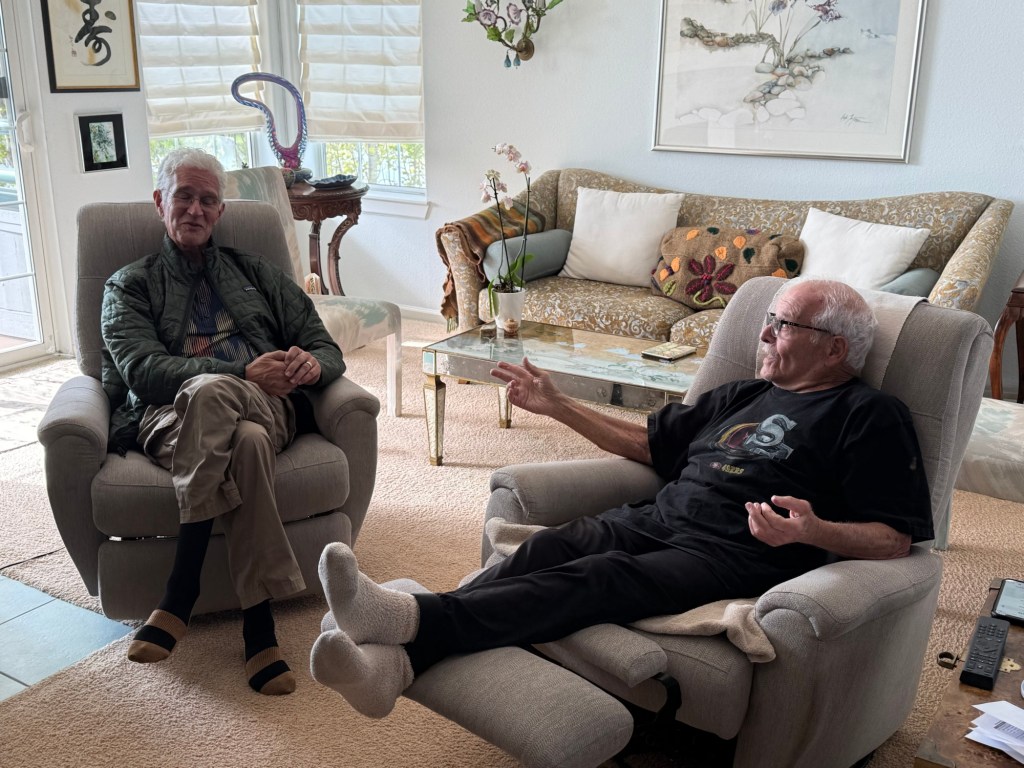
We met some amazing Family Business leaders at the conference and even got to see our dear friend Scott Crowell. The visit with my parents was quick but lovely. Although I talk to my Mom multiple times per week nothing beats real Mom hugs and great cooking. We left SF three days ago and departed for Mexico City. Pro-Tip: if you are in the SFO international terminal and looking for a really good club room you can use Priority Pass to access the Air India Maharaja Lounge. The atmosphere is really nice and the Indian food was yummy.

Mexico City

It only takes 4 hours of flight time to fly from SFO to Mexico City. Although we landed 40 minutes early, our plane didn’t get a gate. In fact, it parked at least 1/2 mile from the nearest gate! Deplaning by mobile stairway created a challenge for us with our two carry on bags and back packs, but we met a lovely lady, Primal, who helped us down the stairs and began a new friendship. She has family in Seattle and hopefully we will see her again!

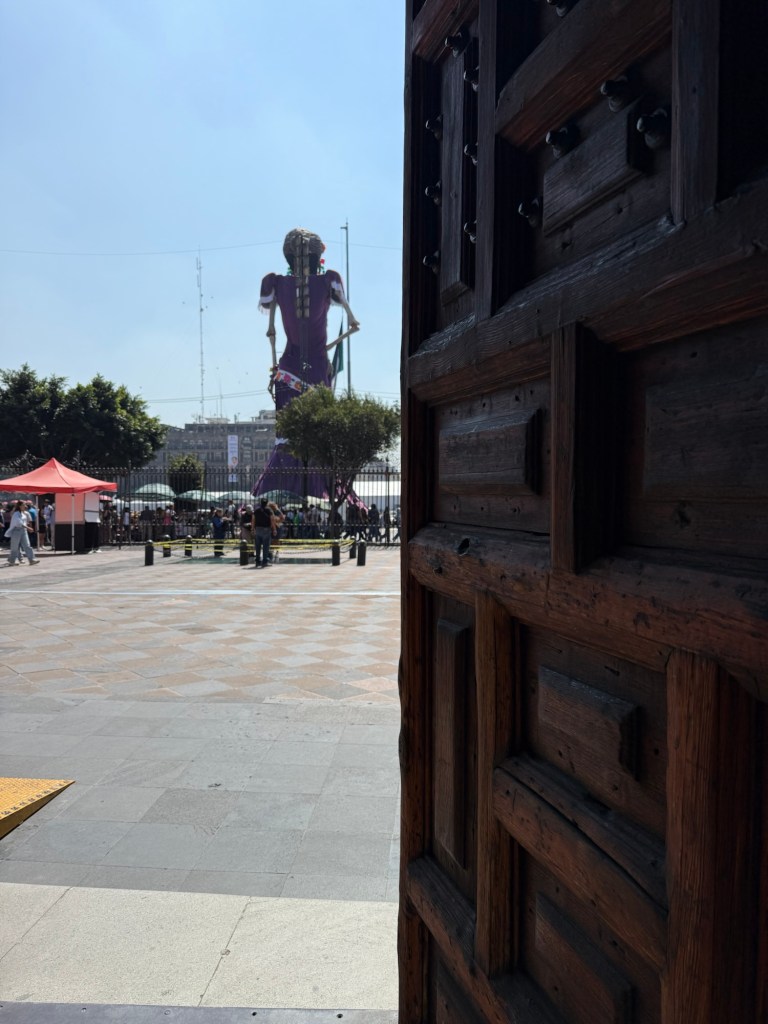
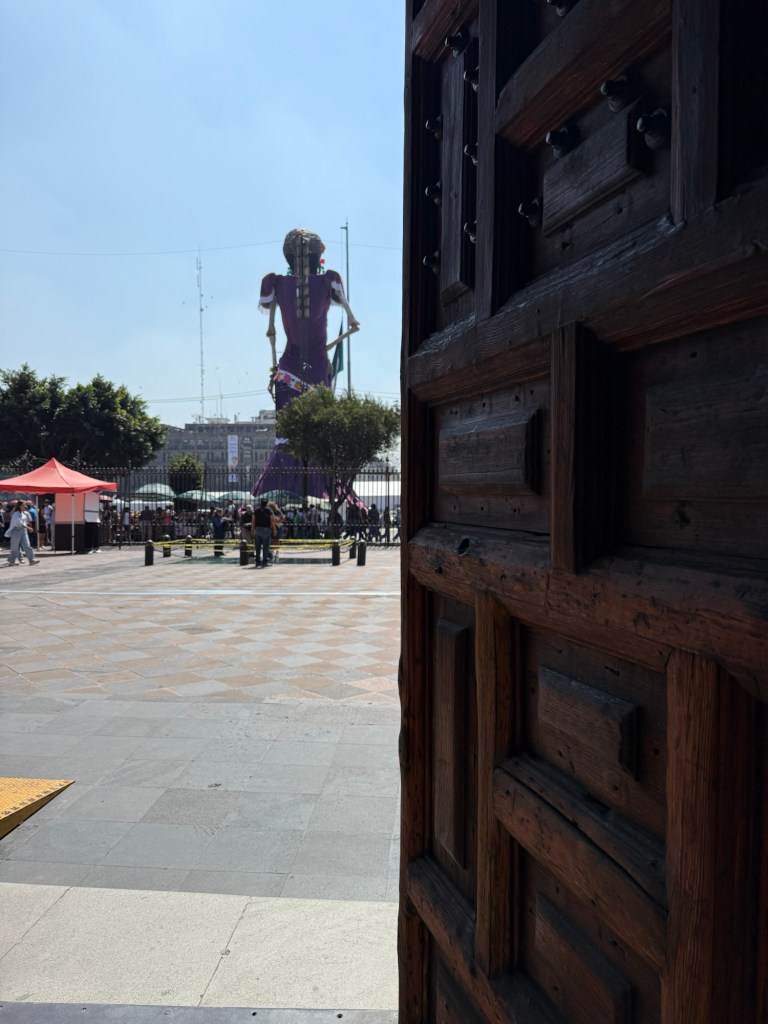
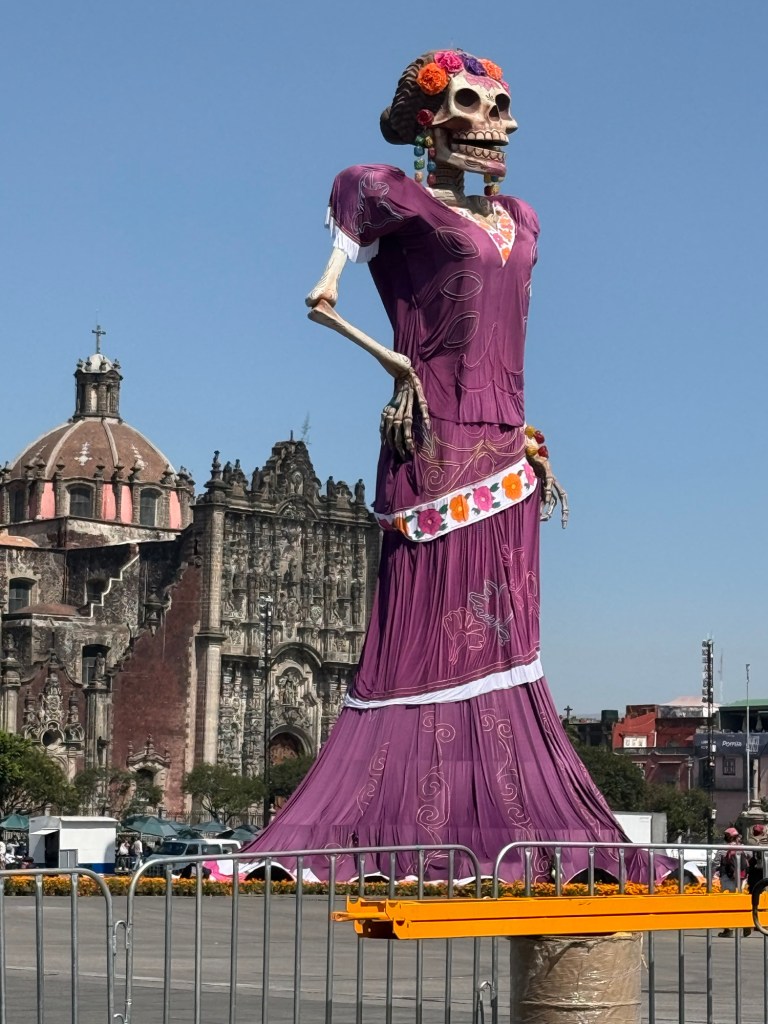
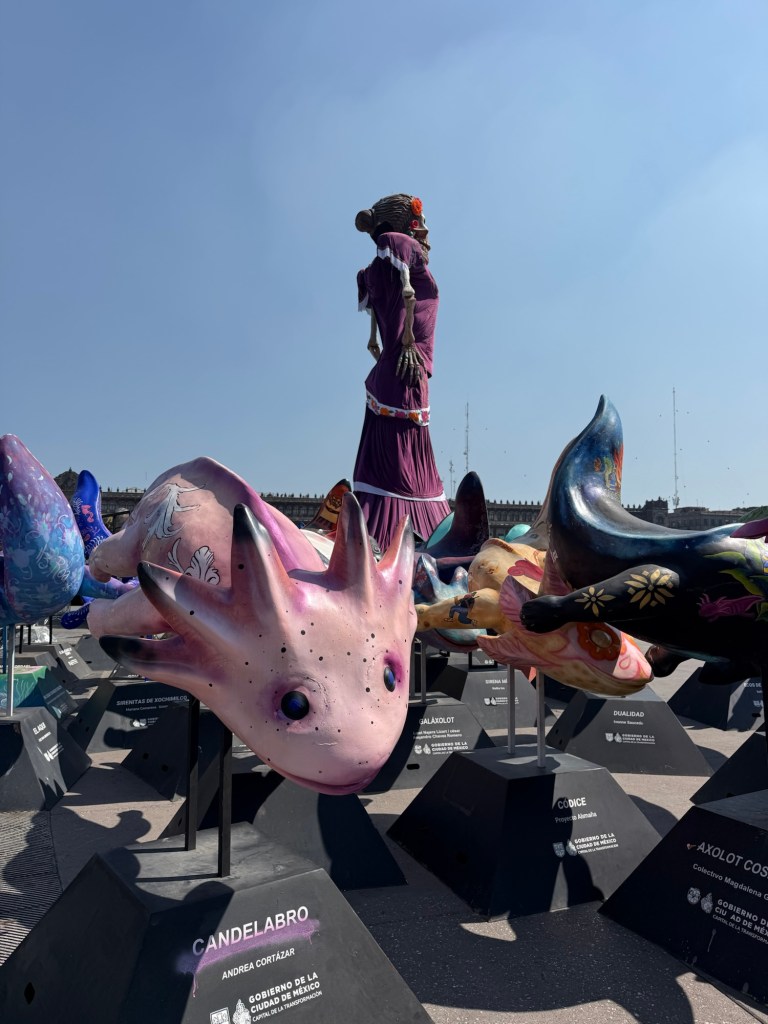
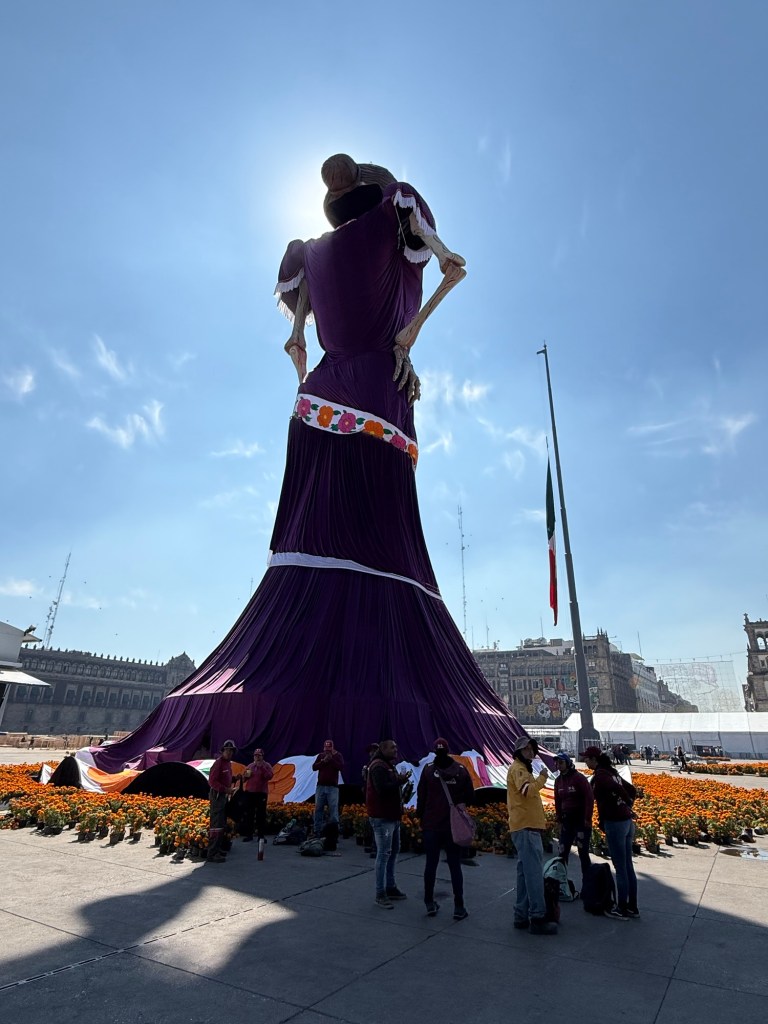
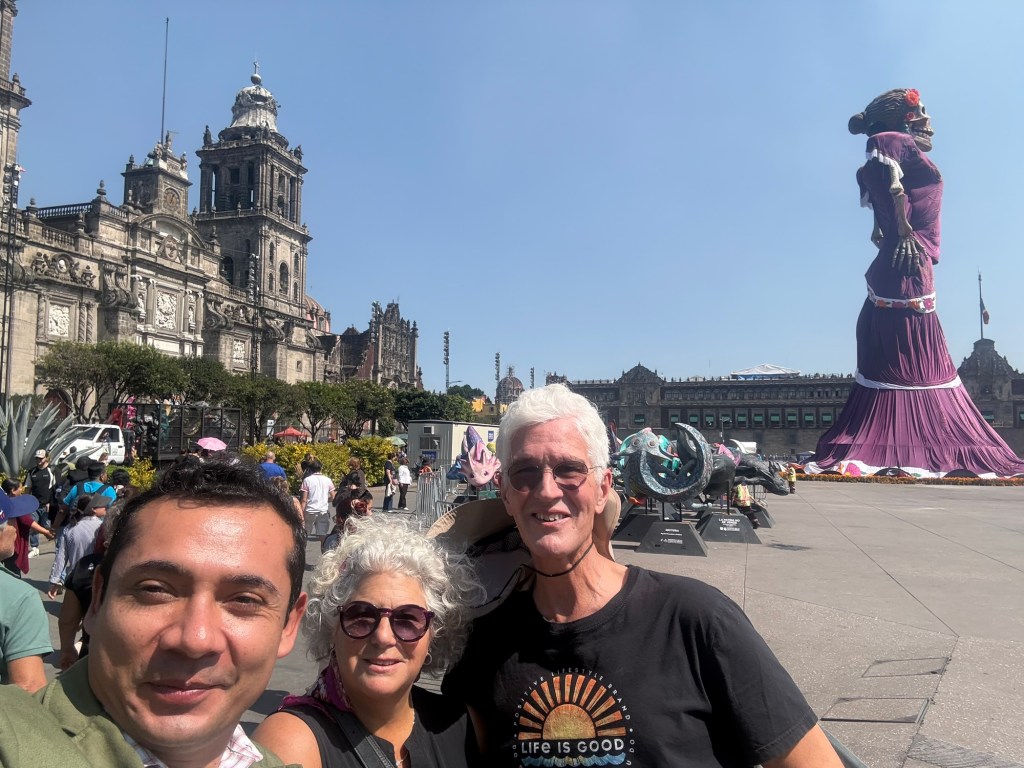
On our way to customs the bus crossed runways and weaved around other planes, some parked and some moving. we discussed going to see “Catrina”, the big, temporary, day-of-the-dead statue in the Central Square of Mexico City. Saul was doing research for us and told us about it and that we needed to see it Monday night because it was supposed come down the next day. Primal, Jim and I were all staying in the same general area so we made a plan to drop our luggage at our respective hotels and share an Uber to see Catrina.

Despite our early arrival it took quite a while to get our luggage and connect with our driver Jorge. But we were up for a late adventure. Luckily for us, at the hotel staff told us that the exhibit was extended for another week so we texted with Primal and told her our tour guide was going to take us to the Central Square the next day, but that didn’t work with Primal’s schedule.

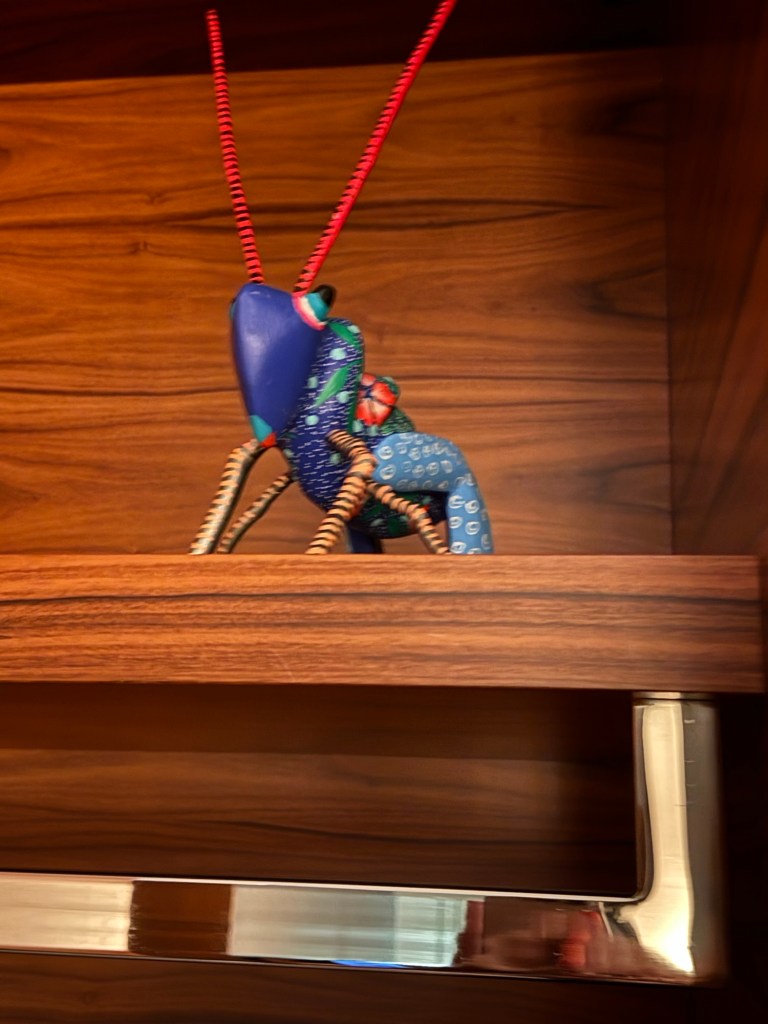
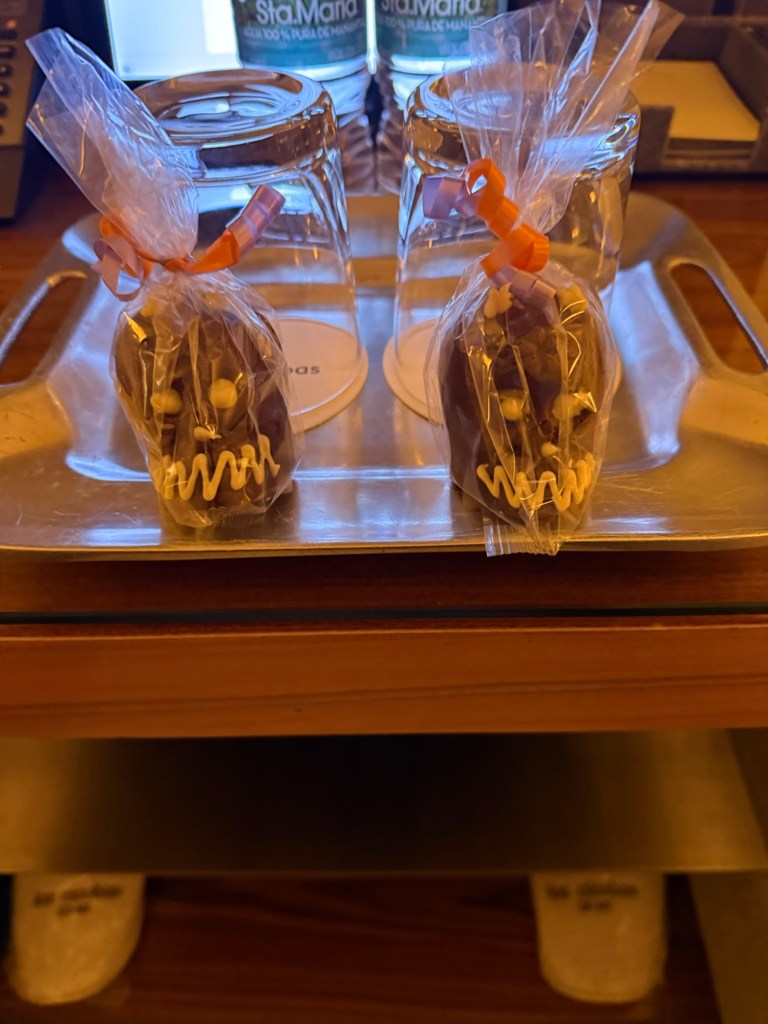
The Los Alcobas Hotel, located in the Palanco district, suited our needs perfectly for a few days. Other than the very attentive and friendly staff, yummy welcome cookies, festive chocolates, and a comfortable bed, the highlight was the epic shower. It had lots of jets and unlike many showers like it, every jet had great water pressure. It took us a while and lots of laughter to figure out how turn off the lights and close the window curtain with the “state of the art” room controls. But, we persevered and eventually succeeded.

We had two days to get a taste of Mexico City. Of course, two days is only a nibble for this city that is slightly bigger than the NYC metro area and the largest in North America.

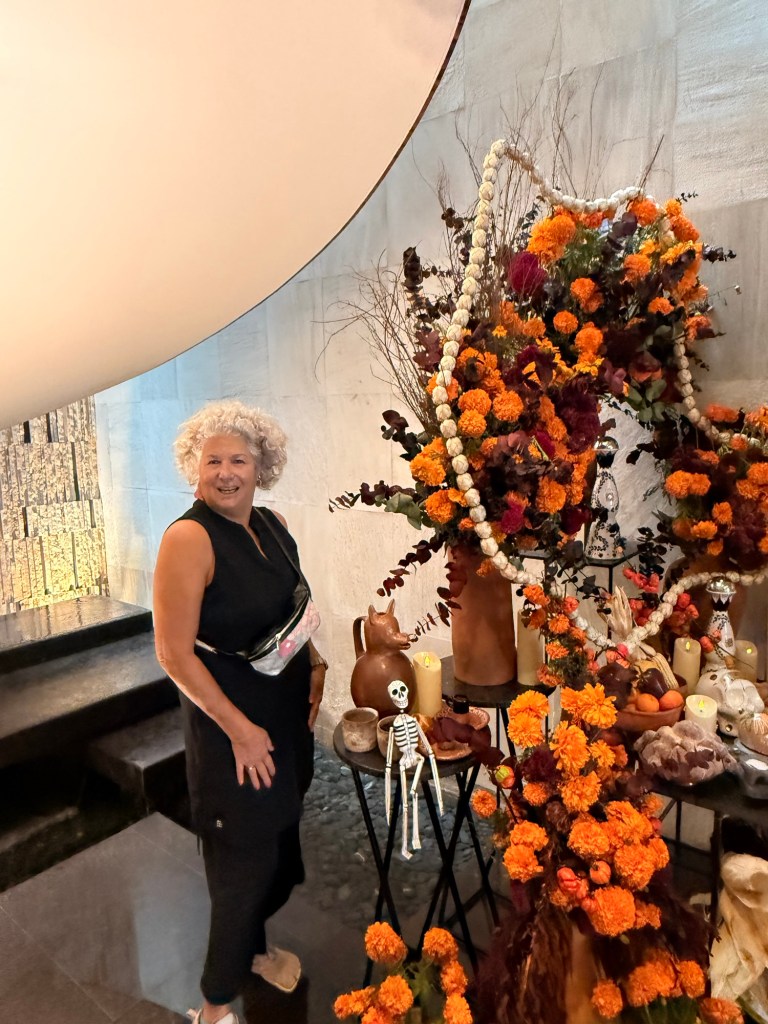
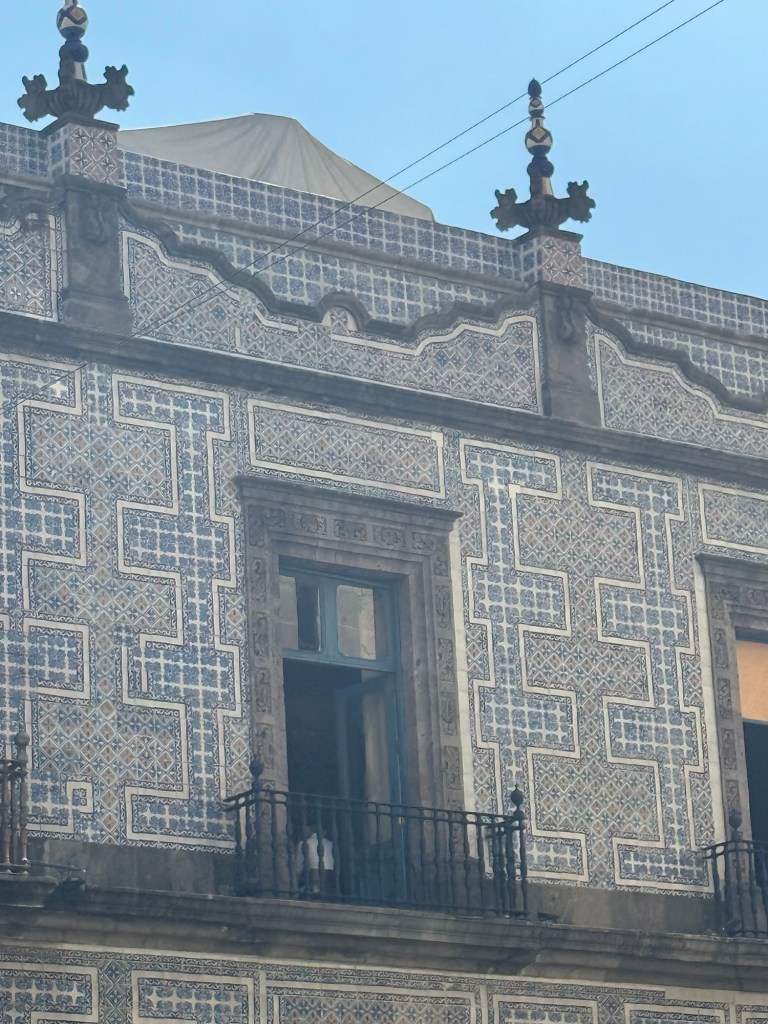
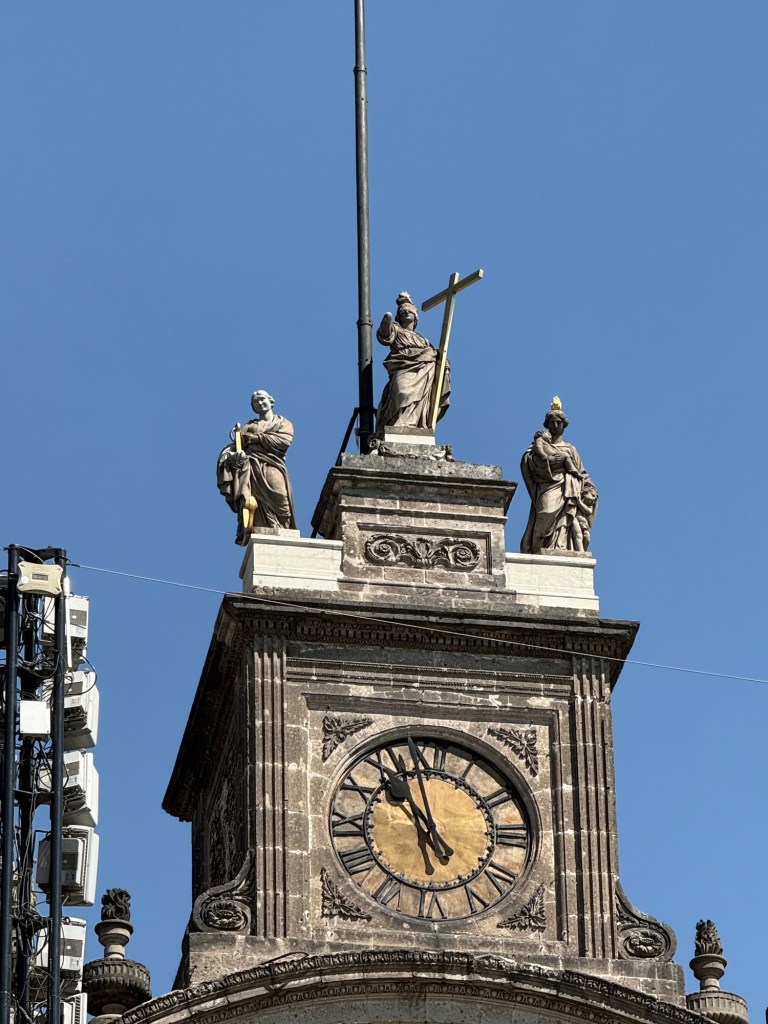
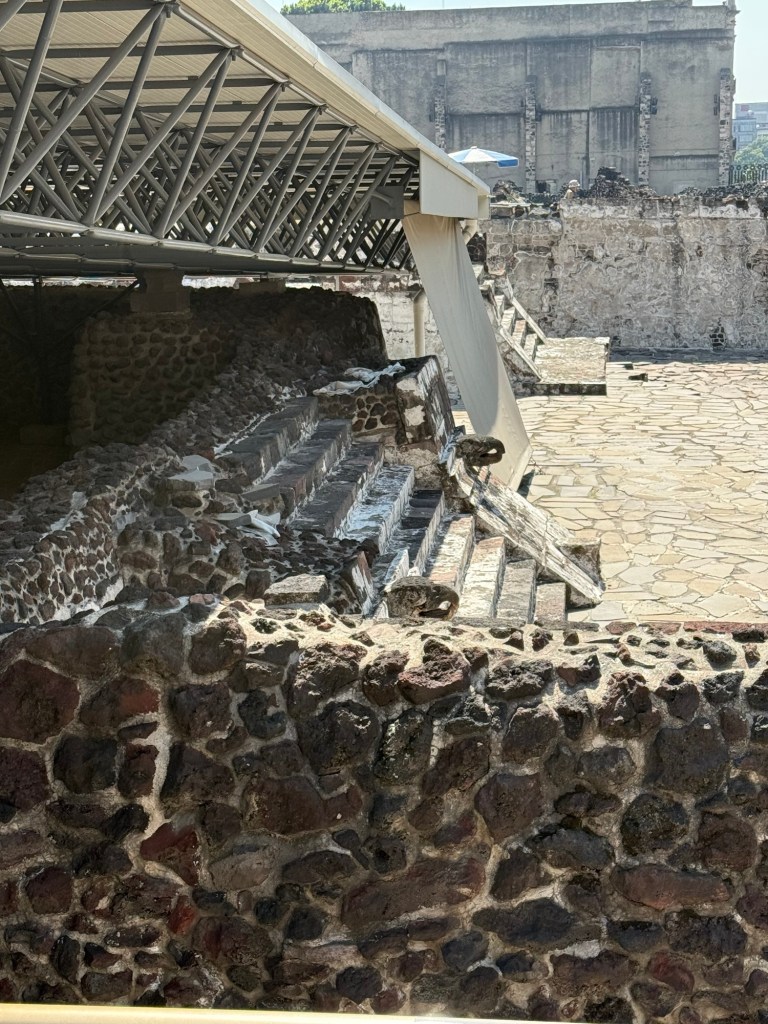
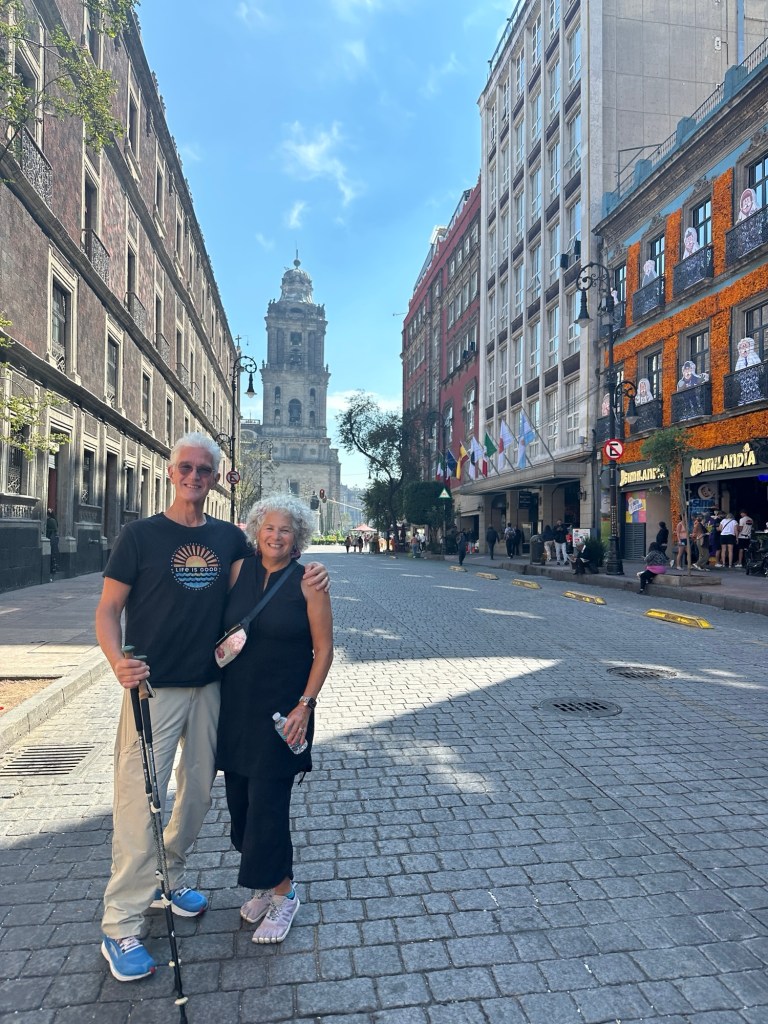
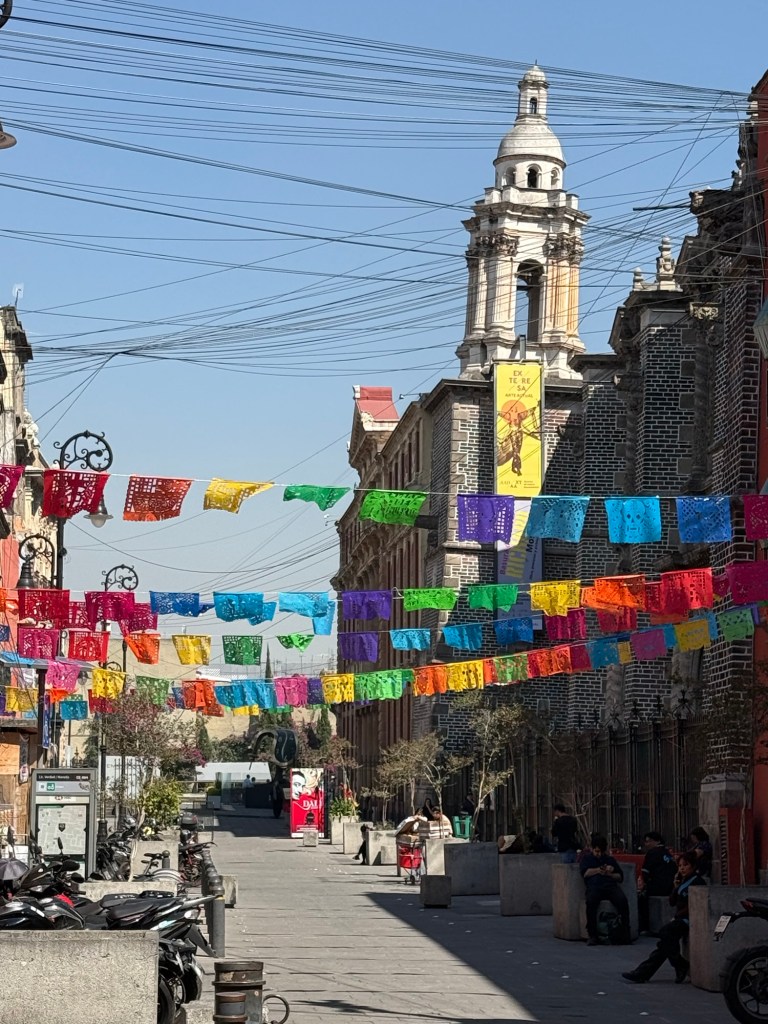
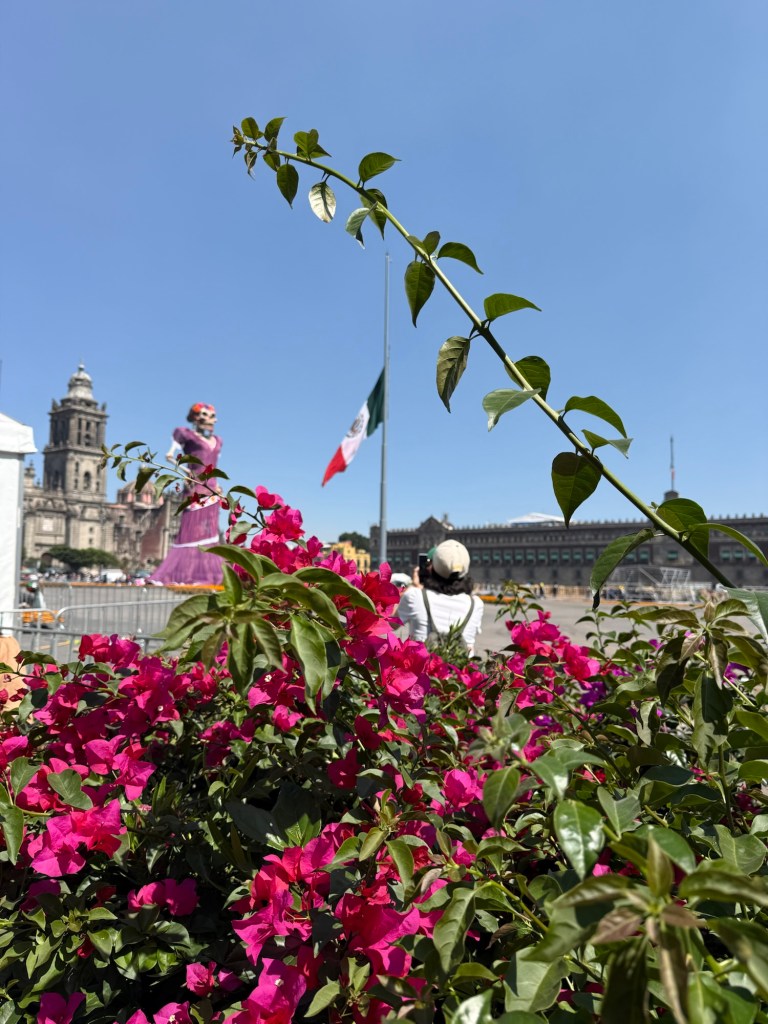
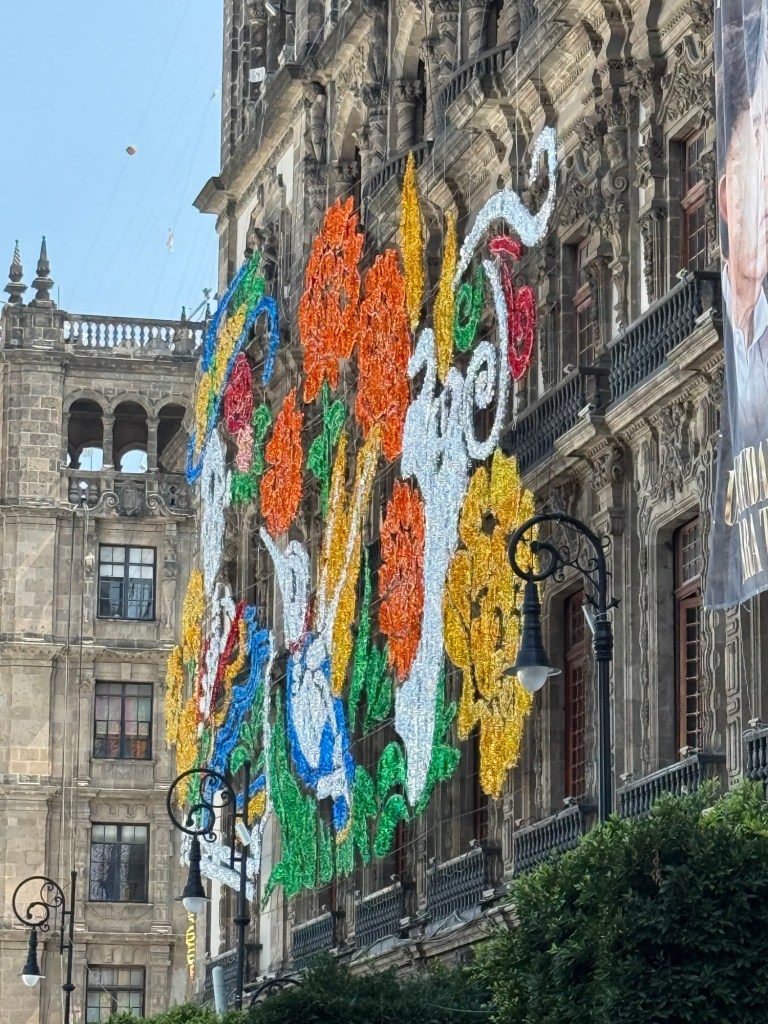
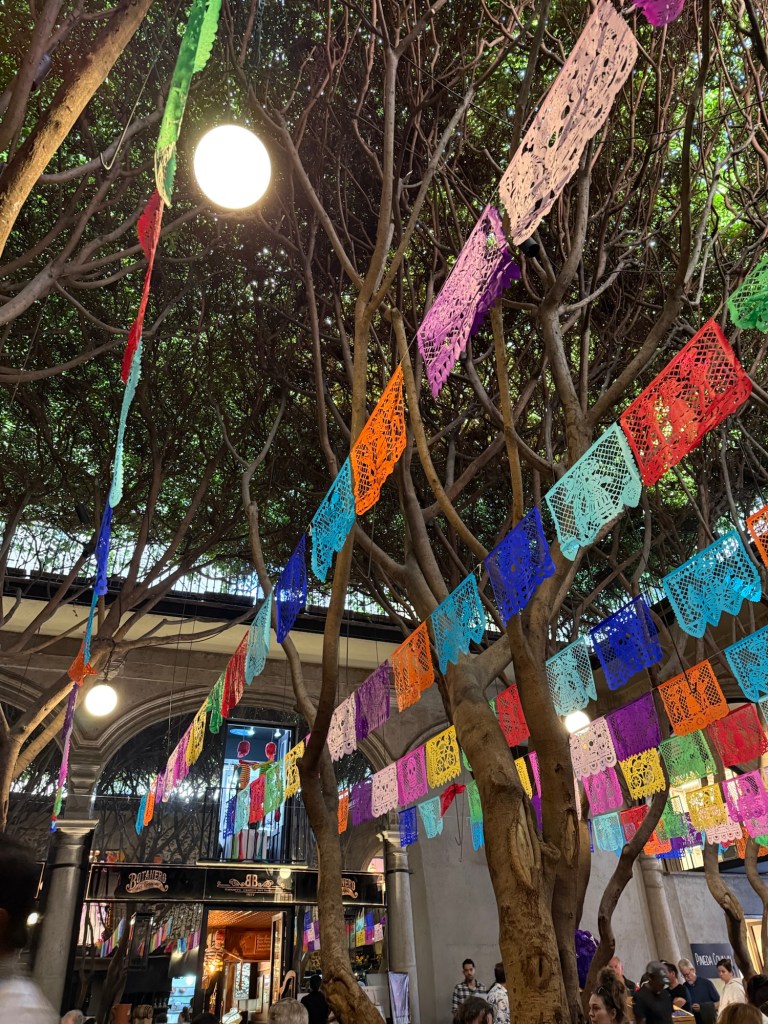
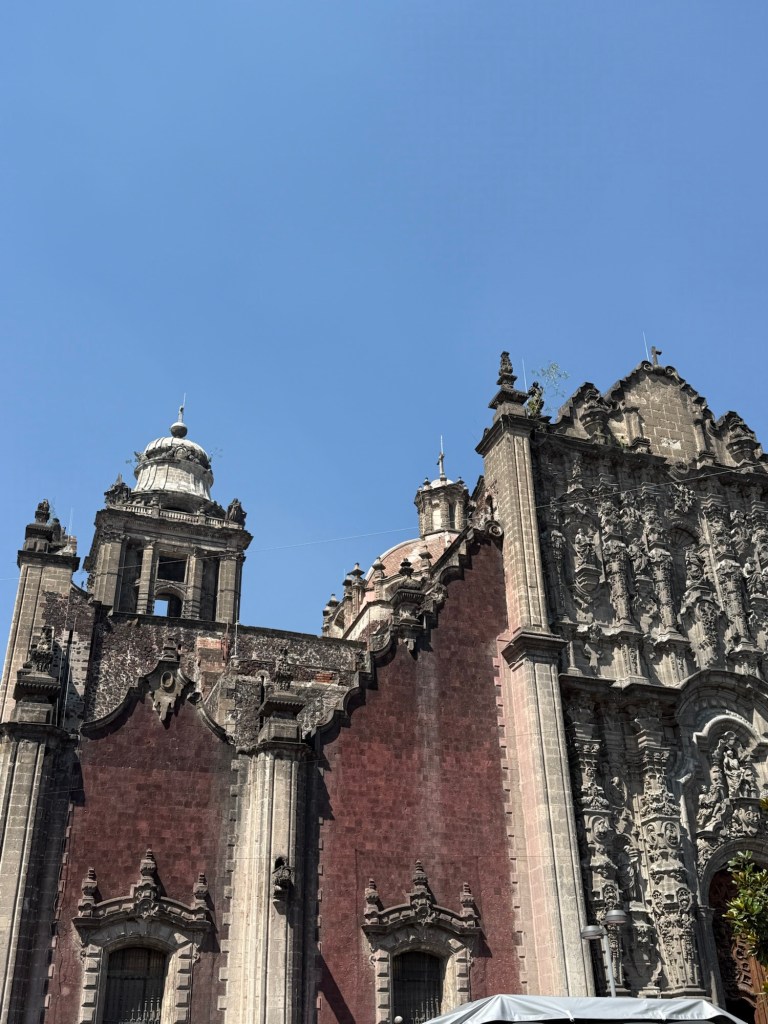
We began our day with a car and guide to explore the nearby historic district. Jorge met us again and our guide Alejandro helped us get acquainted. We drove through Lincoln Park and past Bosque de Chapultepec, it’s huge, almost 2100 acres.The city was still decorated with Day of Dead decorations and bright orange marigolds, and we got out of the car near the Central Square surrounded by the Government Offices, the large Catholic Cathedral, the ruins of a large Aztec Temple and the Catrina Sculpture. Traffic is a huge issue in Mexico City. What should take 20 minutes takes an hour, but it gave us a chance to see a lot while we crawled down the roads to downtown.

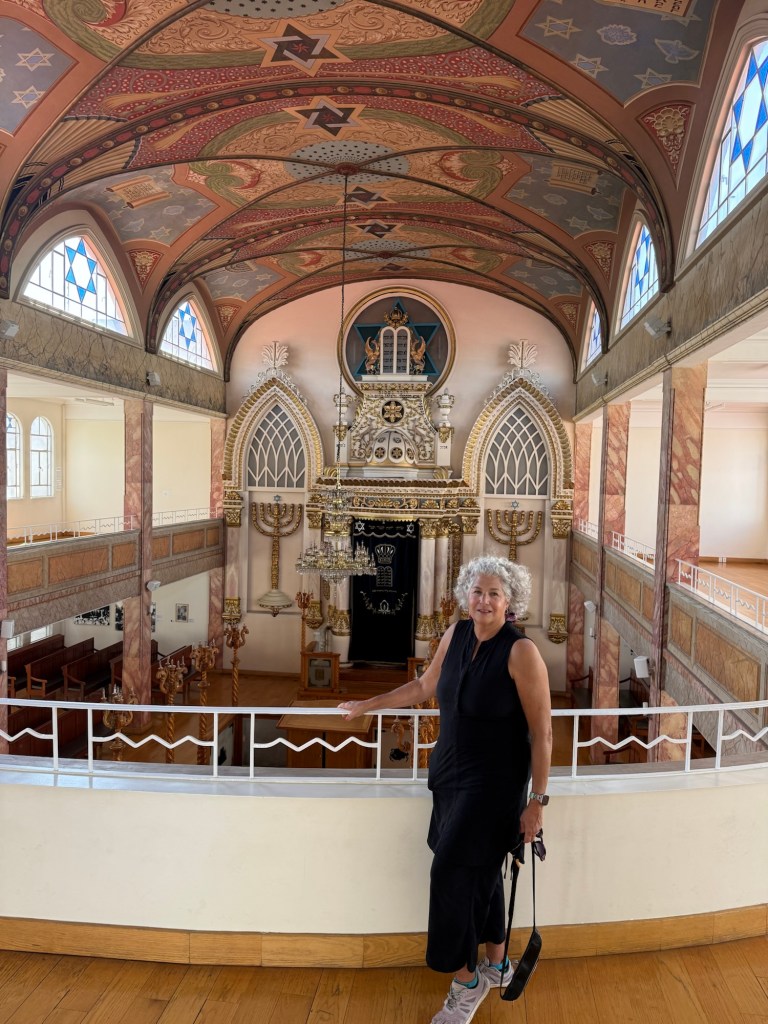
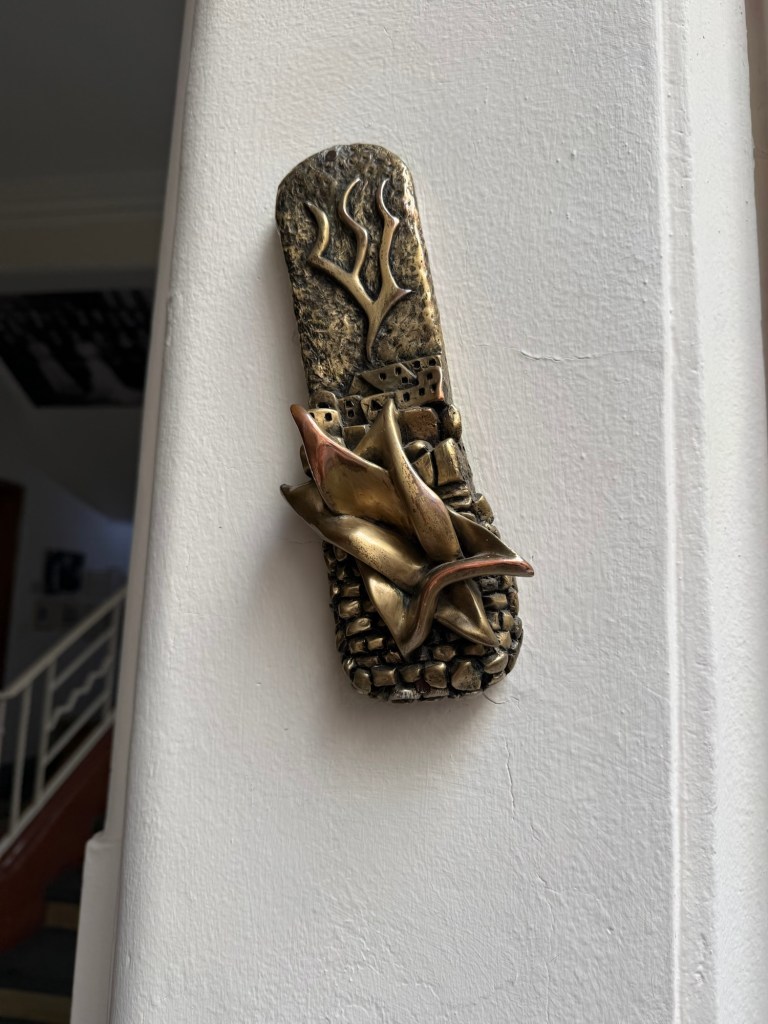
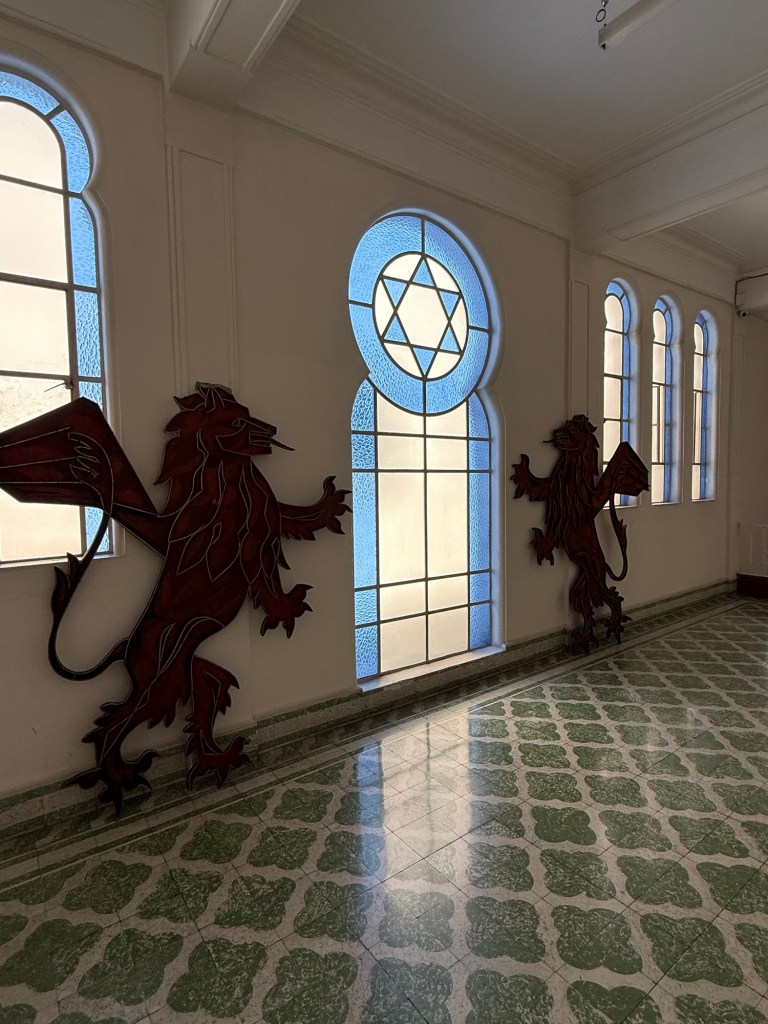
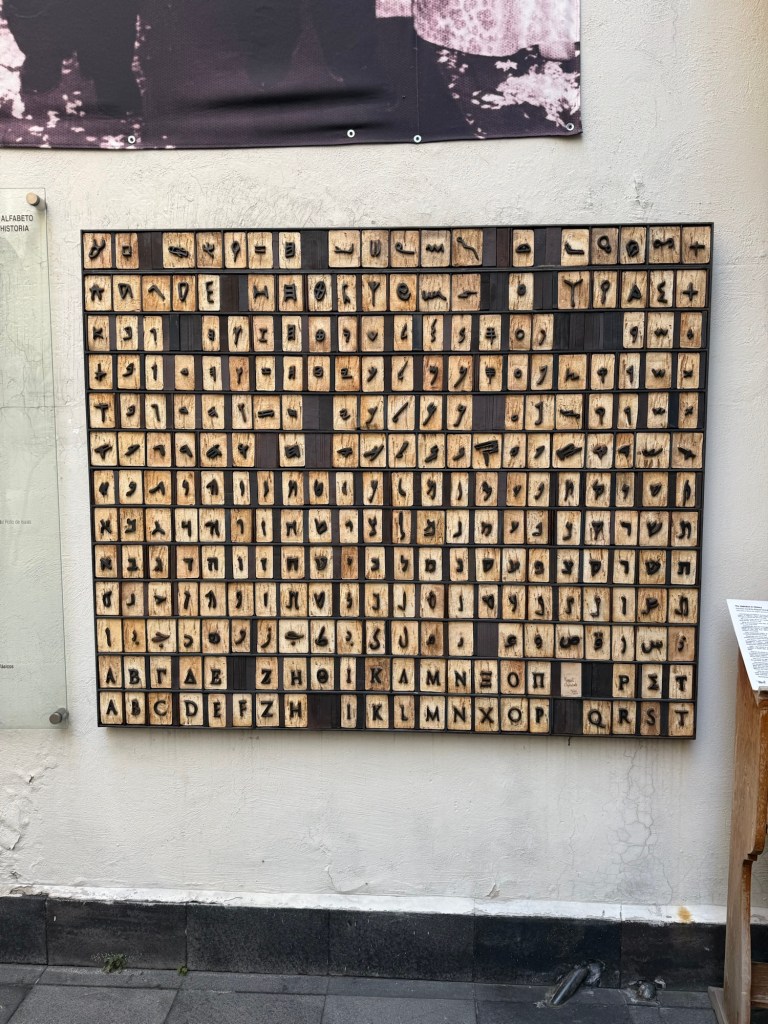
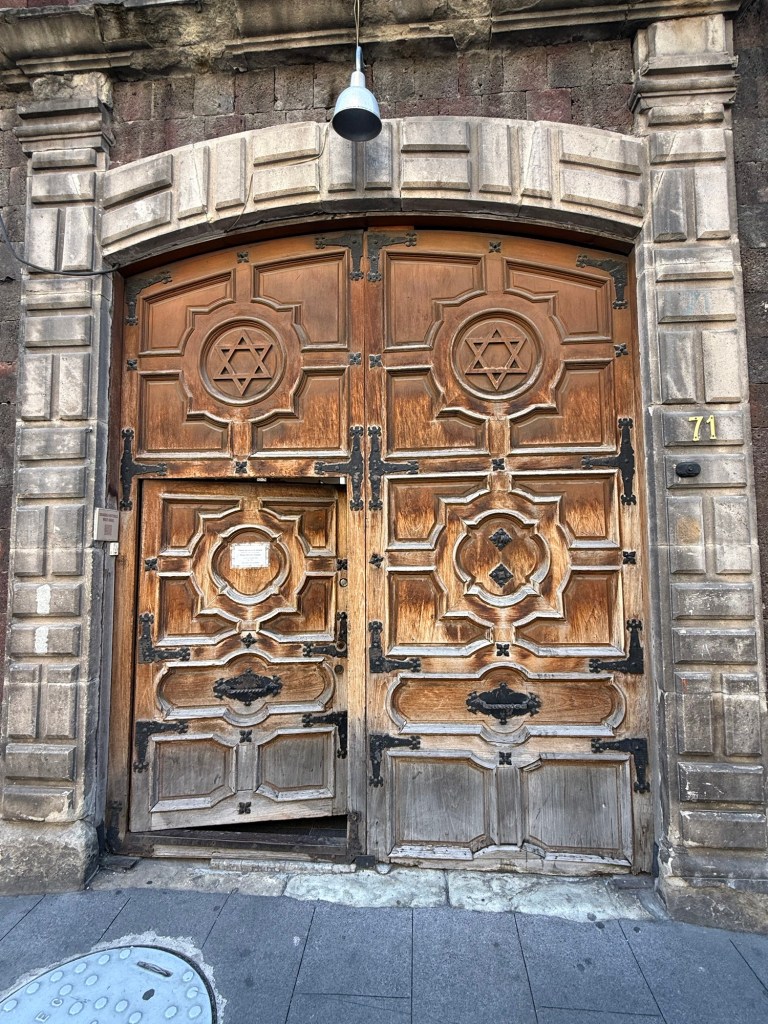
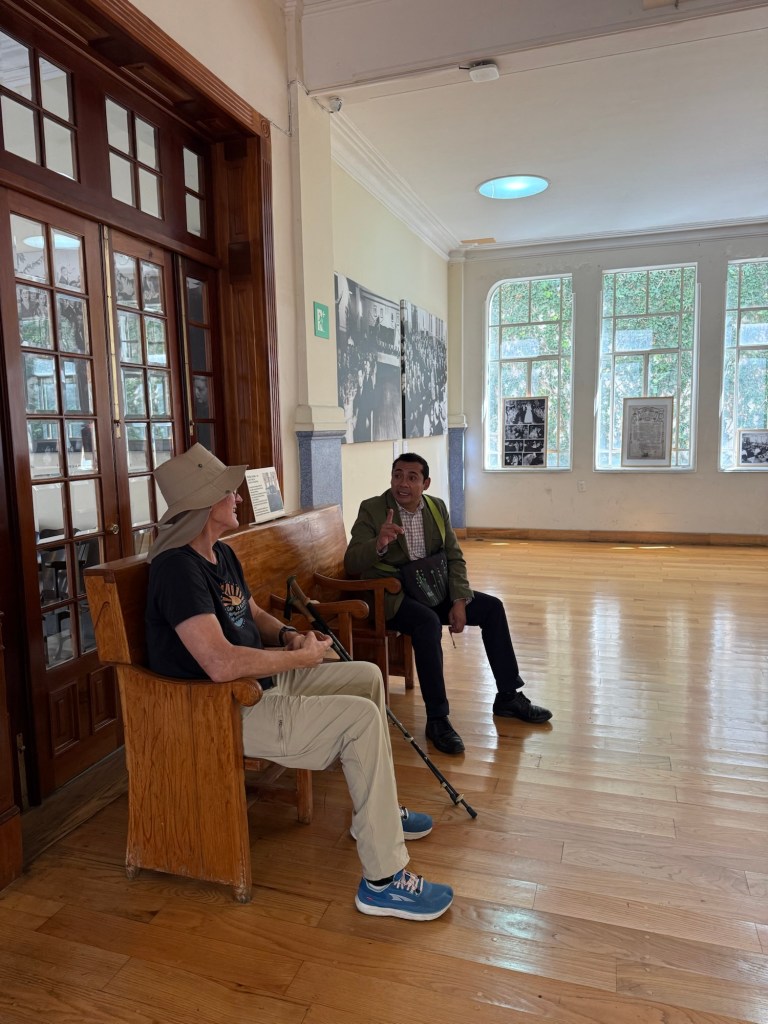
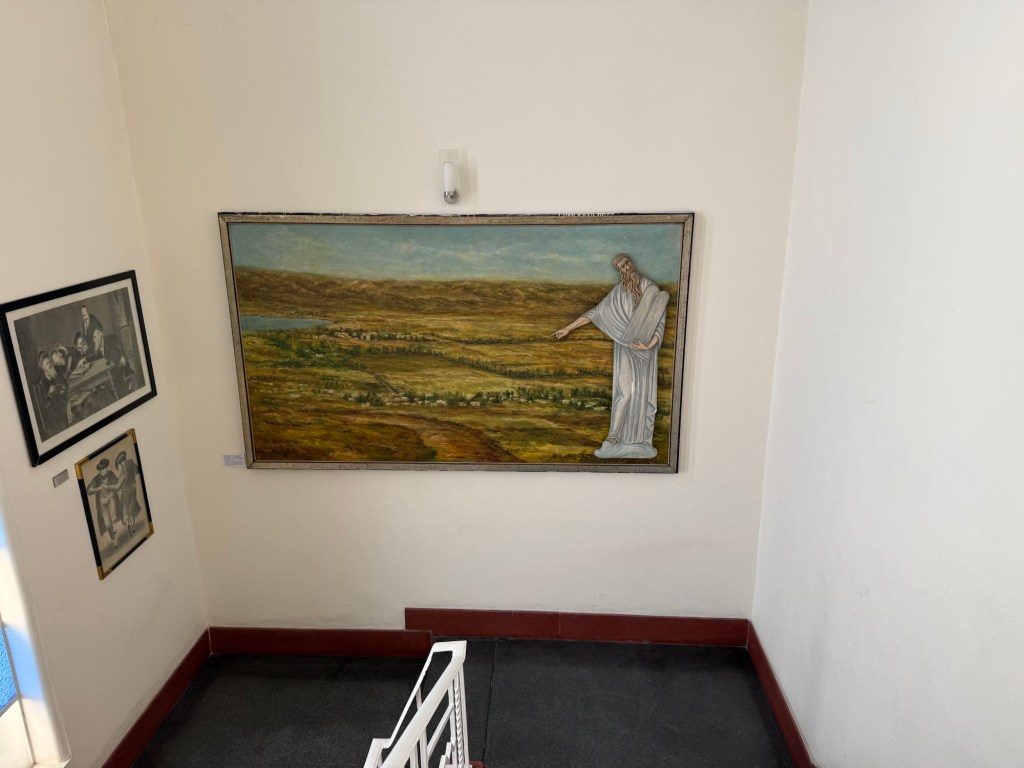
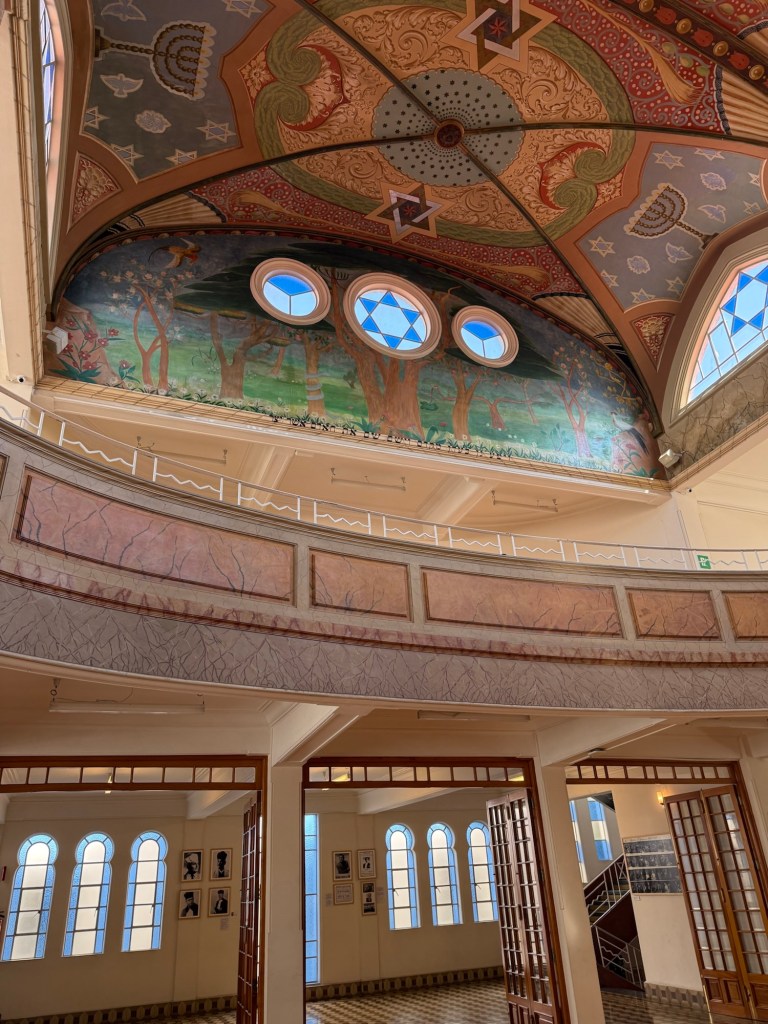
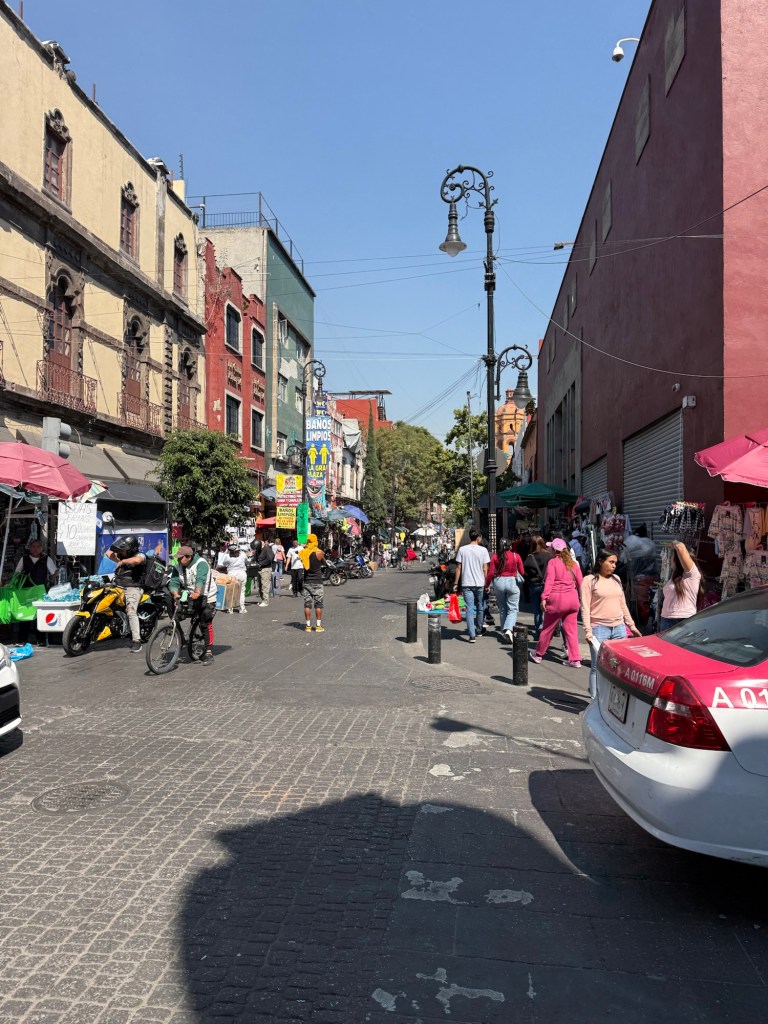
After arriving, we did a walking tour through the old town, past the roads lined with people selling everything from clothes to toys to food as we made our way to the old Synagogue. The abundant sidewalk commerce is reminiscent of India.

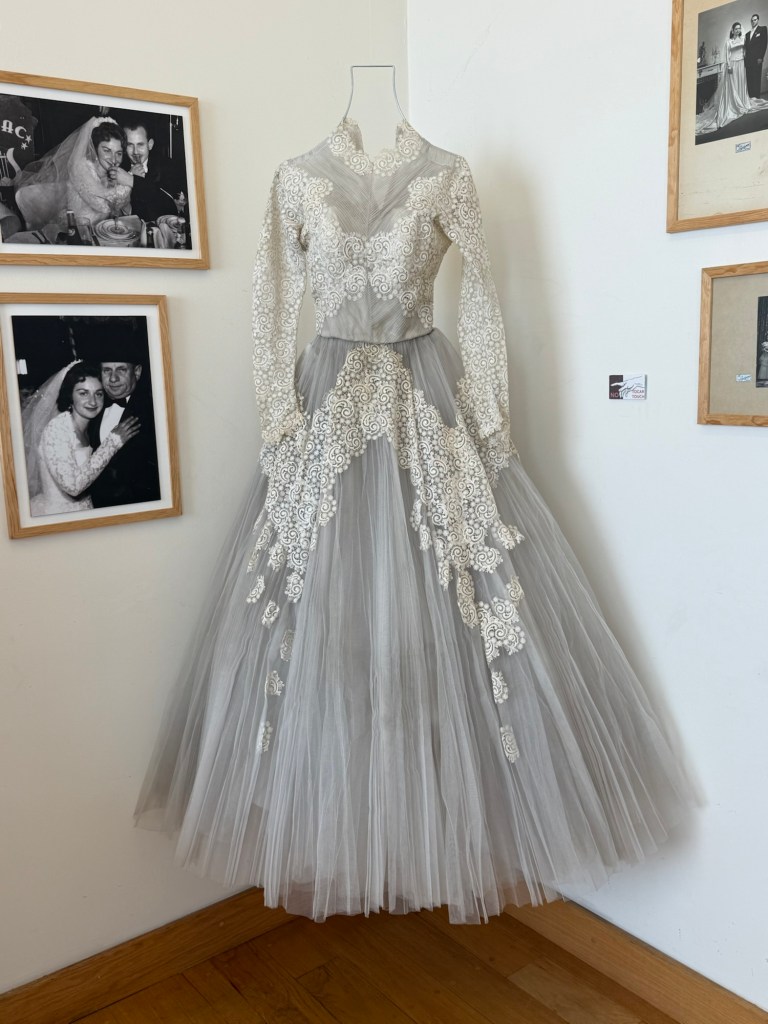
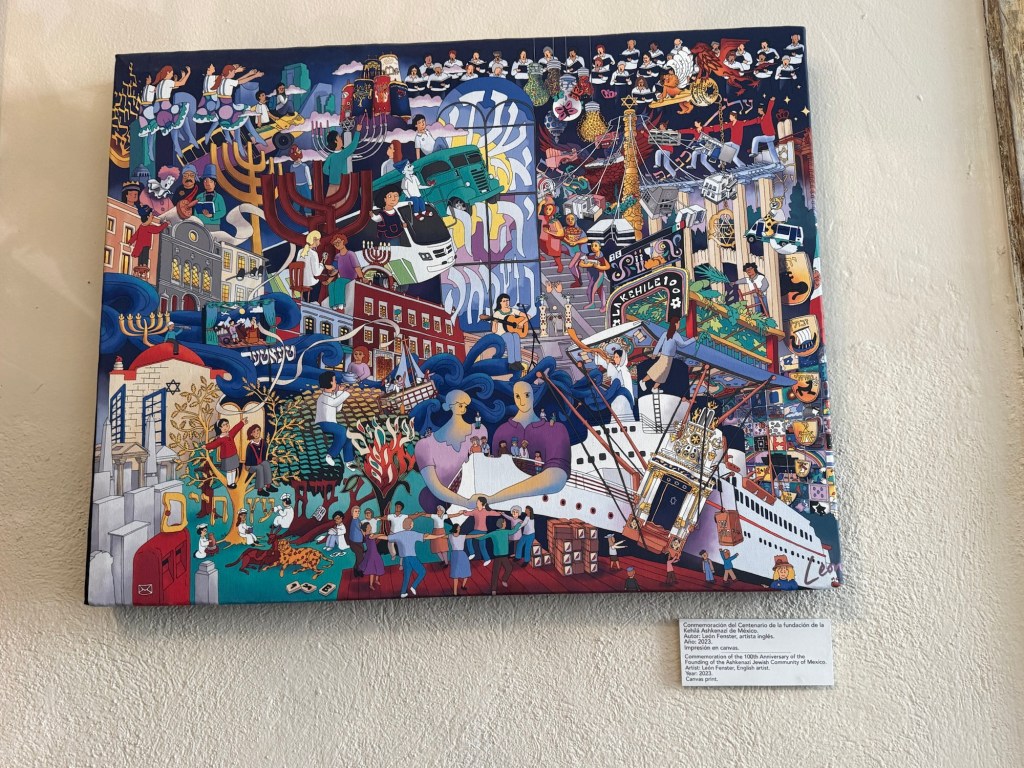
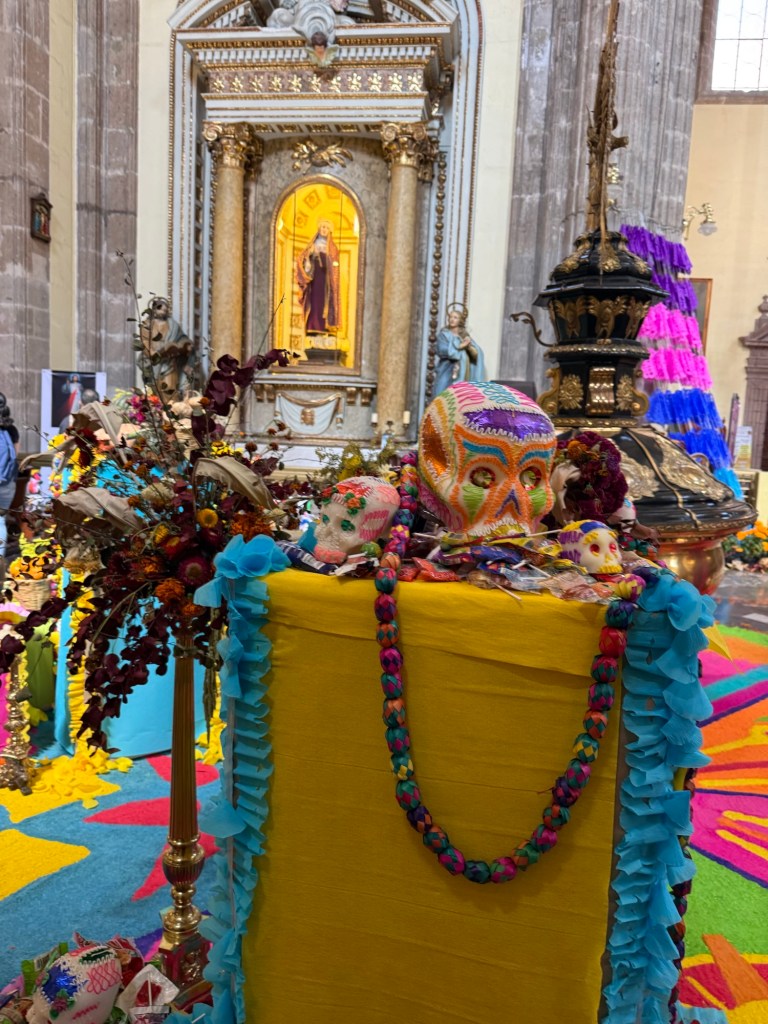
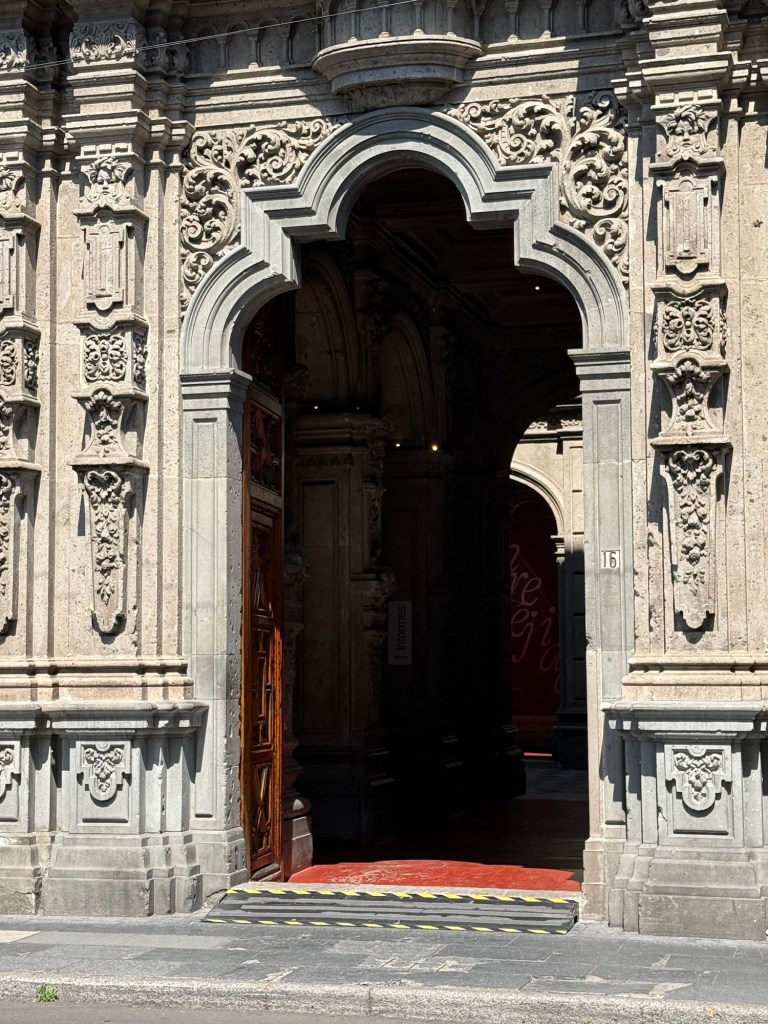
Almost all of the 50,000 Jews living in Mexico live in Mexico City and the synagogue we visited was the oldest. I really appreciated our visit. On our way back to the Central Square we went inside the massive Catholic Cathedral decorated with gold, massive ceilings, two large worship areas and 18 small chapel rooms. Two services were ongoing while we were there. Throughout our travels we have visited many churches. These services were very well attended but most interestingly the priests had beautiful, cantor-like voices.

Although the churches don’t truly accept the Day of the Dead holiday from a spiritual perspective they embrace it with seasonal decorations in the cathedral.

The oldest buildings in the Central Square, (Zocalo) were built with stones taken from the giant Aztec temple that once stood on the site adjacent to the Cathedral. Today all of the ground in the Central Square is slowly sinking because of the collapsing water table. As you look around at the old buildings in the Central Square and the surrounding area, many are noticeably leaning. The Government has worked hard to stabilize the ground under the Cathedral, but many other old buildings do not look safe.

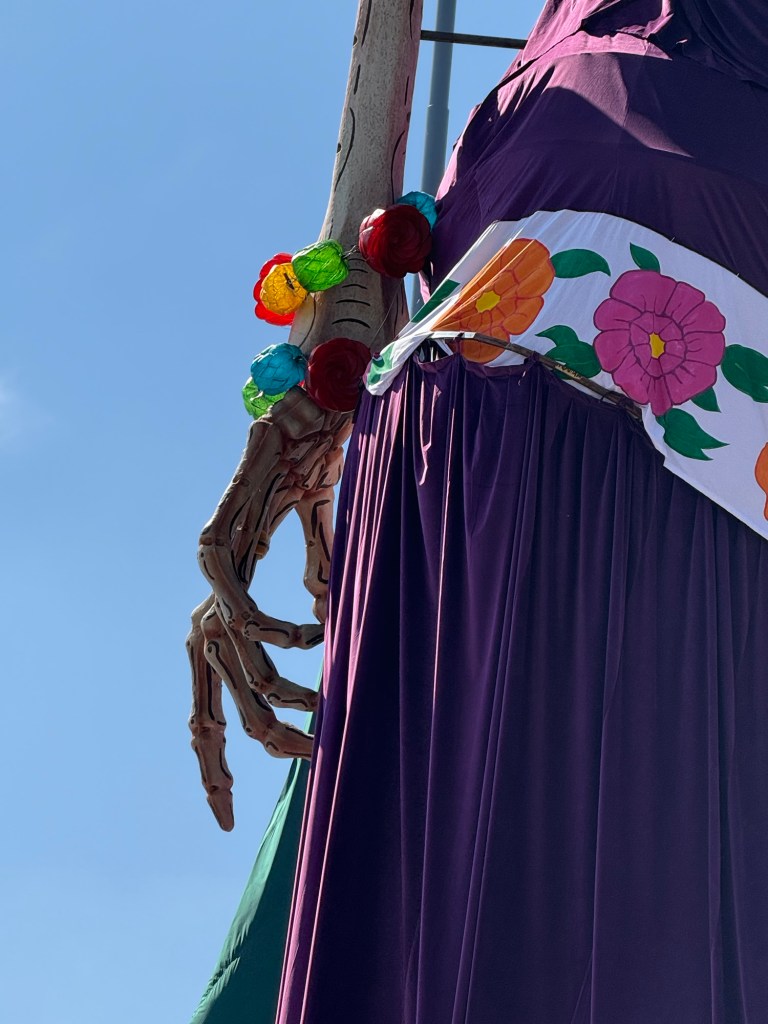
After our tour we walked around Catrina to get different perspectives on our way to lunch. Catrina is really quite something. La Catrina originated as a zinc etching by Mexican cartoonist Guadalupe Posada around 1910 to satirize upper-class society. Diego Rivera transformed it into a national icon.

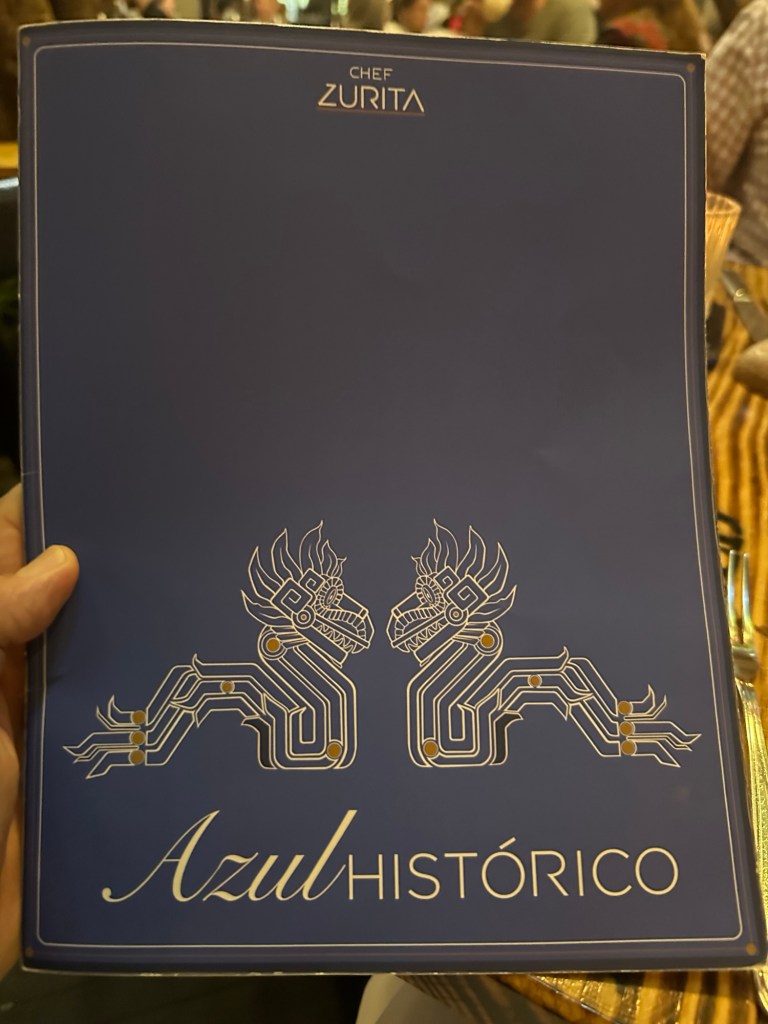
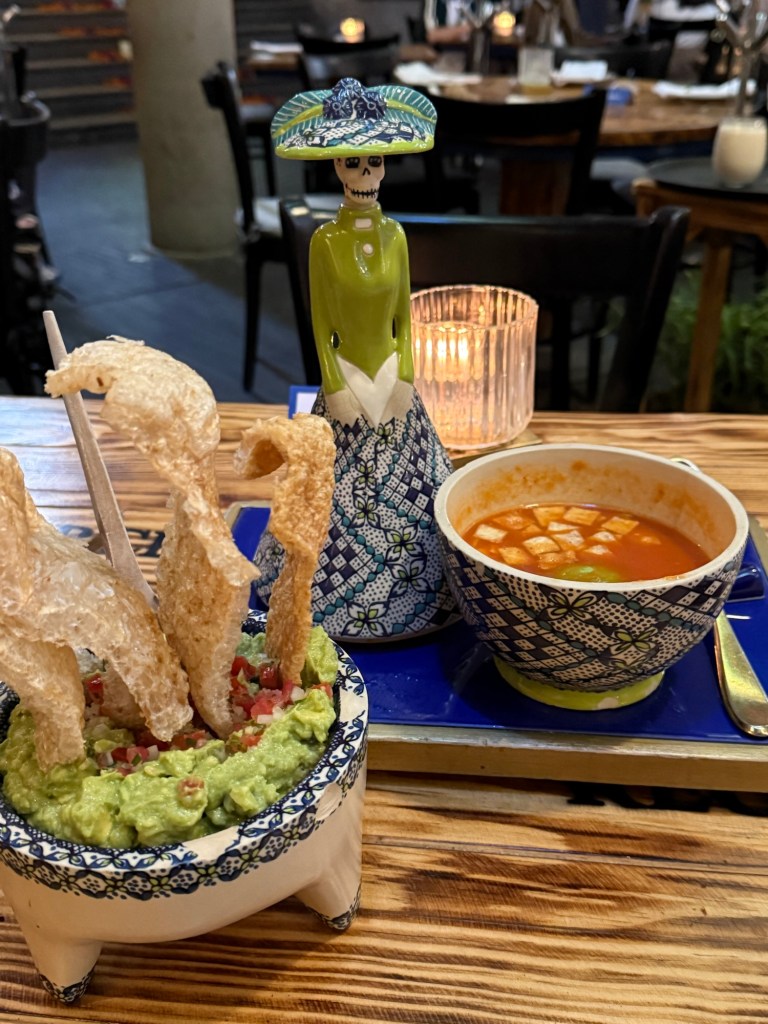
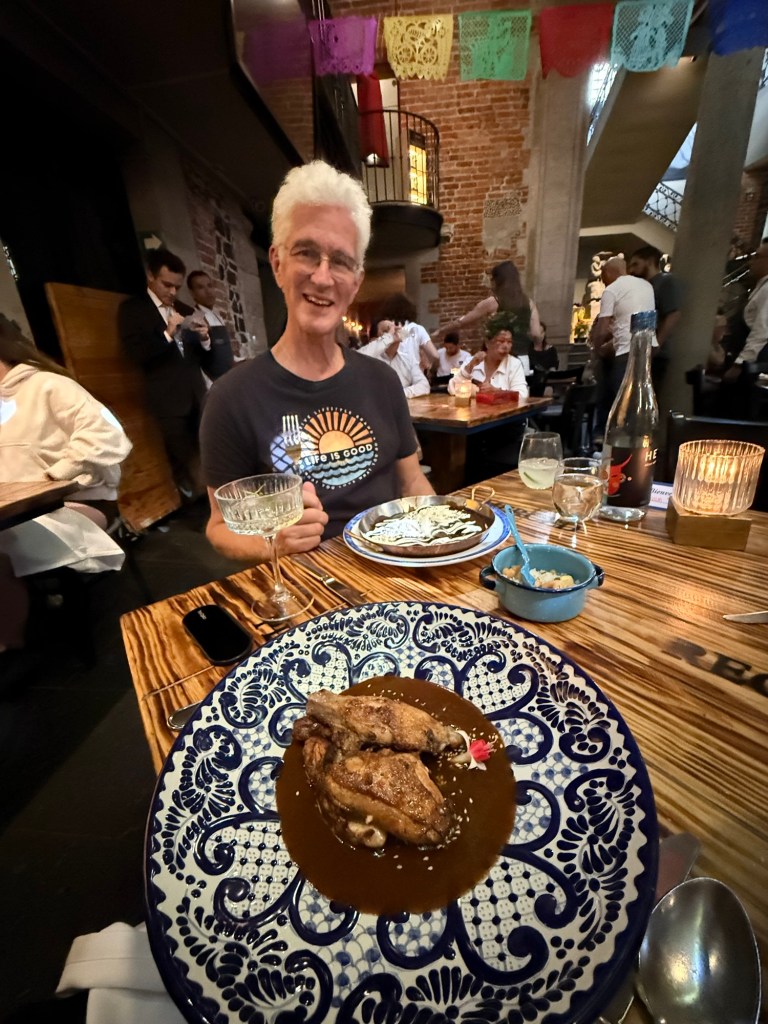
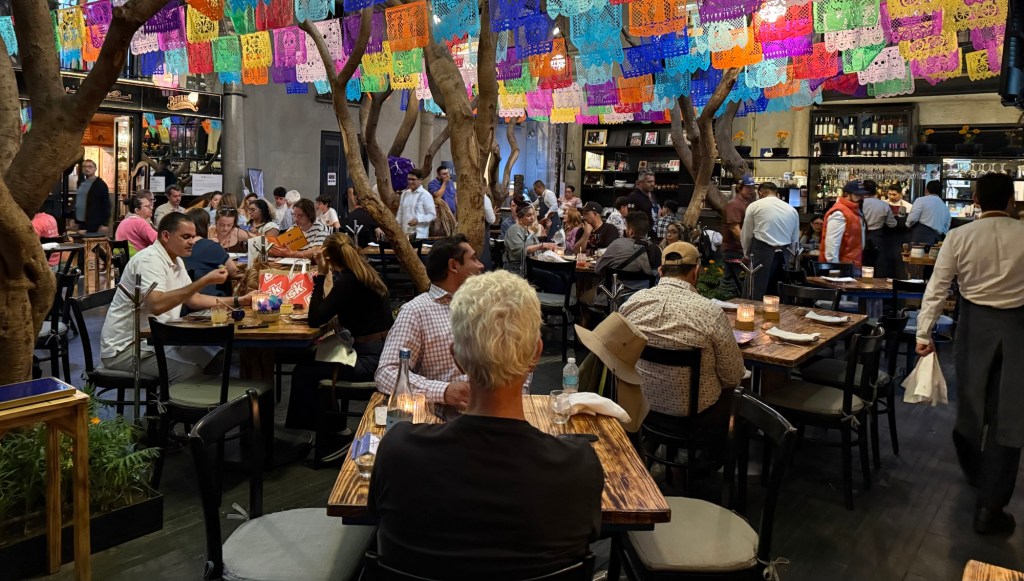
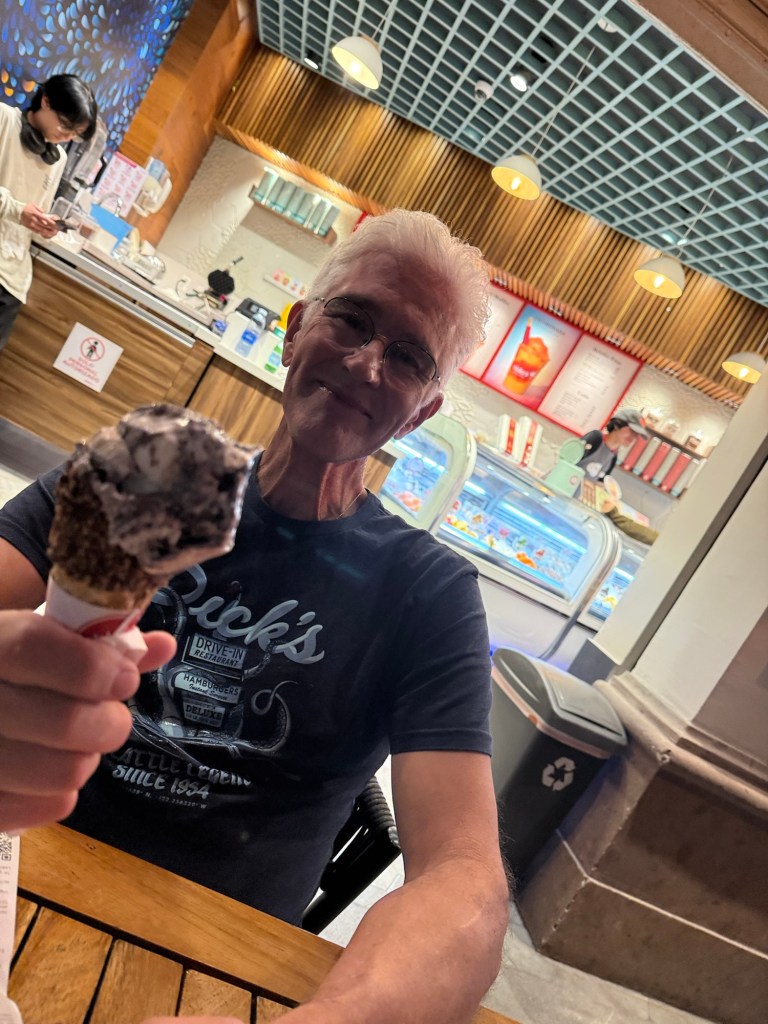
Glen, our Elliott Bay Marina boat neighbor, suggested we go to lunch at Azul Historica. We invited Alejandro, our tour guide, to join us and we got to celebrate his recent birthday. He is in his late 30’s, the same as Saul, and we totally enjoyed our meal together, and now consider him a new friend. We shared all our dishes so we could taste lots of good food and we also had a great conversation with a father and daughter sitting near us. She lives in Mexico City and works for an advertising business with clients all over the world. Her Dad has retired but has spent lots of time in the Seattle area. Meeting new people is definitely one of the best parts of traveling!

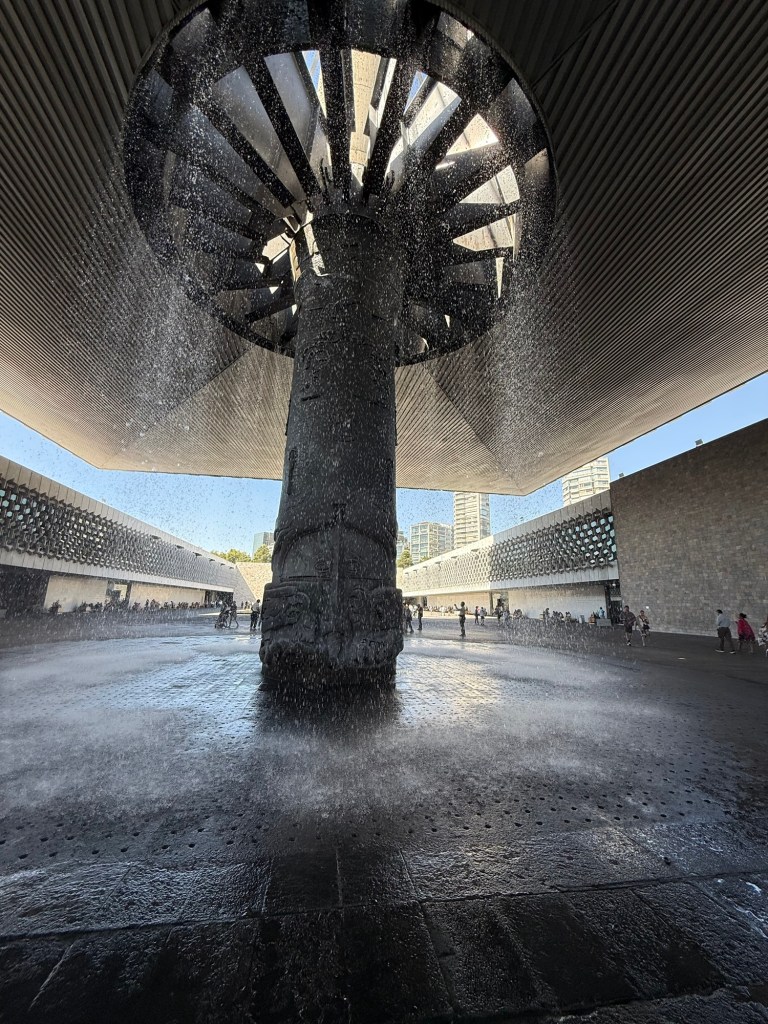
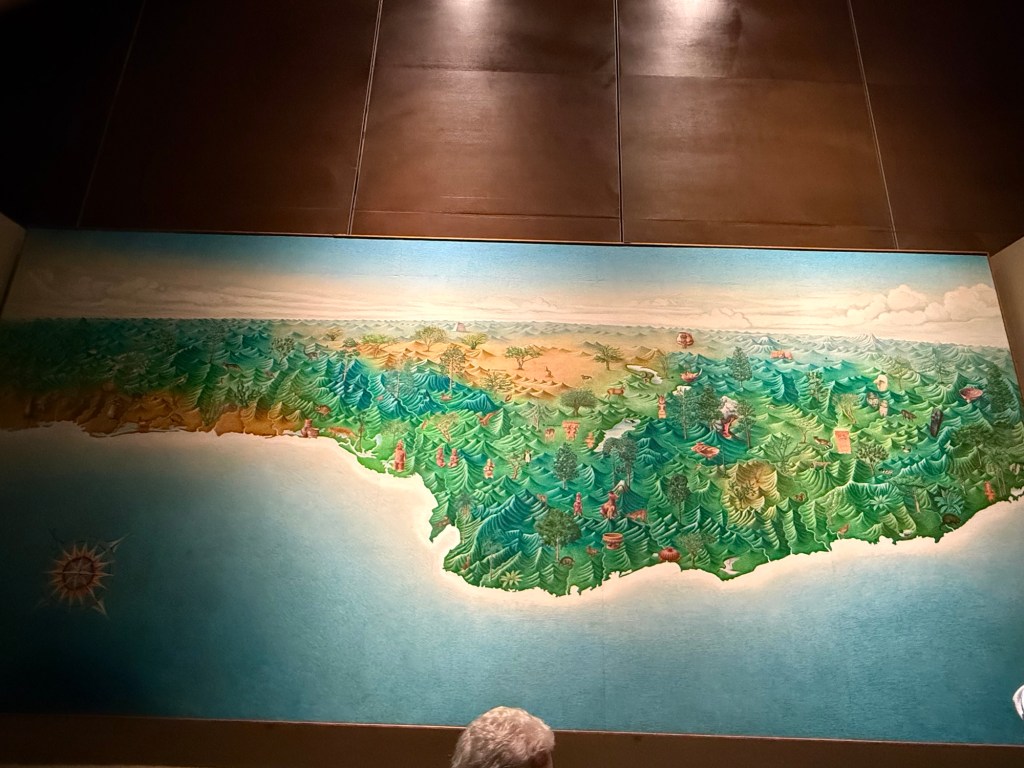
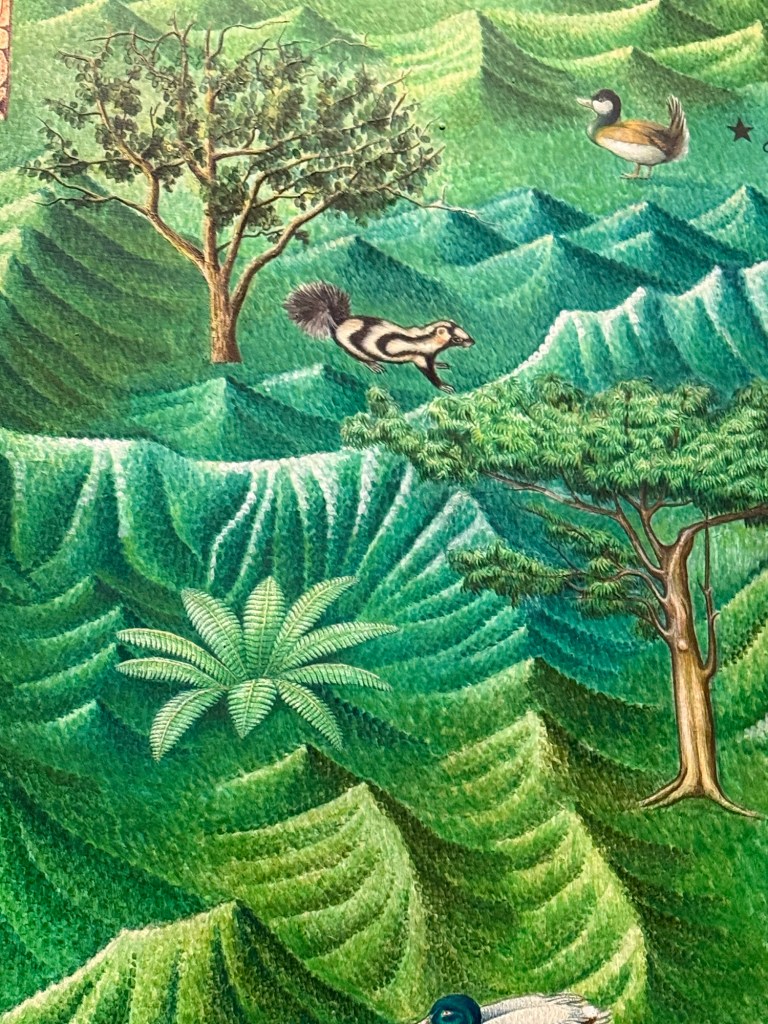
Day 2: Walking through the parks to the Museums of Anthropology and Modern Art.

With Jim’s physical limitations he has about 2 miles of good walking in him per day. So after we walked 1.5 miles to the first museum we decided to borrow a wheelchair to see the sprawling anthropological exhibits. Jim is usually a read-everything-at-the-museum guy. Not surprisingly, I’m more of an overview person so with me pushing the wheelchair he had to adapt to my faster pace.

There is no question that the history of the land now called Mexico is filled with violence, conquering, and human sacrifice. Maybe that is why they have had trouble making the transition to a society based on the rule of law. When walking around the city there is a heavy police, national guard and military presence, with road blocks, roving patrols and government officers with assault rifles everywhere. Alejadro told us that most people don’t trust the police, but they do trust the army patrols. It’s an interesting dynamic. That being said, we felt totally comfortable walking around the city with no obvious crime, addicts or homeless.

Although Jim and I love our time in the wilderness I also love being in a big city full of people, especially when there is also good art and good food. We will definitely come back to Mexico City. We totally understand why Saul loves it so much.

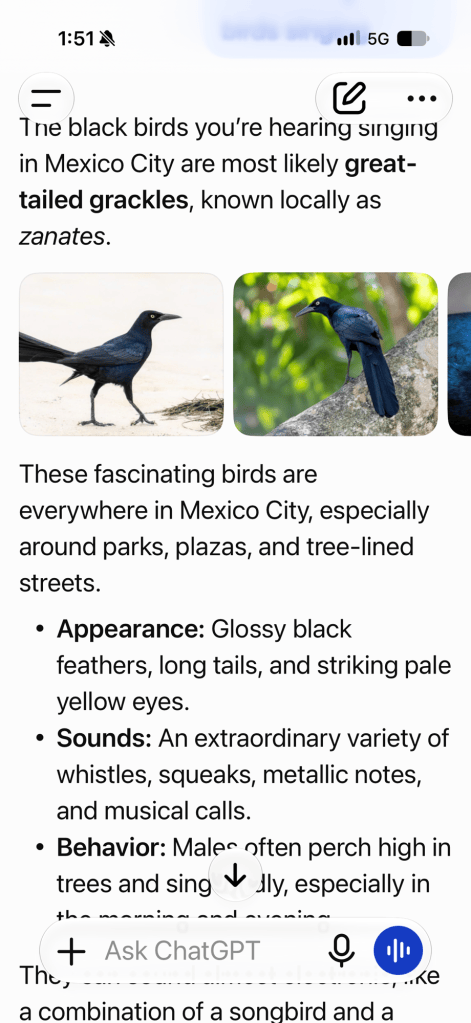
From the archeological museum we walked across the Zocala past beautiful trees and plants to the Modern Art museum. While we were walking we heard the calls of very interesting birds: the great-tailed grackles, known locally as zanates. It’s varied songs are extraordinary. The bird book describes them as whistles, squeaks, metallic notes and musical calls.

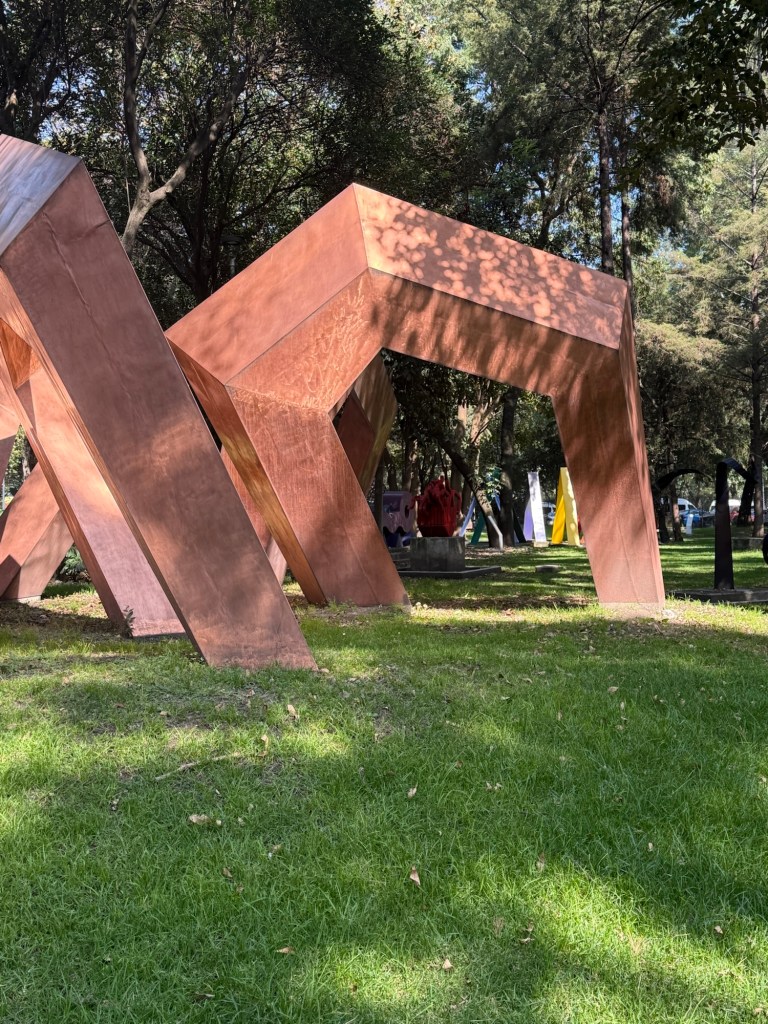
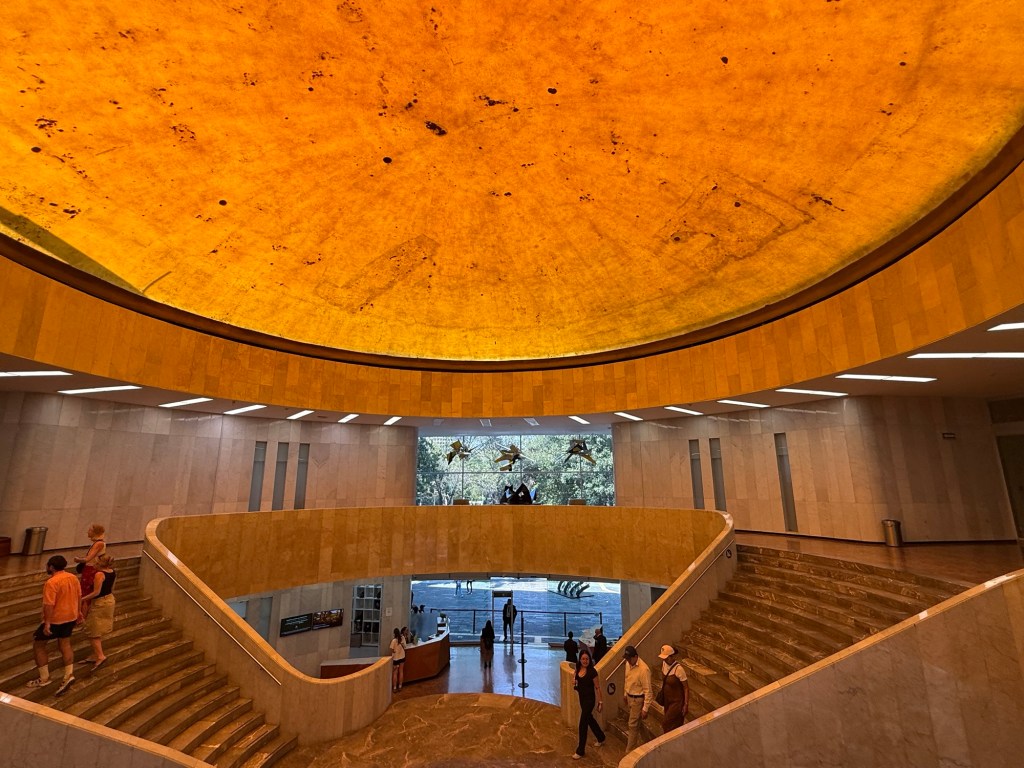
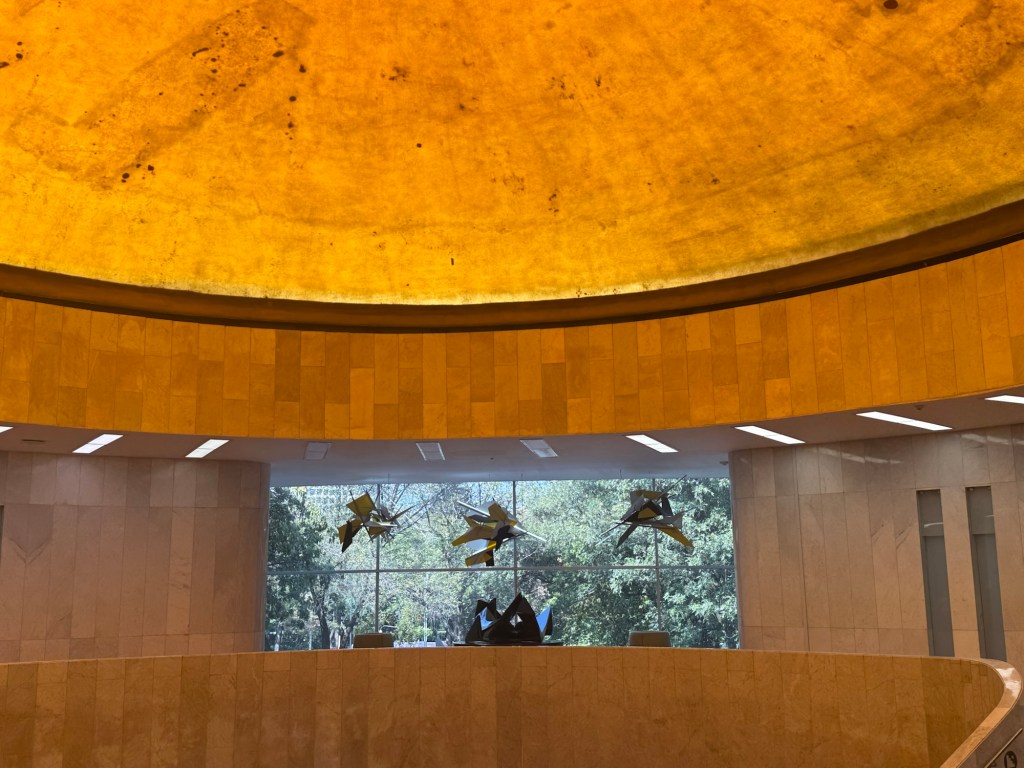
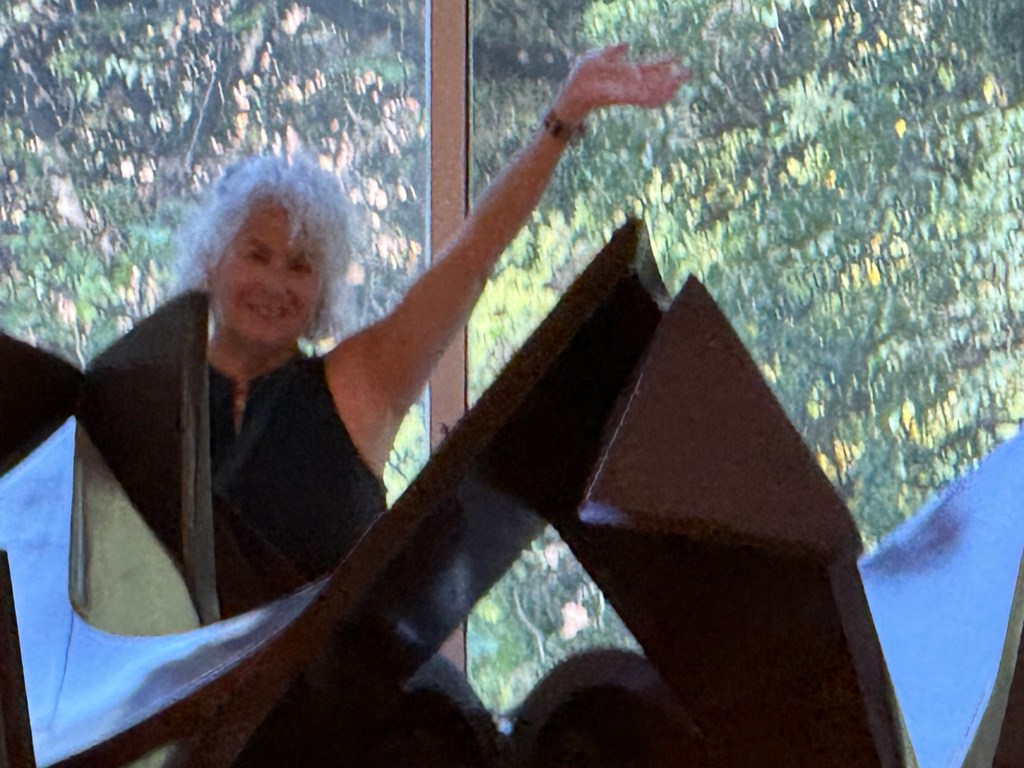
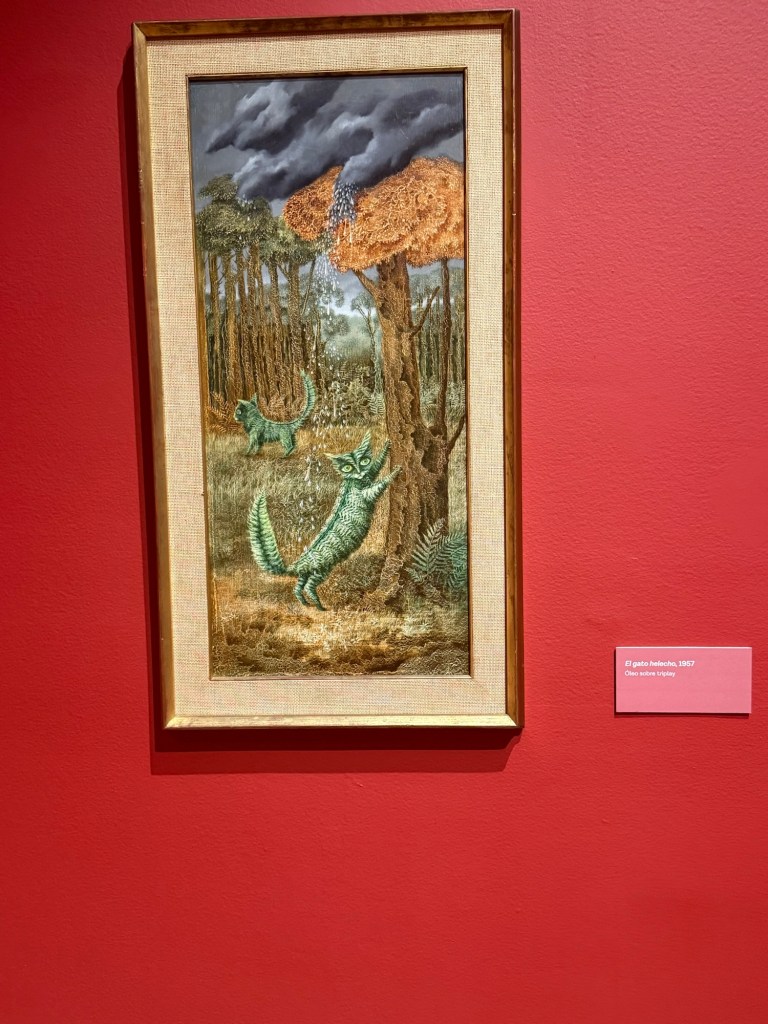
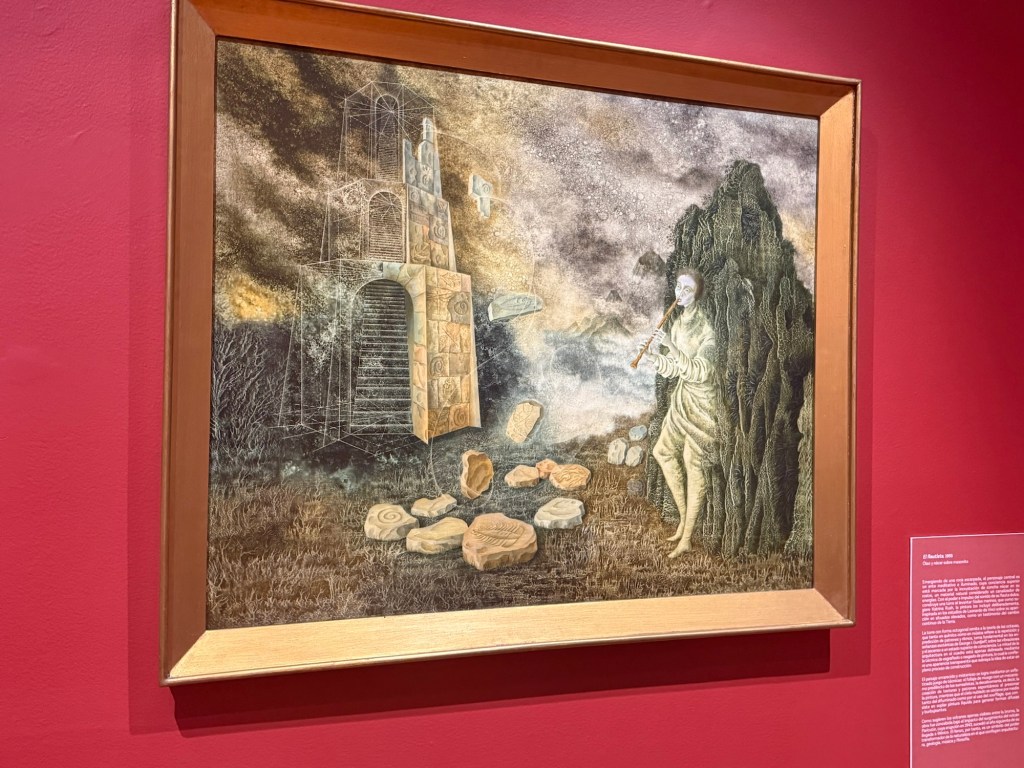
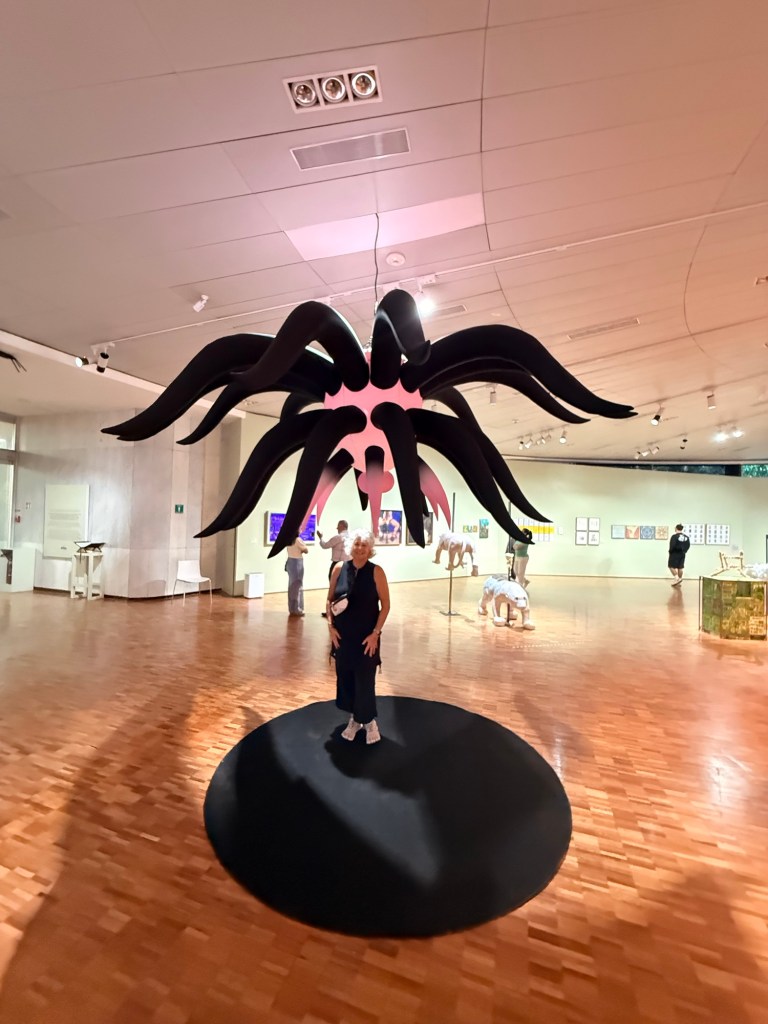
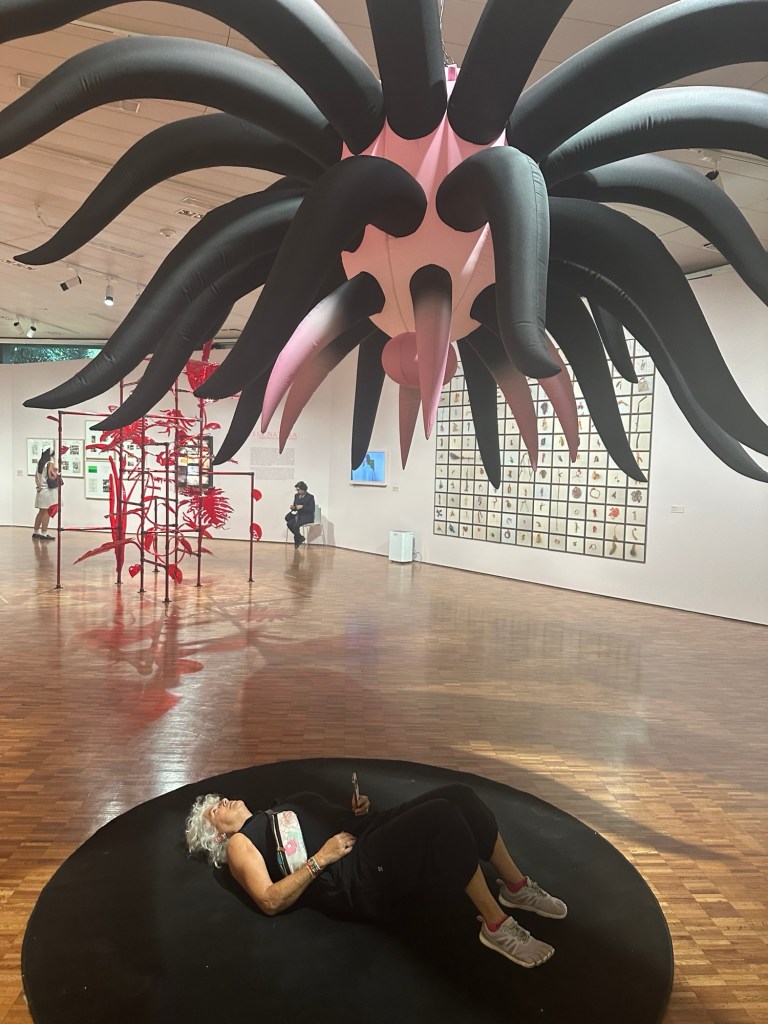
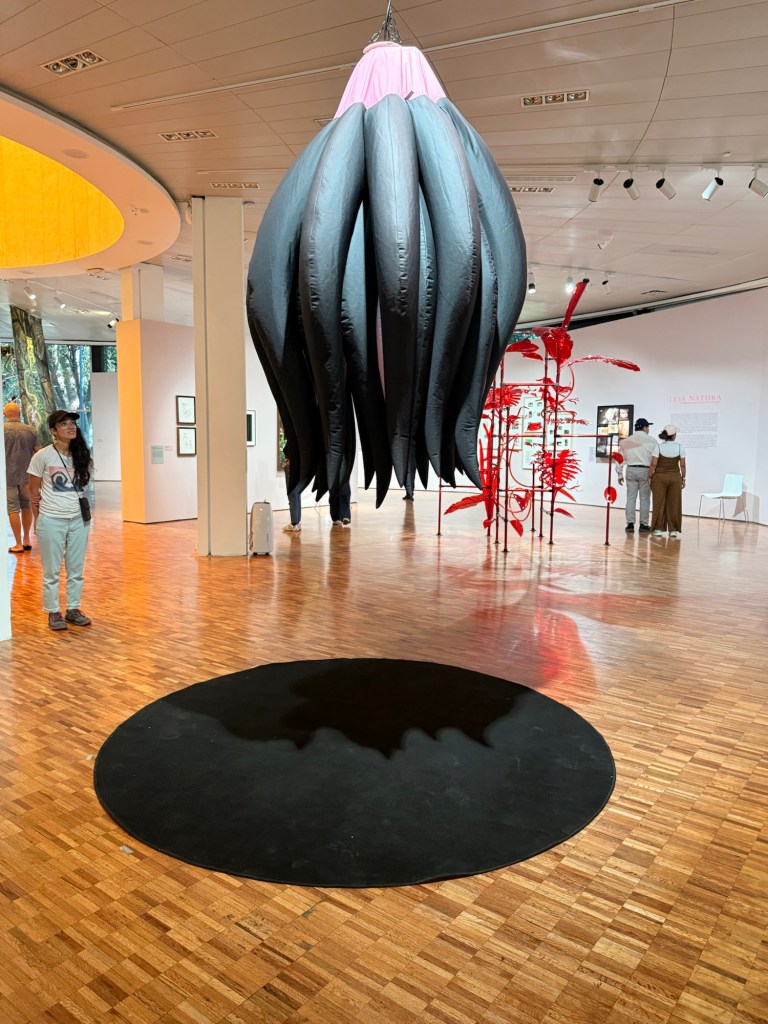
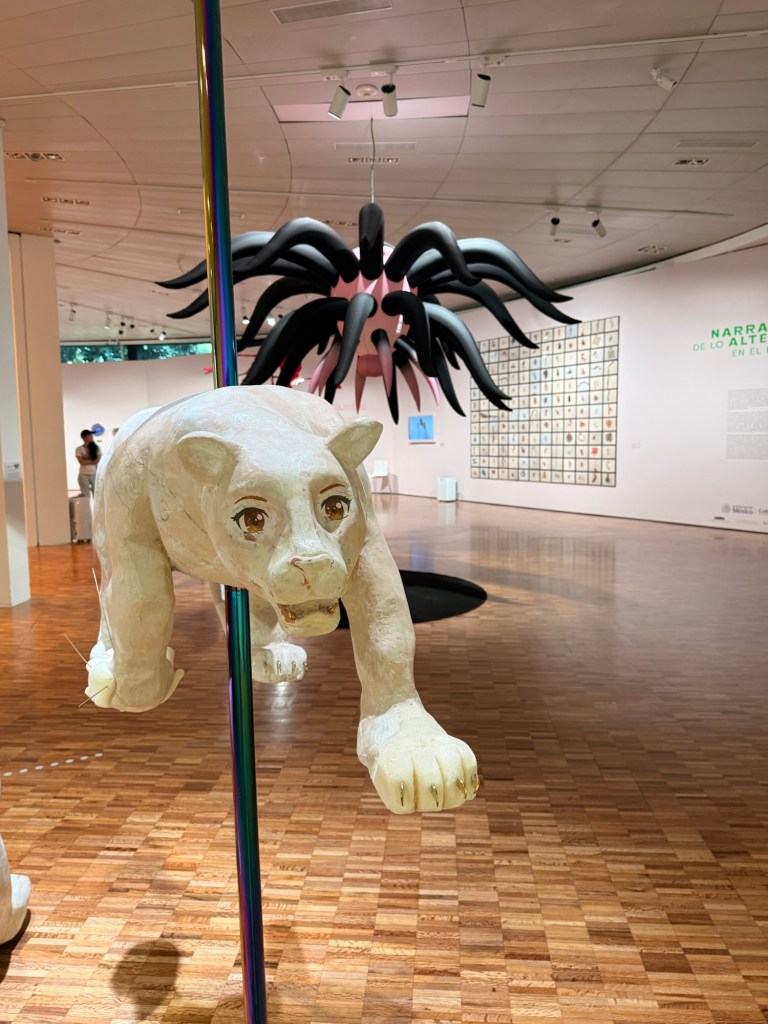
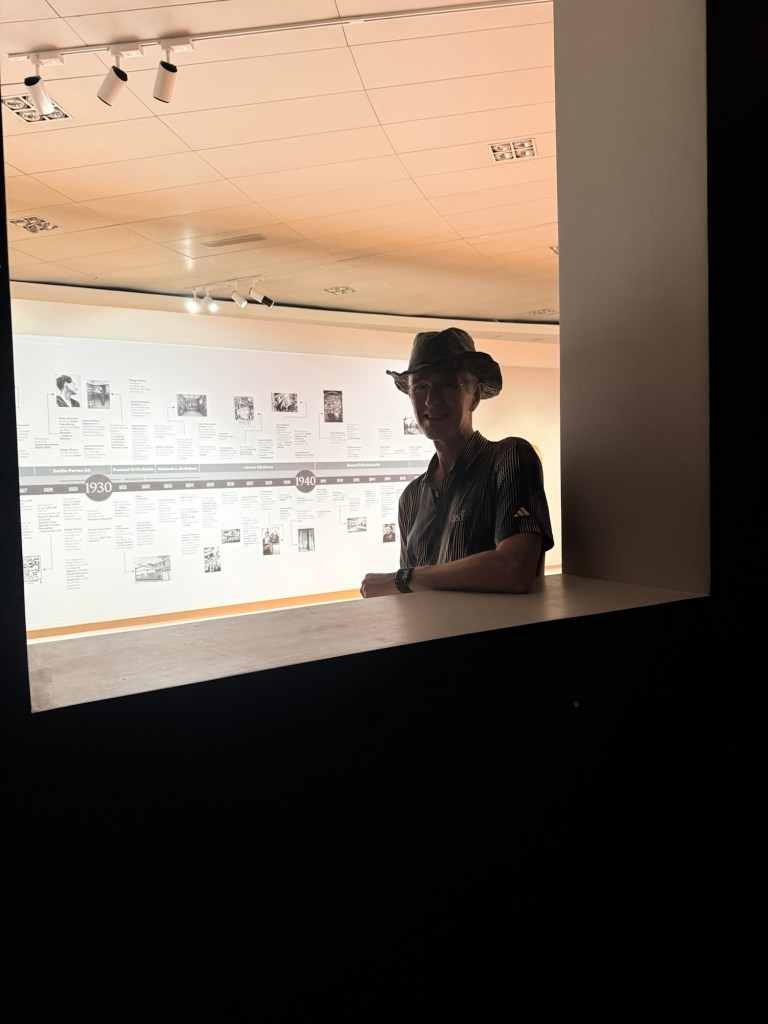
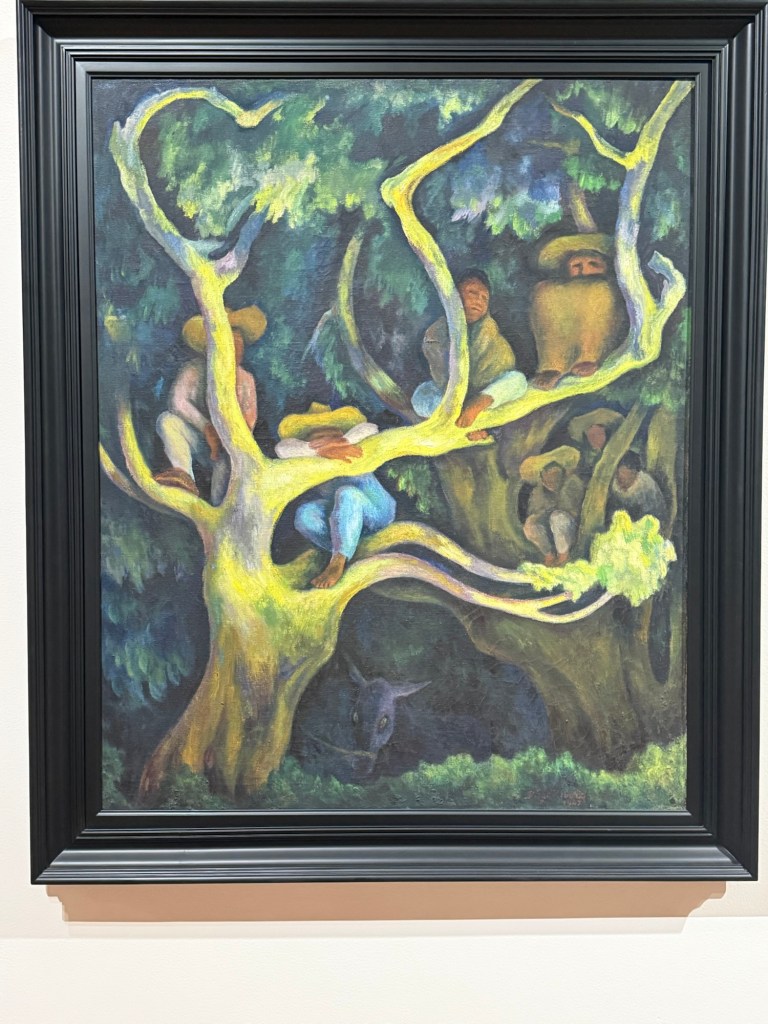
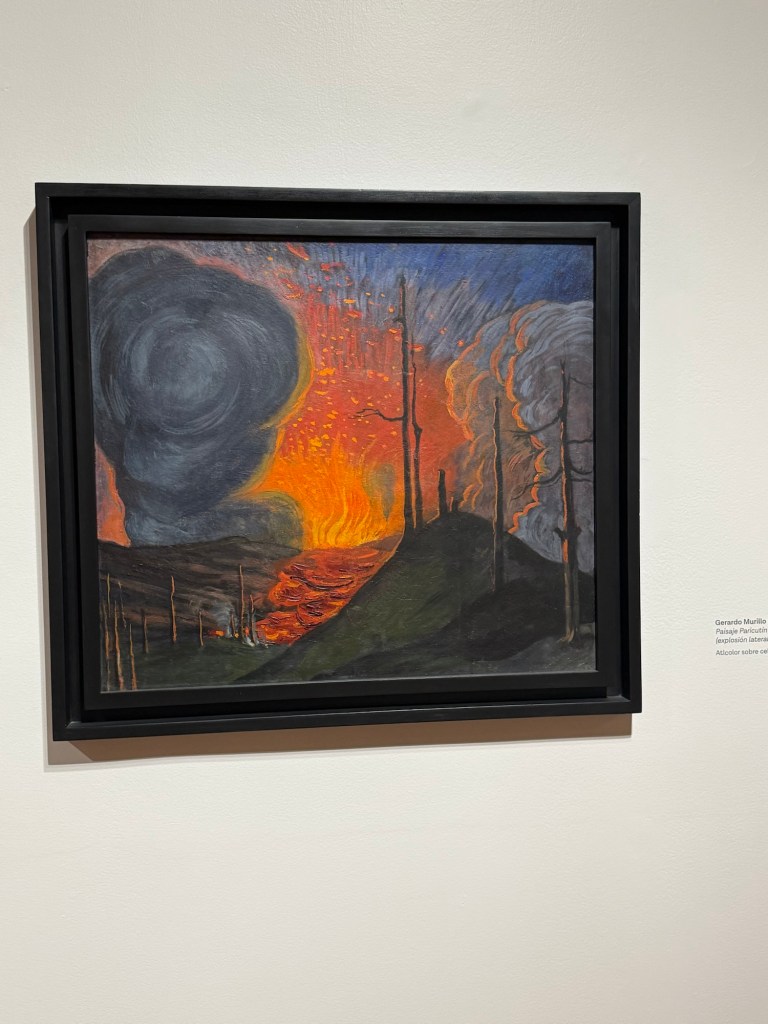
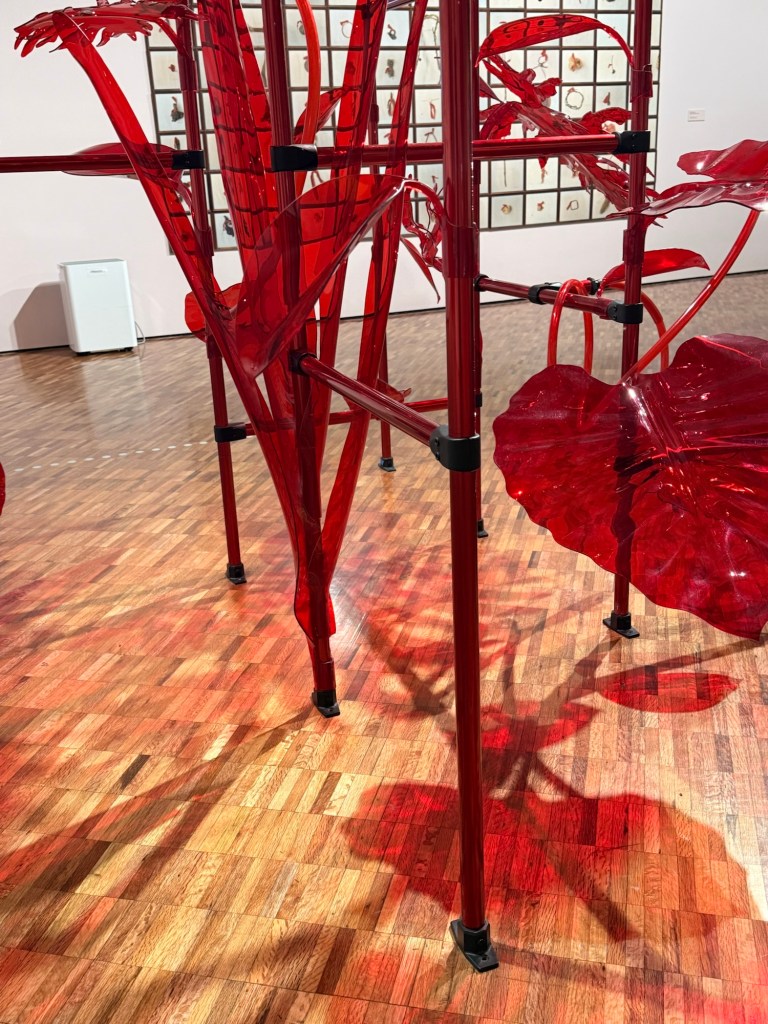
Jim was a trooper walking even more to the Modern Art museum and we took a break in the sculpture garden for a snack and a rest. The museum itself is small but the architecture was interesting. The featured artist Remedios Varo is described as a Psycho humorist. Her art was interesting and beautiful. They also had an interesting exhibit with the history of Mexico told through Mexican artists. Jim is standing in front of the timeline.

Yesterday was a long travel day. Our driver took us to the airport at 5:45am. Of course we were worried about the traffic but at that time of day there was none on the way to the airport.

The airport, once again, was a bit chaotic. The security lines open and close unexpectedly. But the flight to Panama on COPA airlines was easy. My Mom told me her memories of Panama were of how unbelievably hot and humid it was and we certainly got a taste of that exiting the plane. WOW! While waiting for our flight to Quito a massive thunderstorm hit with remarkably hard rain and thunder, but our connection to Quito left on time was smooth and finding our driver after clearing customs was easy.

We drove through traffic and then through a winding, steep, cobblestone road with big buses passing the other way. It reminded us a bit of the switchbacks between Lake Como and Switzerland. But we were deposited safely at our hotel. We have some downtime today to finish the blog and get ready for the main event of our journey tomorrow when we fly to the Galapagos!

Thanks for sharing our adventure:

Written by Fawn. Beautifully Edited by Jim