Islands of Art

  Our journey takes us next to Benesse Art Islands.  To get to this spot in Japan southwest of Kyoto, we traveled by high speed train, taxi and ferry. The Islands are south of the tiny Port of Uno.  Although the islands themselves are just small dots on the map, they are part of the much larger Seti Sea, the “inland sea” passage located between the south side of Japan’s main island and two of Japan’s other large islands.

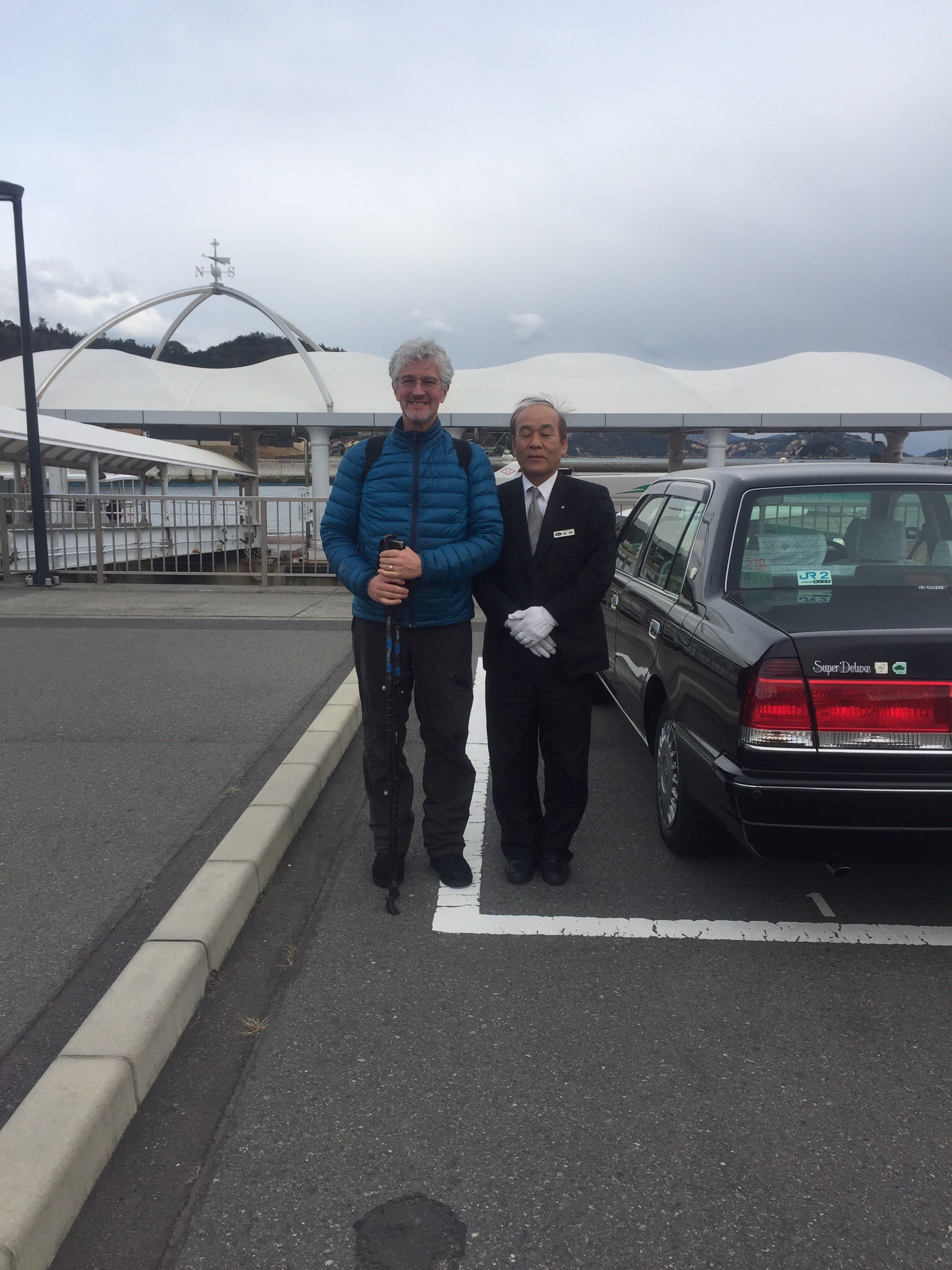
   

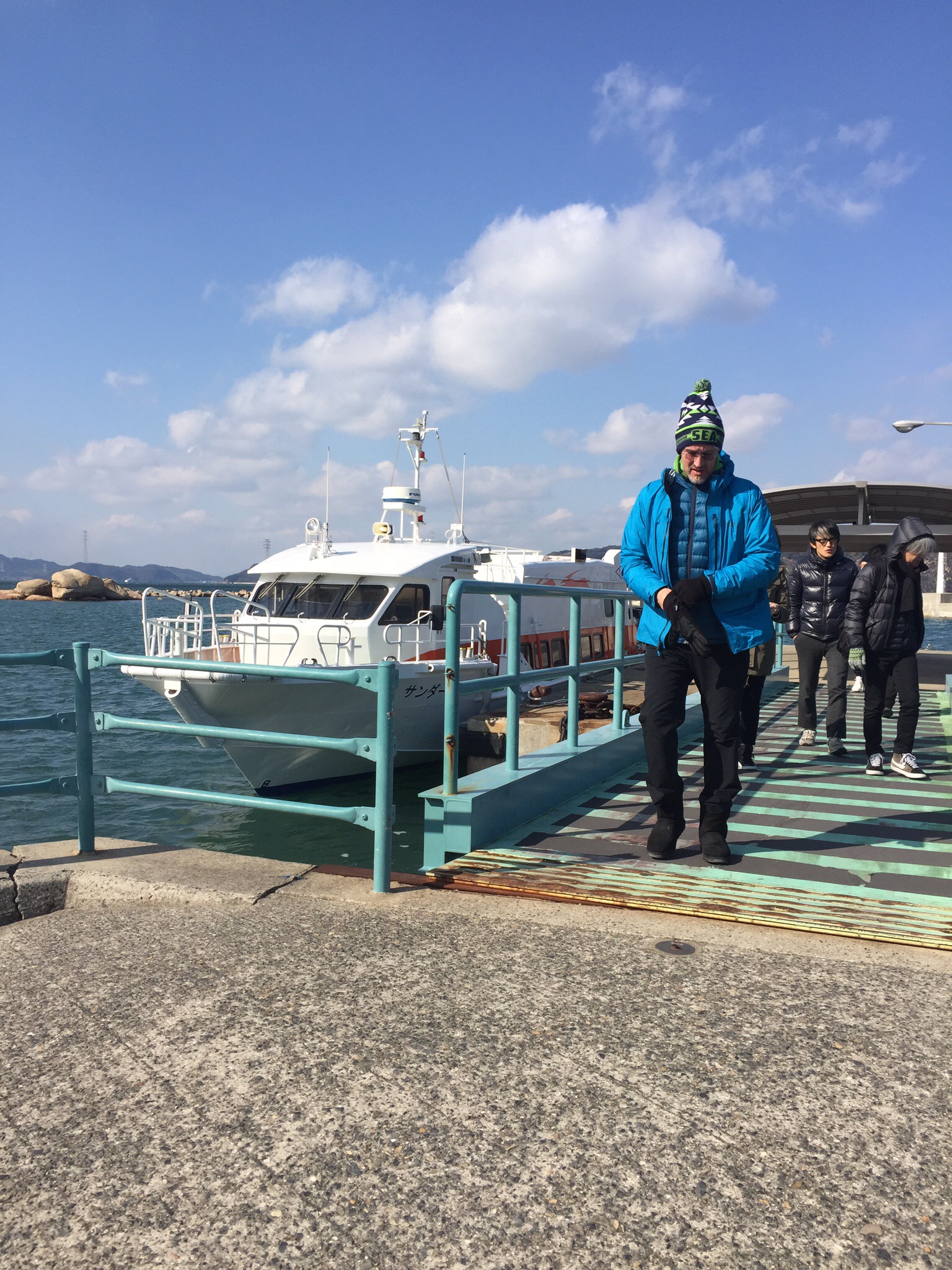
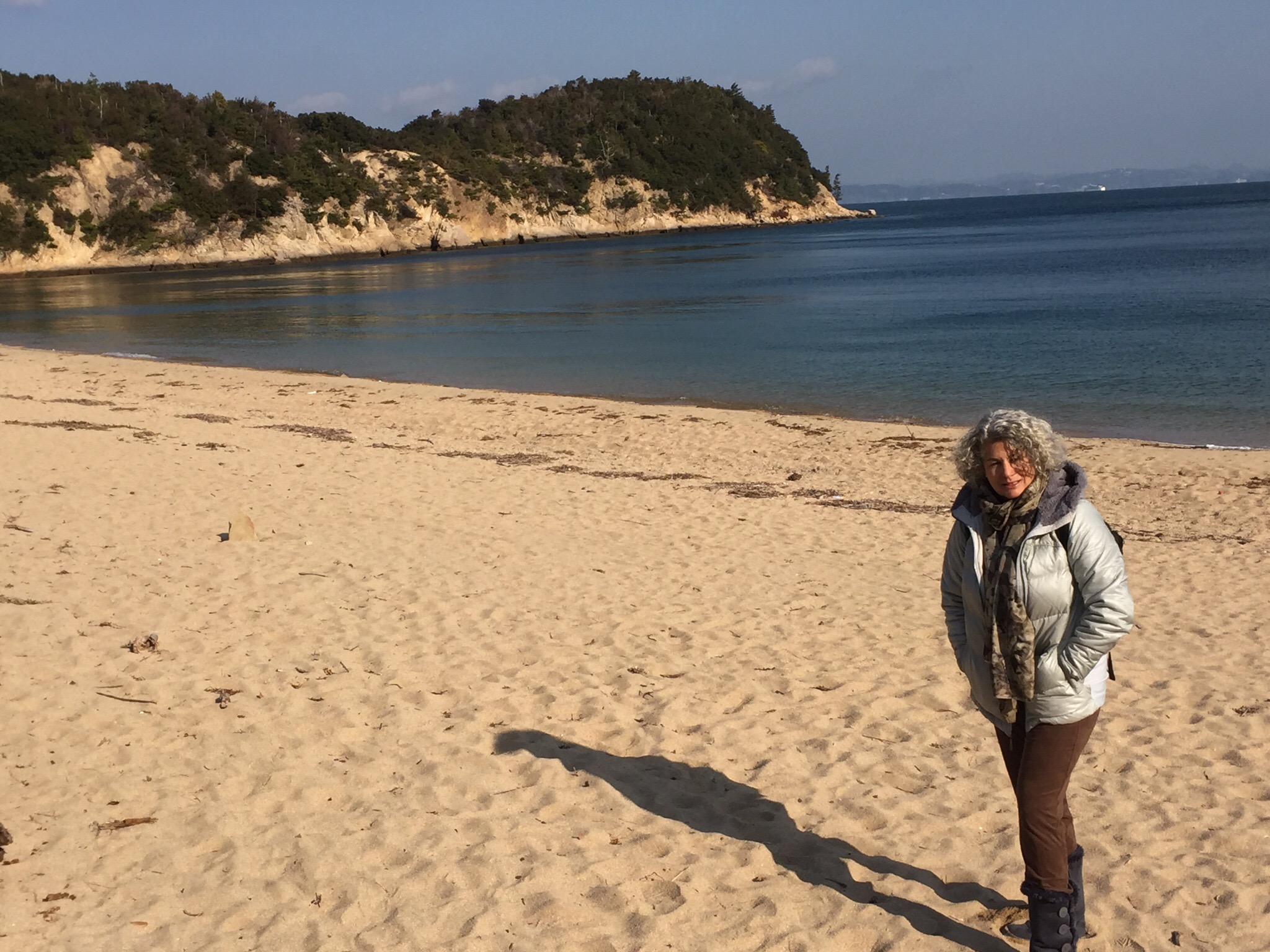
 The taxi took us to the “private” ferry (the “Thunderbird”, the same “public” ferry we would ride the next day) to get to the Benesse Art Hotel on the island of Naoshima.  It was a cold, windy afternoon and the forecast wasn’t promising.  In fact, the smaller inter-island public ferries were canceled on our arrival day. We got to our room and it was quite small.  The design was upscale dorm room.  The art at the hotel was very modern, minimalist .  

If the weather didn’t improve, hanging out in the room and the “minimalist” hotel would be disappointing for 3 nights.  The grounds and beaches are very nice, but we were beginning to question how wise this location was for this time of year.  I think we were going through Kyoto withdrawal.  

Throughout our trip very few people have spoken English, but it really hasn’t hindered our travels.  This night, after a scrumptious dinner, we had a problem with the bill and very little ability to clear it up.  We were beginning to think we would cut this part of or trip short.  But, after talking to our agent by email and phone we decided to wait until the next day and see if the weather improved so we could explore.

It did!  
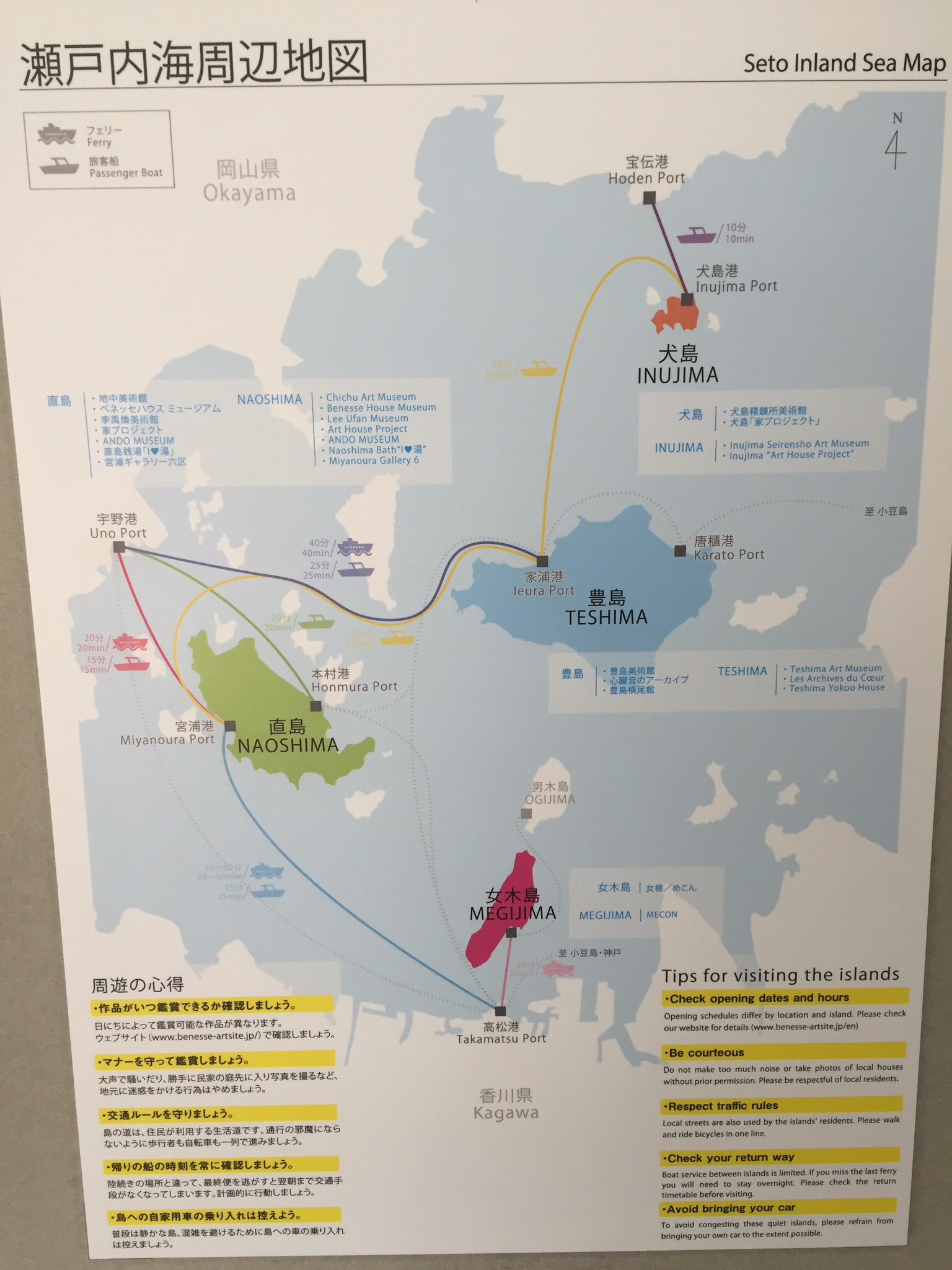
   

 The wind calmed down and the temperature increased enough that the sun felt warm.  Our art explorations by ferry took us to 2 nearby Islands:  Teshima and Inujima.  Jim and I have never really appreciated modern art. But the instillations on these islands are quite unusual, combining old villages with architecture, art and nature.

Once again our itinerary was perfect,
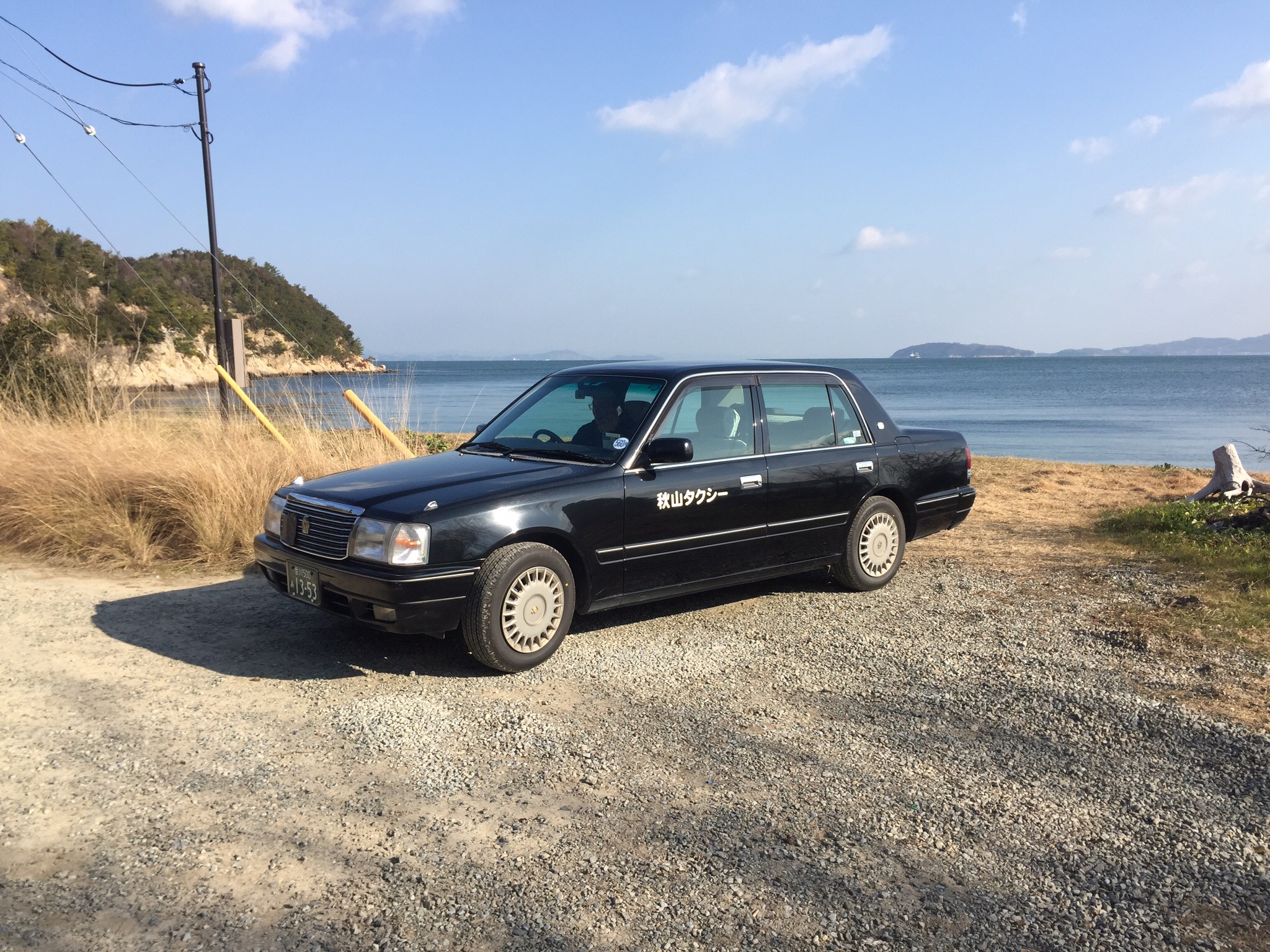
  
  We were met  at the small ferry dock on Teshima by cab and our driver swept us to 3 different spots beginning with Les Archives du Couer. We wove through a little village then came to a building by a lovey beach housing a long dark room with a single light bulb and speakers amplifying individual heart beats from people all over the world.  
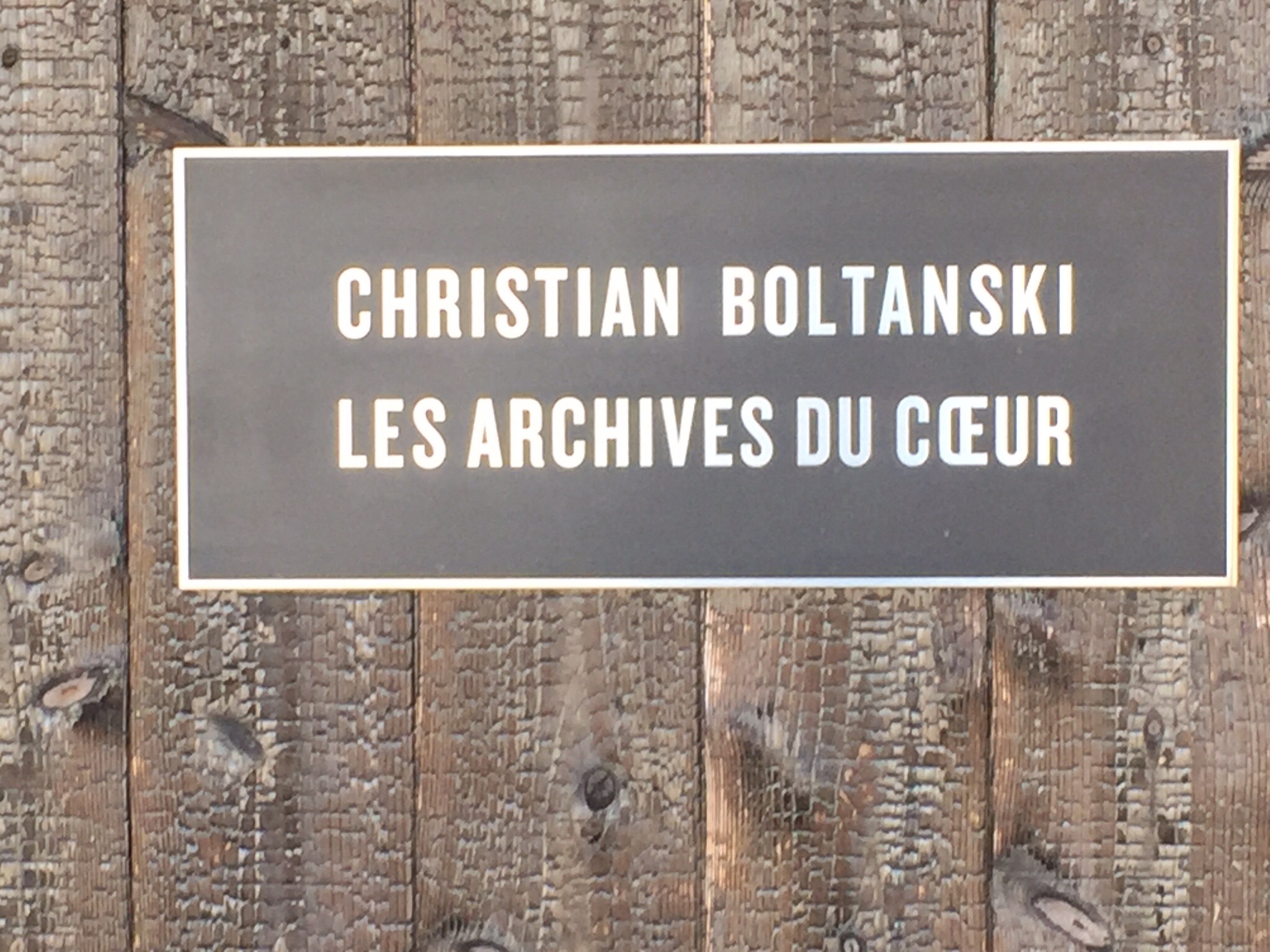
  

 Clever, but not worth the trip. The art got much better from there.

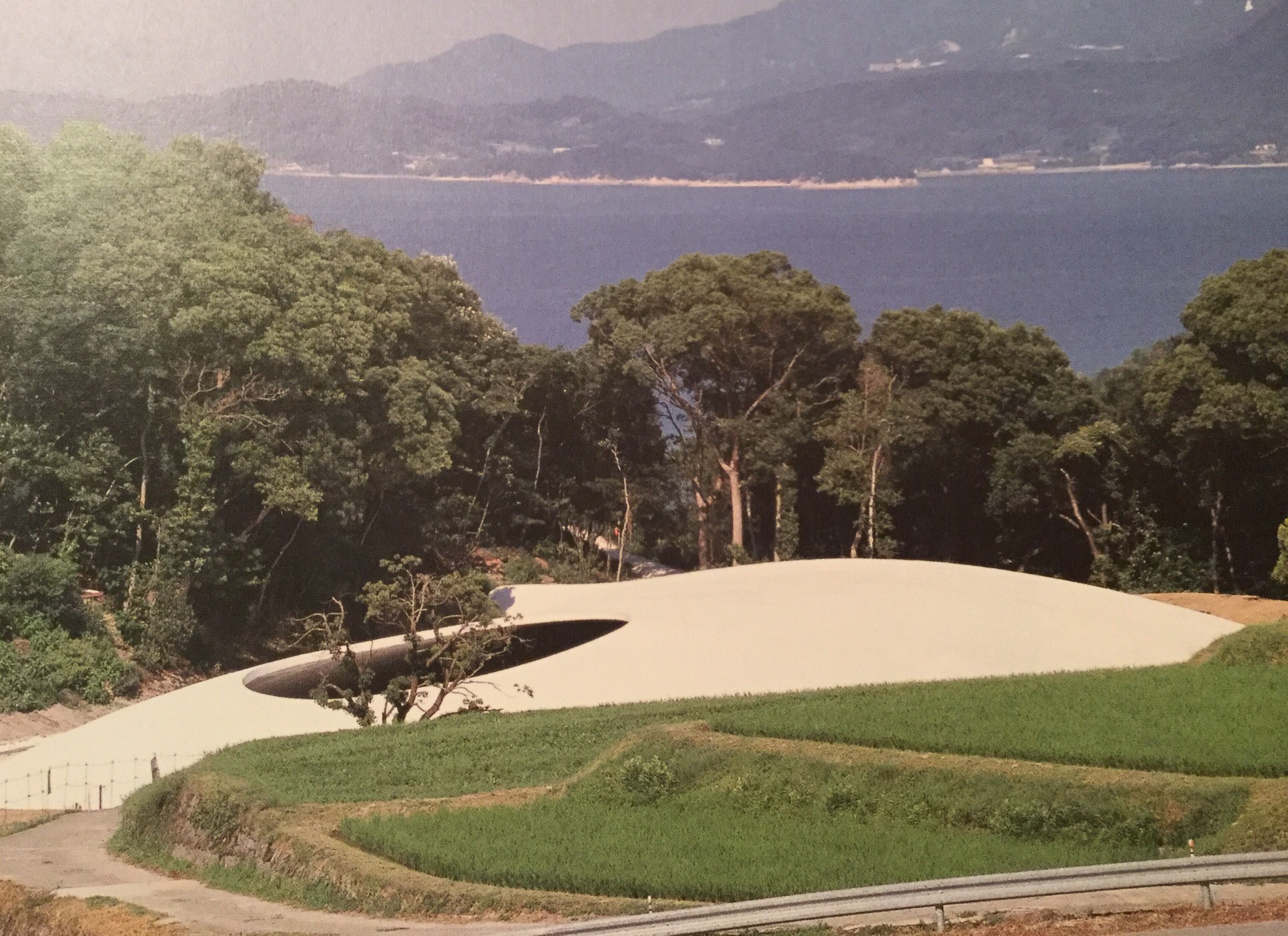
Our next stop was enchanting and perfect.  The Teshima Museum is a collaboration of art and architecture, dug into a hill surrounded by rice paddies. After walking the beautiful grounds you come upon a white concrete dome.   

 Before entering we removed our shoes, put on slippers and were told to be quiet and not step on anything on the ground.  From there you enter a perfect environment with moving water, wind, and openings to the sky.  It is absolutely impossible to describe but I’ll try.  It’s a metaphor for life.  Some drops of water enter from small holes in the floor, they grow in size until they move toward a distant well.  Along the way, the traveling water “beings” join with others, separate from others, and ultimately merge with a large pool or disappear down a well.  If it was a bit warmer we would have stayed much longer.  I’ve taken some photos from the book we purchased because photos weren’t allowed.  
   
   
We stopped for some coffee in the second building before moving on to our last stop on Teshima and our first “art house” experience.  Here is a photo of a group of children visiting the exhibit. 
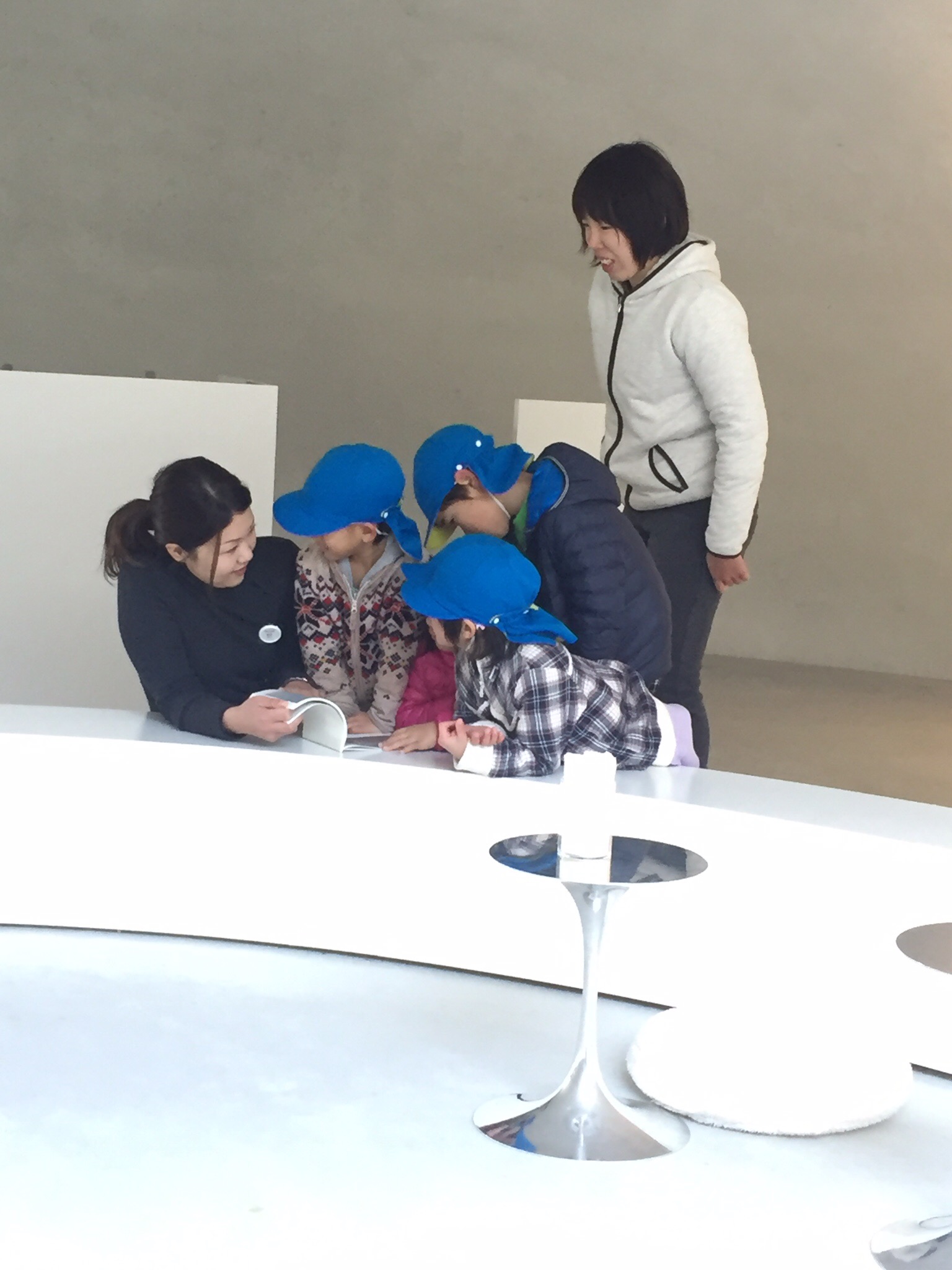
   I love the matching hats to designate the group.  One of the children was clearly visiting her Mom. You don’t see a lot of children in Japan because of the extremely low birth rate.  We read an article just a few days ago about the lack of desire for many young people here to date, have children or even have sex.  If you remember our gold leaf artist who’s family had the studio for 5 generations, they have three 40-something children and none of them are married.   

  An “art house” is an old local home in a hamlet that’s transformed by an architect and artist into an art experience.  The Teshima Yookoo house surprised and enchanted us. This one included a wonderful water element, garden and very cool tower.  Sorry no photos allowed.  When you enter you look through red glass to the rock garden and court yard.   

 The concept of these small architecture and modern art projects was really new for us.  The fact that they were in these small, rural and old areas infusing young people and art lovers was delightful and ingenious.  Would this work in the states?  We think it would in struggling WA communities like Aberdeen.  

When we began our day we weren’t sure if we were going to go on to our third island, Inujima, but we were hooked now.  The weather was good and we were up for the adventure to continue.

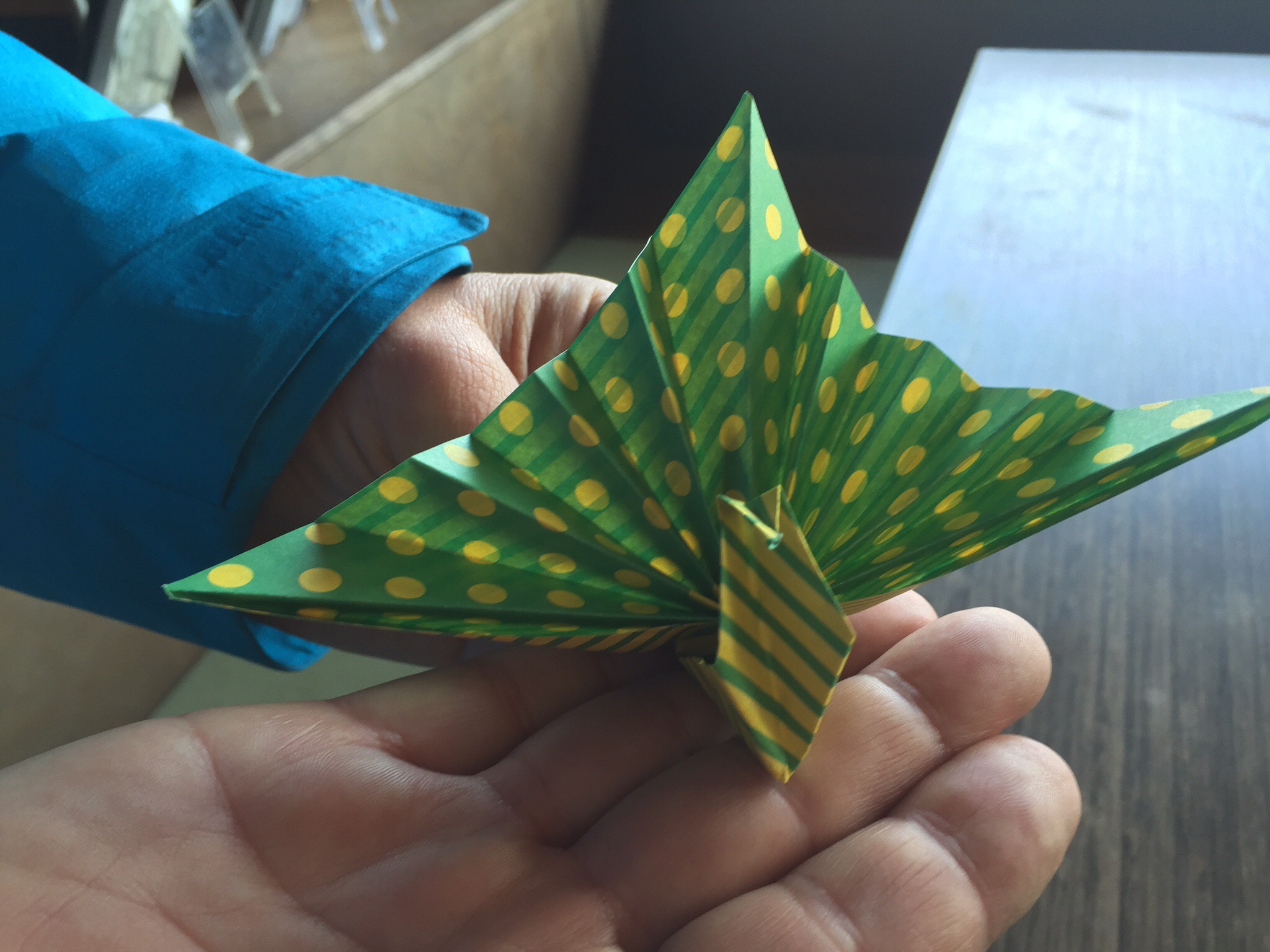
Our enthusiasm was rewarded.  After departing the small ferry there was a building with a cafe and the ticket site for the returning ferry and the art projects on the island. After ordering a lovely small lunch we sat and looked at the water.  The table in front of us was filled with a group of ladies doing origami led by an origami Jedi master.  
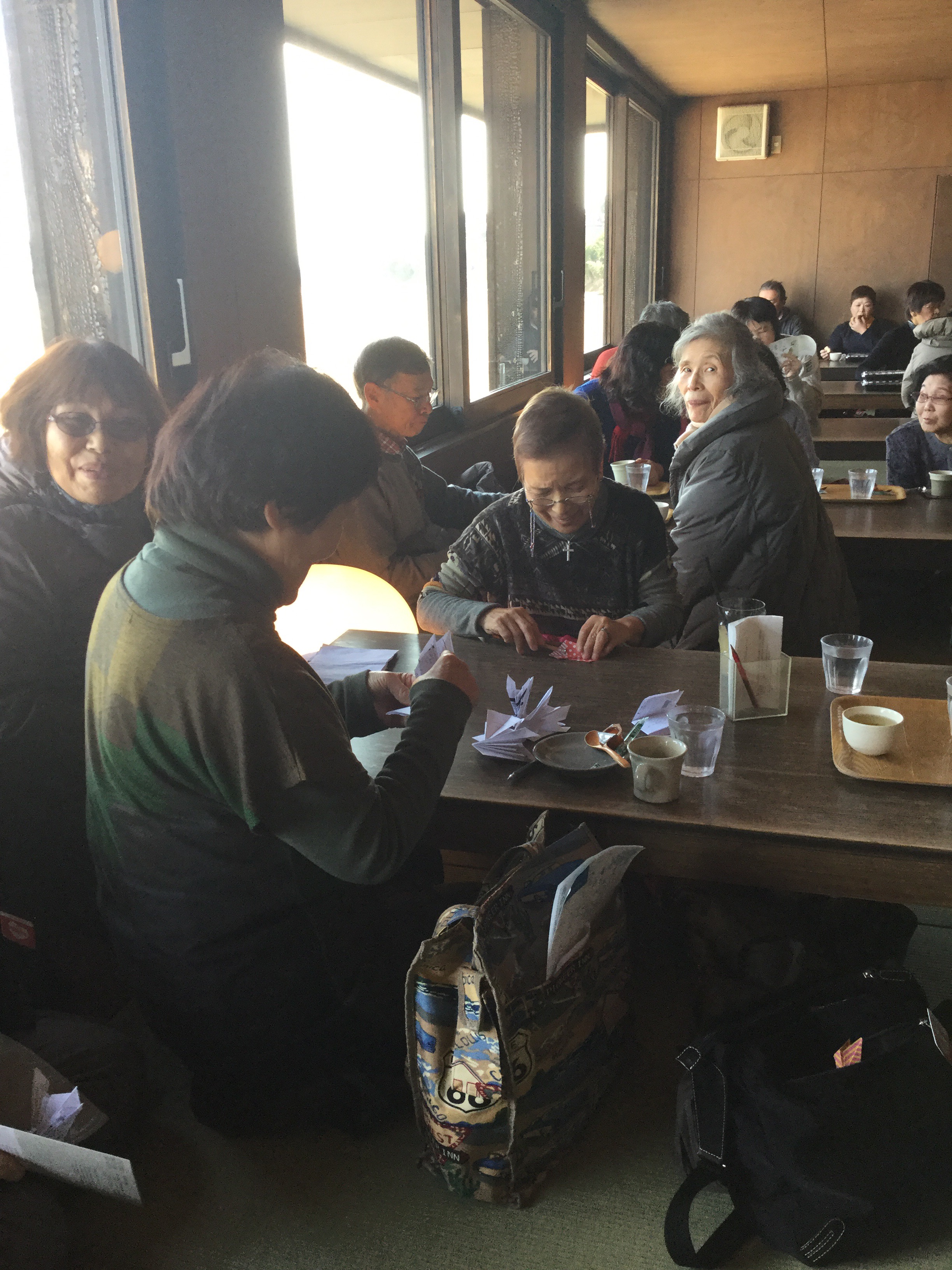
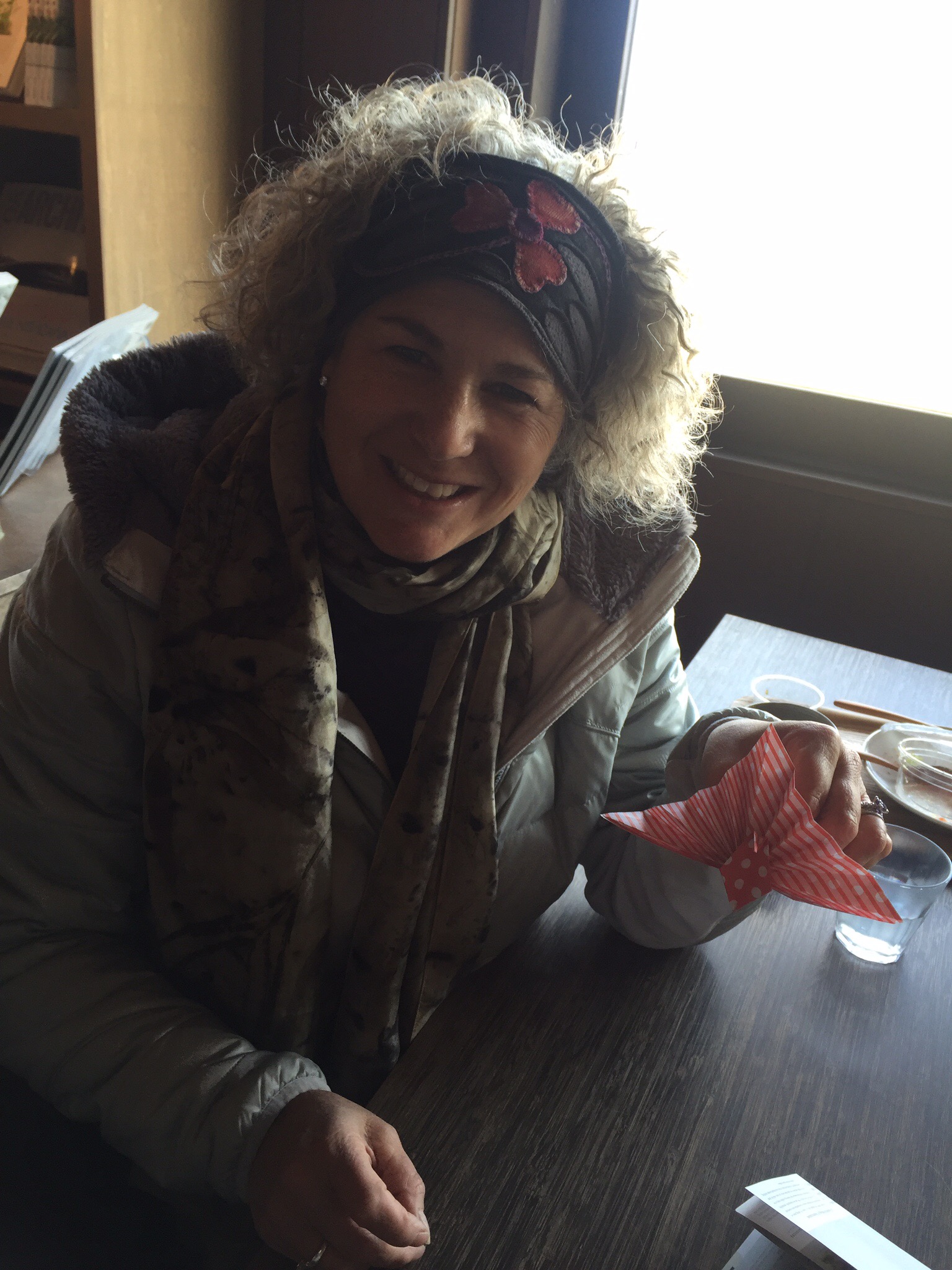
 After I took pictures of her, she made Jim and me a gift of origami.  No English, just smiles and bowing to give our thanks. 
   
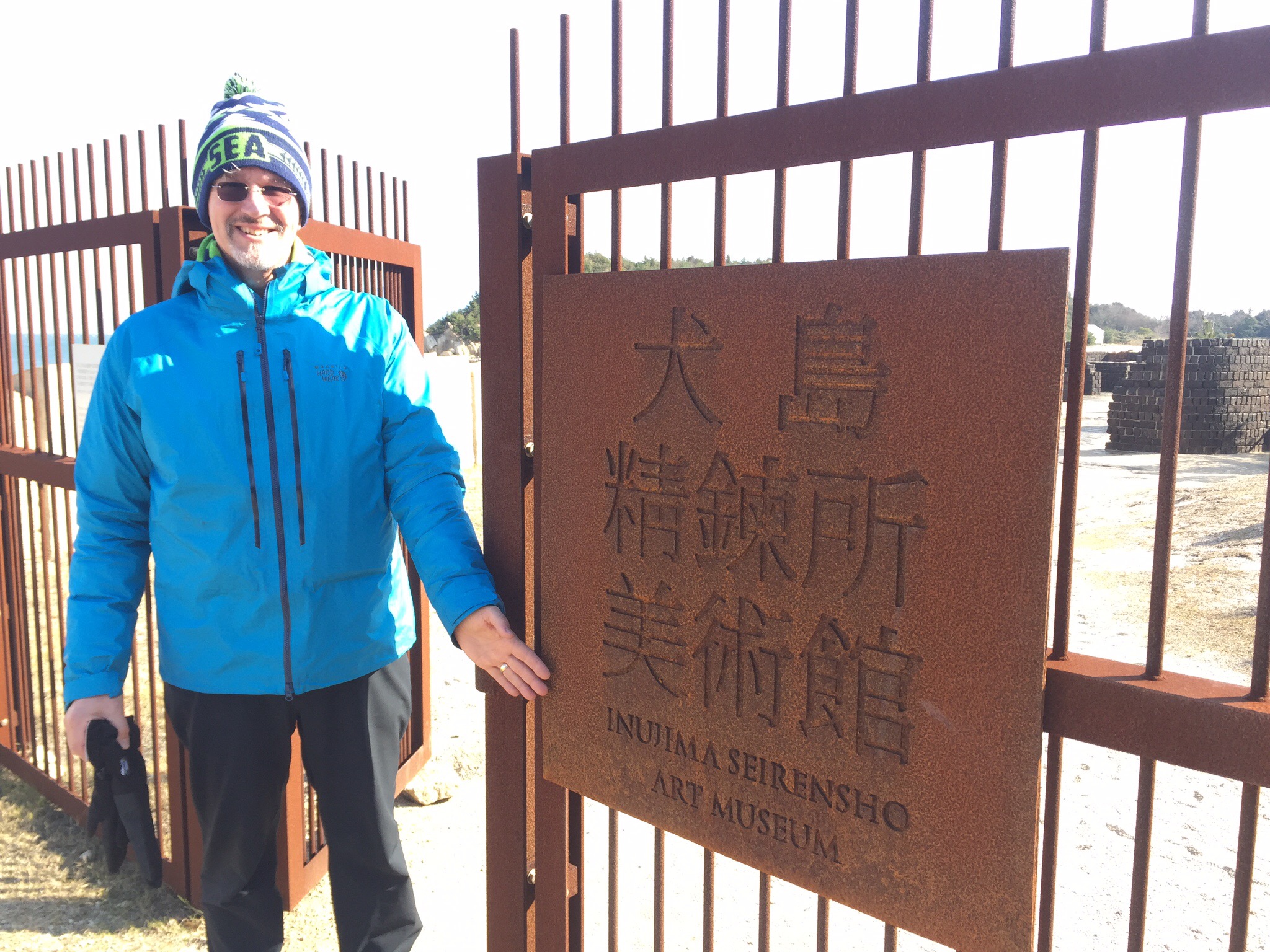
Our hearts and tummies full, we walked to the first stop at the largest art building, Seirensho, created from the remains of a copper refinery.  It’s designed By Hiroshi Sambuichi.  


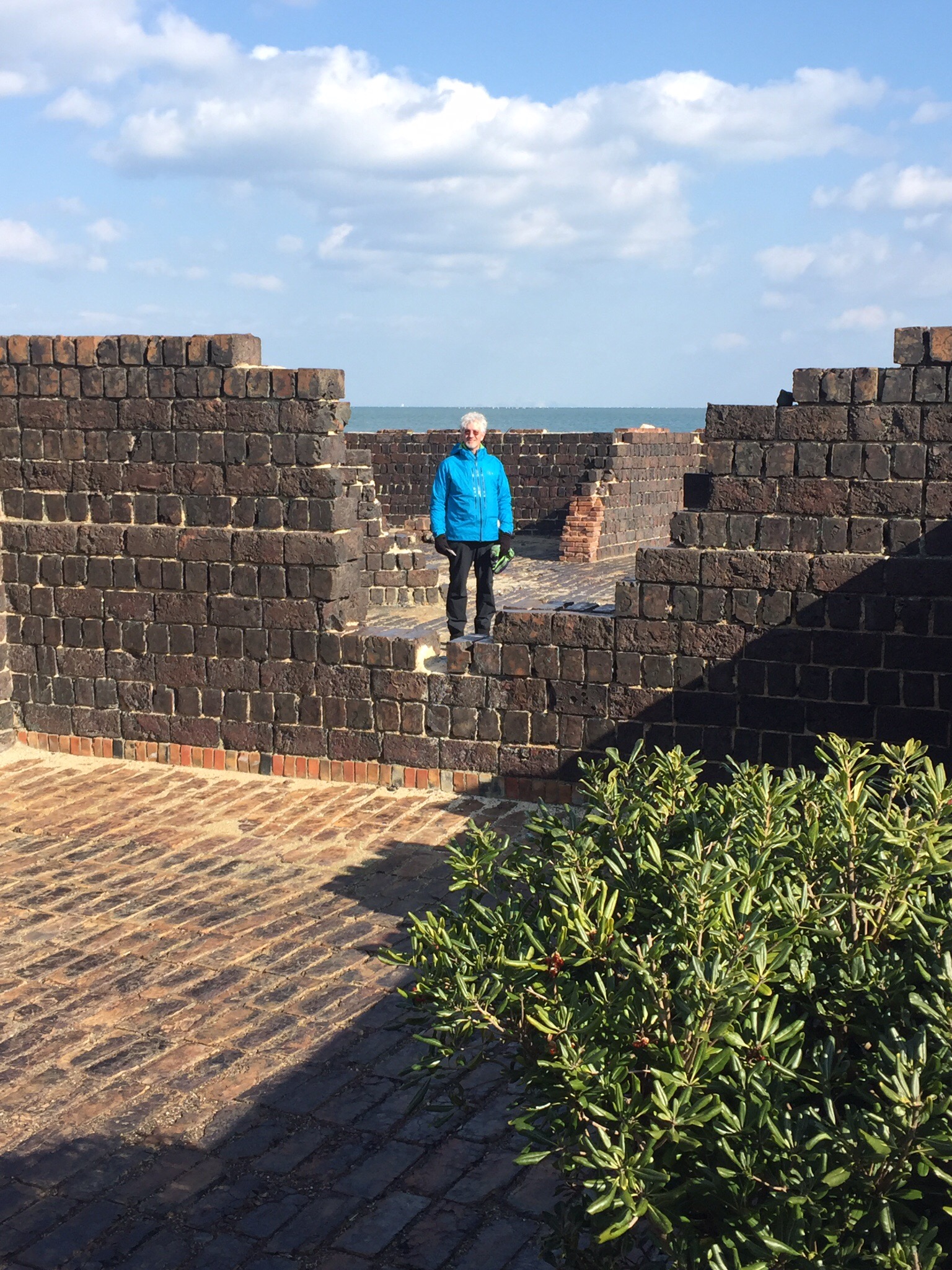
  The bricks used are from the original smoke stack and have a metallic sheen.   The exhibit is hard to explain, but it used long dark hall ways, mirrors, solar projections and natural light in a magical way. We loved it!
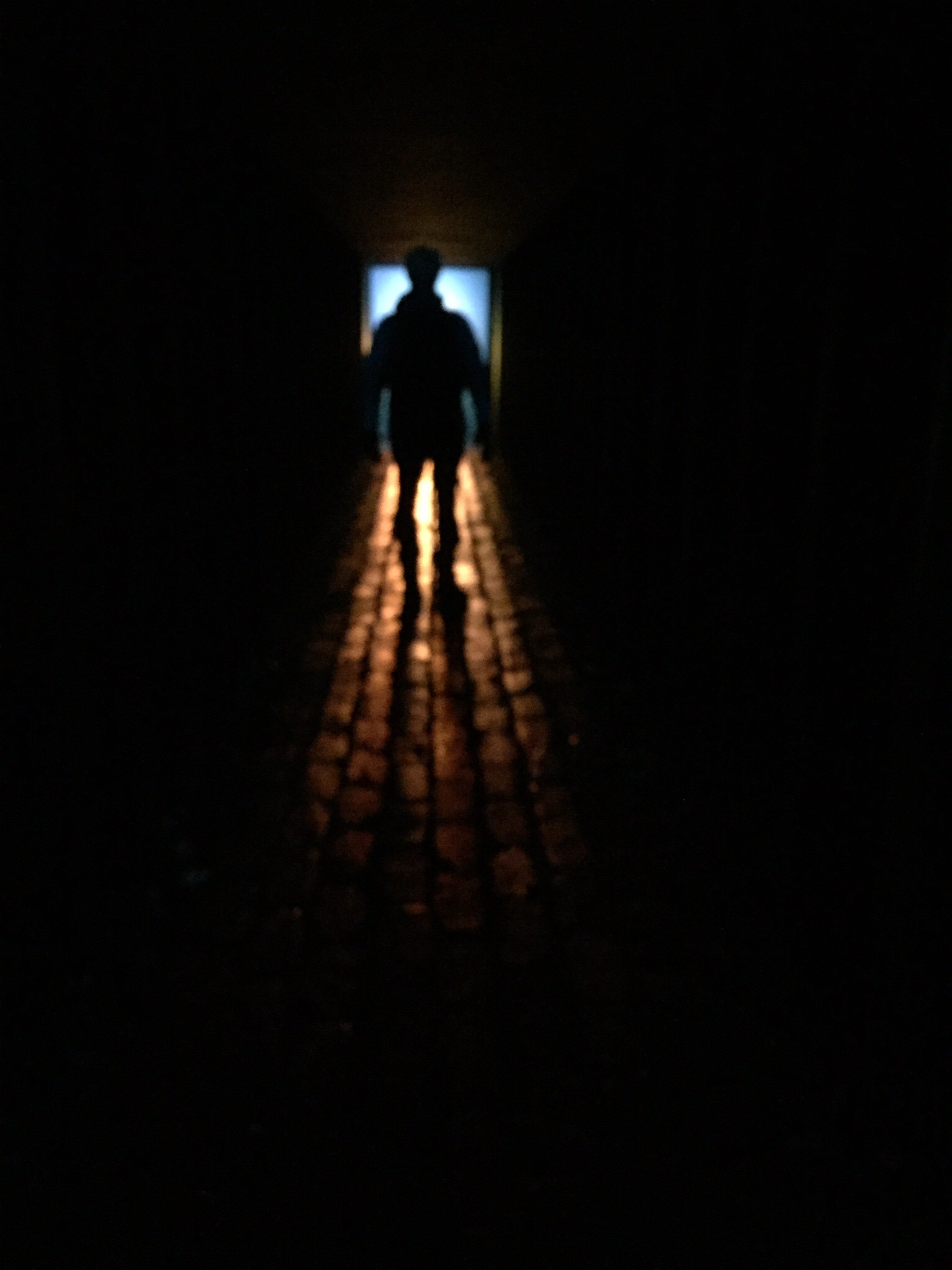
 

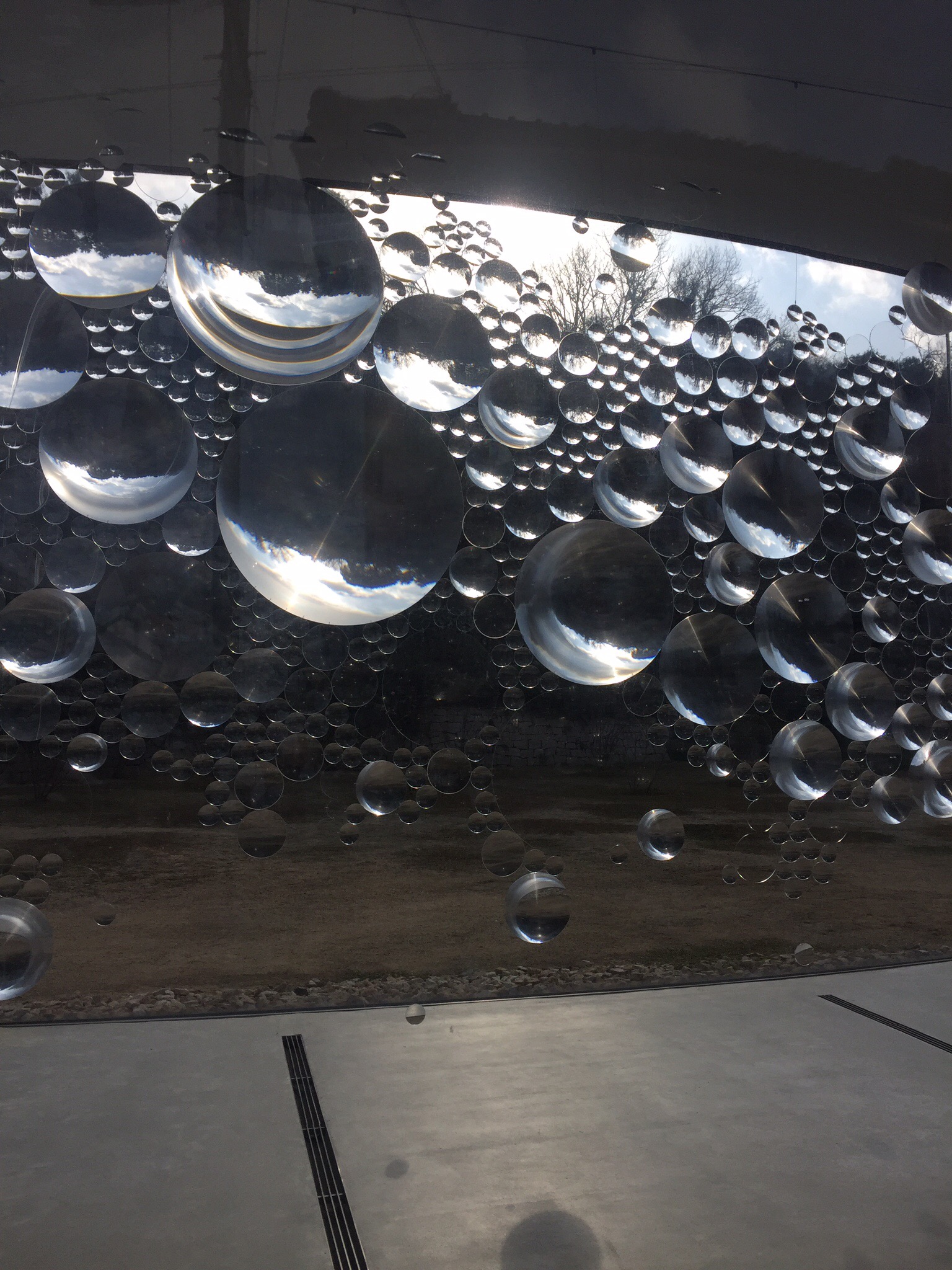
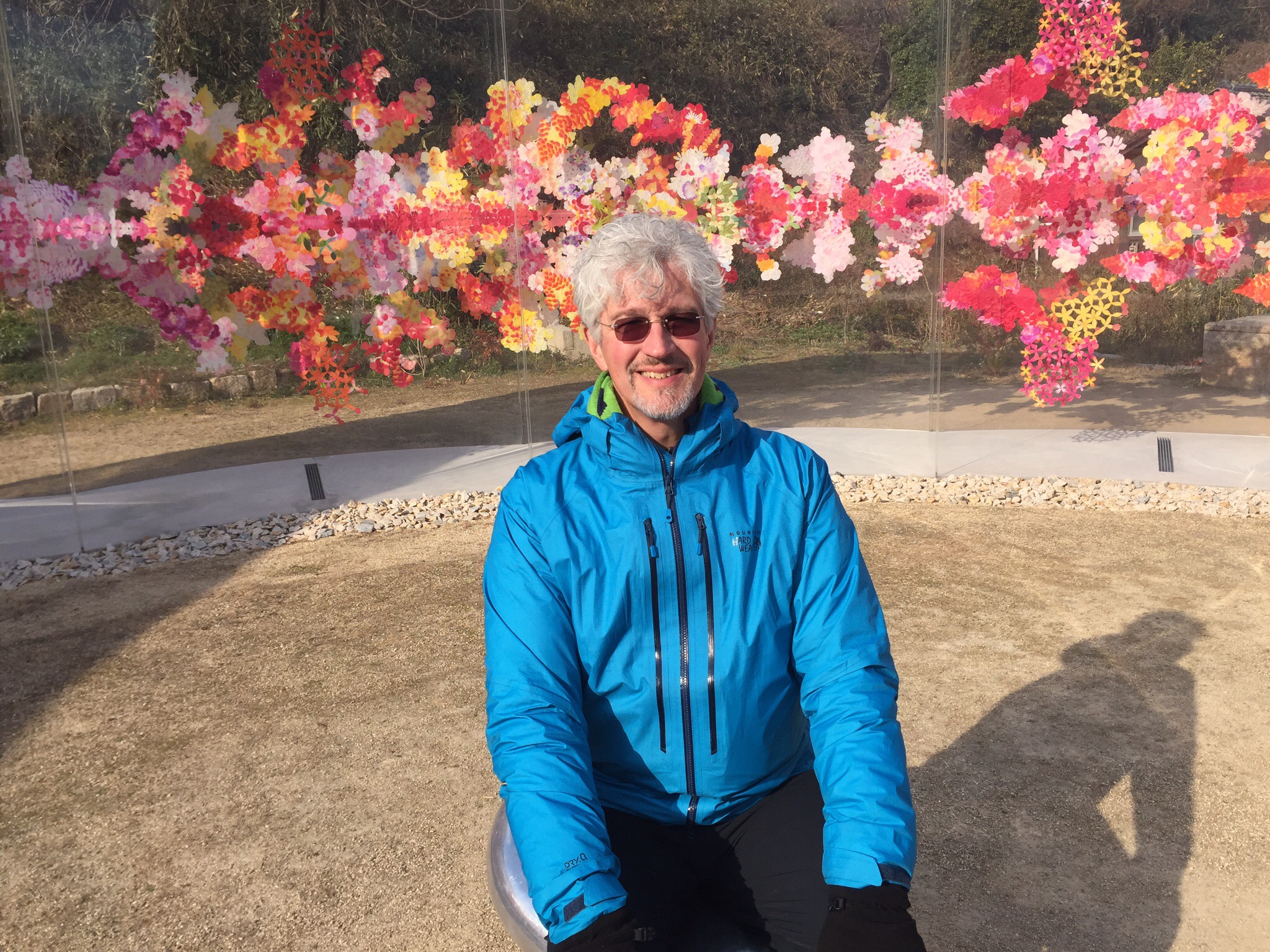
From there we strolled through the village visiting other art house projects. Some we looked at, some we sat in, but alas no photos were allowed. I snuck a few plus some photos of the walk around the Island.


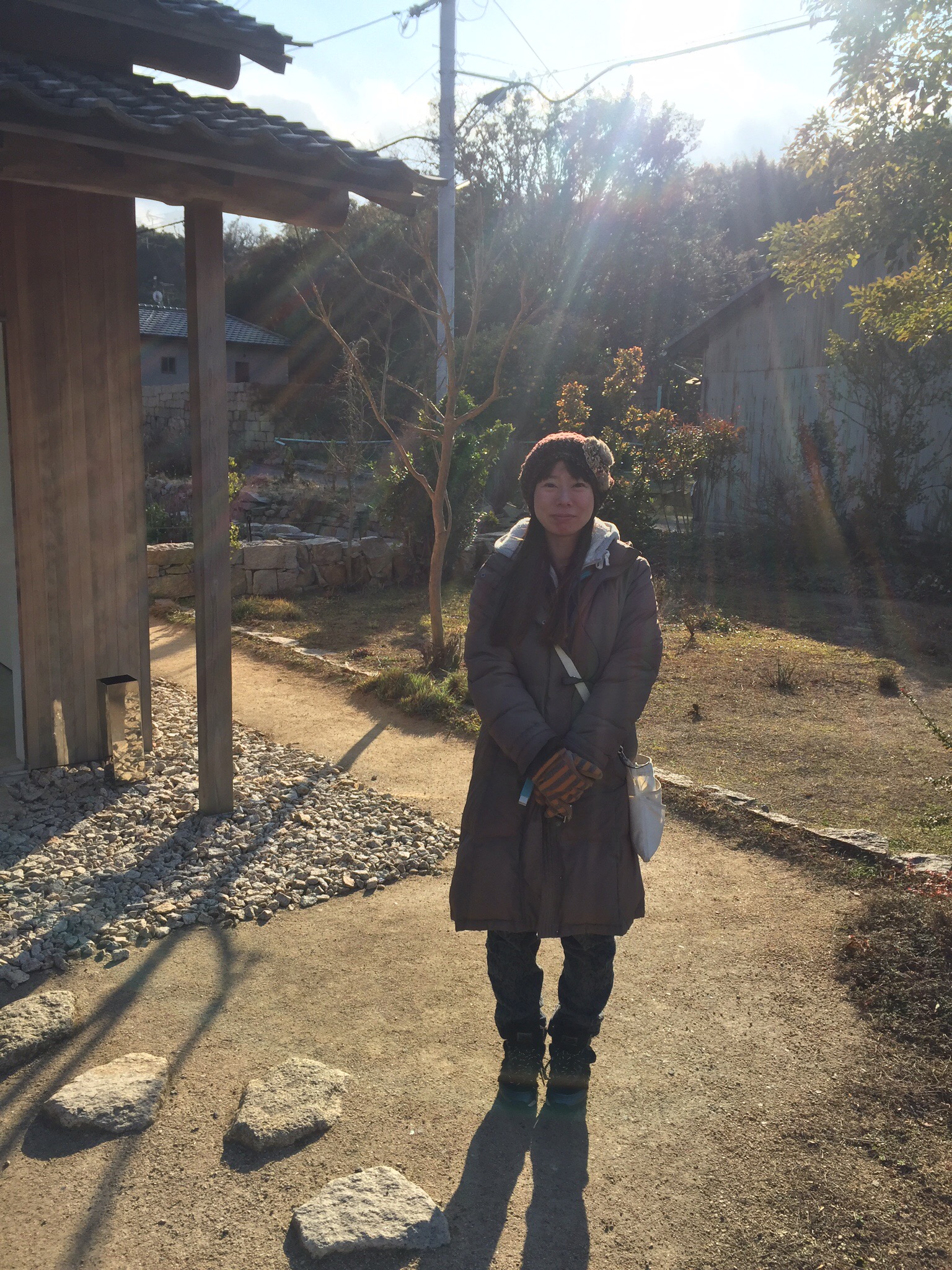
This is one of the young people who have moved to the island to work at the art houses.  They are well cared for by the elders who still live on the island.


The coast here is full of  actual “sea hawks.”
 

After the return ferry we had time for a shower before a traditional Kaiseki Japanese dinner.   
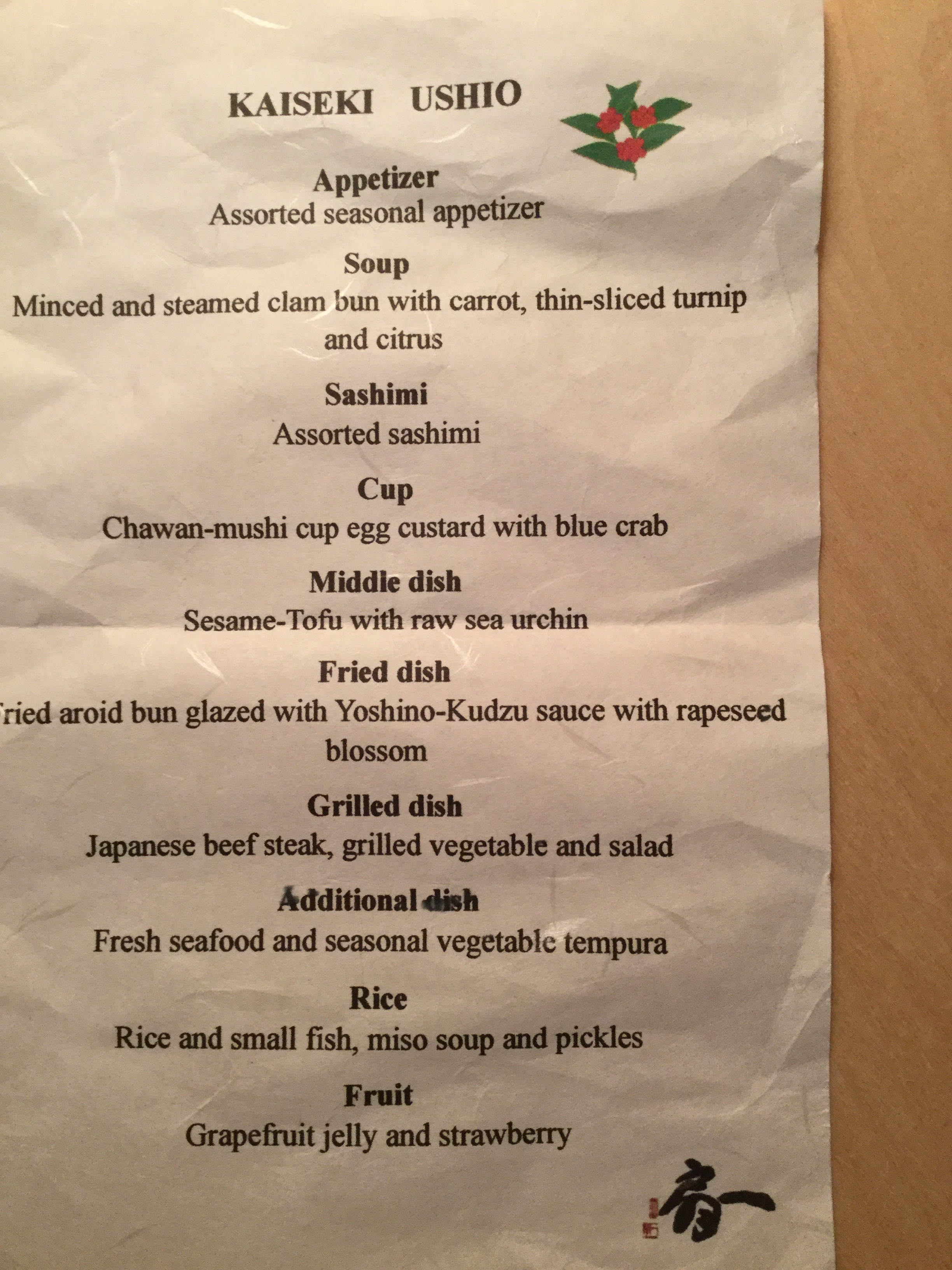
 The restaurant is located at the main museum up the hill above our hotel.  The dinner was perfect.  We’ve been doing quite a bit of sake testing and enjoyed some more with our dinner.  After dinner we ended our day by exploring the museum.  Now this was the modern art we were used to seeing. All white painting, wood and rock circles on the floor, toy soldiers in a circle, “junk on a shelf”. . . it was a fast tour.

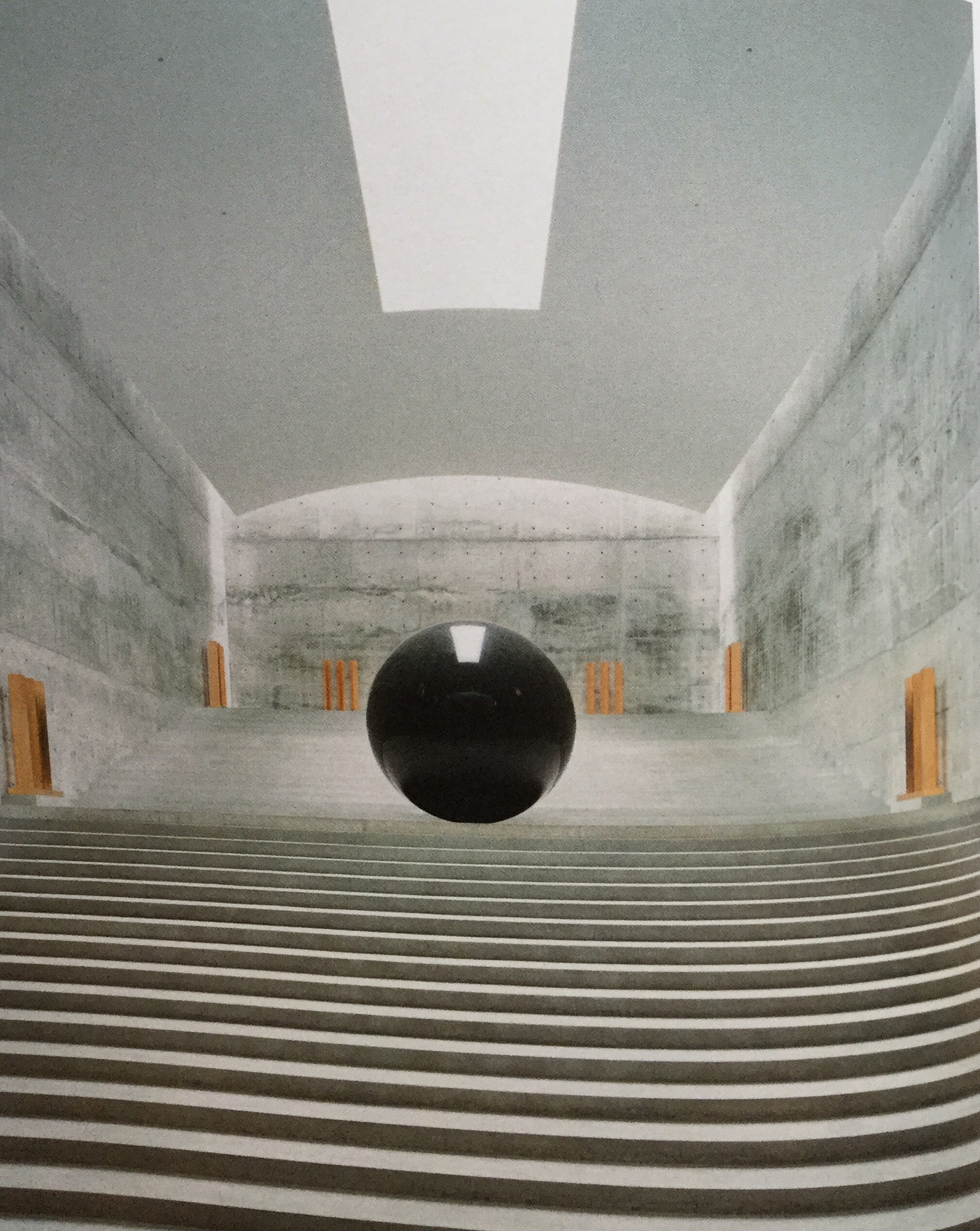
This morning we got to sleep in before exploring the Chichu Museum and another collection of art houses in an old area.  The Chichu features three artists Claude Monet, James Turrell, and Walter De Maria in a building designed by Tadao Ando.  We loved it all, the interplay of art and architecture once again opened our eyes to a new appreciation of the possibilities in this kind of art. No need to explain Monet, but the light, shapes and interactive aspects in Turell’s and Maria’s installations were so engaging.  Again no photos allowed.  This is a picture from the book.  It’s a huge room that you walk into and around.
  
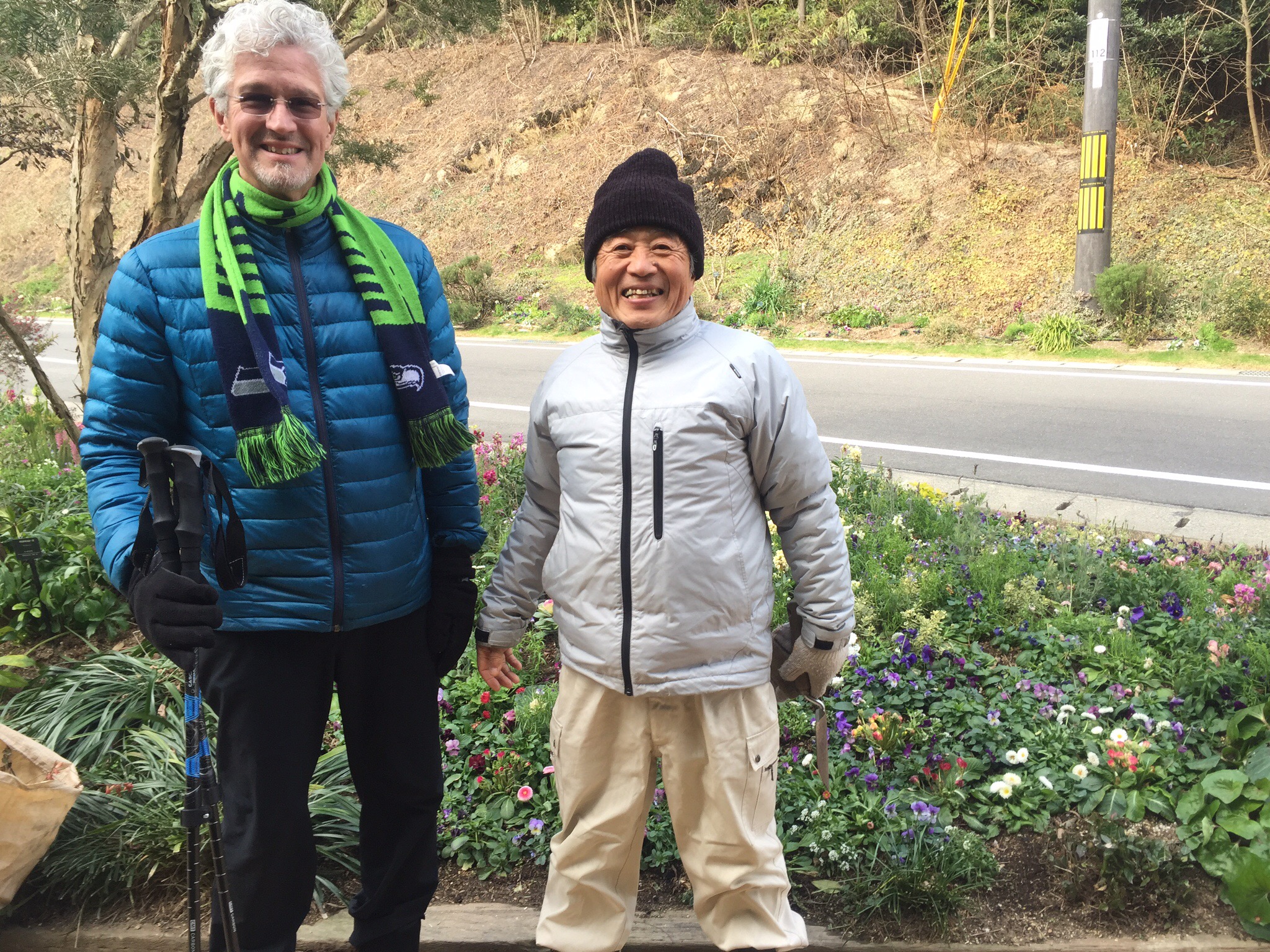
On our way out we stopped to chat with the gardener who was proudly tending and planting flowers despite the winter weather. 
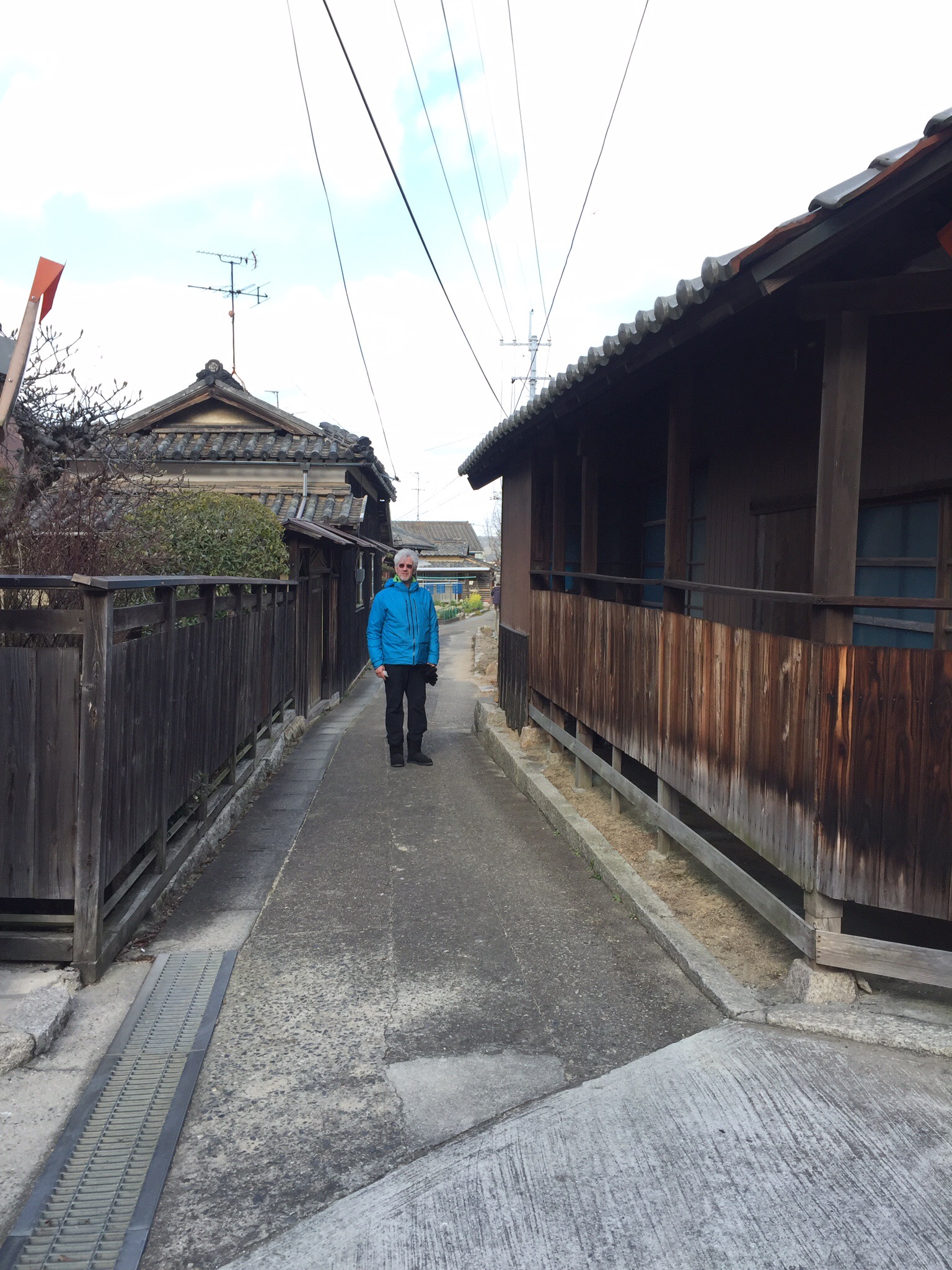
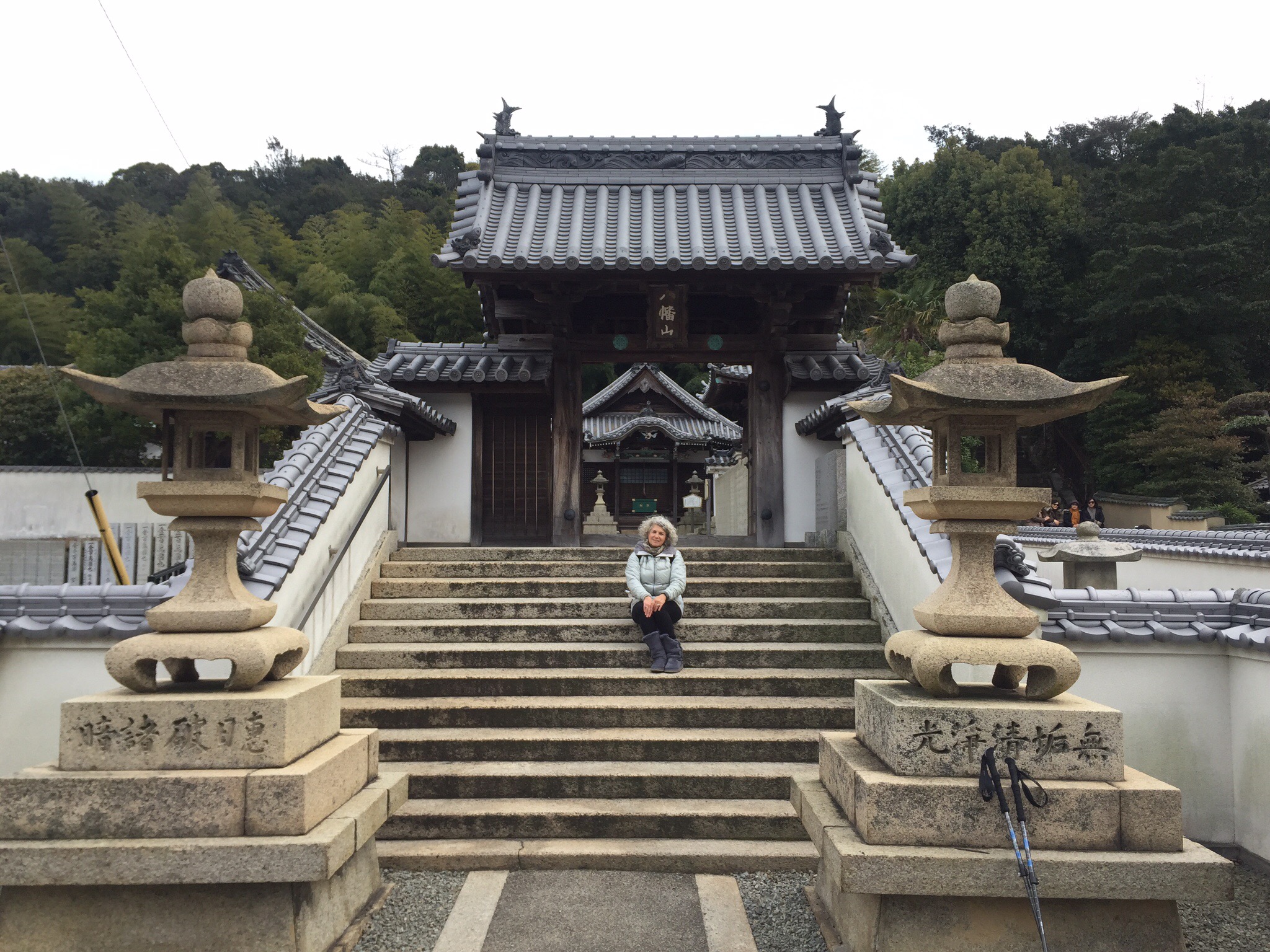
 The best part of the art houses here was walking through the village to find them.  We also passed by a really beautiful shrine.  The curve of the roof (which we learned on this trip, represents the ocean) is particularly dramatic. 


   We stopped for a leisurely, delicious lunch at small spot with only 3 tables.   
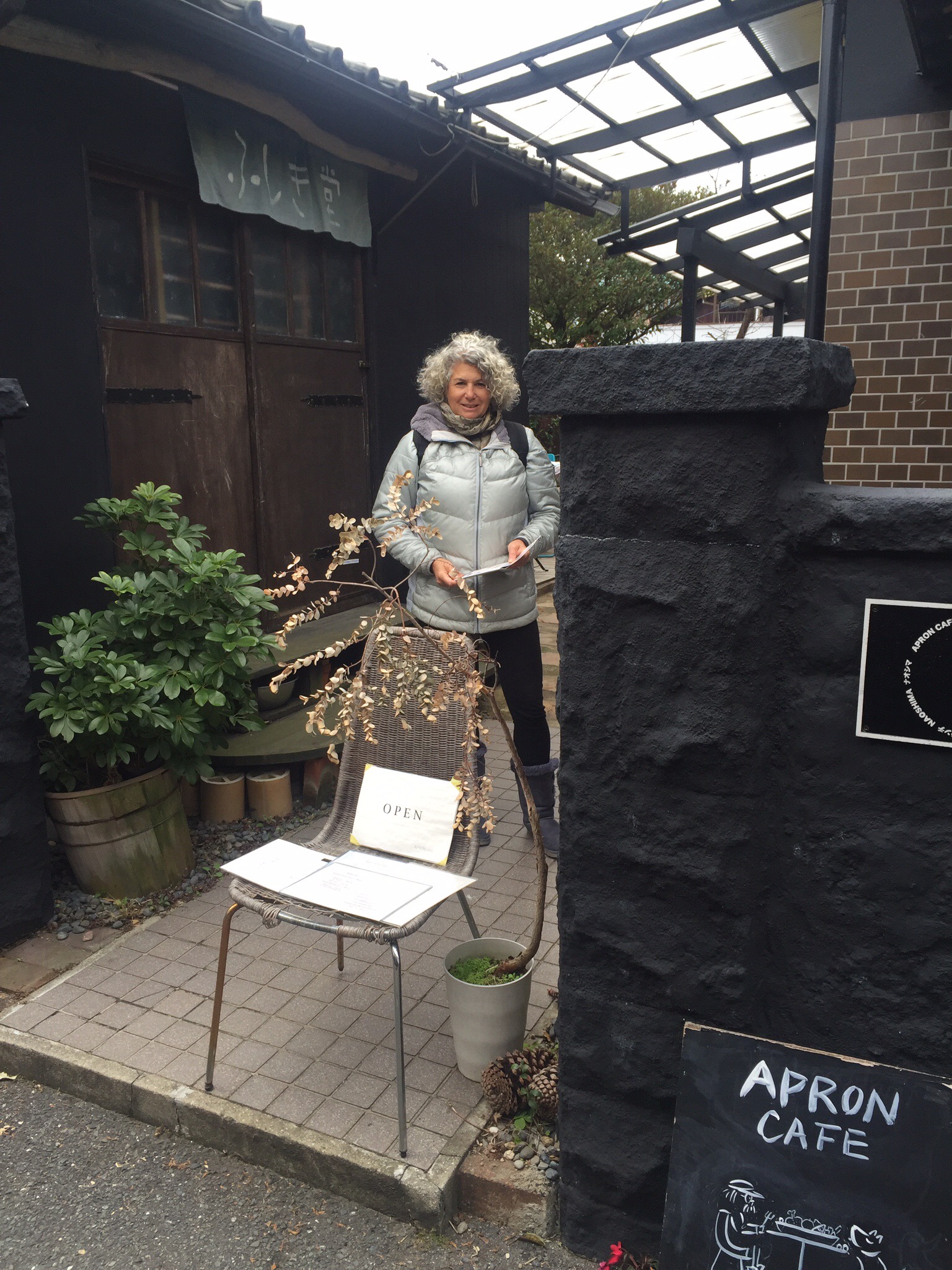
 The food was scrumptious. At our favorite art house here we are led into a dark space using our hands to guide us along the walls before we sat on a bench.  It is pitch black.  This is what it must feel like to be blind. Over time light appears.  A few specks at first and then a full screen. We were then told to stand and walk towards the screen. It turns out the light was there all along.  It just took ten minutes for our eyes to adjust. Really cool. 

Tonight we enjoy one last dinner at the fine hotel restaurant before traveling again by ferry, taxi and high speed train to Matsomoto. The adventure continues!

Nara Fire Ceremony

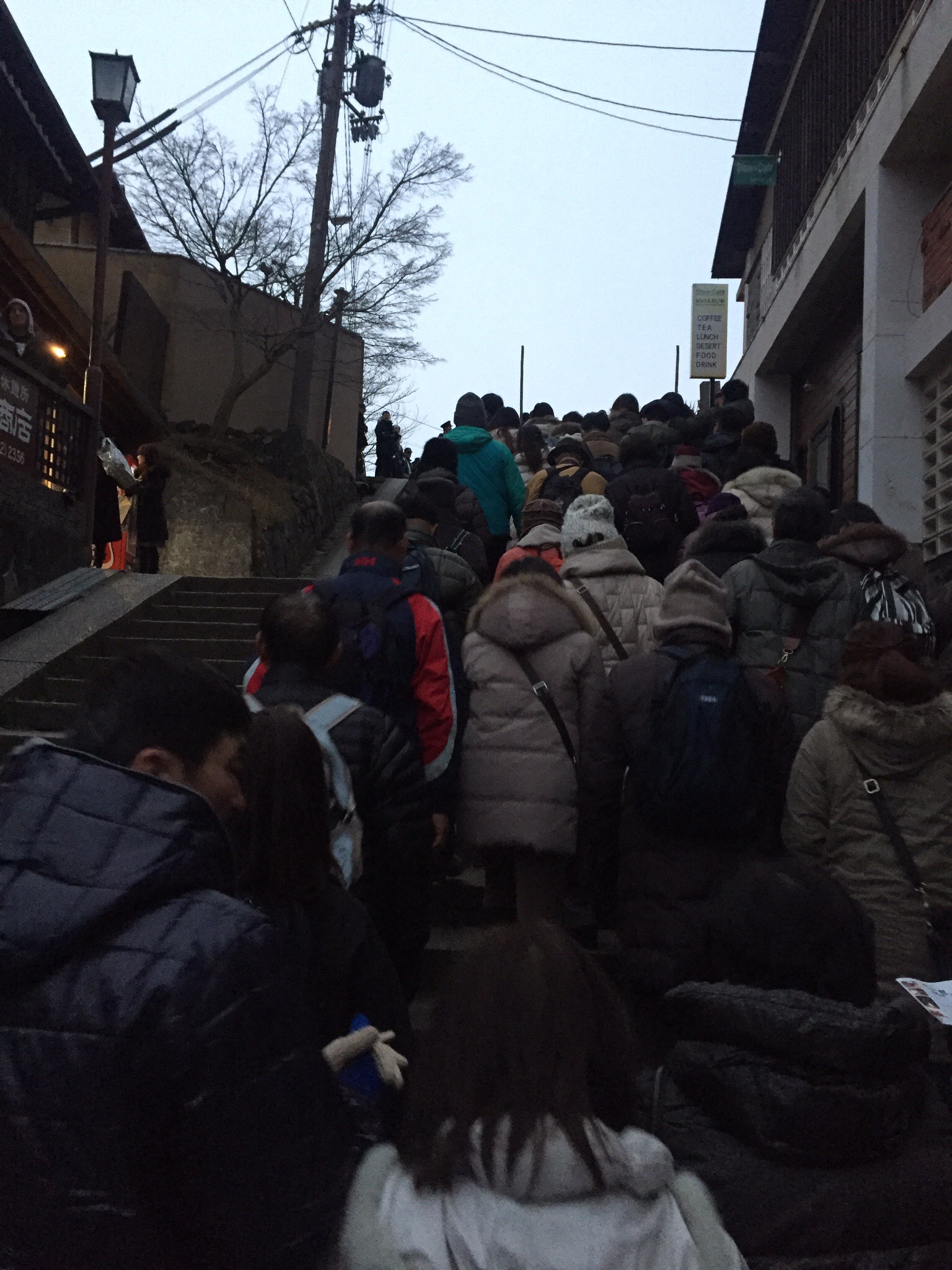
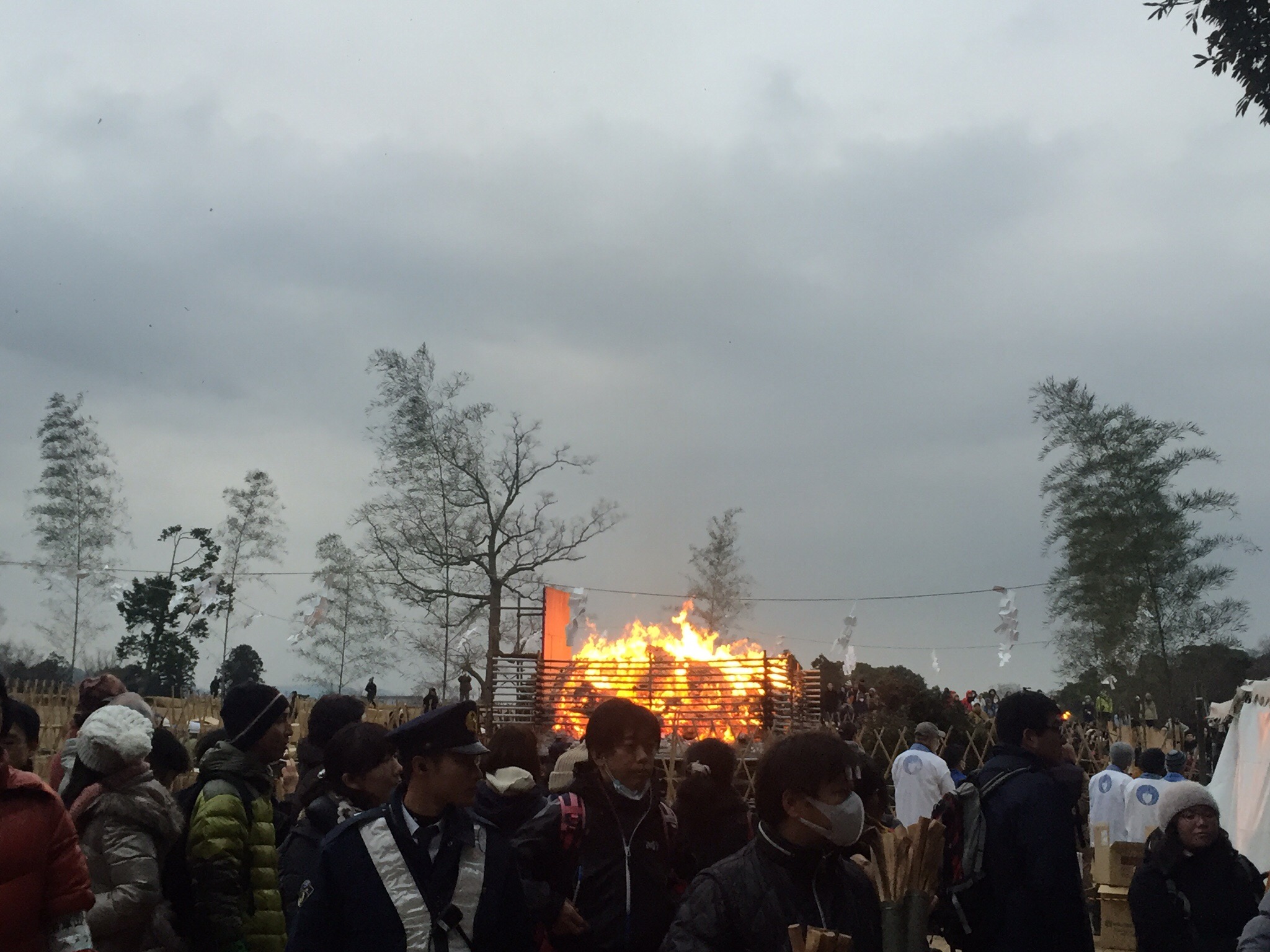
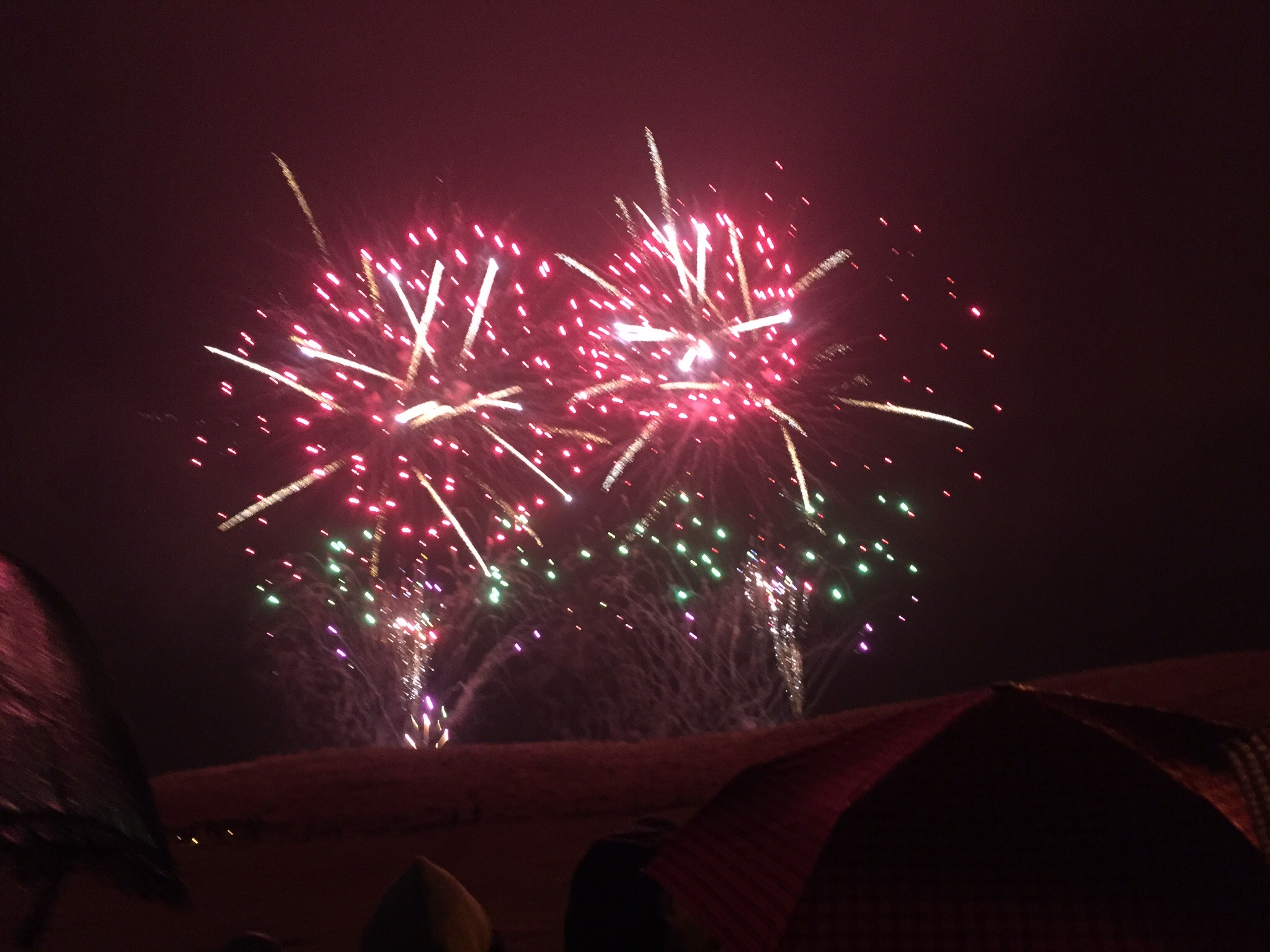
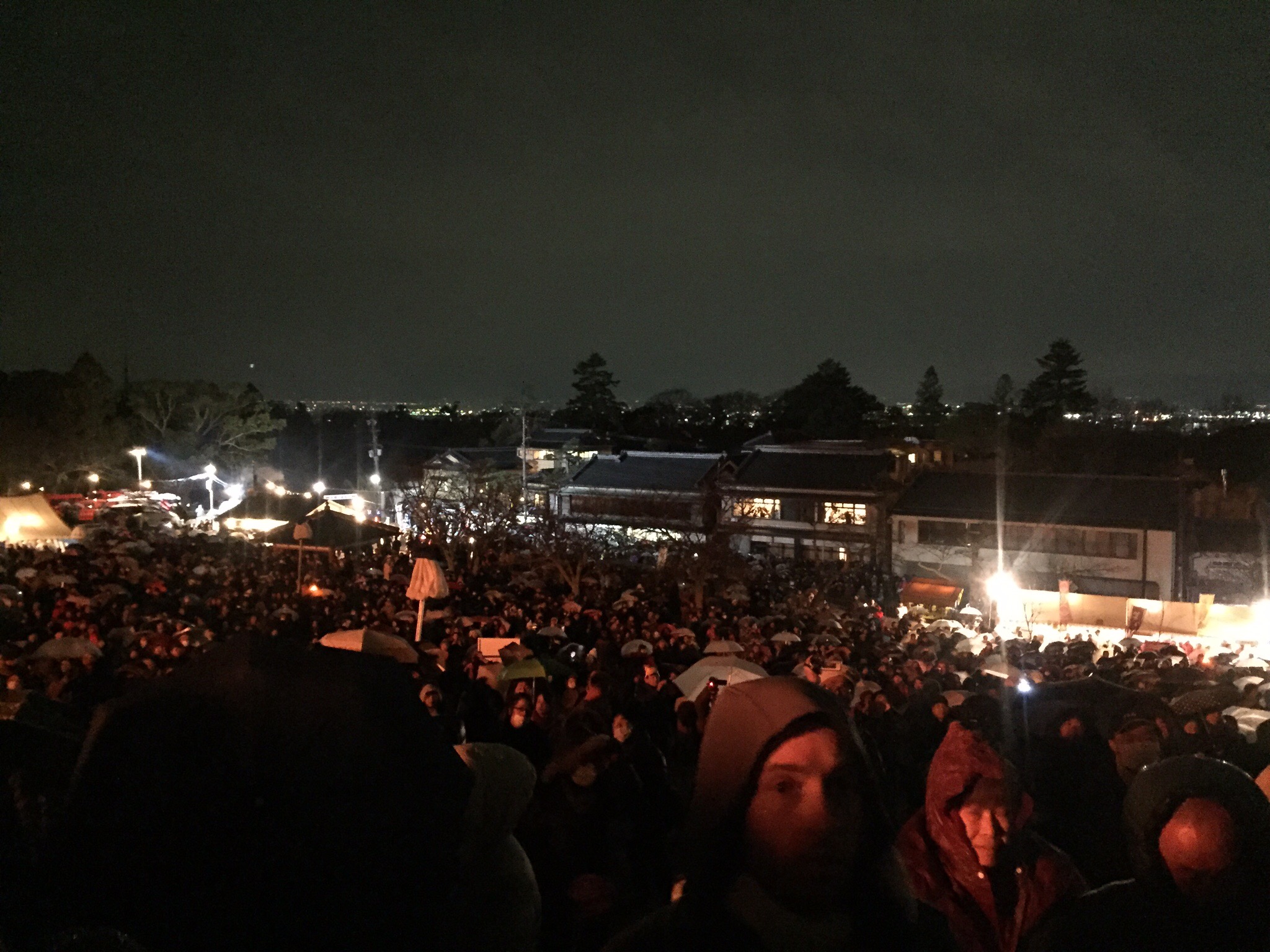
The Nara fire ceremony was a kick.  Combining a community fair atmosphere with great tradition, religious cooperation and fireworks.  Really, what could be better. We joined in on the parade up the hill with chanting and conch shell blowing and stayed for the grass burning. I’ve posted some of the video on Facebook. Jim paticurlalry loved the Shinto head coverings.  This is a must do if you are here this time of year.  It combined interfaith (Buddhist and Shinto) prayers for the departed and world peace along with fire safety for the town and the shrines (which have burned down a lot over hundreds of years).

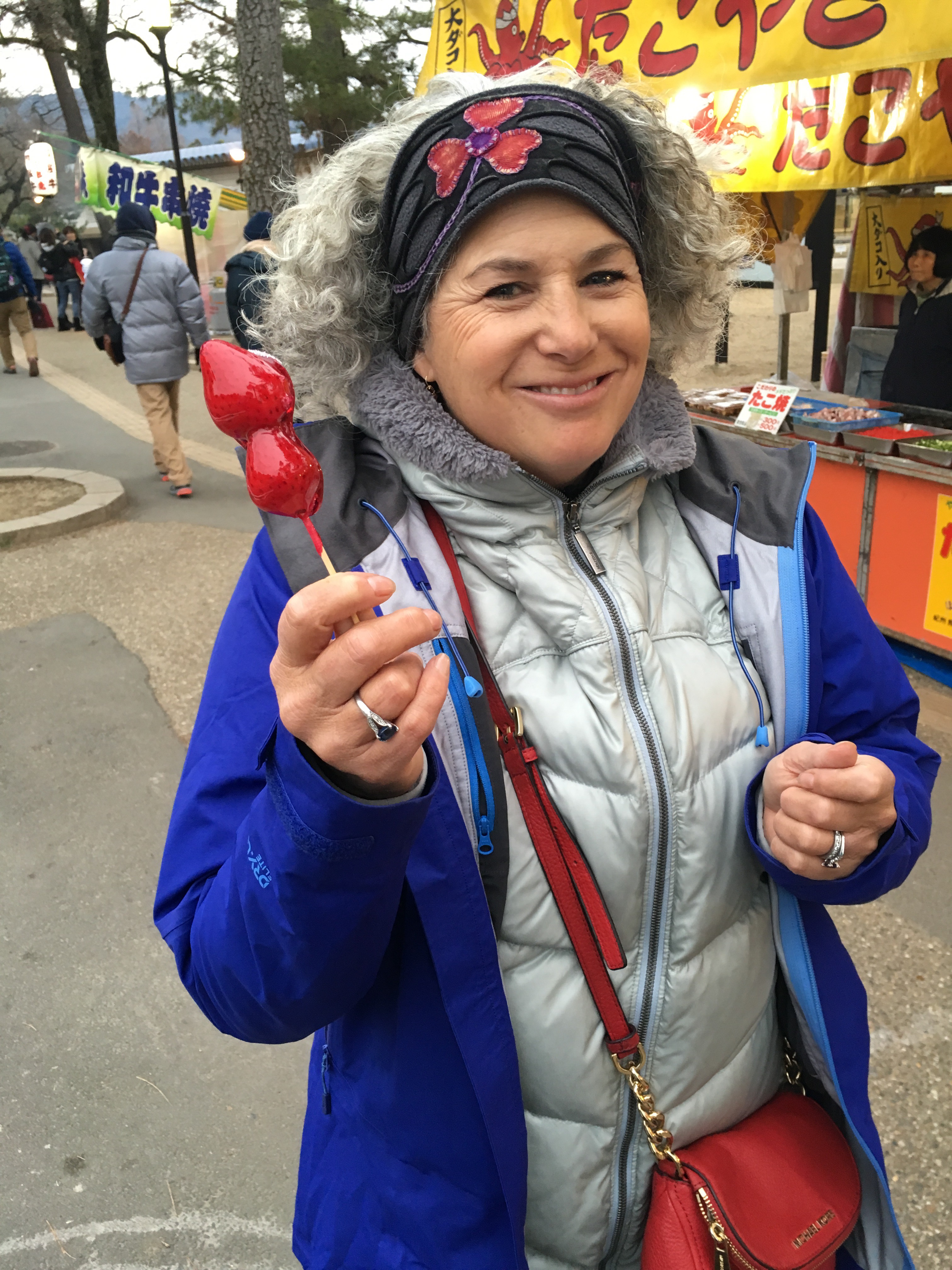
We ate lots of yummy street vender foods (the healthy food is not photographed) including the ceremonial soup topped with a salty-sweet cotton candy.   We didn’t actually eat the crazy bananas, but we did photograph them.


Kyoto

  The last 4 days immersed us in the experience of Kyoto both modern and ancient.  Kyoto was chosen originally for its Feng Shui because it is surrounded by mountains on the north east and west with a river running north to south.  Interestingly, this is exactly the same as our beautiful Alpental Valley.

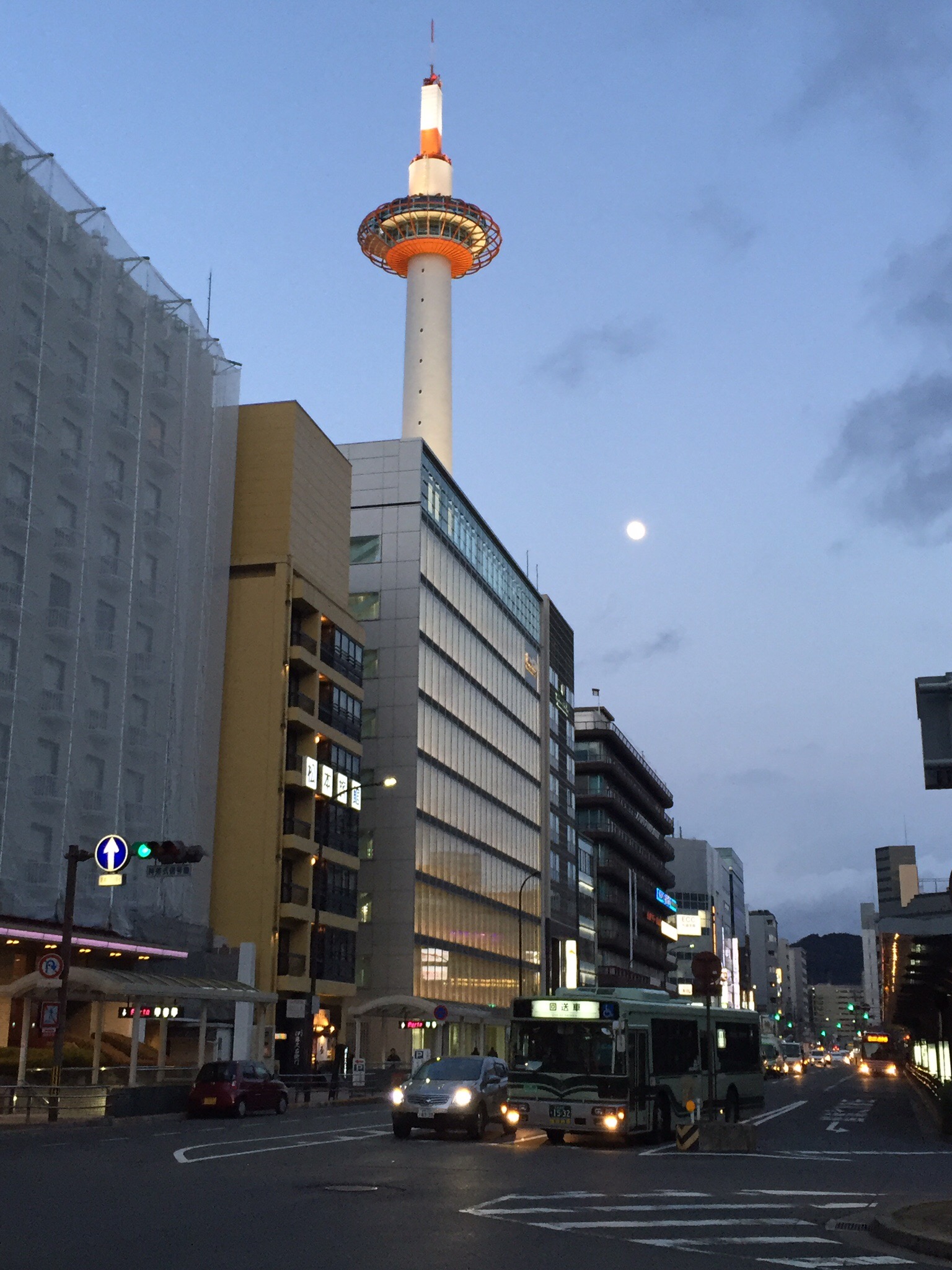
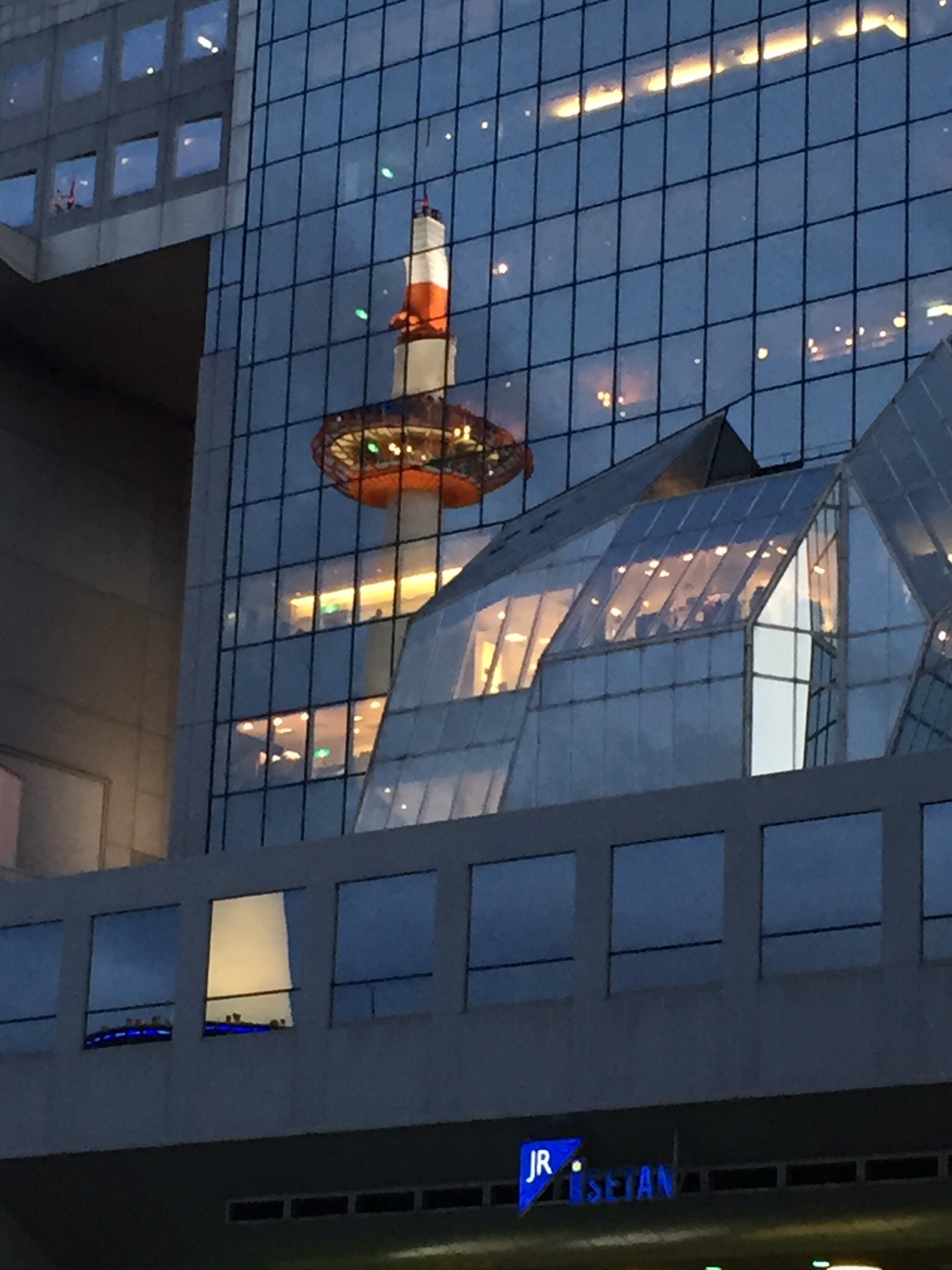
When we left the healing sanctuary in Toba for the train ride to Kyoto the snow began to fall.  The train ride was easy. The Kyoto train station is enormous, with many levels and entrances but the grandeur and epic scale of the modern North entrance made it our favorite, especially the view of the adjacent Kyoto Tower (Kyoto’s Space Needle).  In fact last night after a full day of touring we headed back to experience the hussle and bustle of the area at night.  The station combines transportation, food, shopping, museums & hotels into an engaging and delightful cacophony.

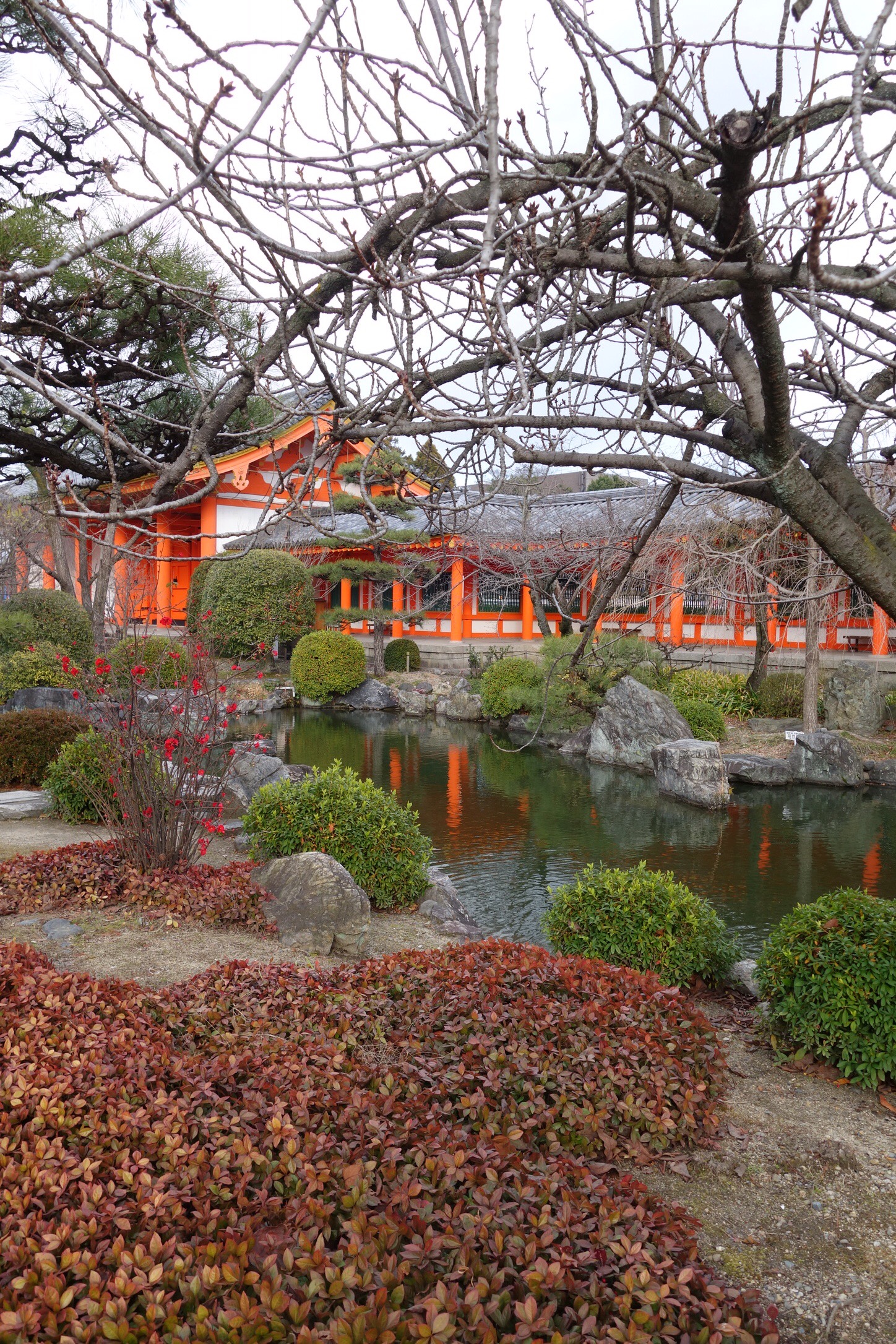
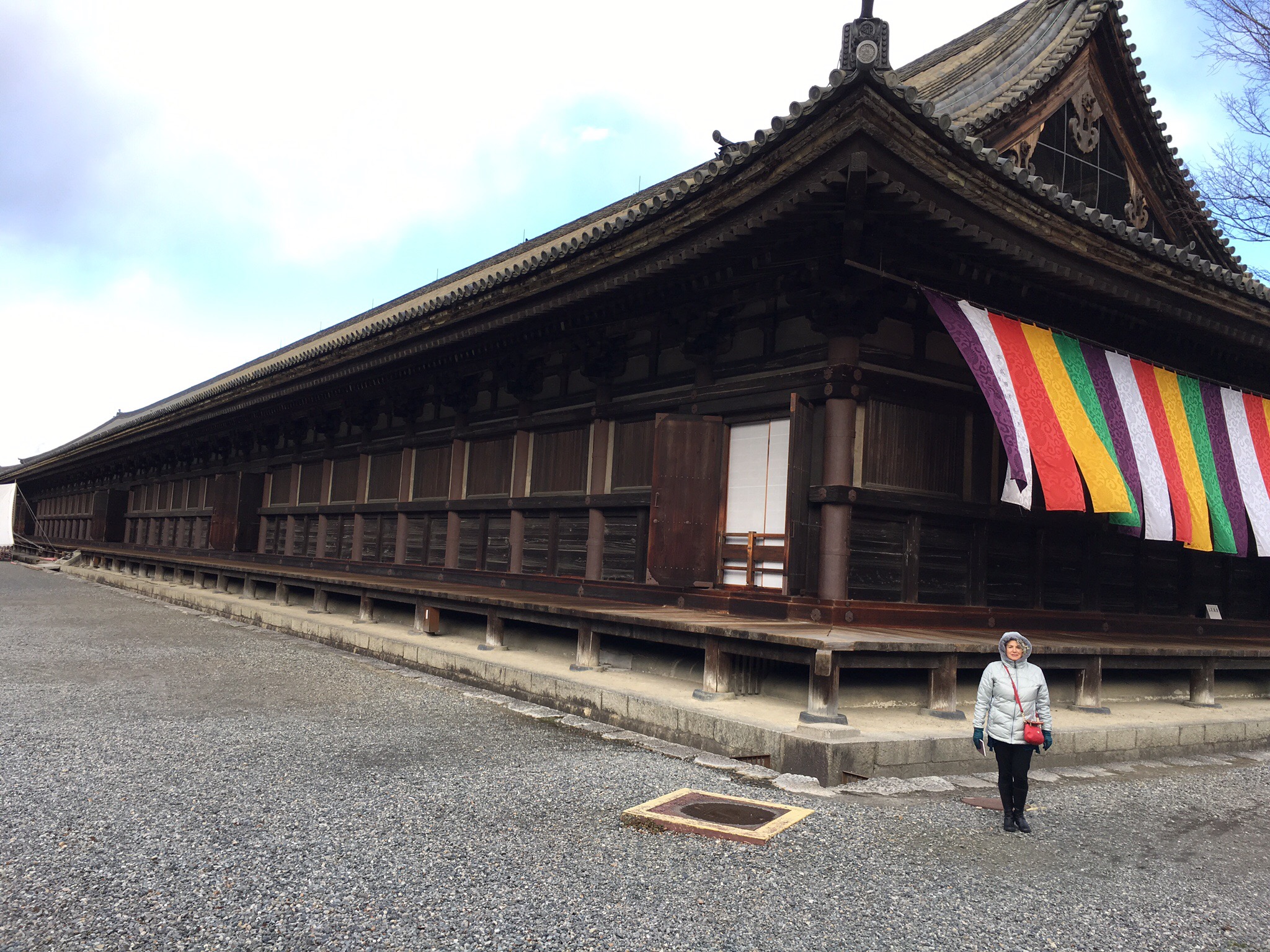
This of course is in complete contrast to the peaceful history of the monasteries and zen gardens throughout the city.  We are staying at the Hyatt in the SE part of town situated between 2 major tourist destinations.  After checking in and dropping off our bags and bundling up we walked to the Golden Temple next door.  The Sanjusangen-do Temple contains over 100o gold plated, life size statues of Kannon (the Buddhist Goddess of Mercy) in lines surrounding a much larger central Buddha, all contained in the longest wooden structure in the world.   

The building was created using an ingenious foundation of alternating layers of sand and clay, allowing it to survive the area’s periodic earthquakes for almost 1,000 years. 

 Back at the hotel we decided to take a fish break and went to the Italian restaurant at the hotel.  The pasta was comforting and warm


 Our second day in Kyoto we met our guide Kenzo for a tea ceremony with a tea master grower before an exploration of the Daitoku-ji  Bhuddist Temple complex and Zen monastery.  Interestingly, this is where our good friend Erica trained for 3 years.  

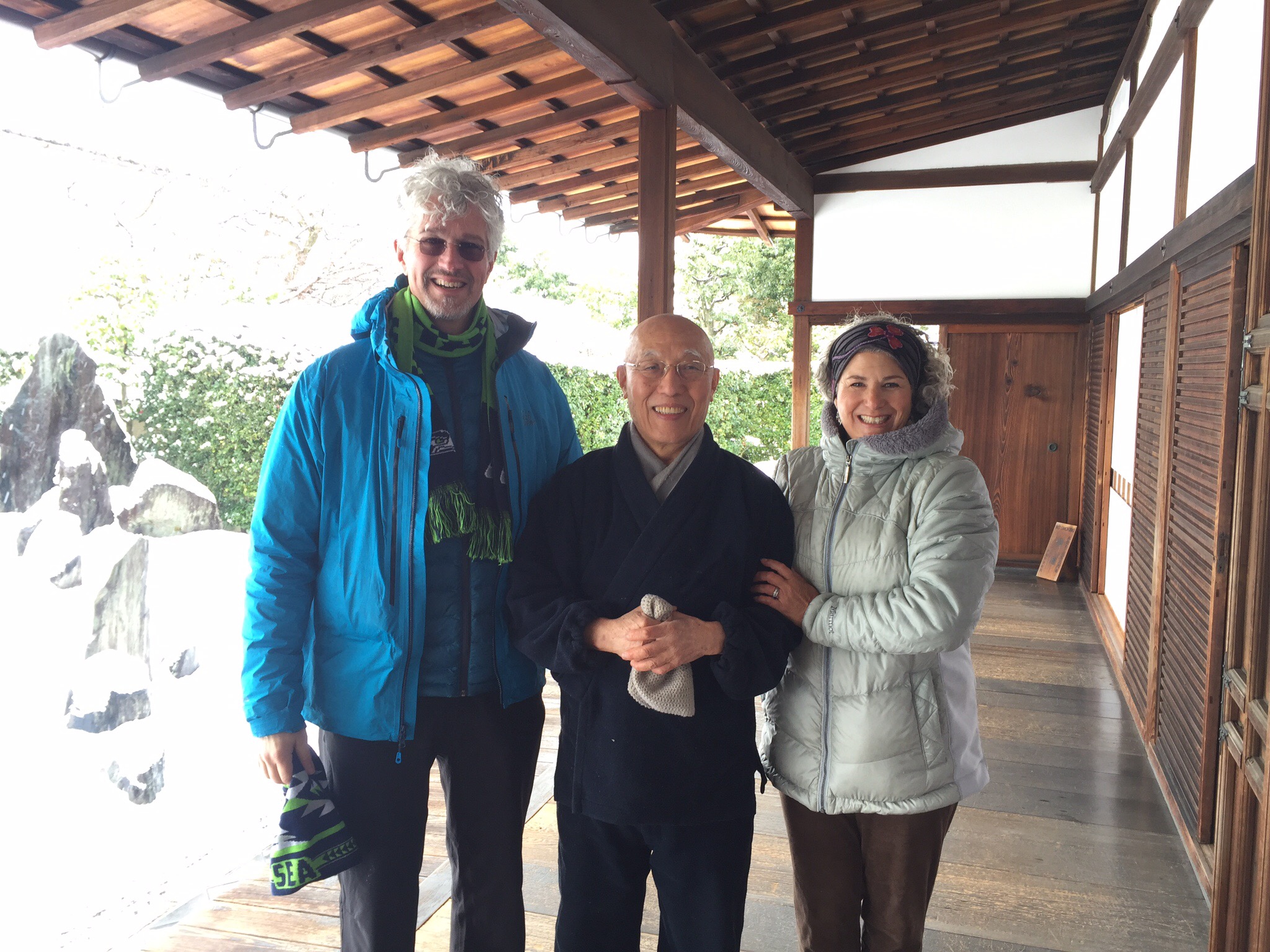
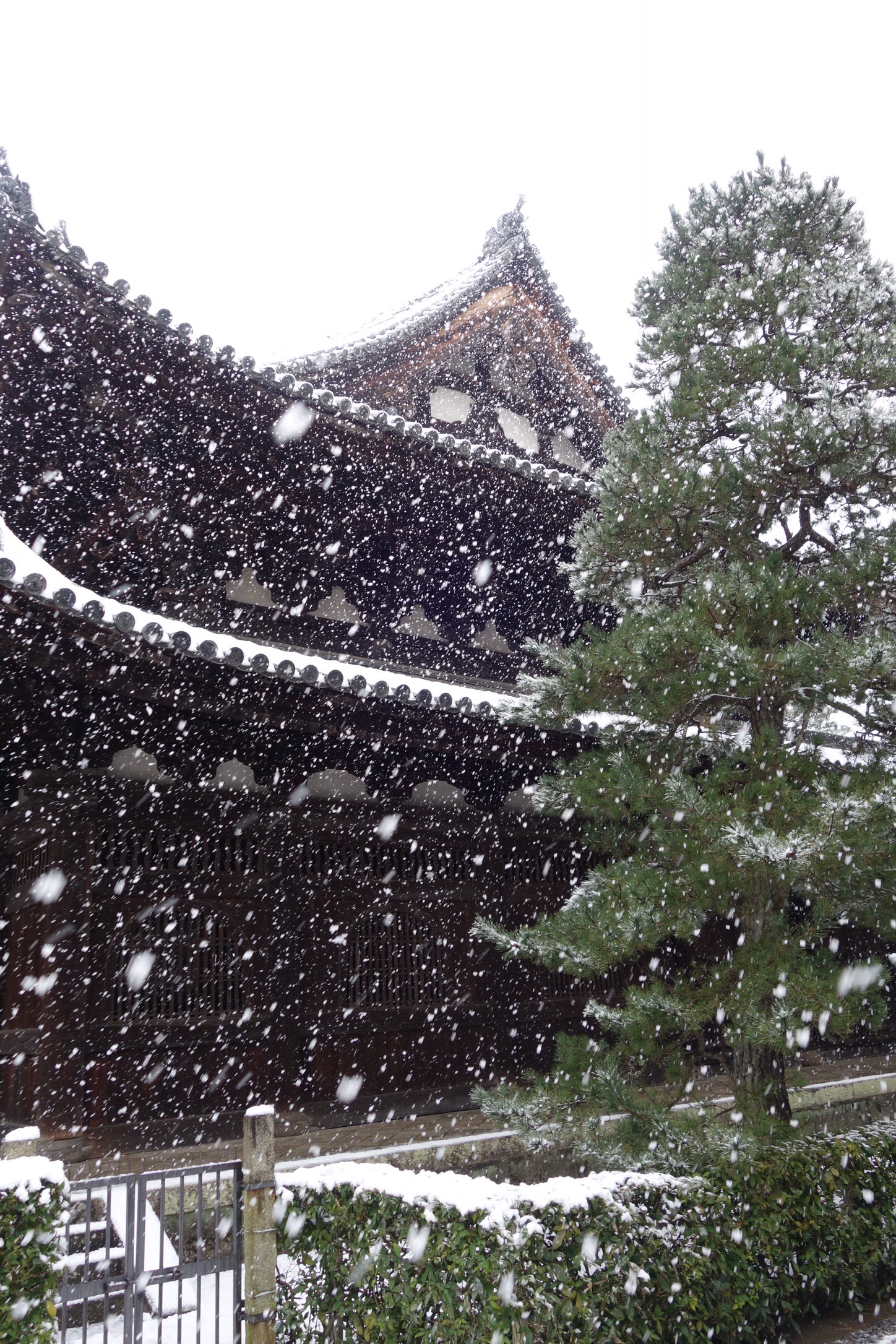
  We got to meet the Abbot who immediately, with a smile, corrected our posture. Our posture was exceptionally stooped due to the  cold.  But he was right, as soon as we straitened up and re-engaged our cores, we warmed up.  The snow falling all around us added a special, enchanting energy to the morning. 

    
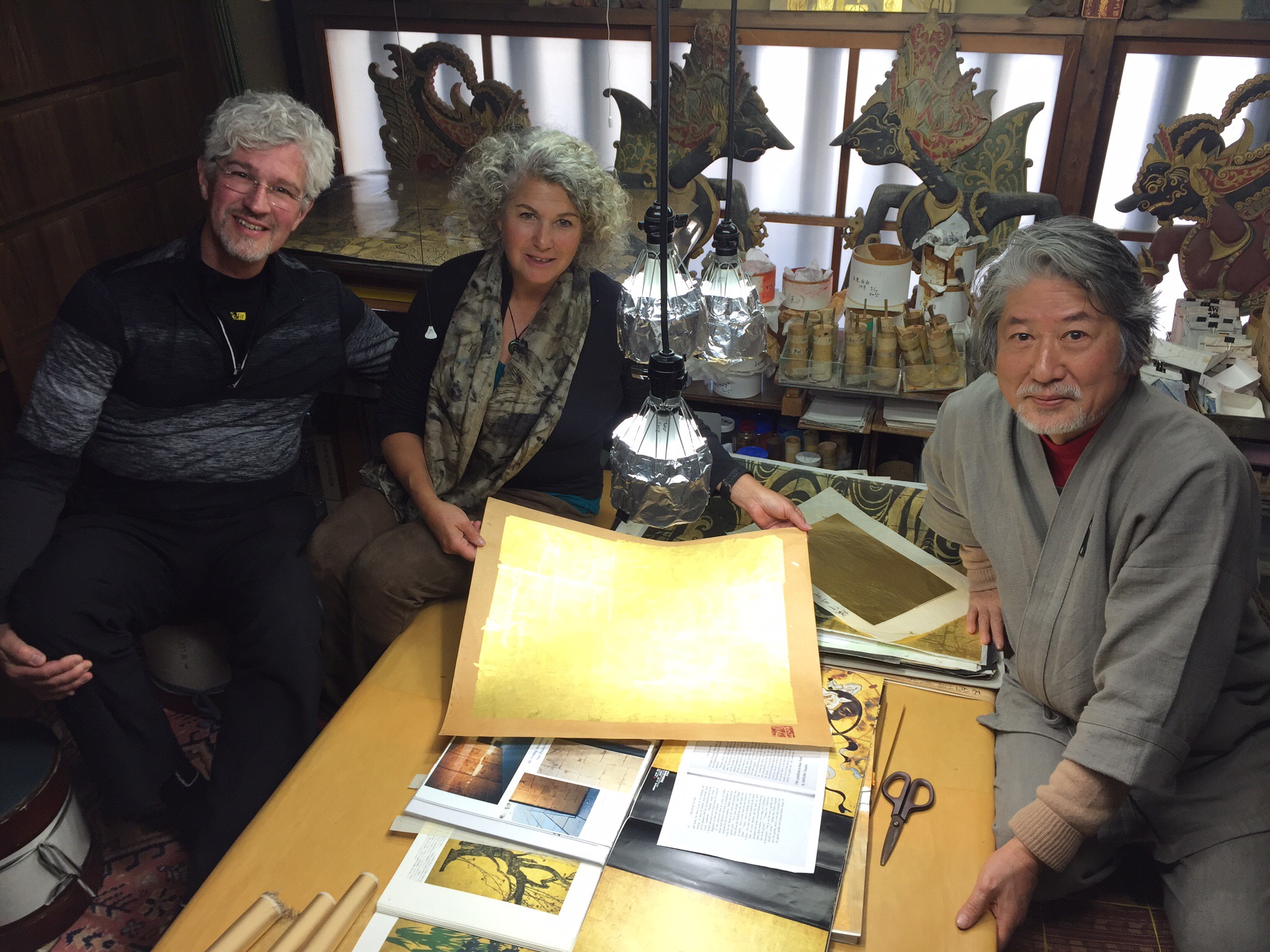
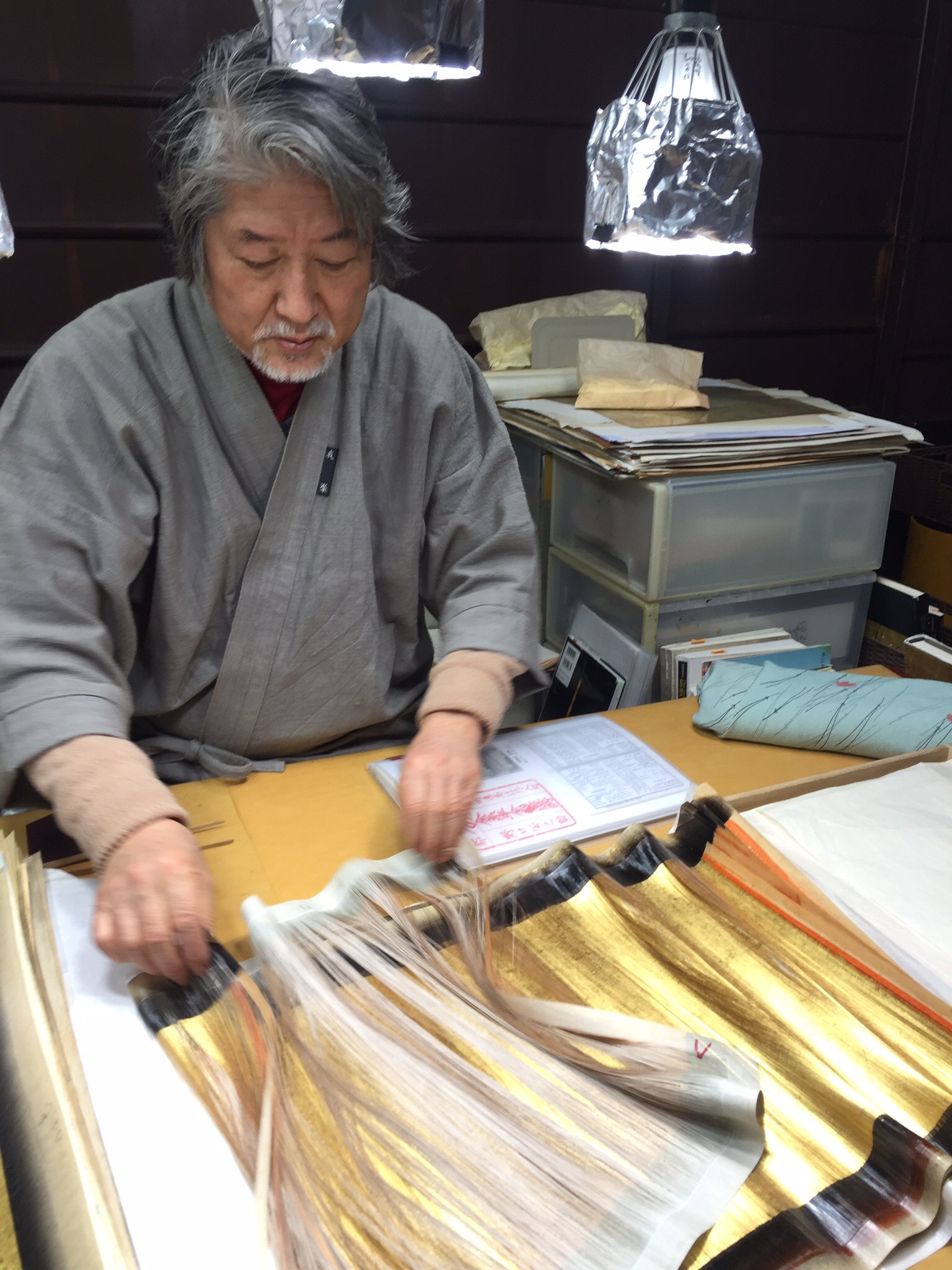
Kenzo took us to the monastery restaurant for a chance to warm up with a yummy vegetarian lunch and warm sake before we strolled through narrow streets to a gold leaf artist, Hakuya Noguchi.  His family has been doing gold leaf work since 1877.   


 This is picture of the gold leaf background design sliced (his great great grandfather did the same thing but used a hatchet) so that it can be used in the weaving of Kimono sashes.  He showed us the technique, and gave us a lesson in the history and the different tools his father and great grandfather used.  We enjoyed tea and conversation with Hakuya and his wife before purchasing a very small piece.   

Our day ended with a visit to a covered outdoor shopping area where we successfully searched for an inexpensive used Japanese Kimono-style robe before saying goodbye to Kenzo.  For dinner we choose Indian food and then collapsed in bed.

As I said earlier, The Hyatt is located in the SE part of town.  It’s a quiet area and our room was on the eastern, garden side so we slept with our window open and were awakened by the monastery bells next door.  The quiet at night suits us just fine.  After a long day of exploring we love the peace and quiet. 

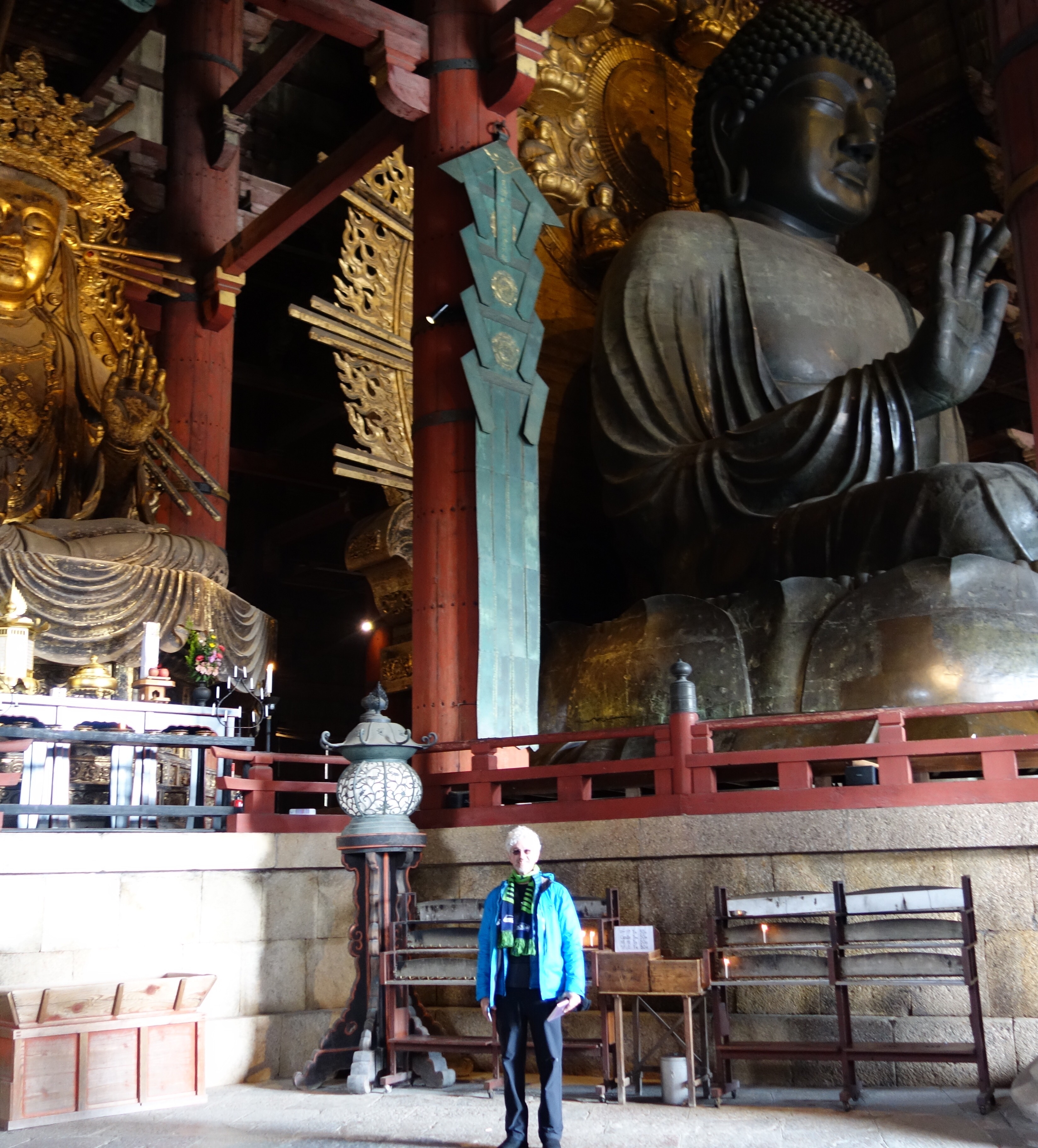
Yesterday was a day in  Nara , about 30 minutes south of Kyoto by local train.  Nara is a park-like setting, with deer everywhere, a cute little town, with many museums and shrines including the big Buddah shrine at Todai-ji Temple. And the big Buddah doesn’t disappoint.  


  The Todai-ji Buddah is 53 feet tall.  It is the largest bronze Buddah statue in the world and is housed in the largest wood structure in the world.  Pictures do not do it justice. The shrine and surrounding park are lovely.  English guides are available to give you an introduction before entering the shrine.  

After a lot of walking Jim decided to hire one of the rickshaws. I was uncomfortable  from the start for so many reasons.  Let’s just say we were surprised when our young, strong, delightful driver, took us on the main road, with buses passing us in the opposite lane, to get to our destination, the Kokufu-ji Temple, with its five-story pagoda.  As we picked up speed down the hill, even Jim was questioning his choice.  But we survived and got a lovely tour.  On the way to our destination we passed the Nara Hotel where apparently both Albert Einstein and John Lennon have stayed.

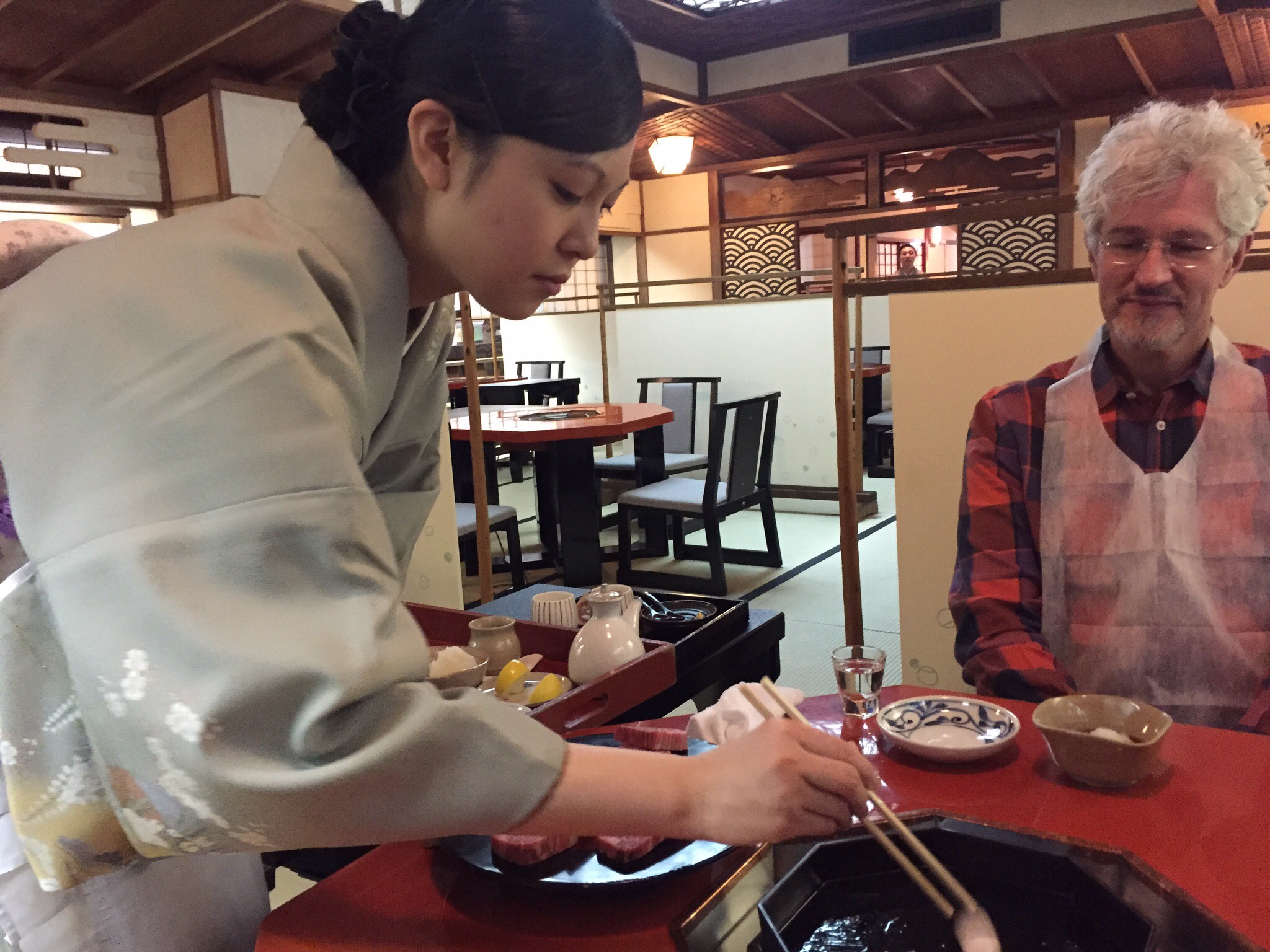
After more shrine and museum visits it was time to head back to the train station where we grabbed a yummy meal in a local little restaurant for a late lunch.  That night, we were able to get a dinner reservation at Mishima-tei, a famous old “shabu-shabu” restaurant in Kyoto, where the food is cooked at your table by a young woman.

 The meal was delicious, and lovely, but too expensive (although we enjoyed the experience).

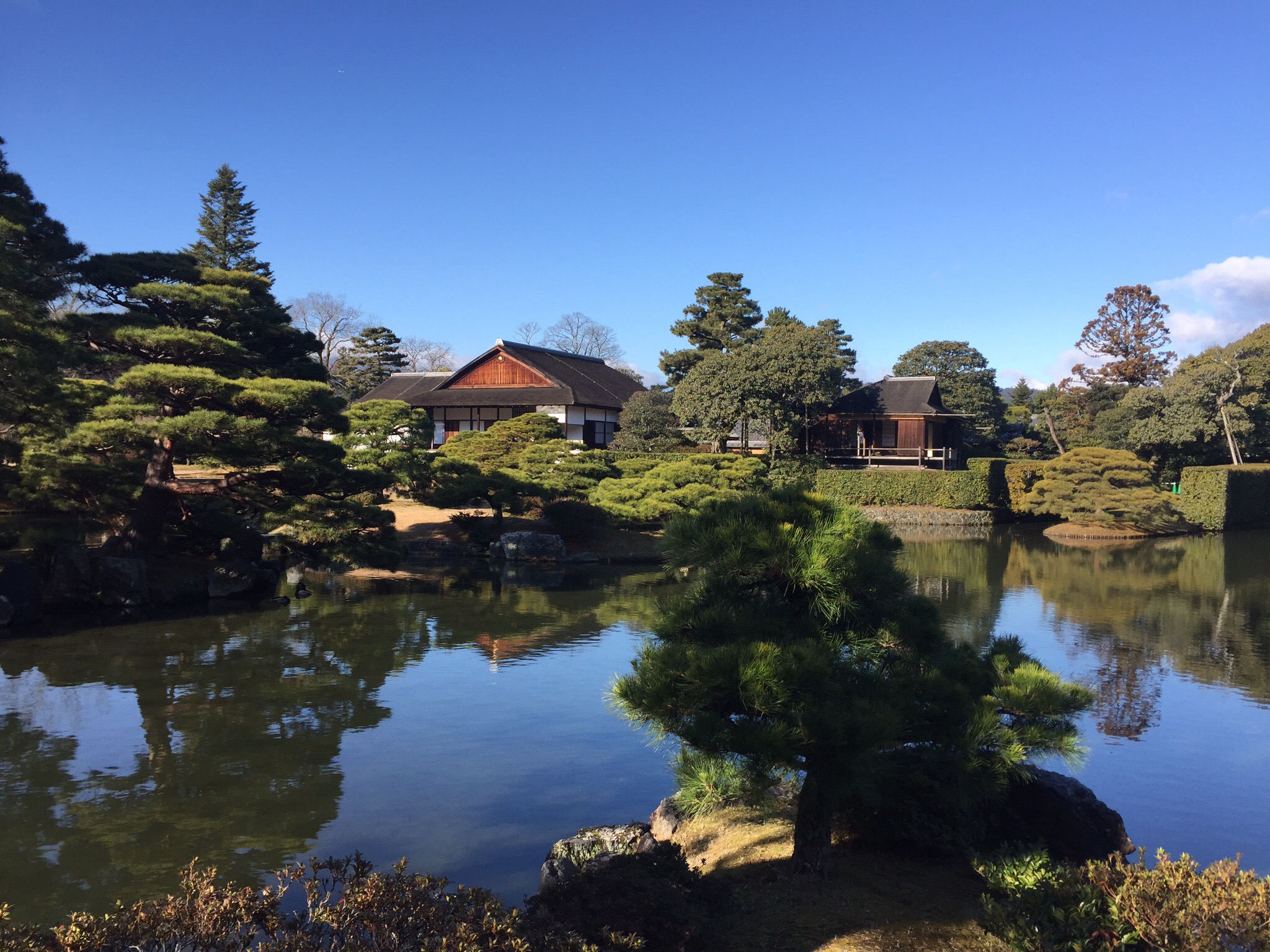
Yesterday was one of our favorite excursions, this time to the 11 acre Katsura Villa and gardens, followed by Arashiyama, with more gardens and a lovely area near Kyoto’s river and the Saiho-Ji (Moss) Temple.

Katsura Villa is the former residence of the Emperor, and now a tourist destination that is available by advance reservation only.  And once again our agent, Esprit Travel, took care of that for us.  The Japanese Gardens there are exquisite and thoroughly enchanted us.   


 It’s given me lots of ideas for improving our mountain house and a much greater appreciation for the beautiful rockeries and garden areas that Glen created for us at our old home on Mercer Island.  They truly are works of art in nature.

Arashiyama is another rock garden  experience next to a glorious bamboo forest which is near a larger park along the river.  We could have spent more time in this little place in the NW part of Kyoto.   


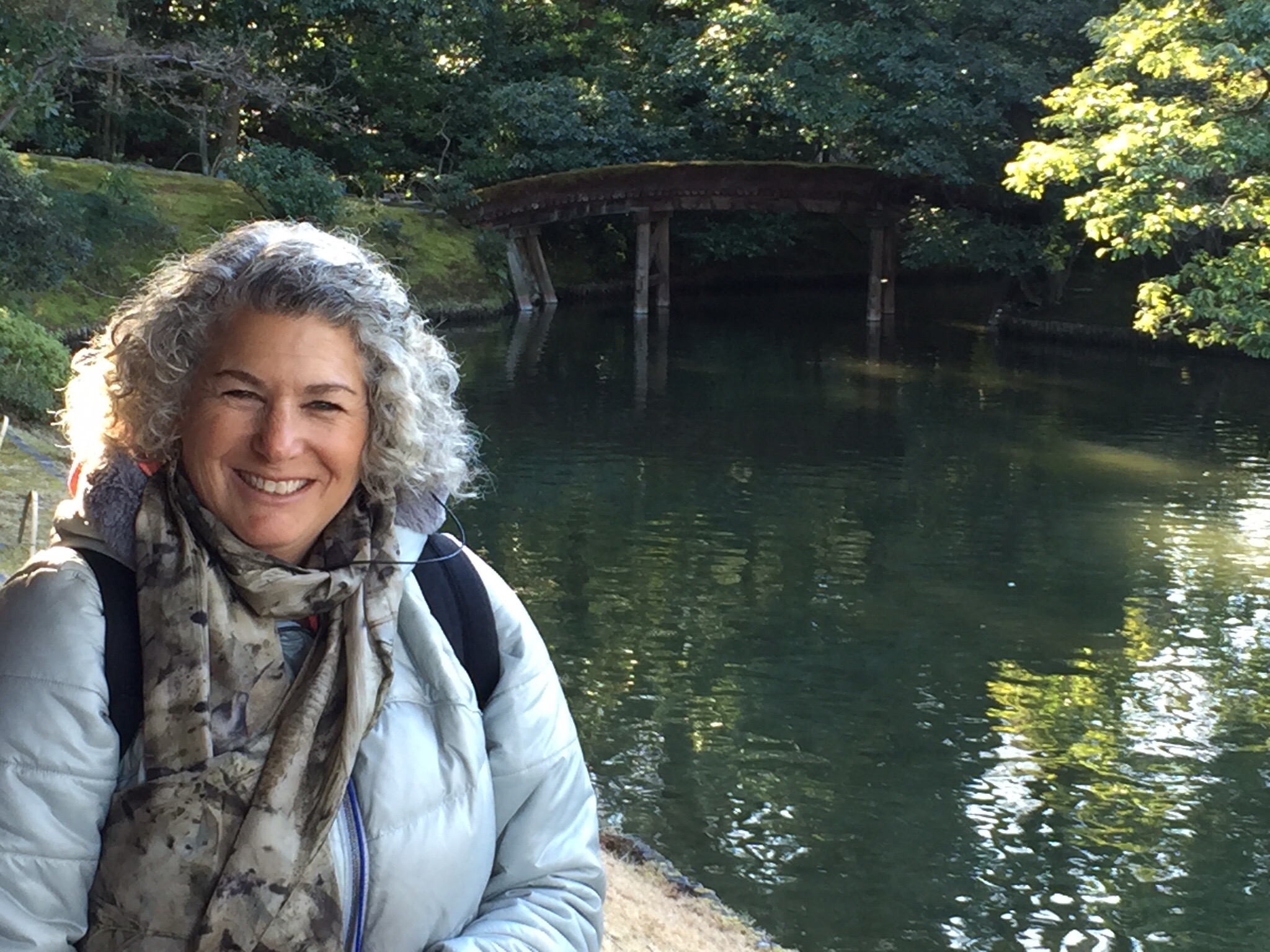
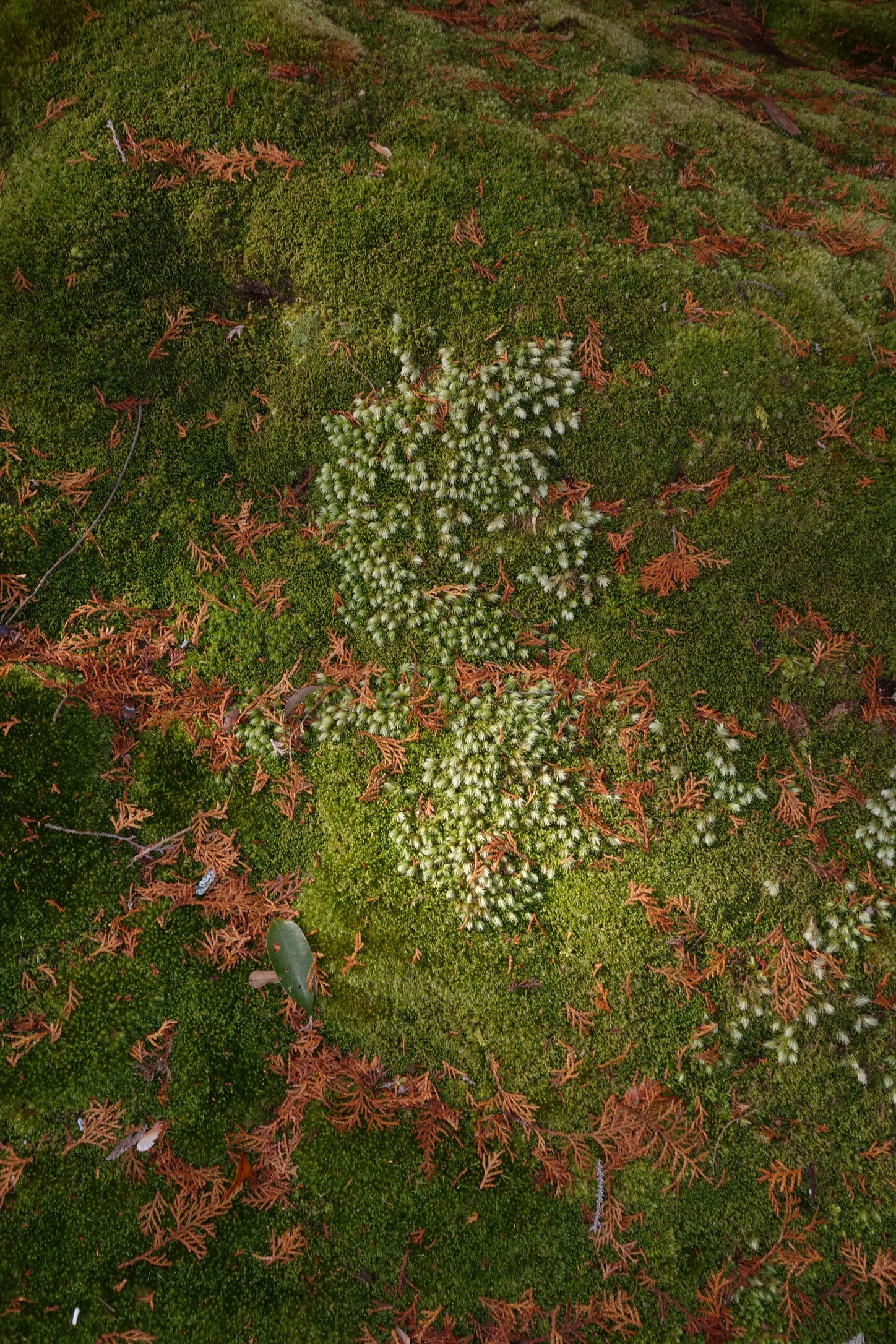
But, we were on a vey tight schedule so we grabbed a very quick lunch at a lovely little restaurant with a  nice view of the river.  Then we hailed a taxi to take is to the Saiho-ji (Moss) Temple.  It’s hard to explain how tranquil and amazing this place is.  Again it’s reservation only and the experience begins with Buddhist monks chanting and praying in the temple.  Afterwards we strolled through the grounds of moss covered gardens, rocks, and trees, all dappled in sunlight.  These gardens were designed 1,300 years ago and are now a UNESCO World Heritage Site.   


 I tried to capture the glowing greens in the photos but they are elusive.  I love moss and have been trying to grow patches in the mountains (sometimes successfully). This truly is a Zen activity.  The moss must be gently and continually swept of debris to survive and thrive.  As much as we would have like to linger longer, we were getting cold.  On our way out we found a little tea shop with a private rock garden where we were fed and warmed.
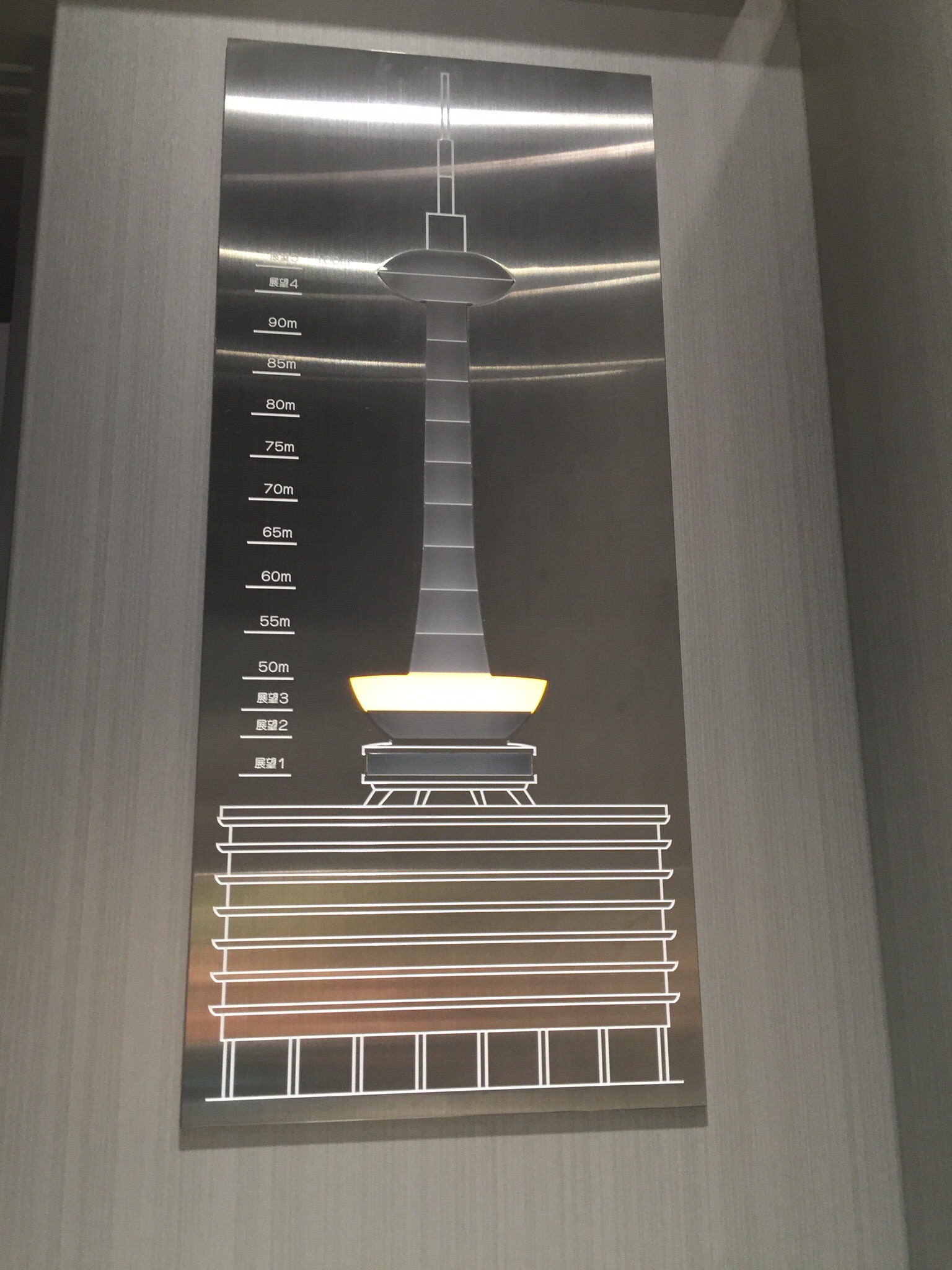
To end our day, and for something completely different, we took a taxi back to the Kyoto Tower (next to the Kyoto Train Station).
Jim and I always like to explore any Space-Needle-like towers when we travel to get better perspective of the surrounding area. We grabbed a drink at the bar while waiting for a gentle sunset and the lights of the city. From the tower we saw some really cool large lit steps on a open floor above the bustling train station.  


Our nex mission was to walk to those steps. After some wrong turns and escalator choices, and with the helpful guidance of a smiling lady at the tourism office in the station, we arrived only to be mesmerized by the ever-changing light display. It turns out the lights begin on the 4th floor outside of the department store, and go all the way up to the 10th floor (the top of the Kyoto train station).


After playing on the stairs we once again found a small local shop for some spicy soup and later ended our evening with ice cream.

Today is our final full day in Kyoto and it began with early morning (6:30 AM) Bhuddist chanting at Chishaku-in, only a five minute walk from our hotel.   

 We missed the correct entrance in the dark, surprising a young monk.  We were about to give up when we found the correct location.  The spiritual chants and ceremony were well worth the early start.  As part of the ceremony we got the opportunity to burn incense to “honor a recently departed ancestor” (Jim’s Dad).

Today is a housekeeping day.   

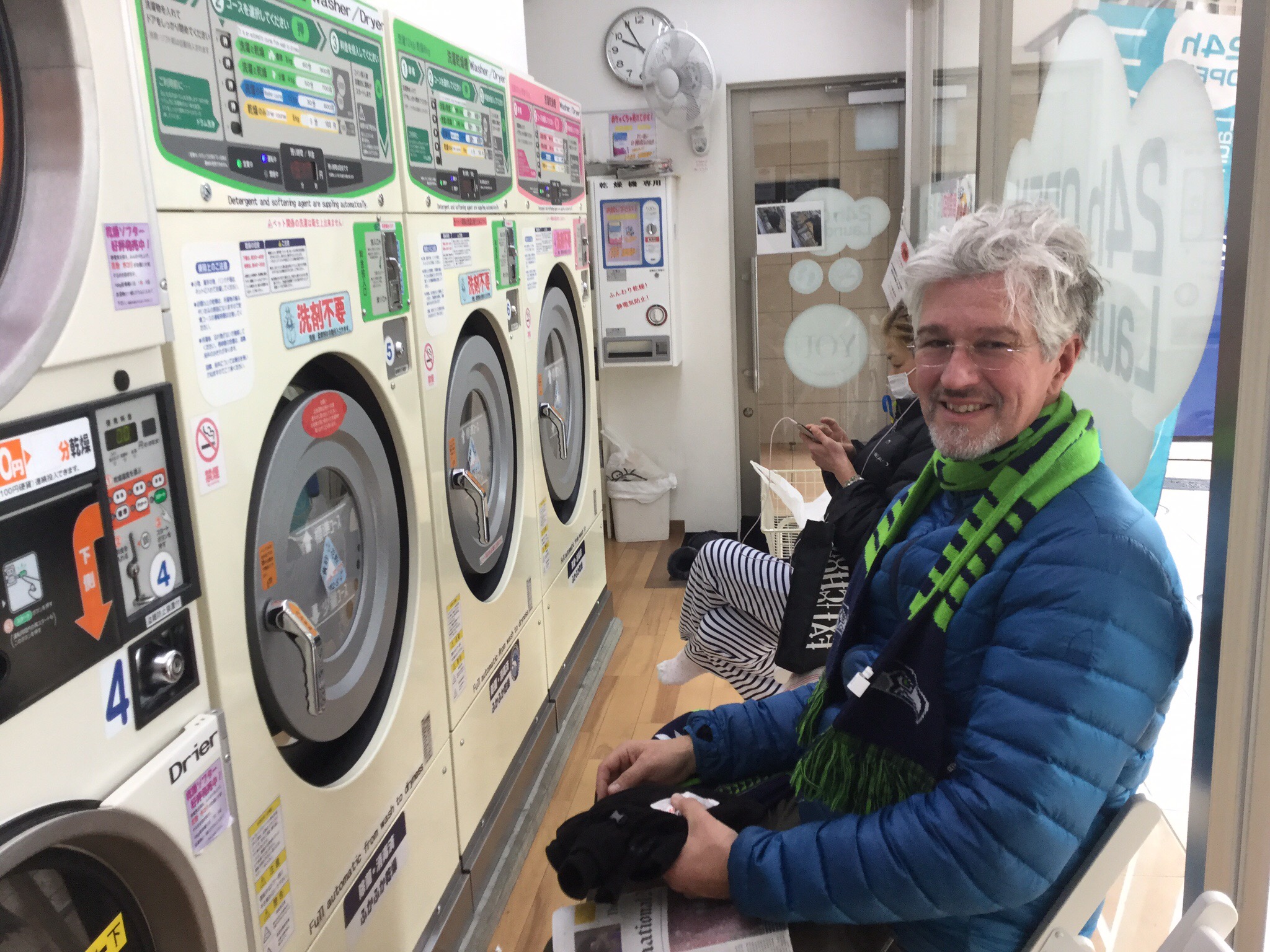
 Time for laundry and packing before we transition tomorrow.  The local laundromat had great machines that both wash & dry, and automatically add both detergent and softener.  While waiting for the laundry I had time to write this blog.  We have to pack our larger bag to ship tomorrow to Matsomoto where we will meet up with it after first exploring the Benesse Art Island and Museum on the little Island of Naoshima.

But, while in Nara we learned that tonight they are having their annual hill-burning and fireworks ceremony.  Yes the Buddha and Shinto sects cooperate to burn the hill to “honor our ancestors and call world peace.” We feel it was well worth another excursion to Nara.  It sounds like quite the local spectacle involving fire, trumpets, fireworks and food.  We will report back in our next blog.

First Days In Japan

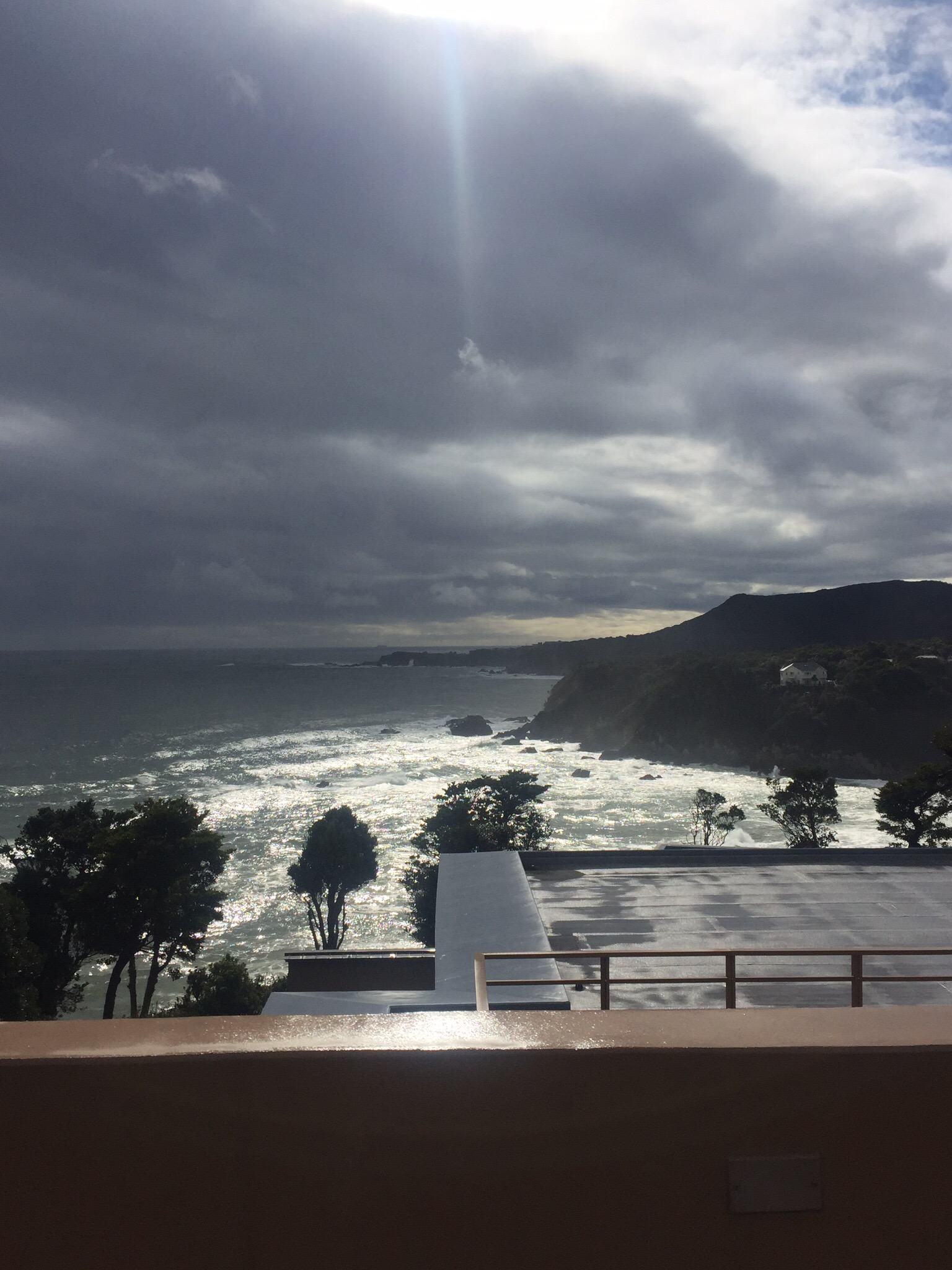
  As I write our first blog from Japan we are sitting in our traditional robes looking out at the stormy sea at The Earth resort.  

We began our trip by flying out of Vancouver to take advantage of the Canadian exchange rate to buy our airline tickets.  By staying over the night before at an airport hotel, it made our day of flying very calm.  Everything was done and all we had to do was eat breakfast and take the shuttle to the airport. 

The most difficult part was getting all of our luggage from the shuttle drop off to check-in.  This isn’t our usual “pack light” adventure.  We are skiing at the end of the trip after two weeks of touring in a winter climate.  But we made it with plenty of time to spare and the Vancouver Airport is quite nice, with an artificial forest stream in the waiting area and a large aquarium. 

 Jim was excited to fly the Boeing 787 Dreamliner with its large windows and better air circulation.  The only oddity was that the reclining seats in our flight’s Business Class didn’t lay down flat (as they did in the two Delta Airlines 777’s we have been on).  Instead, our seats almost reclined flat but then left us at an angle something like Frankenstein’s table in the old movie.  Still we were able to sleep for a few hours of our nine hour flight to Tokyo.

The service from Japan Air Lines (JAL)  couldn’t have been better and I transitioned to my  Japanese cultural experience by ordering the  

 Bento box for dinner which was really quite tasty for airplane food.

After landing our first experience in Japan was fast and efficient.  The luggage came right out and customs was a breeze. Interestingly, Japan takes finger prints and photos of all foreigners.  We were not offended.

Our driver met us, sweeping us and our luggage to his car.  Our 2 large bags, 2 small bags and massive ski bag was on a cart.  We panicked as he approached the escalator only to learn that the clever Japaneese have created carts that adjust so that they can go up or down escalators without a problem.

Once again we chose a wonderful travel agent to plan our trip and we weren’t disappointed at our first quick stop in Tokoyo. The staff took care of all our needs including helping us ship our ski bags on to Myokokogen and our larger bag on to our Kyoto hotel.

After getting our bags settled we headed out for a nearby walk to see a bit of downtown Tokyo. Our travel agent gave us lots of walking and touring suggestions.  This evening we headed out to find a local SIM data card for our IPAD. On the way we walked past the beautifully lit Tokyo International Forum  


 building built on the former site of  Edo Castle.  Bics Camera store was a hopping potpourris of technology and although no one spoke English well and we don’t speak Japanese at all, we all spoke technology and quickly procured a SIM card which the staff tested and is working beautifully.

From there we went to a nearby building that offered a variety of international restaurants.  We settled on some Tapas because they had a no smoking section and made it through a meal and the walk back before collapsing in bed.  Other than the large number of smokers, the Japanese are very clean — there is no graffiti, almost no litter of any kind anywhere, and yet there are almost no public garbage cans.  On our 90 minute drive from the airport to downtown, we didn’t see a single dirty car or even a dirty truck!

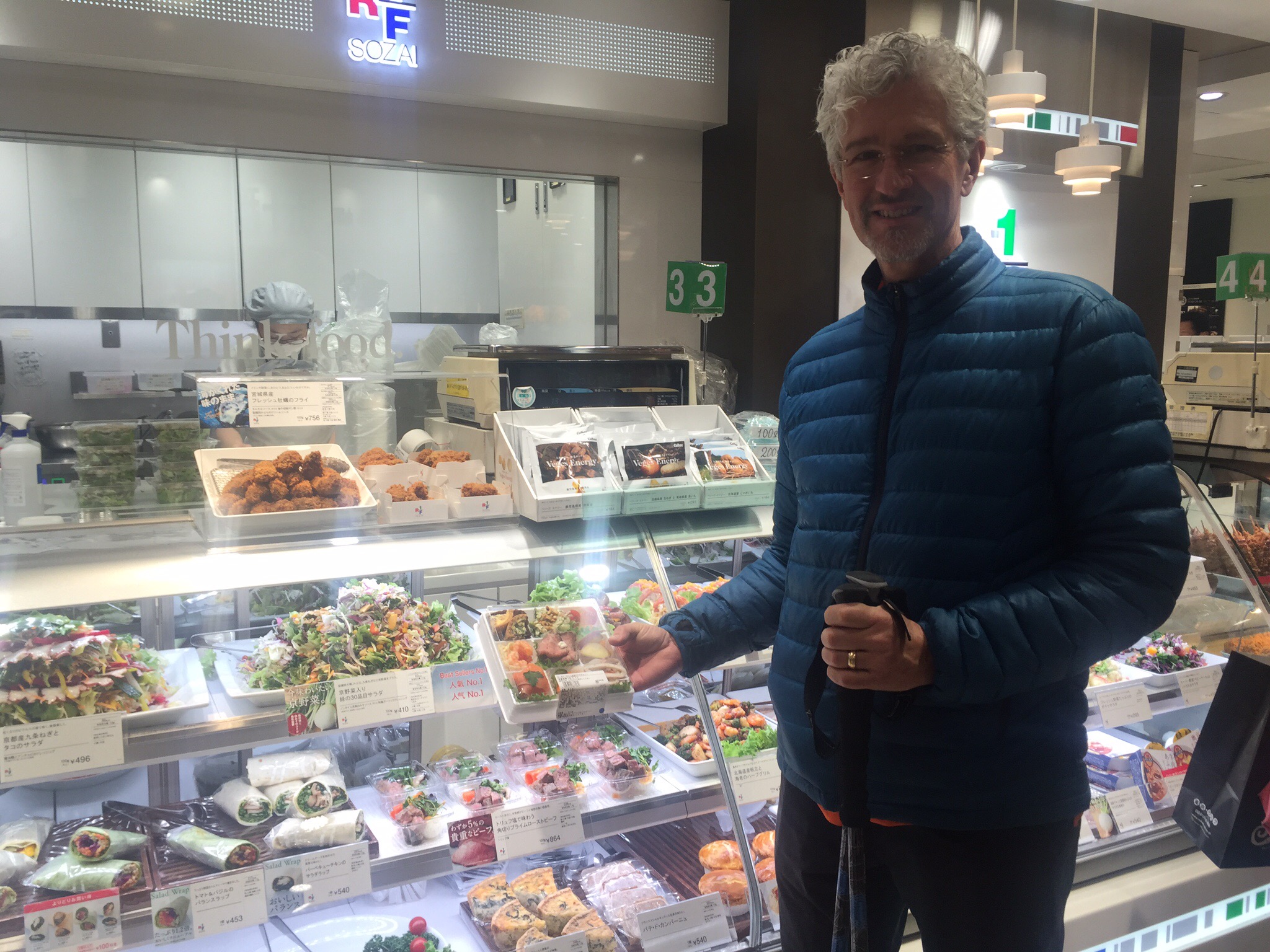
Breakfast was lovely and our job was to take a walk to Dimelers department store and their food section to procure Bento boxes for our train trip later that day.  

  The variety and beauty of the culinary selections was truly overwhelming.  We decided on a Japanese style bento box and a salad for our travel food.

Back at the hotel the staff was waiting to walk us to our train.  Although we felt a bit lazy and self-conscious by this service, we thoroughly enjoyed the stress-free transfer.

  The trains in Japan are exceptionally clean, comfortable, smooth and fast, and run like clockwork, especially the “super express” bullet trains.  We boarded and left promptly only carrying our overnight bags as instructed.  Jim loves trains and this trip will be full of train travel.

Our excursion southwest along the coast took us past Mt. Fuji, lasted most of the afternoon and included one transfer, which thanks to detailed instructions we navigated on our own without a problem.

After 2 mores shuttles (one big and one small), along a surprisingly narrow and winding coastal road (and by many oyster operations) we were welcomed with Japanese bows by the staff at “The Earth” healing waters resort.  Our room is amazing, the views of the ocean and rugged coastline are vast, and the food is artistic and scrumptious. 


Originally, we were supposed to go for a train excursion on Monday to a local important shrine.  But we decided instead to just stay here, enjoy the healing waters and watch the big wind storm that blew in overnight, raised the surf to over ten feet of loud crashing waves, and then gave way to a sunny late afternoon. 

We ended our day yesterday with a facial for me and a shiatsu massage for both of us.  Here in Japan facials include massages, because your face can’t relax if your body isn’t relaxed.  The shiatsu massage was very different.  Two people swept into our room pointed to the bed where we both told to lay down with our clothes on.  They then proceeded to press very firmly on every pressure point in the body. They never touch you directly, there is always a cloth between us and them. It was different, but surprisingly relaxing after it was done.

Very few people spoke any English here and we were the only Americans.  But we felt totally welcomed and well cared for at all times. Here is a young lady, Shinba, that practiced her English with us while we were here and was delightful.  She lives near Mt. Fuji but works here and stays in the staff housing. We are soon to be Facebook friends!

 Today we are on the move again, this time to Kyoto.   We send you all our love and hopefully a little of the “healing waters” Japanese energy we have experienced so far.

We end our first blog with a beautiful sunrise from this morning. 


Fun with James and Jasmine & our change of plans!

After leaving Blind Channel we cruised the short distance to Dent Island. Dent is back in the land of cell service and as the dots appeared the messages came in and we got the news that Jim’s dad was in the hospital. We decided he should fly back and we quickly arranged for a seaplane flight home for him that evening.

Jim’s dad got better during the day and a half Jim was with his dad, so Jim decided to fly back to the boat for our preplanned time with Jasmine and James. However, after Jim returned, his dad became worse again so we decided to head home early. Dick is back at Mirabella now and is doing better. But we wanted to share this last blog post with you.

While Jim flew to Seattle I stayed at the Dent Island marina and was lucky that our friends Stan and Mary Harrelson happened to be there too, so I had a great dinner with friends. Joining us at the table was an interesting collection of boaters and fishermen. I met a lovely couple, Richard and Michelle Glickman, who own Gorge Harbour. They were celebrating their anniversary at Dent. Since I was alone, and determined to catch a fish, Richard offered to take me fishing (this gave Michelle the opportunity to sleep in).

I warned Richard that my fishing success rate was dismal. Despite that, he took me out, gathered a yummy breakfast for us, and gave me a great fishing lesson. Although our summer of heat and sun has been a constant this trip, my fishing day was cool and drizzly. Richard was a great teacher, and we did catch a couple of salmon, but they were too small to keep. Our only keeper was a medium sized rockfish, which later became yummy fish tacos,DSC_7533 but no large catch for us. Ah well. We shared great conversation, I learned a lot and I look forward to seeing Richard and Michelle again.

We got back to Dent just in time to meet Jasmine and James arriving by seaplane. Although it was cloudy they had a fun seaplane ride. “Just a little scary,” James said of the end of the flight.  After they arrived we headed to lunch before taking a nap.

DSC01311

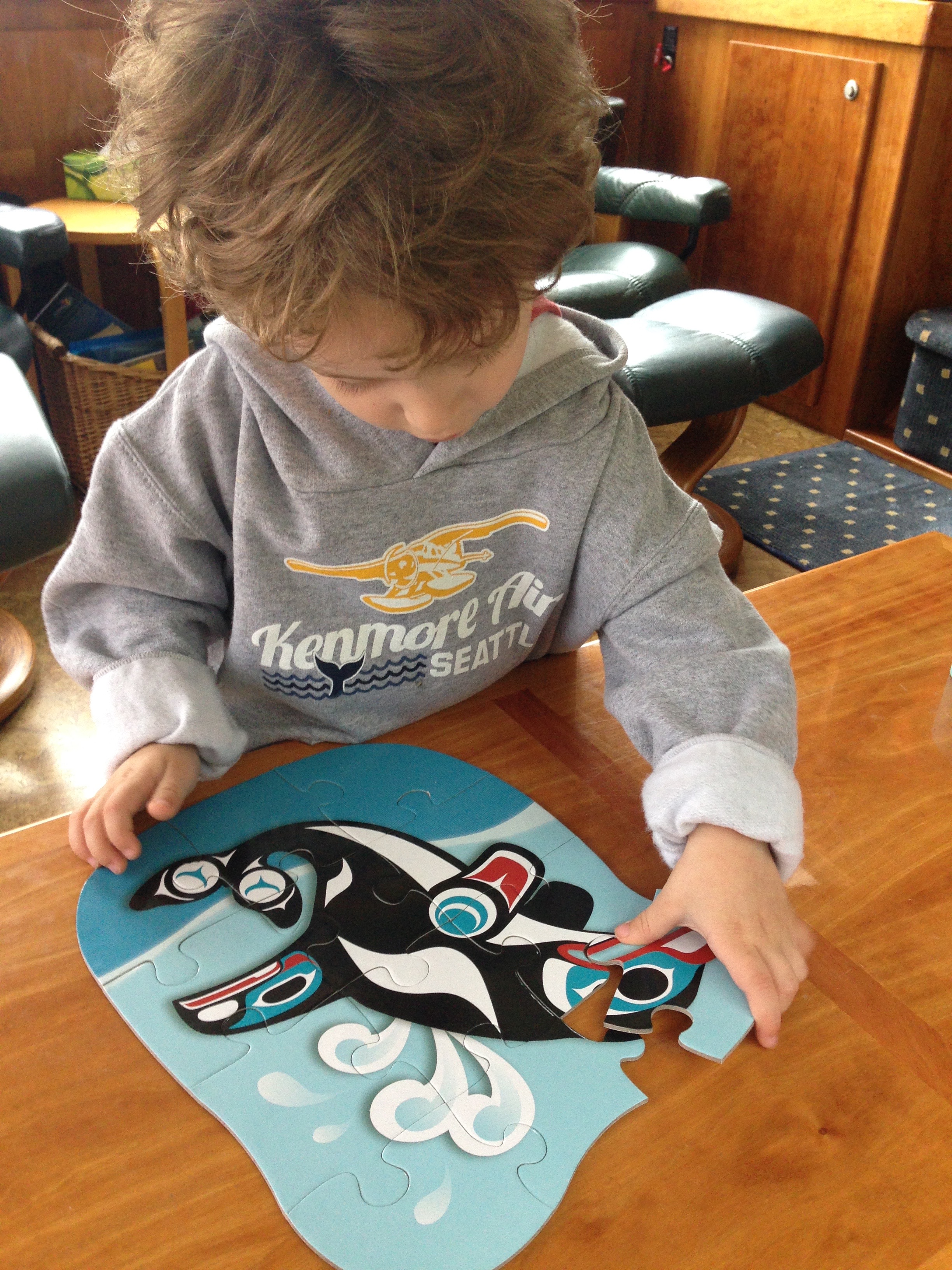
Because it was a rainy day we spent most of our time playing in the boat. But, Grandma was prepared! I purchased a great jigsaw puzzle at Blind Channel that was perfect for James. IMG_3618Although it was rated 3+ he rose to the challenge and really enjoyed working on the puzzle repeatedly over the next few days.

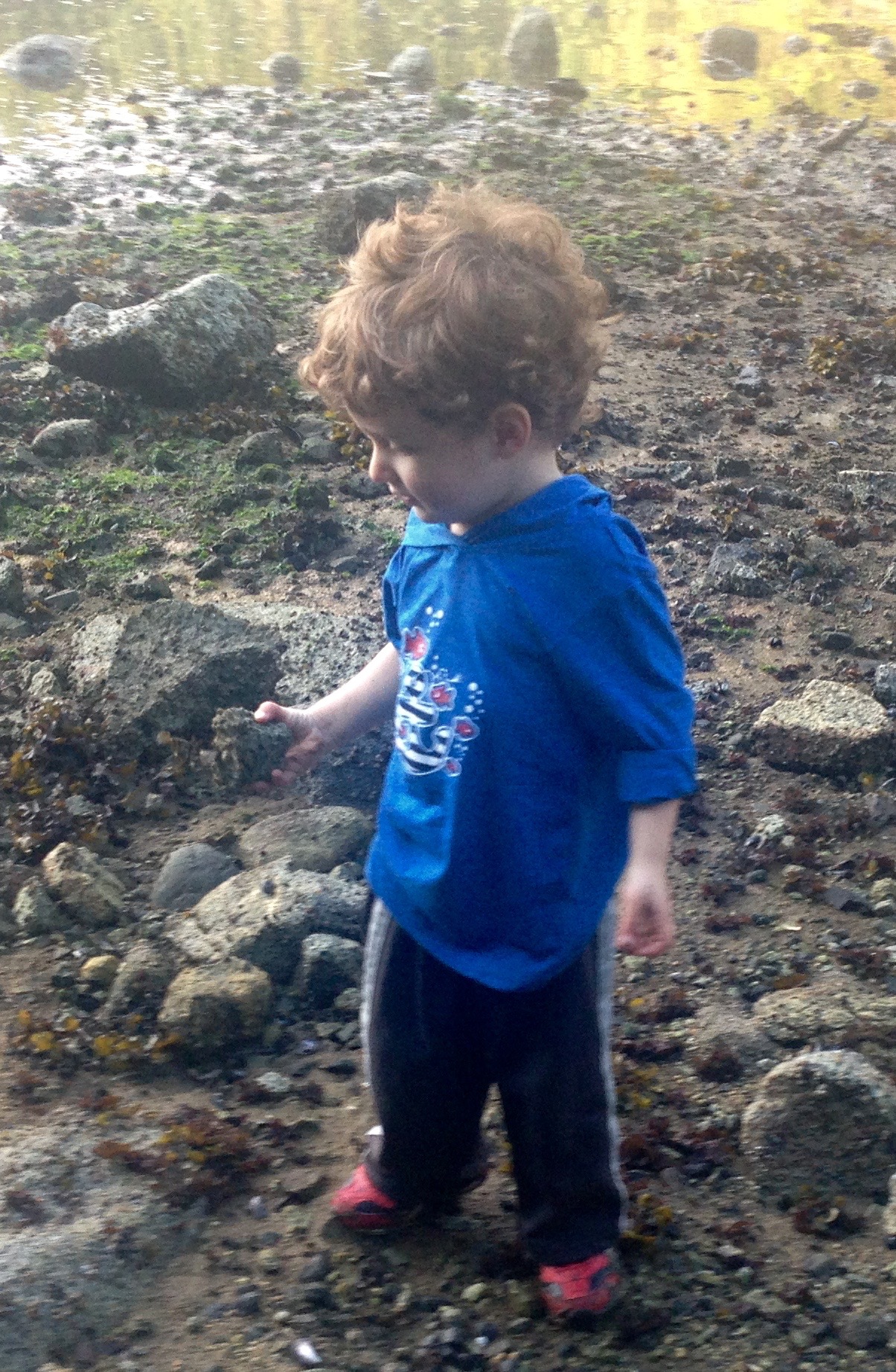
After a good nights sleep we woke up, enjoyed a hardy breakfast, some rock throwing IMG_3623and then all worked on our boat chores preparing the True Love for the Captain’s return and our cruise south.

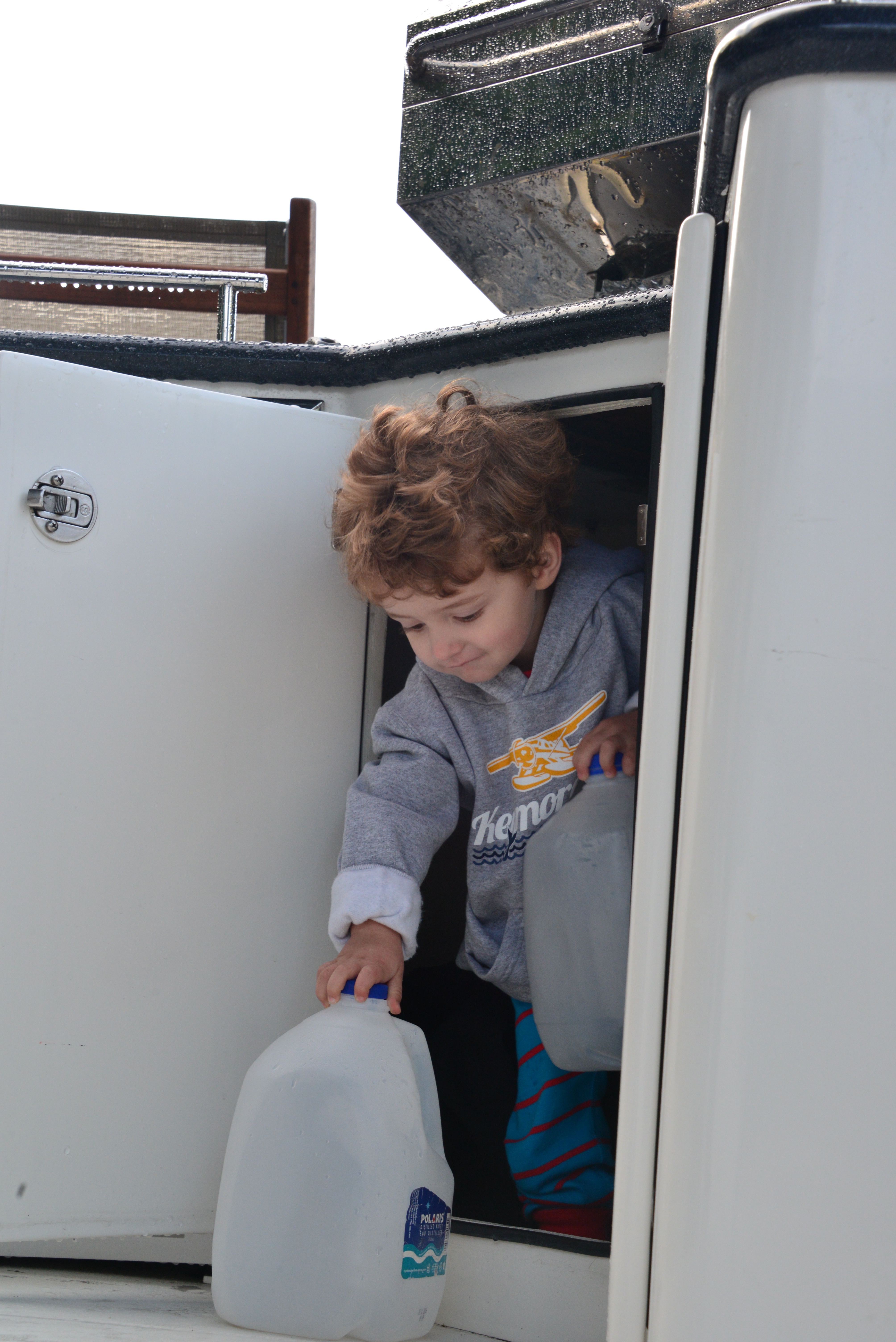
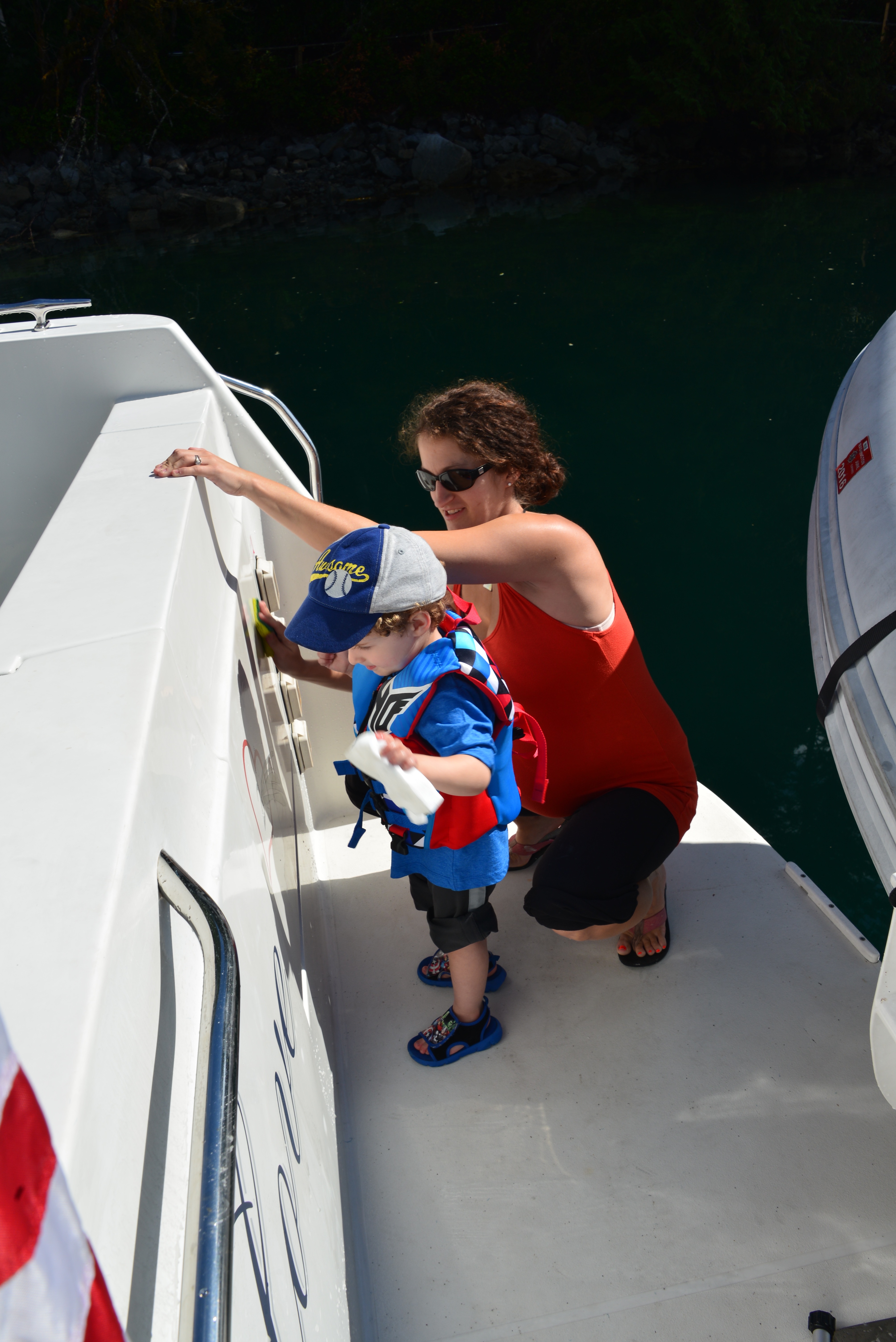
James was a big helper, filling the water tank and washing the boat.

DSC_7350  DSC_7372DSC_7364

The Captain arrived at noon and we headed out. The second mate fell asleep almost immediately, exhausted from all his chores,DSC_7462 but we heard on the radio that there was a pod of orcas just north of Dent. So we turned around and headed to see them. Jasmine had never seen orcas from the boat. The orcas positioned themselves perfectly to feed on the salmon as the current funneled them through the narrow channel. We counted over 12 including some really big orcas.DSC_7504

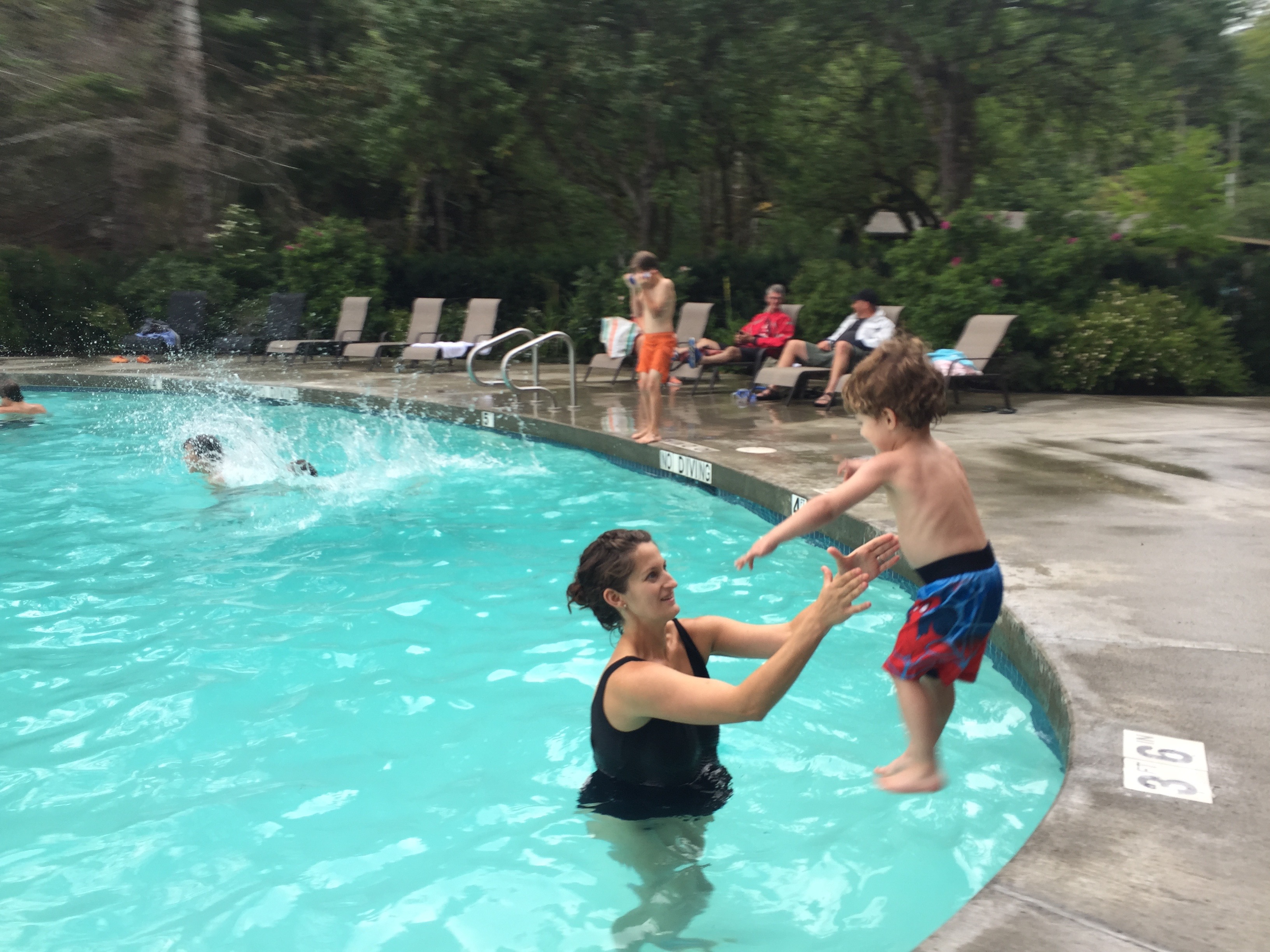
Because we decide to return early to Seattle we changed our plans to take Jasmine and James to Pendrell Sound and instead headed for Gorge Harbour. Richard and Michelle have done a great job with the area and James really enjoyed the heated community pool.IMG_5288

One of our favorite memories of the trip was sharing Mary Poppins with James for the first time. We watched the first half on Saturday night while anchored in Gorge Harbour and James was mesmerized.DSC_7586

From Gorge, we cruised on south to one of our favorite stops: Egmont. It worked perfectly as a stop on our way to Pender Harbour, where Jasmine and James had rescheduled their flight back to Seattle for Monday.

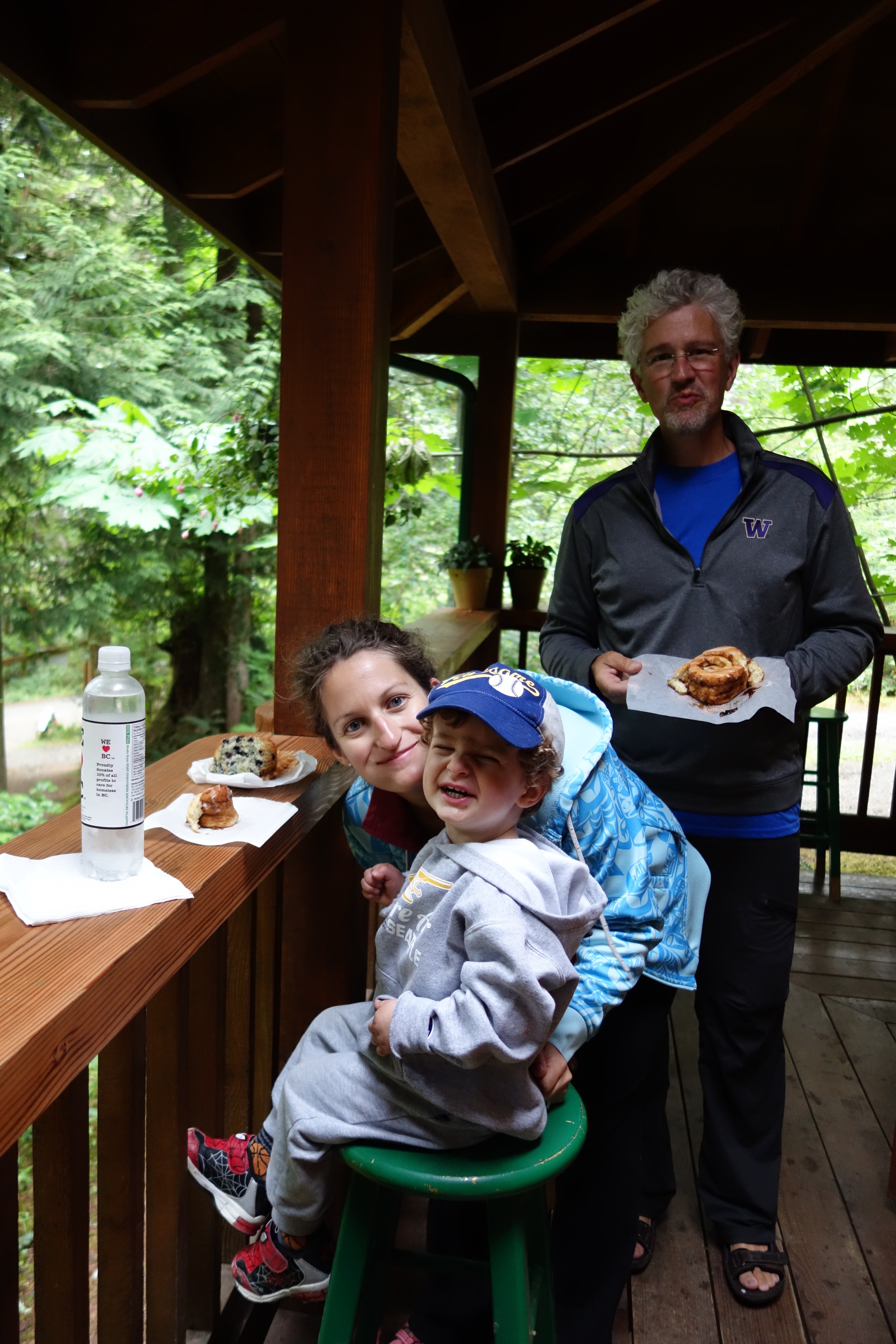
James was excited to see the end of Mary Poppins, which we saved for after dinner. The day ended with a beautiful sunset and moonrise. DSC_7602The next morning we took the tender out to show Jasmine and DSC01305James the Skookumchuck Rapids DSC01306 and then took a walk to our favorite little bakery in the woods. James enjoyed a yummy, mini cinnamon roll and ran around the grounds and the deck. DSC01318 DSC01313 DSC01312Jasmine, Jim and I also enjoyed the yummy baked goods and breakfast sandwiches while we watched James play.

After leavingIMG_3625 Egmont, Jasmine and James napped during the cruise to Pender Harbour, where they awoke rested and ready for their gorgeous seaplane flight home.DSC01325 DSC01332

Even though it was 2:30 PM, after plotting our course and estimating our time of arrival, we decided to take advantage of the long days and temporarily calm winds to cross the Georgia Strait. We then cruised past Naniamo to a new stop, Pirates Cove in the Southern Gulf Islands.

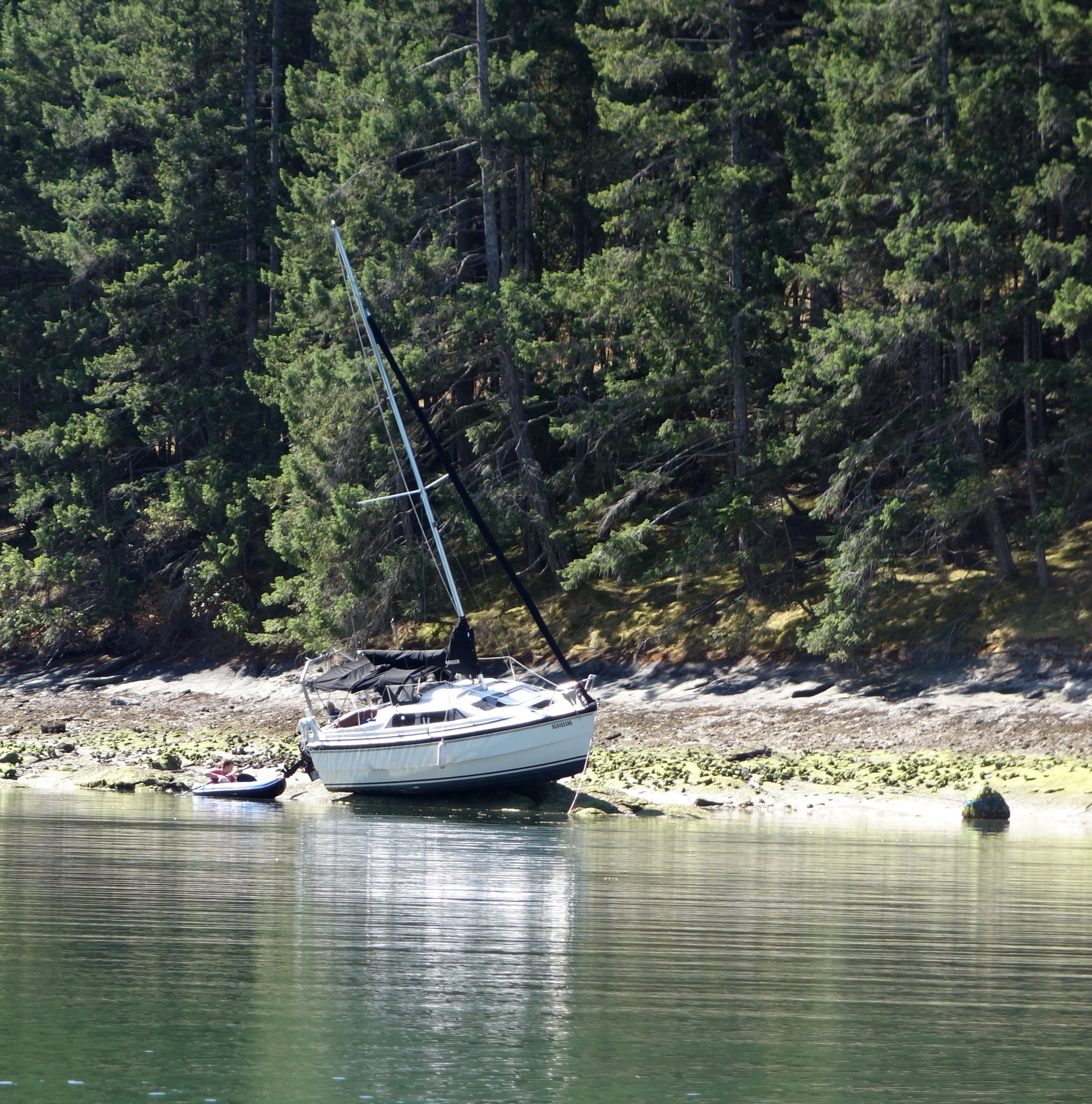
It’s sweet and funky; a shallow little anchorage with shore ties to keep the boats from bumping into each other. Our 57 foot boat was a little oversized for the area, but it was late and we made due. DSC01358 (1)Because it was such a low tide, the Captain was a bit concerned with our position and we had to reset the anchor and the shore tie.DSC01347 The next morning it was clear that our concerns were valid. Our clearance to the bottom was under 3 feet. But a fellow boater had totally miscalculated and was high and dry.

The island surrounding the moorage is a marine park with lots of trails so our days started with a fun little hike.DSC01363 DSC01354 The area is lovely, but unfortunately it was really buggy. Usually, I’m protected by the Captain’s natural appeal to the biting critters, but not this time. Jim didn’t get any bites, because he was protected by long pants and a long-sleeved shirt. I was munched. Over 20 bites! Oh well!
From Pirates Coves our cruise south took us through calm waters and sunny skies all the way back to the USA and to the little town of La Conner. I used to be the person at the helm when docking the first True Love because I couldn’t jump from the high stern to the dock to secure the lines. But since we have owned the Navigator I hadn’t practiced docking. It became clear after we thought I might have to Captain the boat back this trip, that it was time for me to practice docking, “just in case.”

It’s tough for the Captain to give up the controls, but we switched roles, Jim on the lines and me controlling the helm. It’s a little tricky maneuvering in the strong currents of the channel in La Conner, but the Captain was pleased with my docking. I must say the True Love maneuvers beautifully. The next day I took the helm again at the nearby fuel dock.

Because the low tide and the currents we waited until noon to head to Seattle so it was another long day heading home. We were treated to beautiful weather once again and enjoyed watching lots of navy aircraft flying in to NAS Whidbey for fleet week.

As we approached Seattle a skywriter was practicing for Seafair.DSC_7615

We are home now for a while. Our next adventure will be the birth of our second grandchild in late August or early September! Stay tuned!

Until our next adventure!

DSC_7634

The Captain and First Mate of the True Love.

Boldly Going Where We Have Never Gone Before


IMG_0282          The last time we were in the Broughton Islands was in 2011. The weather was awful, time was short, and our boating skills were limited.

This trip the weather was spectacular, we are more confident boaters and we took full advantage of the southern area of the Broughtons.

Because the weather was so nice this year there were definitely more boats cruising and sailing the area than four years ago, but it didn’t feel “crowded” at all. The Broughtons include fjords that stretch for 50 miles, plus channels, bays, hills and mountains that are 99.99% undeveloped. There are very few houses, almost no roads, and when people travel, they travel by boat, seaplane or (rarely) helicopter. As the Captain said: “the physical world here is divided primarily into only three things: the sea, the forest and the sky. And on that beautiful backdrop, there are eagles, osprey, dolphins, whales and, at low-tide, black bears and grizzly bears looking for crabs and clams on the exposed rocks and mud flats.

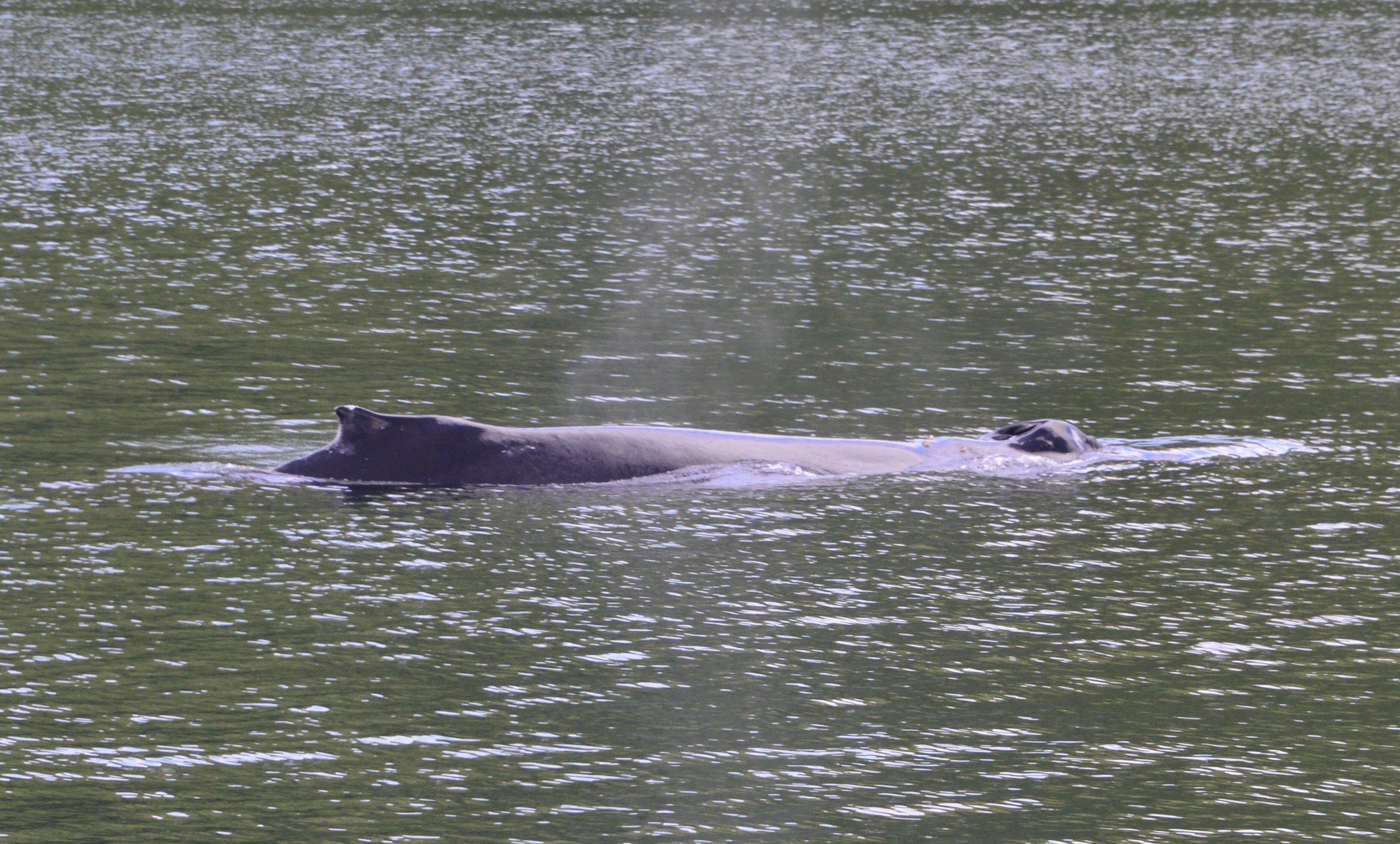
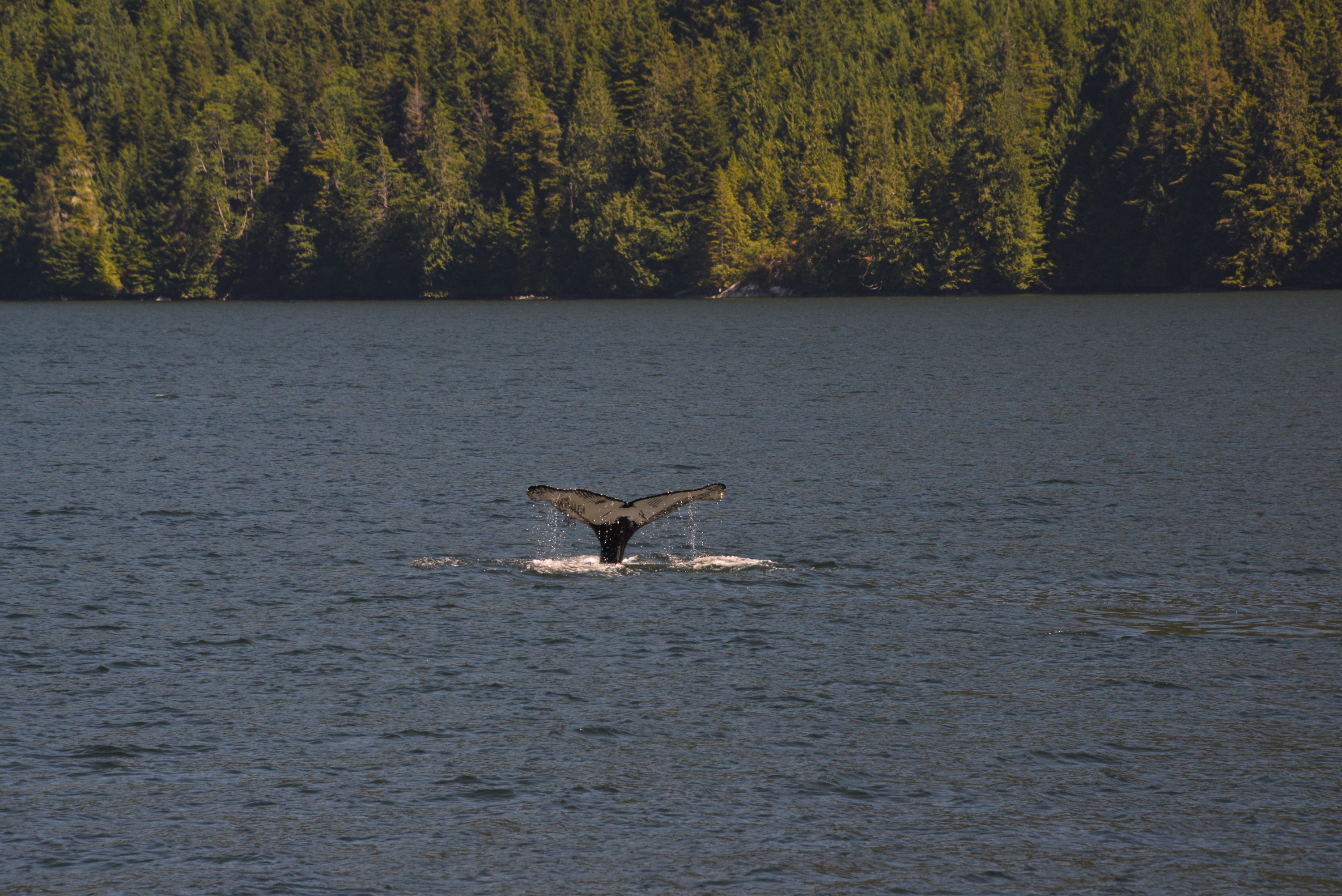
As we cruised up Tribune Channel, we encountered our first whale of the trip.IMG_0284 We’re pretty sure it was a humpback whale so we named it “Wanda.” Little did we know that we would have the opportunity to spend a lot more time with Wanda only a few days later, and only a few miles away.

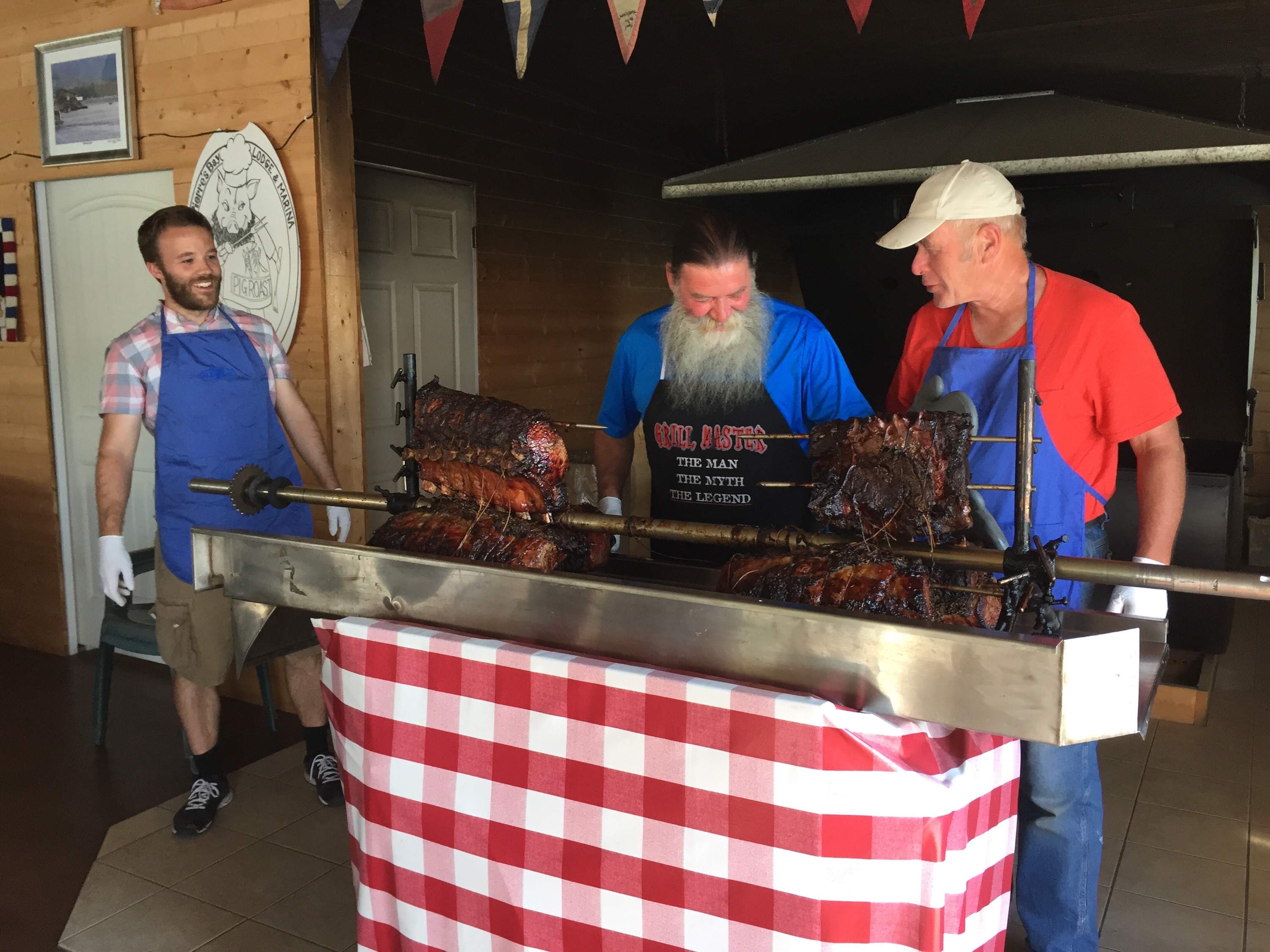
On our second night in the Broughtons we decided we needed to stop someplace with internet so that meant a night at one of the wilderness marinas.  So we stopped in at the Echo Bay Marina and got the last open dock space just in time to share the marina’s amazing prime rib dinner with about 70 other boaters.  

IMG_0301IMG_0298  The owners are truly lovely people. The internet was very limited, but that’s the case almost everywhere in the Broughtons. Cell phone service is also very limited.

Amazingly, we happened to sit down for dinner with two retired gentlemen who were in the area fishing – one from Whidbey Island (near Seattle), and the other from Pasco in Eastern Washington. After talking for a bit, we discovered that the one from Pasco grew up in Portland (Oregon), where Jim’s Dad grew up, and that his grandmother’s maiden, name was Spady! She was related to George Spady, who is Jim’s great uncle, so its very likely that we shared a meal with Jim’s cousin, who Jim had never met previously, at dinner. What a small world! Jim and his cousin exchanged contact information and plan to meet again later this summer.

Despite our desire to get away from it all we must admit being severed from the collective is very unsettling. While we could get, a satellite internet service for our boat, it’s ridiculously expensive so we’re not planning to do that anytime soon. So we do what we can when we get occasional cell phone service and also check in when we can when we stop at a marina.

We realized pretty early on this voyage that we were only going to get to do a little bit more of this vast area than we did four years ago. We needed to pick one of the many long channels to explore this time, so we chose Mackenzie Sound and the Little Nimmo (pronounced “Nee-mow”) Bay Resort. Over most of its history, the Little Nimmo Bay Resort has been available only to people staying at one of the cabins at the resort. But recently the resort opened up its simple but beautiful facilities and restaurant to boaters on a reservation-only basis. It seemed appealing in the guide book, and we were able to get a dinner reservation for Saturday including an afternoon massage and dinner.

Cruising to Nimmo Bay took us to an area of the Broughtons that we had never visited before. As we motored towards the resort, the mountains and constantly changing channel views were enchanting. We passed dolphins and eagles as we cruised, finally passing through Mackenzie Sound and the narrow, shallow entrance to Nimmo Bay.

This is a magical little spot where the resort owners raised their children, schooling them at a nearby First Nation village (Hopetown) that is now almost completely abandoned. One of those children is now the grown man who is running the resort. He lives at the resort with his wife and children, carrying on the family business.

After anchoring and taking a tour of the resort from Brianna (who has worked there for 9 summers) we took the dinghy out to explore the far end (head) of Mackenzie Sound where we discovered that the salt water there was a very comfortable 76 degrees! I couldn’t wait to swim. But I was concerned I couldn’t get back on the dinghy without a ladder. After searching through the dinghy the Captain magically found a little ladder that worked perfectly.
So I went swimming in the salt water of the Broughtons!

          That evening we enjoyed a yummy light dinner of caprese (tomato and mozzarella) salad and some pot stickers before heading out on our dinghy for the best sunset we have ever shared on the True Love: 360 degrees of colorful sky in every direction, beginning with golds and ending with deep reds and pinks.DSC_6918

The next morning we headed out to catch some fish and photograph a bear on the beach. Both evaded us but we did take time to play with the dinghy’s new chart plotter and fish finder. The Captain loves this new piece of equipment because it allows him to feel safe as we quickly explore nearby shallow areas at 20 MPH, something the mother ship cannot do.

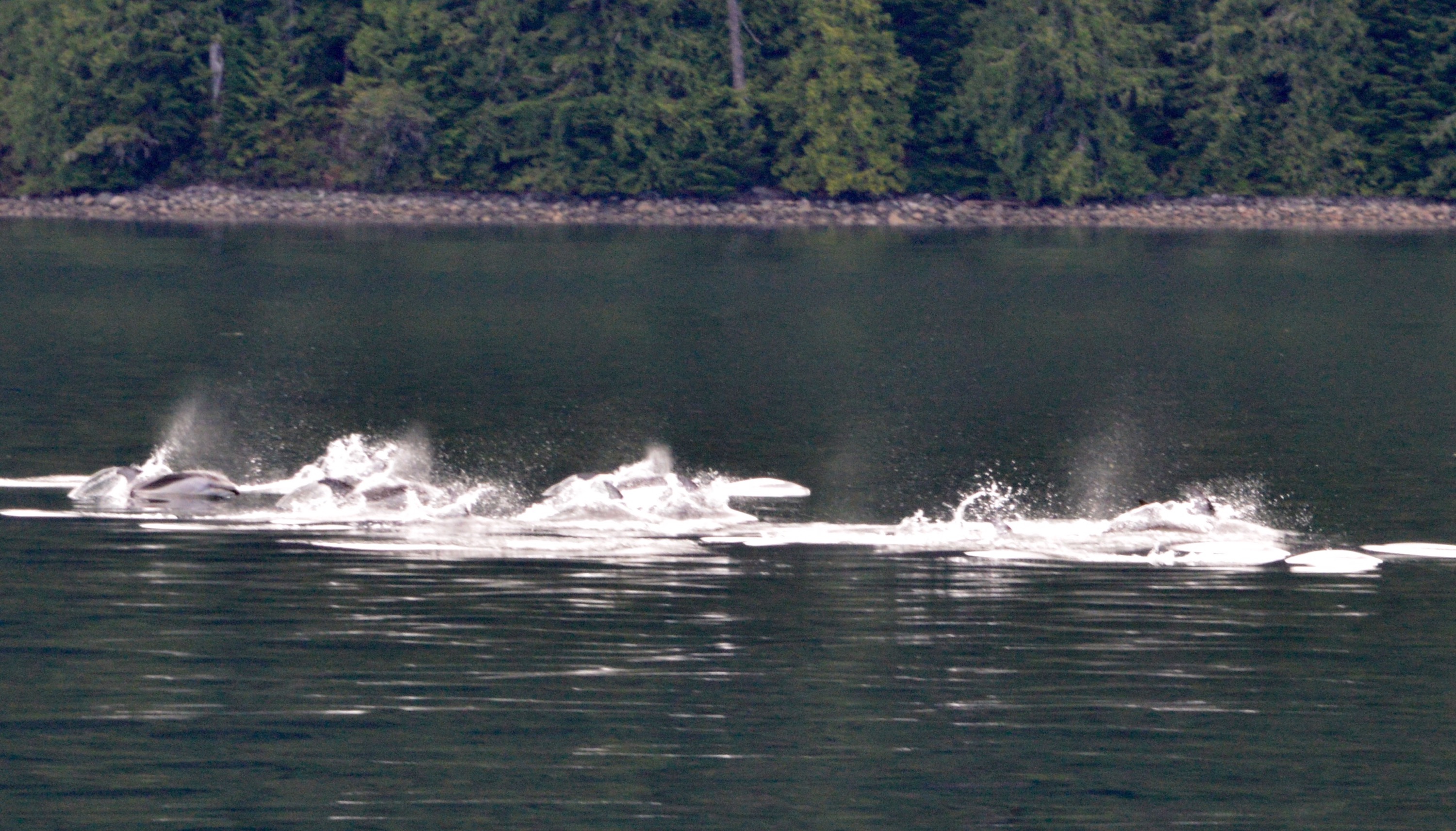
Although the fish and bear were elusive we did have a fantastic encounter with a pod of about 15 dolphins at both ends of Mackenzie Sound. That may be why we couldn’t catch any fish! We stopped for our picnic lunch during our second dolphin encounter and just watched the dolphins play and fish at the narrow, rocky entrance of Hopetown Channel (which was too small at low tide even for our dinghy to pass). According to the manager of the Nimmo Bay Resort, every year at least one large boat ends up on the rocks in this channel because they don’t review their charts carefully and don’t realize their mistake until it’s too late.

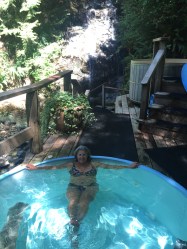
img_0297Our afternoon at Nimmo Bay was spent reading, soaking in the resort hot tub by the waterfall and getting massages. IMG_0296


  Our evening was spent with 4 other guests enjoying a delicious wilderness gourmet meal and ending with a gathering by the dockside fire pit. There was a father and son from Westchester, NY (small world – that’s where I grew up), and a husband and wife from Victoria.IMG_0304

You would have thought after such a full day and a large meal, sleep would come pretty easily. After about an hour of reading when I was still no closer to falling asleep, I decided to go to the top of the boat and look at the stars. The night sky on the water is iffy. Although there isn’t any light pollution, there is usually a marine layer of clouds. But that night was an exception: the stars were glorious and I saw 4 shooting stars (allowing 4 wishes) and a variety of satellites before I headed down to sleep.

Little Nimmo Resort has a reputation for not being very welcoming to boaters, but they couldn’t have been nicer to us or given us better service. They definitely are ambivalent towards boaters if you don’t make a reservation in advance. But we would highly recommend the resort to anyone who can get a reservation. This isn’t a place where you can “drop in” and join the other guests for dinner at the last minute

Thompson Sound: whales, dolphins, bears, Trapper Rick and his new guide, Rees Wilson

Traveling south from the Broughtons back to Campbell River and Desolation Sound is much more comfortable when the typical NW winds blowing down Johnstone Strait are “light” (15 knots or less). Unfortunately, the typical NW winds blowing down Johnstone Strait are “Gale” (35+ knots) or “Strong” (20+). On Sunday, the wind forecast for Johnstone Strait for Monday morning were “light” so we decided to make our way back to the south part of the Broughtons so that we were set up to enter Johnstone Strait on Monday morning. On our way we hoped to see a bear on the beach looking for crabs or clams at low tide.
We stopped first at the Kwatsai Bay Marina to check it out and use some of the best internet in the area so far. It’s a really pretty little bay, surrounded by high mountains, and run by a lovely family although the docks could use some newer planks. The marina was fully reserved, but there was an open spot at the dock where we were allowed to tie up for a quick visit. It’s definitely a good stop for the future. 

 At Kwatsi we got a much-needed Grandparent fix by trading quick text videos with James before leaving to find our anchorage for the night. Based on descriptions in the Waggoner Cruising Guide (our go-to reference text), the Captain decided to investigate the head of Thompson Sound, about 10 miles away. Although the waters of Thompson Sound are so deep that there is almost no place to anchor, the cruising guide said there there was a small area at the very head of the Thompson Sound where a few boats could anchor. 

So began our magical adventure in Thompson Sound. I decided to take a quick snooze so to recover from my late night star gazing the night before when Jim spotted “Wanda” the Whale breaching in the middle of the Thompson Sound, about a mile in front of our boat. 


 We spent the next hour watching Wanda, becoming amateur biologists by counting the number of breaths between each of her dives. The typical pattern was ten breaths: 8 lounging on the surface before bowing her powerful body on the 9th and then diving down strongly after the 10th, showing us the pretty white underside of her tail (which is how we identified Wanda as a humpback whale). Wanda typically remained submerged for 5 minutes (presumably searching for food) before repeating her routine.

The head of Thompson Sound is a glorious place, surrounded by mountains and including the Kakweiken River, where salmon run and bears hunt salmon. The Captain and I had not seen a bear yet, but this was prime bear habitat, so we were hopeful.

The head of the sound had one boat anchored in the little area where anchoring was possible, plus a small shack and a little dock about a mile away. The depths shown by our depth sounder were very different from those on our charts (much shallower in the areas closer to the mouth of the river, and much deeper in the areas farther away. Later we would learn that there was a huge rock avalanche last year that had really changed the river, the shoreline and the nearby bay.

After anchoring a kayaker paddled our way from the small shack and the dock. He introduced himself as Rees Wilson and said that he and his boss had the “wilderness license” for the area and offered bear tours. He seemed like a sweet young man but his first price was much too high for us. After paddling back and conferring with his boss (he referred to him as “the old man”) we soon negotiated an acceptable price, and set the time for our “tour” for the early evening when it would be cooler.
Now we assumed Rees and his boss would be taking us on a boating trip up the river. We assumed wrong. At the appointed time we took our dinghy to their dock where we were introduced to the “old man”: Trapper Rick. Now Trapper Rick is lanky man who looks like he has been in the Canadian outback for decades. It turns out that our young kayaker, Rees Wilson, was training with Trapper Rick to become a licensed “bear guide”. In Canada you must first apprentice with a guide for at least a year before you can take the official bear guiding class. Although this seemed backward to us, we assume the government is just trying to reduce the average class size in their bear guiding school.

Assuming our adventure used a boat and not our legs, we wore our “chako” hiking sandals, not hiking shoes, and Jim didn’t bringing his hiking poles. Nevertheless, we just went for it when Trapper Rick suggested we just put on some bug spray and follow the two of them up the trail from the little dock to a truck that was apparently parked about a half mile away. The trail was once a road, but the road was destroyed by last year’s rockslide, which also washed out a bridge and other parts of the road.

Truck? Huh?

At this point we guessed that we would be taking a truck to a boat that was on the river upstream, and then using the boat to go see the bears. Wrong again.

Along the trail I turned around and looked at Jim smiling and mouthed “OMG”. 

Rees was carrying a can of gas. It turns out that was for the old, very used truck. Because Rees and Rick had no funnel, the siphon method was used to put a couple of gallons of gas in the truck before we drove off into bear country.

As we began our drive up the logging road, we learned that we were Rees’s first official clients during his bear guide training

We were honored to be Rees’ first clients, but glad that Trapper Rick was in the truck with us.

  Trapper Rick gently instructed Reese from the back seat as we made our way up the logging road where we had our first encounter with a grizzly bear: Emma or just “Em”. Rick had named most of the bears over the years. Emma responded to Rick talking to her from the truck, window down, which really made Jim nervous. But, Rick said not to worry, Em could break into the truck easily regardless of whether the window was up or down.

Grizzlies are big bears, even from a distance, and Emma was a female and thus smaller than all of the males.
The logging road abruptly came to an end where an old bridge across the river was now missing. So, we got of the truck walked on a trail followed the river upstream. This river meanders up the mountainside, with occasional small waterfalls. The truck ride took us 600 feet above sea level. 
Once again we were walking a trail, in a line, late in the day in Grizzly country, just Trapper Rick, Rees, me and then Jim. We learned that Trapper Rick, thank God, carried a big 45 caliber handgun and, less comforting, that Rees had a big can of pepper spray. But we were all having a good time and Trapper Rick and Rees certainly seemed confident in their abilities and leadership.

Jim later told me that he was thinking about the old saying: “you don’t have to run faster than the bear, you just have to run faster than the people you’re with” as we walked the trails. Unfortunately for Jim, even though Trapper Jim had a bad leg, he still was pretty fast for an old guy, so Jim felt he was the definitely the slowest in our group. Of course, Jim was counting on Trapper Rick to take on a bear with his gun if needed while we made our escape, giving Jim a short lead at least in getting back to the truck! I never had these thoughts because I assumed I was at worst the second fastest in our group.

Now we thought: it must be time to get in the boat. And there was a boat! 

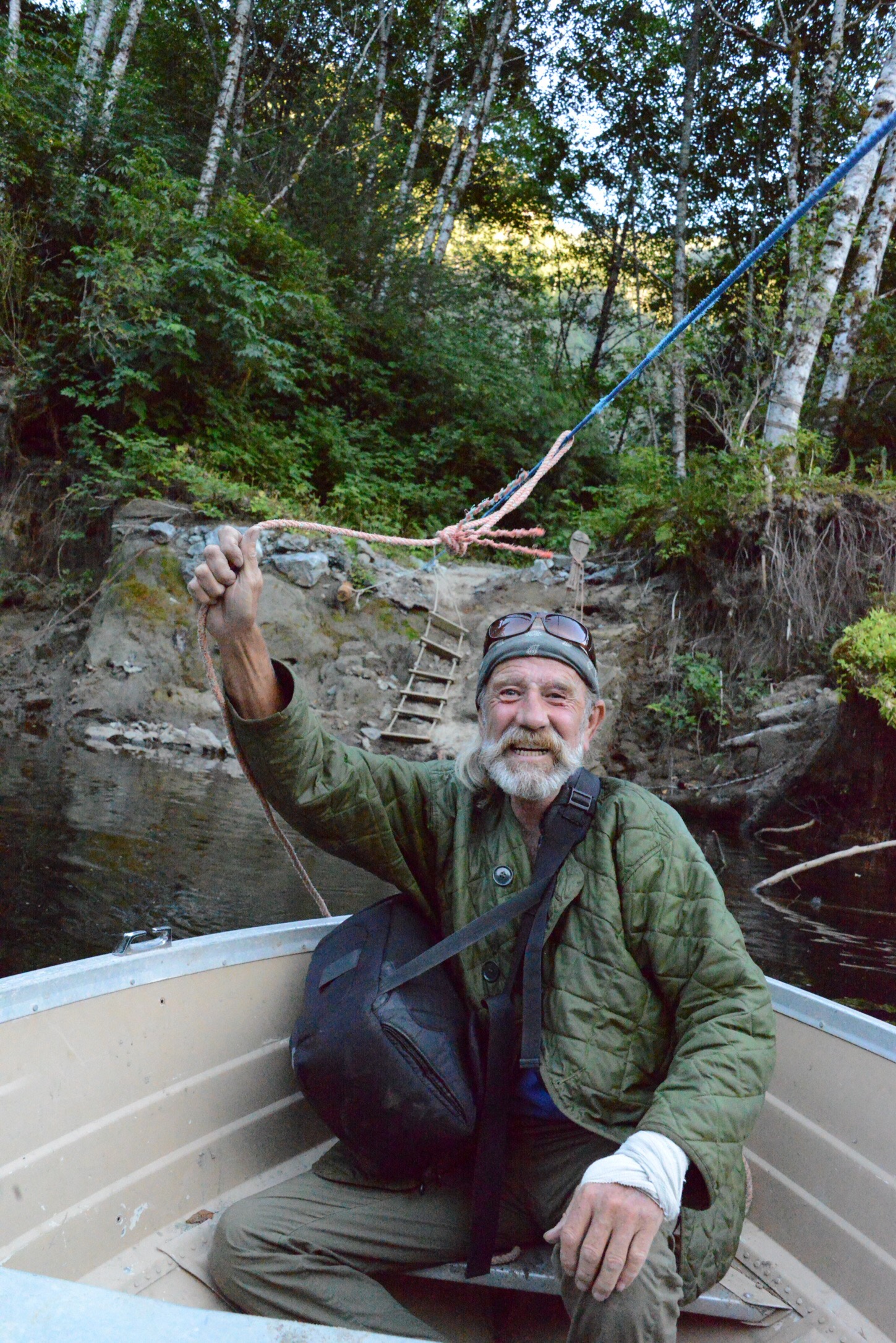
  Unfortunately, it was a sad little rowboat, with no engine or even a paddle, at the bottom of a steep embankment. The old boat was tied to a rope crossing the river and was used like a small river ferry in old westerns movies, where the passengers pulled the rope to traverse to the other side.

  
OK! 

So we climbed down the embankment using a ladder to reach the lower riverbank. We got into the old boat and Rick and Reese pulled us the 30 yards across the river. Again, this all happened on a salmon river in grizzly bear country. Let’s just say that if we had seen a grizzly bear there, it would have been very intimate, but also a bit unnerving.

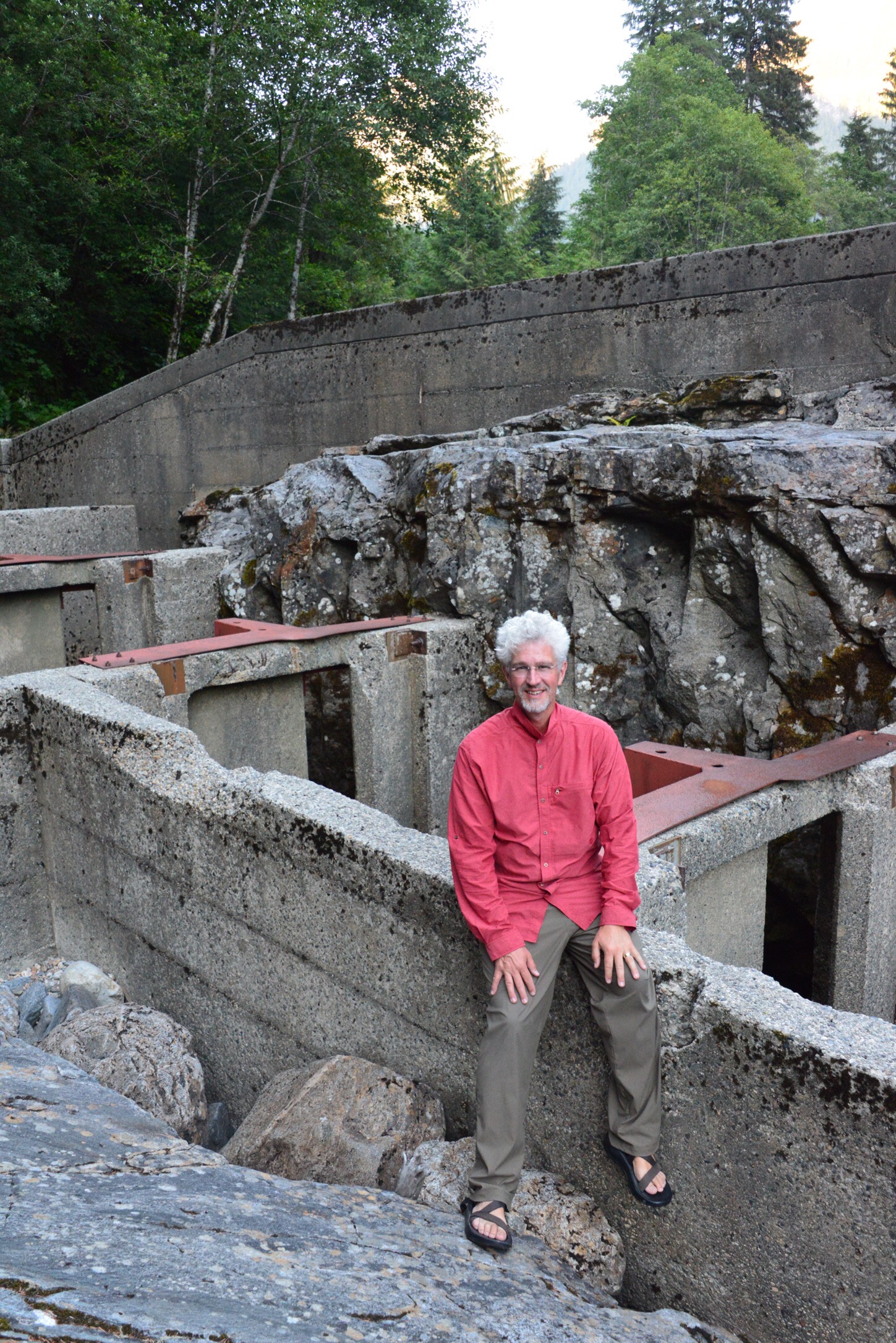
Safely across the river, we climbed out and headed to Rick’s mountain cabin about a half mile away, situated right next to a 10 foot waterfall and an old concrete salmon ladder. The cabin, like every other aspect of Trapper Rick’s Wilderness Bear Adventure Experience, needs some work. But the location was amazing: the salmon were beginning to run, the sun was about to set, and Trapper Rick thought our chances of seeing grizzly bear were excellent. 

OK! 

  We walked a short trail from the cabin to the riverand hung out for about 30 minutes on the river, next to the fish ladder, while Rees watched for bear and Trapper Rick fished for salmon with a rod and reel. 

Jim later told me he was preparing his escape route down one of the weaving concrete chambers in the fish ladder where he figured the bear couldn’t squeeze through. But Jim’s escape route was unnecessary, as there were no bears at the fish ladder while we were there. 

 As the sun was setting we made our way back the way we came: trail past the cabin to the boat, boat across the river, trail to the truck (where Trapper Rick briefly couldn’t find the keys because Rees hid them in the ash tray instead of “leaving them in the ignition in case of an emergency” as he was told), truck down the logging road (it was getting dark, and the headlights weren’t working), truck to the end of the road and finally trail to the dock. 

Halfway down the logging road Rees said he sensed that we would see another bear and we did. The biggest male bear in the local area ran across the road in front of us. Grizzly sighting number 2!

We were all tired and hungry when we got into our dinghys to head to our boats. Yes, Rick and Rees were staying in the other boat in the small anchorage. Probably a good idea given the grizzly bears living in the area!

We said our goodbyes at the dock and drove our dinghy the short distance back to the safety of the True Love where I cooked up some chicken legs on the grill and heated up a package of Trader Joe’s gnocchis. We washed those down with some celebratory champagne. After much needed showers we shared some ice cream on the upper helm while looking at the glorious stars and reliving our big adventure in GrizzlyLand.

What a crazy, wonderful, unexpected adventure. Both Trapper Rick and Rees love what they are doing and where they are working in this beautiful land. Trapper Rick stays in the area in the winter and hunts sable in the winter. His life has taken him from Nova Scotia, to Los Angeles (where he was briefly a member of Hell’s Angels before witnessing a murder), to working as a welder in Northern Canada to his current gig of Wilderness Bear Guiding in Thompson Sound. 

The sounds of seals splashing in the water filled the air as we fell into a long, deep sleep. The next morning it was low tide and we hoped to spot another bear at the beach during low tide. Rees paddled over to say goodbye and while he was aboard we all saw Emma on the nearby beach.

  
It was a little tricky bringing in the shore tie because the seaweed on the surface had tightly bound both the incoming and outgoing lines together. We’ve never experienced this before. It wasn’t impossible to detangle, just tedious.

Because of the problem with our shore tie and the lovely morning bear sighting, we left a little later than expected which led to rougher seas than we hoped as we cruised south down Johnstone Strait. On our way out of Thompson Sound we passed some  more Dolphins. 


But fortunately, the winds and seas were going in the same direction as we were, and the True Love and its crew made it the 20 miles to the next safe harbor, Forward Harbour, without a problem. The calm bay was a bit crowded with boats gathering to prepare for the trip north to the Broughtons the next morning.  But we found a good anchorage, took the kayaks out for a spin and slept in the next morning before heading down to one of our favorite spots: the “Crawford Anchorage” next to Erasmus Island, near the Blind Channel Resort. It was as perfect as we remembered, so we stayed there for a couple of days before meeting up with Jasmine and James at Dent Island. 

  Crawford Anchorage is a practically perfect location with room for just one boat, fantastic views, eagles and a short tender drive to Blind Channel. 

  
Blind Channel is one of the nicest places in this area with a yummy restaurant for dinner, little store, fuel pumps, internet and overnight docks. Last night we went there for dinner. Their salads are beautiful with edible flowers and yummy fresh greens. After more than a week out we are out of fresh vegetables, so I was craving greens.
Today we are going to do some provisioning back at Blind Channel, kayak, fish and edit these blogs so that we can share our most recent adventures with you! 

True Love Adventure copy editor hard at work!

2015: a year of uncertainty, fear, growth, mindfulness and adventure

  As I write this summer’s first entry of True Love Adventures we are anchored in Boughey (pronounced “Boogie”) Bay in the Broughton Islands, which are a remote and beautiful group of islands on the N.E. side of Vancouver Island in the Canadian Pacific.
Given our longer-than-usual timeline for this vacation, we hoped we would be able to make it as far north as the Broughtons. We’ve made it up here once before, in 2011, but the weather was pretty bad and we didn’t have time to fully explore these islands. So, I was drawn to return to the Broughtons this year, weather permitting.
  We began our trip north from Seattle with our longtime friends Jeanette and Brett Newman. There is something so special about spending time with old and dear friends. Now that Jeannette & Brett live in Sonoma, we don’t get to see each other often, but our time together was, as usual, easy, calm and authentic.
  As we left our Seattle homeport, Elliott Bay Marina, on Friday July 10th, an eagle sat on the marina’s outer breakwater as if to wish us a Bon Voyage. We cruised north about four hours to our usual spot at Fort Flaggler, across the bay from Port Townsend. From there, we took the dinghy into town for a walk and delicious dinner at the Sirens Tavern before returning to the True Love for a pleasant evening of conversation. 
The next day (Saturday), we had an easy, although somewhat foggy, passage across an almost perfectly calm Strait of Juan De Fuca to the San Juan Islands. We anchored at Turn Island, just outside of Friday Harbor. We hadn’t anchored at Turn Island for at least 15 years. That was our first “cabin cruiser” experience when we borrowed Jim’s brothers’ old boat, affectionately nicknamed the “WallyPop” and took our “tween” children up there for a really fun family experience together. I guess that was a foreshadowing of our love with boating.
On Saturday afternoon, we walked around Friday Harbor before Jeannette and Brett took us out to another yummy dinner, this time at the Coho Restaurant. On Sunday morning, the women took a walk around Turn Island while the men circumnavigated the same little island in the dinghy. Because we were running a little late, we used the dinghy to take the Newmans to Friday Harbor for their one-hour seaplane flight back to Seattle.
  Then it was time to head north to Canada. It was a beautiful, sunny, cloud-watching kind of day. We thought we were going to spend our first night at little Reef Habour (Canadians spell “harbor” with a “ou” instead of an “o”), between Cabbage and Tumbo Islands, just a few miles west of Patos Island, the most northerly island in the San Juans. This was one of our favorite stops at the end of our summer cruise last year. But this year it was too crowded, so we kept cruising north toward Montague Harbour, which is much larger and can always accommodate another boat at anchor.
As we were cruising up the west side of the Strait of Georgia, heading for the main entrance (Active Pass) that connects the Strait with the more protected waters of the Southern Gulf Islands, we approached Boat Passage, a much smaller entrance, just as the high-tide slack was occurring (when a rising tide peaks, just before it begins receding). Our reference text told us that this little used entrance to the Southern Gulf Islands was doable during high-tide slack so we decided to look at it and ultimately gave it a try.
We made it without bumping into anything, but we completely agree that the only time to use this narrow, winding passage is during a high-tide slack, when the depth is at maximum and there is no current.
  Montague Harbour is a great place to watch sunset especially if you anchor on the less sheltered northern side of the outer bay. This year we were a little concerned about weather so we anchored in the south side of the inner bay but were still treated to a spectacular golden sunset. 
Genuine and authentic are our themes for this year. We have been through a great deal since our last summer cruise through Canadian waters on the True Love. 
As some of you already know, Jim developed an unusual weakness in his left leg last summer, which led us through a nine-month medical odyssey of spinal MRI’s, PET scans, lumbar punctures, a probable diagnosis of spinal cancer, a living-with-cancer mindfulness retreat (that was the transformative “silver lining” to the whole medical odyssey), a last minute trip to Israel (documented in the previous True Love Adventure blog) during which Jim became significantly stronger, which led his radio-oncologist to say it was now very unlikely that Jim ever had spinal cancer. For example, while Jim could barely walk two miles in the spring, he can now walk 6 miles! In fact, we were recently able to do our favorite local hike to Snow Lake (while six months ago Jim couldn’t even do the easy first half of it).
While that was going on I have been working to help my amazing sister overcome her addiction to prescription pain meds. We are so proud of her! She is doing everything she needs to do to rebuild her life and return to full mental and physical health. Her journey has also been about being genuine, truthful and authentic. 
The last year has been about growth, healing, setting boundaries, making important choices and meditation. We now begin our days not with the TV but with fifteen minutes of meditation. Calming healing breath in . . . tension out. It’s an amazing way to start your day! 

Now that I have a healing husband and sister, I felt free to go north again on our boat and explore.
After we made our way to Nanaimo for our annul yummy Greek dinner at Taverna Astera we analyzed the typically cryptic weather forecasts for Johnstone Strait: the narrow, windy passage that is the only way to get to the beautiful Broughton Islands without cruising 200+ miles in the open ocean. Could we get a few days of lighter-than-usual winds to allow us to get through Johnstone Strait to the Broughtons?

The weather forecast Monday night was for light winds north of Nanaimo on Tuesday and relatively light winds in Johnstone Strait (15 knots) Wednesday morning. It looked like we might have the weather window we needed.
Unfortunately, when we awoke Tuesday morning the winds were unusually strong in Nanaimo blowing from the Northwest. It seemed unlikely that the winds farther north were actually “light” as forecast. Undaunted, we headed out of the harbor for the Strait of Georgia (although we made a contingency plan to bailout to another protected anchorage if the weather report was wrong). When we left the dock our fellow boaters were surprised that we would leave the protected harbor with the winds at the dock were already so strong.

 
It was a long 10-hour, 80 mile cruise to Campbell River, but fortunately the winds were relatively calm after we got 20 miles north of Nanaimo, perfectly calm the last 20 miles, and the sun shone brightly almost the entire way!
We arrived at Campbell River around 8PM. The main marina at Campbell River was full so we had procured by phone a space at the smaller Fisherman’s Wharf marina to stay for the night. Because of our late arrival, the marina office was closed when we discovered the dock space they assigned to us was impossible to get to without bumping into other boats. So instead we simply docked at another, more accessible dock space amongst the tugboats at the end of the pier and hoped the tug that usually moored there was not coming back in the middle of the night.

After a yummy omelet for dinner, we both slept well until our alarm sounded at 4:40 AM to remind us that this was the time we needed to leave to ride the ebb tide north and enjoy the forecast light winds on Johnstone Strait. Across the dock a tugboat captain was readying his boat for a day of work on the water. He liked our boat and wished us well. It felt like a good sign.
As the sun rose another boat made its way out of another moorage to join our little procession up Johnstone Strait.

We got lucky: the winds were light and the sunrise was peaceful and beautiful. On our way north we spotted the Caper (Gabby and Gillian Barlow’s boat). They were heading south making their way home from Alaska. We hope to make that same journey some day. We talked over the VHF radio, took pictures of their beautiful yacht as it passed and continued on our journey north. Five hours later, around noon, we turned into Havannah Channel and the sheltered channels, inlets and bays of the Broughton Islands.

Needless to say, we were pretty tired, so we decided to anchor almost immediately, here at Boughey Bay. We ate a quick lunch, drank a glass of celebratory champagne and then took a well-deserved nap. The rest of the day was warm and beautiful. We read, did our exercises and enjoyed interesting conversations.

Jim was reading about the 60th Anniversary of Disneyland and how Walt Disney knew it would never be “complete” because it would always evolve and change. This led me to say that truly iconic businesses or brands have a “soul” that changes, evolves and improves over time. It doesn’t take away from the original idea or the original business. But a truly great business, over time, develops a “soul” that guides it as it continues to grow and achieve its fullest potential in serving its customers, employees and community.
The sun sets 30 minutes later this far north (around 9:30 PM during our trip).

For dinner I made coleslaw, steak on the grill and roasted peppers. After a well-fought game of chess, we went to sleep only to wake to find a very low tide. We truly had anchored at just the right spot. Twenty yards further back into the head of the bay and we would have been on dry land. Oh well; no contact, no foul!

As we head out for our first full day in the Broughton Islands, we can feel ourselves relaxing, and our creative energy renewing, as we surround ourselves with nature’s beauty and the peaceful tranquility of cruising among coastal mountains, through protected channels, fjords and inlets.

  Exploring Southern Israel with quick trips to Jordan and Egypt

We packed about as much into the last 3 days of our vacation as we possibly could.  We left the pool at the Ramon Crater and were picked up by our driver Tovia Cohen for our drive to Eliat, at the southern tip of Israel.  The drive took us through the crater.  This is definitely a place to explore more at a future visit when, hopefully, the temperature will be well below the 110 degrees it was when we drove through.

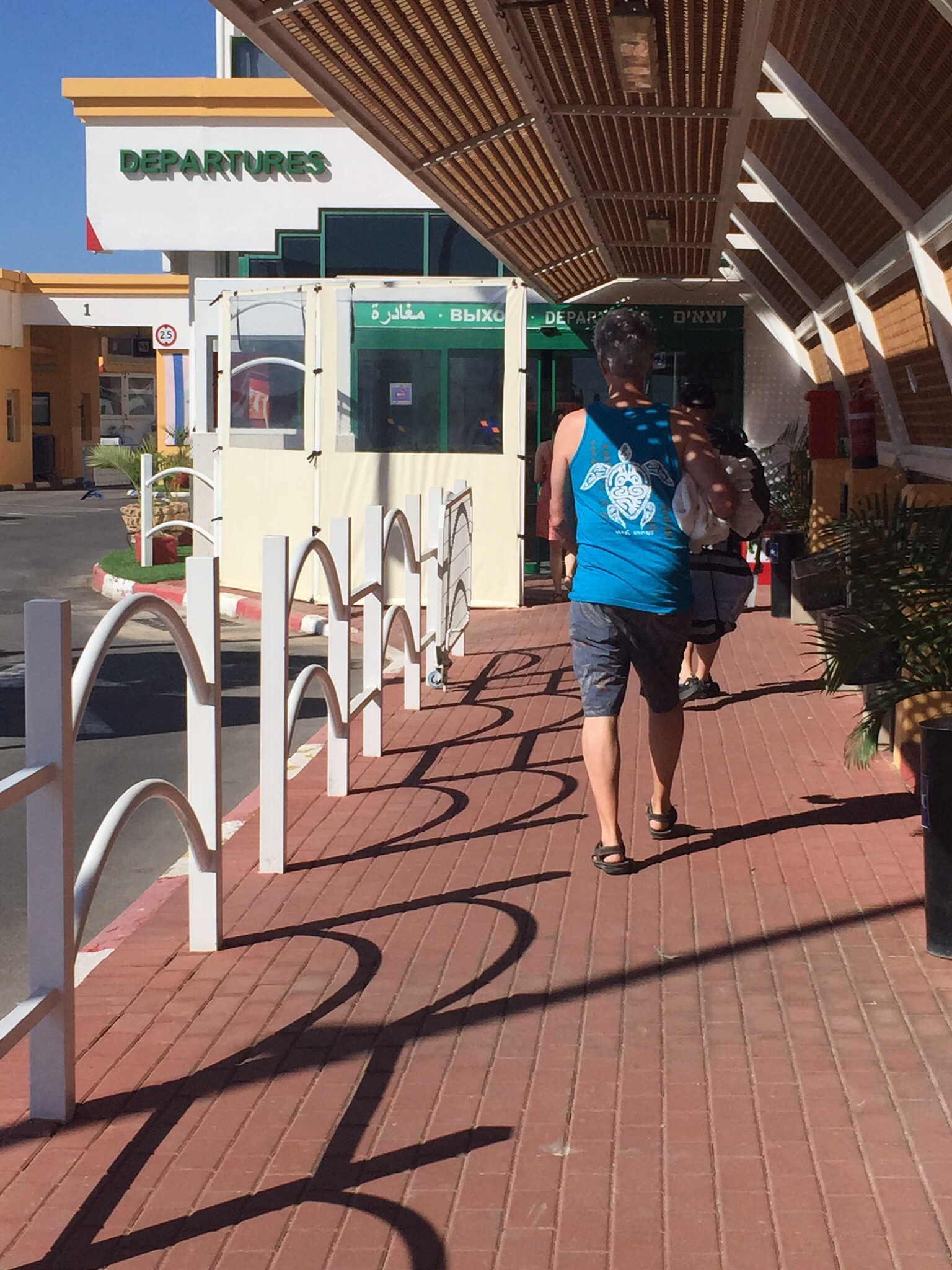
Tovia drove us about 2 hours through the Negev desert until we were just north of Eliat, and then we drove east for about 5 minutes to the Jordanian border for our overnight excursion to Petra.  Crossing the border from Israel into Jordan was an experience.  There are multiple steps and fees on both sides of the border along with a 50 yard “no man’s land” between the two.  There was a line of people ahead of us, but we were probably the only Americans.

We were met at the boarder by our guide, Marwan, and his driver Sam.  They were our excellent escorts to Petra. On the way they proudly showed us Aqaba (the modern Jordanian city that shares the north tip of the Red Sea with Eilat), before we headed north into the Jordanian side of the Negev desert and up into the Jordanian mountains.

The 2 hour drive to Petra went through some interesting and diverse terrain.  The mountains are unusual:  red sandstone with diagonal stripes of black lava.  From the barren desert we climbed into the higher hills where there was enough grass between the rocks for a few goats to graze.  As we climbed to 4,000 feet, the temperatures decreased to the mid-80’s and there were a lot more goats, and even some sheep, camels and donkeys.  


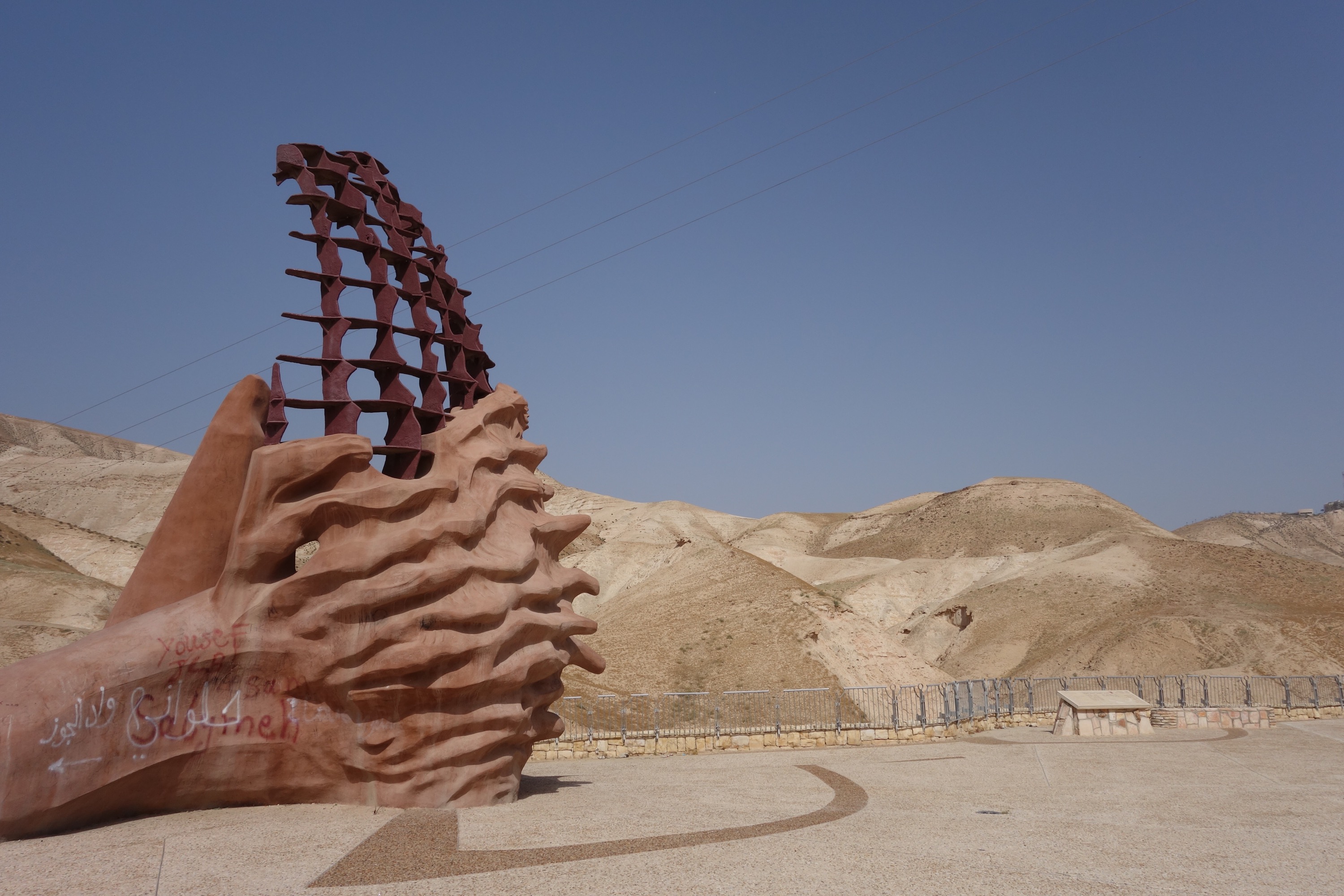
 We made a quick stop with a great view of the mountains falling away into the desert about 30 minutes from Petra. 

Marwan and Sam delivered us to our lovely hotel, the Movenpic, located right next to the entrance gate into Petra.

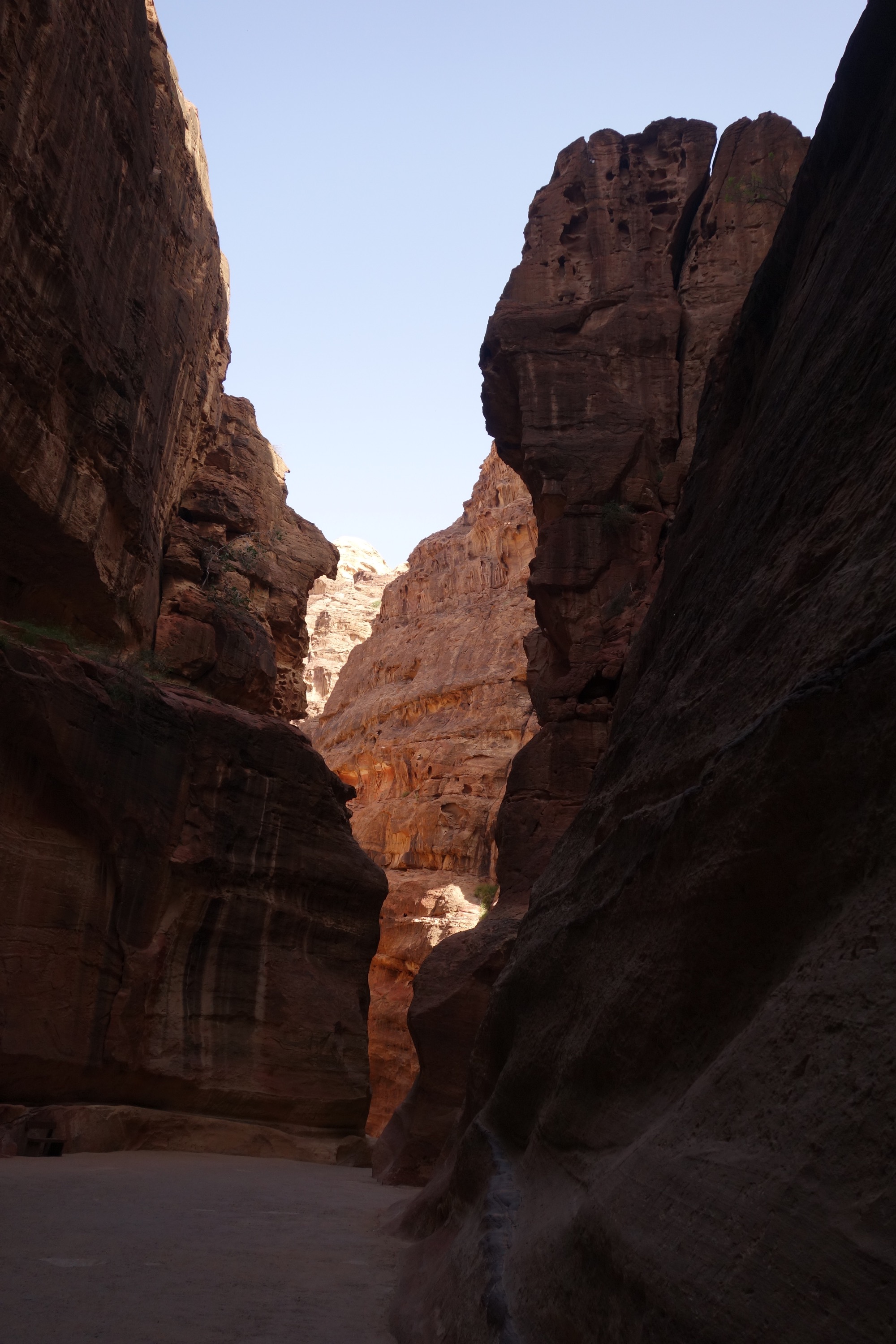
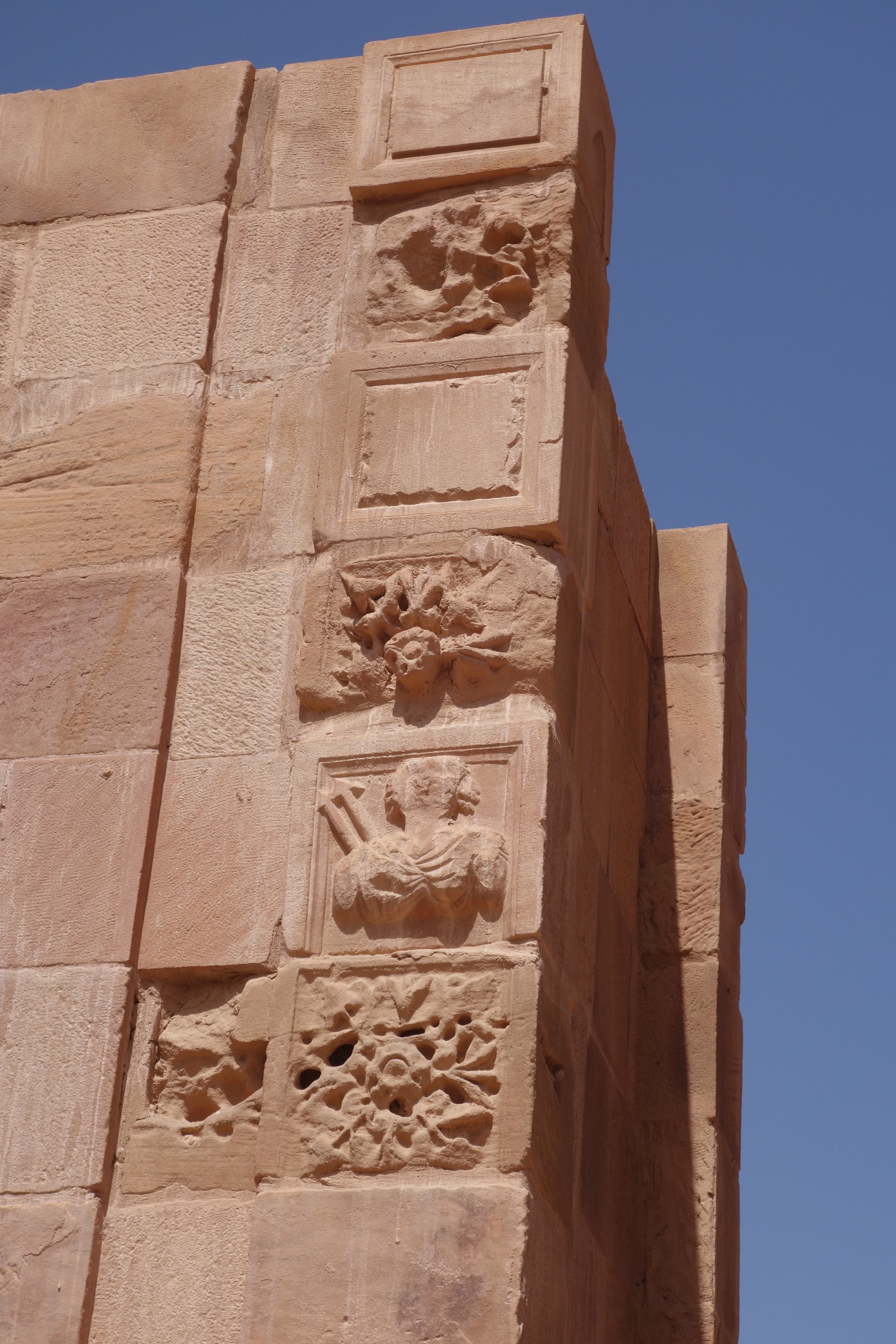
Petra is more than ancient carved sandstone temples, tombs and caves.   

 Between 200 BC and 200 AD, Petra was a major crossroads city of over 20,000 people strategically located on the main “incense trade” caravan routes among Damascus, Constantinople, the Red Sea, and what is now Saudi Arabia (where incense such as frankincense & myrrh were manufactured for use in religious and burial ceremonies throughout the ancient world).

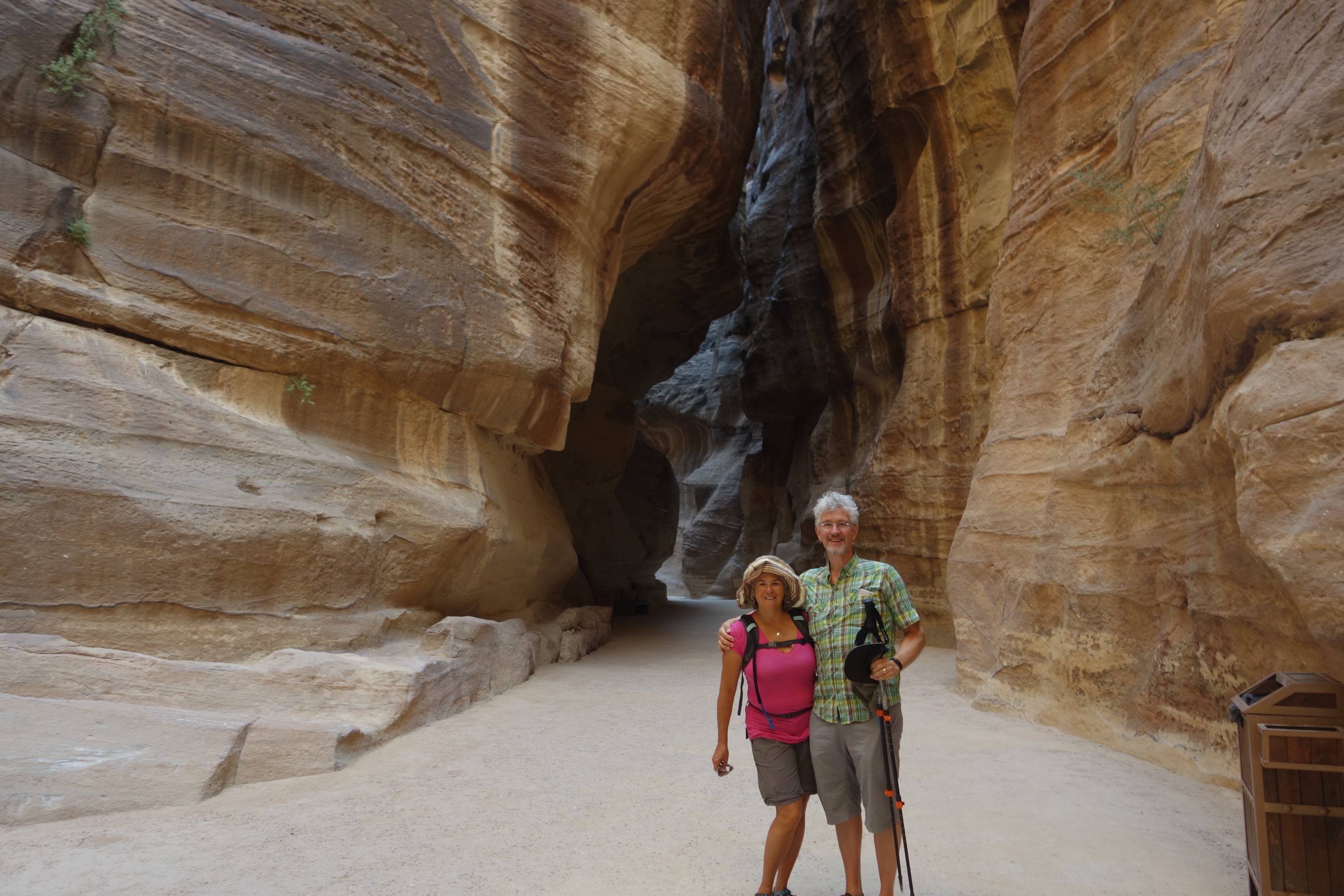
The narrow sandstone cliffs of Petra are very similar to Zion National Park in S.W. Utah.   


The Nabataeans who created Petra moved into the area from the northern Arabian desert after Israelites were taken as slaves into Babylonia around 500 BC, and the Edomites left the area to for the greener lands of southern Judea.  

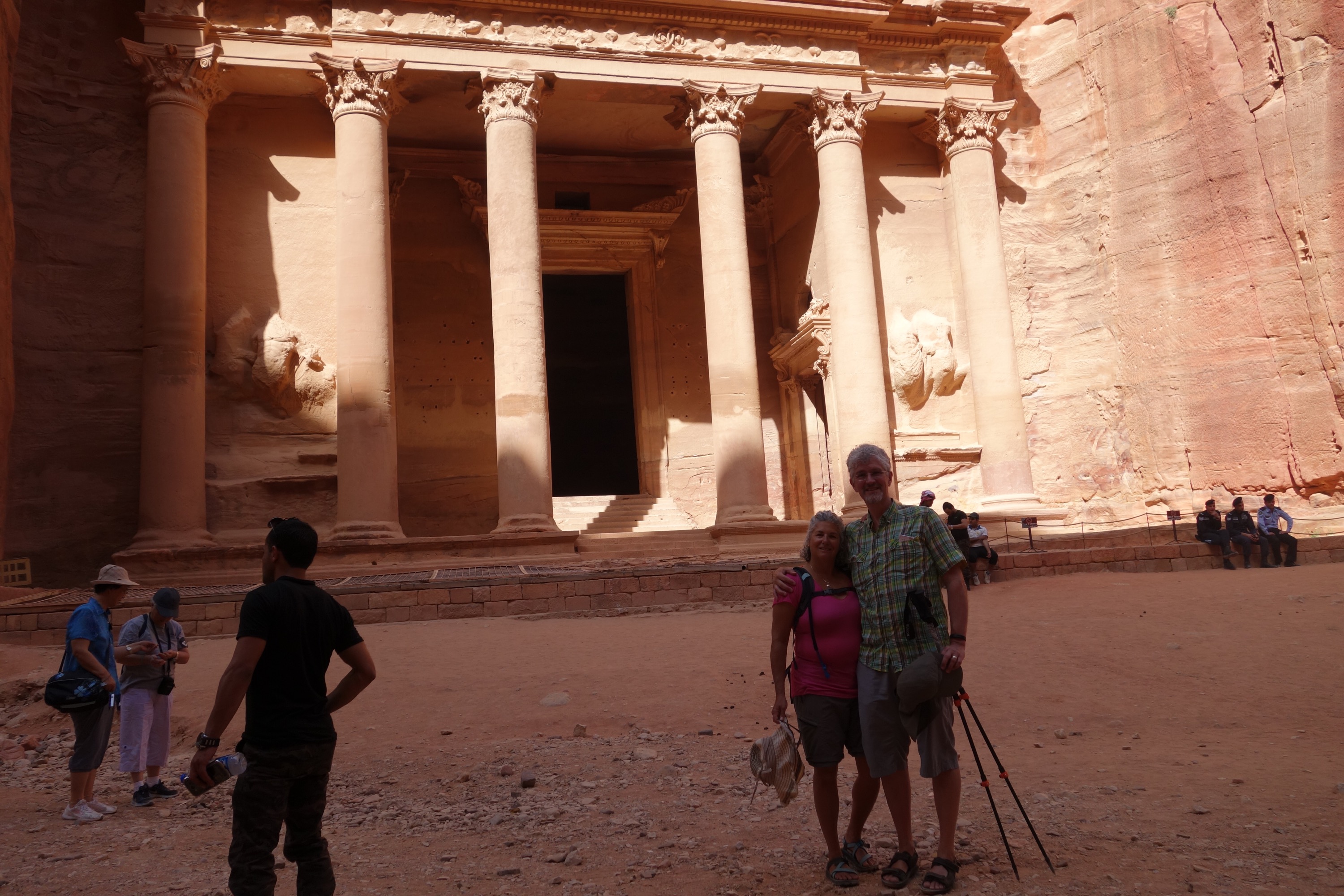
Although the classic Petra shot is known as the “Treasury” because many thought a treasure was hidden there, in fact all ruins carved into Petra’s sandstone cliffs are burial tombs varying in size according to the importance of the person buried there.


The Nabataens were one the most “modern” civilizations of their time.  They were not a great military power, but their advanced knowledge about how to find and store water in the desert, plus their strong diplomatic skills when confronting militarily superior adversaries, allowed them to control the incense trade routes and become wealthy and prosperous.  Because the Nabateans depended on trade, they respected all who traveled through the area (as long as they paid the “transit fees”).

Most importantly and very unusual for this region even today, women had (almost) equal rights with men.  Nabataen women routinely owned property and businesses, and Nabatea was the only kingdom of the ancient world where the King and Queen both appeared together on coins.  There are many countries in today’s Middle East that can learn a lot from the ancient Nabataens.

We very much enjoyed our time with our guide Marwan who personally has chosen to follow the Nabataen philosophy for women regarding his wife, son and two college-age daughters.

Jordan’s economy has been hit hard by the cost of supporting refugees from the Syrian civil war and by the spread of ISIS to western Iraq.  Unlike other nearby Arab countries, Jordan has very few natural resources.  Instead, the Jordanian economy depends mostly on tourism and on transit taxes levied on goods passing through Jordan, both of which have been hard hit by the violent conflicts nearby.  As Marwan so eloquently stated: “The big problems in the world today are caused by those who want to dominate others.”  Well said.

After our beautiful walk through Petra we headed back to Israel where we easily transited through the border and, thanks to a quick cell phone call, were promptly met by our Israel taxi driver Tovia on the other side of the border.

This trip we bought local Israeli cell phone chips for our “unlocked” cell phones so we had working cell phones and internet the whole time we were in or near Israel.  It made it a lot easier to call taxis or hotels or family back home when needed.

Eliat is a strange place on the Red Sea.  The area at the southern tip of Israel is so narrow that you can stand at the water’s edge downtown and easily sea Jordan, Saudi Arabia and Egypt. 


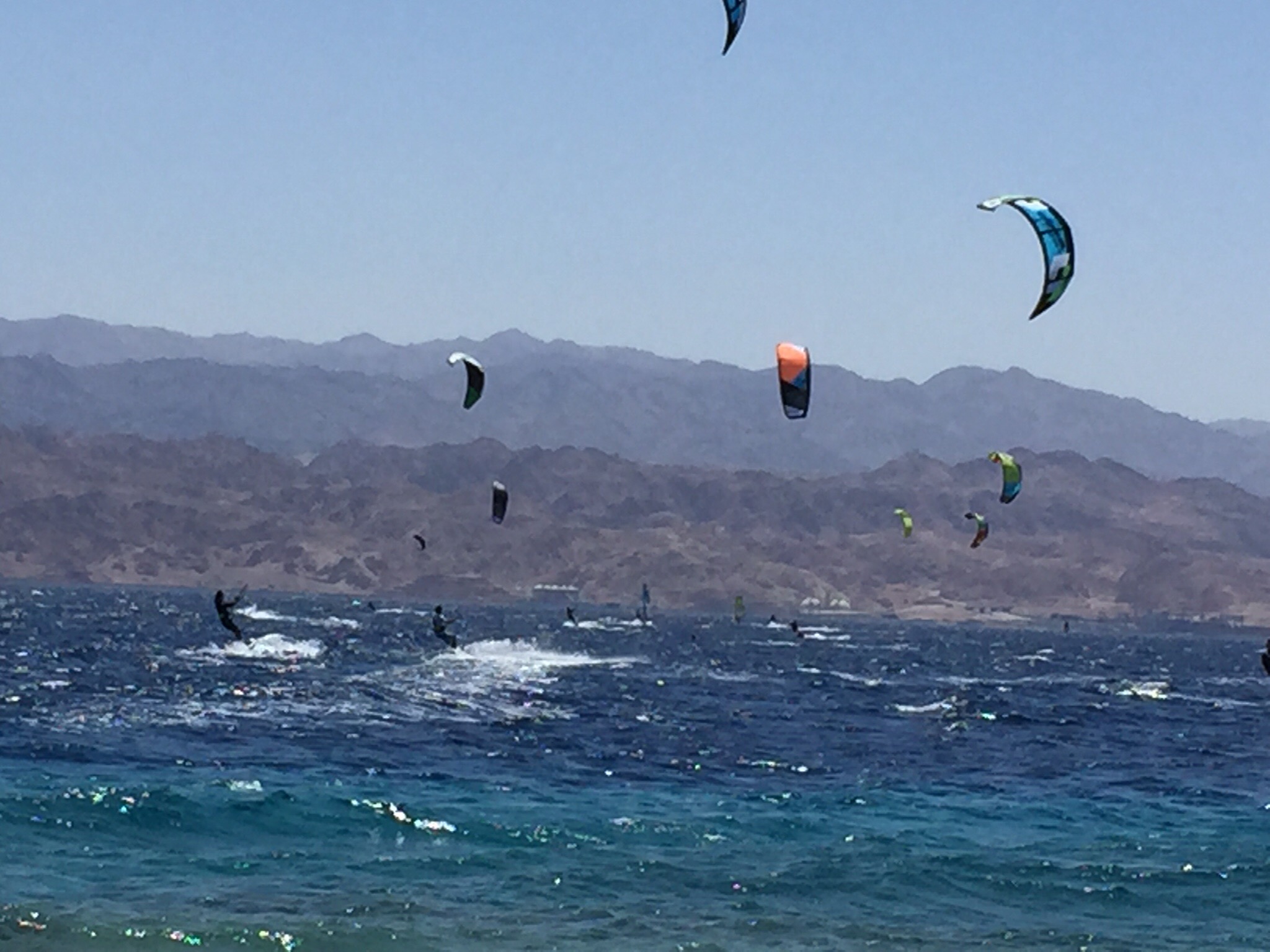
Israeli young people come to Eliat to play.  The boardwalk area is an “over the top” Las Vegas style playground of hotels, carnival rides, shopping and restaurants.  The most southern beach area (next to the Egyptian border crossing to the little resort city of Taba) is teeming with sunbathers, kite surfers, wind surfers, scuba divers and snorklers.

Our hotel there was in the quieter, southern part of the city close to the scuba shop, which was good.  Unfortunately, it was the only hotel during our trip that we didn’t like.  We had to change rooms because the carpet in our first room was really gross. The Isrotel Yom Surf hotel is big, with big pools perfect for families, but not as clean as we like.  Next time we would stay someplace smaller and cleaner.

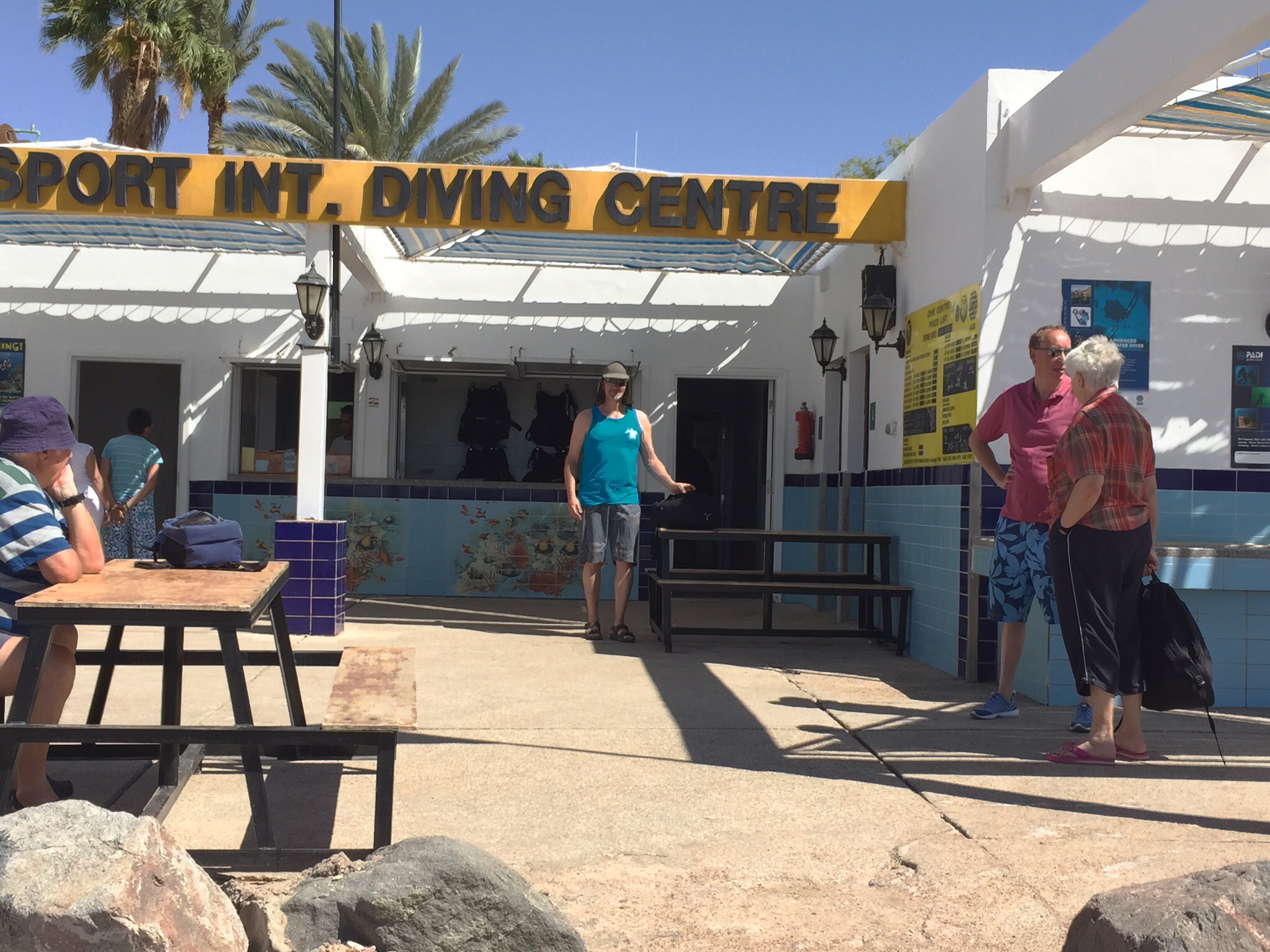
We really only had one day in Eilat for scuba diving the Red Sea which led us to our next adventure.  We chose to dive from a boat instead of from shore, but this required crossing the border into Egypt.


We were told by the Eliat dive shop to bring our passports “because we might need them”.  That was a bit misleading.  We absolutely needed them because we had to go through the official border crossing into Egypt before we could get on the dive boat — at this narrow part of the Red Sea, boats are not allowed to cross the well guarded border. 

Our boat left from the little 3-boat dock at the Taba Hilton which was just beyond the Egyptian side of the border crossing.  Joining us were a French family whose daughter was working in Israel with an NGO.  Unfortunately, her student visa did not allow her to leave Israel for day trips to Jordan or Egypt, even for a few hours.  But after some tears and some special help from an administrator, they let her through.  Apparently, Israel border security routinely “profiles” pretty young women, because terrorists have used them in the past to smuggle explosives, usually unknowingly.


The border crossing was the same drill as for Jordan, with three different stops on each side and a “no man’s land” in between.  The Egyptian side of the border crossing was very inefficient compared to the Jordanian crossing, with a large number of men (not one woman) at each station apparently doing nothing while we waited for them to notice that we were there.

After finally making it across the border, we had to find our way to the Egyptian dive center at the hotel, which took a lot longer than it should have because there weren’t any signs and no one gave us clear directions.


 Although the dive equipment was a little old, the dive master, the dive boat, the scuba tank air and the diving experience itself were all great.  It was wonderful being out on the beautiful blue water on a boat.  


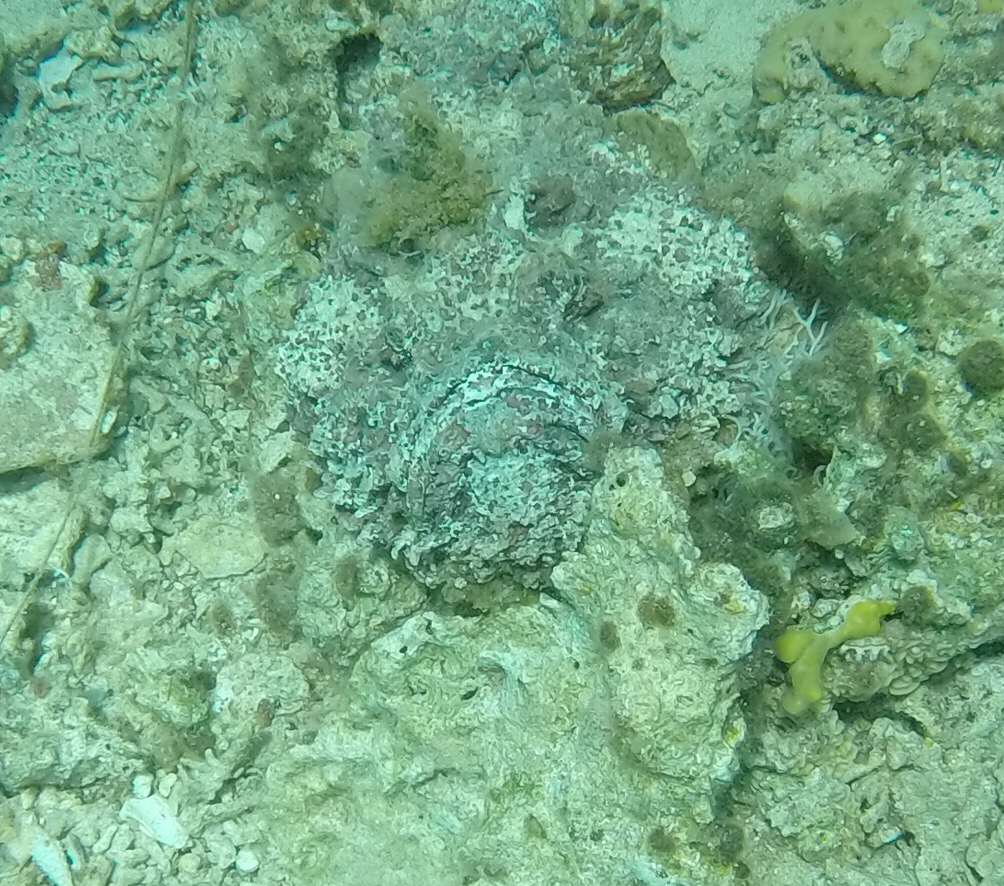
We spotted flying fish next to our boat almost immediately.  Our three dives were really beautiful with lots of interesting fish, pretty coral and crystal clear visibility.  This area has lots of big lion fish, scorpion fish, rock fish and other similar camouflaged poisonous ground fish.


We learned after our first dive that these fish are really quite venomous and we would have had to be rushed to the hospital if we were stung.  (That propably would have been better shared before we dove our first dive!). Fortunately these fish are not aggressive at all unless you are aggressive towards them.


These fish are really hard to see in the photos because they like to hide in the sand or on top of the coral.


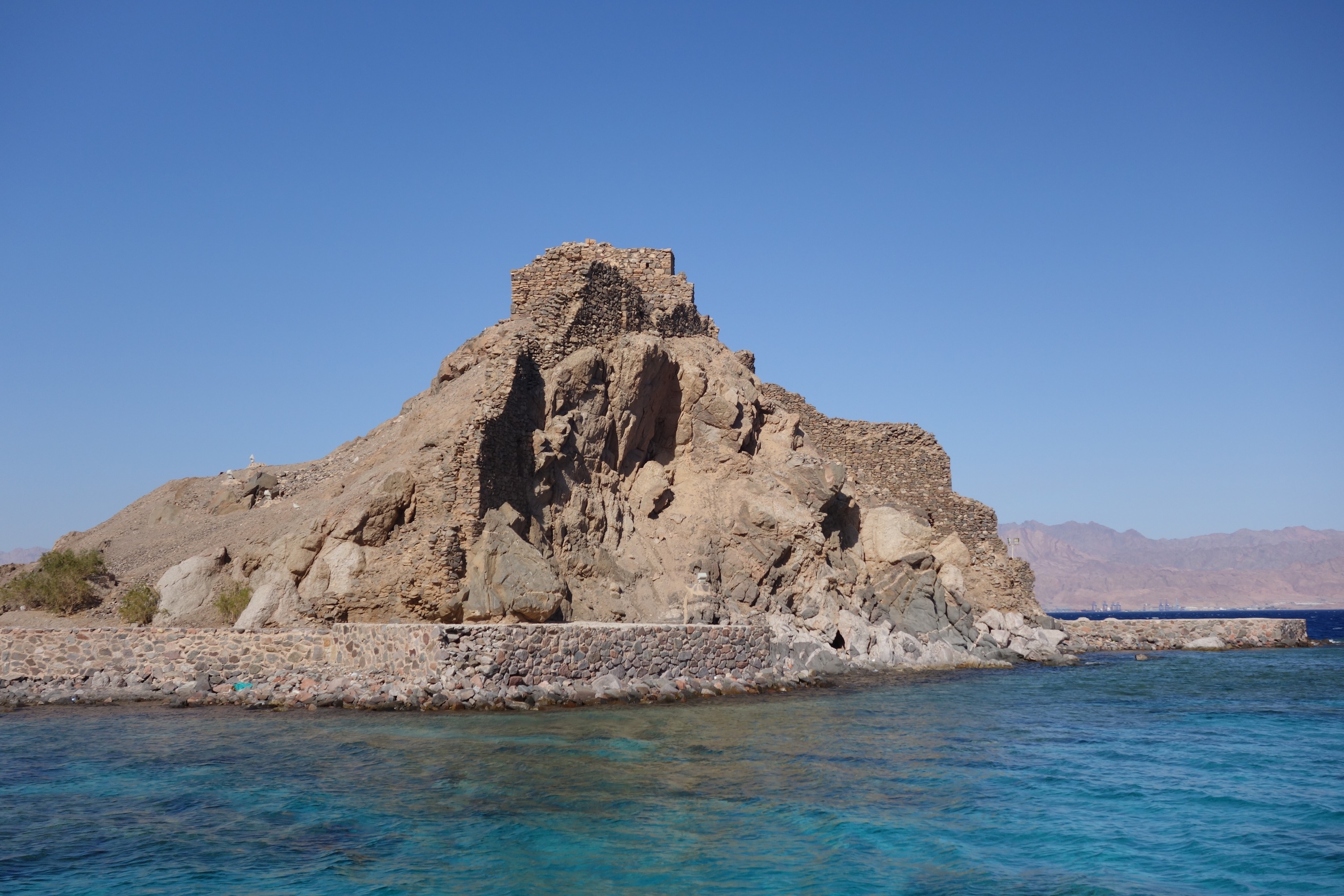
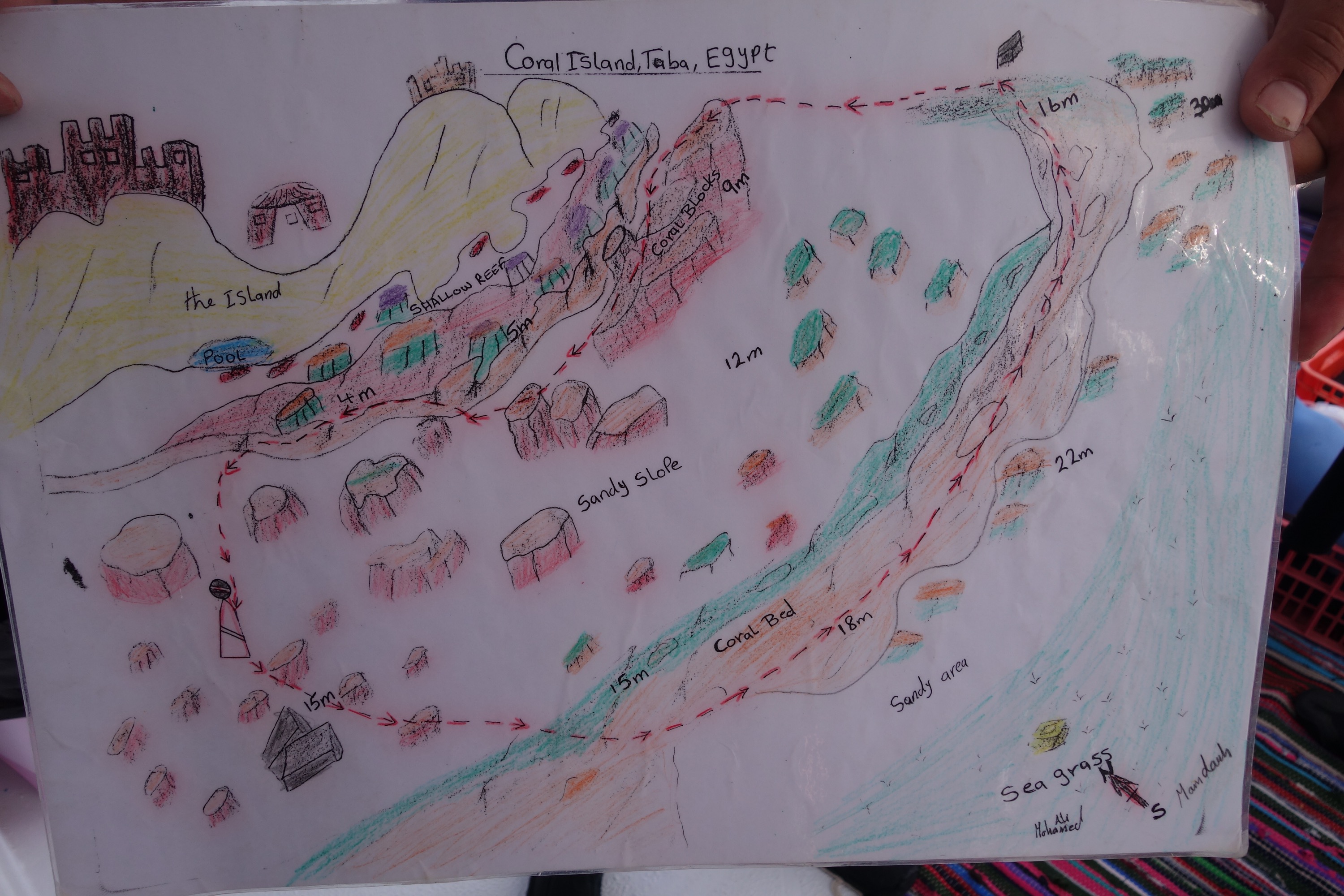
Our last dive, at Coral Island, was our favorite.  I didn’t want to leave the water!


The trip back through the border crossing was easy but tedious and no one from the dive shop met us at the Israeli side of the border to drive us the mile back to our hotel.  So we walked a bit and hailed a cab at another hotel.  Back at the Isrotel Yom Surf we took a quick shower and rested before heading out for dinner.  Although we were pretty tired we felt we had to venture out to grab a bite and see Eliat’s famed “boardwalk” area.  As I described earlier, it was quite a show.

We slept soundly and spent our morning at the busy beach watching the beautiful kite surfers expertly playing and jumping in the wind.  The Israeli side of the Red Sea is full of colorful activity as people play on the surf and beach. 


 We didn’t see anything like that in nearby Jordan & Egypt. There are hotels there but not much playing, as far as we could tell.

After our morning at the beach we took a 50 minute , super easy flight to Tel Aviv’s little “Dov” airport for our last night in Israel.  We ended our trip where we began, at the “Shalom Hotel and Relax” which was our favorite hotel on our trip.  We deposited our bags in our room and took another walk around the ancient port of Old Jaffa while enjoying the much cooler temperatures and Mediterranean ocean breezes.  We watched our last Israeli sunset from the lovely hotel rooftop deck and then headed out for a fantastic final meal at our favorite restaurant: Shila’s.   

 We called to make our dinner reservation several days earlier in the week but even then we were only able to reserve a couple of seats at the bar.  But it turned out great because we loved getting to know our bartender/server.  He was flying to Atlanta, Georgia the next day to try to sell a special switch for laser equipment to the U.S. Army that he and his cousin had developed.  Although he looked so young, he had already finished his mandatory military service as an officer.  He truly represents the young, intelligent, can-do entrepreneurial spirit of so many in Israel.  Unfortunately, this was a sad and stark contrast from the news stories of riots and violence in America (which we were asked about often).  Hopefully, these crises will lead to the reforms needed to improve the quality of life in America’s inner cities.

Today, we woke early enjoyed our last big Israeli breakfast and were picked up by our driver and taken to the airport.  As I write this we our on our first flight of the day, to London (5 hours because of a strong head wind), where we will get our next flight (9 or 10 hours) to Seattle.  We left Tel Aviv on Sunday at 10 AM and should arrive in Seattle the same day at 5PM, but our trip will take 17 hours because Israel’s local time is 10 hours ahead of Seattle’s.  We can’t wait to see everyone again!  Jasmine, David and James will be picking us up at the airport so we’ll get to see them first. 

Overall, We’ve been blessed with a magical and amazing trip. We thought we understood Israel and the area before, but it is hard to truly understand the complexity, mystery and history of the Holy Land without visiting it in person.  We believe the best thing an average person can do to understand this area, support Israel and fight the terrorists (including ISIS and the others near here who want to dominate others) is to visit and see this beautiful and exotic land for yourself.  

A good way to support peace is to travel here among the countries that want peace. Meet the friendly people, enjoy the area and the wonderful vibe.  Many thanked us for being brave or courageous for visiting.  We didn’t feel brave at all, and would not have visited if we didn’t think it was safe.  Instead, we feel fortunate, humbled and proud to learn more about the people, culture and history of this amazing area, and to be able to share it with our family and friends. Thanks for reading!

PS. We are home!  Posting our last blog from the boat. As Jim said last night, “we love traveling, but our souls’ home is here in Seattle.  And there is nothing better than being picked up at the airport by your grandchild!  


En Gedi, Dead Sea, Masada and our drive to the Crater

  
Yesterday we drove out of town for an adventure near the Dead Sea. On the way down we passed the spot in the hills which marks sea level.  The Dead Sea is 1400 feet below sea level — the lowest dry land on Earth.

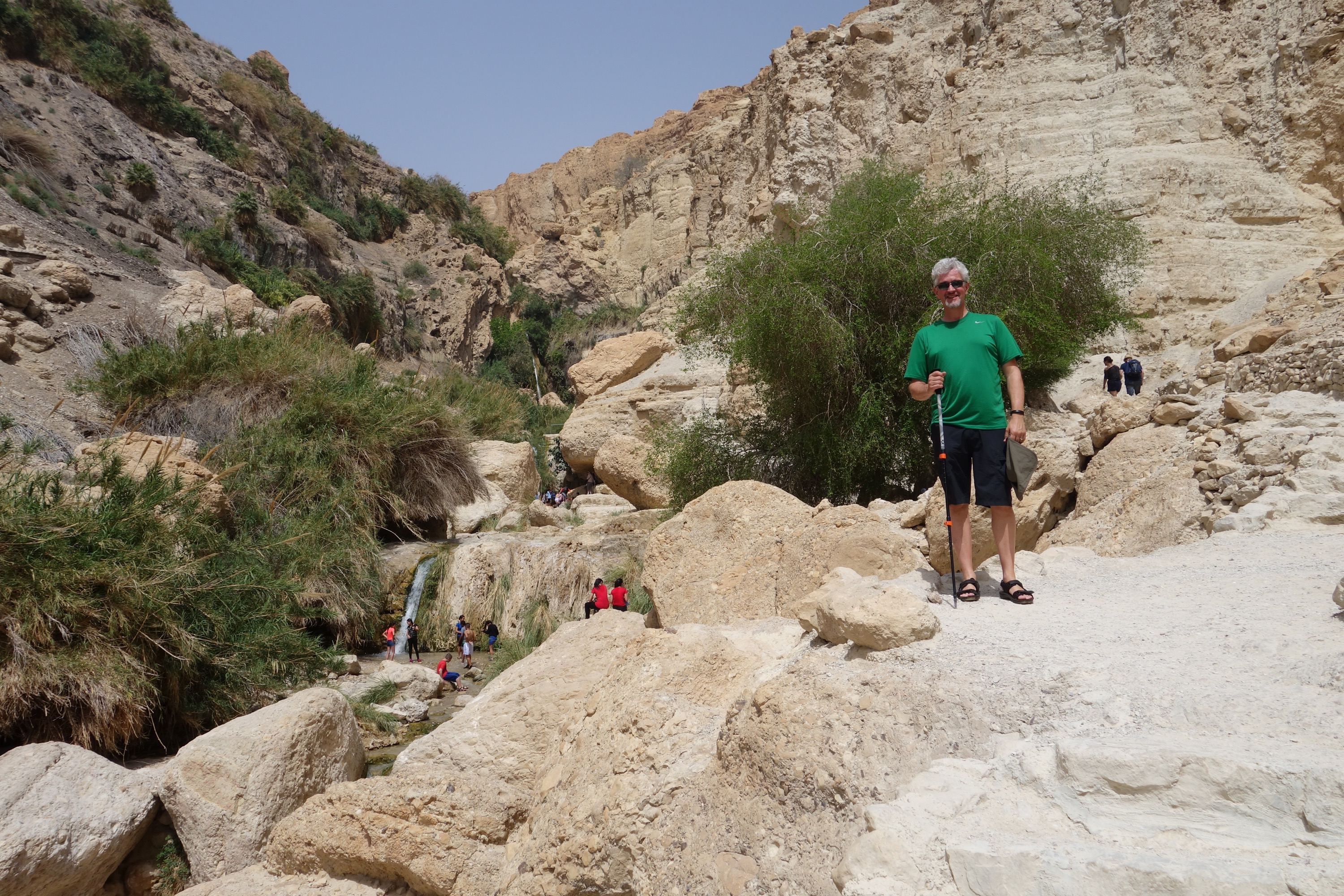
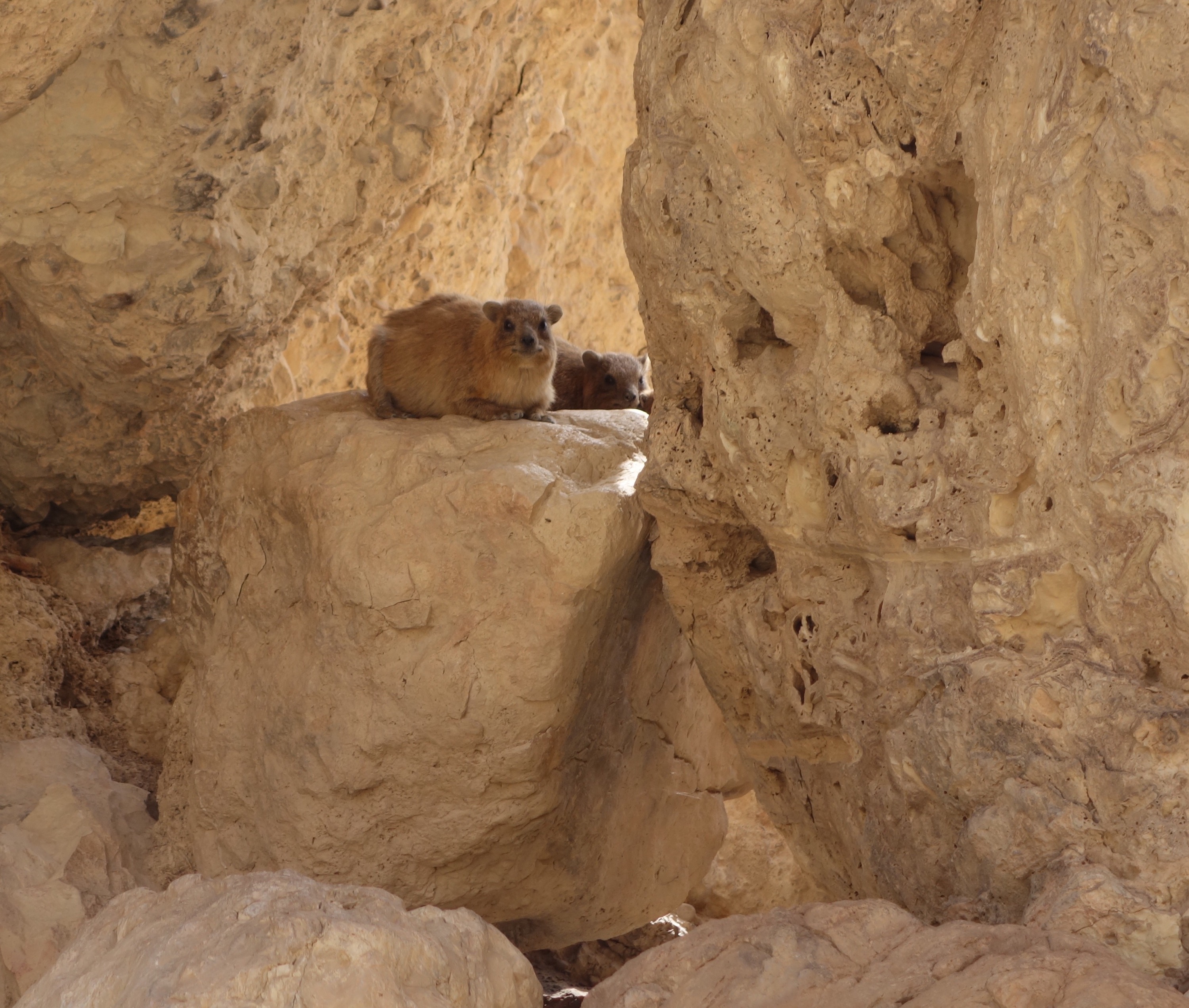
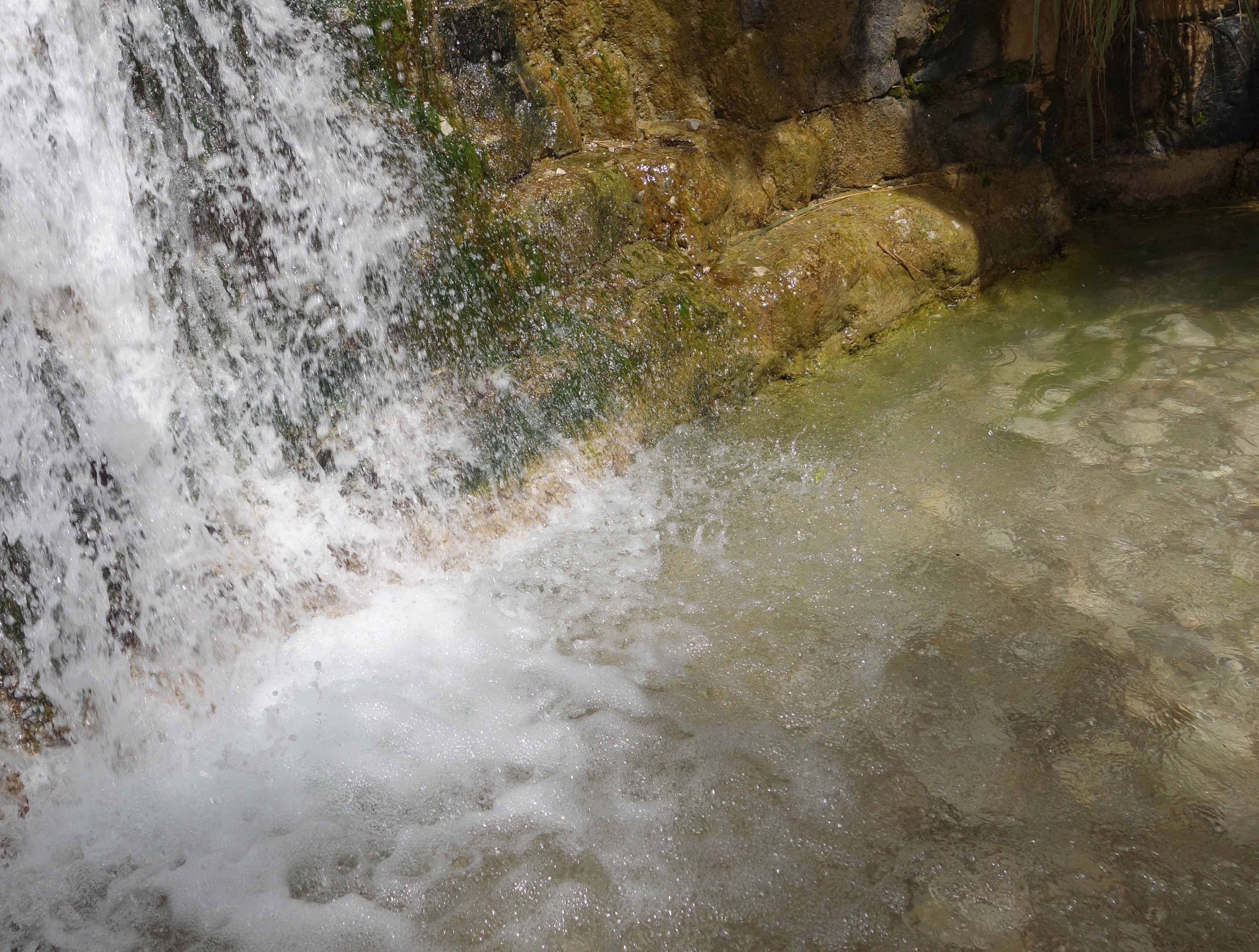
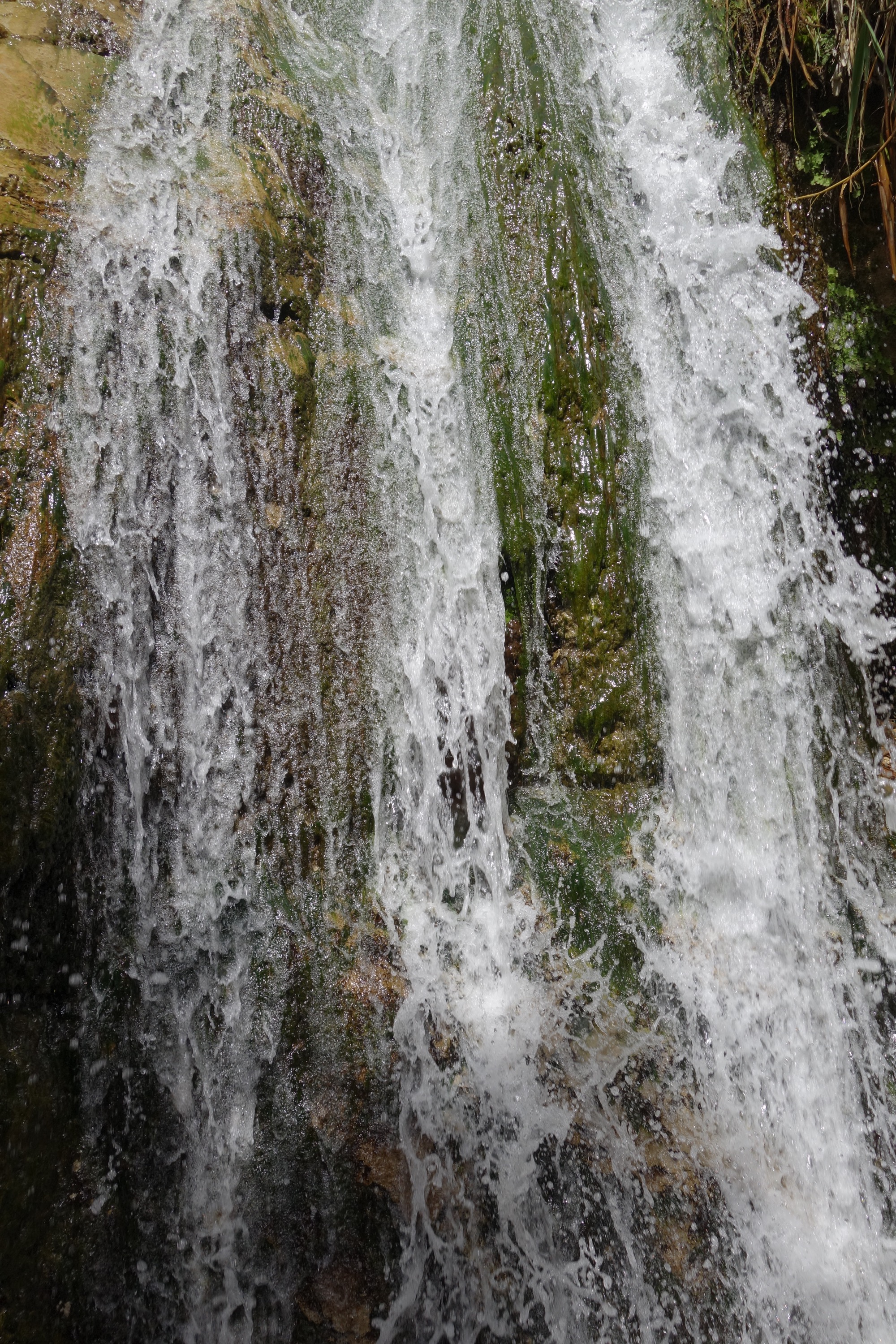
Our first stop was at the spring at En Gedi. For Washingon State it’s barely worth noticing, but in the desert, adjoining the Dead Sea, it’s mana from heaven.  The surrounding hills are barren but still quite lovely.  

Almost immediately we saw local “Rock Rabbits” which come from Africa.

   
 I of course played in the water with the visiting school kids. 

   
   Ari showed us where capers come from.  First, the pod (the caper); then the flower, and finally the long seed which is also edible.

  
Here is the tree that was most likely used for the crown of thorns put on Jesus before the Crucifixion.  The thorns are huge.  

From En Gedi we proceeded about 20 minutes south to a nearby hotel to experience the Dead Sea and have lunch.  We’ve all heard about floating in the Dead Sea but it is amazing to experience it.

  
You feel unweighted from the minute you walk in the water.  Jim didn’t like the feeling of the concentration of chemicals in the water slowly burning off his skin.  If you drink a cup of the water, you’ll die.  A bit of it will make you throw up, so most people experience the incredible bouyancy without splashing or getting your head in the water, and even then for no more than 30 minutes. Your skin definitely feels scrubbed clean when you’re done (but without any scrubbing).  We rinsed in the beach showers before swimming in the hotel pool, showering again at the hotel spa, before having lunch and heading out to our final stop of the day:  Masada.

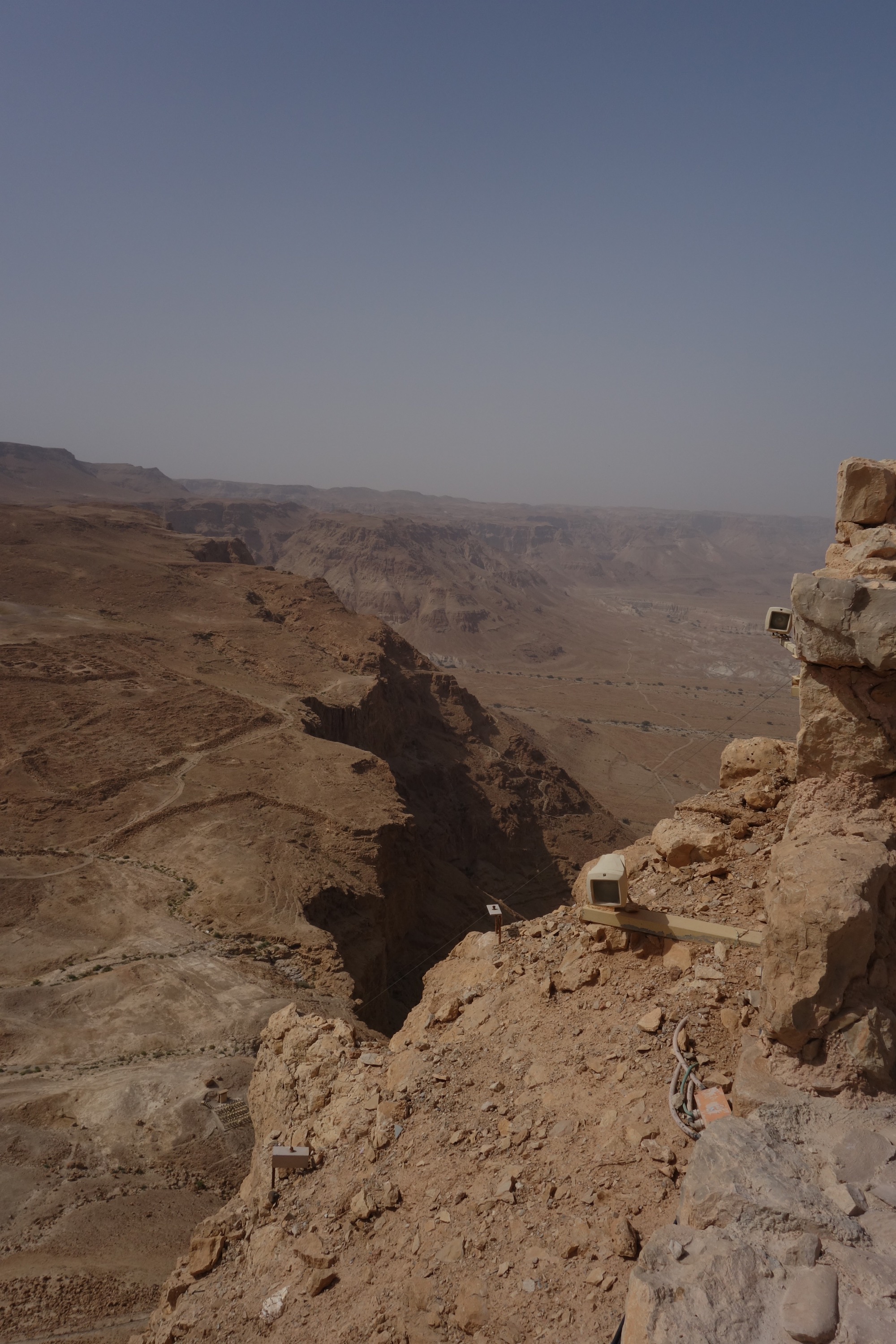
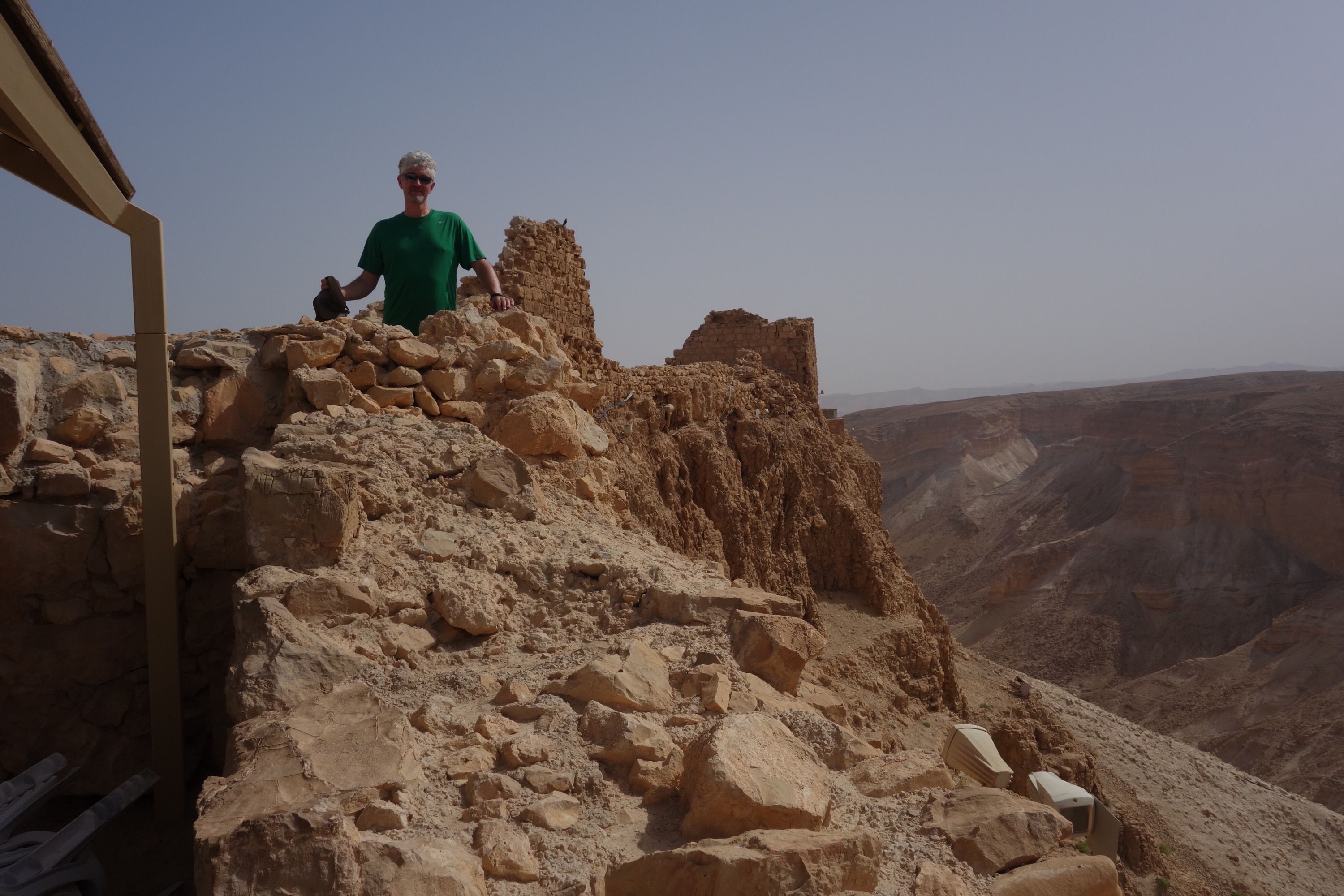
It was late in the afternoon and extremely hot, but empty.  Again, Herod out did himself with the construction of this mountaintop palace and fortress.

  
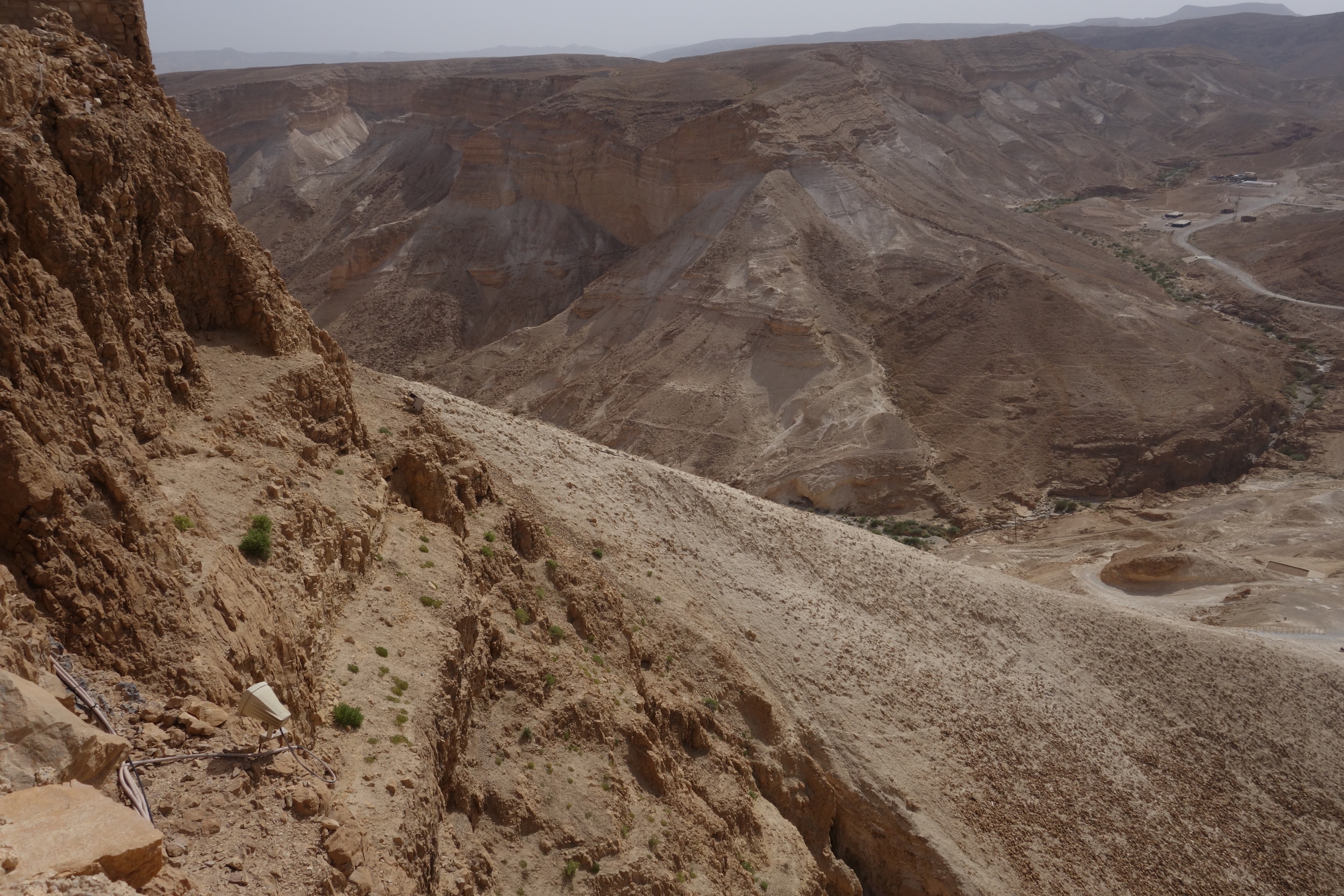
       The system for capturing rainwater in the 14 huge  cave cisterns was remarkable. 

Not only is Masada an amazing example of ancient military engineering, it is decorated and plush with both a Southern and Northern Palace so Herod could stay in the part of Masada that was warmer in the winter and cooler in the summer.  
   

It took the a Roman Legion (10,000 troops) 8 months to finally defeat 1,000 Jews (most of whom were women & children).  The only reason the Romans were able to sustain a siege that long in the Dead Sea wastelands was the nearby fresh water from En Gedi. 

Eventually the Romans were able to build a massive ramp to carry a huge mobile assault tower to the “only” 700 foot high walls on the western side.  It must have been terrifying to watch the slow progress of the dirt ramp and wooden assault tower over the months.

  
Ultimately, all the Jews chose suicide over being being raped, tortured and at best enslaved for life.  Each Jewish defender killed his own family, and then 10 men were selected by lot to kill the other men.  The last ten soldiers then  decided who would kill the other 9 before falling on his own sword.  We know this because one woman survived and told the Romans, who then recorded it in their historical documents.

Before the war which followed Israel’s Independence in 1948, the young zionists used Masada as a symbol and training ground for the young men and women who would become the soldiers needed to defend Israel from the likely all-out attack by the neighboring Arab nations that most people thought would follow Israel’s independence.

This morning (our 35th Engagement Anniversary!), we left Jersulam to head south into the Negev Desert.  We stopped briefly at the national monument and museum honoring Israel’s first Prime Minister:  David Ben Gurian.  

   
 Young soldiers were their doing leadership training.  

 
The views of the desert were beautiful and during a different time of year Ari said the hikes are beautiful.

A group of wild mountain goats escaped the desert for a green treat in the park like setting. 

    This evening and tomorrow morning we are enjoying a lovely respite at the Beresheet Hotel at Ramon Crater.  

  It’s a truly lovely hotel with an awesome pool.  Originally, they thought this crater was formed by a meteor strike but it’s actually a geological formation caused by the receding ocean long ago. 

 
After grabbing lunch we said goodbye to Ari Ram.  We will miss him, but I know we will meet again.

Tomorrow, our True Love Adventure continues with a long drive further south, past Eilat, then north-east into Jordan to the ancient city of Petra where we overnight before returning to Eilat at the southern tip of Israel which adjoins the Red Sea.