Mumbai was named “Bombay” by the Portuguese because it’s a very “Good Bay.” Mumbai, like San Francisco, is a large vibrant city on a peninsula surrounded by water. But it’s much larger: the 10th largest city in the world, with over 23 million people.
After arriving at the airport we had a lunch at the airport’s Taj hotel complete with a space man! Then we loaded on a bus for our first driving tour with a stop at the massive “laundry Ghats”. This is where people still do laundry, not for individuals anymore (because of washing machines) but for the garment industry. If you get clothes from India and they are color safe or preshrunk and manufactured in Mumbai, they are washed here. It didn’t really make sense to me until we did our tour of the nearby Dharavi Slum the next day.


The Dharavi Slum is hard to understand until you see it. Our tour was led by a “slum tour” entrepreneur who took us through the allyways of the cramped confines of this part of the central city.
Unlike Seattle’s homeless encampments you don’t see crime, drugs and addiction here. Instead you see the manufacture of clothing, luggage, furniture and leather products (as well as old apartment buildings in the nearby residential areas), and very little begging. Many of these products are sold by Amazon and other international retailers. People were pleased to see us and proud of their work. These people work and live in the area because it is close to the central city and they don’t have to commute. Slums like Dharavi are the only affordable places to live in this very expensive city. The only other option is commuting 2 hours a day by train to the more affordable suburbs, but since most people work 10 hours a day, a lot of people choose to live in the slum. So Mumbia is a city of dramatic contrasts, from its many modern high rise buildings, to the ghats and the slums. The hard working entrepreneur who created our “slum tour” is proud of his community (where he was born and still lives) and wanted tourists to see and understand why so many people choose to live and work here.
He also trains other guides who live here so they can work part time to help pay their way through college. At first the local officials here didn’t like the idea of the tours saying that this wasn’t the “real India and why would you want to show people this?” But he convinced them it was important and tour companies like Tauck now bring lots of people here to tour. Part time work is very rare n Mumbai, so it’s difficult to “work your way through college.” Of course with the cost of real estate here, all of the old low-rise apartments will eventually be replaced by modern high rise apartments, although many plans to do so have failed because of corporate and government corruption.
I asked our guide what he would do and and he said the government should just give people who live and work here enough money for them to move out of the city and let them decide where to go and live and work. When our airport guide for Tauck (who is well paid) was asked why he still lives there, he said: “why wouldn’t I? It’s where I grew up, and where my family still lives.” Different strokes I guess.
I’m already brain storming about how I can get Amazon to help with this issue. If you have any ideas about how to do that, please share those with me.

Our first day in Mumbai, Jim and I skipped the morning tour to get up early and watch the Super Bowl. We all know how that turned out. It was a great game, but with mediocre commercials and a lousy ending. We are using the IPad to stream the commercials.
We ended our final Tauck Tour day with a boat ride to tour Elephanta Island. Our boat departed from the famous “Gateway to India” built by the British a hundred years ago, when everyone who traveled to India came by boat and most embarked at Mumbia because that’s where you could most easily get on a train to continue to your final destination in India’s interior.
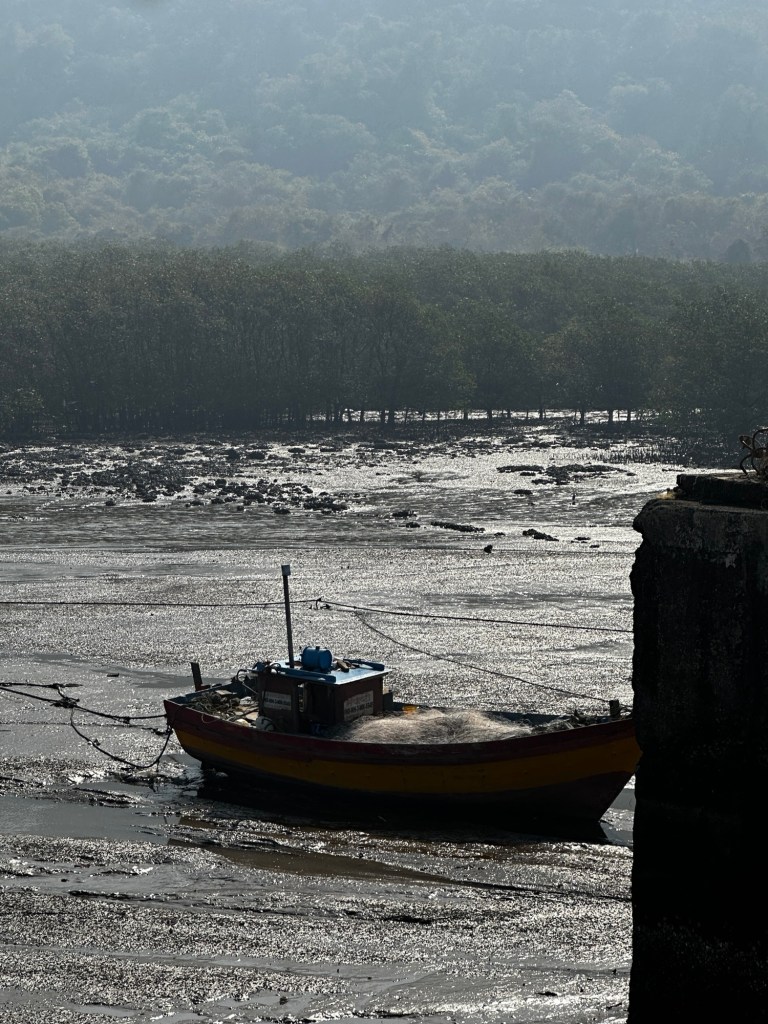
Our 45 minute boat ride crossed the big bay, passed large commercial freight docks and cruised over muddy waters.


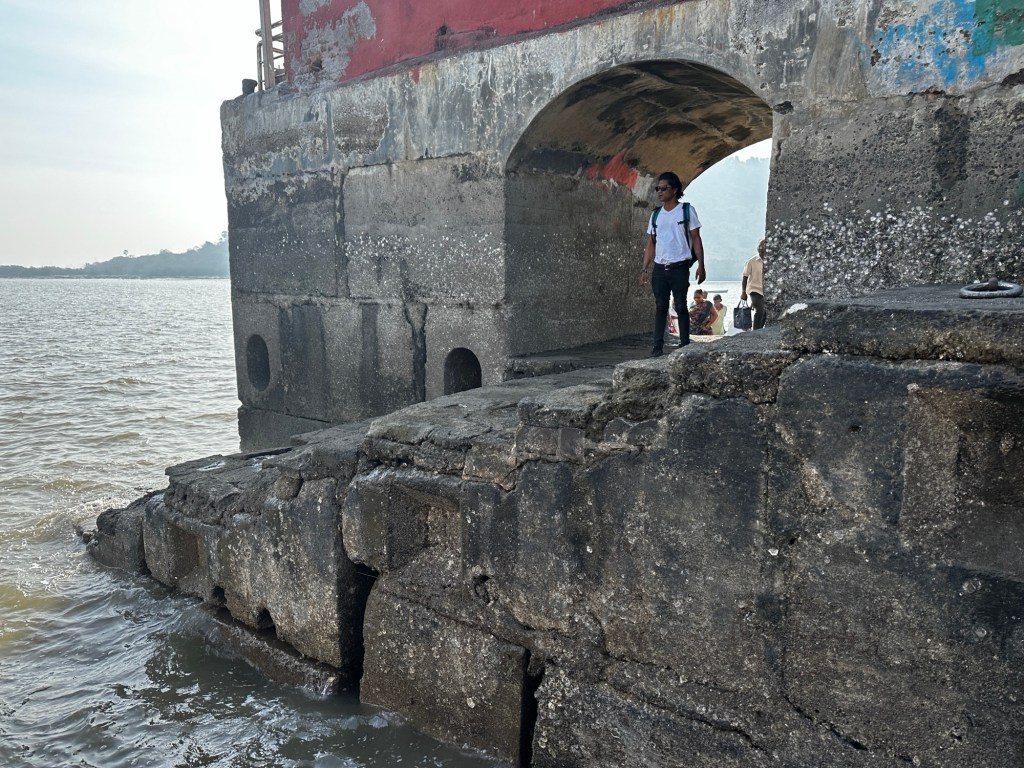
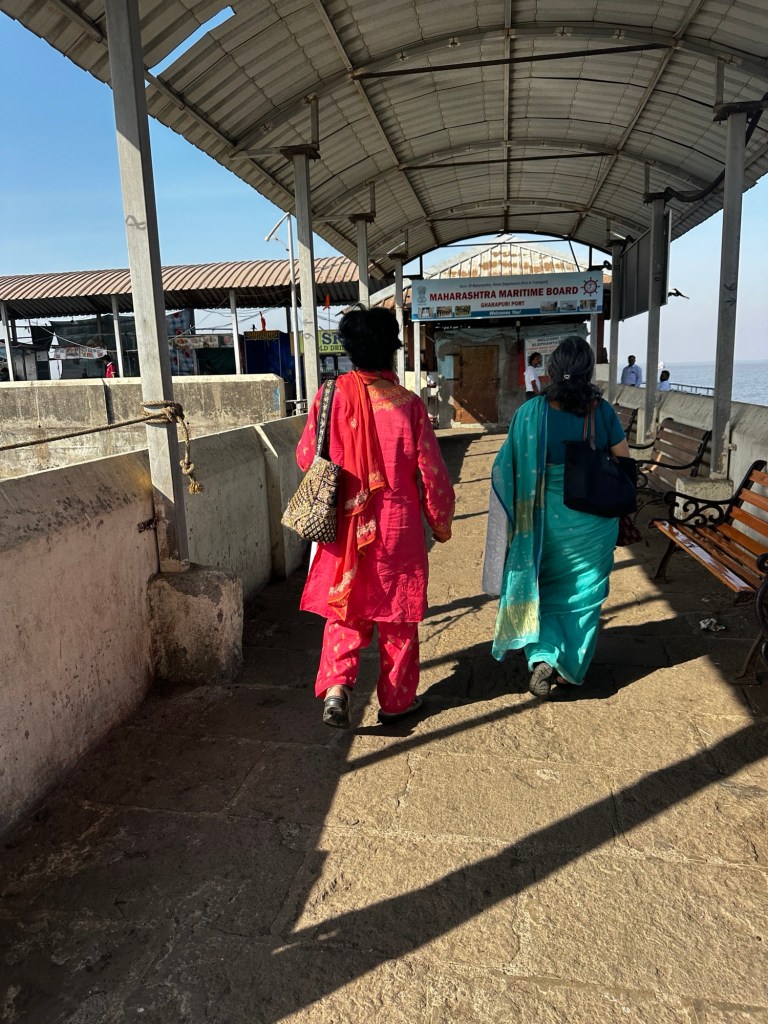

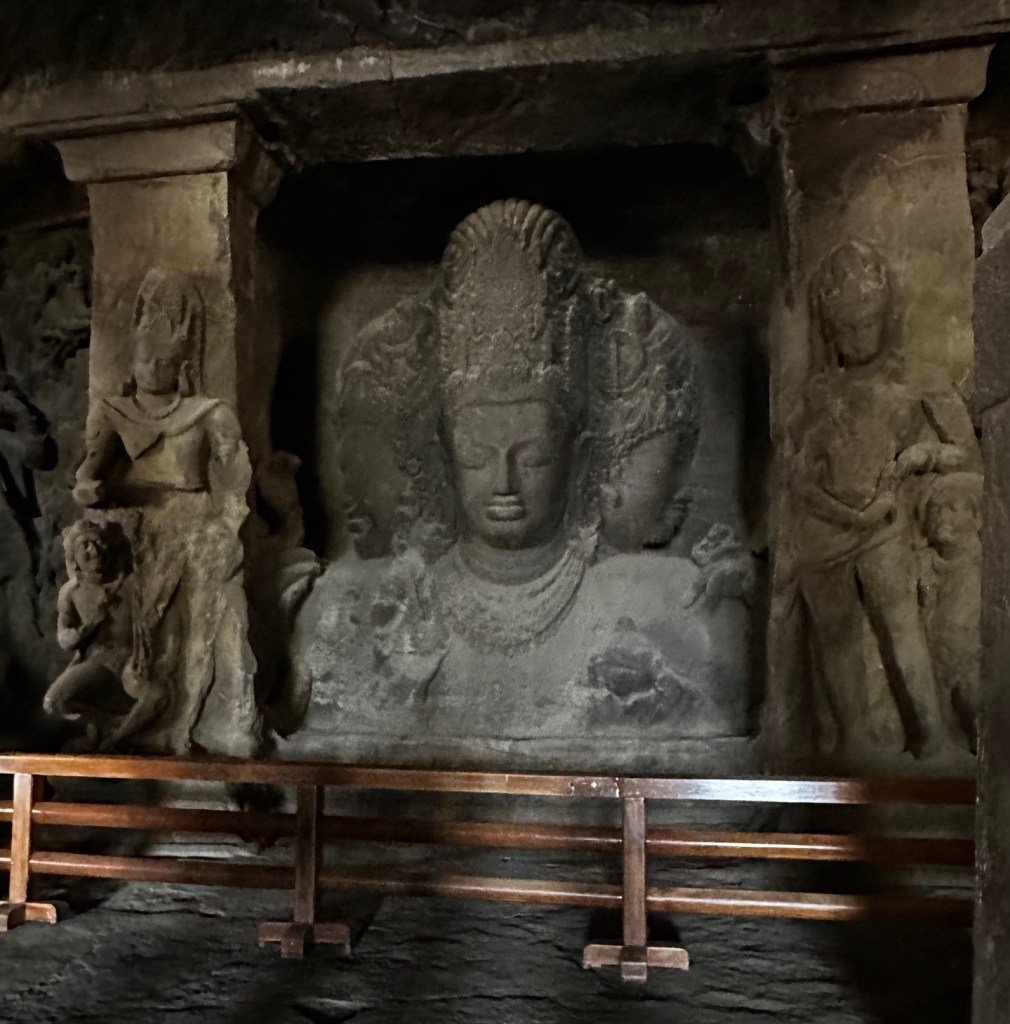


Docking at the stone pier at tiny Elephanta Island is definitely like going back in time. After reaching the top of the pier, we rode a funky little toyish train to the shore, the then climbed the 120 steps up to the caves, which are filled with very impressive Hindu carvings of the Hindu Divine Trinity: the Creator, the Preserver and the Destroyer of Evil. Our guide beautifully narrated the stories behind the sculptures as we circled from the east entrance to the final statue of Shiva in a meditative pose. He sits at the end of his everlasting life cycle in the classic meditative pose with only two arms. The Hindu Divine Story reflects the 4 stages of humanity: Youth (where we gain knowledge), Marriage, Retirement, and then the end of life, giving up materialism, meditating on life and hopefully reaching Nirvana. The caves were carved in the 5th century AD. The caves are surprisingly dramatic, beautiful and insightful.
As we headed back to our hotel by boat, our incredible group was feeling a bit of melancholy. We’ve all had a great time together and shared so much, thanks to our leader and tour guide, the amazing Tina del Campo.
At our farewell dinner there was lots of joy and hugs and promises to stay in touch.
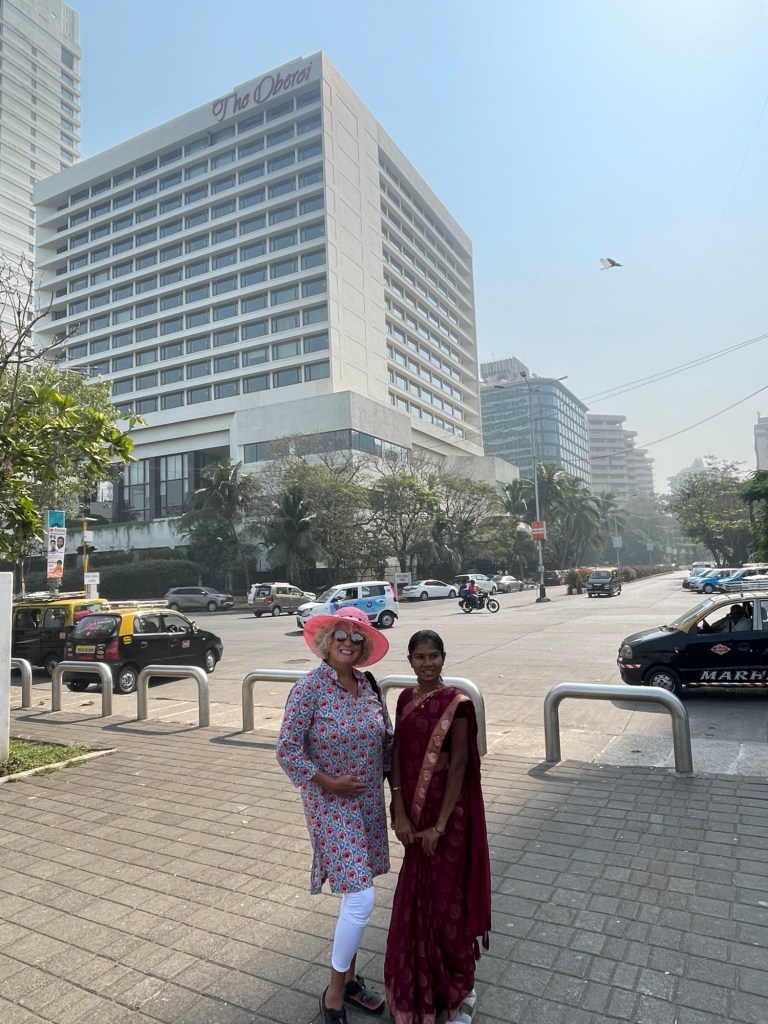
Because of the available flights from Singapore to Seattle, we decided to chill here in Mumbai for a few more days and did some touring on our own, confidently navigating our way across busy streets, hailing cabs and exploring the Victoria Terminus Train Station. Boy it’s huge and busy! We also went to the very good Prince of Wales Museum and strolled the waterway in front. of our hotel, past the many “art deco” style hotels and apartments.
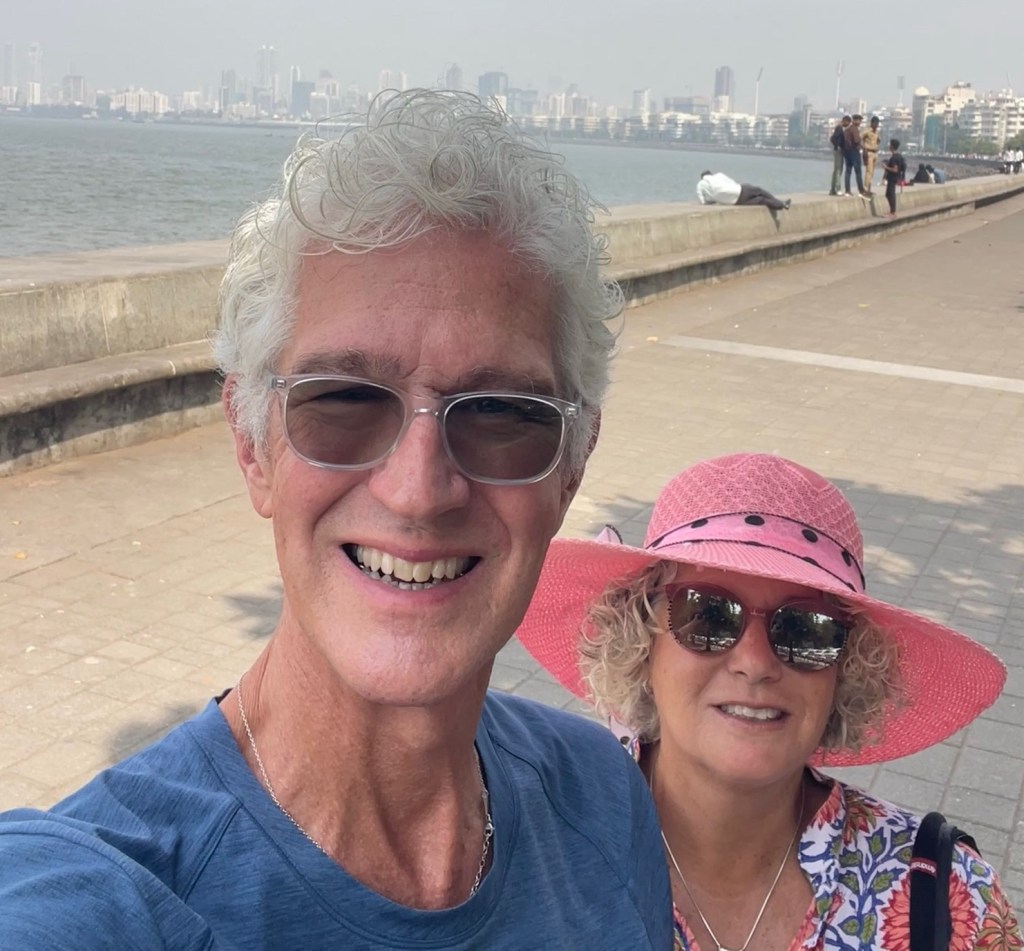
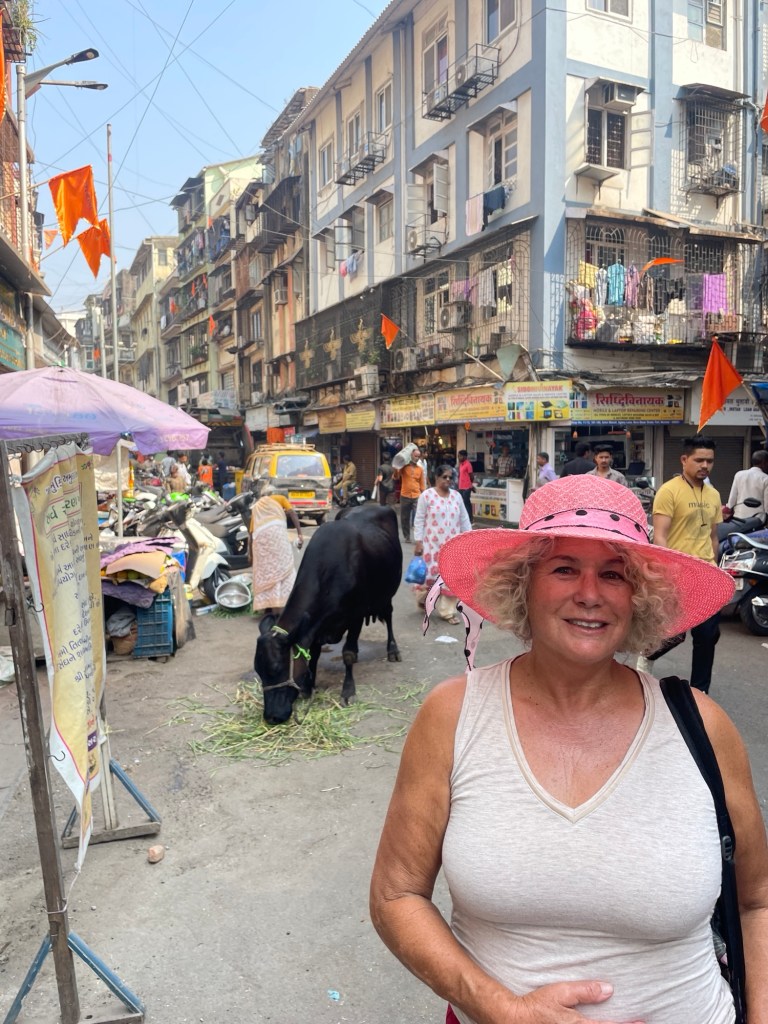
A lot of people wanted to take pictures of me in my pink hat. Someone said I looked like Englands Queen Camilla (married to King Charles). The pink hat I bought in Kerala for $1.20 has made me a minor star on the Mumbai waterfront. I don’t see the resemblance, I’m definitely more “wheatish” as they say in India because of my dark skin, but a lot of people here think differently.

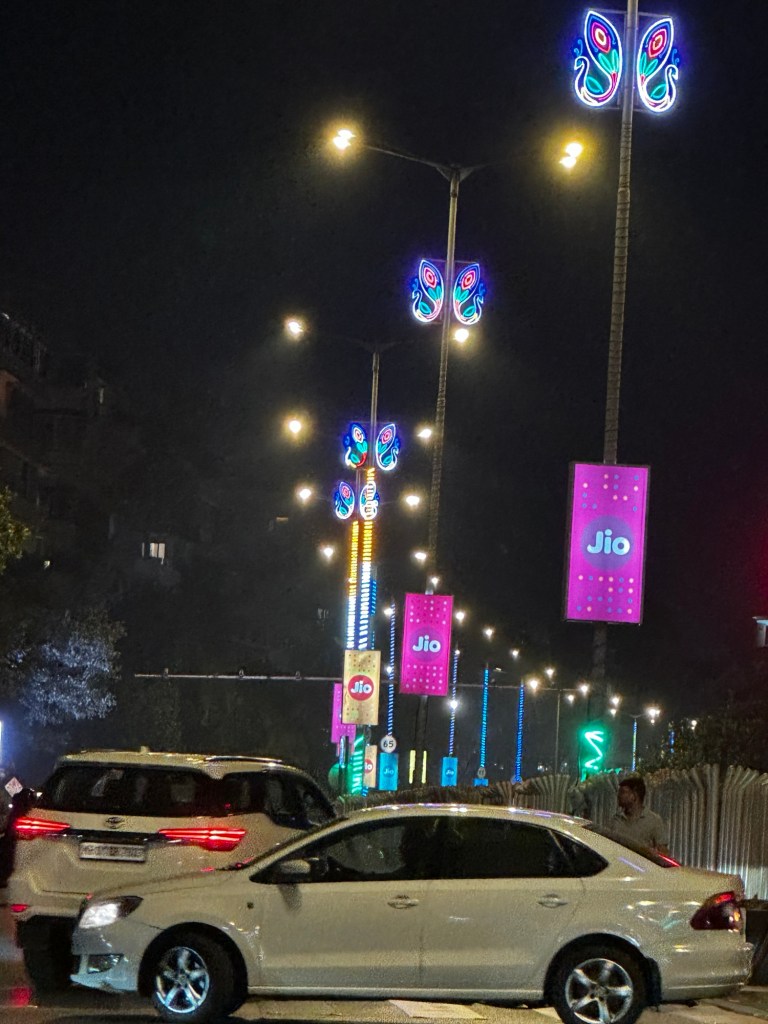
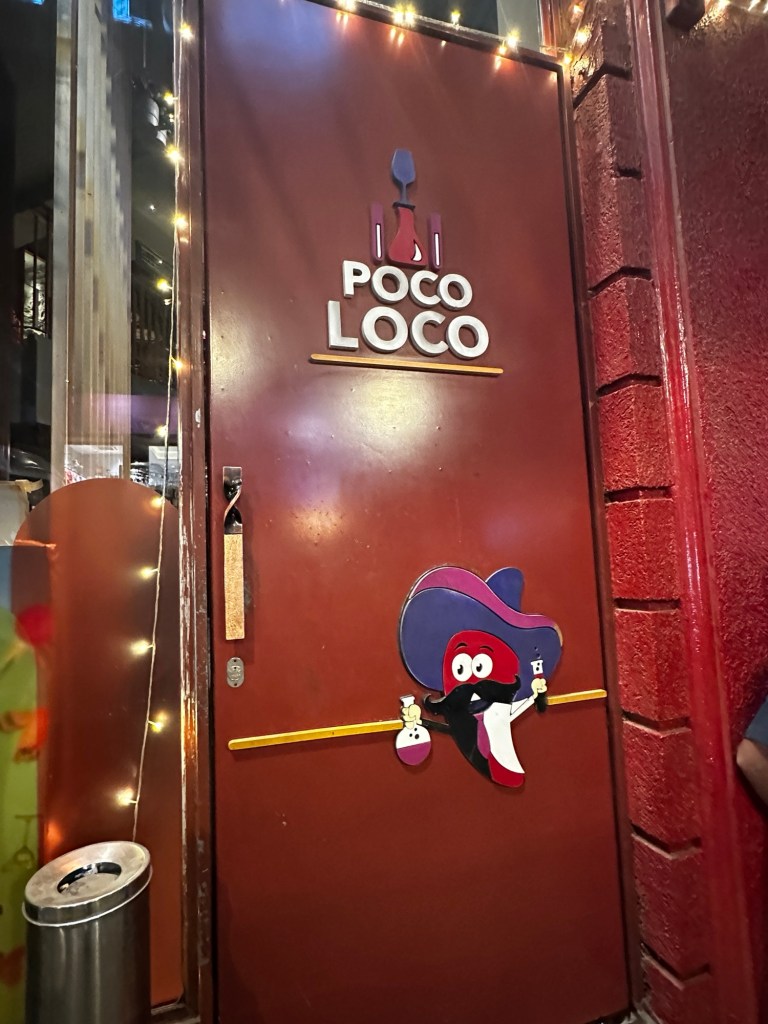
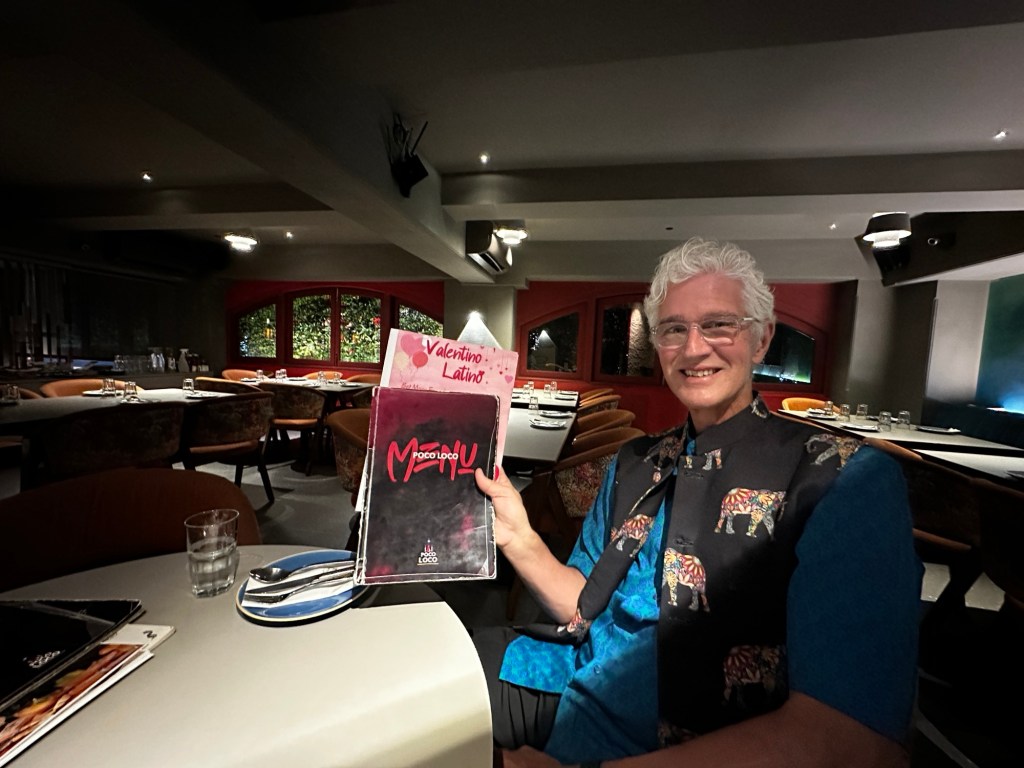
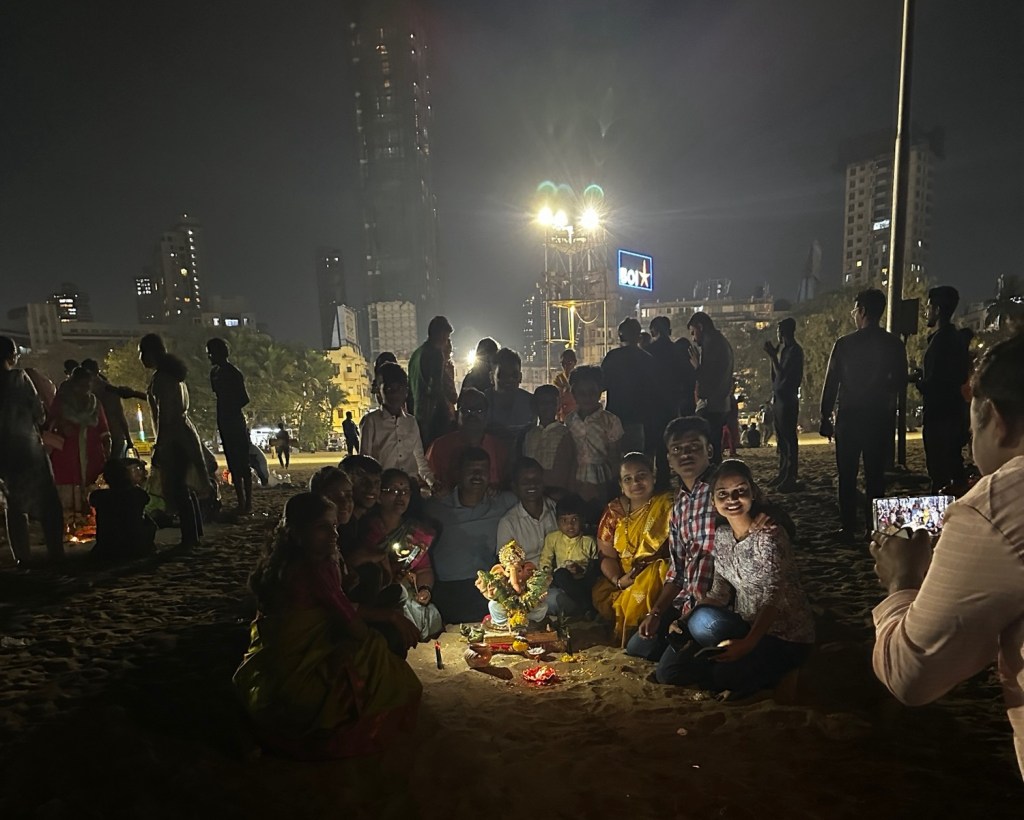
For Valentine’s night we were ready for a small local restaurant and the concierge suggested Poco Loco Town, a Mexican/Spanish Tapas restaurant in a less fancy part of town. We had a blast and the food was different but yummy. We walked back to the waterfront after dinner and stumbled on another remarkable serendipitous celebration of Ganesh (the beloved Indian deity of Good Fortune). Families arrived in trucks with their specially decorated Ganesh statues, walked onto the sandy beach, prayed, made wishes, lit incense and then took the Ganesh statue into the water and pushed it out to sea. We were surrounded by lots of Hindu joy and family celebration and welcomed into several celebrations for photos.

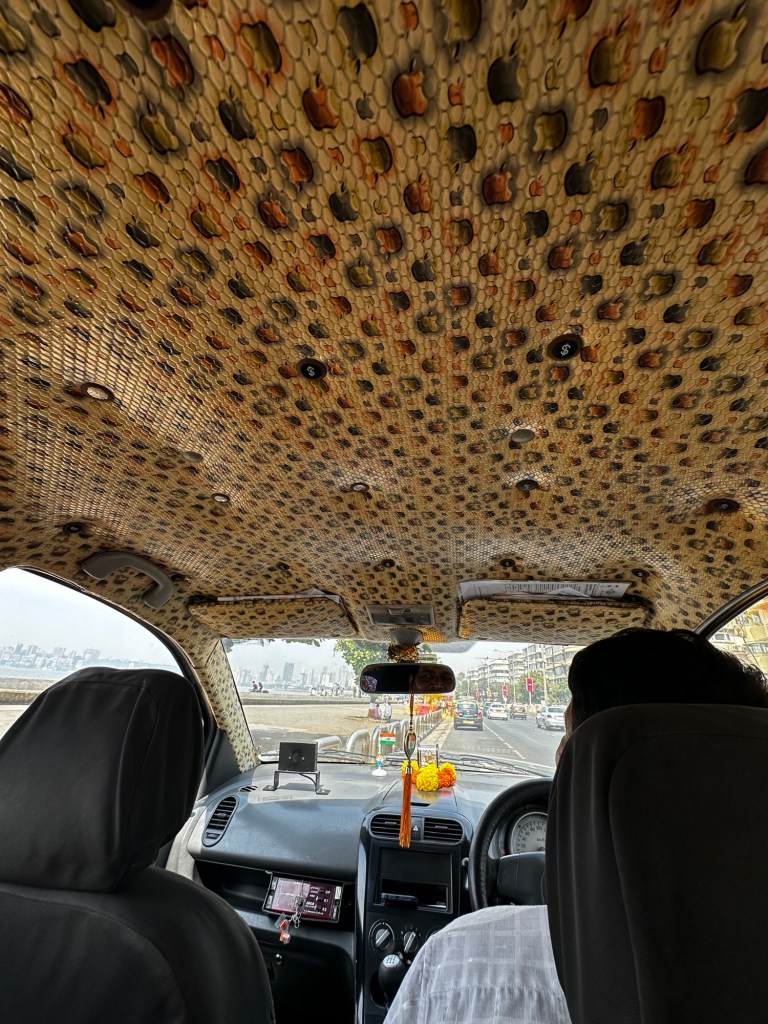


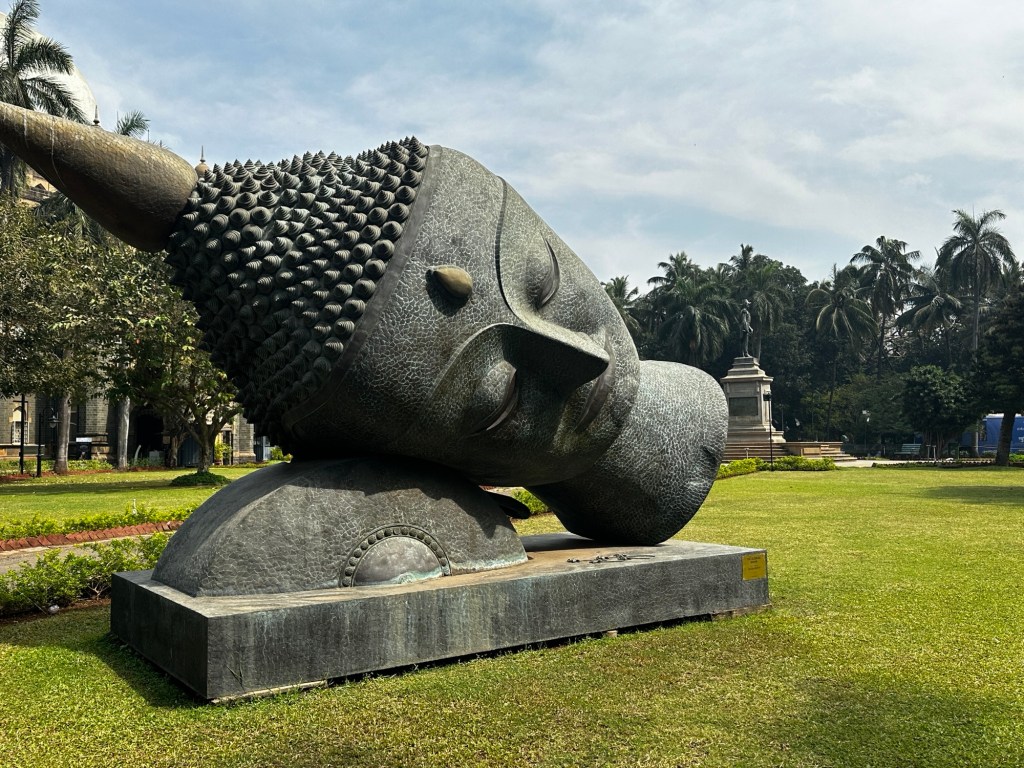
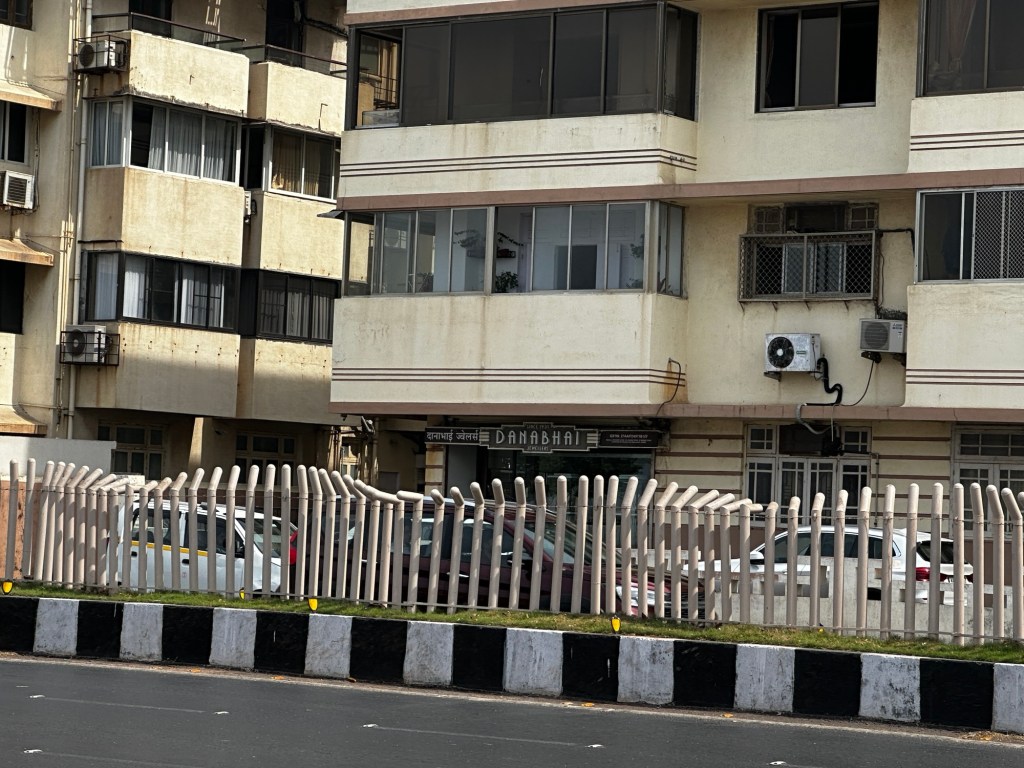
Organizing our luggage for our last leg of the journey is next on the agenda, followed by dinner with friends of the Wortleys, who are our Seattle-area friends who lived and worked in India years ago.
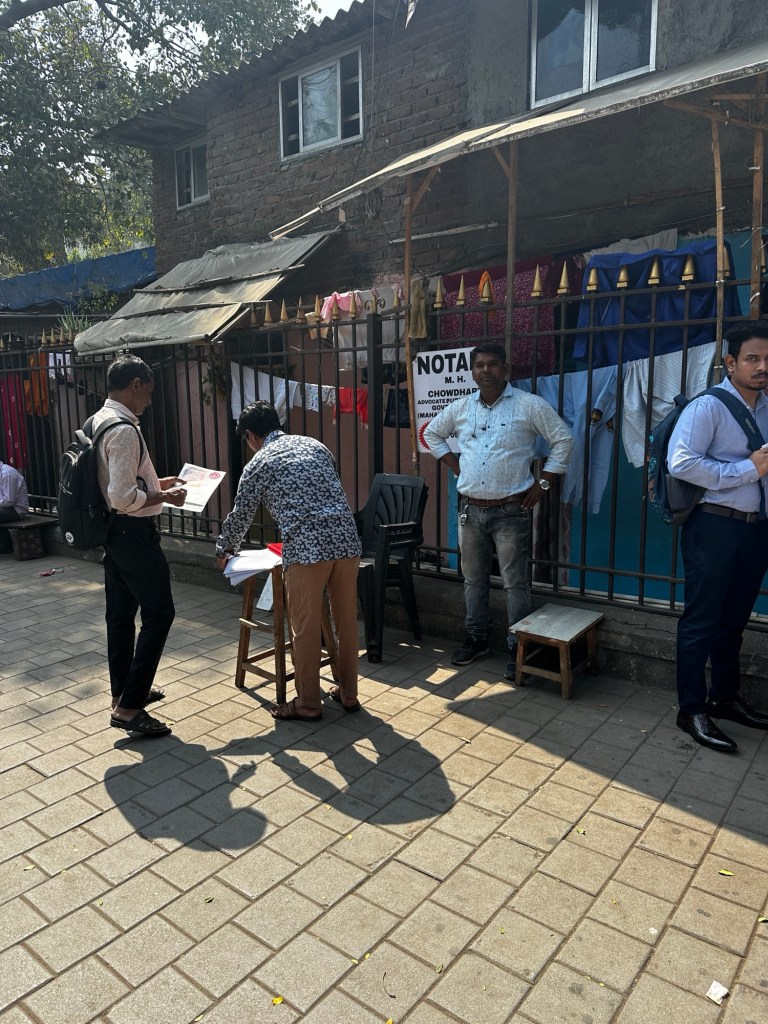
Our final day in Mumbai we woke up ready to find the big Jain Temple. Apple Maps said it wasn’t far, but we didn’t realize there were many Jain temples in the area. We wandered in areas of Mumbai that are very local: markets, local shops, cows, clothing, street side typists and more. We did find many small Jain temples, bought some sandals, laughed a lot and made it back to the hotel after about 3 hours of wandering.

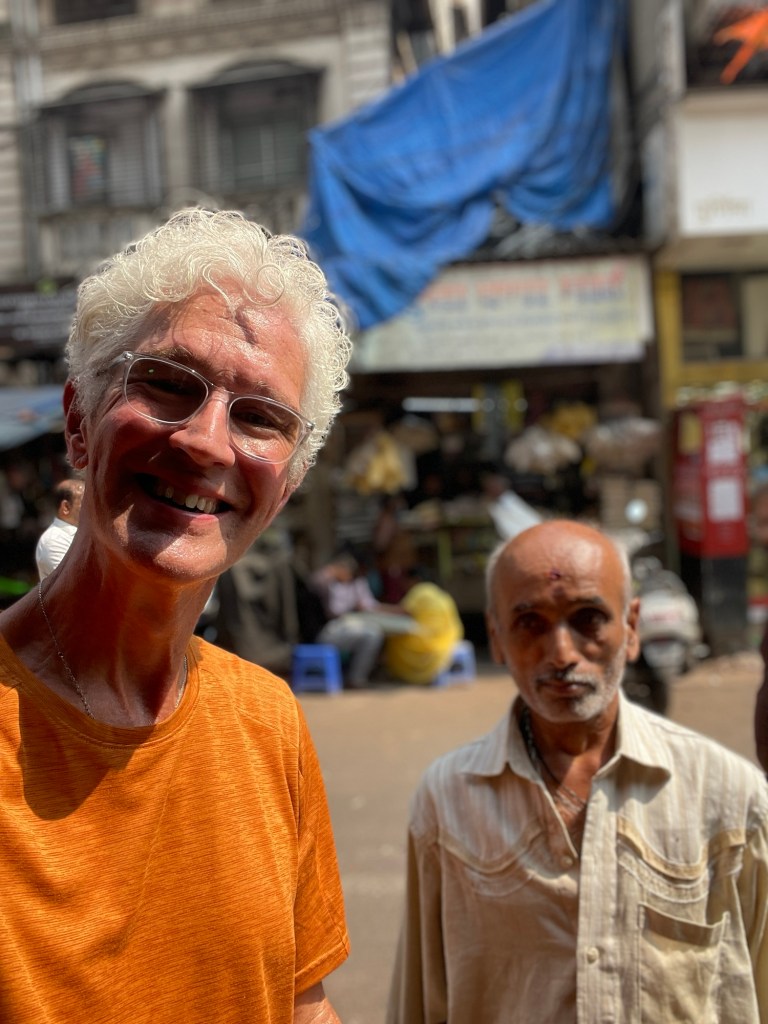
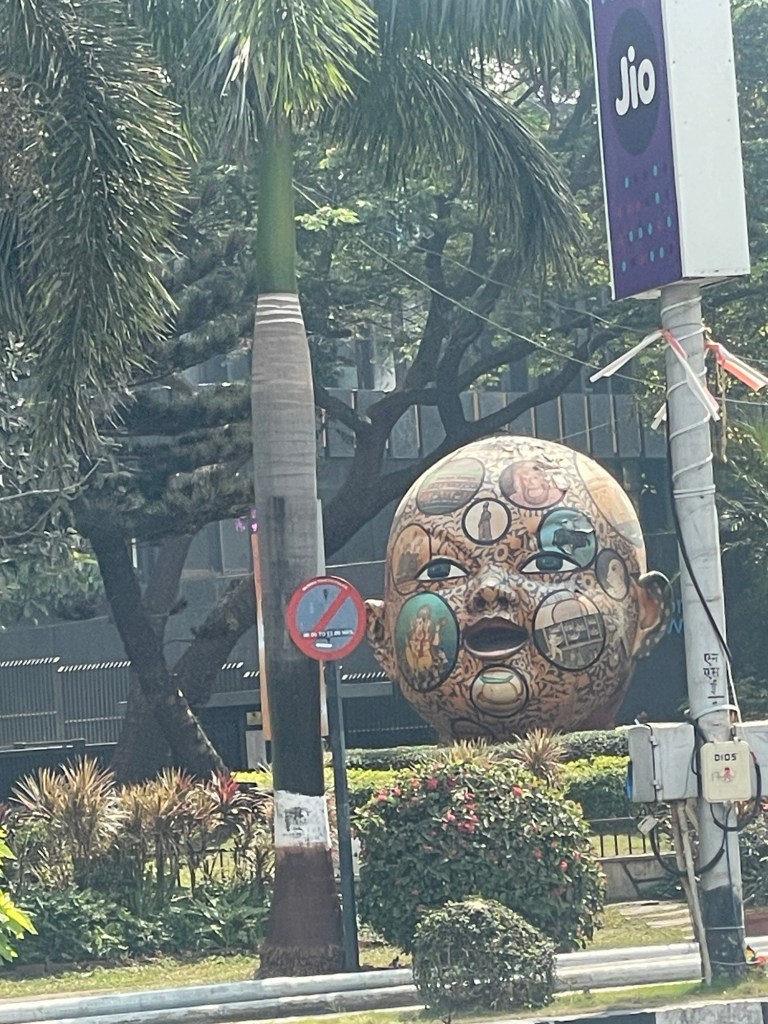

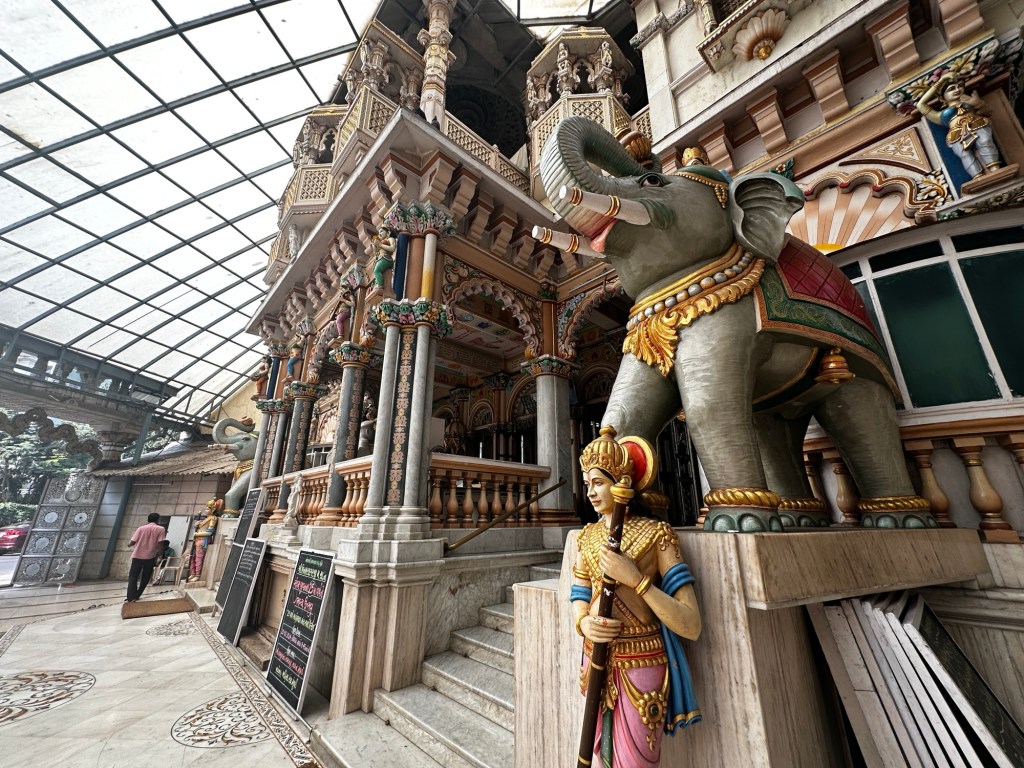
After we got back to the hotel, we realized the big Jain Temple was very close to our friends business who we were visiting later. So we rested a bit, got a snack, and then took a cab and successfully visited the beautiful Temple in a very different part of the city.



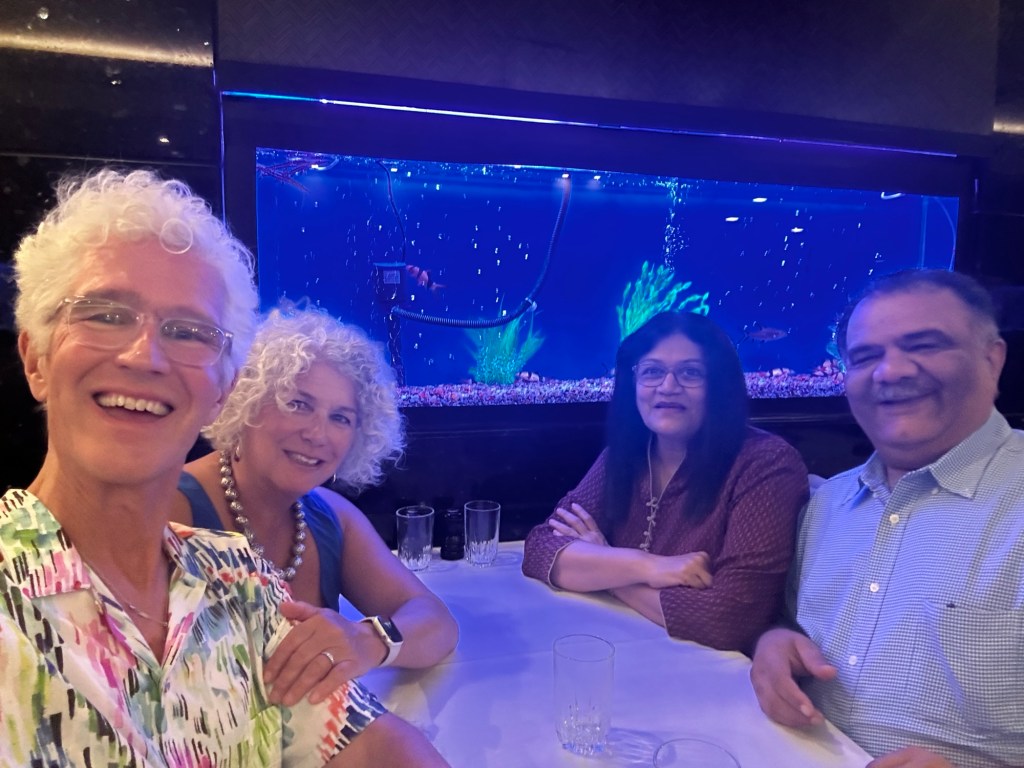
Then we had the joy of meeting Anand and Sujata. It’s so special in life to meet new people. They’re lovely people and they took us to a special dinner at the very popular Trishna fish restaurant in a lovely part of town we somehow missed on our walkabout earlier. We truly hope they will visit us in Seattle when they come to the states again.
As we write our final blog of India we are in Singapore and we fly home tomorrow. We don’t miss the honking. We are thrilled to have ice, salad, fresh vegetables and fresh air. But more on Singapore in the last blog.
 True Love Adventures
Wow, what an amazing adventure! Can’t wait to get more details as we sit on the beach and enjoy the calm of the Princess.
That was excellent and thank you for sharing it. You have developed an interesting perspective and shared so well with others that likely never travel down that road.