Final Days of the River Cruise and Budapest

The cruise ended in Budapest. We’ve visited cities in 5 countries: Netherlands, Germany, Austria, Slovakia and Hungary.

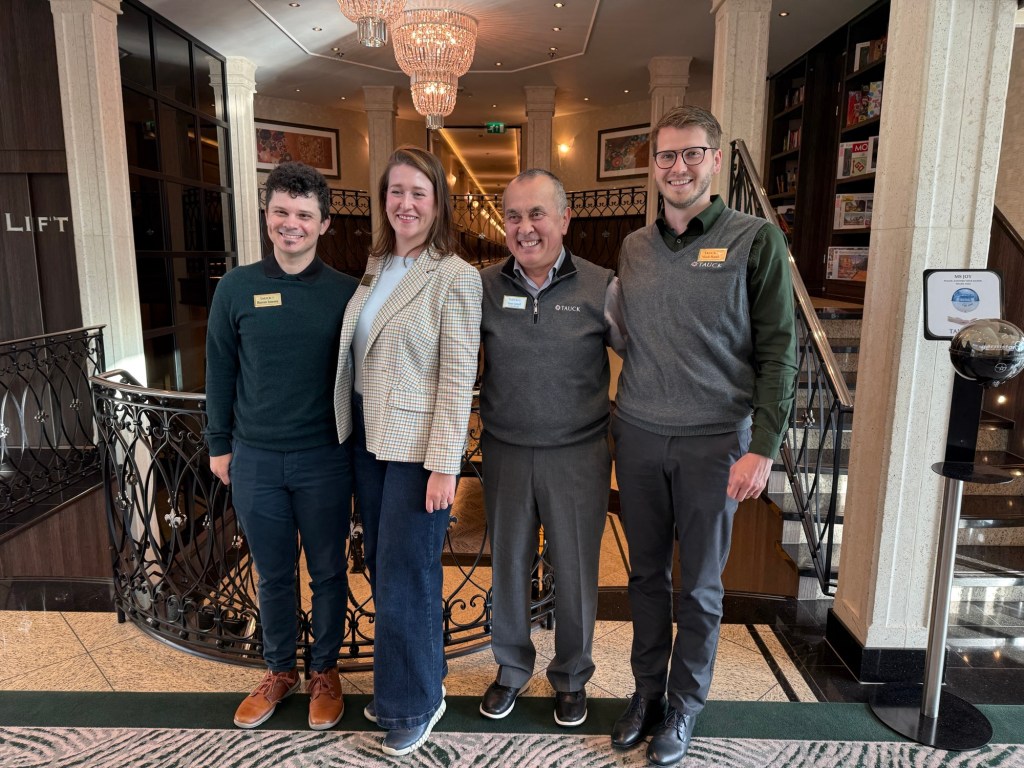
Some of the people we met on board will be lifelong friends. Two women we met on board, Wanda and Mary, have big birthday’s next year, along with me, within a few days of each other. We are plotting how to celebrate together.

A group of friends were celebrating a couple’s 50th Anniversary and decided to celebrate together.

Our new Aussie friends, Andrew and Ann, are a must visit and they want to come visit us to enjoy the Alpental snow.

Sue and Michael from Oregon are seriously considering visiting us on on BC’s Sunshine Coast on our boat.

Jim and I have never been to this part of the world and we thought a river cruise gets us the most places in the easiest way. Tauck did a fabulous job and we highly recommend it.

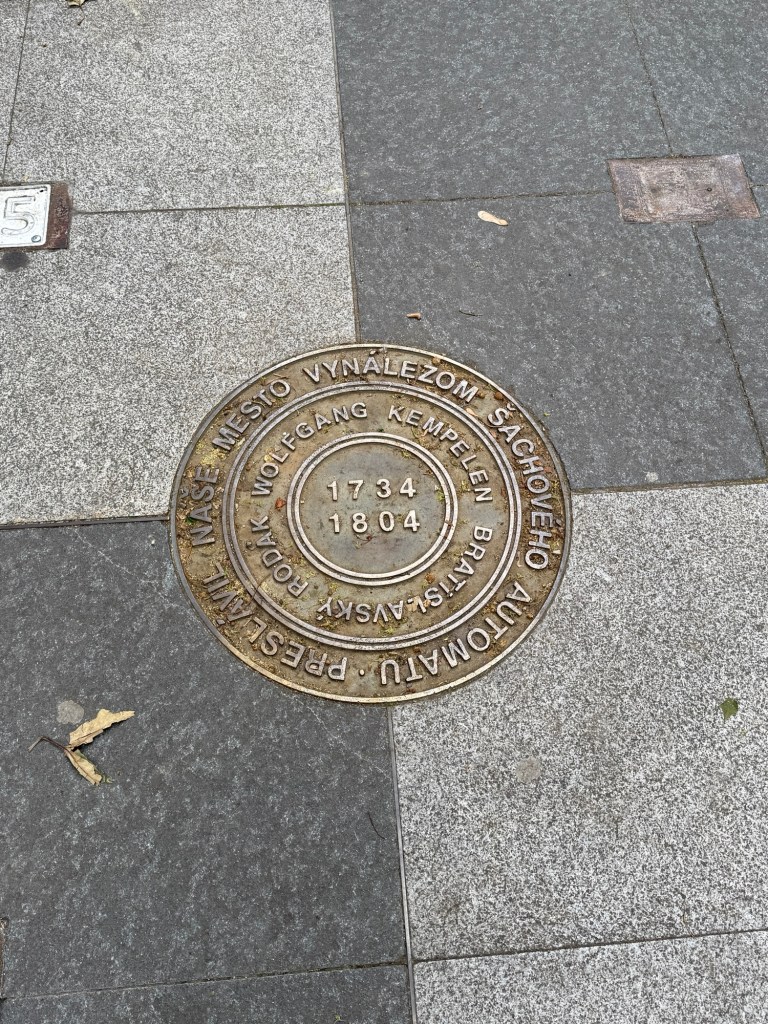
Bratislava

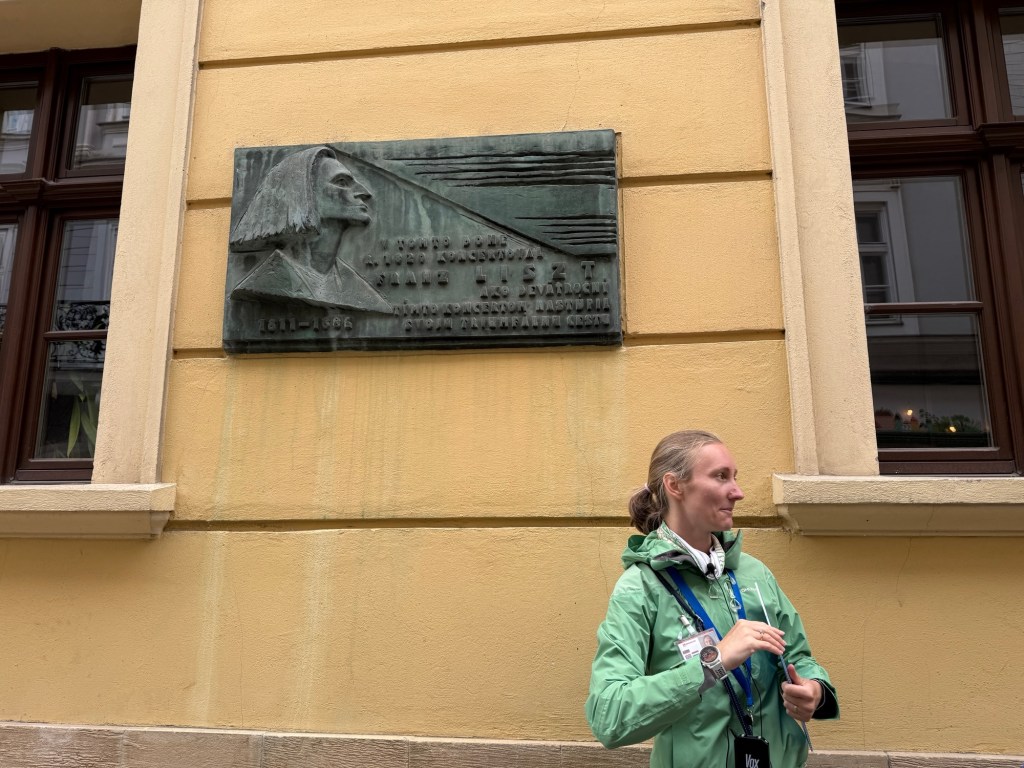
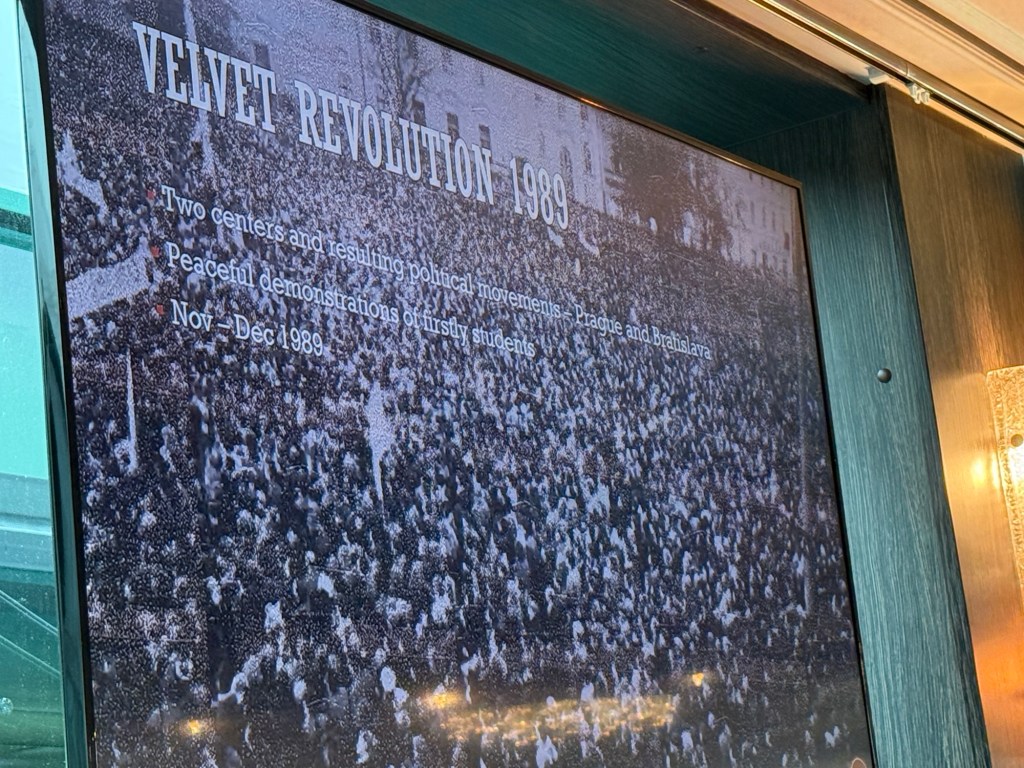
Before touring Bratislava we got an excellent lecture on the Velvet Revolution that brought Slovakia and the Czech Republic freedom from Soviet Communism. Each stop in this area of the world brings history alive. For the people who live here the transition from oppression to freedom is a living memory that is only 36 years ago (when our son Saul was born). You can still feel the negative vibes from the Nazi Occupation, the Soviet Liberation and then the Soviet Occupation and its “Iron Curtain” that denied freedom and even the opportunity to immigrate to a free country. Before touring Bratislava, we listened to a man who was 16 when he skipped school to gather to protest the repressive Communist regime in the main square. Would the Soviets invade again as they did in 1956 (Hungary) and 1968 (Czechoslovakia)? Not this time. These small countries are rebuilding and we could feel the pride from our speaker and the much younger guide who later led us on a walking tour of Bratislava.

Budapest

It’s hard to reconcile the beauty of this city with the horrors of the past, but we must.

Budapest is such a beautiful city of emotional contrasts. As it rebuilds and restores its classic buildings after years of government oppression, you can feel people worry about the future, if Ukraine falls to the Russians. When we left the cruise ship and checked into the beautiful Parisi Udur Hotel the young man behind the counter was quick to discuss his fear that the Russian occupiers could return. Of course Hungary is in NATO now and hopefully that still means something.

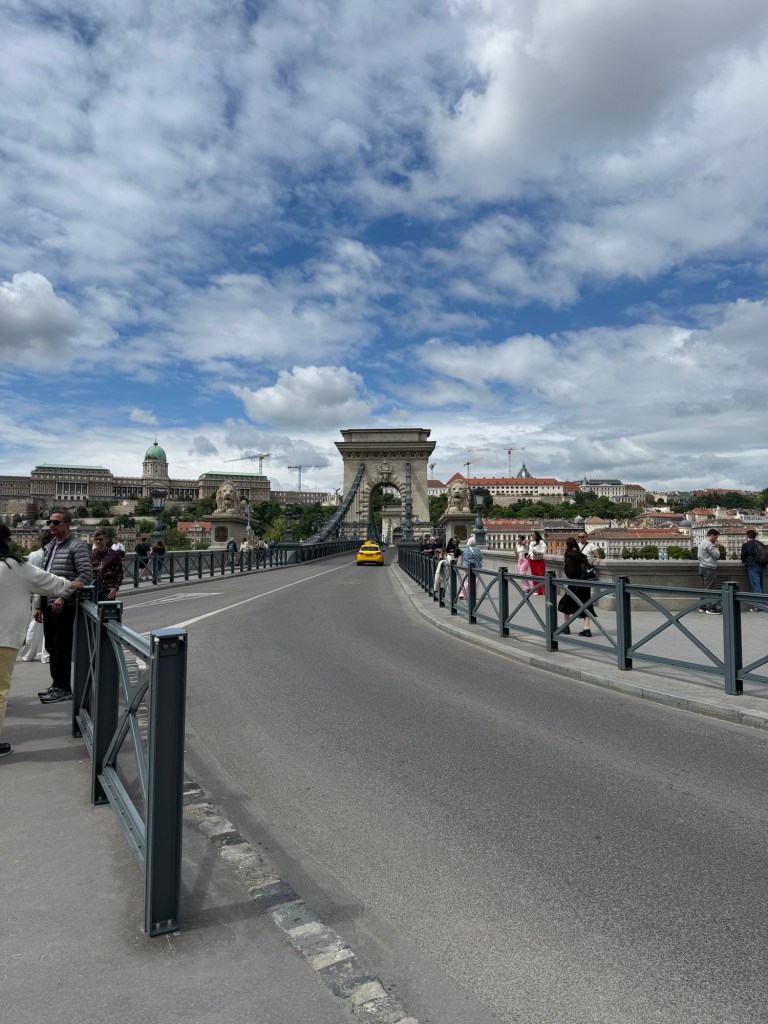
Before we checked into our Budapest hotel, we were treated by Tauck to a guided overview bus tour of the city ending at the stunning Mathias church on the Buda side of Budapest. On the other side of the Danube River is Pest (pronounced “Pesht”). The Buda and Pest sides of the combined city are connected by stunning bridges. Pest is the much larger and flat part of the city while Buda is on a hill with a large Castle and the amazing Mathias Church.

The tour guide on our bus told us the tale of all the Hungarian losses in battle. They did win a war against the Ottoman Empire, but that was after the Ottoman’s occupied Budapest for 150 years, and since that time the Hungarian army hasn’t faired so well.

After completing our bus tour, we visited the local market and I did one of our speed walks up the hill with Vladi and about 15 others to enjoy the great view and work off some of the yummy meals we ate that day.

Two days ago, in a logistics miracle, Tauck’s staff got all of the passengers and their luggage off the ship in record time. Some passengers headed directly to the airport (some as early as 3:30 AM) while most of us went to a hotel in Budapest for an additional night or two.

The Parisi Hotel in Budapest is stunning and our room (#504) was spectacular. After checking in we headed out to work on our Budapest checklist of things to see and do.
Our first stop was the Budapest Synagogue. This was an extremely tough visit. 600,000 Jews, one tenth of the 6 Million Hitler murdered, were from Hungary and most were rounded up and killed very late in WW2. It is beyond insane that the Nazis thought that killing some of their smartest and most capable citizens and their families would help win the war, and yet that is what they did. This display from the Synagogue museum is disturbingly similar to the quotas that we’ve seen today, and not just for Jews. Note to everyone: the keys to a successful society are encouraging everyone to reach their full potential by working hard, learning from the past, reading a lot, doing your best, and living a moral life.

The Budapest Synagogue is so beautiful yet unusual. It’s very colorful and has an organ (which can only be played by someone who isn’t Jewish because of the biblical commandment to not work on the Sabbath). It’s rectangular. This congregation wanted to assimilate and be more part of society, so it began what they call the Neolog Judaism: the evolution of many Jewish communities away from strict Hasidic rules, ultimately resulting in what we now refer to as Conservative and Reform Judaism. One of the people on our boat was here 10 years ago and got to attend a Kol Nidre service at the Synagogue which she said was very moving.

On the other hand, one of the most disturbing aspects of the Synagogue is the mass grave right next to the building where thousands, mostly unidentified, bodies were buried after the Nazis were defeated.
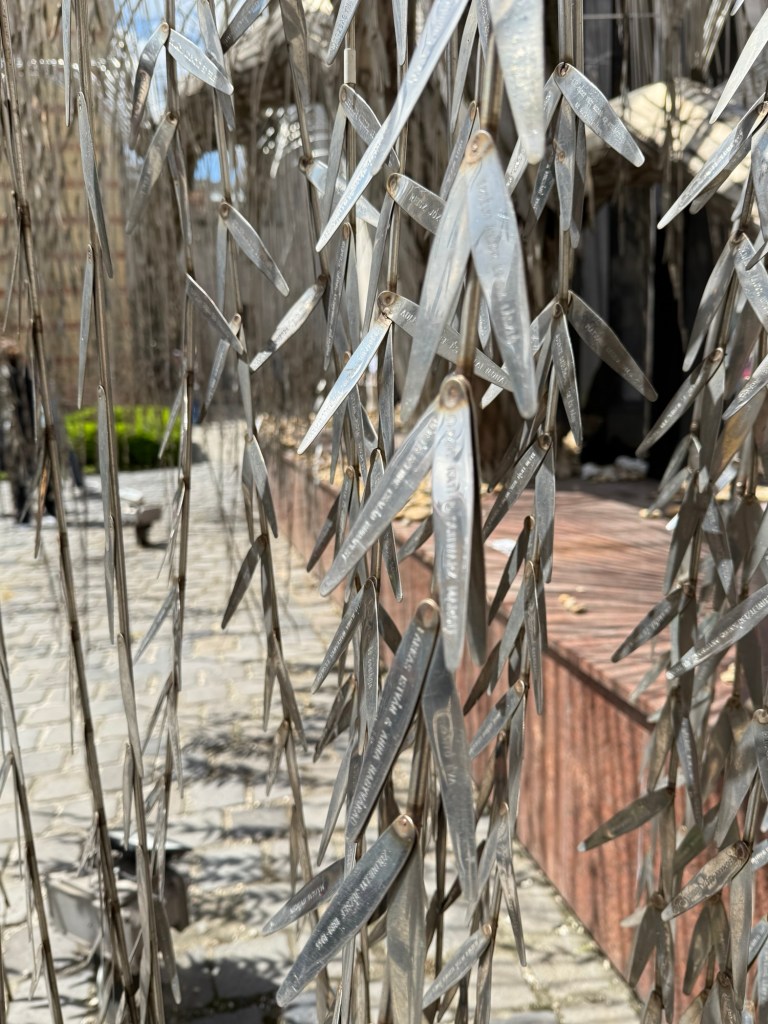
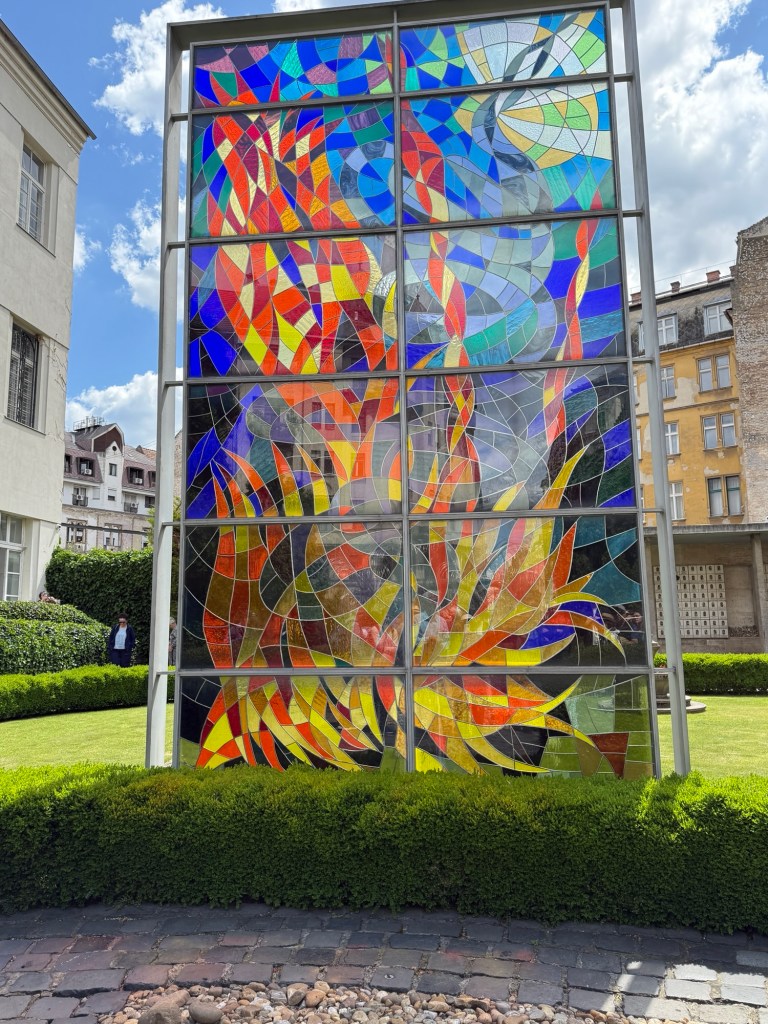
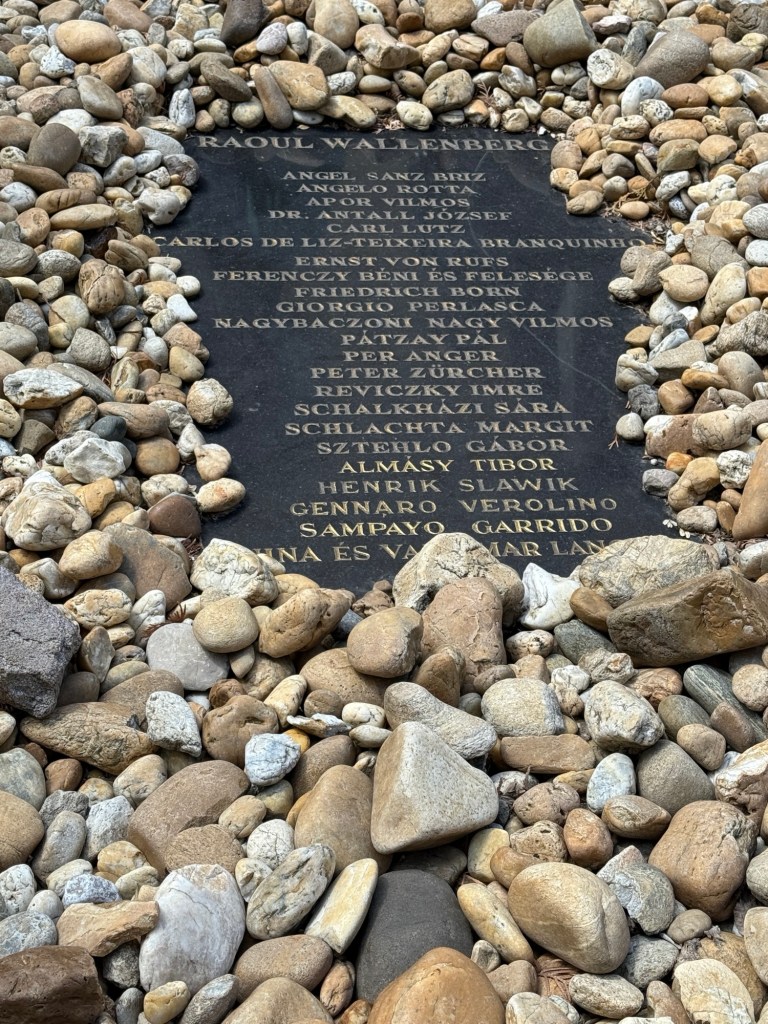
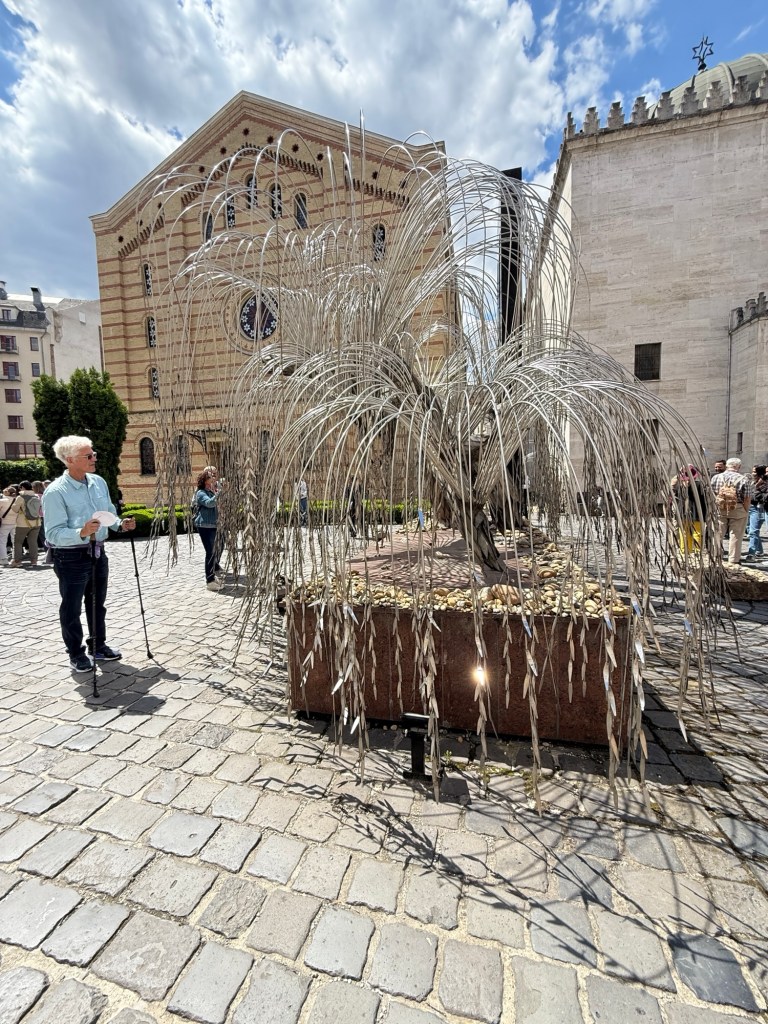
A small garden in the back of the Synagogue features a tree of life made out of metal with the names of the many of the victims of the Nazis. But the garden also features the names of the brave people, mostly diplomats from neutral countries like Sweden and Switzerland, who risked their lives to save thousands of Jews by giving them fake passports and documents showing that they had long ago converted to Christianity.

It was a sad but necessary stop in Budapest.

Heroes Day and a Folk Festival

After this visited I need some fresh air and a bit of a walk. We were heading to the Central Park to ride a hot air balloon that takes you high in the sky while always attached by cables to the ground.

On our way to the metro we stopped for Shwarma at a Turkish restaurant.

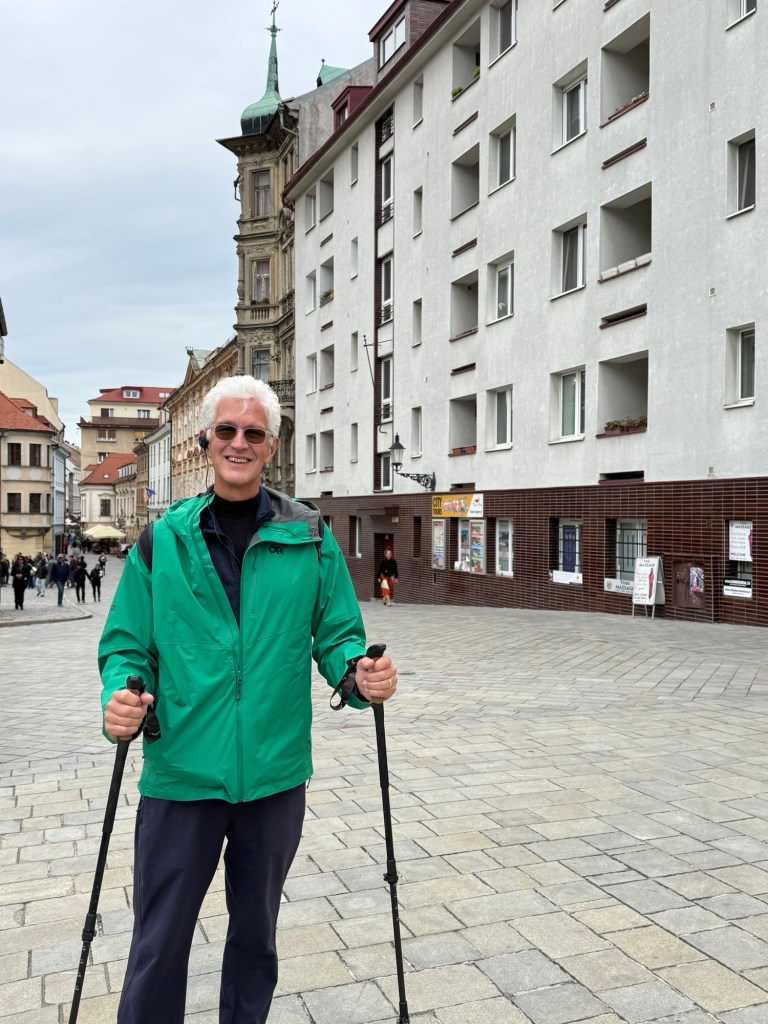
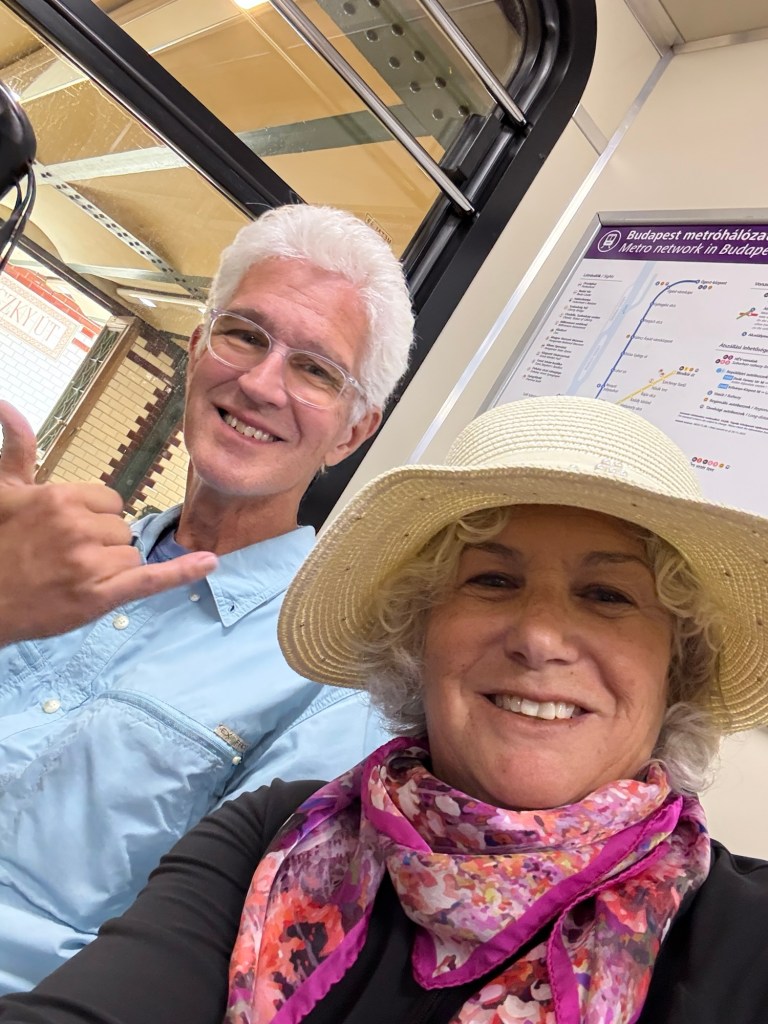
The Metro and light rail here are wonderful. Jim walked as much as he could, but his limit is about 3 miles a day so we always figure out the metro wherever we travel. This was easy. Jim rode free because he’s over 65 (You only need to show your ID if asked). Not quite 65, I had to pay about 25 cents per trip.

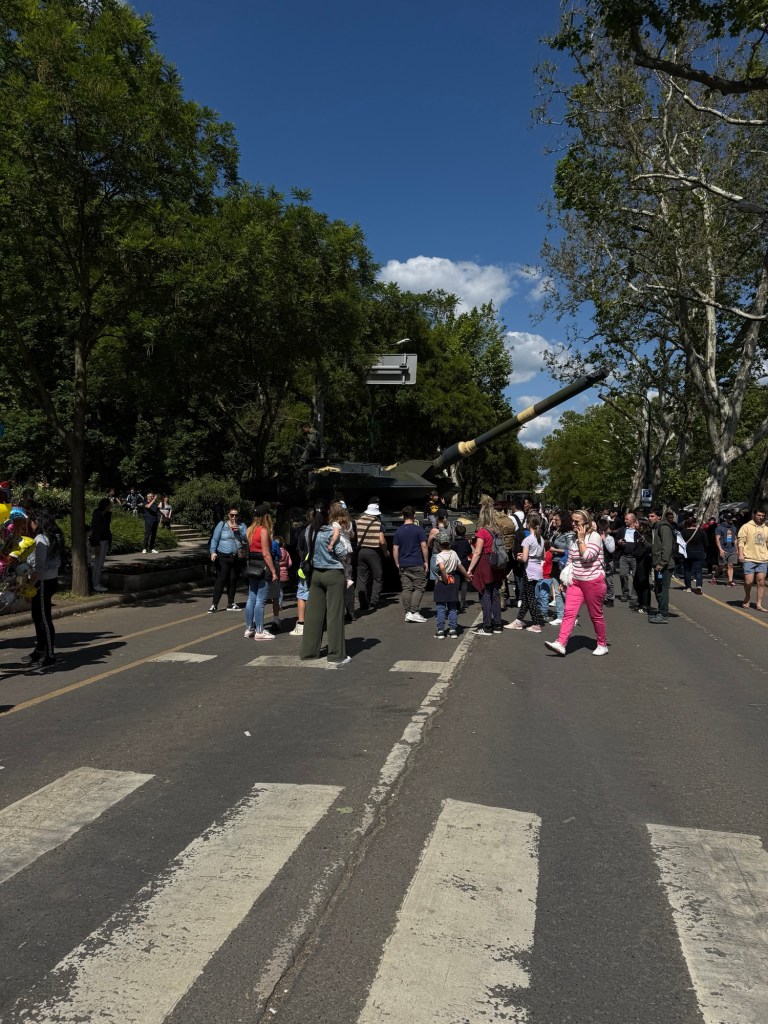
After navigating a transfer, we ended up in the big park on the outskirts of Pest. There a kind of military fair was underway where kids could climb on tanks, “play” on, in and around other military equipment, compete in obstacle courses and laser tag, and fly drones. Hungary is a small country (less than 10,000,000), with a history of military occupation, so it’s no surprise that many Hungarians want a strong military so that history doesn’t repeat itself. They need to essentially emulate Israel. We hope they succeed.

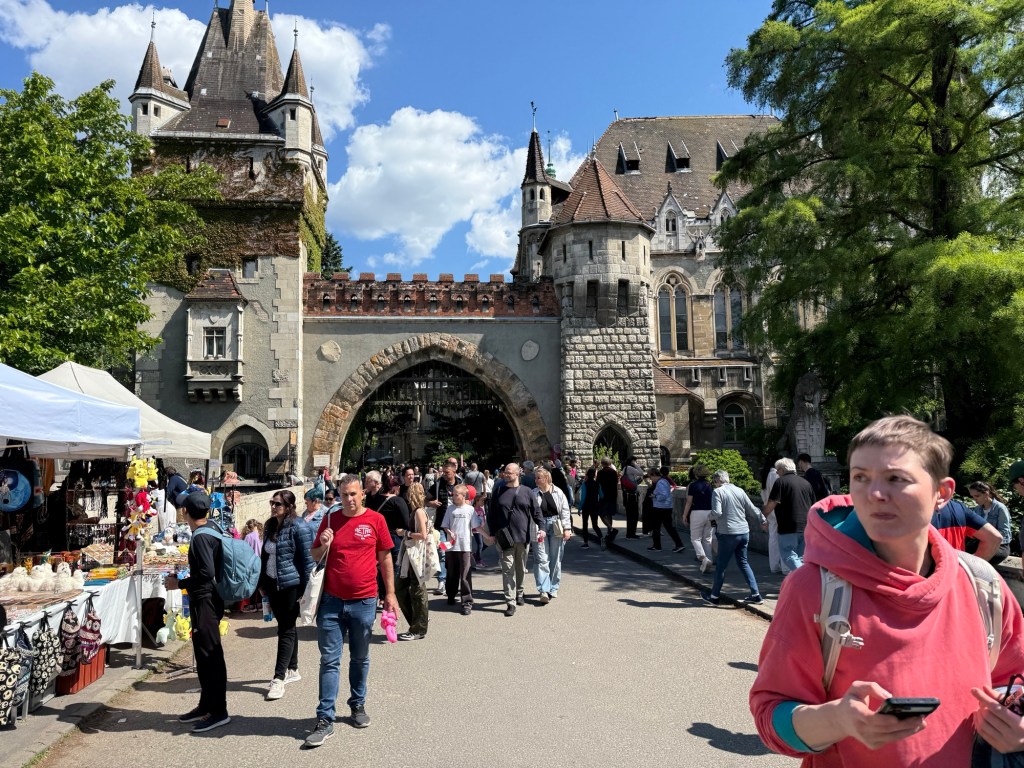
Ultimately, we weren’t able to accomplish our original goal of getting the view of the city from the ballon because the winds aloft were too strong. So we kept walking around and found the folk festival complete with Peruvian dancers and lots of food booths.

Exhausted from our excursions we headed back to the hotel via the metro and napped before a wonderful light and early dinner followed by a lovely evening stroll.

Yesterday, our last day in Budapest was also our first full day on our own.

We woke up and enjoyed a delicious, but smaller breakfast and headed out to visit the Parlament Building, the nearby Shoes Memorial (also commemorating Holocaust victims), then soaked in the oldest Turkish Bath building in Budapest: the Gellert. One of our favorite bridge buddies at the Rainier Club was Max Gellert. I wonder if he was originally from this area.

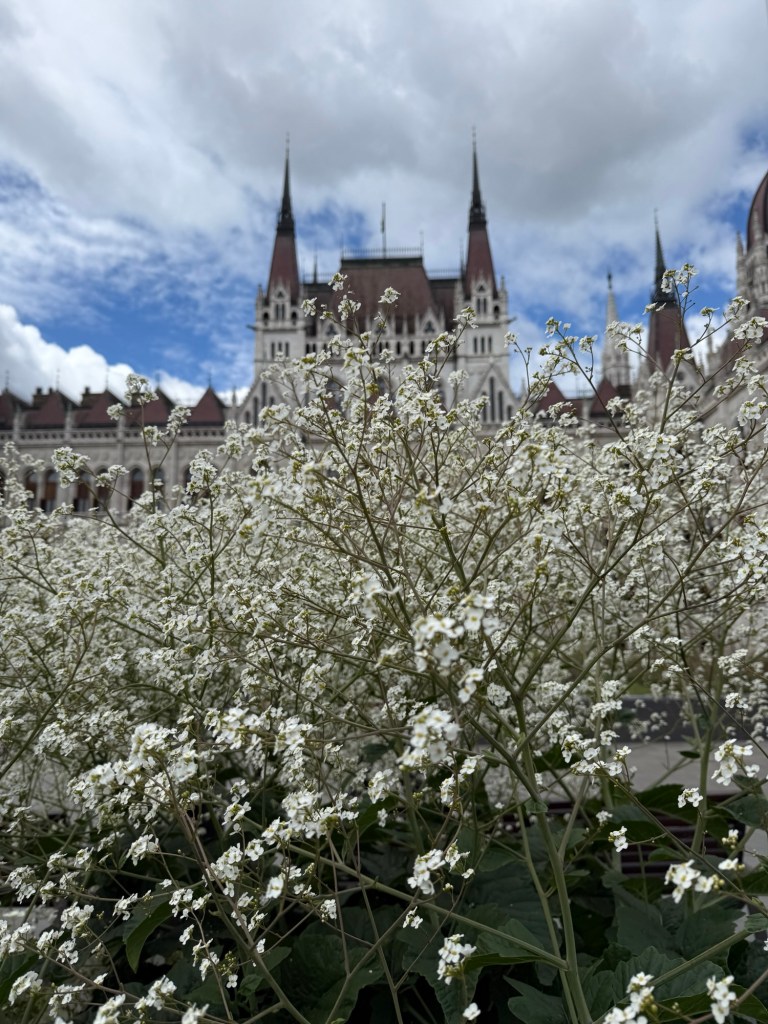
Unfortunately, we didn’t buy tickets to the Parliament building tour in advance and they were sold out. But we enjoyed walking around it while asking ChatGBT to tell us about the statues of the many leaders of the past. The gardens were lovely.

After circumnavigating the Parliament building we walked to the nearby Shoes Memorial. It was dedicated in 2005 to the memory of the Jews who were lined up, tied together on the banks of the Danube River, shot, and then pushed in. But they were forced to remove their shoes, who knows why, before their deaths. Created by the artist Gauls Pauer in collaboration with film director Can Togay, its location close to Hungary’s elected leadership is a reminder to those in power: never forget the great evil that passed through this land.
In the same vein there is a sculpture near there that shows a tired person with the inscription: doing the right thing can often be hard, dangerous and exhausting.

After walking about 2 miles we hopped on the light rail and headed to the Gellert Baths, which are just across the Danube on the Buda side of the river. These are old, opened in 1918. The attached hotel is under renovations, but the baths remain open. The baths are stunning and the thermal pools are heated by underground thermal springs that have been a blessing to the inhabitants of the area for over 1,000 years. The water doesn’t smell of sulfur but is clearly filled with other minerals. The magic of the healing thermal springs were documented as early as the 13th century. After our morning excursions, we decided we needed a snack before we entered the pools and we selected a “Cream Puff of Unusual Size” (CPUS) filled with cold Carmel cream, whipped cream and drizzled with caramel. Yum!

The baths are a maze with lots of steps down and up. An attendant suggested after seeing Jim with his walking sticks that we purchase a “cabin” (2 ft by 3 feet) to make it easier to get changed into our suits. After procuring towels and sandals for Jim, we proceeded to change and in “I Love Lucy” style, Jim mistakenly locked the wrong lock and we couldn’t get out. So we had to pound on the door until someone let us out, saying “it wasn’t the first time”. Then we wandered around searching for the bathrooms and totally missed the easy route to the thermal pools (which had their own bathrooms). There is also a regular pool, but that didn’t fit the bill. We did find the old thermal pools and at 36 and 40 degrees Celsius perfect. The old pools are extremely large and beautiful and we enjoyed them for quite a while before we showered, dressed and headed back to the hotel, walking and by light rail.

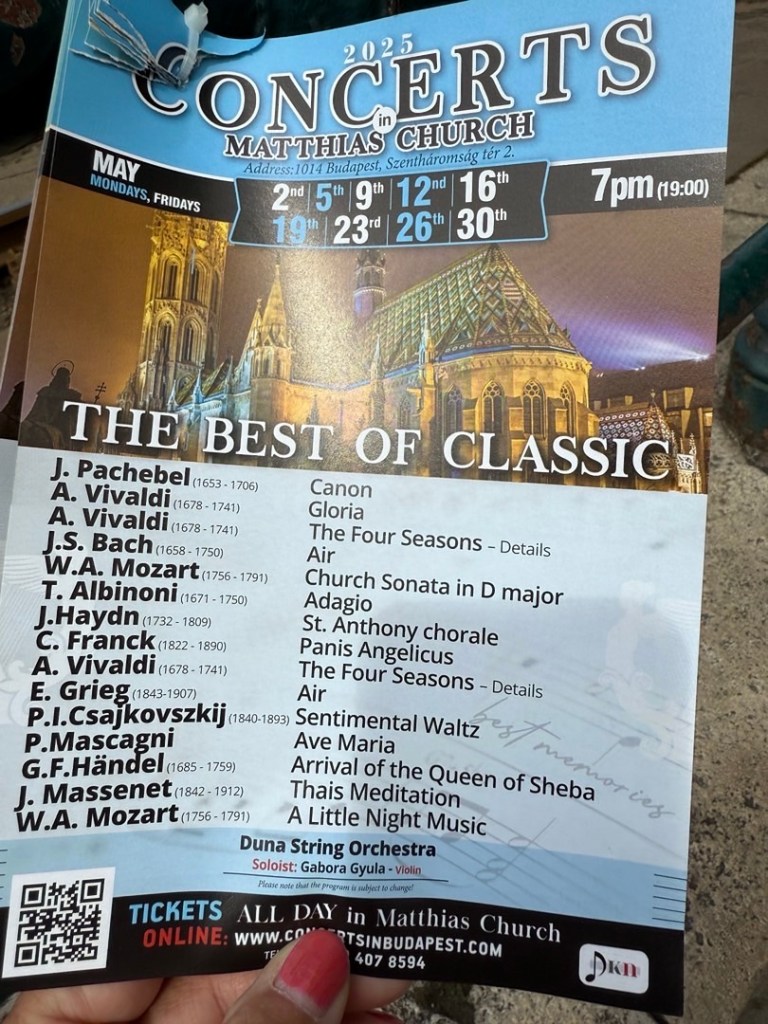
On our walk that morning Jim saw a brochure for a concert at the Mathias Church and he had a feeling that we should go. How right he was! After a quick nap, we took a taxi and headed up there with enough time to grab a delicious thin crust pizza before heading into the church.

The talented musical quintet (3 violins, a cello and a bass) played a collection of classical top hits that filled the baroque cathedral with enchanting music.

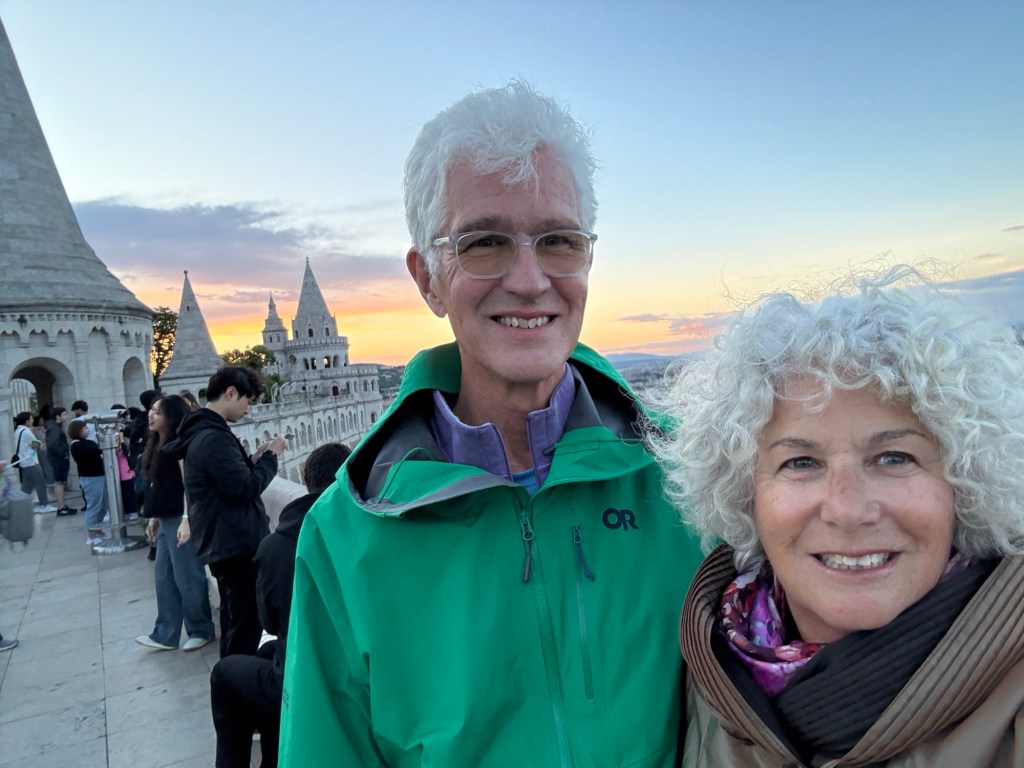
We exited the Cathedral to a spectacular sunset and walked up to the nearby viewpoint before heading back to the hotel using the funicular to get down to the river and then walking the rest of the way.

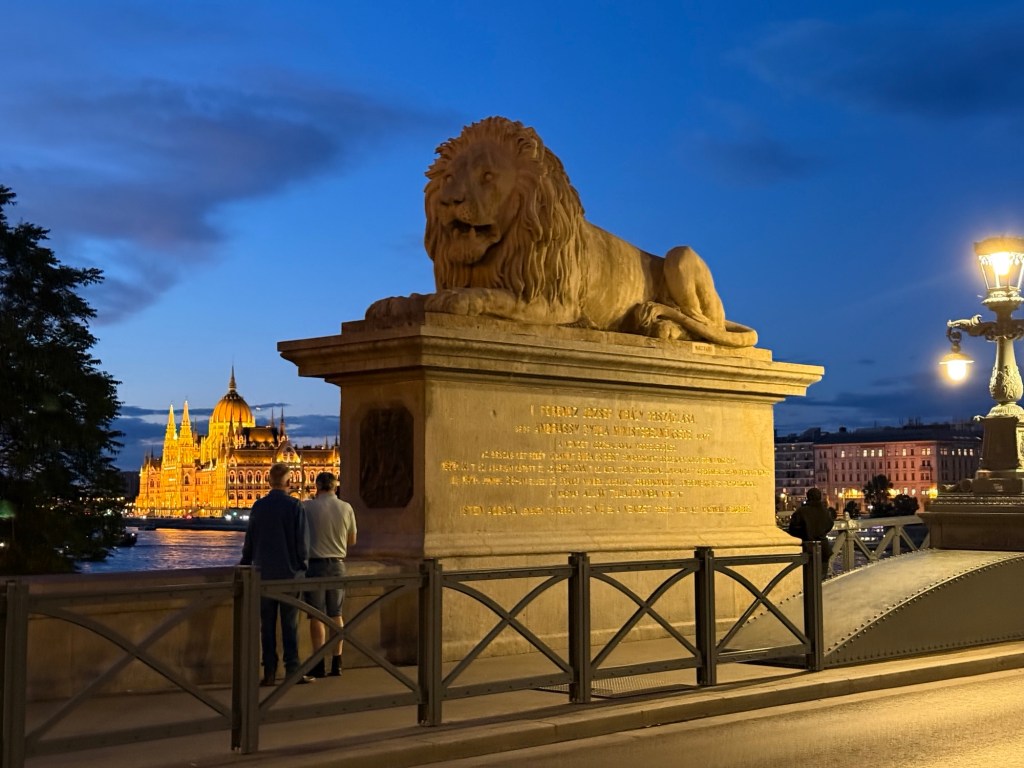
This city of contrasts sparkles at night with the water, bridges and old buildings illuminated with abundant brightness and happiness trying its best to wipe away years of darkness, death and repression.
Needless to say we slept really well after such a lovely full day.

Today we pick up our rental car and enter the driving part of our journey, first to Prague and then Switzerland.
River Cruise: The “Wild” River from Regensburg to Passau, Melk Abbey & Vienna

The Main River canal system that connects the Rhine River to the Danube River works well until you get close to Regensburg. That’s where the Danube has no dams and locks and is therefore considered “wild”.

The “wild” section has roads and buildings on both sides of the river but without the dams and locks the water level is “natural” which means it is often too low or too high to transit. When we reached the “wild section” it was too low for larger barges and cruise ships to get through. Tauck ships are newer and float about a foot higher, so our ship barely made it after unloading almost all of the passengers and the expelling all of the ballast that helps the boat remain very stable while cruising or at a dock.

To transit the “wild” section, a special river pilot took the helm through the shallow waters, and got through, although the side and bottom of our boat got scraped a bit. Most of the other river cruise ships had to wait for higher water.

It seems crazy to us that after investing in this remarkable river and canal system that goes across Europe, they leave this one section without a dam and locks which creates chaos for the whole system. Although we believe in keeping some rivers “wild” we think that makes the most sense where the river runs through a national park or “wild” lands, not where there are roads and buildings all along the so-called “wild” section.

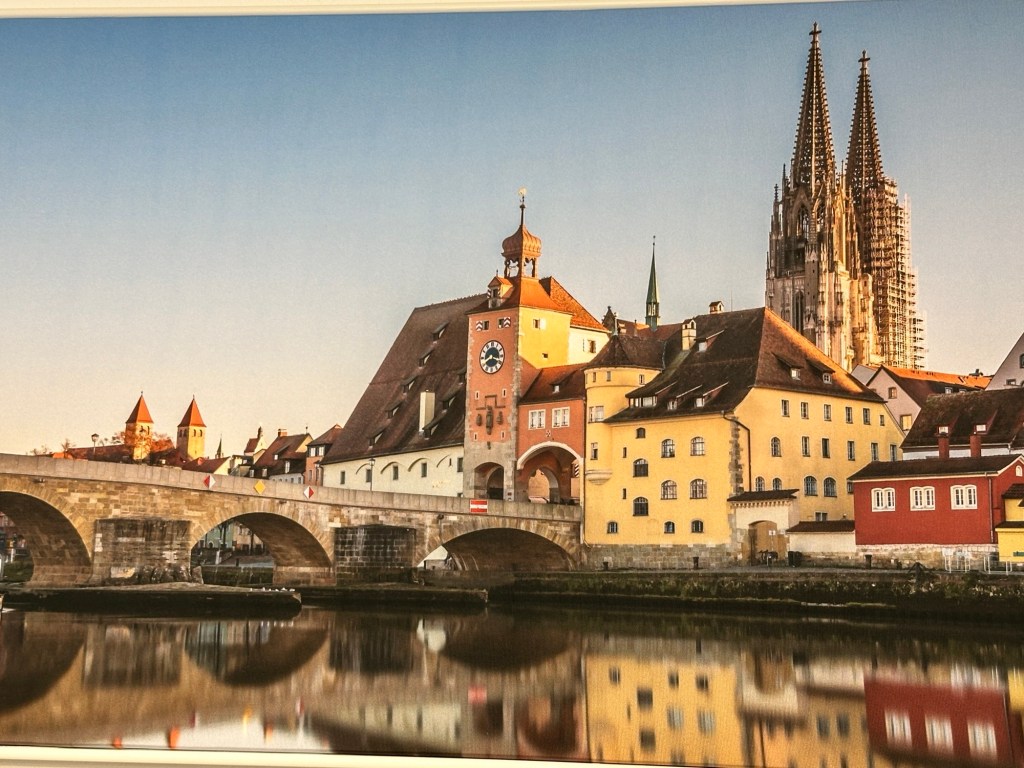
Because we had to leave the ship while it traveled slowly down the “wild” Danube, we were off the boat for over 12 hours. We left early in the morning on the bus and had lots of time to kill before meeting up with the bus on the other side of the “wild” river. That being said, we really liked Regensburg.

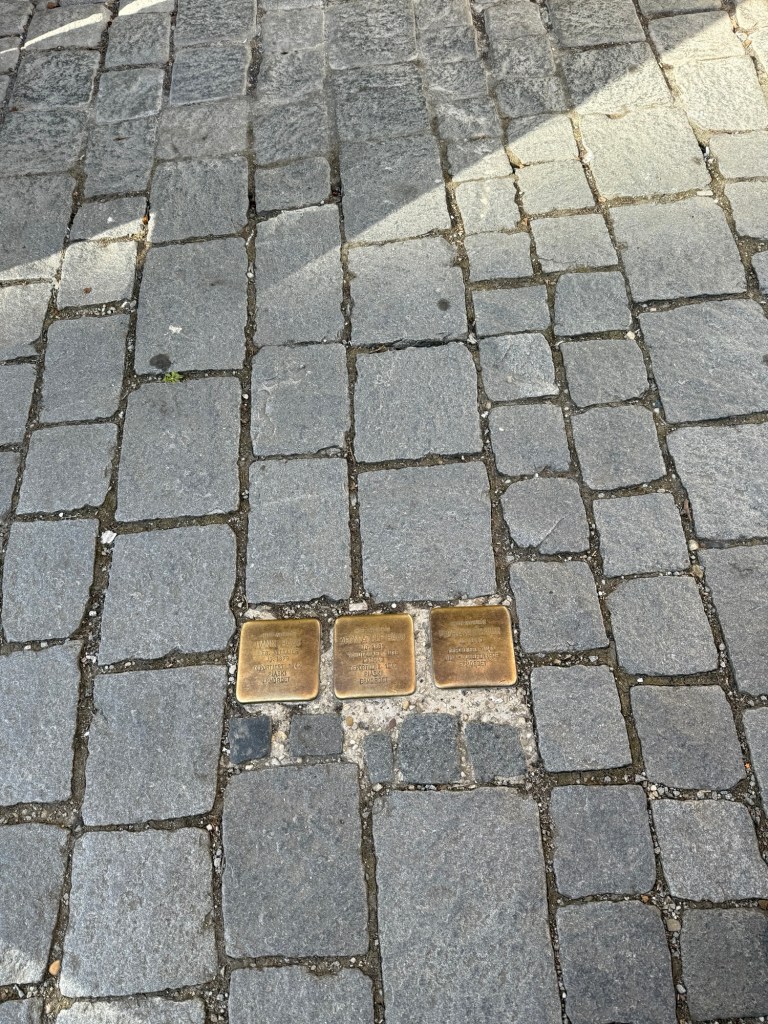
Our local walking guide had a lovely voice and narrative style as we walked across the famous 1,000-year-old stone bridge into town. He pointed out the “stumbling stones” as we walked by.

“Stumbling stones” are a Europe-wide project by artist Guter Demnig, commemorating victims of the Nazi regime by installing small copper plaques on the street in front of homes where the Nazis arrested local Jews, gays, protestors and other “undesirables” showing the date of the arrest (the Nazis kept very good records of such things). Students and others do the research on local victims and then volunteers install the plaques. We passed two of these in Regensburg and when we rendezvoused with the ship in Vilshofen later and walked around we spotted more.

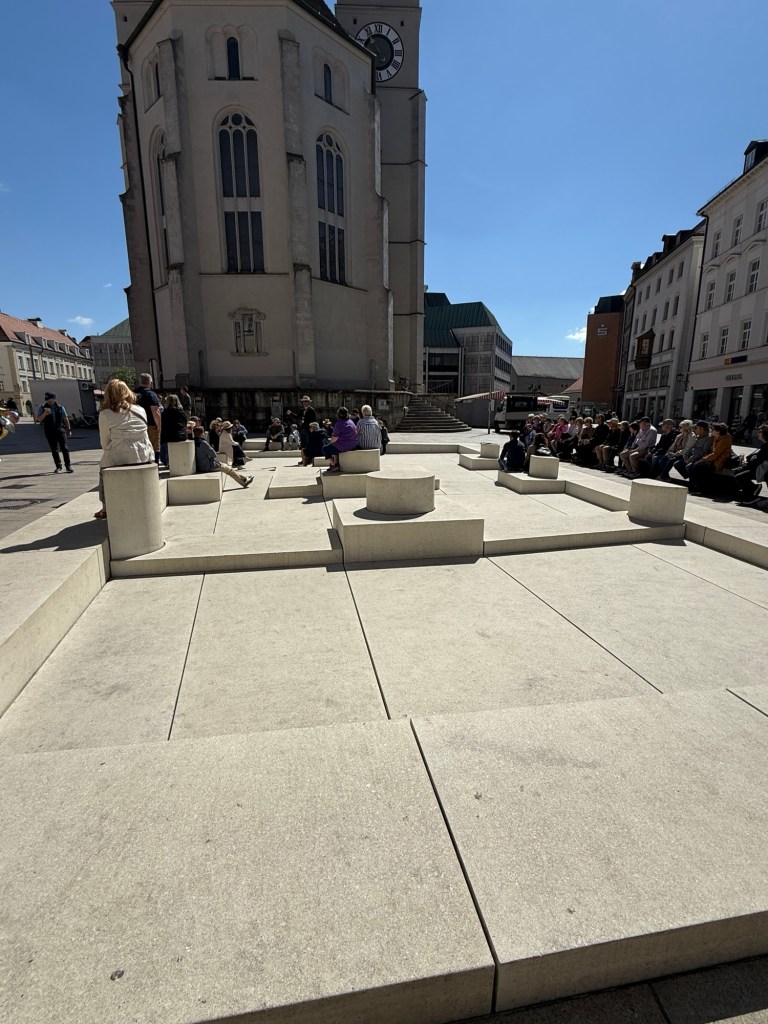
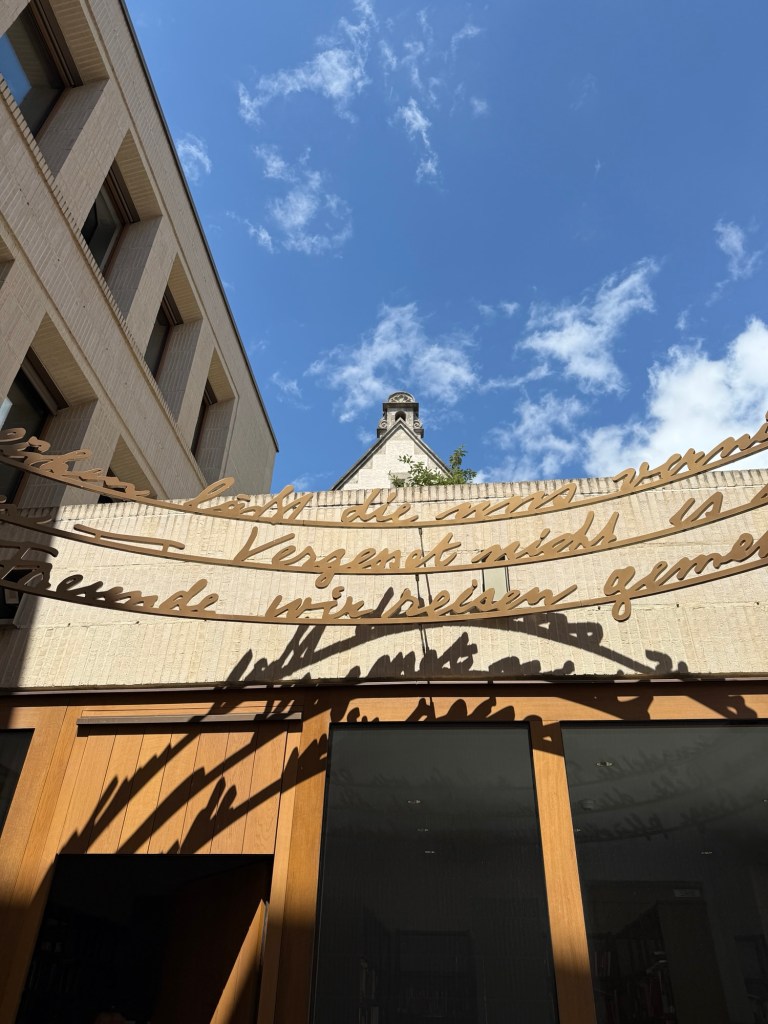
After connecting with fellow passengers we went looking for and found the modern Synagogue in Regensburg, which is only a few blocks from the original Jewish area where about 500 Jews lived until the early 1500’s, when all of the Jews were forced to leave the town with only 4 days notice, and their entire community, including the small temple, was razed to the ground, creating a new “plaza.” A church was eventually built a few hundred years later in about a quarter of the plaza. Very recently archeologists discovered the foundation of the old little synagogue, and now there is little sculpture park there, where visitors can rest and contemplate what happened long ago and what is still happening around the world today.

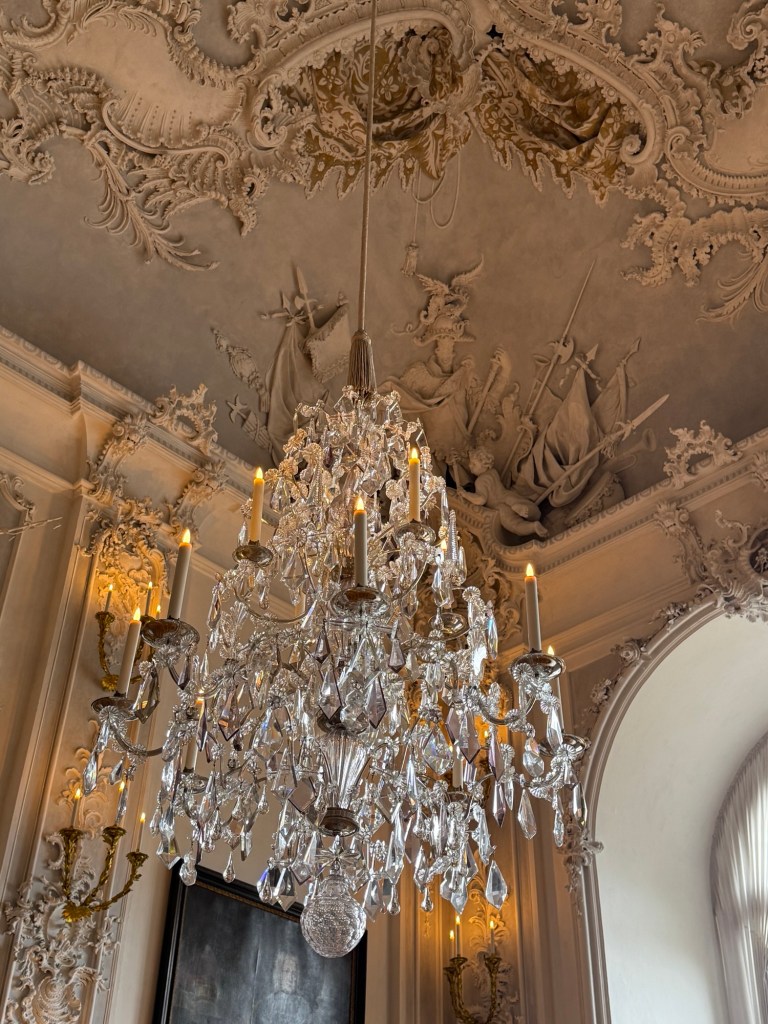
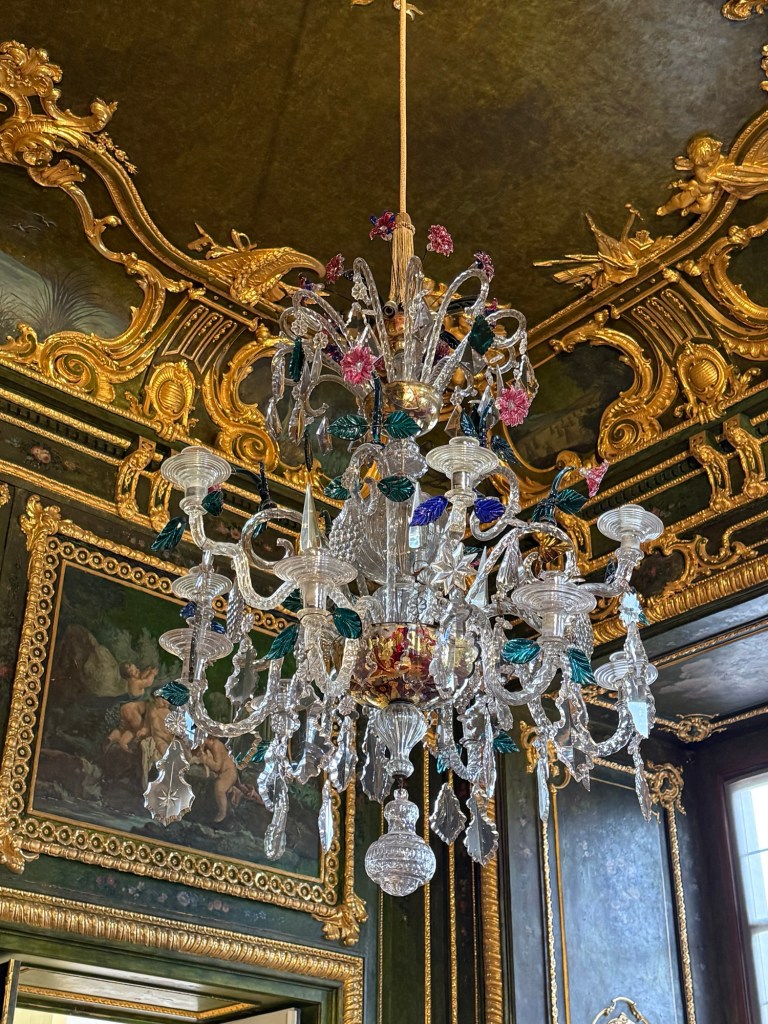
We also visited the Thurn and Taxis Palace which is still in use today. The family made its money originally by coming up with a pony express type system for delivering mail throughout Europe. But this modern royal family seems to have all the “drama” issues that plague so many other modern royals. That said, their palace has lots of nice things and the Venetian Chandelier in particular was amazing. This picture below doesn’t do it justice. We weren’t allowed to take photos inside but we got this from a gift store brochure.

After the tour we had quite a bit of free time and I was a bit droopy after getting the cold that Jim got on our first day on the boat and that has been circulating among all of the passengers, crew and townspeople we have visited. As we were looking for a nice place to eat lunch we passed a pho restaurant and that called out to me. The perfectly spiced curry soup soothed my cold and gave us both the energy we needed to explore some more. We did a little shopping and stopped for what turned out to be the perfect chocolate ganache cake (with ice cream for Jim of course!). We were looking for a place that had a nice bathroom and a sweet treat. The “Alex” brand restaurant was just what we were looking for.

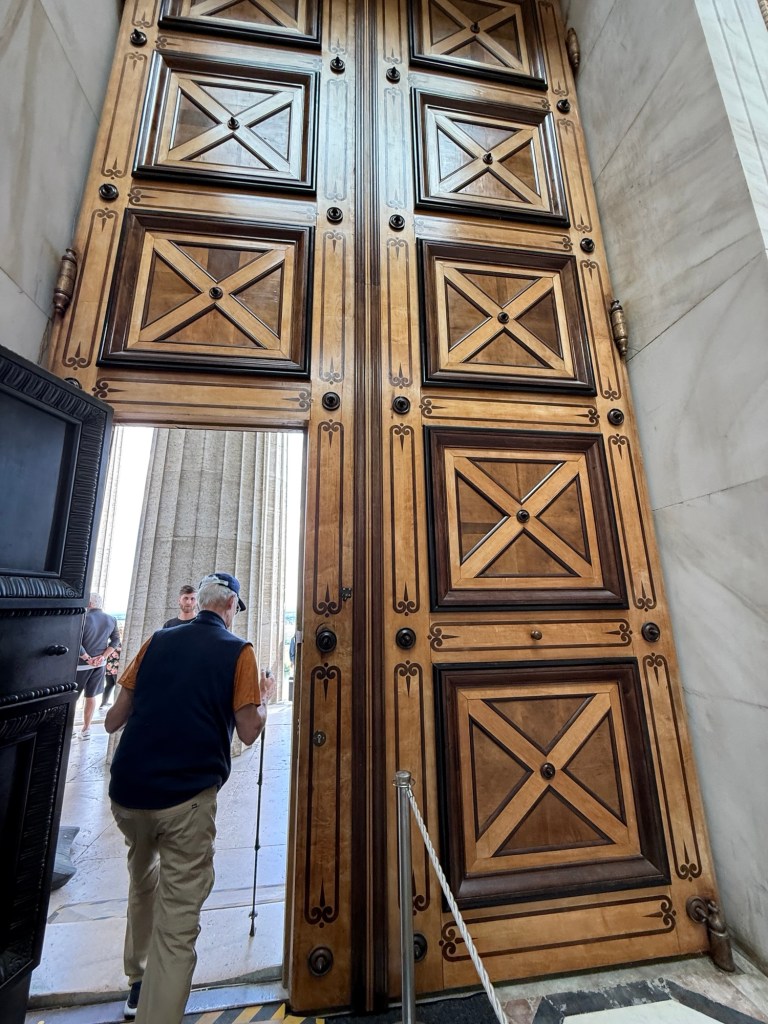
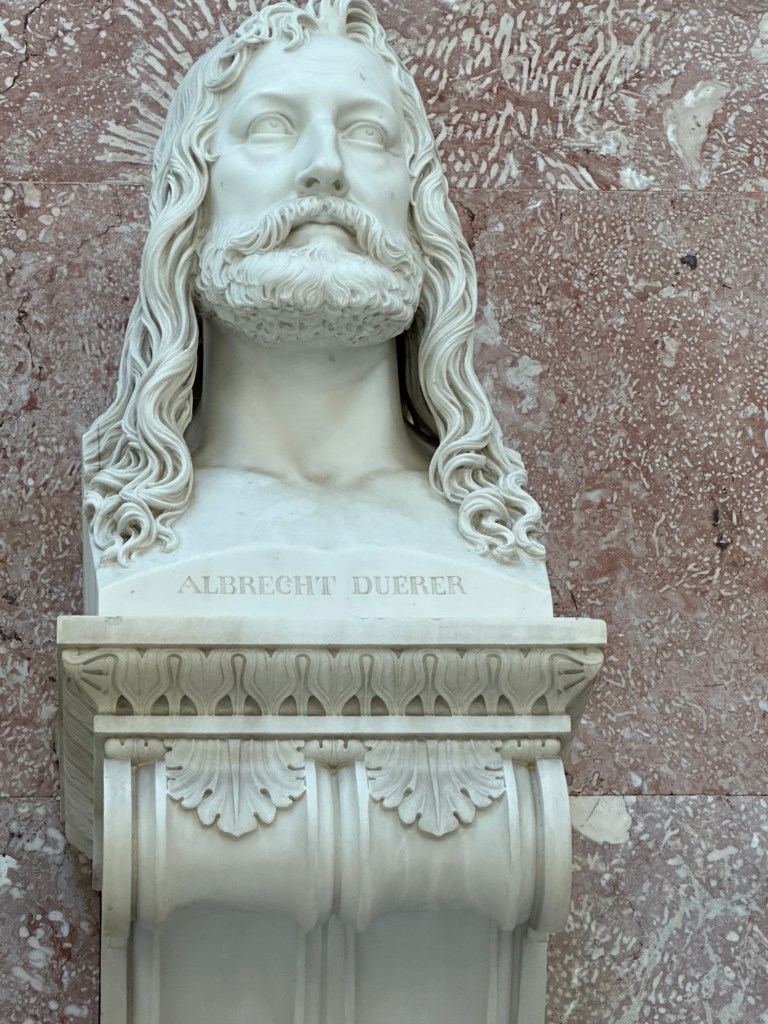
After we got back on the bus to leave Regensburg we headed to a strange place called Vallhalla. Created in the early 1800’s to house busts of important German speaking people, it is a “modern” version of a Greek temple on a hill overlooking the Danube with spectacular views. There are only names on the busts without any additional information in either text or audio, and only 3 women (Mother Theresa, another nun, and Sophie Scholl who protested against the Nazis as part of the “White Rose” non-violent resistance movement in Germany. After she was caught distributing anti-Nazi pamphlets at the University of Munich, she was arrested and executed by guillotine. She was 21 years old.

The view from the building is wonderful and I still had the energy to walk down and up the steps.

Once we were back on the bus we heard that the ship was delayed even more than expected so we were going to have to kill even more time in Vilshofen. By this time it was almost 6 and we were all ready to be done. In Tauck fashion our guides offered to get us a snack at a nearby restaurant to help pass the time waiting for our ship to arrive from its “wild river” transit.

The next day, we skipped the walking tour of Passau and slept in. After we got up, we strolled around a bit and met up with our group before the organ concert in the remarkable St. Stephen’s Cathedral. Half of the organ is under repair so the sound was less than amazing but still dramatic and the baroque cathedral is spectacular.

Back onboard all I wanted to do was take a shower and rest. The head cold had sapped almost all of my energy. But I rallied to get up for the men’s quartet. They had been singing together since they were children in the Regensburg boys choir.

Now we are under way again as we make our way to Melk Abbey. The sun is shining and Jim and I did our yoga and are watching the world slowly go by as we cruise down the Danube.

Melk Abbey and a truly peaceful afternoon.

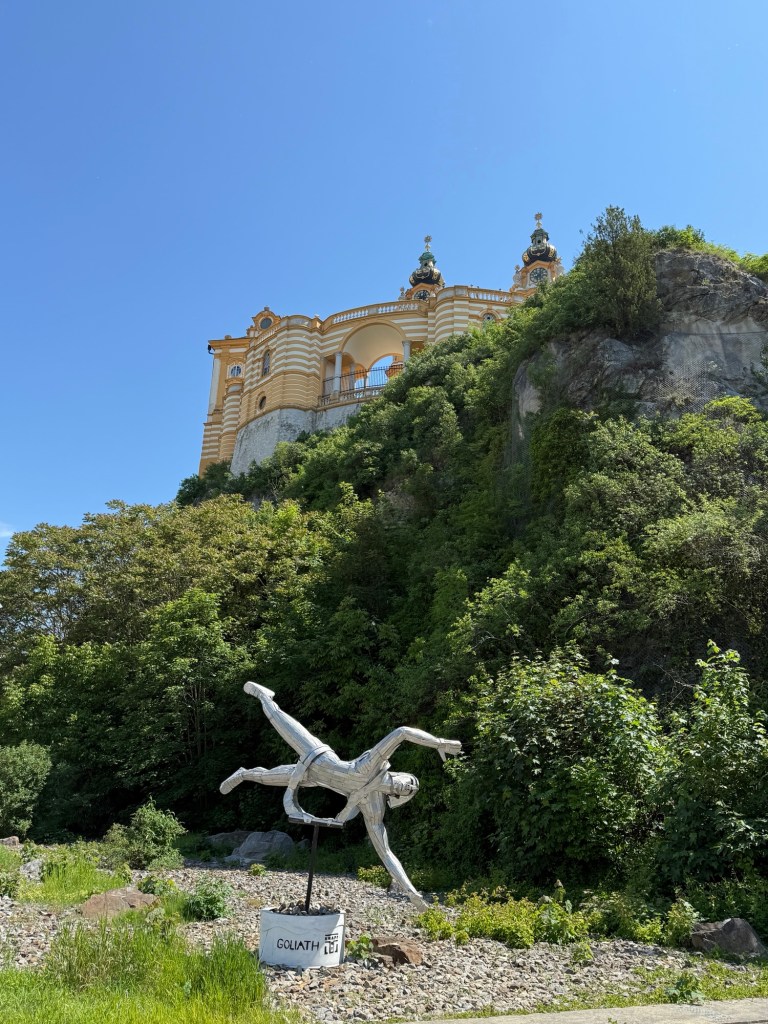
It’s hard to pick a favorite day on this trip, but our visit to Melk Abbey and then cruising down the Danube through the Wachau Valley has been our favorite so far.

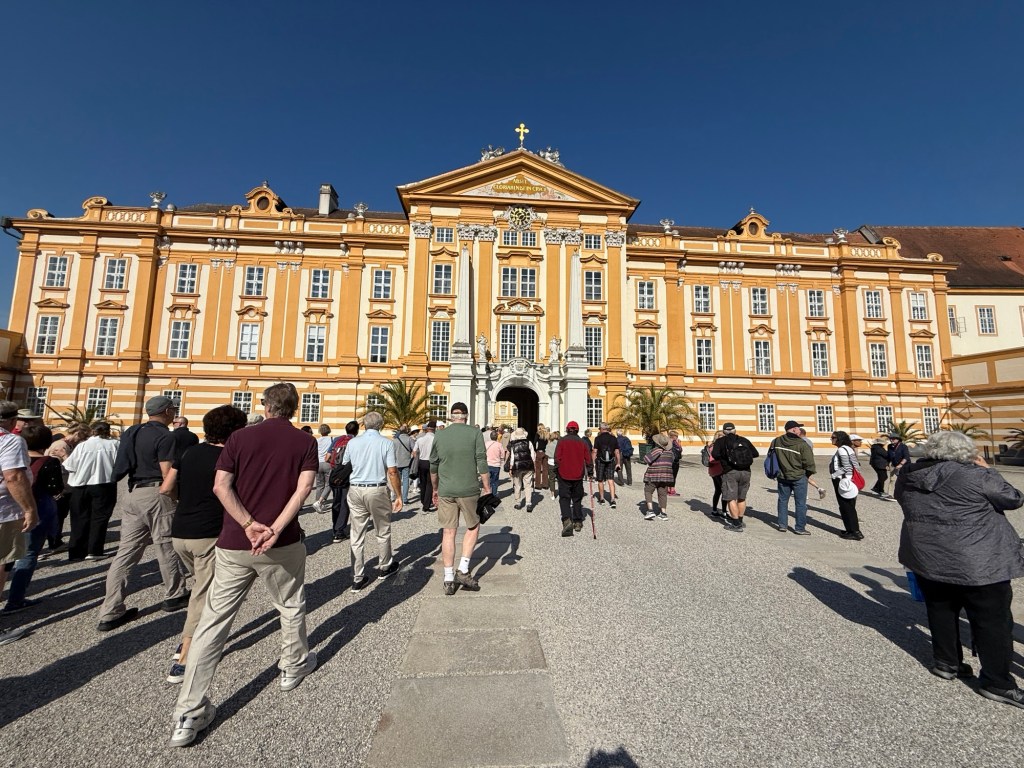
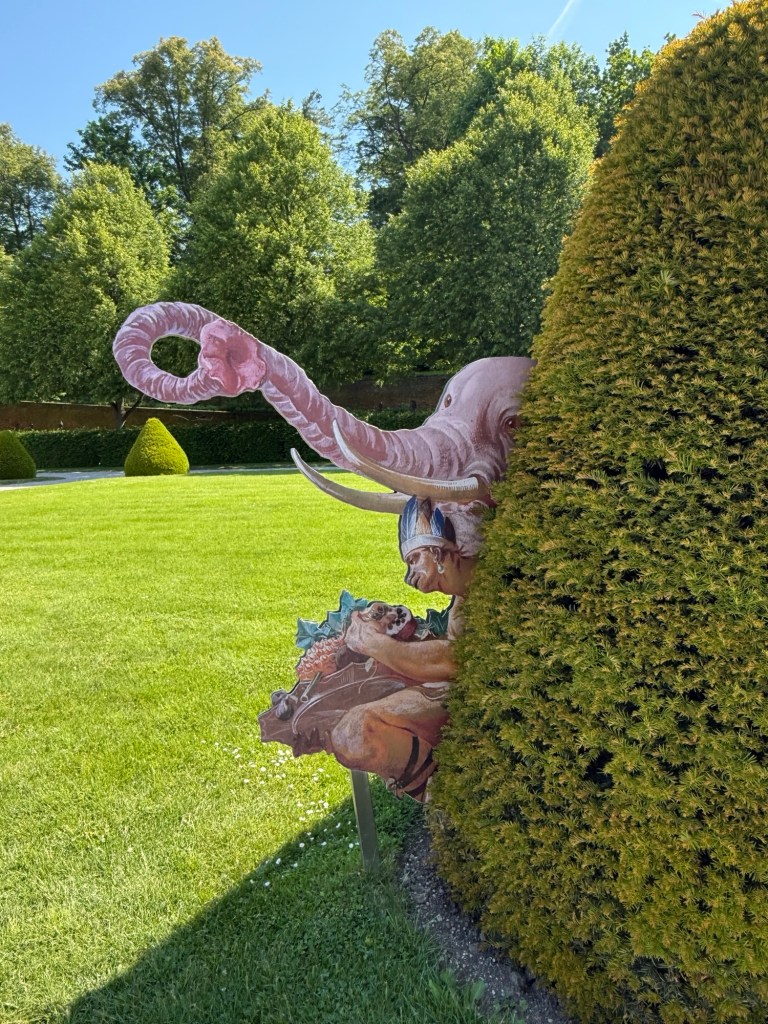
We’ve visited many palaces and churches but Melk Abbey and the town of Melk was special. Some of the palaces were more oppulent. But this place was alive. It is home to a middle and high school, an active monastery, remarkable library, and the sounds of children’s laughter fill the beautiful garden.

Our guide was a former student and described the school as a Latin Hogwarts. She guided us through the new museum creatively curated with a mixture of modern design displaying the history and treasures of the building illustrating the history of the building.

After the tour we strolled through the quaint town of Melk and tasted and purchased some Apricot Gin. This will sustain us after we leave the ship as we explore Budapest and beyond.
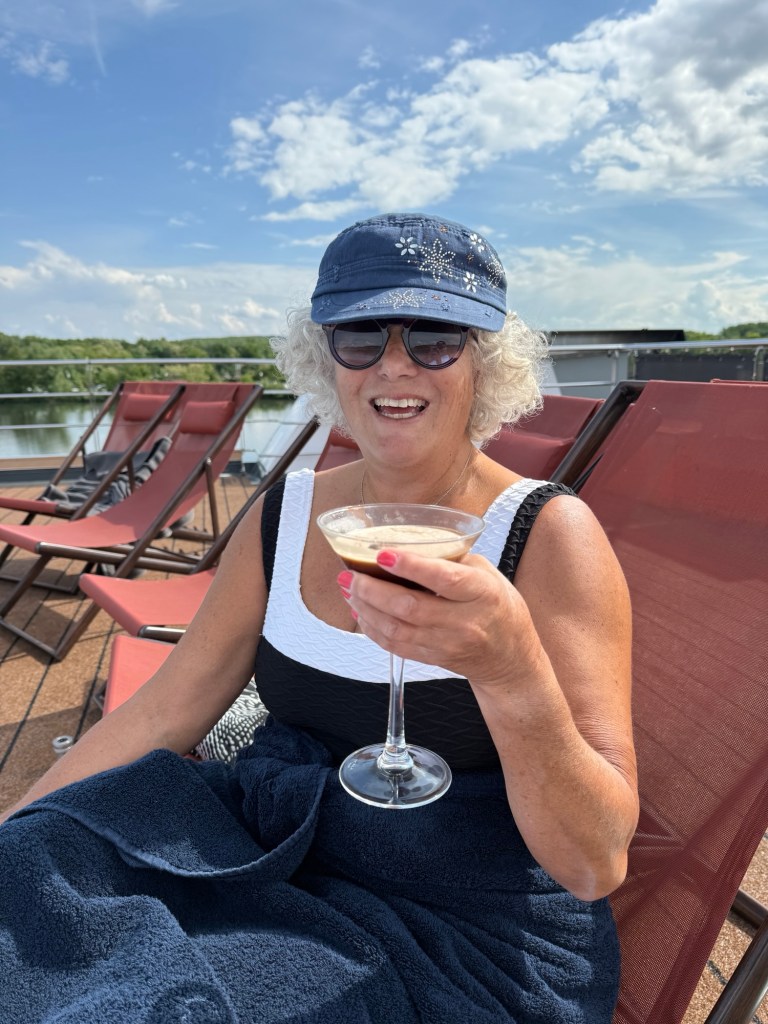
From Melk the ship cruised slowly to Vienna. Our weather finally shifted to some rain, but Jim and I headed up to the hot tub and soaked through the slow rain and sun. We drank and munched and totally relaxed. Those of you who know me well know that I don’t chill often. But this time I did and enjoyed a wonderful afternoon.
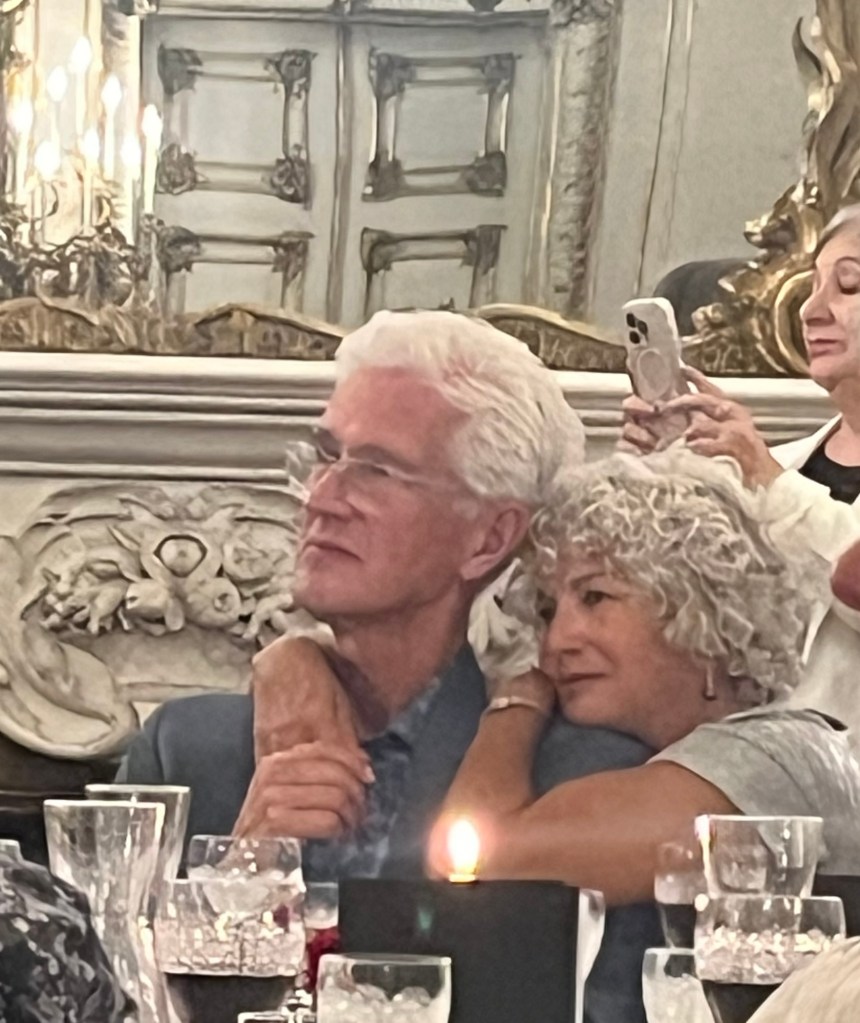
Because we rested during the day we had the energy to stay up in the lounge and enjoy singing and dancing with our shipmates.

Vienna (Wien)

Yesterday, we were in Vienna for one day and one remarkable evening. This was not enough in anyway. Jim and I just didn’t know what to expect in Vienna. Our guide was wonderful but I was overwhelmed with the lack of time versus what I wanted to explore. Obviously, we will have to return to Vienna.

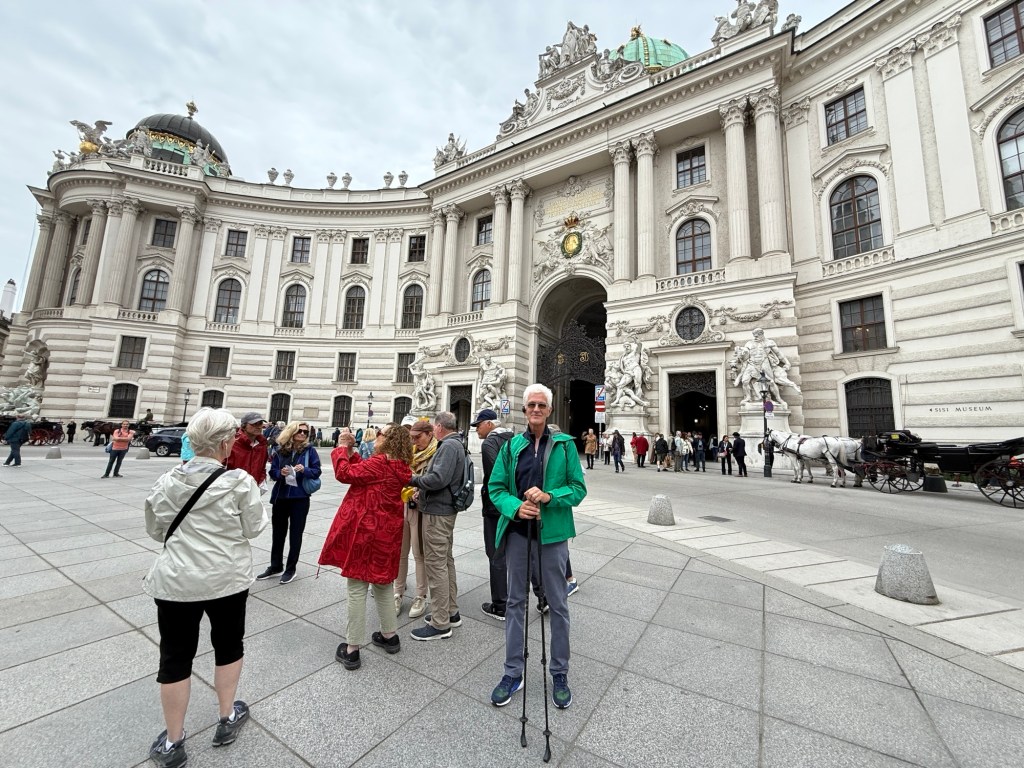
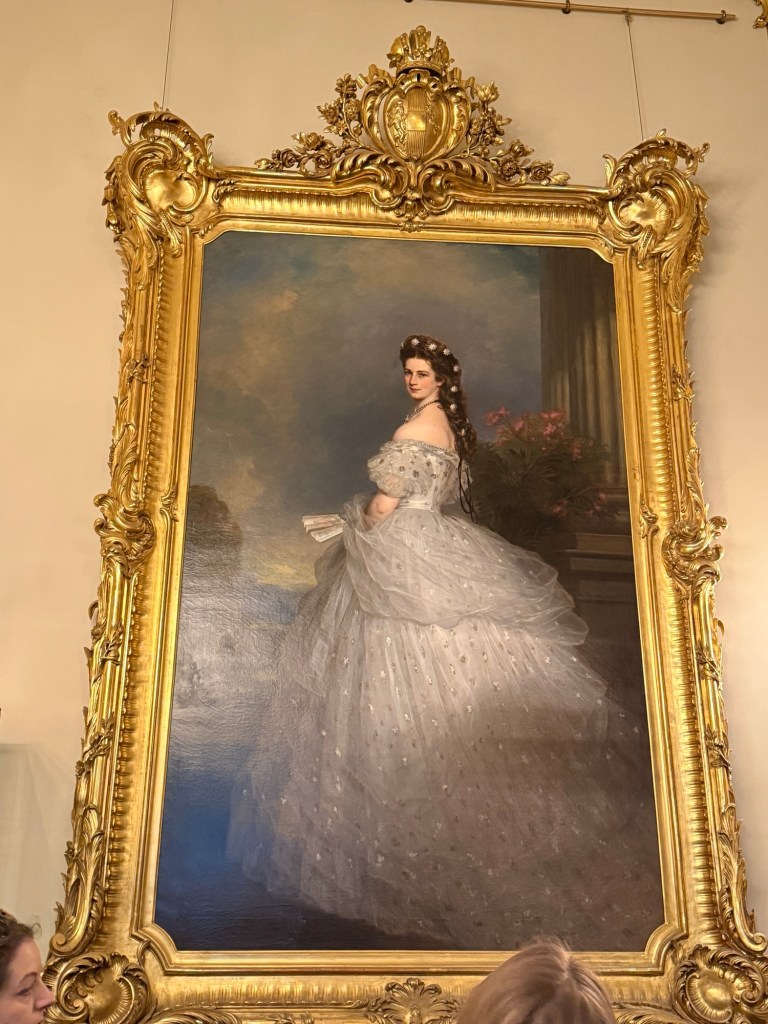
We did a quick bus tour, then a walking tour and we chose the tour of “Sissy” Palace. It was crowded, but interesting. Empress Elizabeth’s story is tragic. She was married at 16, and although Emperor Franz-Joseph loved her, she was totally unprepared for the demands of a “royal” life and lived a tragic and depressing life until she was mistakenly assassinated while traveling in Italy at age 64. Her rose garden, however, was in full bloom and quite beautiful.

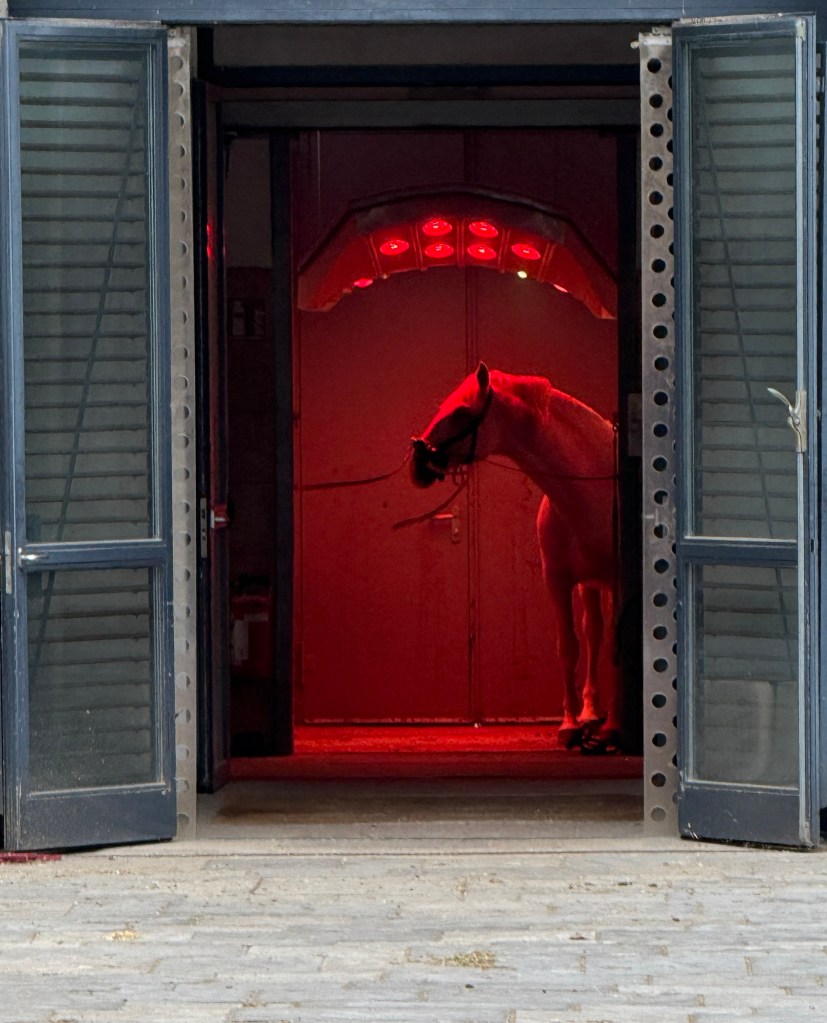
After the palace tour we got a quick overview of the old city, including a quick glimpse of the Lipizzaner stallions. I loved this view of the horse getting red light therapy after a workout. Our physical therapist has suggested that Jim try red light therapy. If it works for the Lipizzaners I think it will work for my stallion!

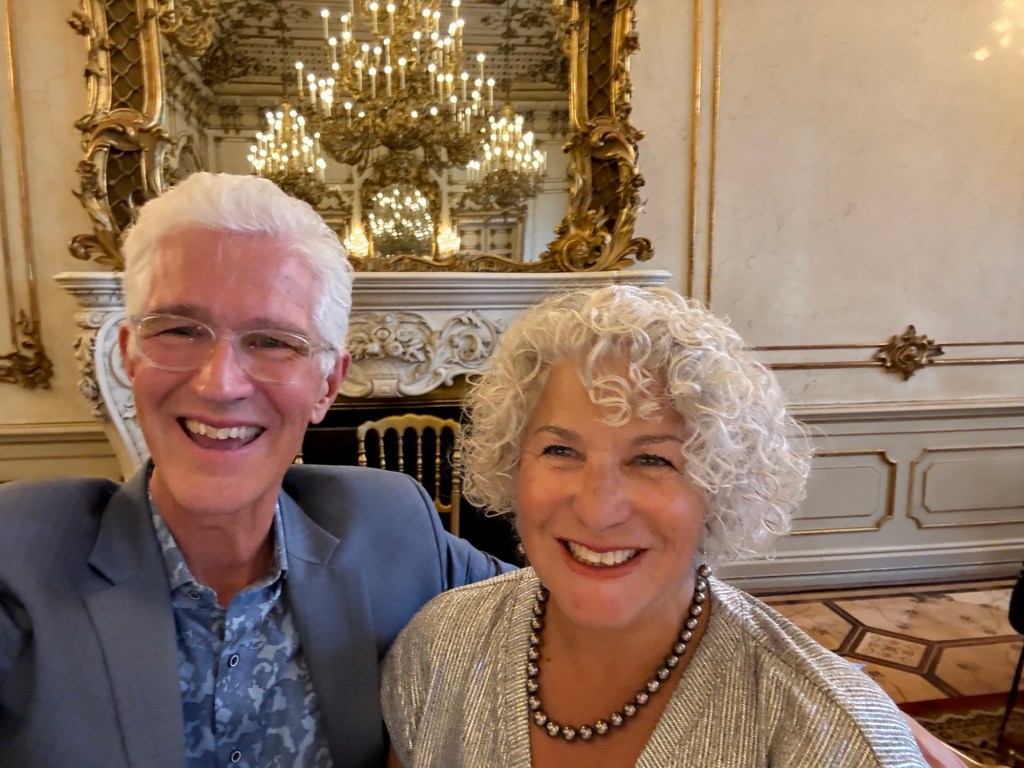
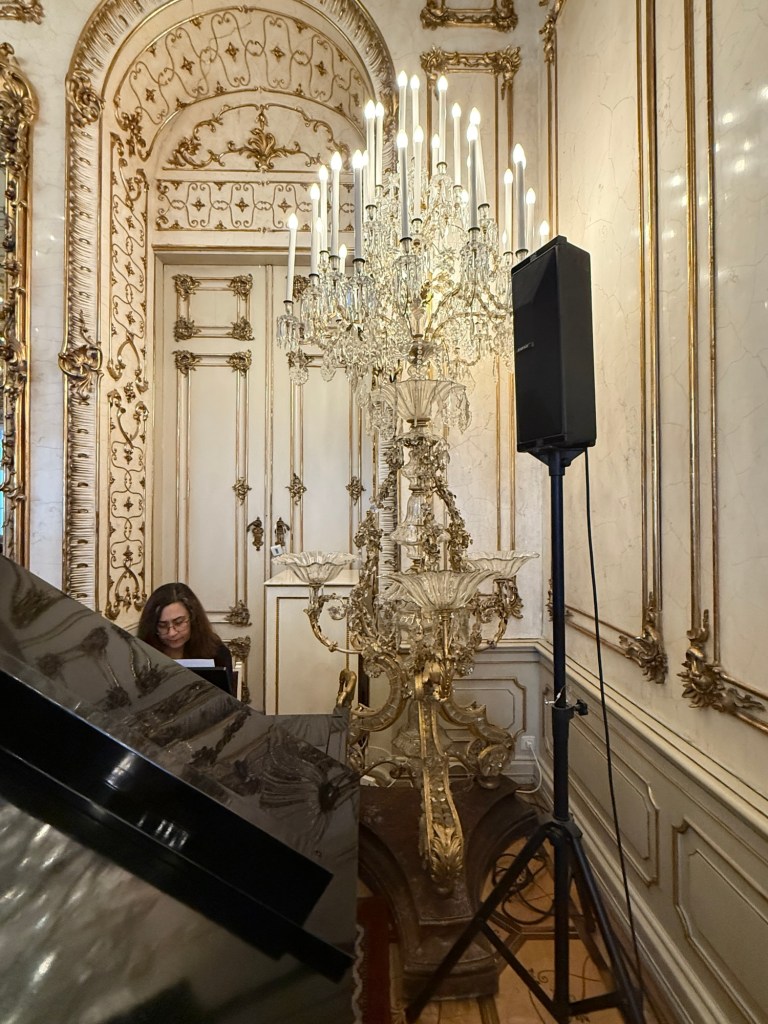
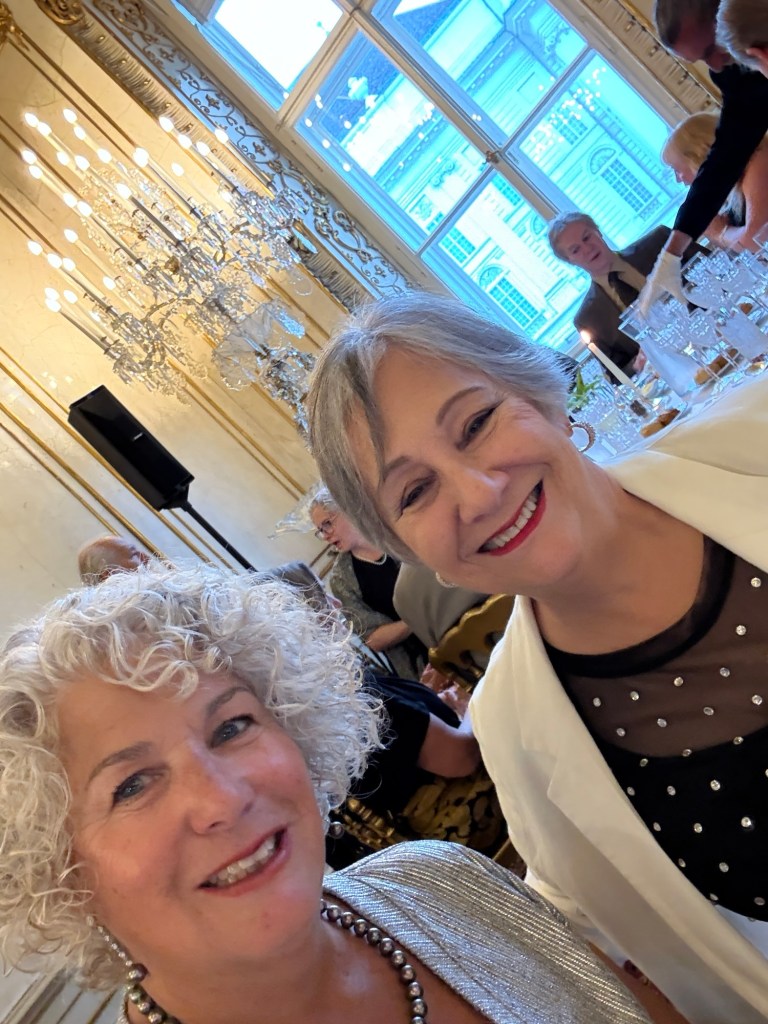
The highlight of our visit to Vienna is the extremely special Palais Pallavicini dinner and entertainment. We all dressed up in our finest clothes and rode our coach to the (exclusive to Tauck and other special state visitors) event. We walked up the beautiful entrance and wide stairway and entered the second story ballroom where we were served a lovely meal, lots of wine and were entertained by musicians, dancers and opera singers.

As I write this we are again in the forward lounge cruising to Bratislava in Slovakia. Behind the iron curtain. Bratislava and Vienna are the closest capitals in Europe. They are an hour apart by car and only 4 hours by boat.

We are both looking forward to the history lecture before the tour.

Dovidonia

Biking, Cruise Day, Surprises and More

It’s been a few days since I blogged and that is always a mistake. It’s amazing how quickly we forget the days. It’s Saturday morning here now, so here goes.

Castles Along the Middle Rhine

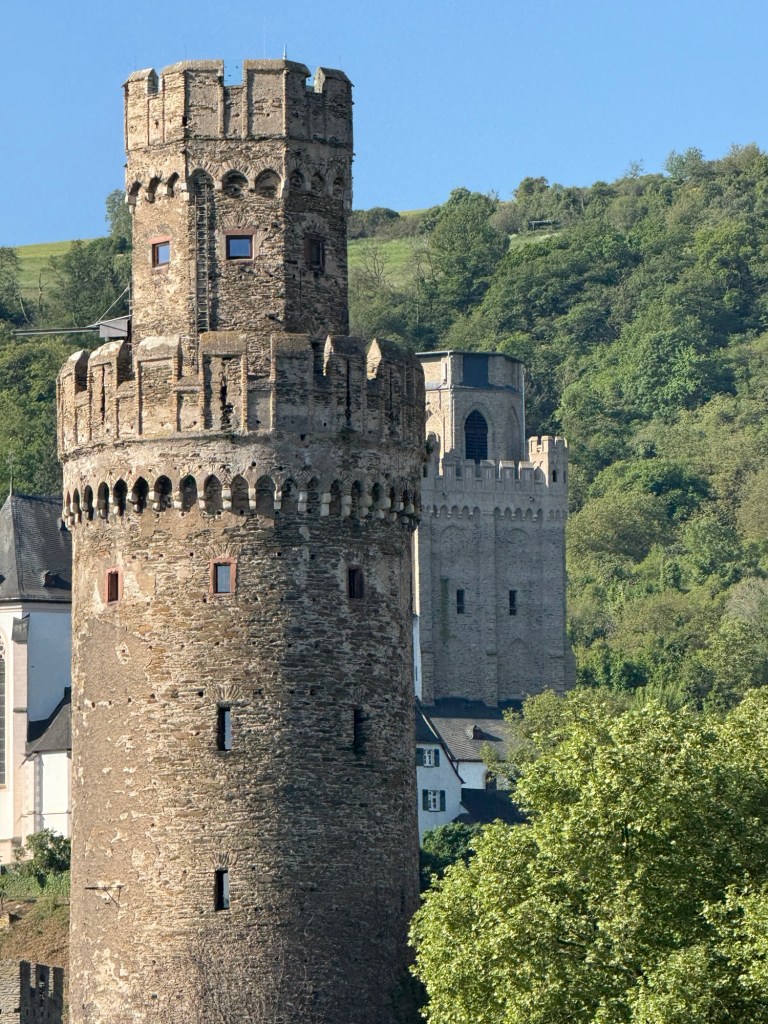
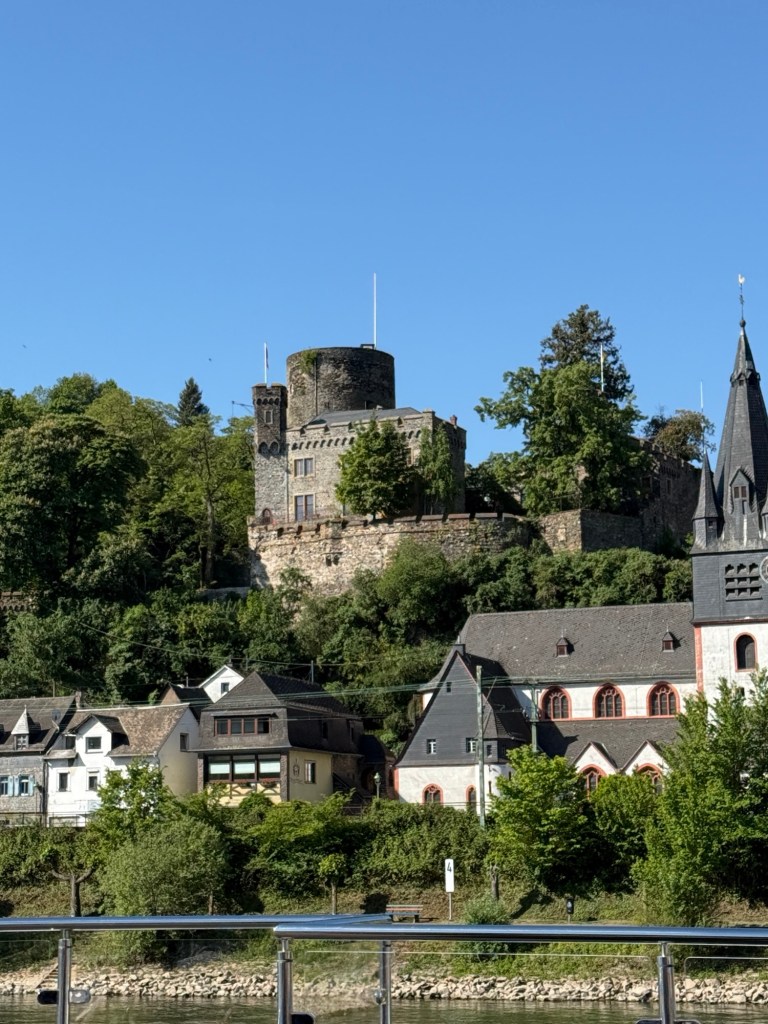
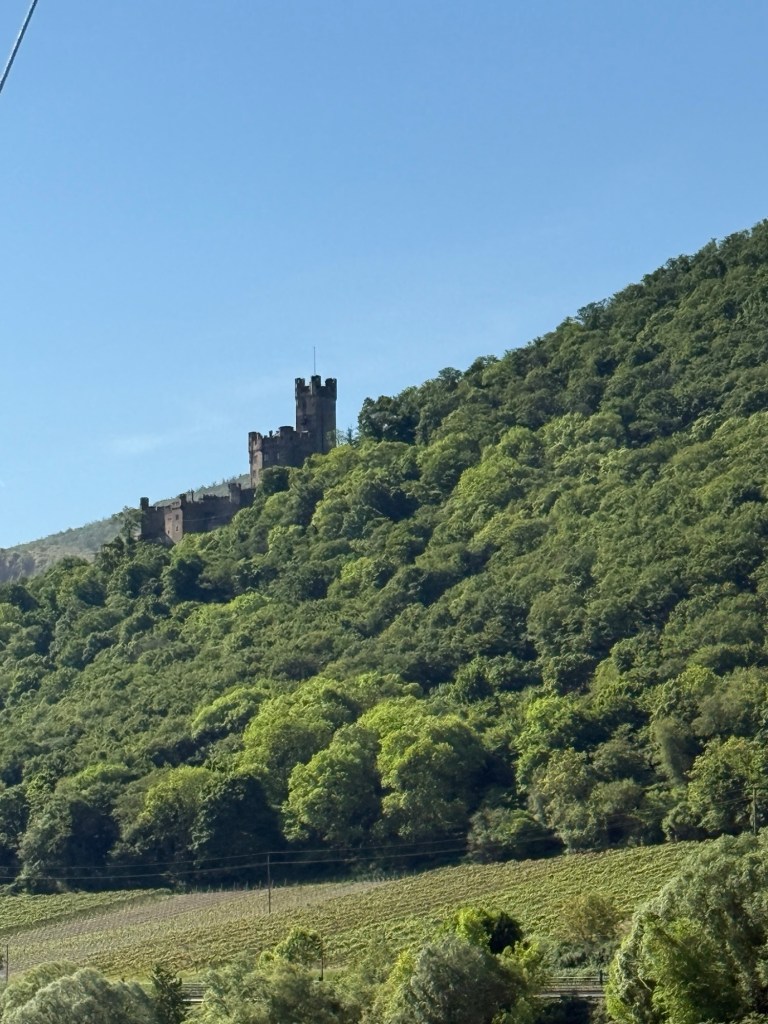
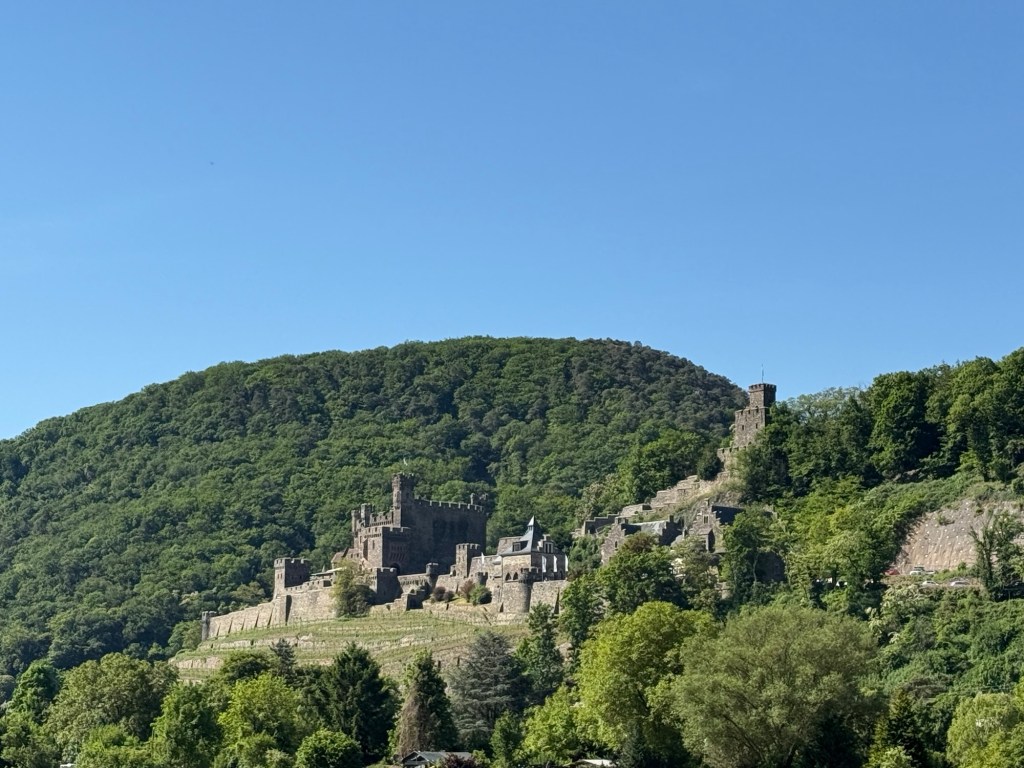
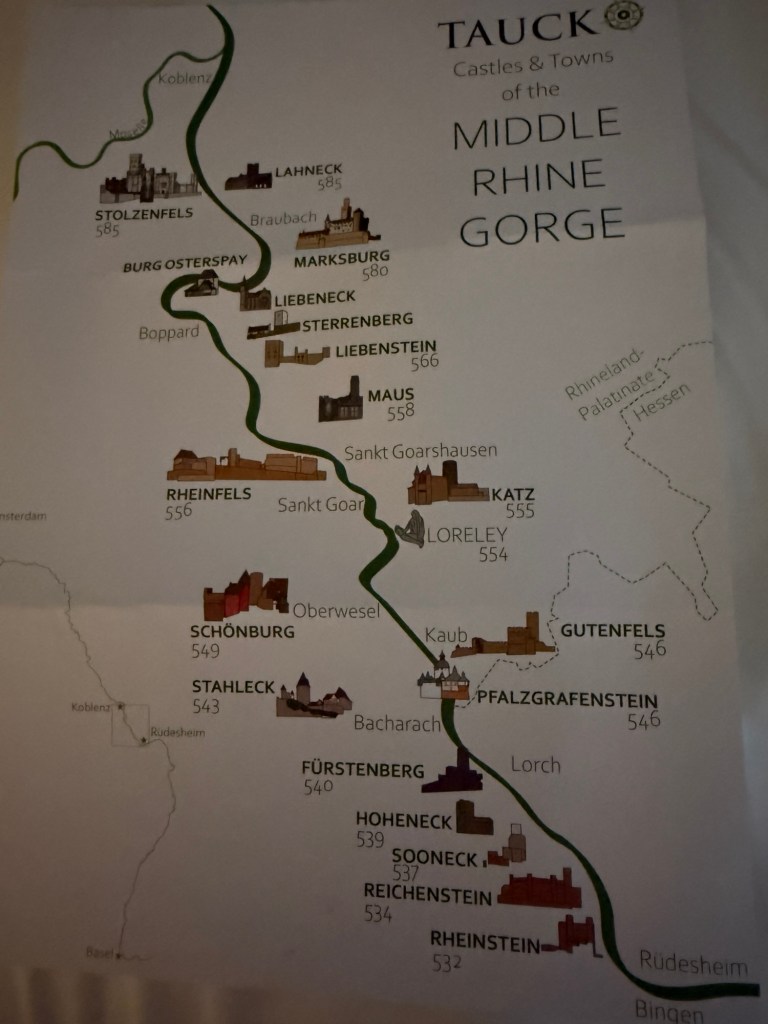
Schedules are fluid along the river with all the locks and the traffic. But we expected to enter “castle country” around 7 Am. I woke up early, looked out the window and there was the first castle at 5:45 Am. So we quickly got up and headed to the top deck of the ship. The main part of the castle tour was an hour or so away, but we saw lots of them with our fellow early risers. Here’s an interesting castle fact. Square towers were more susceptible to attack than round towers especially after the use of cannon.

The area was really beautiful and we were blessed with warm and clear weather. In the evening we were entertained by a lovely trio (clarinet, guitar and bass. Their energy and harmony were wonderful.

Biking in Rudesheim

We signed up for the biking excursion, but it was unclear if e-bikes were available. Apparently, it’s hard to find e-bike providers in the area along the canal. Tour groups that focus on biking everyday scoop them up. But Tauck procured enough for the group that signed up and we enjoyed a lovely ride along the canal. When our leaders assessed that we were all capable, we went further up to the winery

Full Day Cruising with a Surprise Stop in Miltenberg

We learned an interesting fact from one of our guides, towns ending in ‘burg’ reference a castle town and “berg” means in the hills or mountains but usually without a castle. That being said, our next stop was Miltonberg.

At this part of the trip the canals travel through towns with very low bridges, so the top of the boat is off limits to passengers and the pilot house raises and lowers as needed. In fact sometimes the bridge is so low it seems impossible that the ship will make it. Tuesday was supposed to be a nonstop cruise day, but we were ahead of schedule and made a lovely stop in Miltonberg.

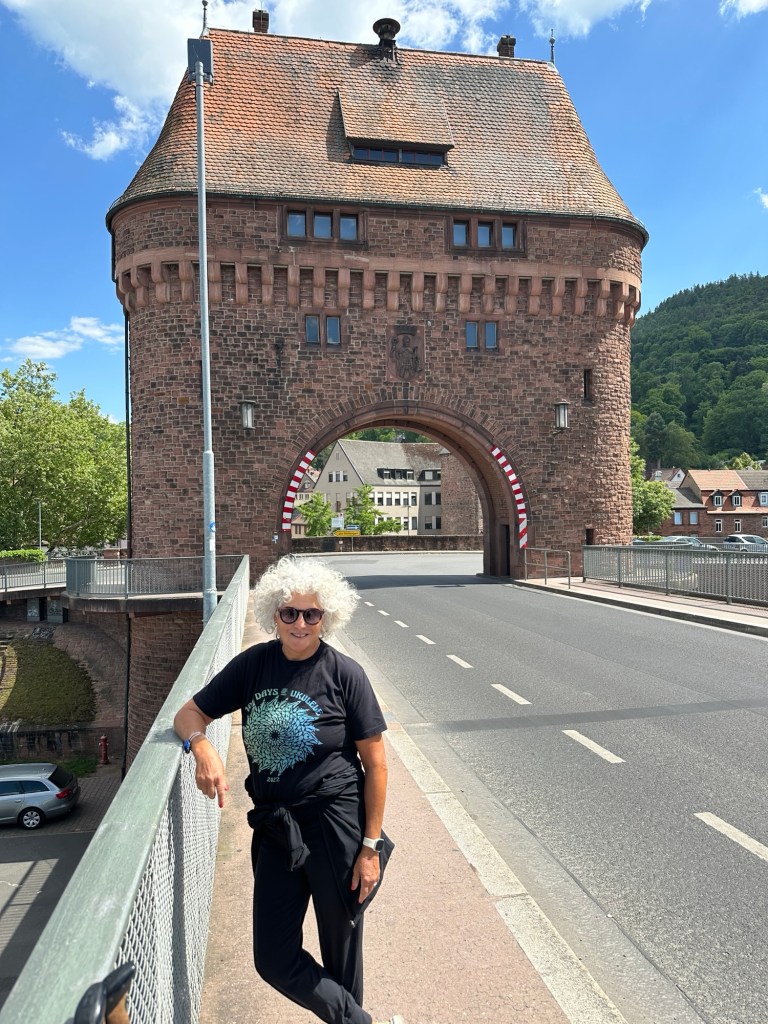
I was thrilled to stroll the town and we passed a small music store with Ukuleles. I needed a new kapo but the proprietor was such a character I forgot to buy one. Harold was born in the town and gave us lots of history. Miltonberg lucked out in the war and they were only hit by one bomb. So most of the buildings and old homes are intact. Some were over 500 years old!

Würzburg Palace and Walk About.

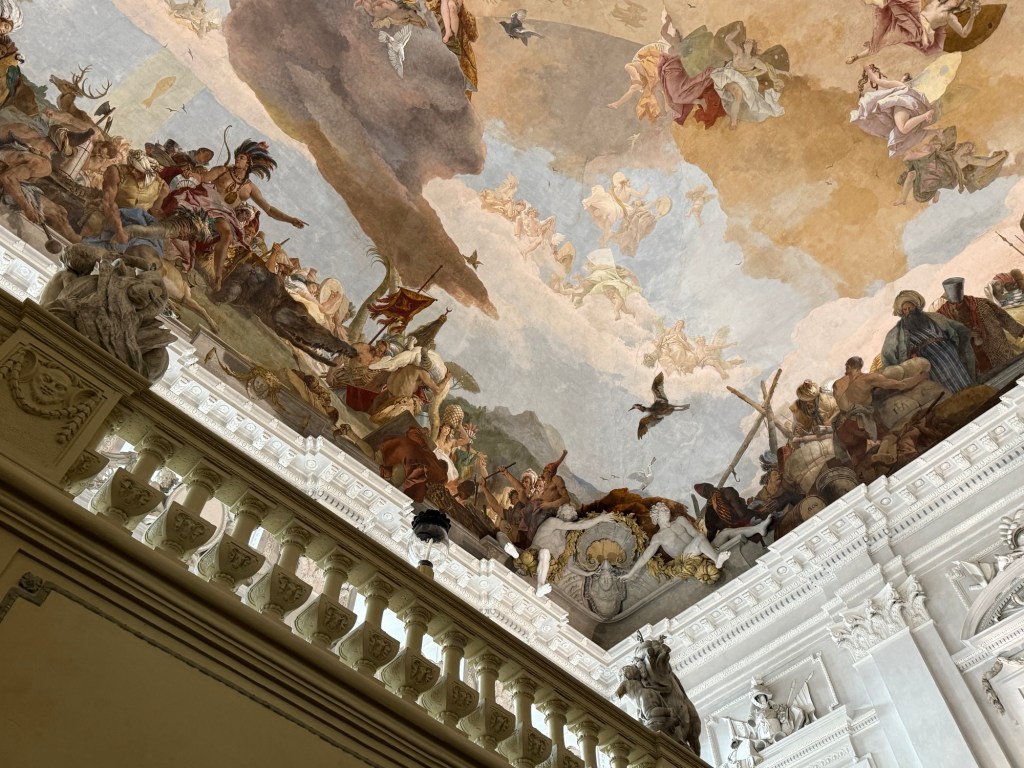
Saturday (yesterday) we cruised to Würzburg and Jim and I chose to visit Würzburg Palace. Although much of it was bombed in WWII, the amazing frescos survived. Würzburg is a college town, and a winery town.

Our excursion began with a delicious wine lunch and then the group split up. Some took an hour bus trip to Rothenburg to see the Summer Palace while our group walked up to the City Palace. I’m not really a fan of the long bus rides. And the City Palace is stunning.

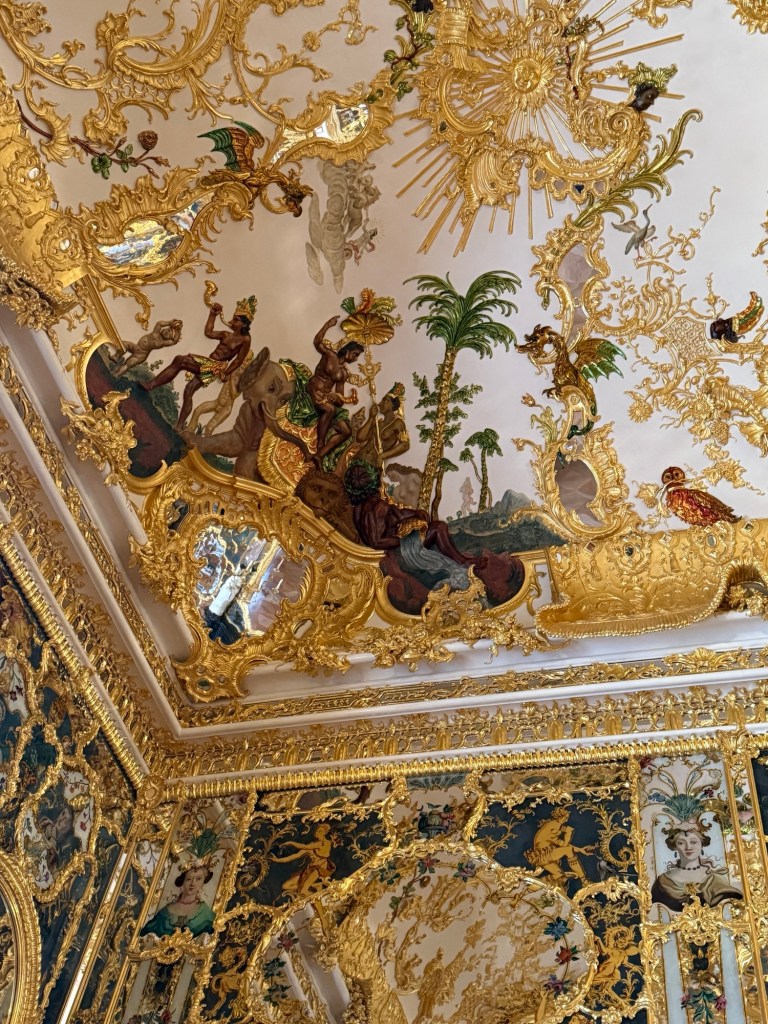
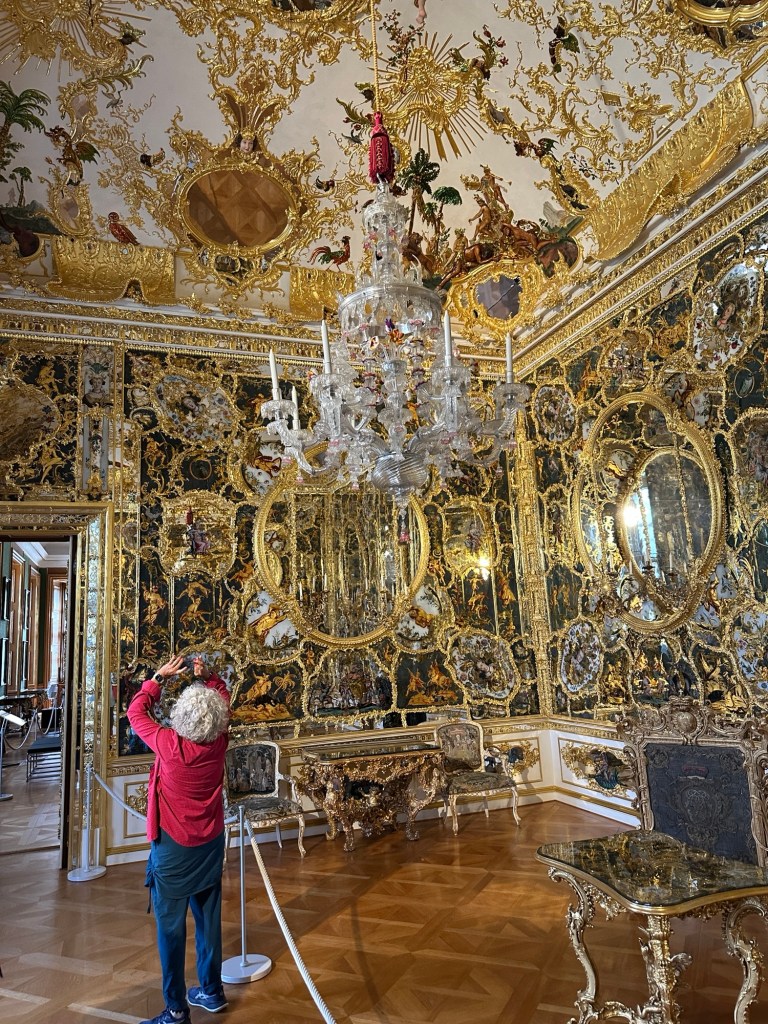
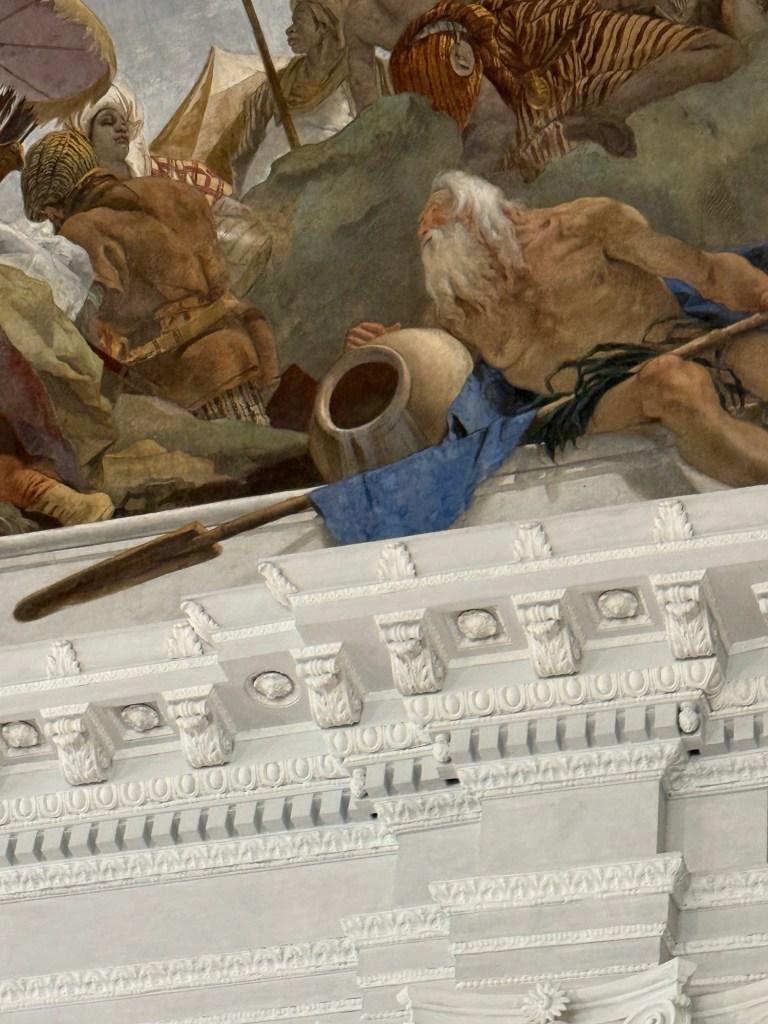
Painted by Venetian artist Tiepello, the City Palace rococo Frescos are among the largest in the world. They took our breath away. The technique and perspective are quite remarkable. Here’s a good link to the information. The three dimensional techniques create surprising visual rewards. The rest of the palace features more stunning rooms, glass, and chandeliers. Our guide loves this town and shared his joy and the history with us.

After the palace tour we walked around a bit, bought Jim a sweater and then walked over the wine bridge.

Bamburg and the Emperor and Empress who became Saints.

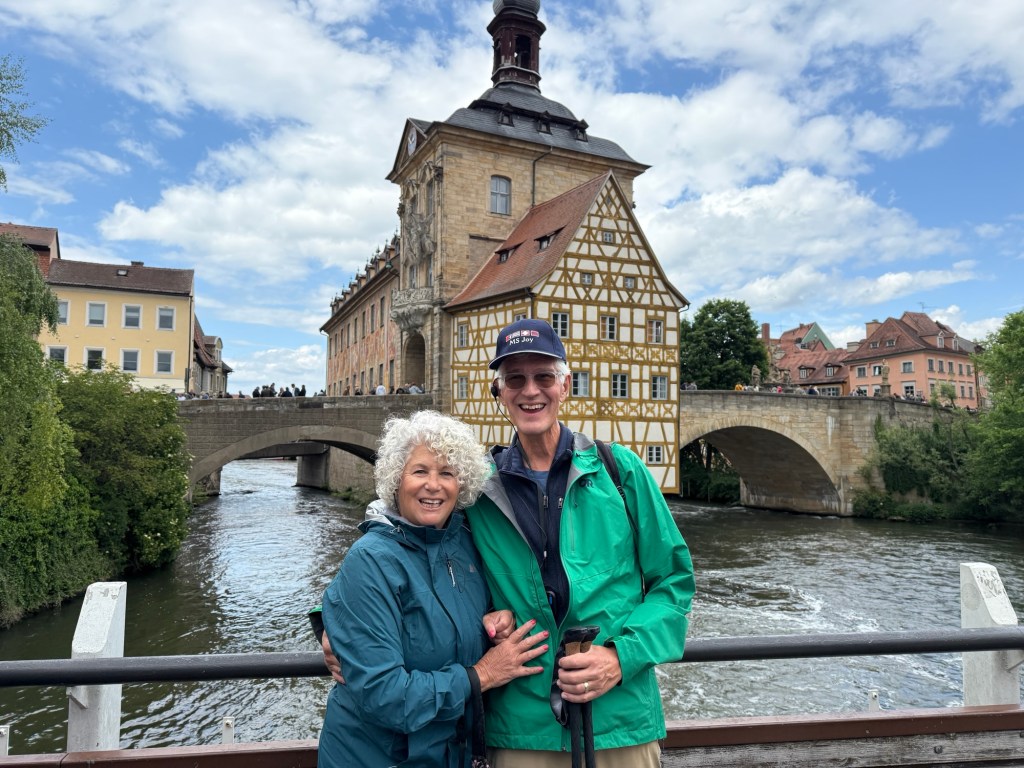
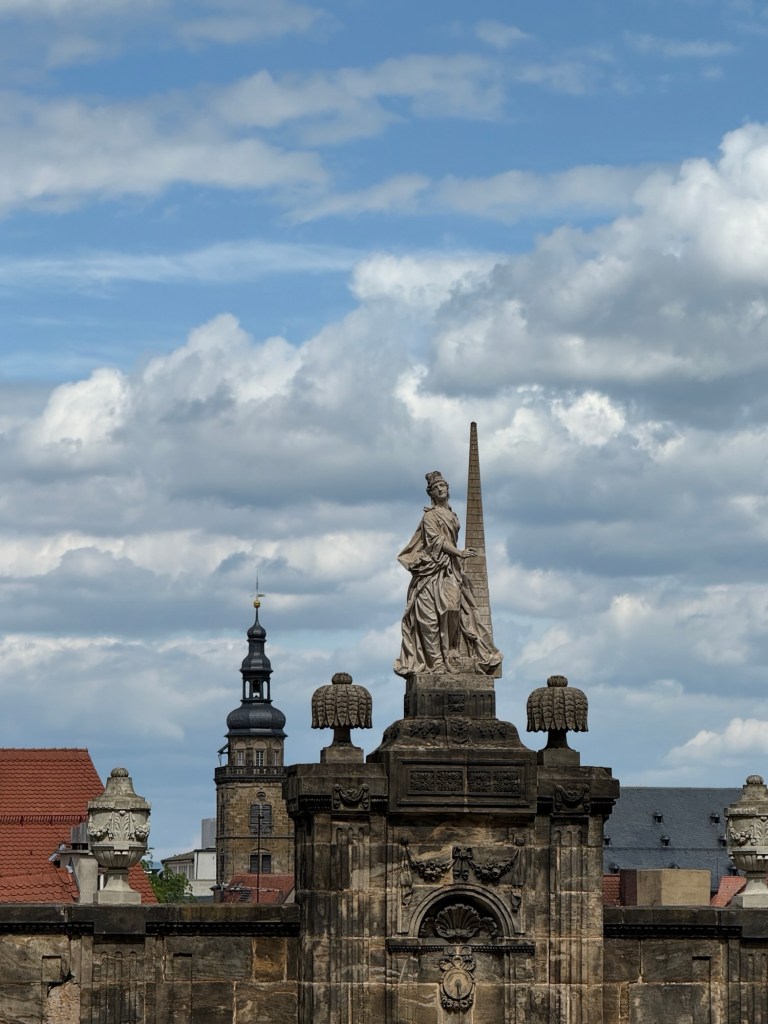
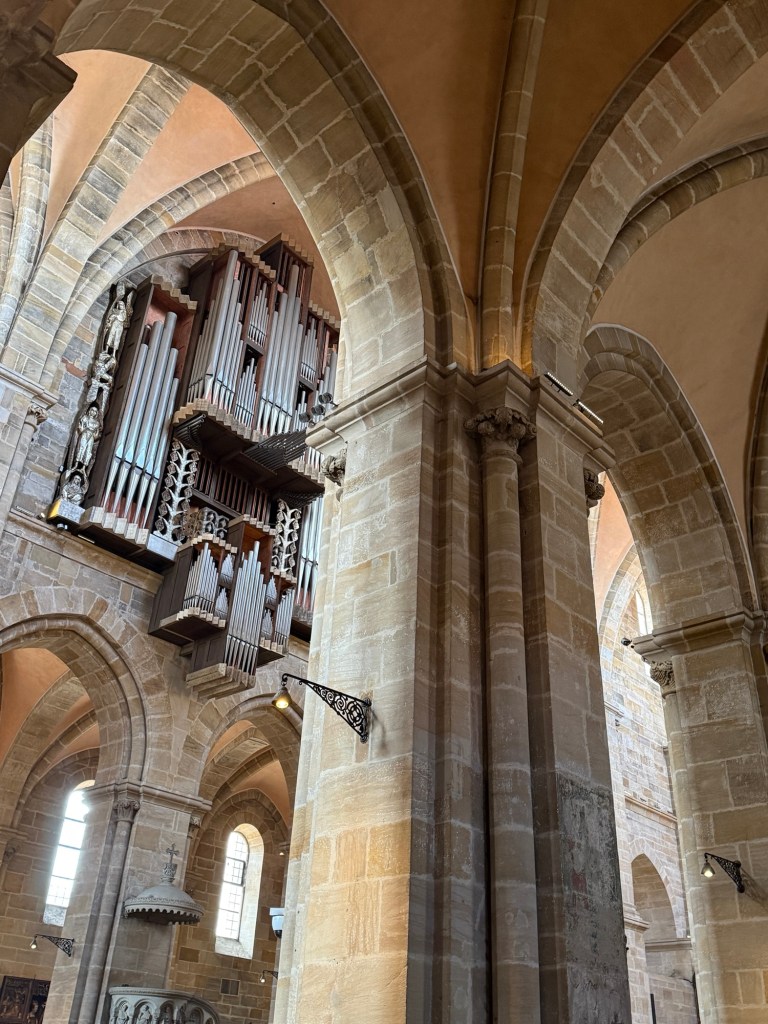
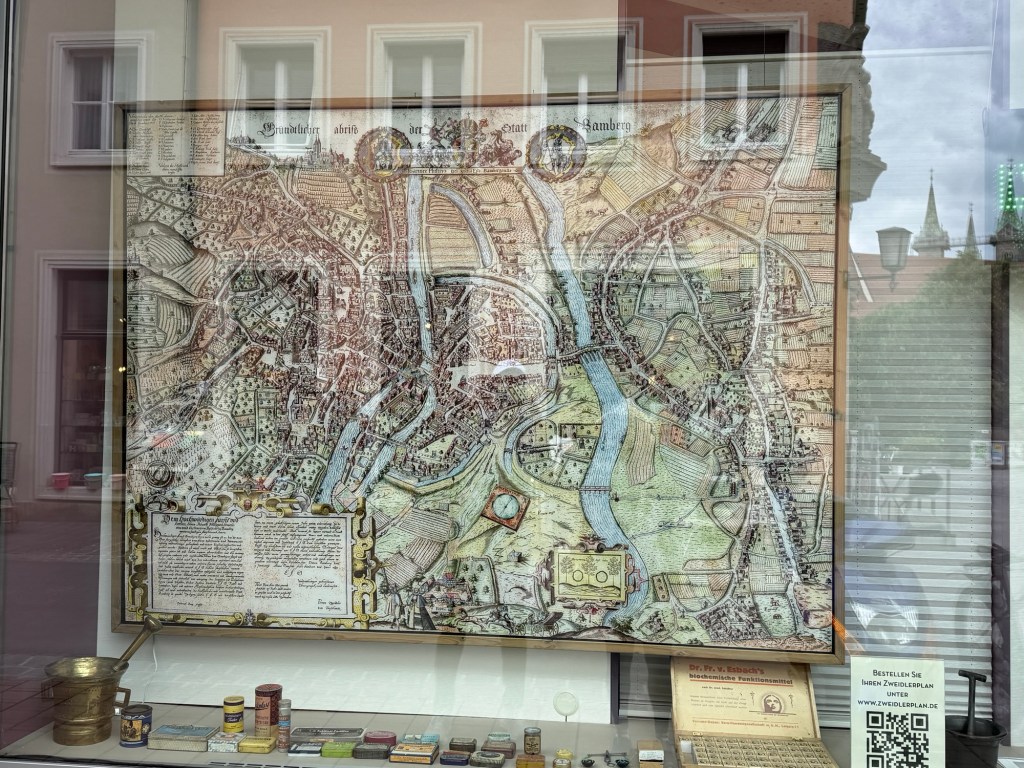
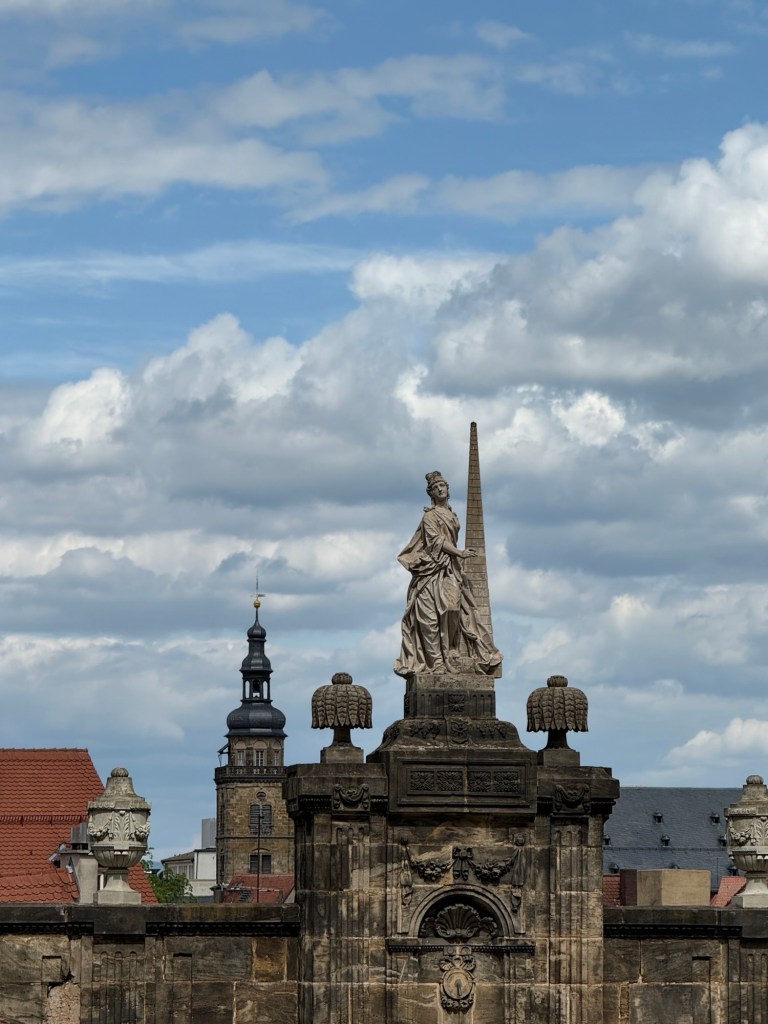
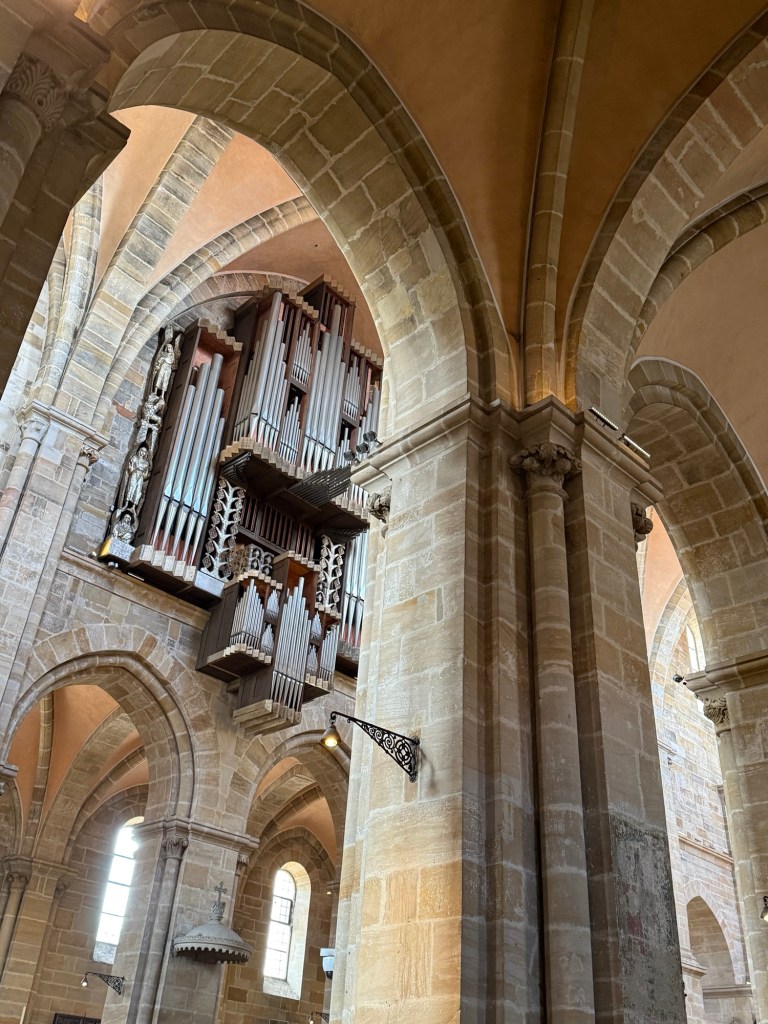
Bamburg was founded in 1002 by King (& later Holy Roman Emperor) Heinrich the Second and his Queen (& later Empress), Kunigunde. Unlike most royal marriages at the time, their marriage was not arranged, it was for love. Both were deeply committed to building the Würzburg Cathedral and were later canonized as Saints (the only Royal Couple ever to be elevated to Sainthood). The Cathederal is majestic but surprisingly simple. They had no children, but were both entombed in the Cathedral after each died (Heinrich died first, and Kunigunde served as Empress Regent until the next Holy Roman Emperor was elected).

Bamburg in general was a bit dirtier and more crowded than Würzburg. After the tours we walked around the old town a bit and I bought a cute skirt. Surprisingly, we were gifted two “Hemp” beers. We put the bottles in our fridge but haven’t tried them yet. Bamburg is known for its “Smokey” beer, which I tried and really liked.

I joined the group doing a speed walk back to the ship. And I’ve begun to dial back on the croissants, alcohol and desserts. Exercise alone is not enough.

When we got back to the ship the Umpa Band played in the lounge. Of course I had to have another beer.

Nuremberg and 80’ Locks

You might be asking yourself, wait a minute, why isn’t Nuremberg spelled with an “urg”, doesn’t it have a castle? You would be correct it does have a very cool medieval castle, but I guess it had a little mountain first and then a castle. 🤷🏽‍♀️

Of course Nuremberg is most well known for its relatively recent history as the center of Hitler’s mass propaganda rallies prior to WW2 at the 2 square mile Zeppelin “airship port” and parade grounds, followed immediately after WW2 by the Nuremberg war crime trials. There isn’t much to say about it. Thankfully, the reviewing stand where Hitler stood is in disrepair and the grandstands overgrown with weeds. Today there are no Zeppelins and the parade grounds are used for a soccer stadium, rugby and other events.

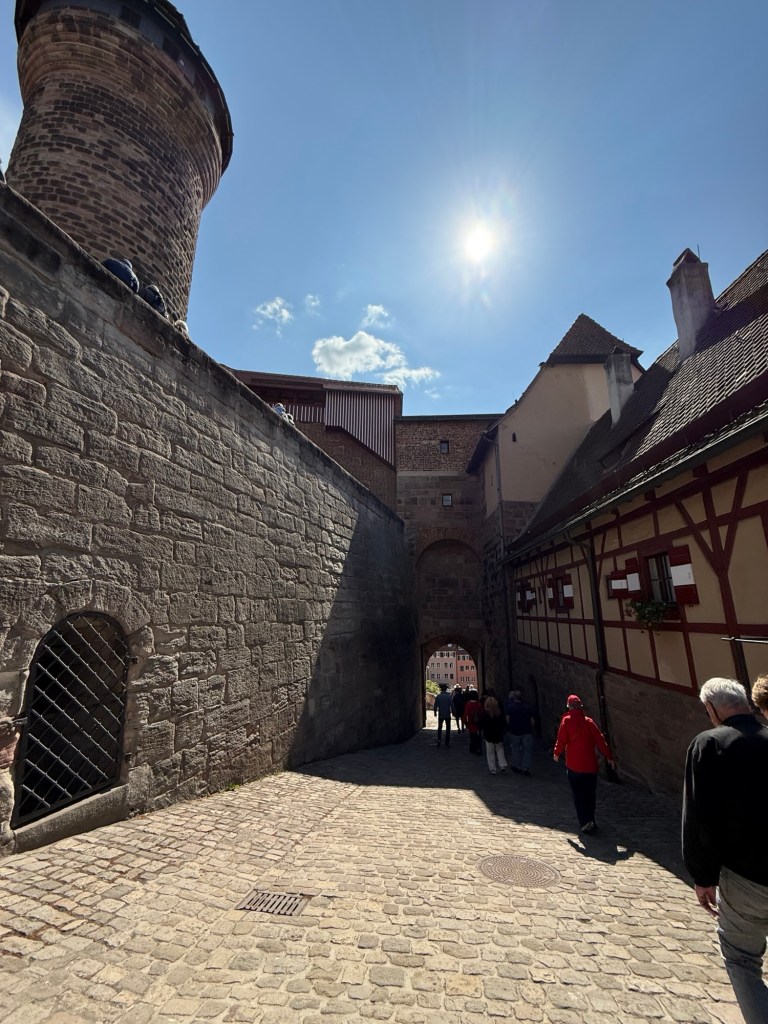
The Nuremberg Medieval Castle and surrounding old town was much more interesting. This is definitely the place you want to go if you are under siege by a medieval army! It’s only entrance is narrow, steep and exposed to attack from multiple directions.

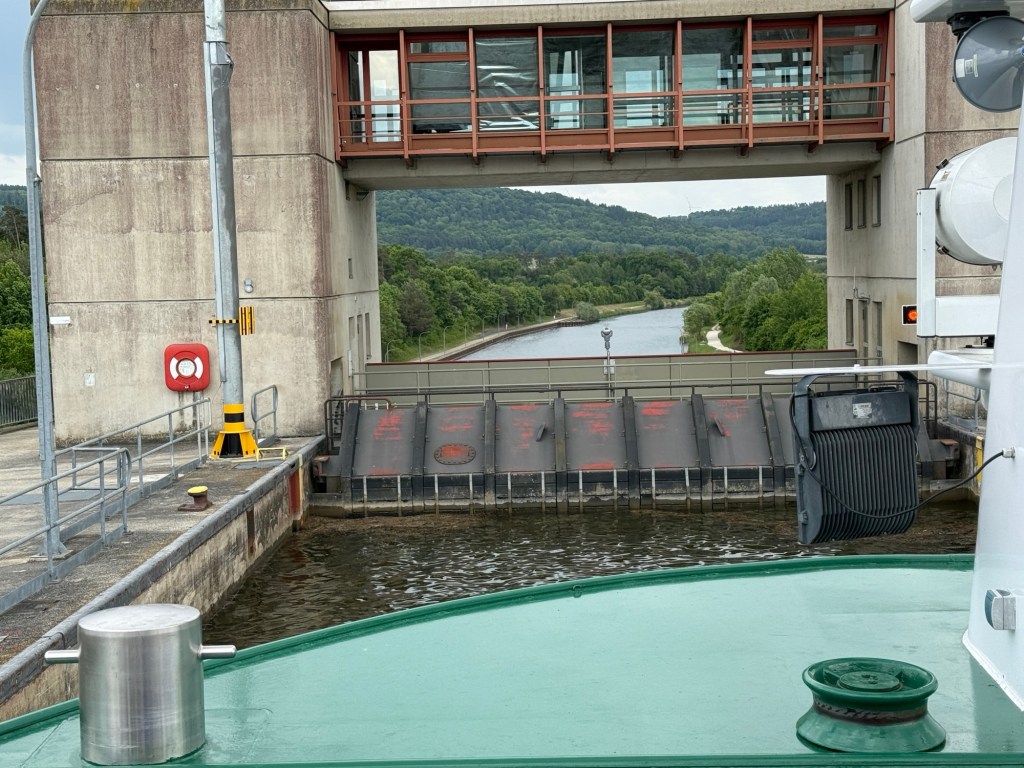
After we left Nuremberg we began cruising in the most modern section of the lock system that connects Nuremberg to the Danube. King Ludwig and his son were very interested in canal technology. They completed the first marginally successful connection of the Main and the Danube. It opened the same time as the Eerie canal in 1850, but was only partially successful and was mostly used for day excursions.

In 1921 Germany decided to build a modern canal with electricity sold by the new hydropower generators providing the money to build the expansion but the Nazi’s had other priorities. But construction resumed in 1960 and the beautiful new canal and gigantic locks opened September 25, 1992. So it took 32 years to build 106 miles of canals and locks, with the project repeatedly delayed by environmental lawsuits. People called it “the canal that leads nowhere” because of the Iron curtain, but then the Iron Curtain fell. The goal was to bring people together using the canals and at the same time creating an efficient, eco-friendly system for moving goods. The locks were 12 meters wide and designed for motorized barges that were 10 meters wide. But then the Riverboat Cruise Operators got interested and built ships that were 11.5 meters wide that just barely fit. The locks recycle most of the water they use in a very ingenious way.

Time-lapse video of large lock.

For some crazy reason the German Government no longer charges barges or cruise ships to use the system so all of the capital and operating costs are paid by German taxpayers.

The last three locks were amazingly 80’ high. We went up one side of the European Continental Divide to an altitude of 1,333 feet (remember we started at sea level in Amsterdam) and now we are beginning the voyage down river to Budapest (at 300 feet of altitude). Check out Jim’s time-lapse videos. It was a crazy experience. When we approached the down lock it looked like we were going to cruise right off the plateau.Fun 20’s Dance Party to Celebrate Tauck’s 100th Anniversary

I can’t even remember which night this happened, but the pictures were fun. We didn’t get the memo about the 20’s theme so we dressed in our India attire.

Goodbye for now.

Jim and Fawn

Amsterdam Day 3 & 4 and now the Cruise

I’m watching the world pass by as we cruise up the Rhine River on our way to Cologne. But, we had two days more of touring Amsterdam before we began our river cruise.

Rick Steves Walking tour and Mastering the Metro.

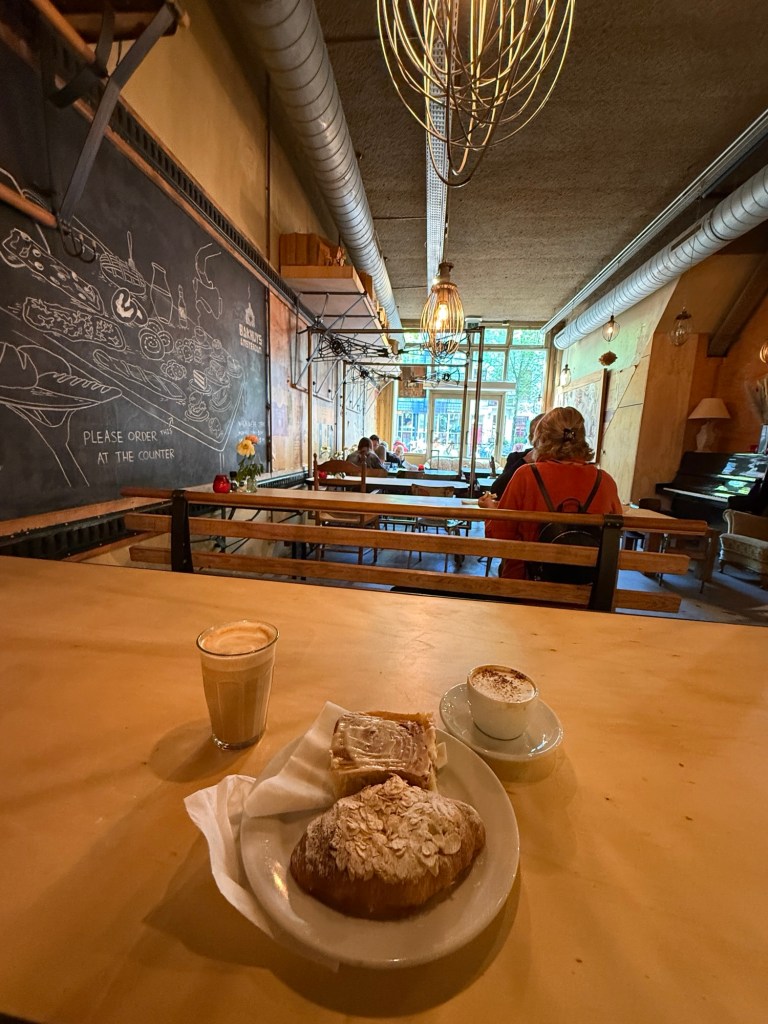
Before heading out we stopped on the way for a particularly yummy warm and flaky almond croissant from the local Bakhuys (which means quite literally, bake house).

We don’t really feel like we have mastered a new place until we ride the metro and Amsterdam’s Metro was lovely, and super easy to maneuver. Just like most of Asia you can pay for the subway or light rail with a tap using Apple Pay or a credit card each time you get on and off. Note to Seattle: for goodness sake, time to replace the “honor system” in which so many riders act dishonorably.

After riding the Metro to Central Station we walked and listened to the history of the area and other tidbits from Rick Steves’ audio tour. Although we had walked some of it before, the audio tour connected the dots and helped us understand the city even more.

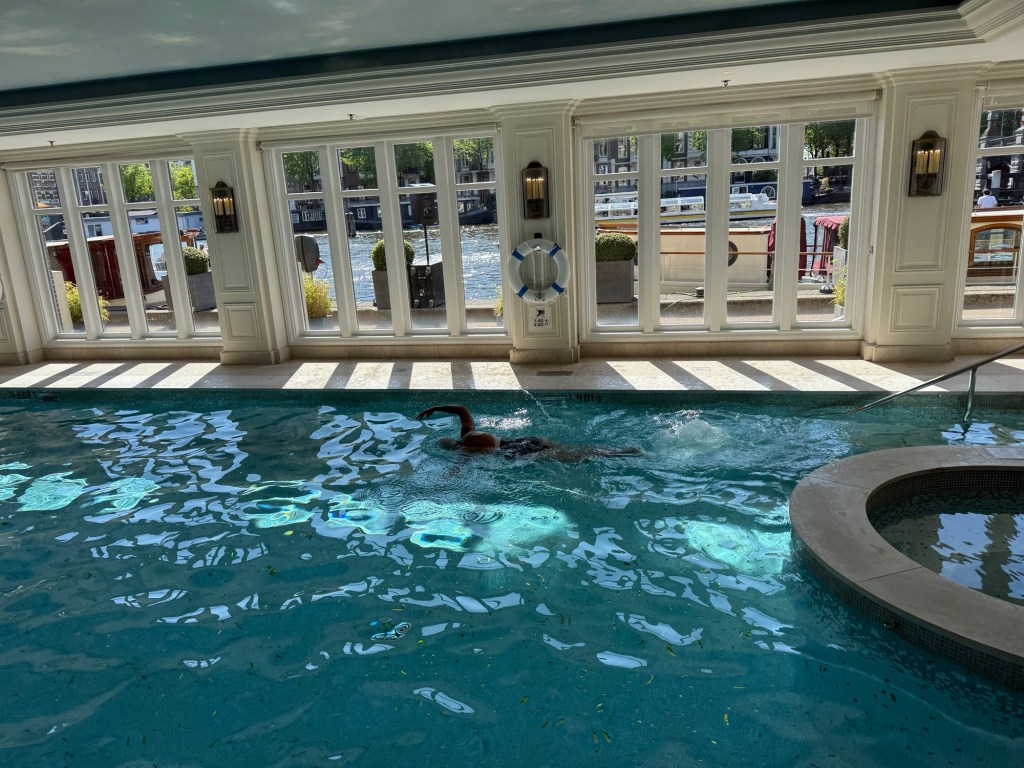
After using the beautiful hotel pool we rested a bit and then went out for a yummy Italian dinner at a local restaurant we passed the night before. It was a good choice.

I forgot to mention the day before when we were grabbing a late snack in the hotel bar and were entertained by a floating opera singer (who had been engaged for a big birthday bash on the canal).

The Portuguese Synagogue

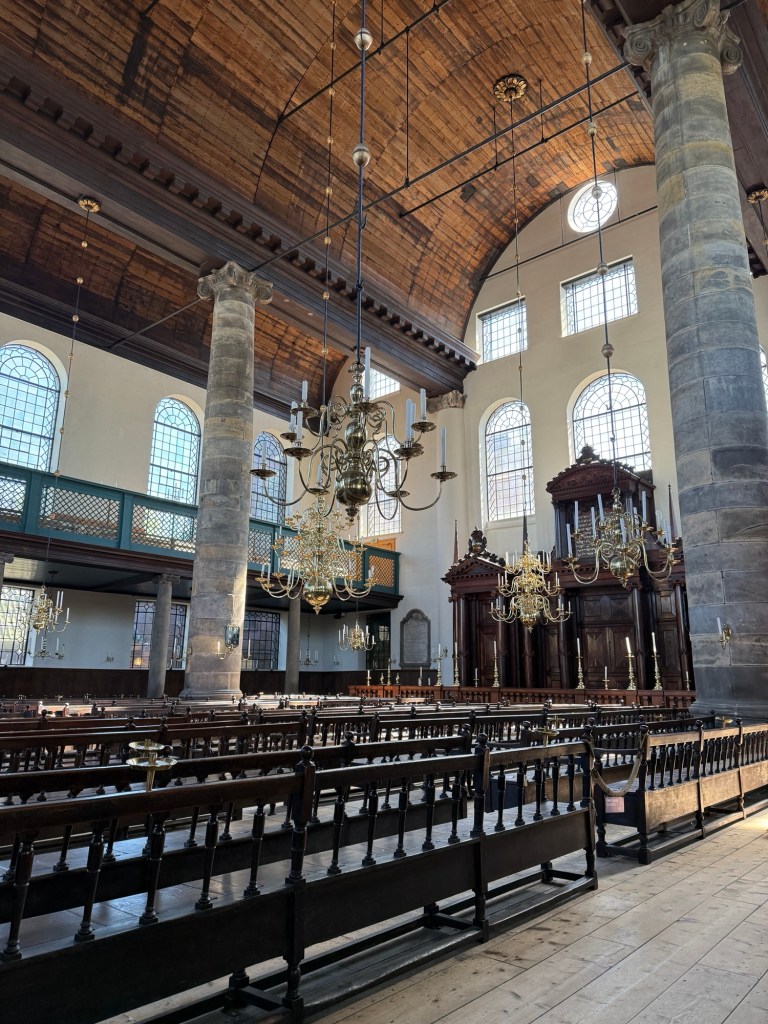
Yesterday, Monday, we checked out early from the hotel and made our way to the Portuguese Synagogue. If you go to Amsterdam this is a must visit. The Portuguese Synagogue is the largest and oldest in Europe still in use today. It is a Sephardic synagogue built by the Jewish survivors of the Spanish and Portuguese Inquisitions who escaped death by agreeing to convert to Christianity (the “New Christians”), but then converted back to Judaism after immigrating to Holland where “freedom of religion” was a radical new concept.

Next door to the Portuguese Synogogue is an Ashkenazi Synagogue (for Jews from other parts of Europe). It was also built with wood, a few years after the Portuguese Synagogue.

Both Synogogue’s survived the Nazis because Hitler wanted them to remain as a museum of the “extinct” Jews.

Although 90% of the Jews in Amsterdam (including Anne Frank) died in the Holocaust, on the first Sabbath after Victory in Europe Day on May 8, 1945 (80 years ago), there were still enough Jews to reopen the Portuguese Synagogue which continues in active use today.

Sadly, so few Ashkenazi Jews survived the Holocaust that their 17th Century Synagogue is now a museum and no longer actively used for worship.

The energy in the Portuguese Synagogue is quite peaceful. Someday we would like to attend a service here. Although it has no electricity or heat, it is lit at night by 1000 candles along the pews and in giant hanging candelabras.

When we visited during the day, sun was shining in through the high windows, ighting the pews as we sat and listened to a recorded Shalom meditation on our EarPods.

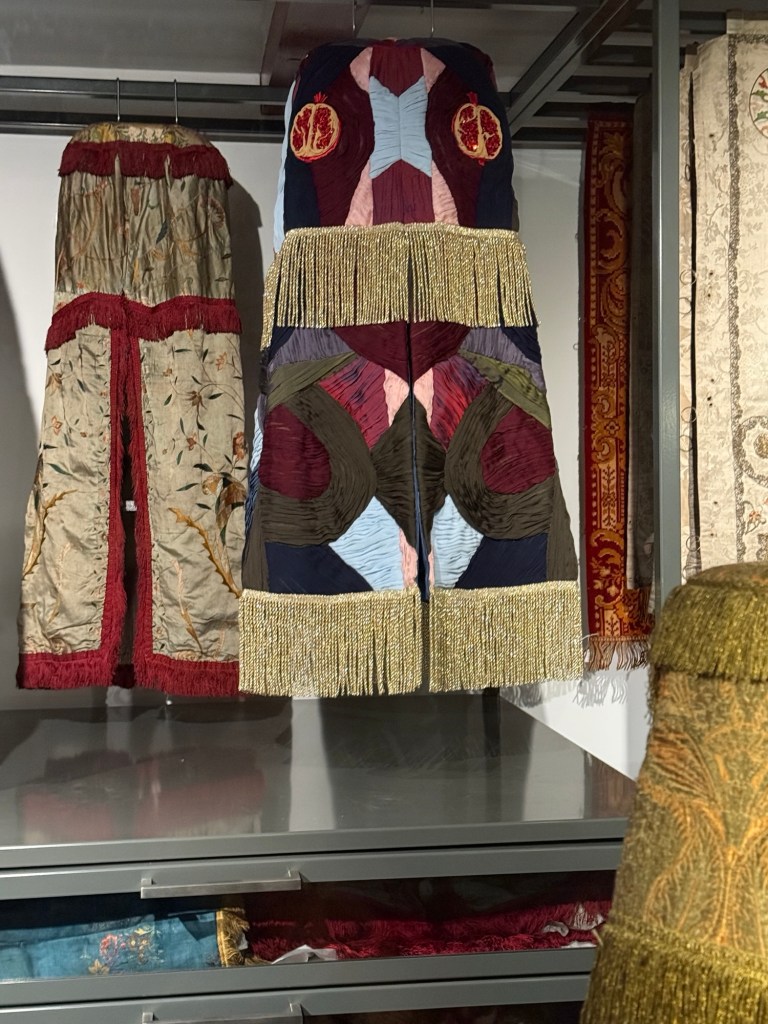
The “treasures” vault of the Ashkenazi Synagogue Museum preserved many old artifacts, including Torah Scrolls, candelabras, and clothing.

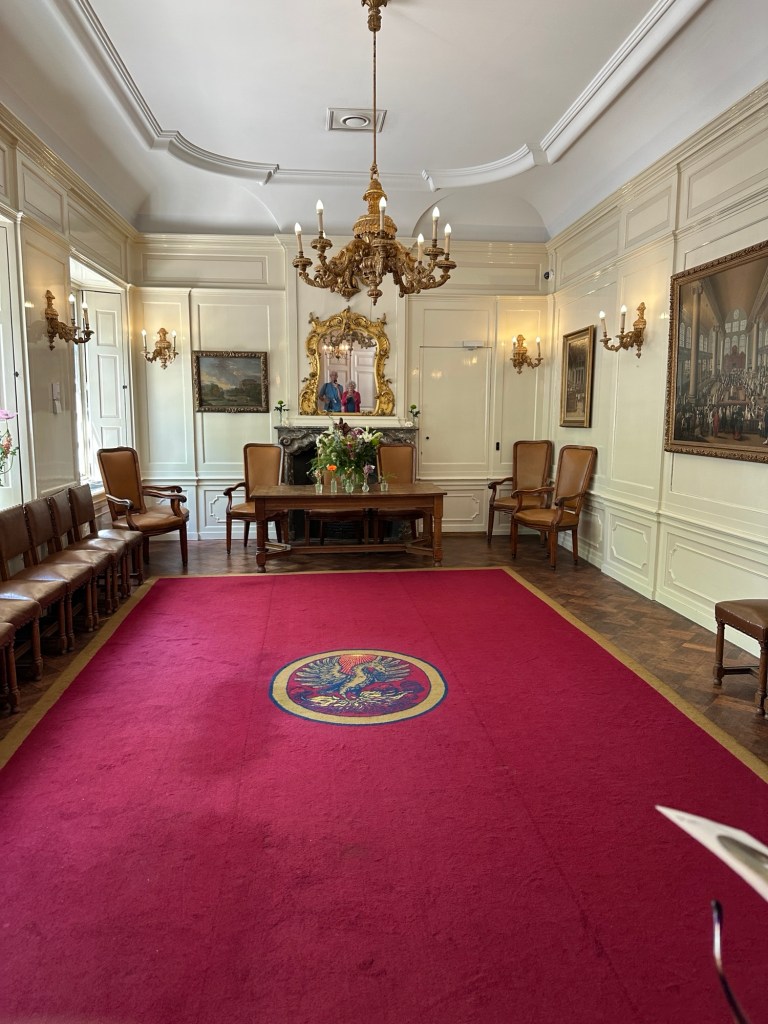
We learned that the symbol of Jews in Amsterdam and other places around the world was the mythical Phoenix bird, which rises from the ashes of its own death. Which of course makes perfect sense, because Jews were always rising from the ashes of the most recent pogrom.

The MS Joy

From there we walked back to the hotel to catch a bus to the ship. Our luggage was in our room (308) when we arrived on board. This is our first cruise of any kind, other than our personal cruising of course. I must say it is a real convenience to unpack and know that we won’t have to move our luggage for 14 days.

Our stateroom is lovely and comfortable. The ship felt a little strange to me at first, I can’t even explain why. Maybe a little claustrophobic, but it is plenty big for the 115 guests on board.

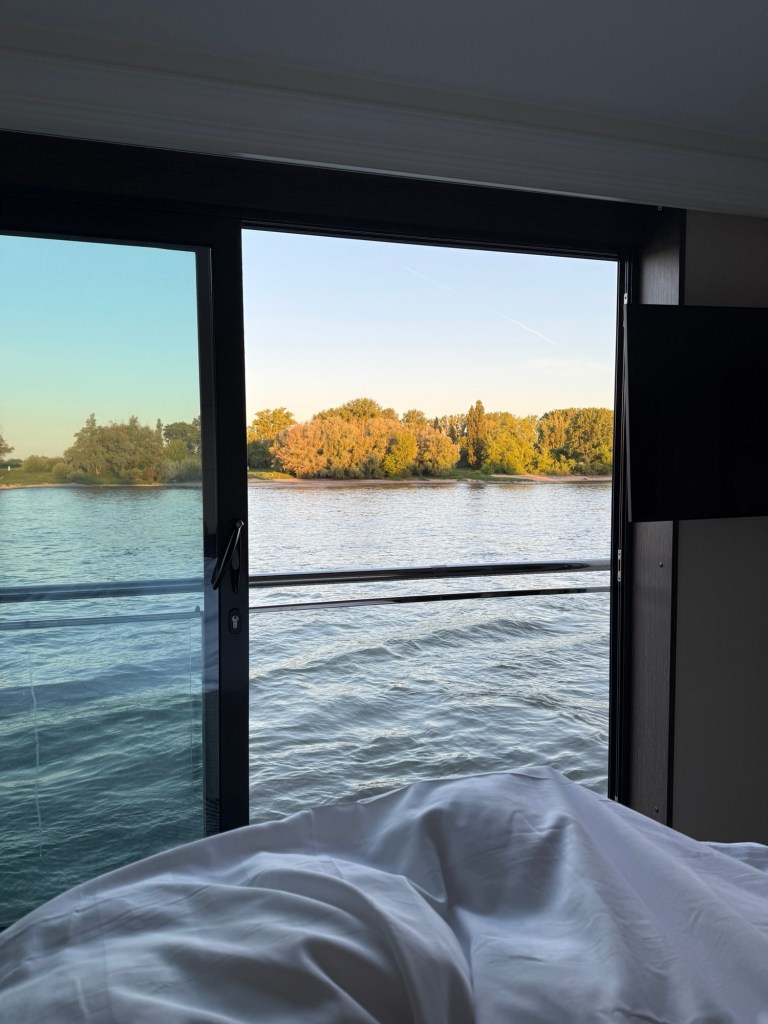
We’ve quickly acclimated and connected with many of our fellow passengers forming new friendships. Our room is on the starboard side and at our dock in Amsterdam our view was industrial. So opening the sliding glass outside doors for sleeping really wasn’t a choice. But once we were underway Monday night the joy of the view bloomed and I was able to open the windows to lots of fresh air.

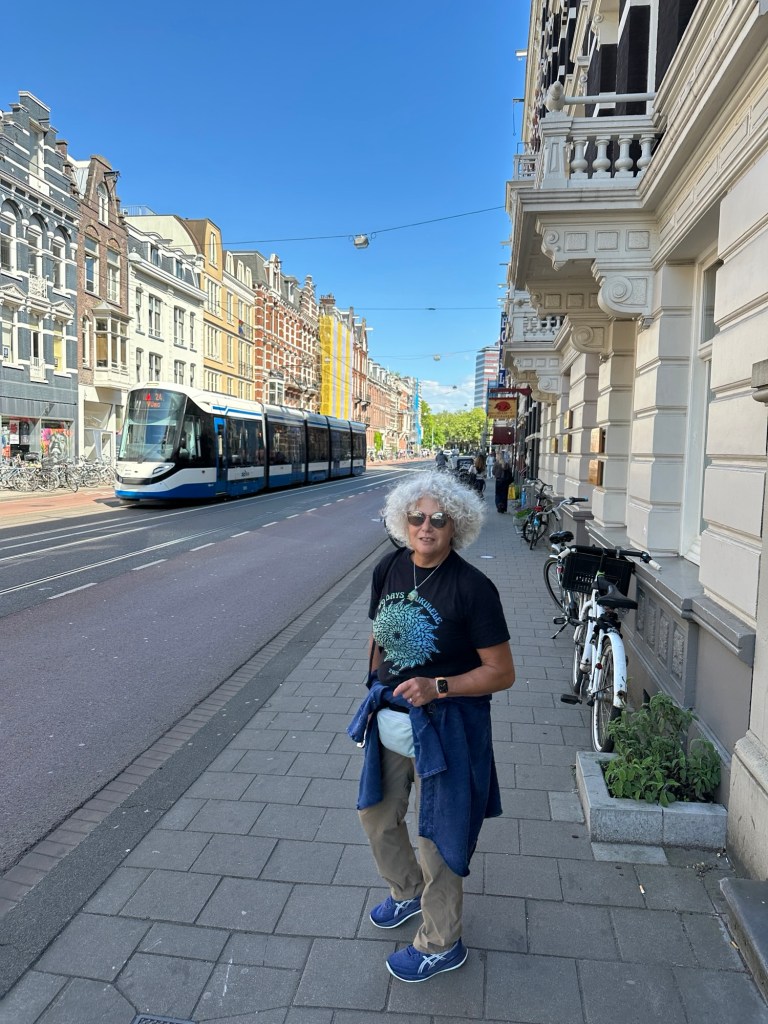
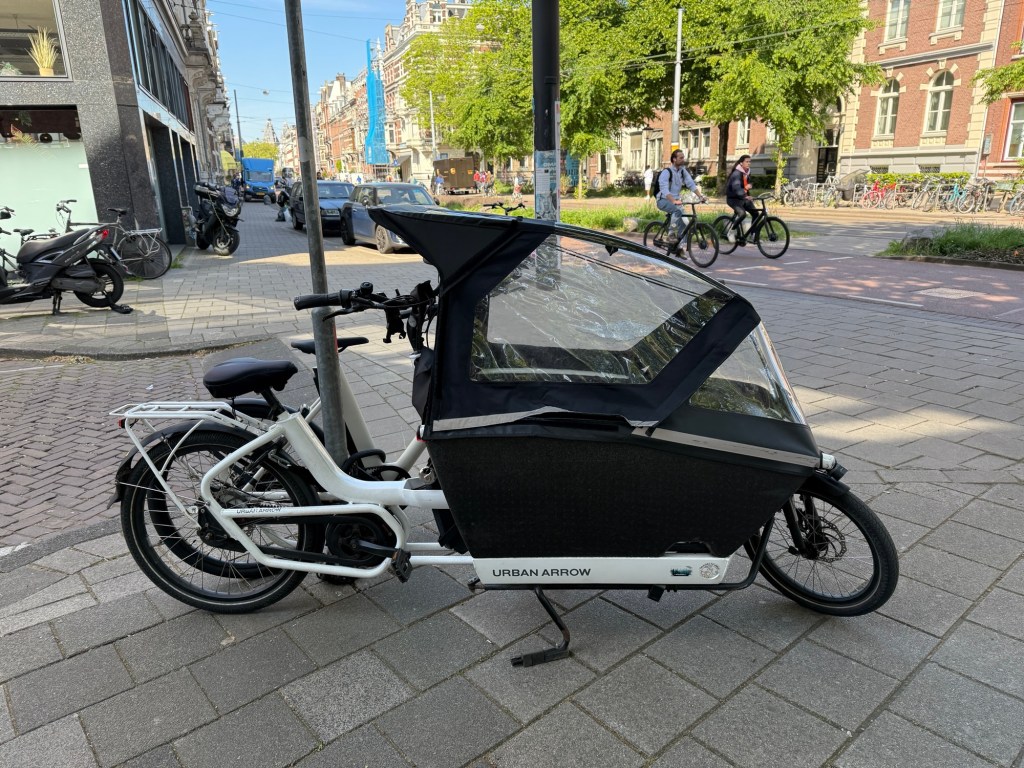
But before leaving Amsterdam we had one last touring day in Amsterdam. Although there are very few cars driving around, there’s an enormous number of bikes. So you need to be very careful crossing the many bike paths which crisscross the city. All of the cars and buses are restricted to a very slow speeds (about 20 mph) to create a safer environment for the much more numerous the cyclists.

On the way to the RIJKS National Museum our bus guide gave us some fun facts. He described Amsterdam as a “Cosmopolitan Village” because it is really pretty small. The plan, a very quick tour of the RIJKS Museum, meandering canal lunch tour and some free time before a coach ride to catch up with the ship.

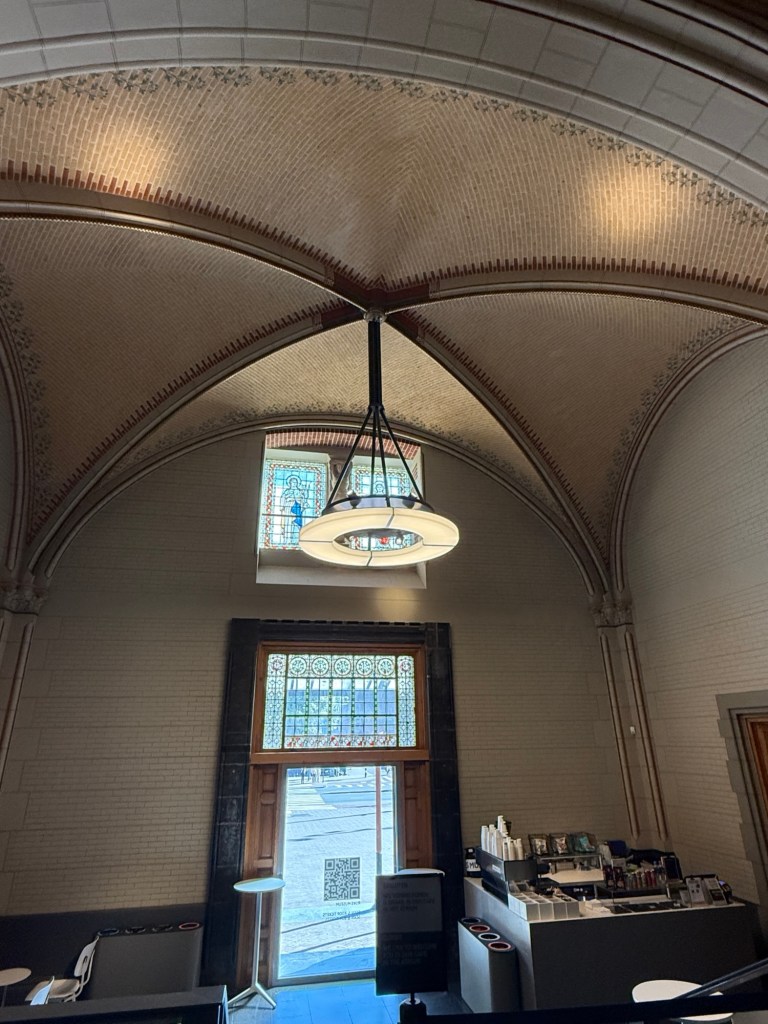
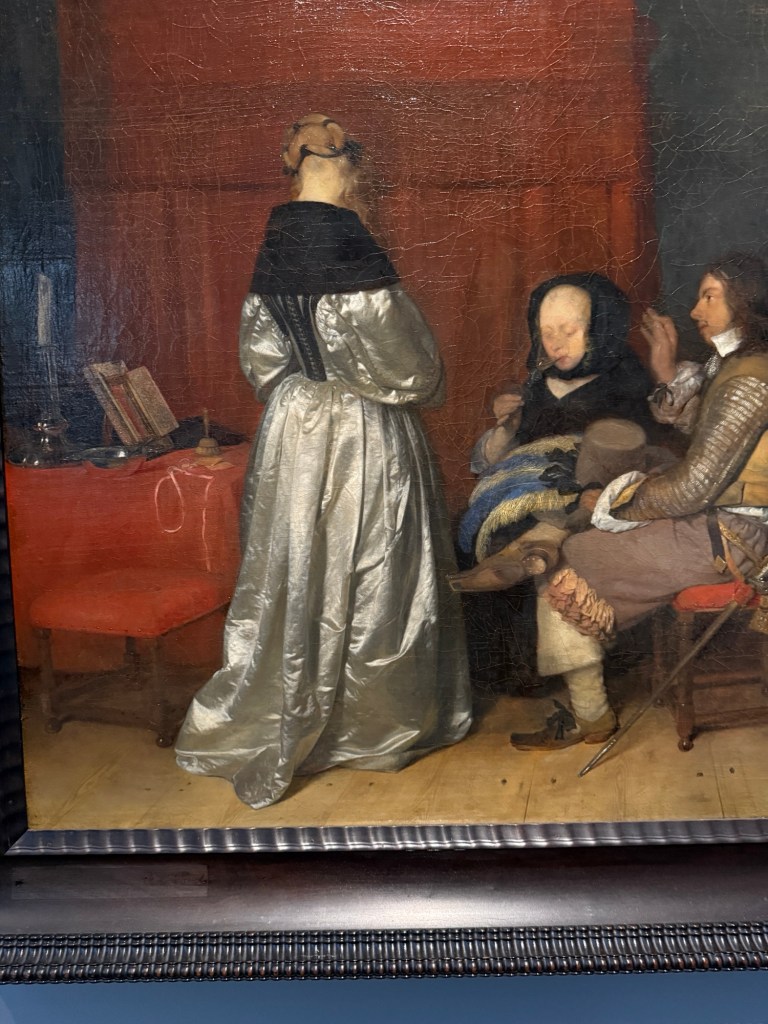
The RIJKS Museum tour was like an art speed date, and our guide had her list of highlights that she mentioned as we raced through, quickly looking for openings here and there through the crowd. The building itself is quite special. Of course the most famous painting there is Rembrandt’s Night Watch (which is currently being restored).

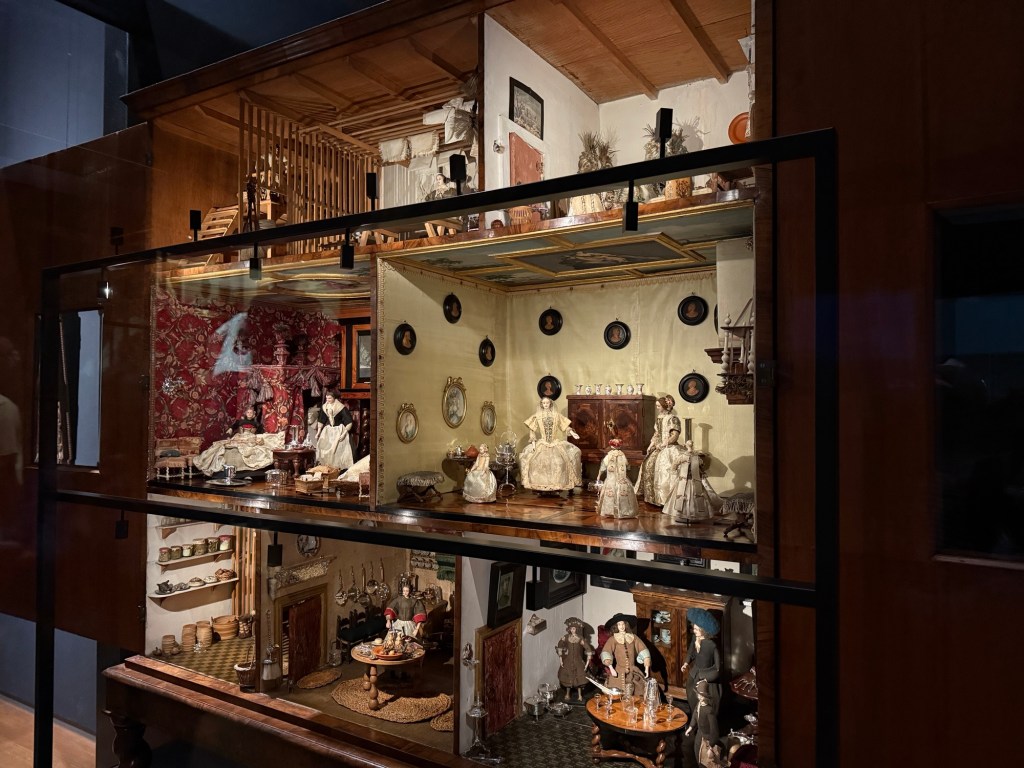
I learned some fun Rembrandt facts. He always had his light coming from the upper left and shadows on the lower right side of paintings. We could watch the restorers with their computers, microscopes and lasers, painstakingly working on the painting. I found that fascinating and would have liked to talk to the restorers and learn more about what they were doing. I loved some of the Vermeer paintings. We quickly saw some strange miniature houses the wealthy created to demonstrate the grandeur of their house. These are not to be confused with doll houses.

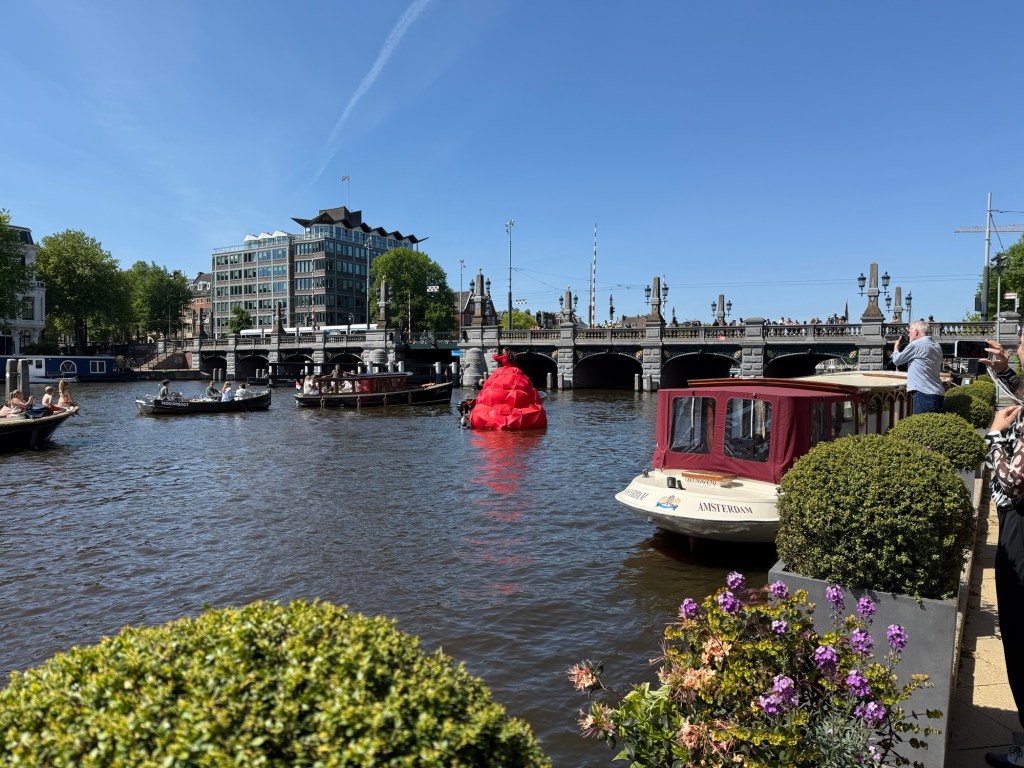
Of course, seeing Amsterdam from the canals is a must. There is nothing quite like it. Our guide on the tour shared some fun facts and history. It turns out that a woman was the creator of the Central Bank of Amsterdam. And although she was not allowed in their stock exchange building, she was very important to the financial success of Amsterdam.

After touring some of the Amsterdam canals by tour boat, we had 2 hours to walk around and Wanda (a fellow passenger) and I went in search of the nearby grocery store to stock up on some needed sundries. I hadn’t seen any grocery store in all our walking around. Unlike most places we visited, there aren’t lots of corner groceries and drug stores. I thought to myself, where on earth are all these people shopping and it turned out it was underground near the museums. We still had time to kill so we grabbed a latte and hung out at a nearby locals cafe.
After a break to wander, we boarded our bus and made our way to meet up with the ship that had been cruising all day to a rendezvous point 50 miles up river from Amsterdam.

Jim stayed on board today because he was feeling a little bit coldy so he missed the canal cruise but he got to experience the first locks and a lovely day healing and napping in the sun.

Unfortunately, the coach hit traffic and took over 2 hours to get to the ship. I really don’t like the coach ride part of these tours, but sometimes they are just necessarily. But once on board I went to our room and showered before a lovely dinner. We disembarked for the overnight cruise highlighted by a stunning sunset.

Overnight away from the dock we opened our doors to the sound of the water, occasionally woken up by industrial activity and barges going by, but still wonderful. This morning after breakfast I did my walk/run on the upper decks while Jim did his stretches. Sun continues to warm our journey and we feel very lucky. We had some touring business to attend to, picking our our excursions for the the rest of the journey.

So we will grab a bite to eat before docking in Cologne and exploring that city.

Cologne:

No rushing out this morning. We enjoyed cruising on our way to Cologne and I got a run in by doing laps around the top deck. The weather is perfect and the experience of running the circle including some steps while cruising was kind of interesting, half against the wind, half with the wind.

We just returned from a special tour by a young local guide, Benny. He was energetic and informative and extremely cute.

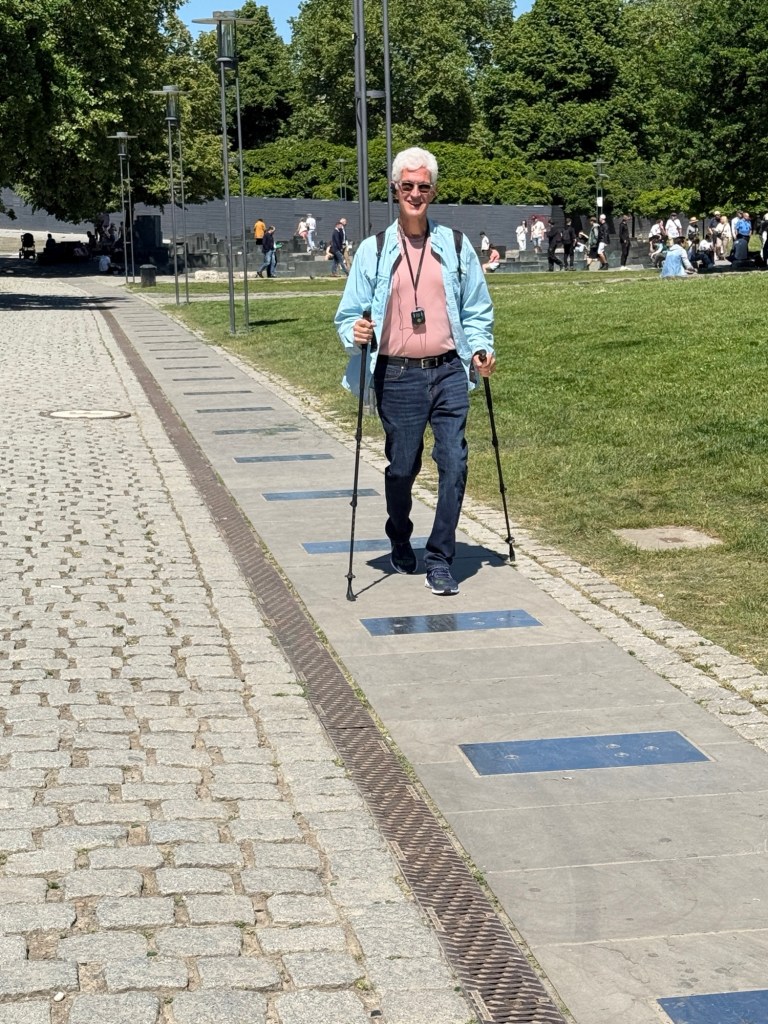
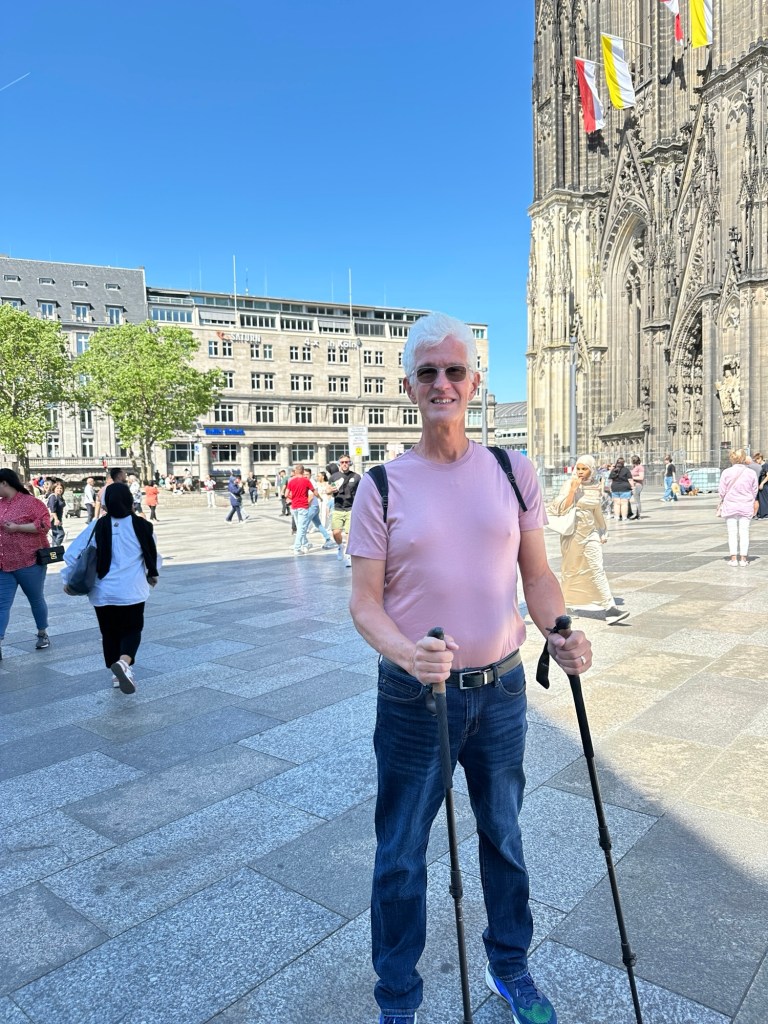
You can see Jim in the pictures above walking over some metal boxes. These mark where a “water fence” can be constructed quickly to hold back flooding waters. It was built after three years of big floods in the 1990’s. It’s tested every year but it hasn’t been needed yet in a real flood. It can be constructed in only a few hours by 1200 people.

After the tour we went into the cathedral which is quite impressive. The glowing, magnificent stained glass and its huge size make it especially remarkable. It was built over hundreds of years and was the tallest building in the world after it was completed in the 1800’s until the Washington Monument was built in DC (using the scaffolding from this cathedral). We stopped for some yummy ice cream on our way back to the ship. Our last stop was the main Cologne rail/auto/pedestrian bridge that is completely covered with the thousands of padlocks placed by loving couples who attach their symbolic “love lock” to the bridge and throw away the key into the Rhine River below. Tonight, we get underway again at 6:30 and then will celebrate the evening with local beer, food and music.

Auf Wiedersehen.

Fawn and Jim

The beginning of our River Cruise Adventure: Amsterdam Day 1 & 2

It’s been a while since we’ve written a blog. Last summer, I didn’t really finish our cruise blogging. Life and work got in the way.

But, I’m motivated again. To catch you up a bit . . . Jim had his aortic valve replacement surgery in February and it has made a huge difference. We are so thankful for the amazing surgeons and modern medicine. His heart is working beautifully and we are working on getting his muscle strength back.

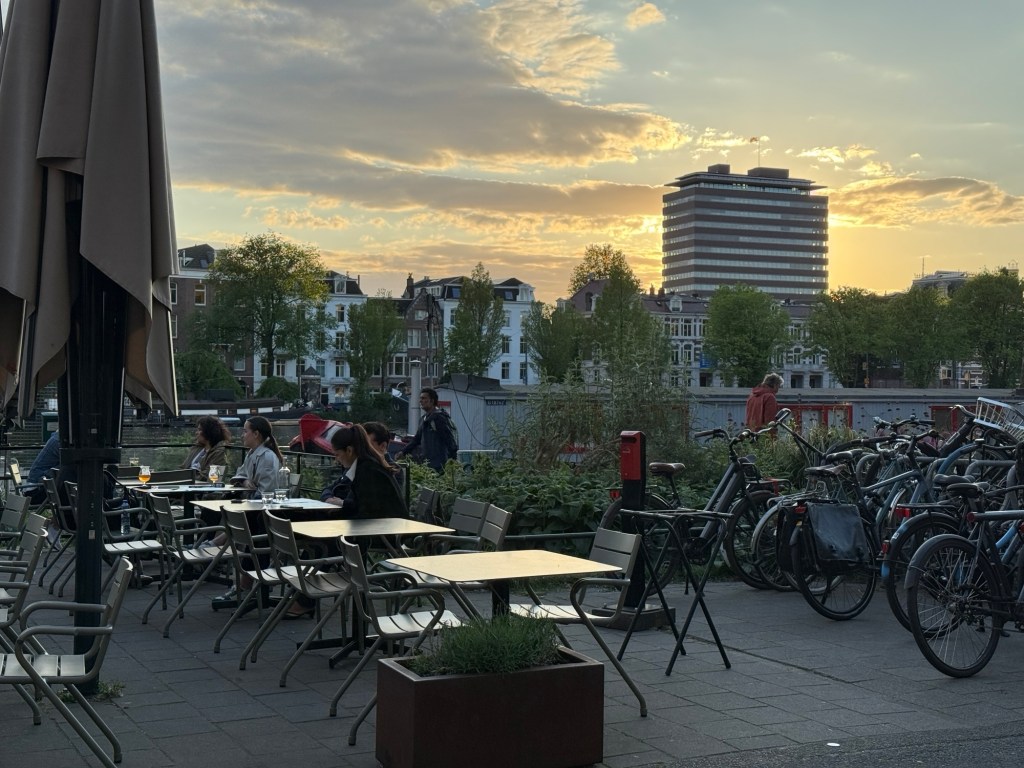
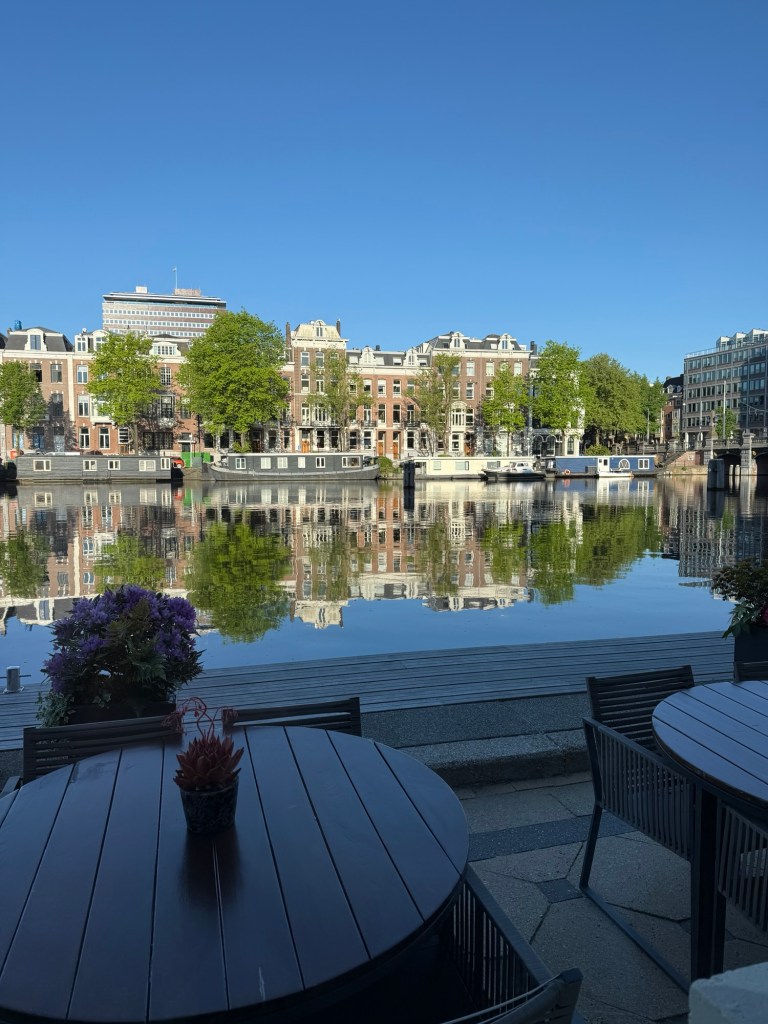
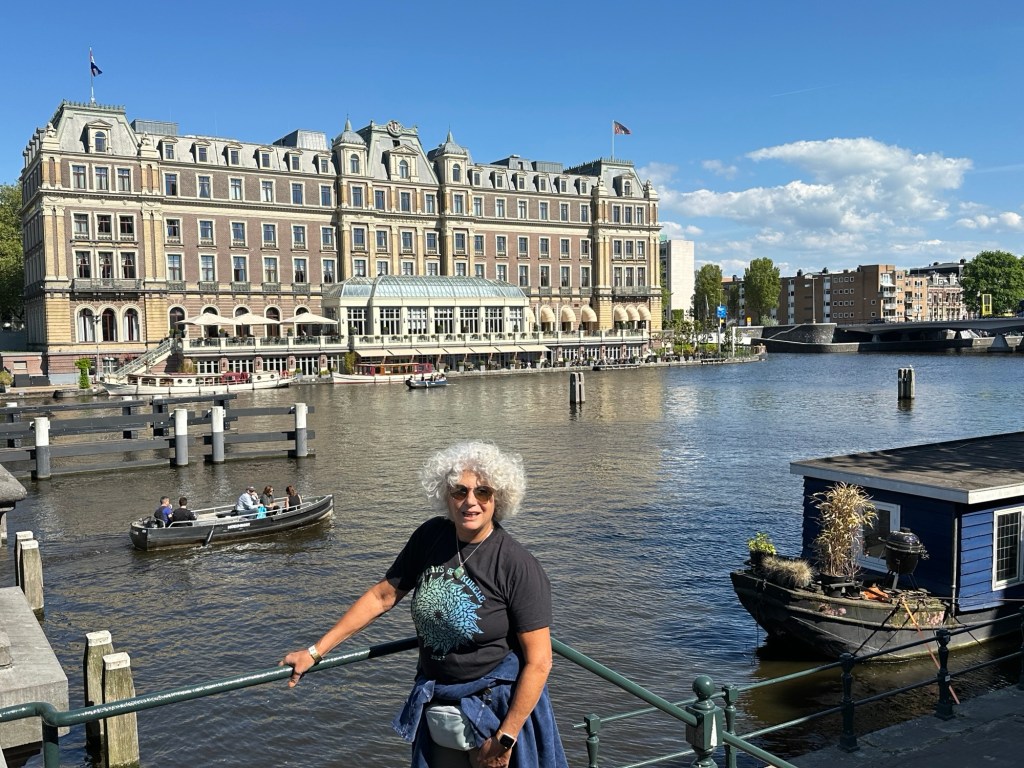
Today, we are in Amsterdam, acclimating to the current time zone (Seattle + 9 hours) before we board our riverboat cruise to Budapest. Yesterday, after landing in the morning we got to our beautiful hotel on the Amstel River, the Amstel Intercontinental, and immediately went out walking on a beautiful sunny day (which apparently are as rare here in May as they are in Seattle).

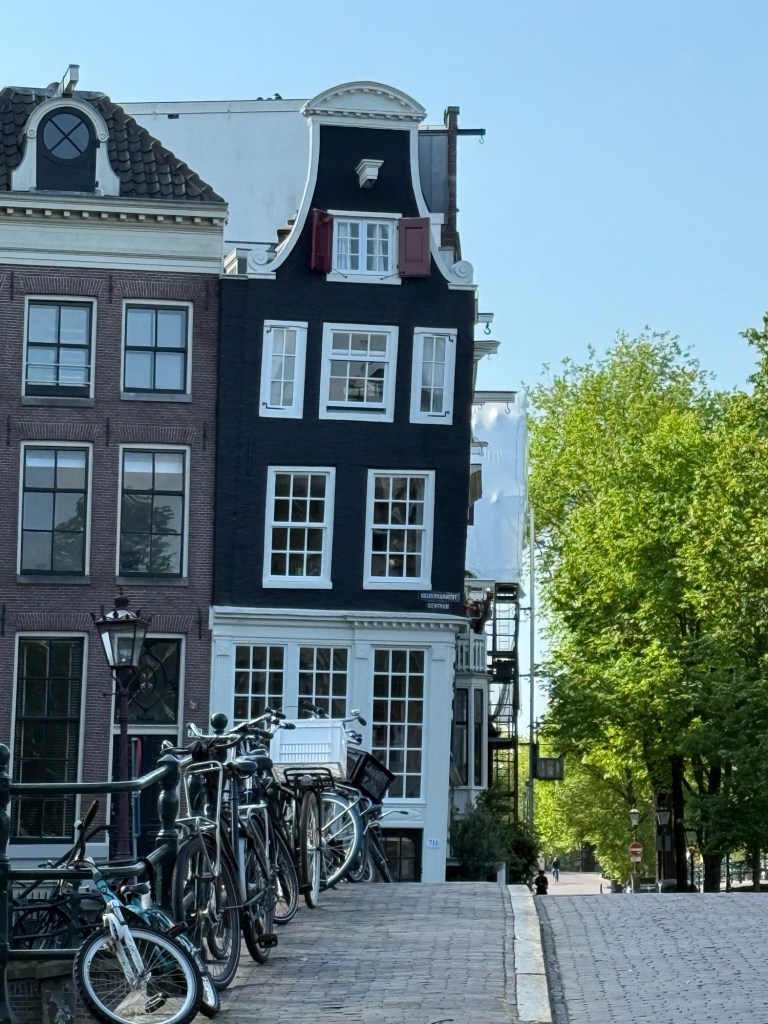
I’m struck by how familiar the architecture is and I guess, it shouldn’t be surprising. New Amsterdam (now New York City) after all was where I grew up. All the beautiful canals are another story. The semicircle rings of canals radiating out from the city center require over 1,200 bridges with most of the best views from the middle of each bridge. That plus all of the bicycles make strolling here quite fascinating. It’s different from anywhere else we have been.

Everyone warned us about all the bicycles so, we were prepared. And we made it through our first day without any close calls. And yes, some of those bicycles have huge “baskets” (some look like small bathtubs) in front to carry children, groceries and other cargo.

We’ve been blessed once again with sunny weather to explore the city. And we walked 4 miles acclimating to our current time zone (about 9 hours ahead) before settling in for a yummy lunch at an outside canal side table at Maria’s restaurant, watching the little tour boats cruise by. Then we walked some more before exhaustion set in and we went back to the hotel for an afternoon nap. Jim’s rehab is certainly being put to the test!

Three hours later we woke up and headed out for dinner at a nearby local restaurant: De Ysbreeker (“The Icebreaker”), also next to a canal.

Amsterdam Day 2: Of course, we woke early this morning and both felt pretty good given the time change.

Great morning view for breakfast.

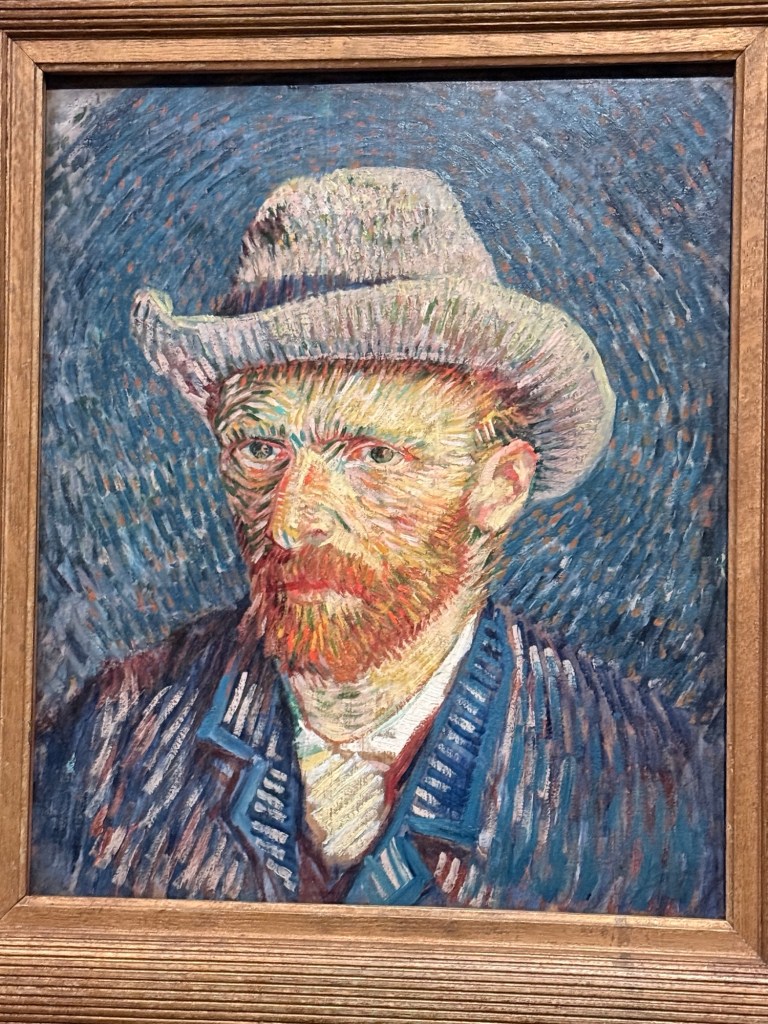
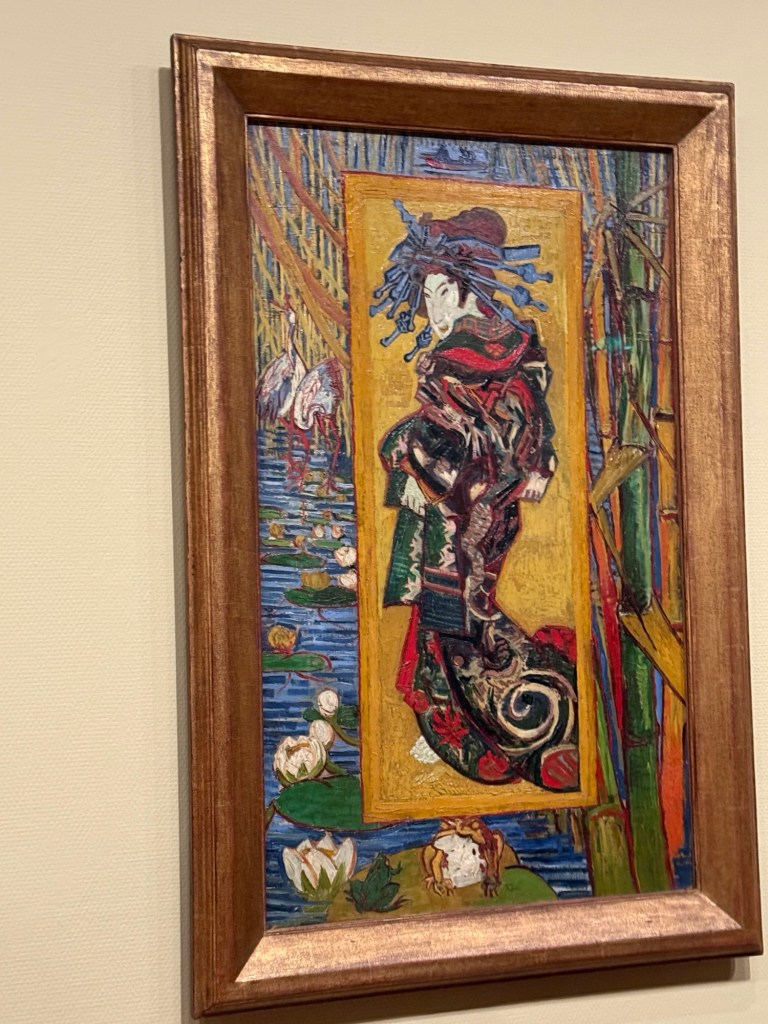
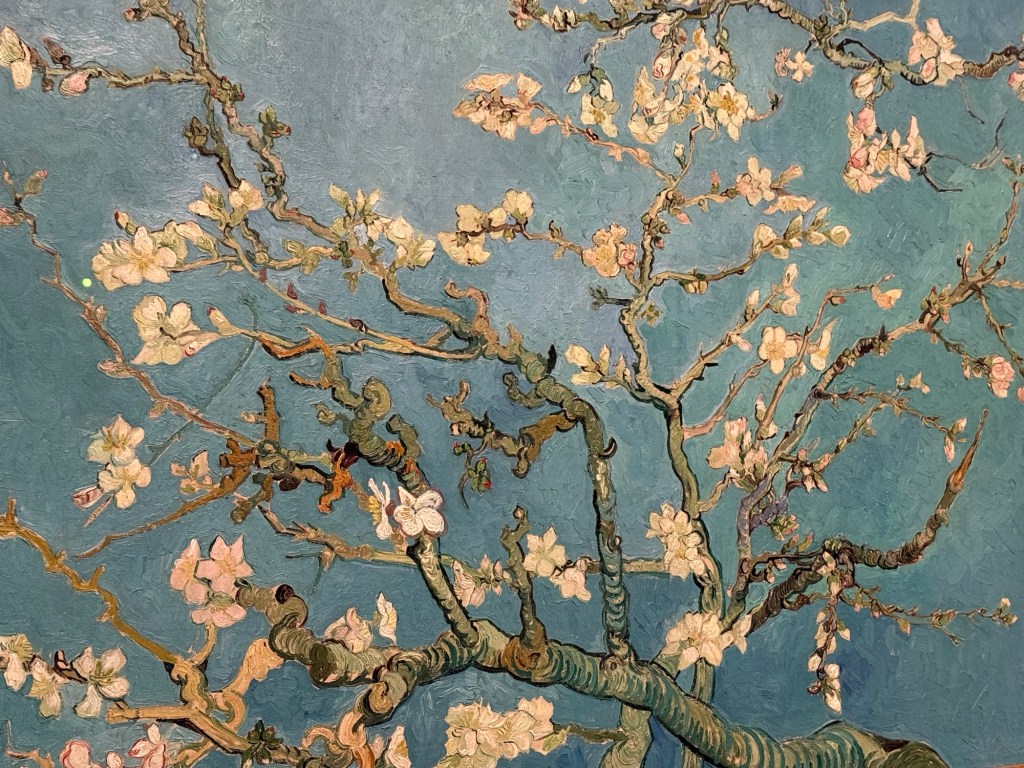
After a beautiful breakfast, we are taking a bit of a break before heading off for the Van Gough Museum.

Once again we are blessed with “tourist weather”. It’s much more usual for it to be rainy and cooler here, much like Seattle. But as we roamed the streets to the museum district the sun shined down. People were at outside tables at all the cafes, smiling with faces to the sun. We passed one person who was wearing a great t-shirt. I didn’t get a photo but it said, “Don’t blame me, I was left unsupervised.”

We met up with our guide Fannie for our Van Gough tour. She was a tall, energetic, art historian with a well crafted narrative of the exhibit and the Van Gough history of painting. We all know the basics, but she was able to add so much knowledge of quality and growth of his painting from dark realism to the vibrant pointillism and colors we’ve all come to appreciate.

After taking a break at the museum cafe, we wandered over to the Anselm Keifer special exhibit. Keifer was inspired in many ways by Van Gough and early in his career won a grant to travel the same journey from Holland to Belgium and France. His paintings are enormous, layered and overwhelming.

There is no way to experience the size except by being there. How on earth they move this exhibit is a huge question. As another person standing near us said, “very carefully!” I was blown away. Now we want to see the 2023 documentary “Anselm” and it would be amazing to visit his art compound in person. But what a great experience to see the exhibit here.

On our way back to the hotel for an afternoon nap to keep up our Jet lag recovery program, we stopped for gelato. Back at the hotel, we swam at the lovely pool and then we headed out for a nearby late dinner at a local Indian Restaurant.

Strolling back to the hotel on this temperate night, we passed some young men practicing some field hockey techniques. Turns out this guy is quite famous amongst field hockey aficionados, his friend boasting about Olympics and European championships.

I had an interesting observation walking around yesterday. People don’t wear clothing with a lot of color. Tans, black, browns adorn the inhabitants of Amsterdam. The people are lovely. It doesn’t mean anything really, just interesting. They choose to blend in with the usually grey weather.

You can see from our colorful plumage today, we stick out! After a reasonably good night’s sleep and another yummy breakfast overlooking a canal, today we are heading out for the Jewish Quarter.

Tot zines voor nu (Goodbye for now)

True Love Adventurers in Amsterdam, Fawn and Jim