It’s been a few days since I blogged and that is always a mistake. It’s amazing how quickly we forget the days. It’s Saturday morning here now, so here goes.
Castles Along the Middle Rhine
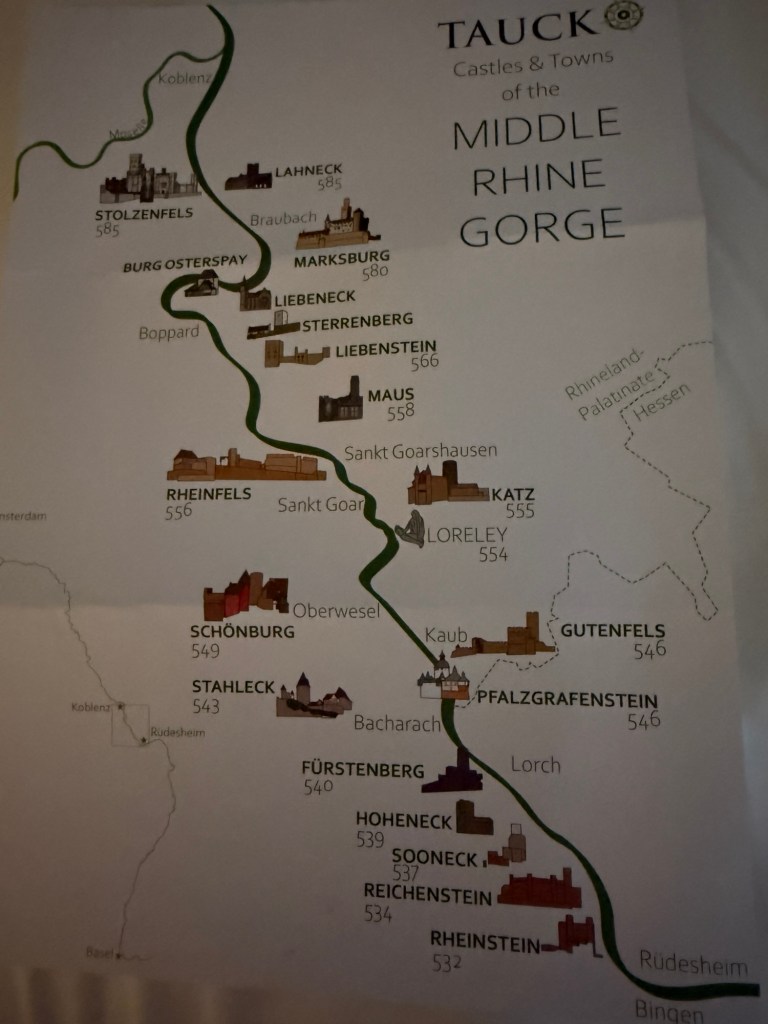

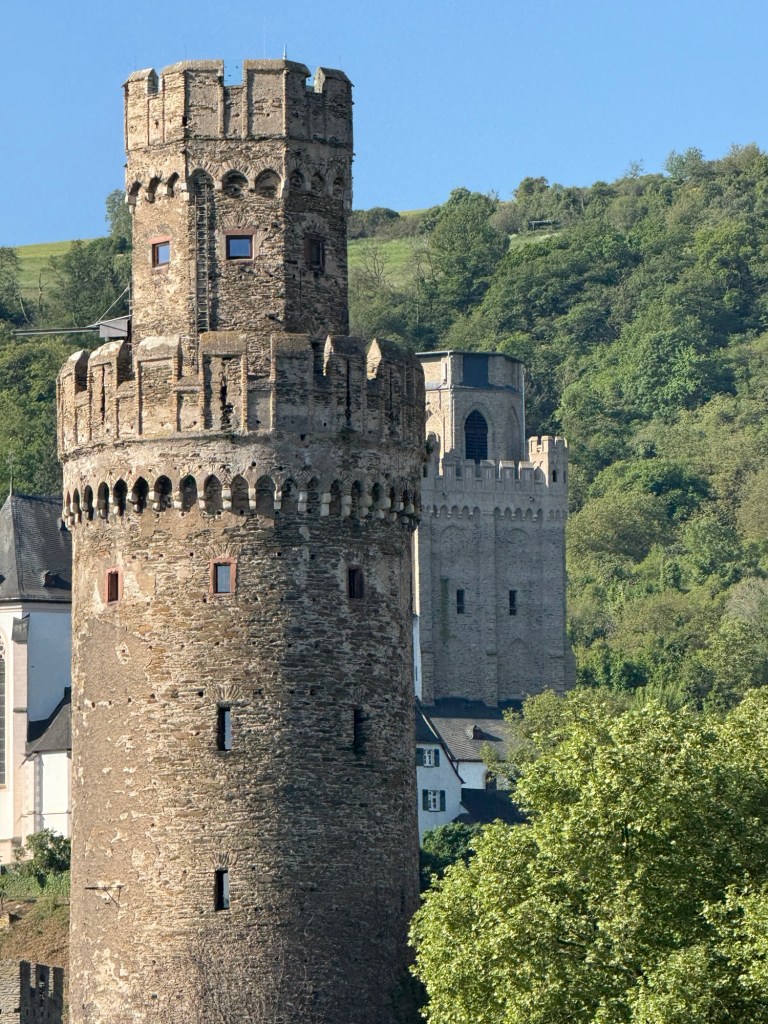

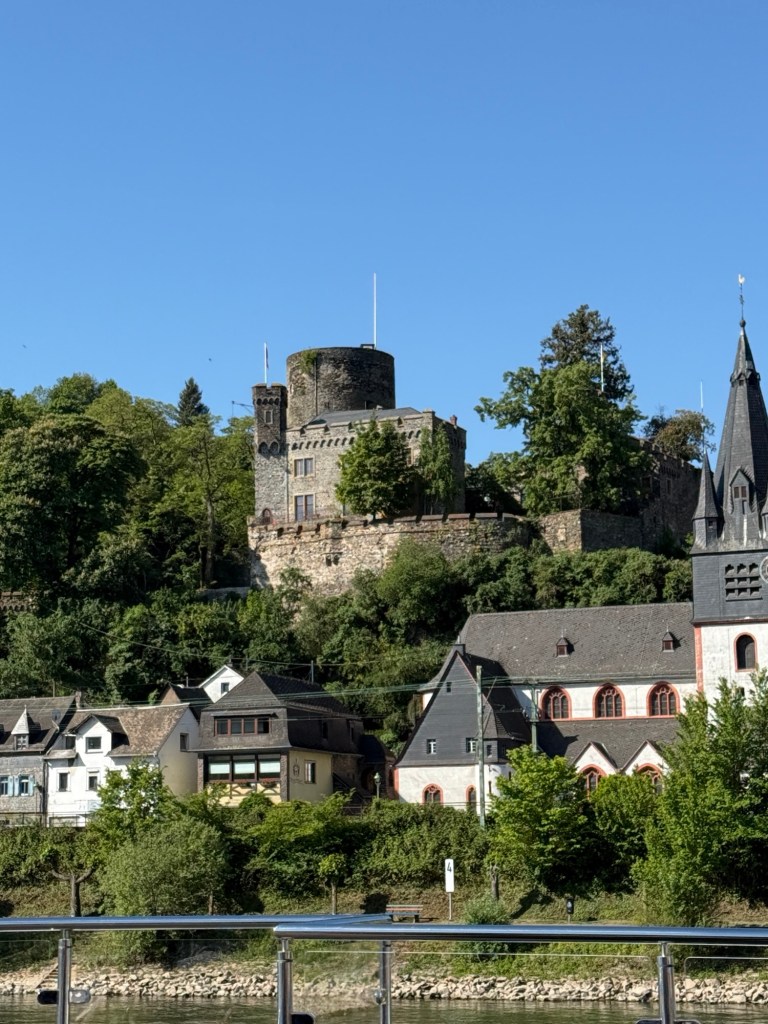
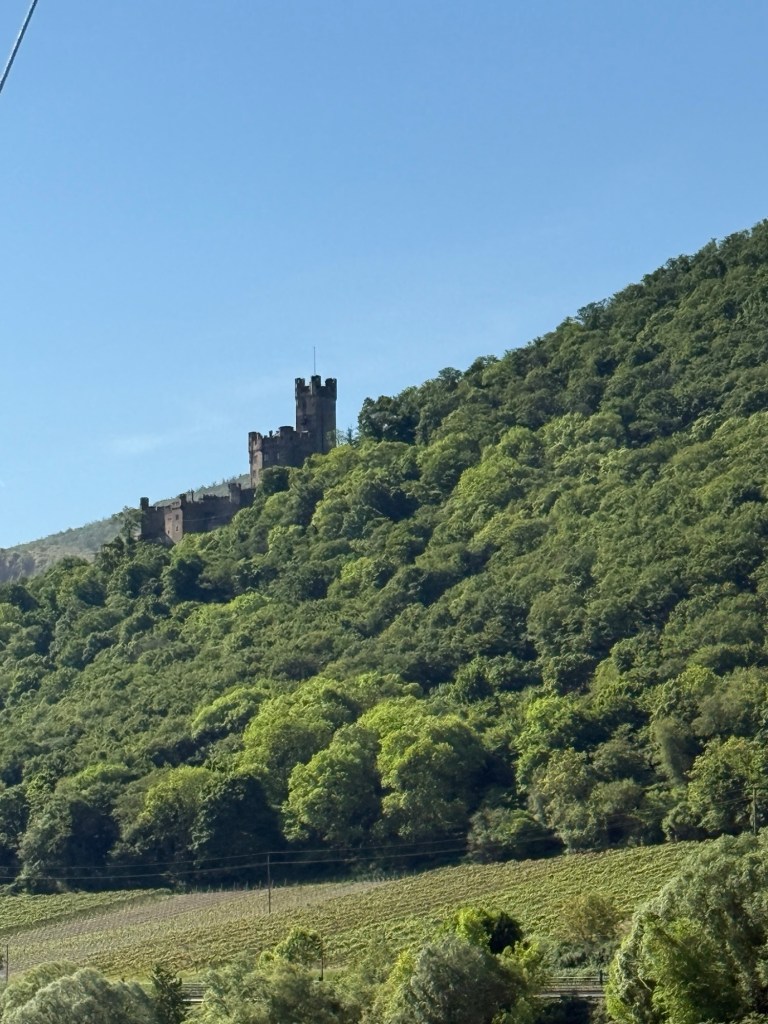
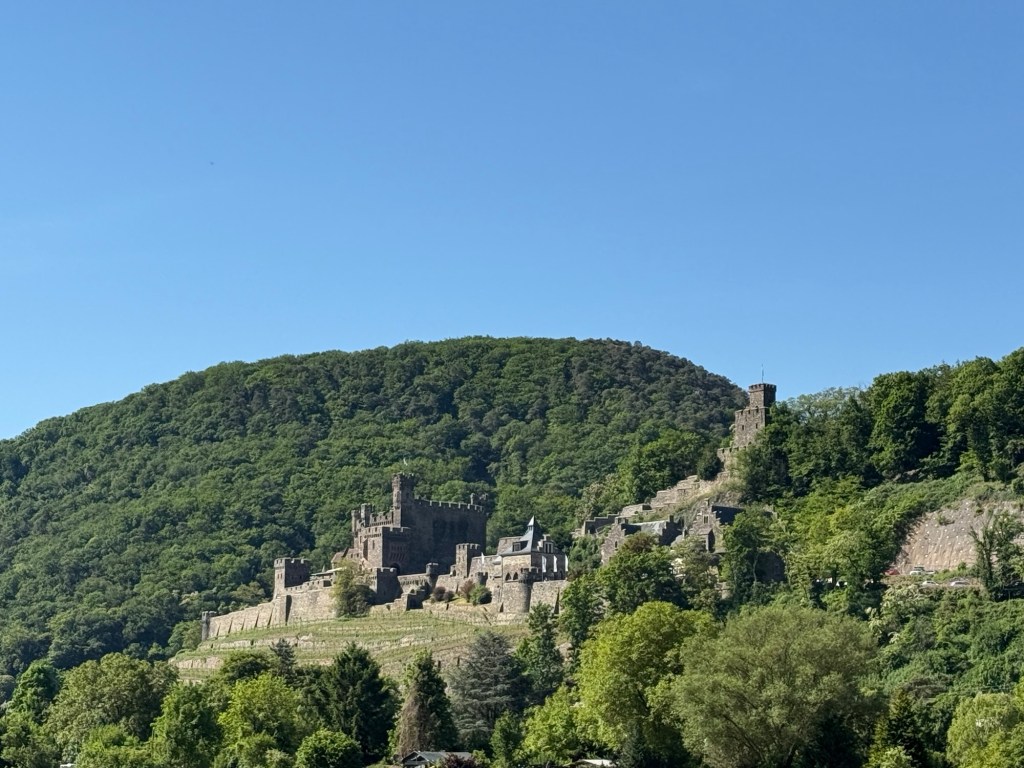

Schedules are fluid along the river with all the locks and the traffic. But we expected to enter “castle country” around 7 Am. I woke up early, looked out the window and there was the first castle at 5:45 Am. So we quickly got up and headed to the top deck of the ship. The main part of the castle tour was an hour or so away, but we saw lots of them with our fellow early risers. Here’s an interesting castle fact. Square towers were more susceptible to attack than round towers especially after the use of cannon.
The area was really beautiful and we were blessed with warm and clear weather. In the evening we were entertained by a lovely trio (clarinet, guitar and bass. Their energy and harmony were wonderful.
Biking in Rudesheim

We signed up for the biking excursion, but it was unclear if e-bikes were available. Apparently, it’s hard to find e-bike providers in the area along the canal. Tour groups that focus on biking everyday scoop them up. But Tauck procured enough for the group that signed up and we enjoyed a lovely ride along the canal. When our leaders assessed that we were all capable, we went further up to the winery
Full Day Cruising with a Surprise Stop in Miltenberg


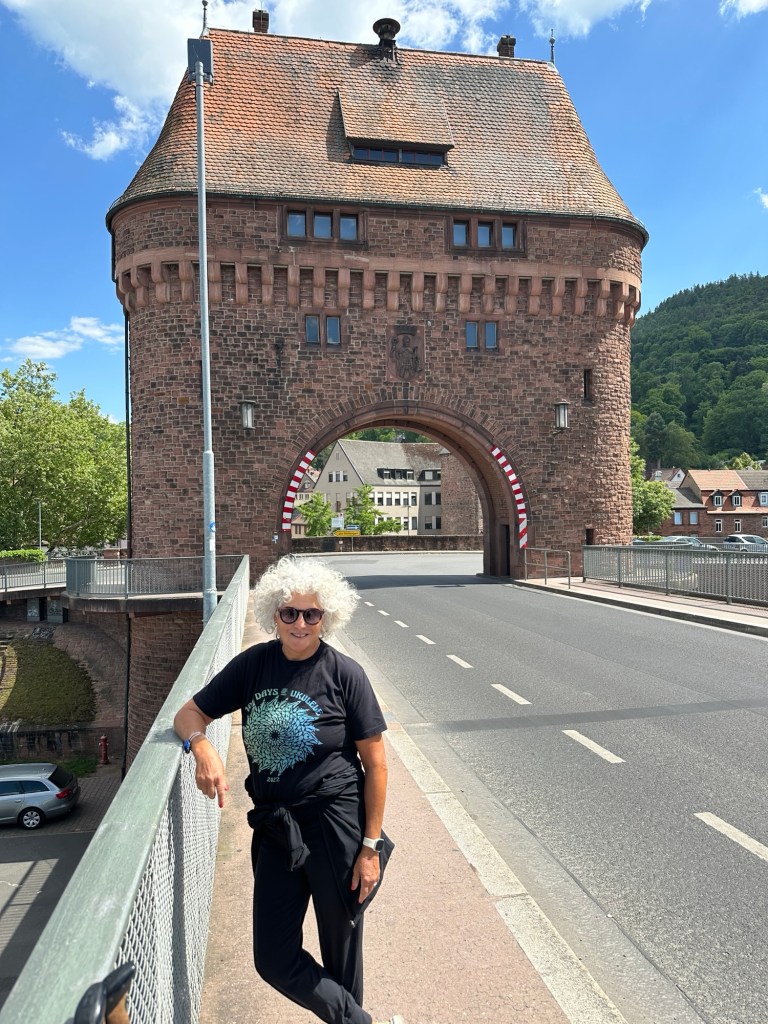
We learned an interesting fact from one of our guides, towns ending in ‘burg’ reference a castle town and “berg” means in the hills or mountains but usually without a castle. That being said, our next stop was Miltonberg.
At this part of the trip the canals travel through towns with very low bridges, so the top of the boat is off limits to passengers and the pilot house raises and lowers as needed. In fact sometimes the bridge is so low it seems impossible that the ship will make it. Tuesday was supposed to be a nonstop cruise day, but we were ahead of schedule and made a lovely stop in Miltonberg.
I was thrilled to stroll the town and we passed a small music store with Ukuleles. I needed a new kapo but the proprietor was such a character I forgot to buy one. Harold was born in the town and gave us lots of history. Miltonberg lucked out in the war and they were only hit by one bomb. So most of the buildings and old homes are intact. Some were over 500 years old!


Würzburg Palace and Walk About.
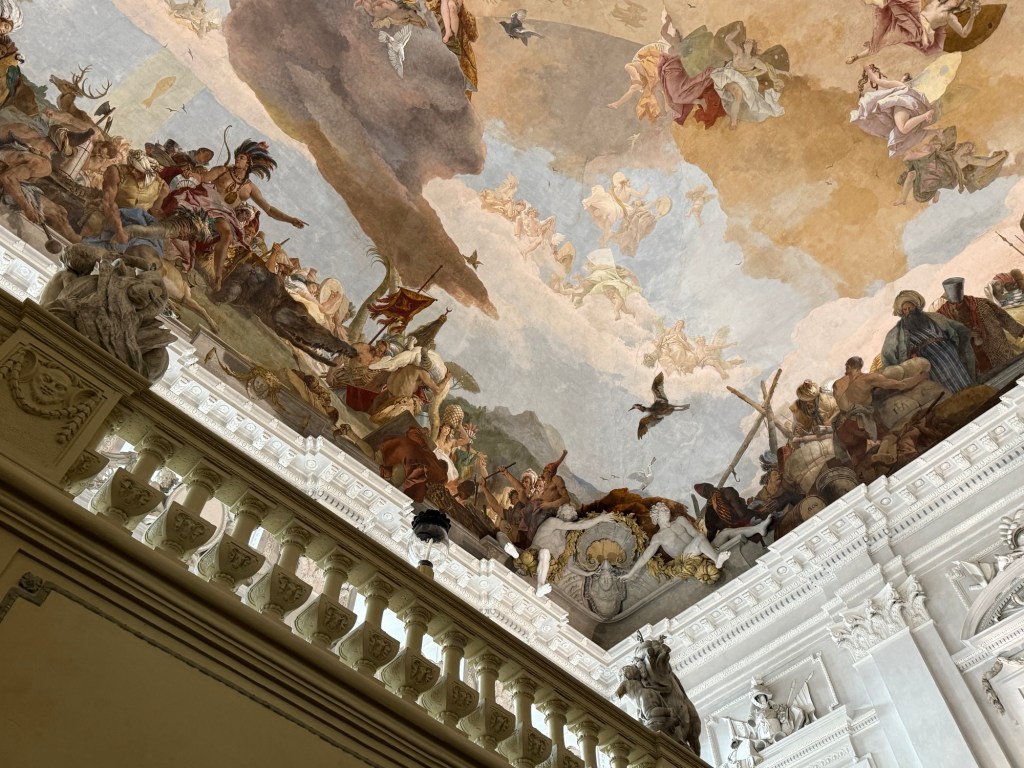
Saturday (yesterday) we cruised to Würzburg and Jim and I chose to visit Würzburg Palace. Although much of it was bombed in WWII, the amazing frescos survived. Würzburg is a college town, and a winery town.
Our excursion began with a delicious wine lunch and then the group split up. Some took an hour bus trip to Rothenburg to see the Summer Palace while our group walked up to the City Palace. I’m not really a fan of the long bus rides. And the City Palace is stunning.


Painted by Venetian artist Tiepello, the City Palace rococo Frescos are among the largest in the world. They took our breath away. The technique and perspective are quite remarkable. Here’s a good link to the information. The three dimensional techniques create surprising visual rewards. The rest of the palace features more stunning rooms, glass, and chandeliers. Our guide loves this town and shared his joy and the history with us.

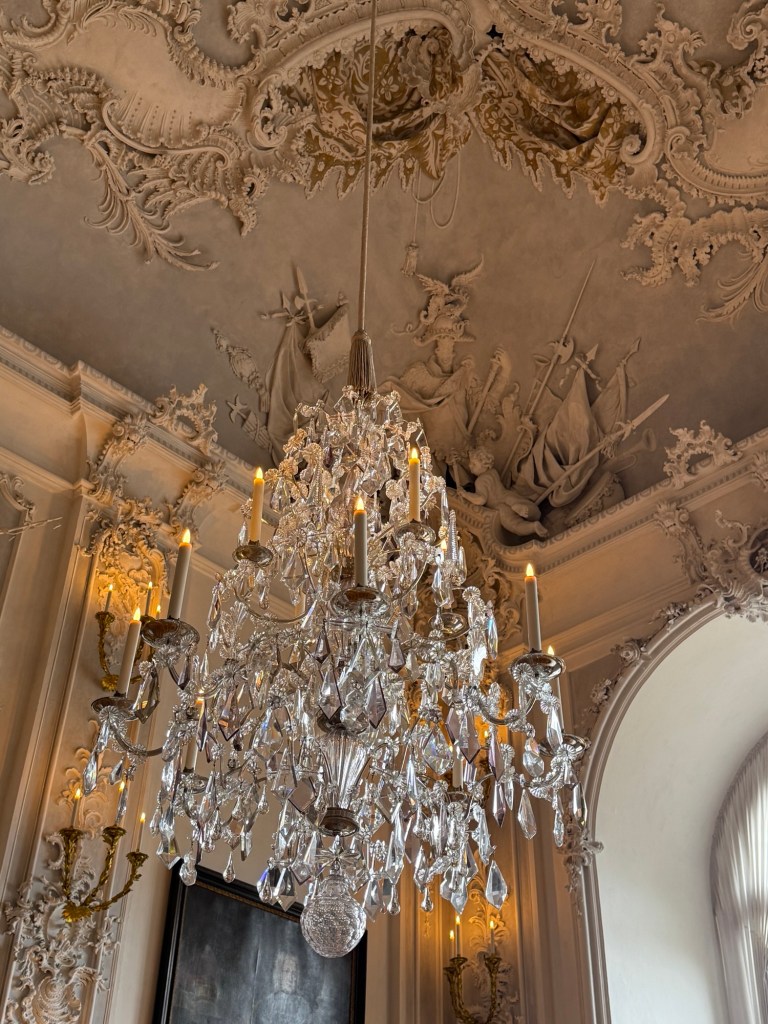

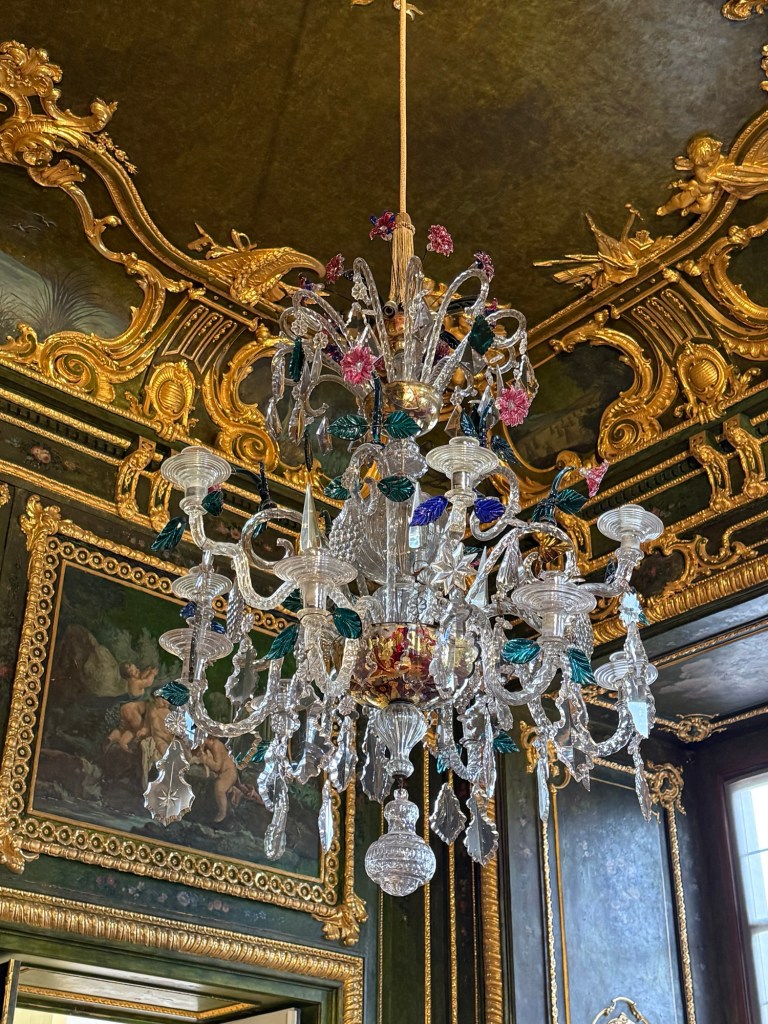


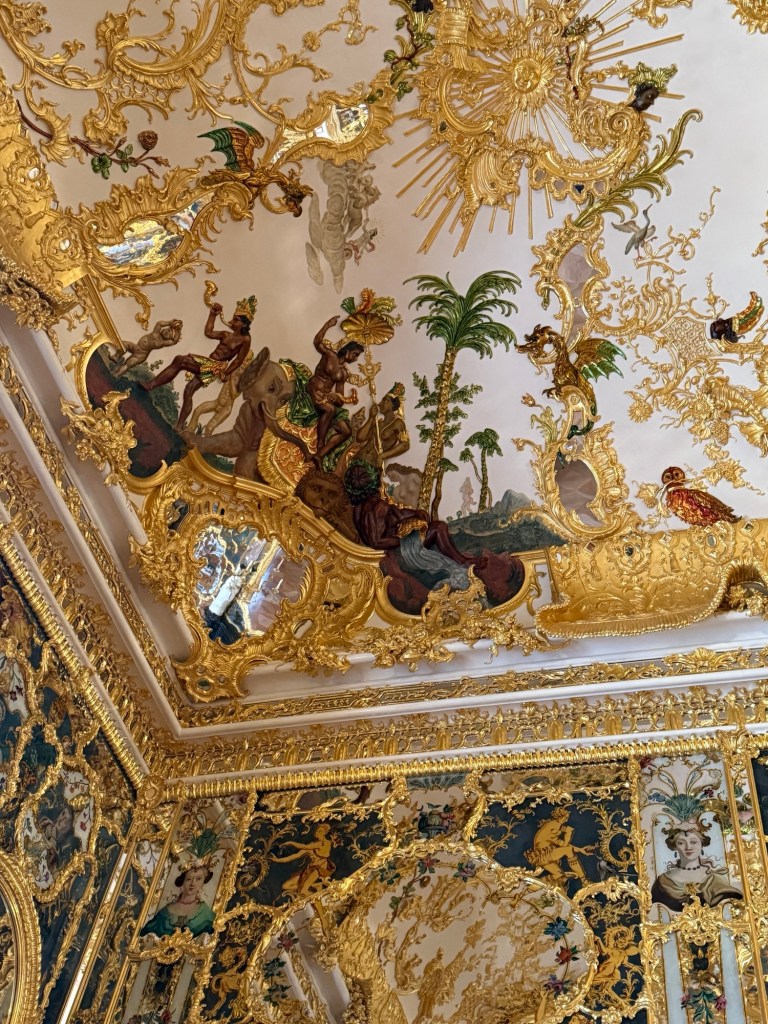
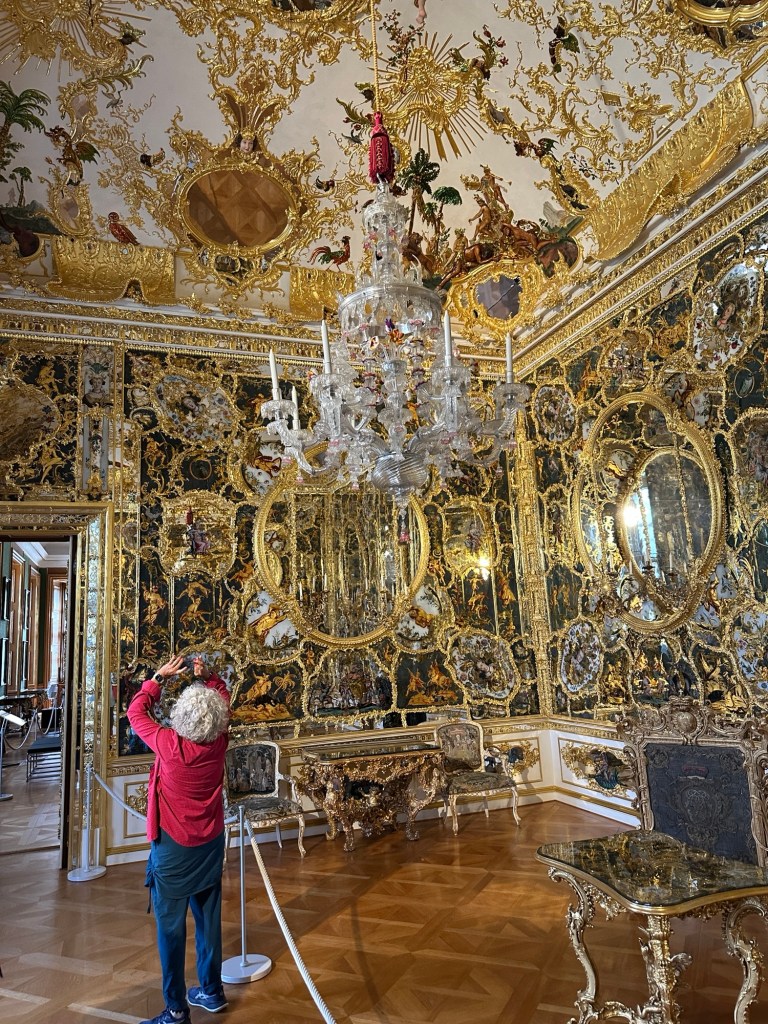
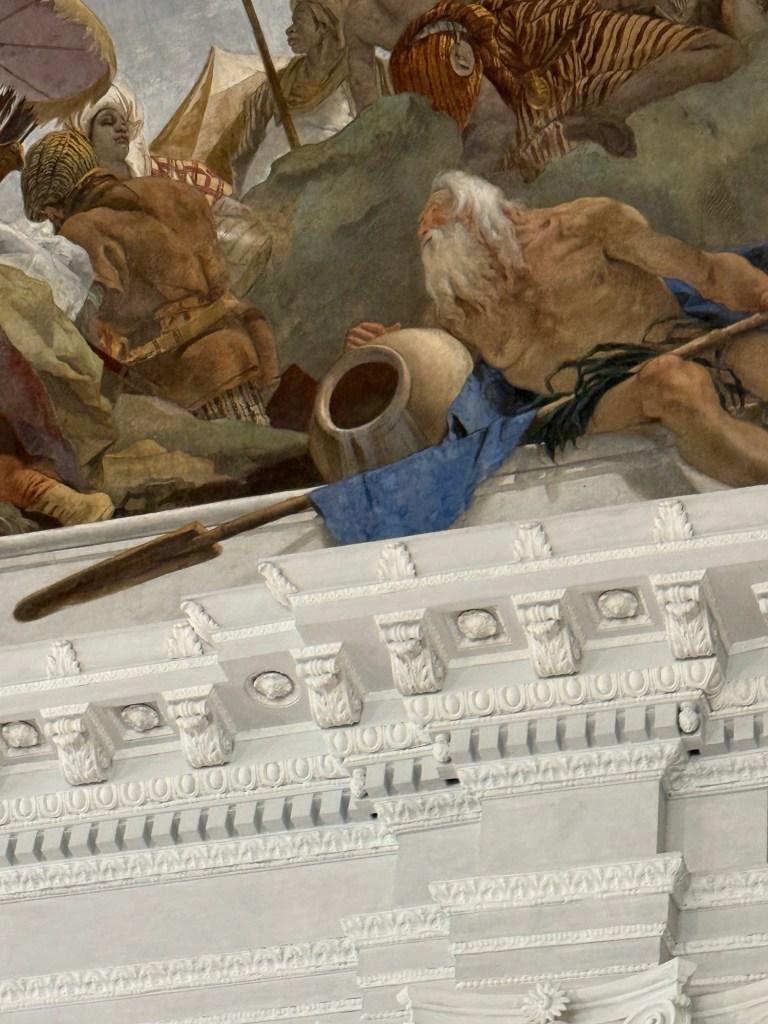

After the palace tour we walked around a bit, bought Jim a sweater and then walked over the wine bridge.
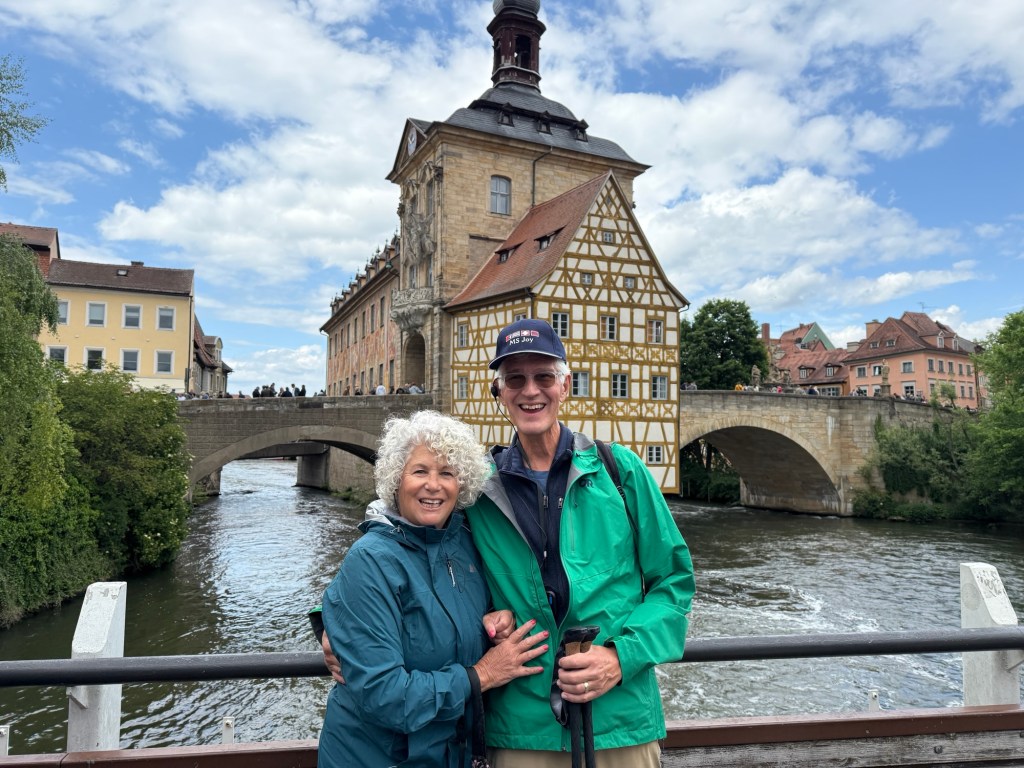
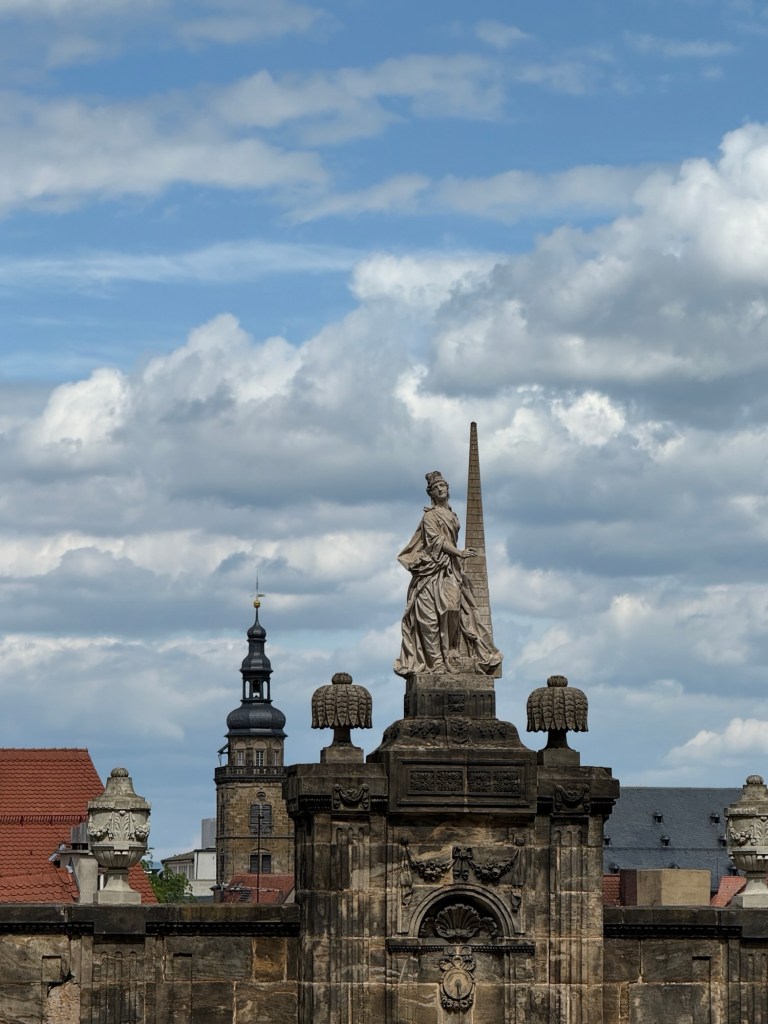
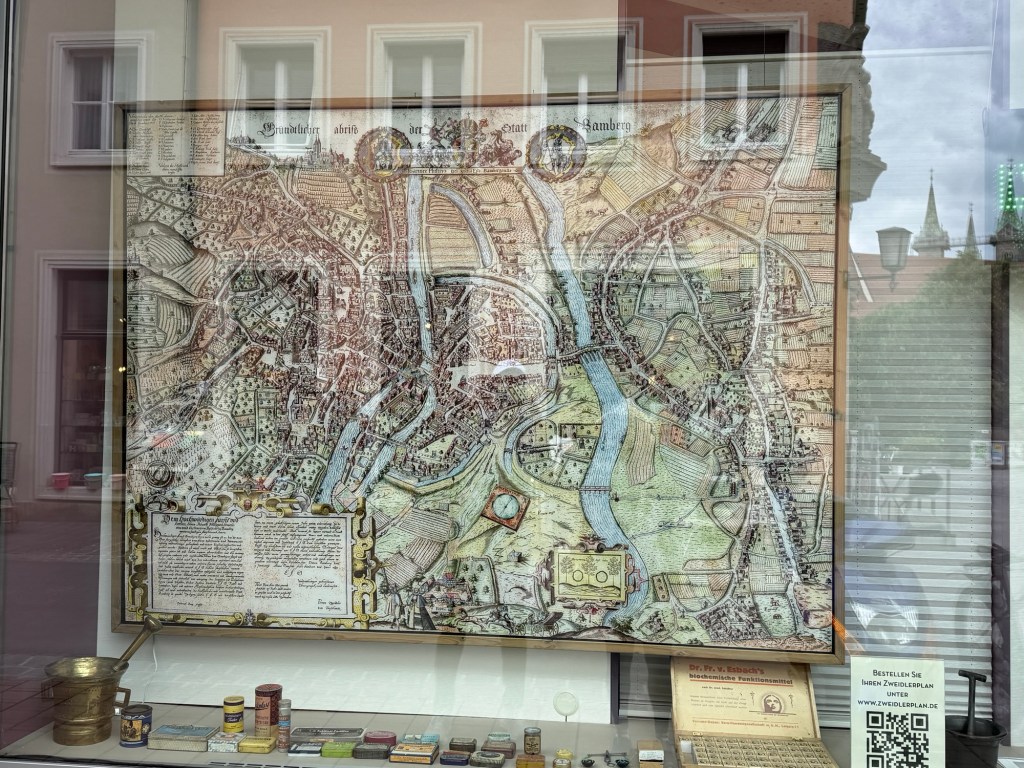
Bamburg and the Emperor and Empress who became Saints.
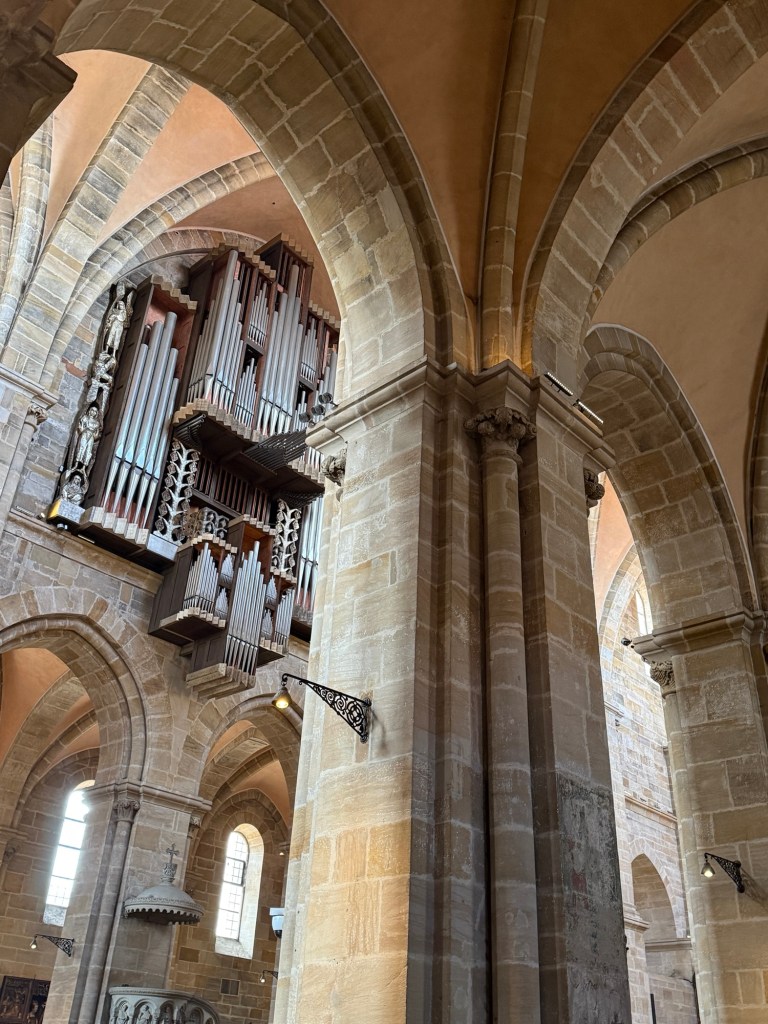
Bamburg was founded in 1002 by King (& later Holy Roman Emperor) Heinrich the Second and his Queen (& later Empress), Kunigunde. Unlike most royal marriages at the time, their marriage was not arranged, it was for love. Both were deeply committed to building the Würzburg Cathedral and were later canonized as Saints (the only Royal Couple ever to be elevated to Sainthood). The Cathederal is majestic but surprisingly simple. They had no children, but were both entombed in the Cathedral after each died (Heinrich died first, and Kunigunde served as Empress Regent until the next Holy Roman Emperor was elected).
Bamburg in general was a bit dirtier and more crowded than Würzburg. After the tours we walked around the old town a bit and I bought a cute skirt. Surprisingly, we were gifted two “Hemp” beers. We put the bottles in our fridge but haven’t tried them yet. Bamburg is known for its “Smokey” beer, which I tried and really liked.
I joined the group doing a speed walk back to the ship. And I’ve begun to dial back on the croissants, alcohol and desserts. Exercise alone is not enough.


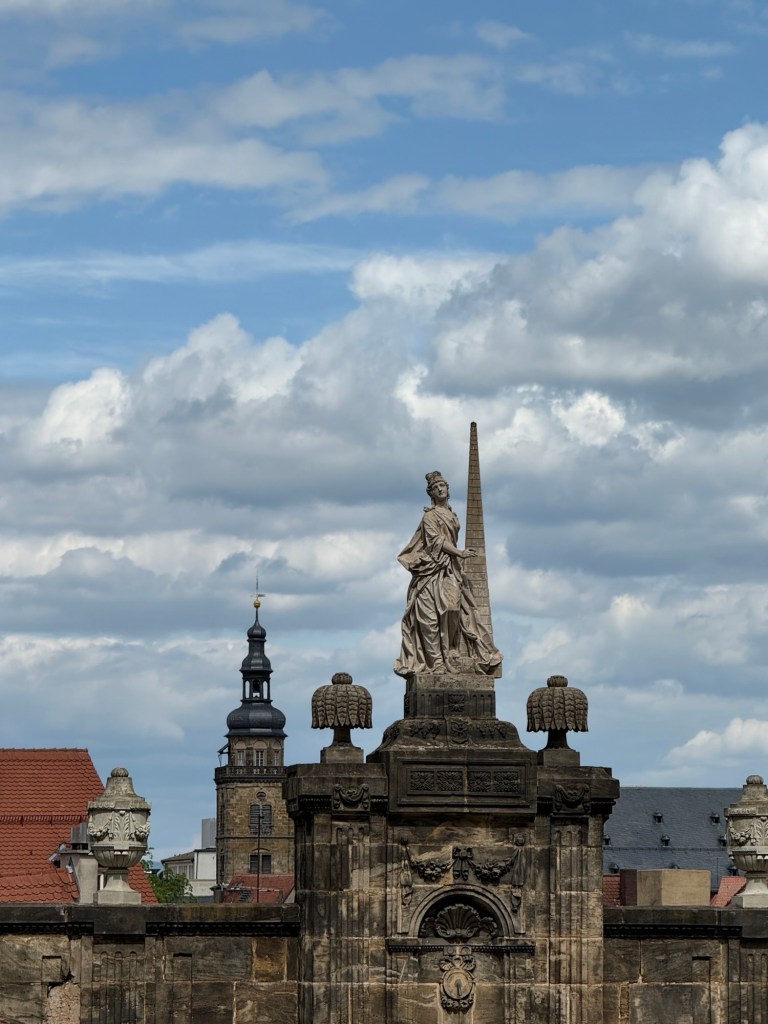
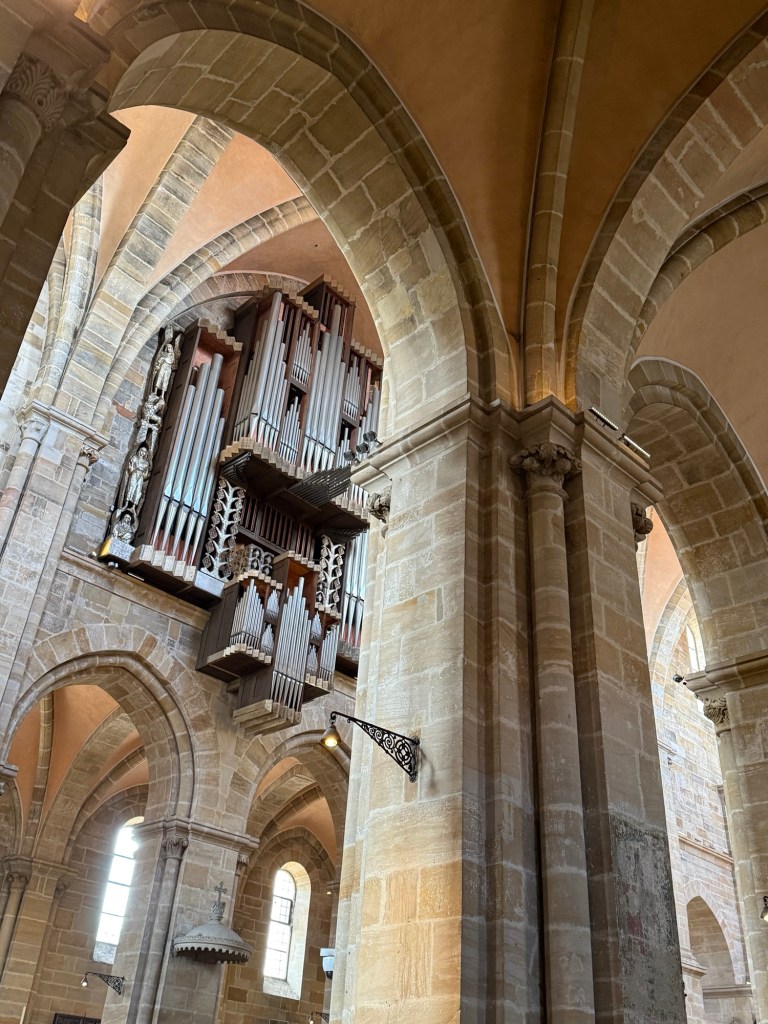
When we got back to the ship the Umpa Band played in the lounge. Of course I had to have another beer.
Nuremberg and 80’ Locks
You might be asking yourself, wait a minute, why isn’t Nuremberg spelled with an “urg”, doesn’t it have a castle? You would be correct it does have a very cool medieval castle, but I guess it had a little mountain first and then a castle. 🤷🏽♀️
Of course Nuremberg is most well known for its relatively recent history as the center of Hitler’s mass propaganda rallies prior to WW2 at the 2 square mile Zeppelin “airship port” and parade grounds, followed immediately after WW2 by the Nuremberg war crime trials. There isn’t much to say about it. Thankfully, the reviewing stand where Hitler stood is in disrepair and the grandstands overgrown with weeds. Today there are no Zeppelins and the parade grounds are used for a soccer stadium, rugby and other events.
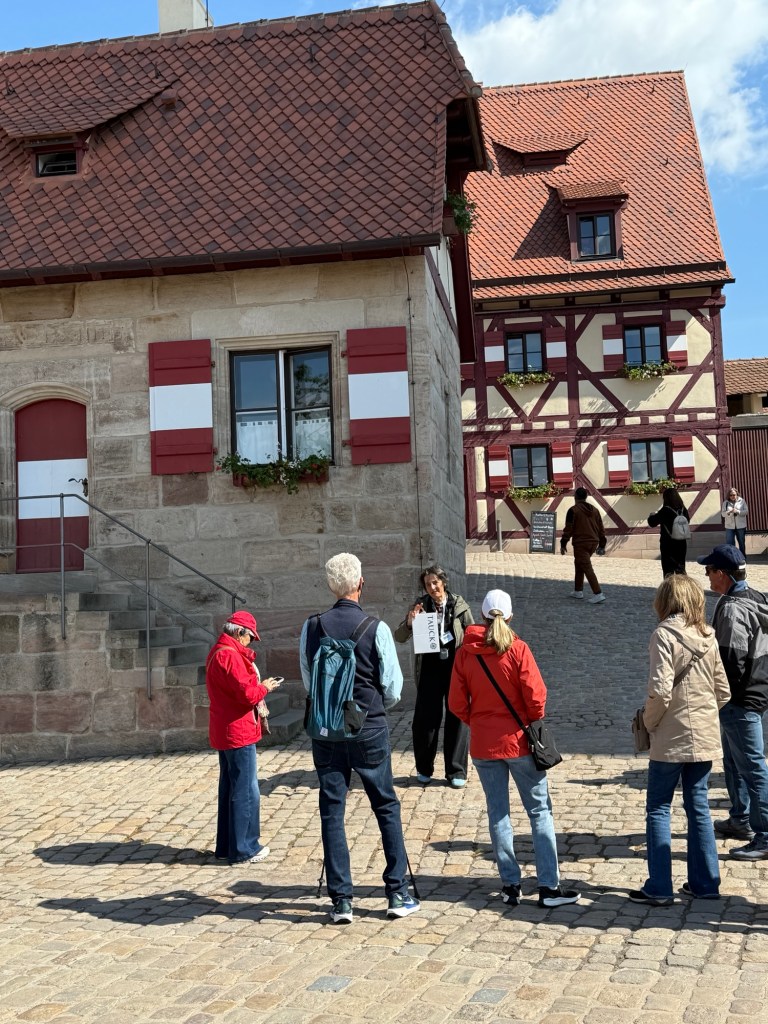
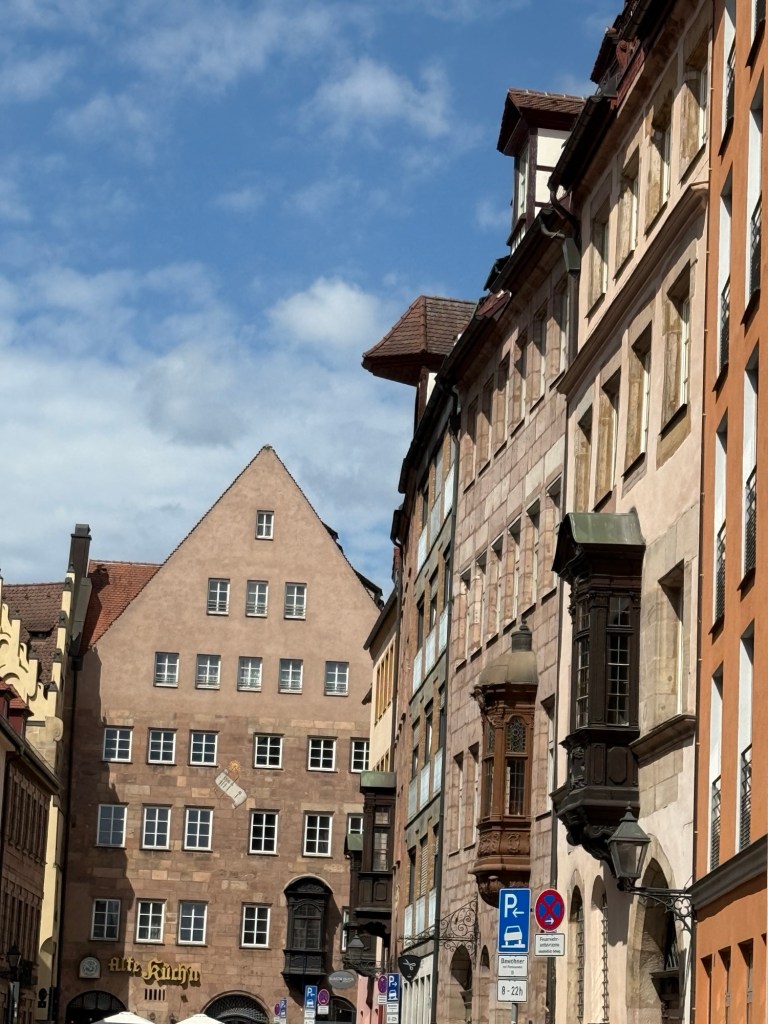
The Nuremberg Medieval Castle and surrounding old town was much more interesting. This is definitely the place you want to go if you are under siege by a medieval army! It’s only entrance is narrow, steep and exposed to attack from multiple directions.


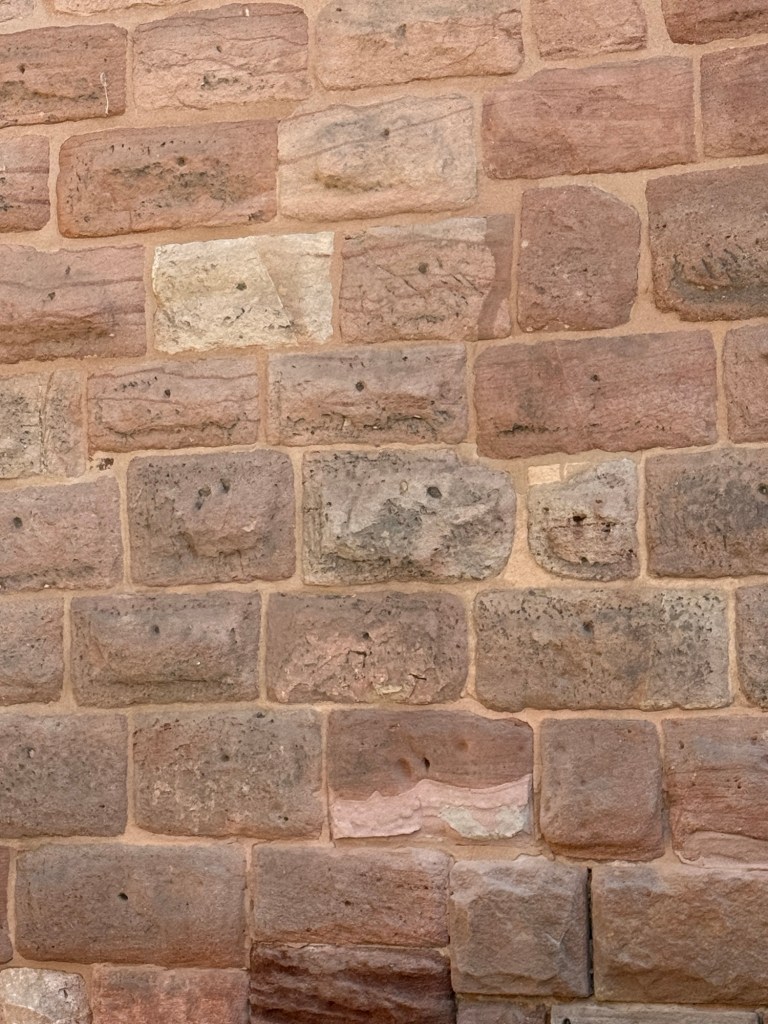
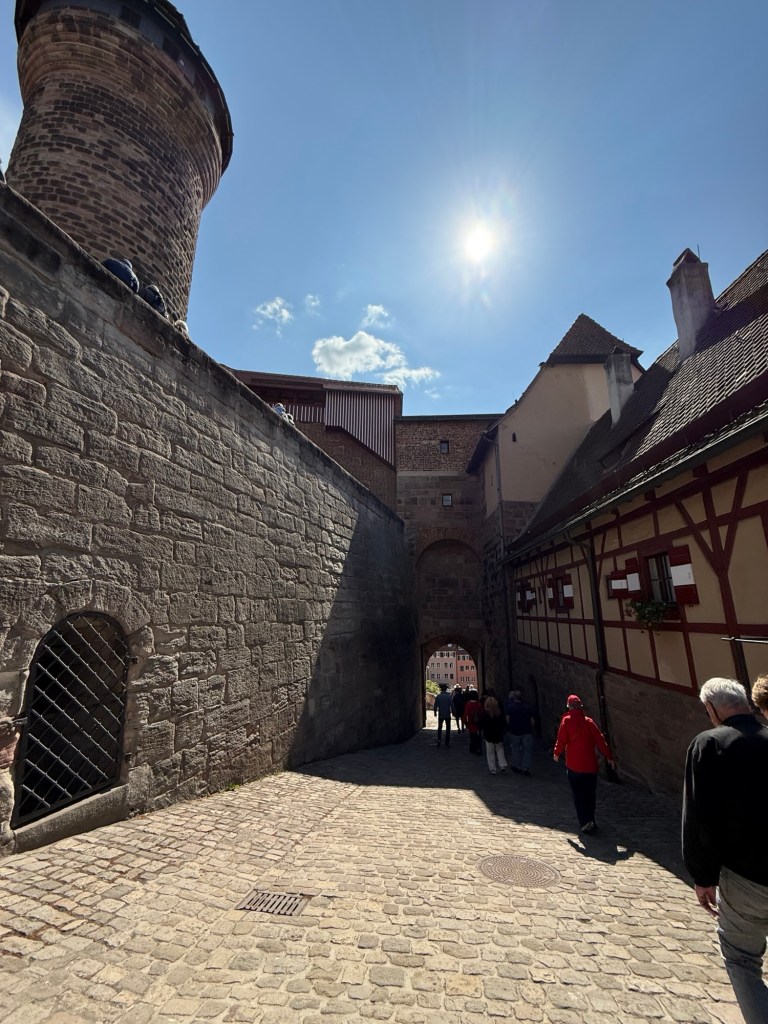


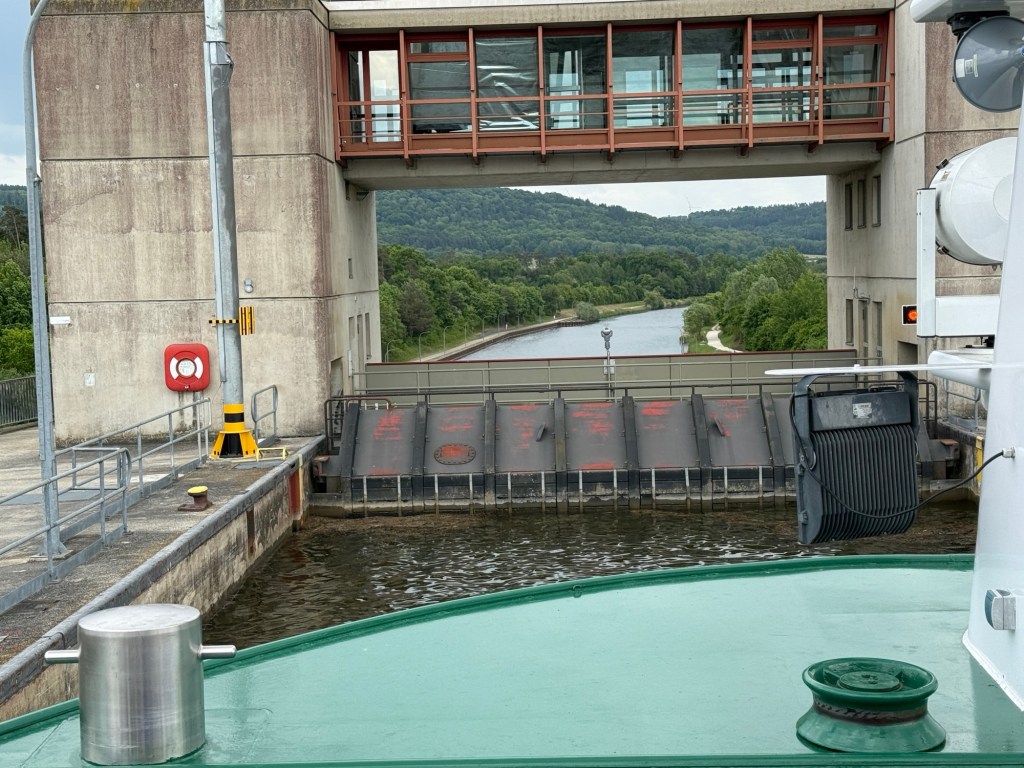
After we left Nuremberg we began cruising in the most modern section of the lock system that connects Nuremberg to the Danube. King Ludwig and his son were very interested in canal technology. They completed the first marginally successful connection of the Main and the Danube. It opened the same time as the Eerie canal in 1850, but was only partially successful and was mostly used for day excursions.
In 1921 Germany decided to build a modern canal with electricity sold by the new hydropower generators providing the money to build the expansion but the Nazi’s had other priorities. But construction resumed in 1960 and the beautiful new canal and gigantic locks opened September 25, 1992. So it took 32 years to build 106 miles of canals and locks, with the project repeatedly delayed by environmental lawsuits. People called it “the canal that leads nowhere” because of the Iron curtain, but then the Iron Curtain fell. The goal was to bring people together using the canals and at the same time creating an efficient, eco-friendly system for moving goods. The locks were 12 meters wide and designed for motorized barges that were 10 meters wide. But then the Riverboat Cruise Operators got interested and built ships that were 11.5 meters wide that just barely fit. The locks recycle most of the water they use in a very ingenious way.
For some crazy reason the German Government no longer charges barges or cruise ships to use the system so all of the capital and operating costs are paid by German taxpayers.
The last three locks were amazingly 80’ high. We went up one side of the European Continental Divide to an altitude of 1,333 feet (remember we started at sea level in Amsterdam) and now we are beginning the voyage down river to Budapest (at 300 feet of altitude). Check out Jim’s time-lapse videos. It was a crazy experience. When we approached the down lock it looked like we were going to cruise right off the plateau.Fun 20’s Dance Party to Celebrate Tauck’s 100th Anniversary


I can’t even remember which night this happened, but the pictures were fun. We didn’t get the memo about the 20’s theme so we dressed in our India attire.
Goodbye for now.
Jim and Fawn
 True Love Adventures
This was very interesting as I mentioned we did the reverse cruise a number of years ago and your summary of the experience was very detailed and facts included were enjoyable to read.
Thank you
Al and Julie