Mumbai to Singapore was super easy. Tauck continued their excellent service by facilitating our transfer to the airport in Mumbai despite us staying the extra days.
Many people told us that two days were enough in Singapore and quite honestly we could have used an extra day. We didn’t get to do everything we wanted. But we filled our two days fully with visits to the wonderful Asian Cultural Museum (thank you Barbara!), the modern waterfront area and iconic Sands Casino Complex, the Gardens By The Bay park, the subways, a food tour and a jazz performance at a French bistro on our last night. We didn’t have time for a harbor boat tour or the visit to the nearby Sentosa Island Island recommended by Doris (our food tour guide). Oh well, there’s always next time. Singapore seems like a good stopover on our way to Perth, Australia someplace we would like to visit someday.
We stayed at the Tanglin Club (a reciprocal club for the Rainier Club) and it is in a perfect location: quiet, a wonderful history, a great pool, and easy access to stores, restaurants and the amazing Singapore subway system.
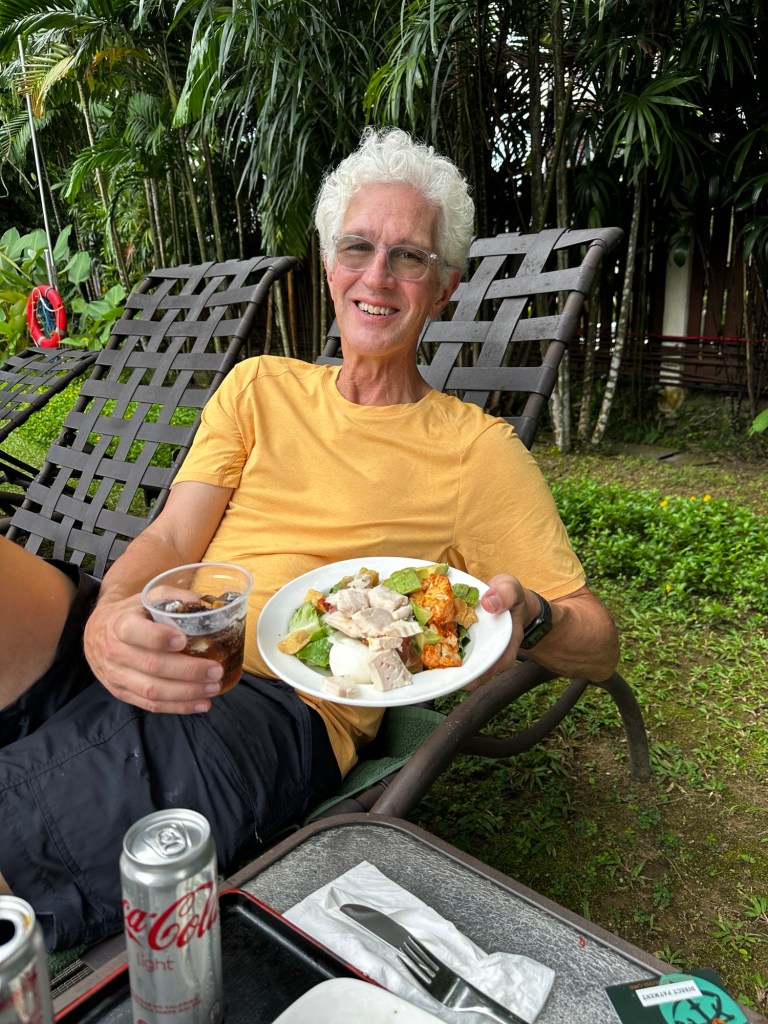
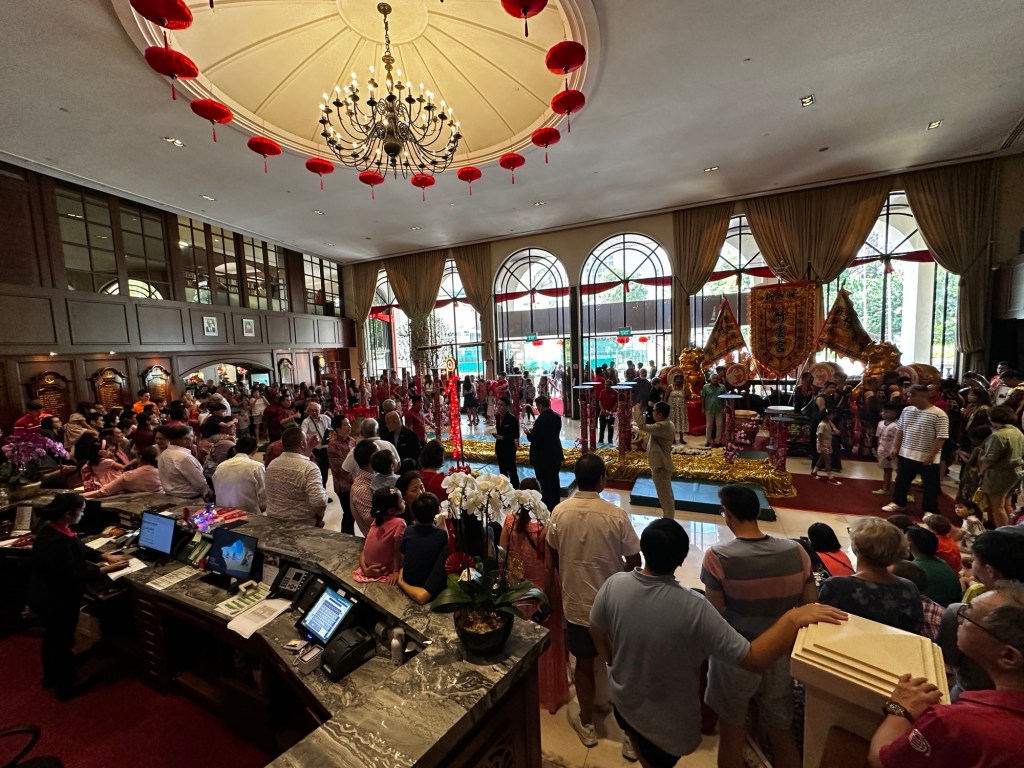
Our first morning the Tanglin Club hosted a Chinese New Year celebration. And it was great fun! Our first afternoon we enjoyed some quiet time at the pool and a swim and a salad and Diet Coke (with ice!) (remember in India you can’t eat salad or have ice without risking getting the “Delhi Belly” upset stomach).
Singapore in many ways is the antithesis of India. This very small nation state, smaller than Rhode Island, has accomplished so much in 50 years, overcoming its 3 year occupation by Japan in WW2 and third-world poverty. Today, it’s the wealthiest nation in SE Asia, orderly, clean and fun. This progress has come in large part from government policy that targets drug traffickers with life imprisonment (or even death!), a commitment to publicly funded education, and a government funded housing authority that has built a lot of high quality, high rise condos that people buy using money they are required to save from every paycheck (they can also use these mandated savings accounts for “premium” USA-style medical insurance or retirement income).
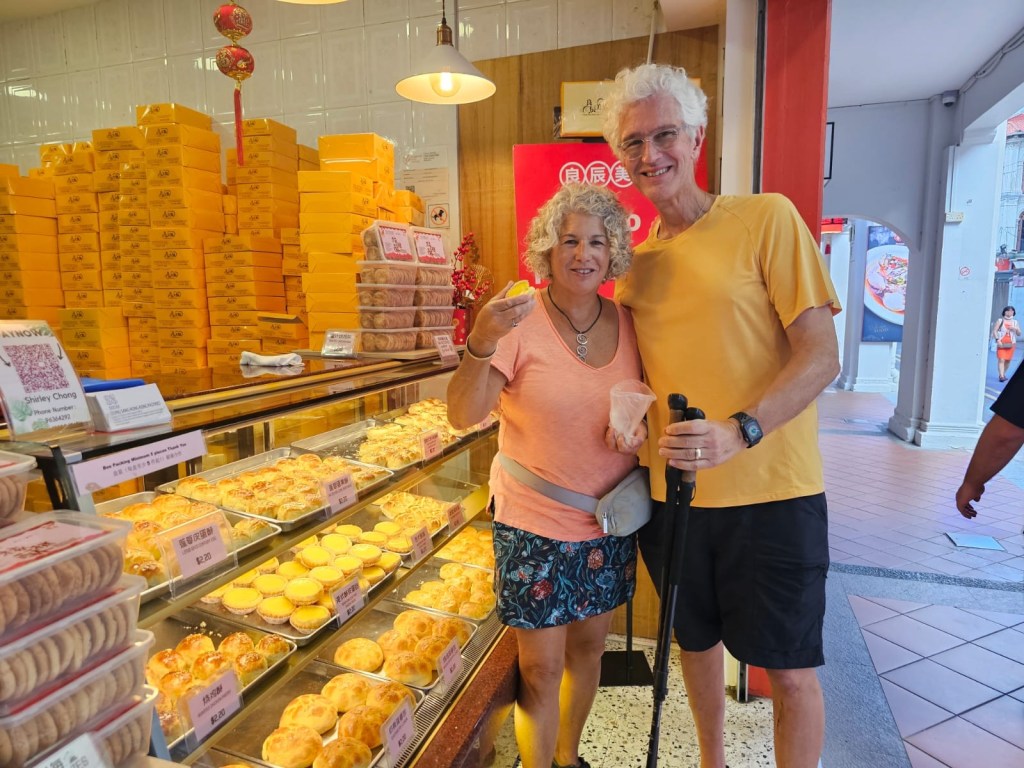
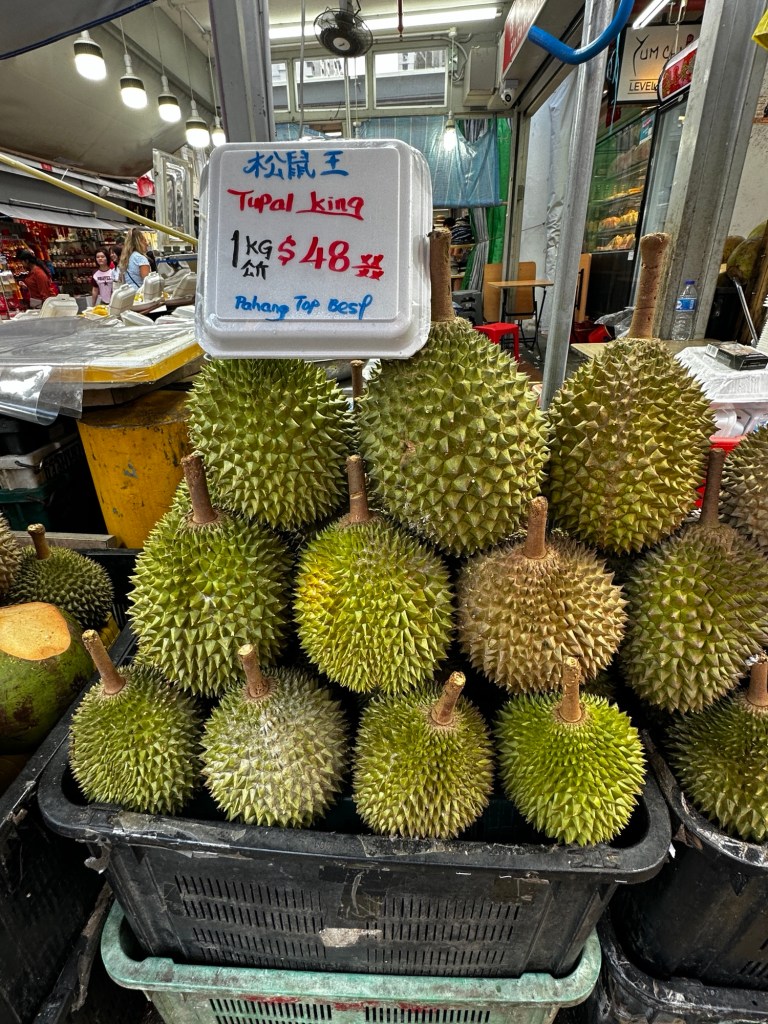
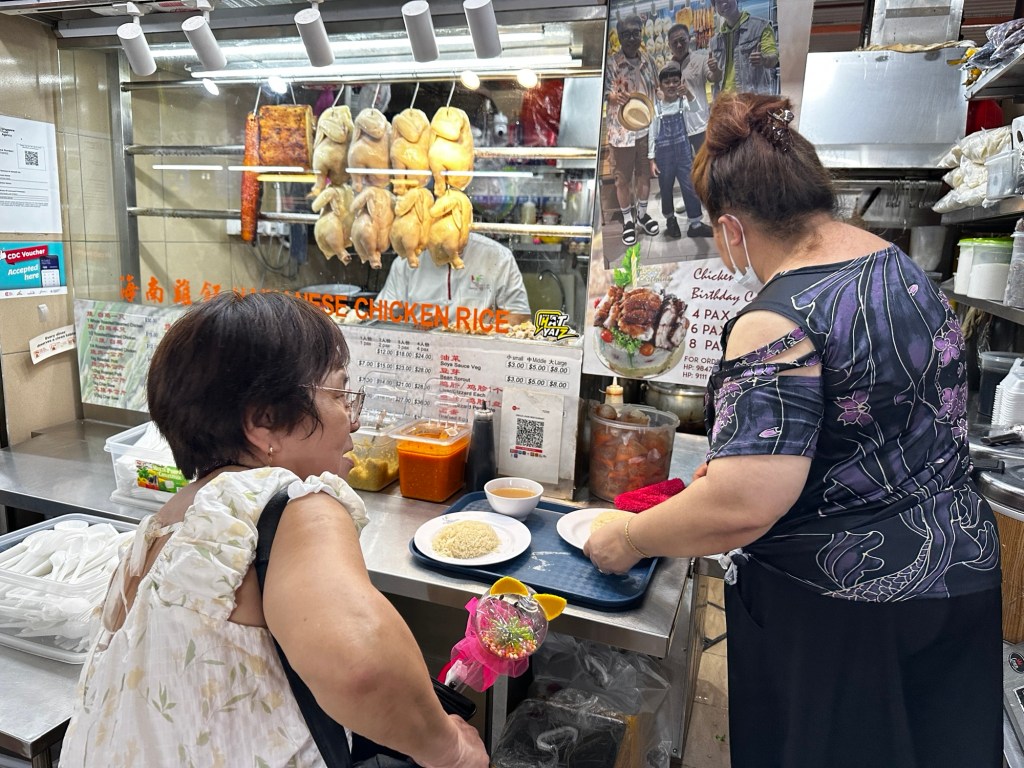
After our restful afternoon we headed out for an evening food tour with Doris, who we found on TripAdvisor.com. The tour was great fun. I wish we had room to eat more, but she took us to some great places we wouldn’t have found ourselves.
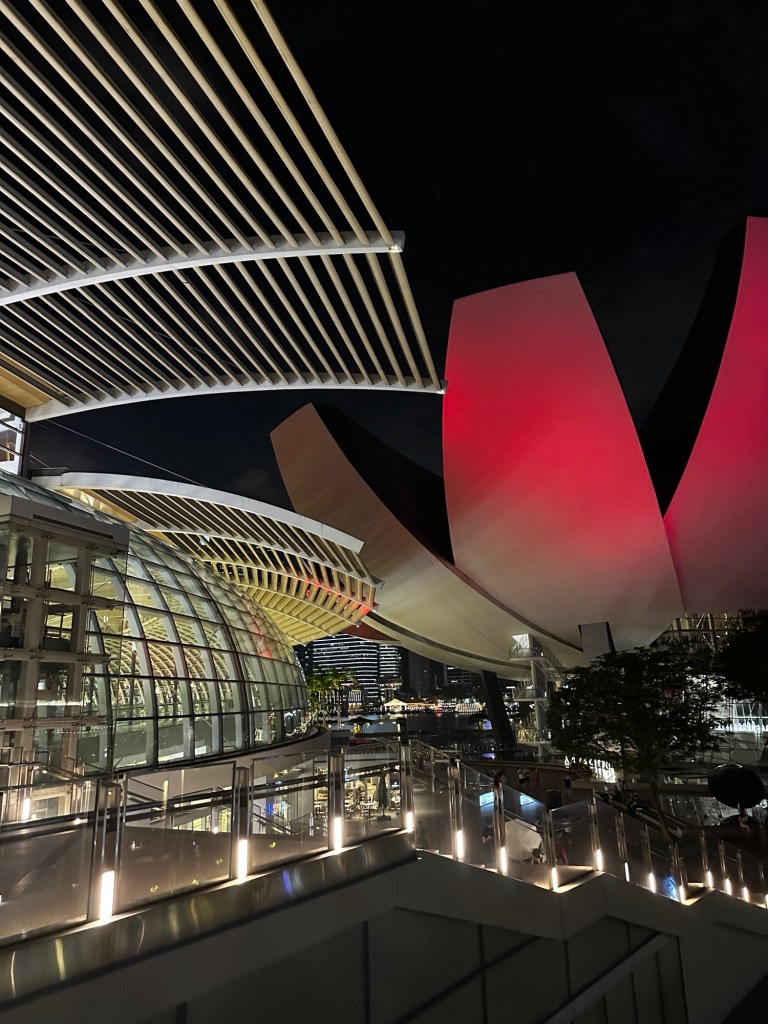
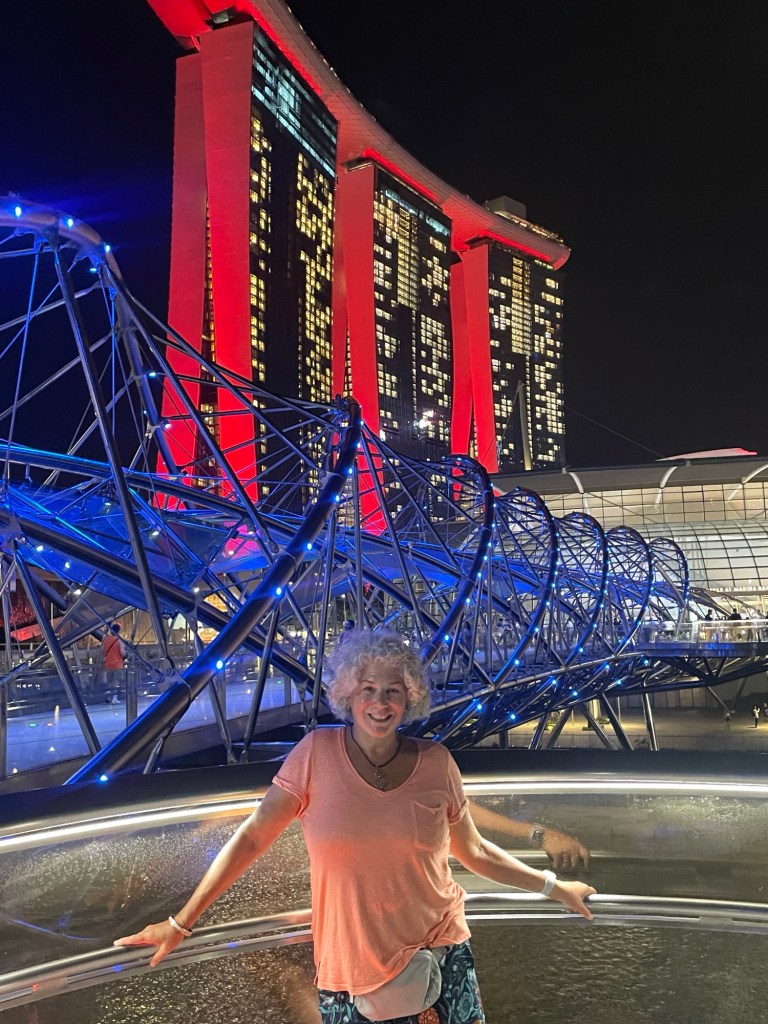
After finishing our tour with Doris we ventured by subway to the light show (the Bellagio is better, but this was still fun) and walking around the iconic Marina Bay Sands Casino, shopping mall and marina district.
The Singapore subways are nicer than Japan’s, immaculate and easy to navigate and with more easy to find escalators and fewer steps. Granted they are newer and cover much less territory. Paying for your fare is super easy: you just tap your credit card on one of the many turnstile gates when you enter, and again when you leave, and you are automatically charged a dollar or two for your trip. If you don’t have a credit card, you can tap your phone, or use a prepaid metro card. This is something Seattle should do with its Sounder Light Rail system, rather than continuing to rely on the “honor” system in which most riders act dishonorably.
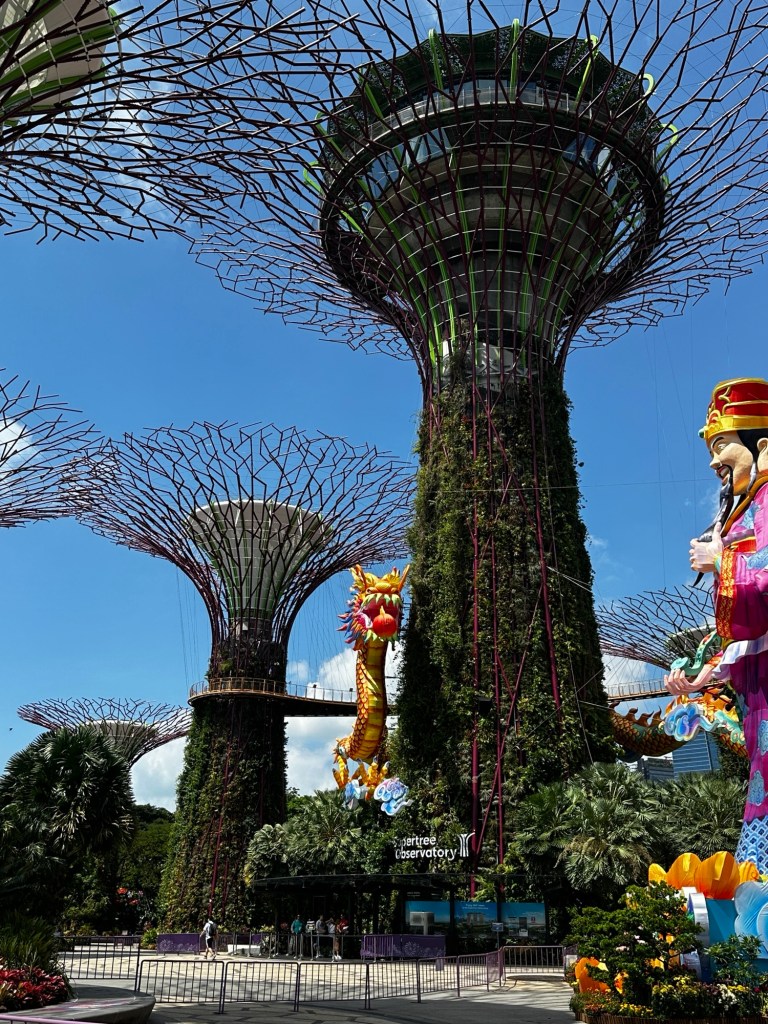
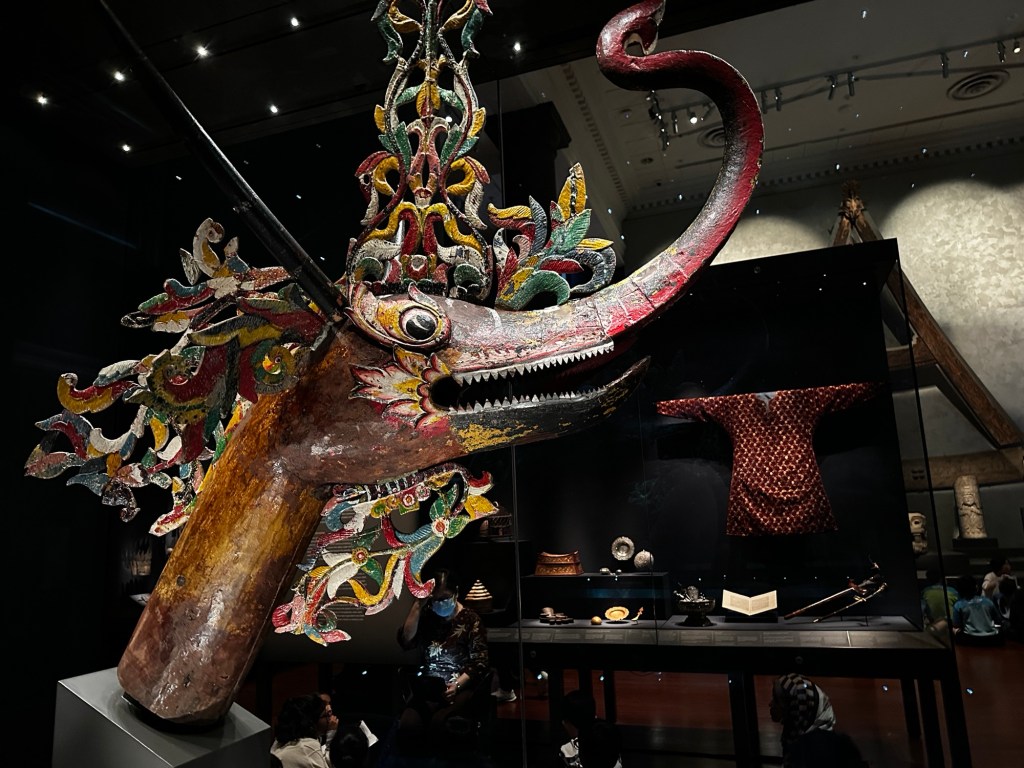
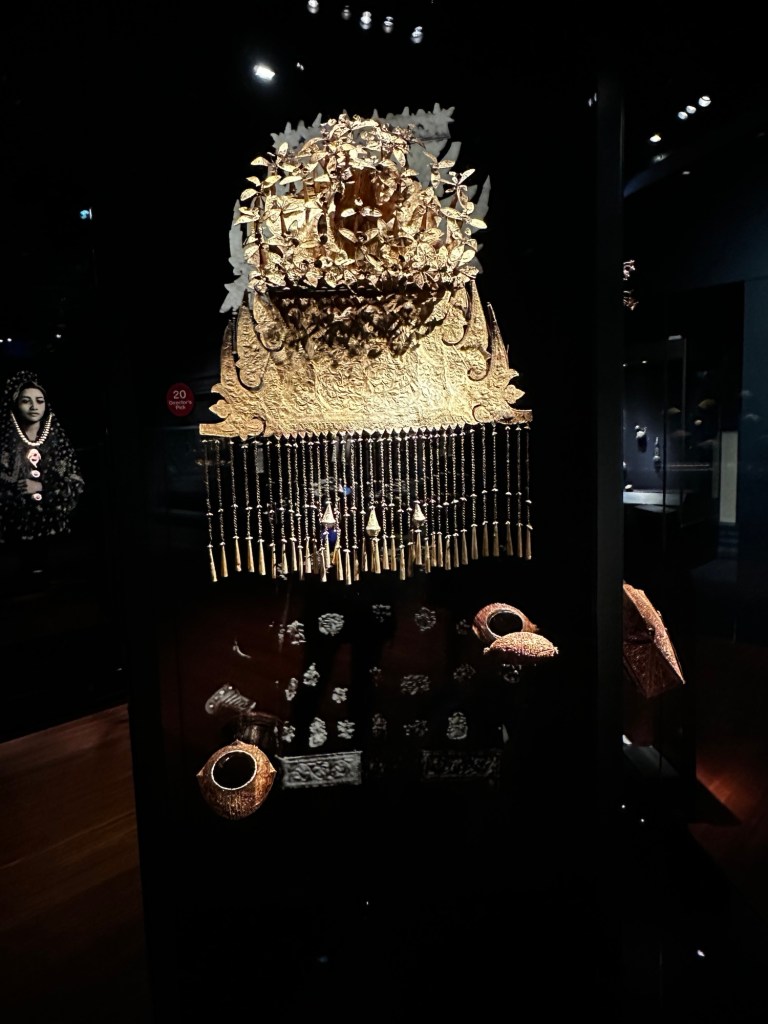
Our final day we started early and we headed out to explore the “Gardens By the Bay” marina district and the Asian Civilizations Museum. Both were a lot of fun and the exhibits at the Museum were very well done. Again our “advance team” Barbara and Richard Wortley told us to check it out! As usual there was too much to see in one day at the museum. But the jewelry exhibit was special, showing the jewelry on the photo of the person who wore it.
Our day ended with a lovely dinner at a nearby Maison Gerard, a little local french bistro. We had noticed a poster earlier for a jazz performance on Monday night, so we made a reservation. We love attending these small music performances in the cities we visit and this one didn’t disappoint. We met a married couple at the table next to us who knew the performers. They shared with us that their daughter plays Eponine (one of the leading roles) in the London performance of Les Miserables. They shared videos of one of her performances and it gave us goosebumps. Hopefully, we will meet Jenny and Kevin Ong somewhere in the world someday and watch their lovely and talented daughter Nathania Ong perform on stage.
As we toured around Singapore we constantly noticed the lovely soundtrack that accompanied many places. It was interesting and southing. Certainly different that the soundtrack of honking horns in much of India that we visited.
Our journey home began early in the day on Tuesday 2/20/2024. We left Singapore at 9 AM and arrived in Seattle the same day at 7 AM thanks to the international date line.
Jasmine picked us up at SeaTac and we headed to her house to hang out with Jasmine, David and the grandkids. It was so good to give them hugs and play a bit. Then we headed up to the mountains, retrieved our tons of mail at the little post office and stayed up until about 5 PM before we took a nap, stayed up a few more hours and then went back to sleep. May our jet lag adjustment take less than a week!
Helping with the birthday puzzle.Giant balloons from India were a hit.Jasmine’s India dress.
It’s been 5 days since we’ve been back and we’ve gotten back into our regular schedule; mail is sorted, groceries stocked, we’ve played bridge with friends, stayed on our boat, visited my sister, attended a bluegrass festival and finalized work on some business projects. Snow is in the forecast for the mountains and we hope to enjoy some good snow skiing later this week.
Jim says we can’t plan our next travel adventure for 2025 until we totally get through the jet lag. But we are thinking Germany/Austria/Switzerland or Croatia/Greece/Israel then of course there is always the option of going back to northern Italy (we haven’t been there since we visited with the kids 20 years ago). These will all be wonderful, but nothing like the exotic and unusual experience we just had in India.
Mumbai was named “Bombay” by the Portuguese because it’s a very “Good Bay.” Mumbai, like San Francisco, is a large vibrant city on a peninsula surrounded by water. But it’s much larger: the 10th largest city in the world, with over 23 million people.
After arriving at the airport we had a lunch at the airport’s Taj hotel complete with a space man! Then we loaded on a bus for our first driving tour with a stop at the massive “laundry Ghats”. This is where people still do laundry, not for individuals anymore (because of washing machines) but for the garment industry. If you get clothes from India and they are color safe or preshrunk and manufactured in Mumbai, they are washed here. It didn’t really make sense to me until we did our tour of the nearby Dharavi Slum the next day.
Space ManLaundry GhatsLaundry GhatsSunset from BombayLobby of Oberoi
The Dharavi Slum is hard to understand until you see it. Our tour was led by a “slum tour” entrepreneur who took us through the allyways of the cramped confines of this part of the central city.
Unlike Seattle’s homeless encampments you don’t see crime, drugs and addiction here. Instead you see the manufacture of clothing, luggage, furniture and leather products (as well as old apartment buildings in the nearby residential areas), and very little begging. Many of these products are sold by Amazon and other international retailers. People were pleased to see us and proud of their work. These people work and live in the area because it is close to the central city and they don’t have to commute. Slums like Dharavi are the only affordable places to live in this very expensive city. The only other option is commuting 2 hours a day by train to the more affordable suburbs, but since most people work 10 hours a day, a lot of people choose to live in the slum. So Mumbia is a city of dramatic contrasts, from its many modern high rise buildings, to the ghats and the slums. The hard working entrepreneur who created our “slum tour” is proud of his community (where he was born and still lives) and wanted tourists to see and understand why so many people choose to live and work here.
He also trains other guides who live here so they can work part time to help pay their way through college. At first the local officials here didn’t like the idea of the tours saying that this wasn’t the “real India and why would you want to show people this?” But he convinced them it was important and tour companies like Tauck now bring lots of people here to tour. Part time work is very rare n Mumbai, so it’s difficult to “work your way through college.” Of course with the cost of real estate here, all of the old low-rise apartments will eventually be replaced by modern high rise apartments, although many plans to do so have failed because of corporate and government corruption.
I asked our guide what he would do and and he said the government should just give people who live and work here enough money for them to move out of the city and let them decide where to go and live and work. When our airport guide for Tauck (who is well paid) was asked why he still lives there, he said: “why wouldn’t I? It’s where I grew up, and where my family still lives.” Different strokes I guess.
I’m already brain storming about how I can get Amazon to help with this issue. If you have any ideas about how to do that, please share those with me.
Our first day in Mumbai, Jim and I skipped the morning tour to get up early and watch the Super Bowl. We all know how that turned out. It was a great game, but with mediocre commercials and a lousy ending. We are using the IPad to stream the commercials.
We ended our final Tauck Tour day with a boat ride to tour Elephanta Island. Our boat departed from the famous “Gateway to India” built by the British a hundred years ago, when everyone who traveled to India came by boat and most embarked at Mumbia because that’s where you could most easily get on a train to continue to your final destination in India’s interior.
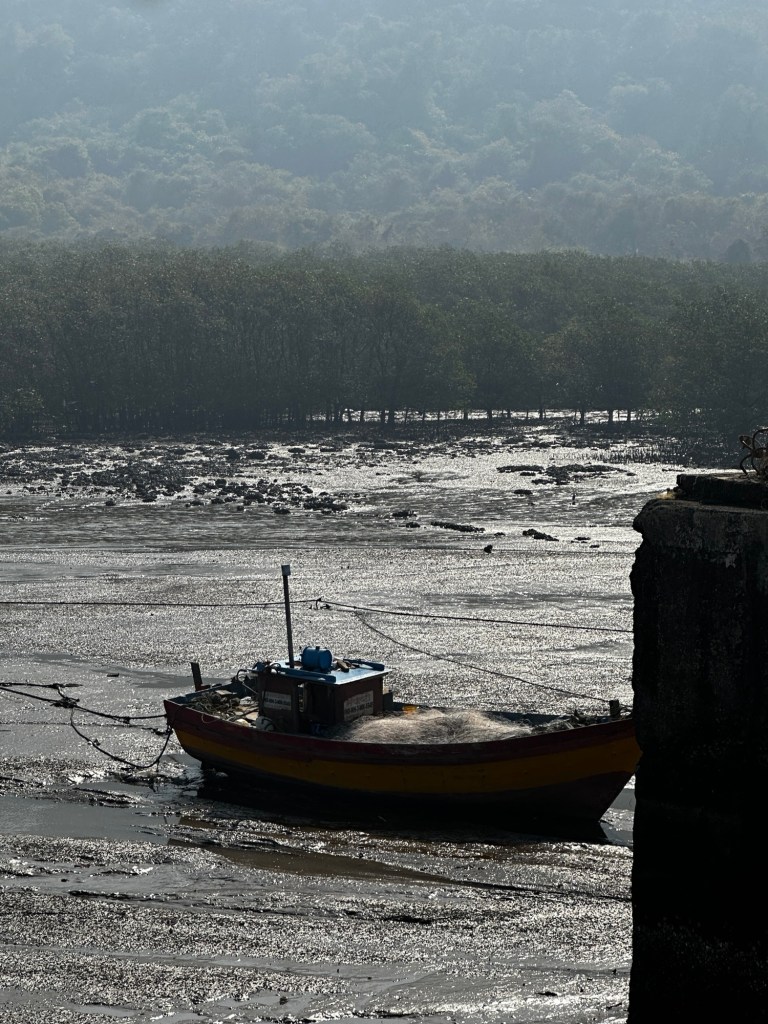
Our 45 minute boat ride crossed the big bay, passed large commercial freight docks and cruised over muddy waters.
India Gate and The Taj HotelElephanta Island DockOur GuidesLow TideRemarkable carvingMagic photoTina our amazing leader!
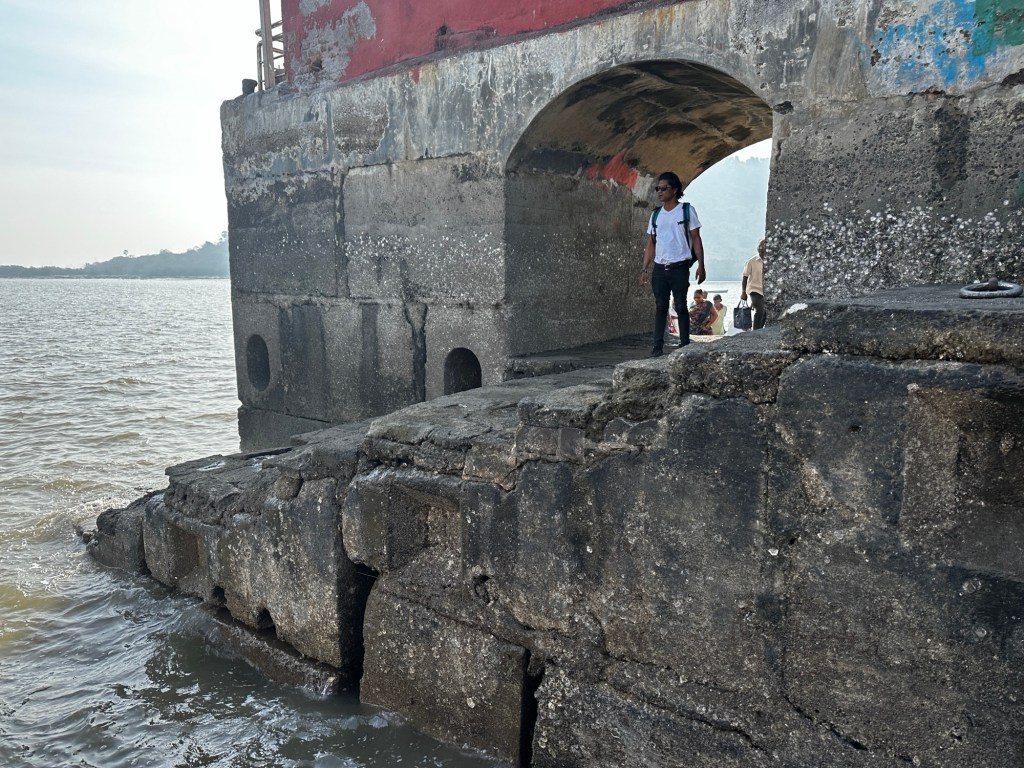
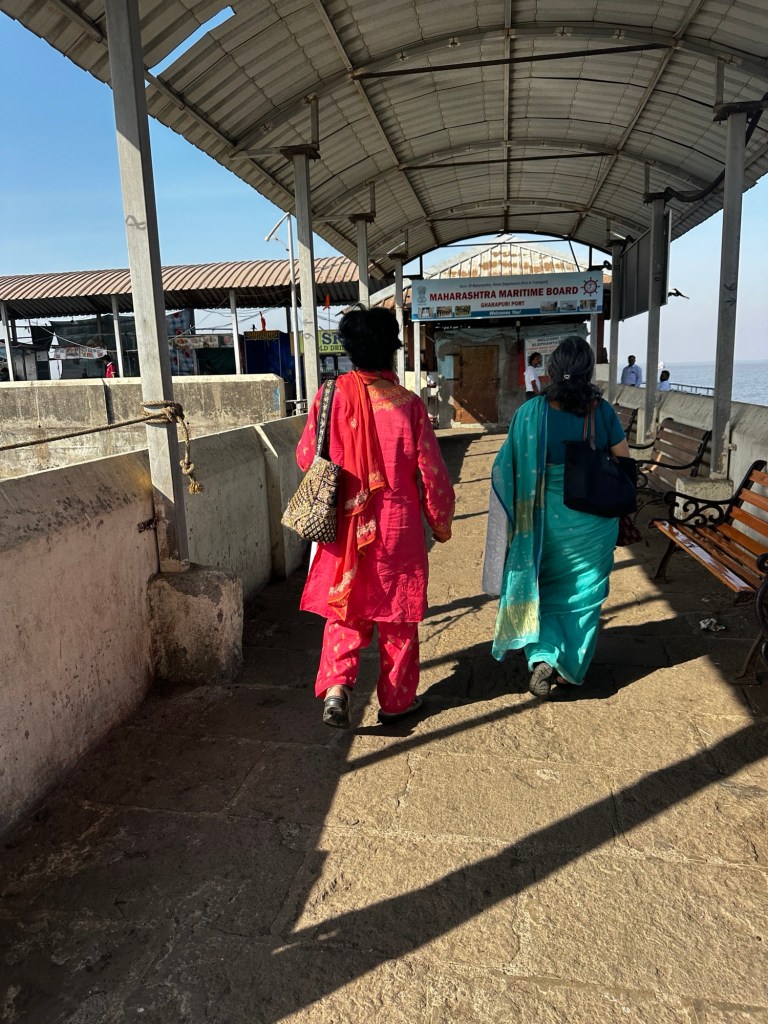
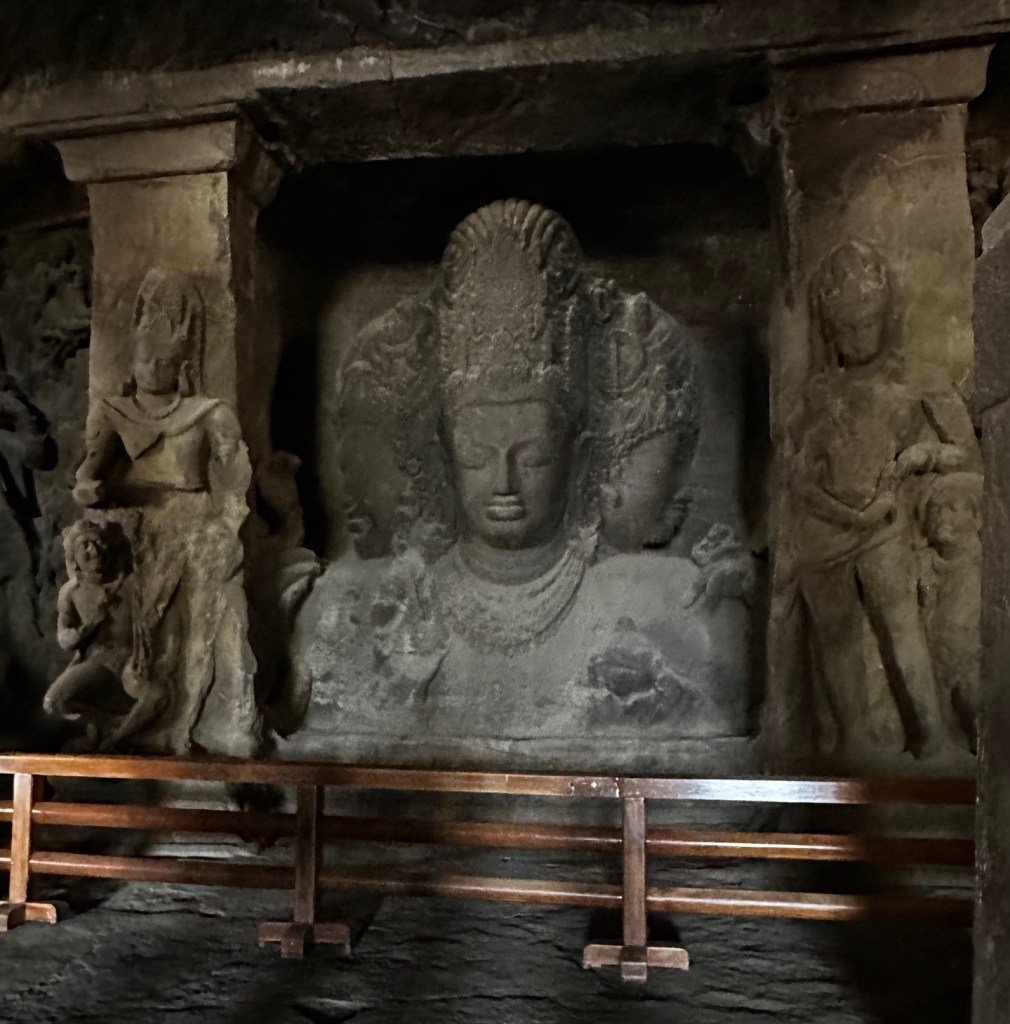
Docking at the stone pier at tiny Elephanta Island is definitely like going back in time. After reaching the top of the pier, we rode a funky little toyish train to the shore, the then climbed the 120 steps up to the caves, which are filled with very impressive Hindu carvings of the Hindu Divine Trinity: the Creator, the Preserver and the Destroyer of Evil. Our guide beautifully narrated the stories behind the sculptures as we circled from the east entrance to the final statue of Shiva in a meditative pose. He sits at the end of his everlasting life cycle in the classic meditative pose with only two arms. The Hindu Divine Story reflects the 4 stages of humanity: Youth (where we gain knowledge), Marriage, Retirement, and then the end of life, giving up materialism, meditating on life and hopefully reaching Nirvana. The caves were carved in the 5th century AD. The caves are surprisingly dramatic, beautiful and insightful.
As we headed back to our hotel by boat, our incredible group was feeling a bit of melancholy. We’ve all had a great time together and shared so much, thanks to our leader and tour guide, the amazing Tina del Campo.
At our farewell dinner there was lots of joy and hugs and promises to stay in touch.
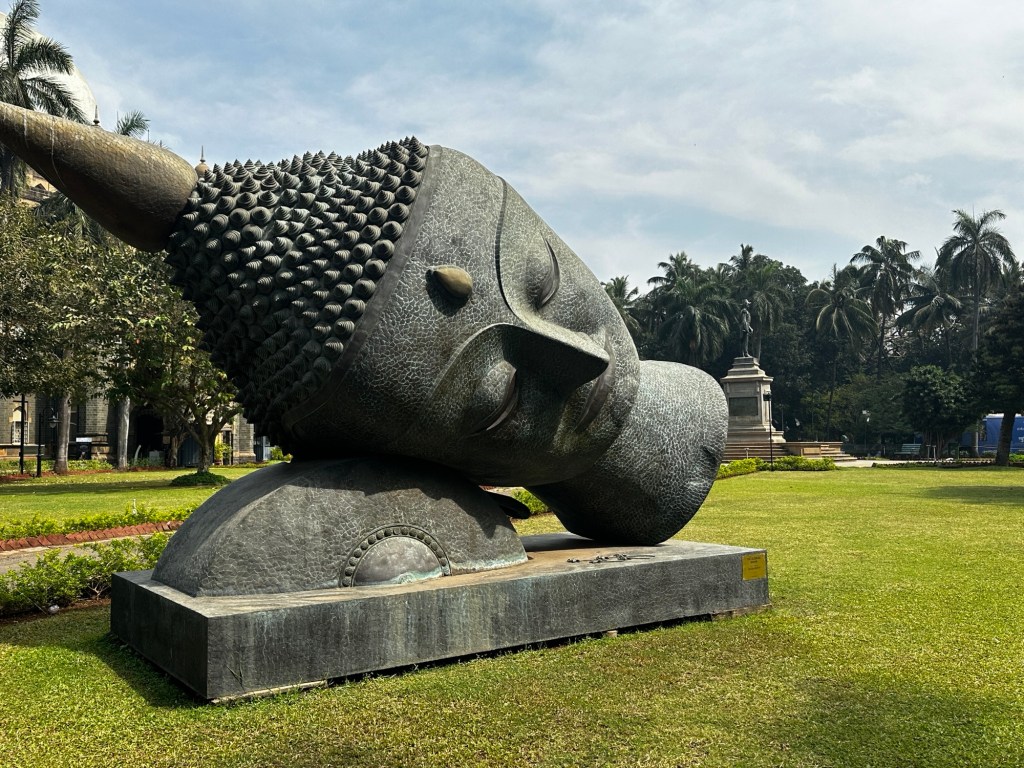
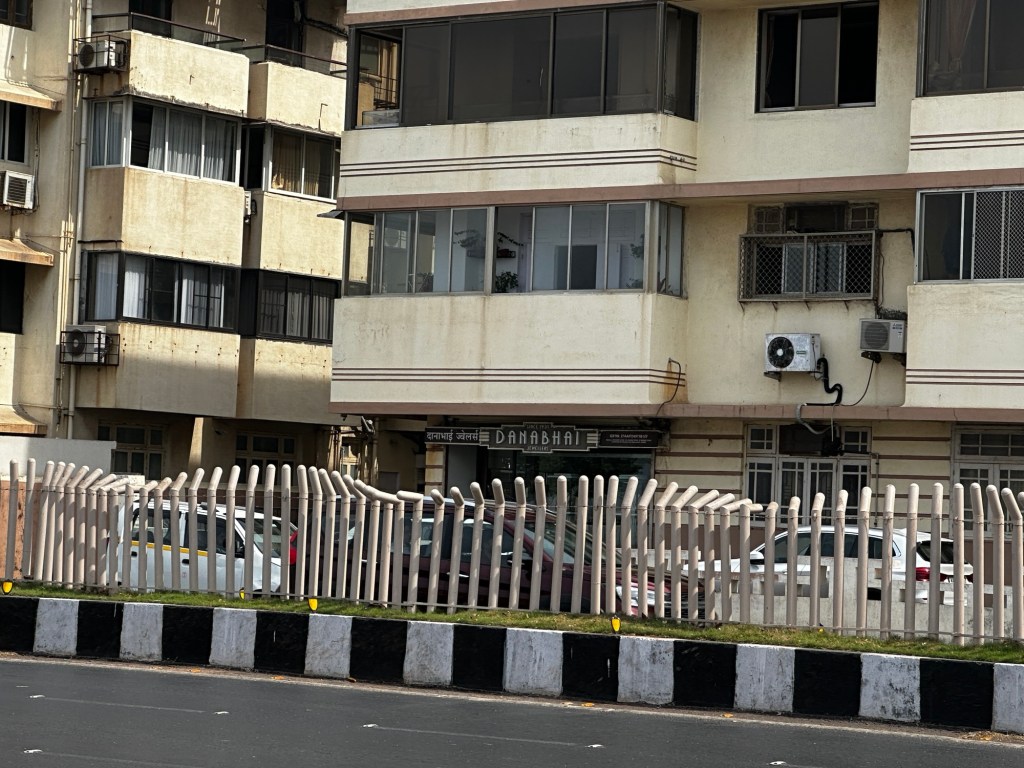
Because of the available flights from Singapore to Seattle, we decided to chill here in Mumbai for a few more days and did some touring on our own, confidently navigating our way across busy streets, hailing cabs and exploring the Victoria Terminus Train Station. Boy it’s huge and busy! We also went to the very good Prince of Wales Museum and strolled the waterway in front. of our hotel, past the many “art deco” style hotels and apartments.
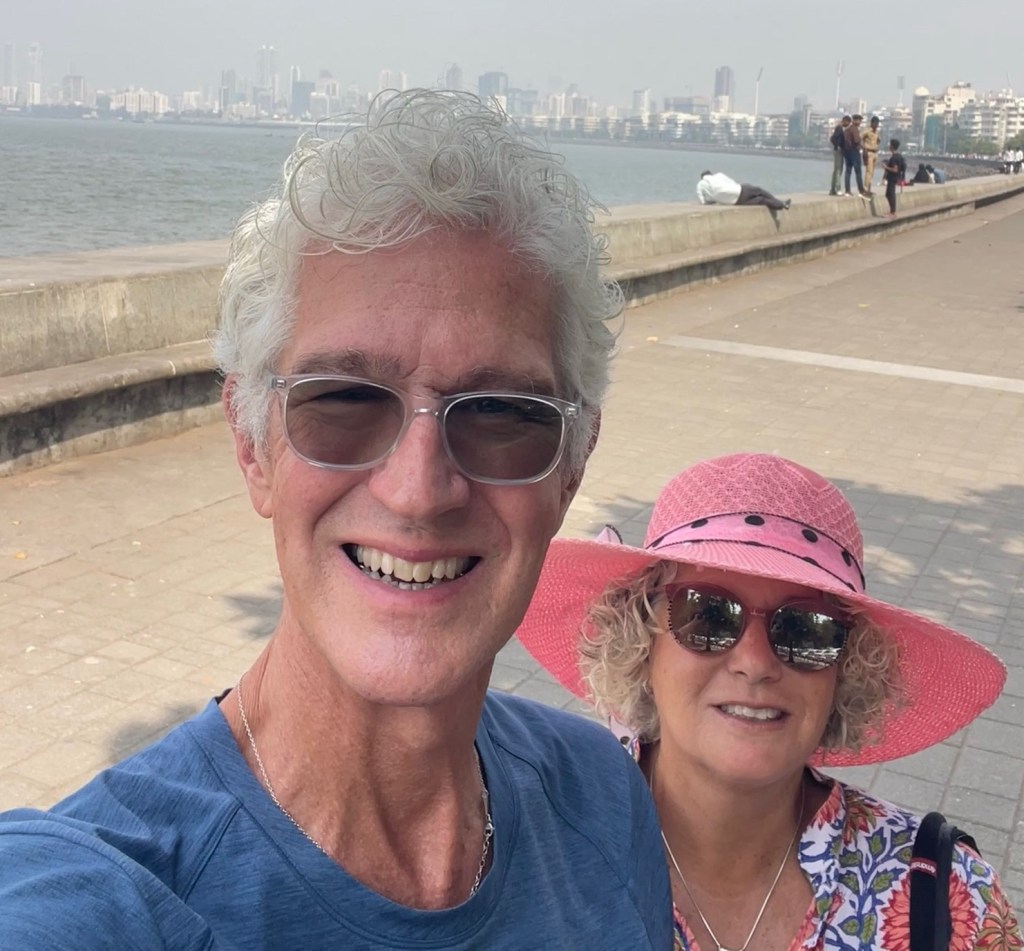
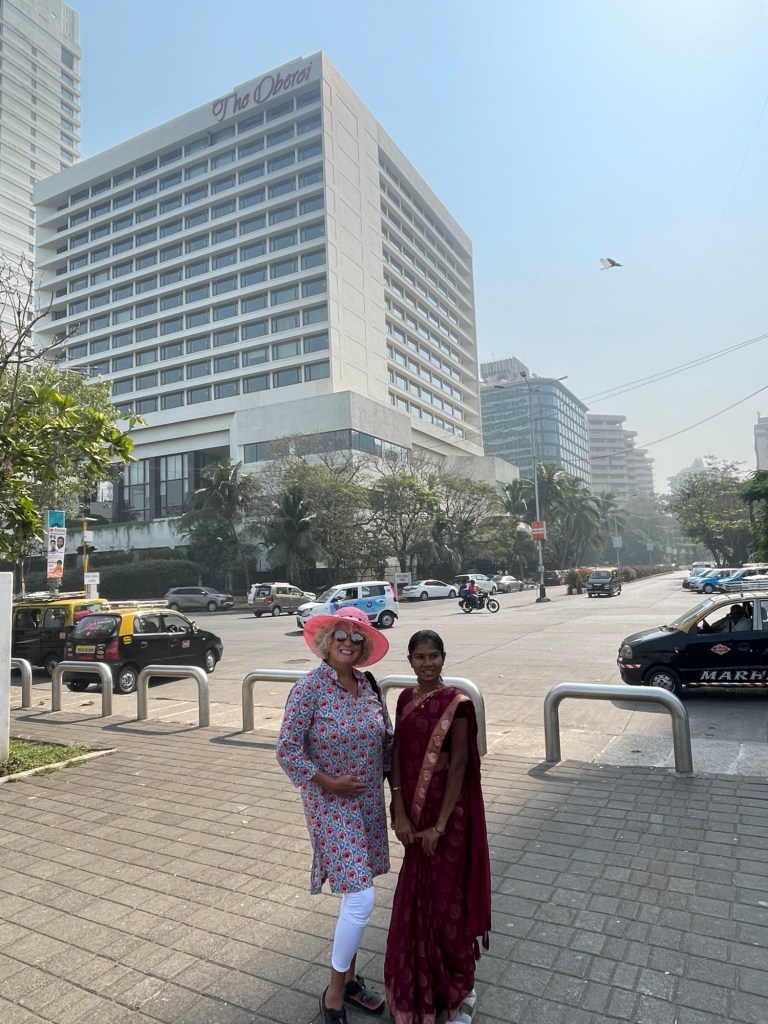
A lot of people wanted to take pictures of me in my pink hat. Someone said I looked like Englands Queen Camilla (married to King Charles). The pink hat I bought in Kerala for $1.20 has made me a minor star on the Mumbai waterfront. I don’t see the resemblance, I’m definitely more “wheatish” as they say in India because of my dark skin, but a lot of people here think differently.
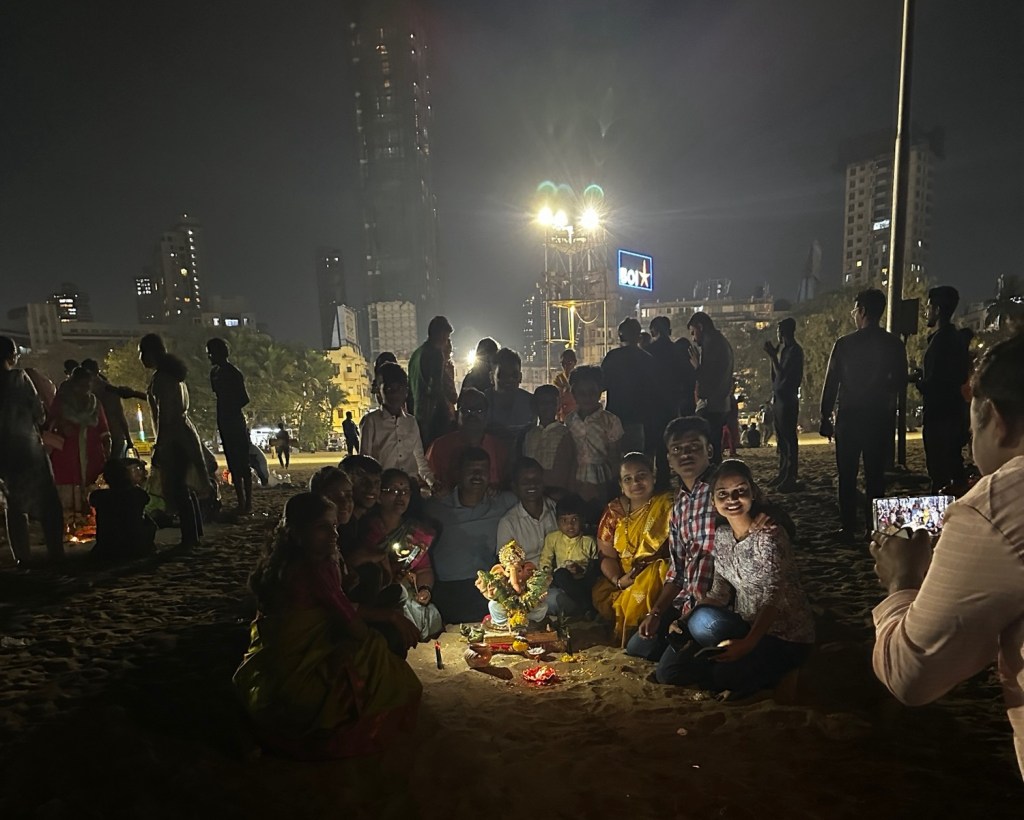
Ganesh Celebration
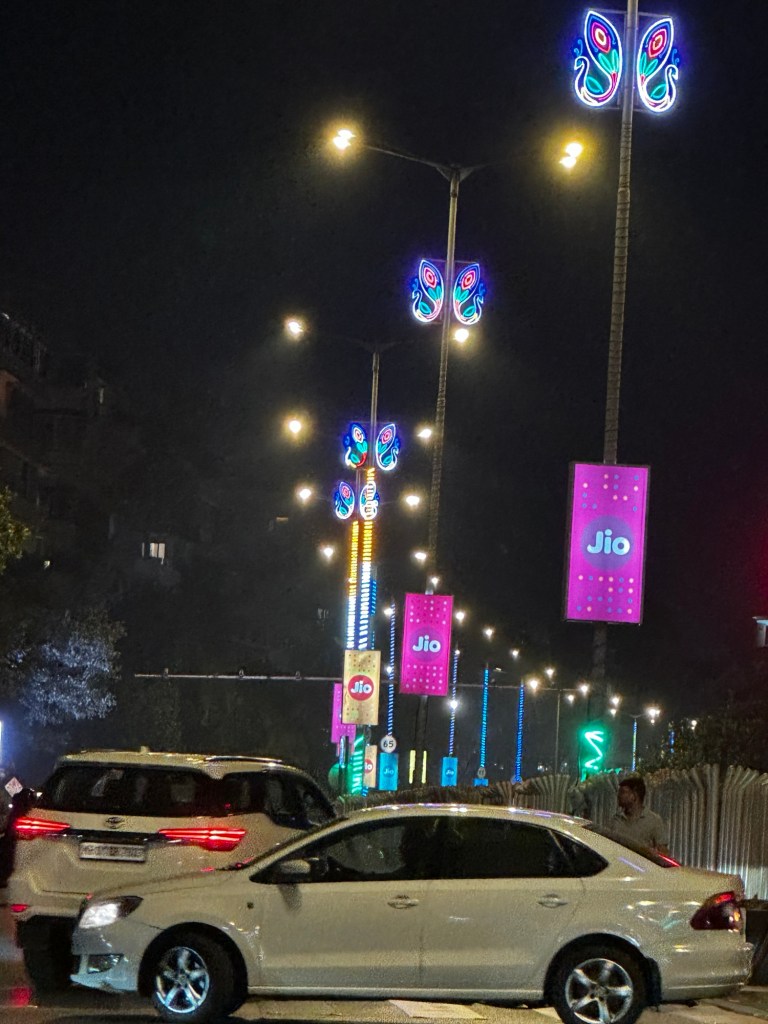
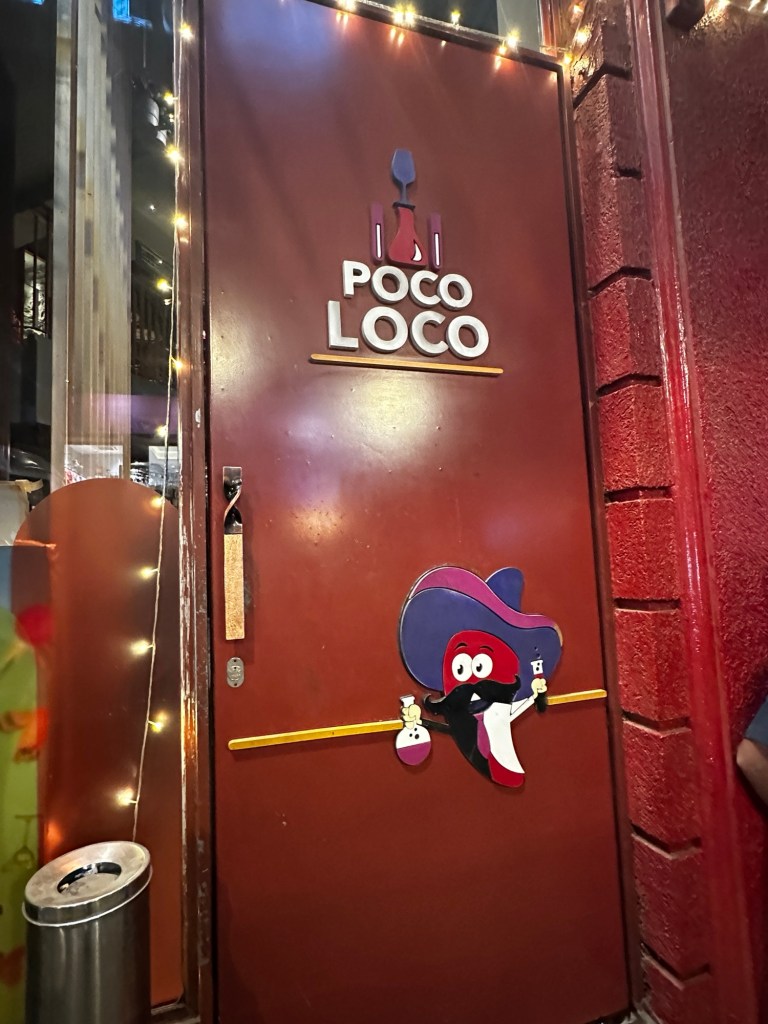
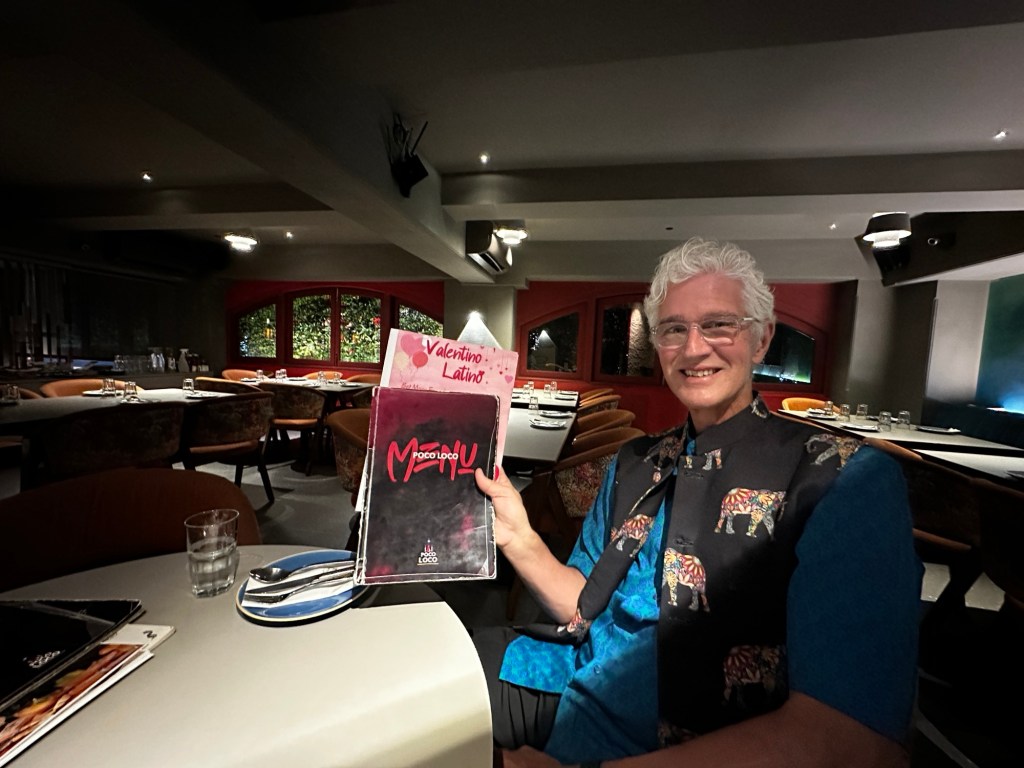
For Valentine’s night we were ready for a small local restaurant and the concierge suggested Poco Loco Town, a Mexican/Spanish Tapas restaurant in a less fancy part of town. We had a blast and the food was different but yummy. We walked back to the waterfront after dinner and stumbled on another remarkable serendipitous celebration of Ganesh (the beloved Indian deity of Good Fortune). Families arrived in trucks with their specially decorated Ganesh statues, walked onto the sandy beach, prayed, made wishes, lit incense and then took the Ganesh statue into the water and pushed it out to sea. We were surrounded by lots of Hindu joy and family celebration and welcomed into several celebrations for photos.
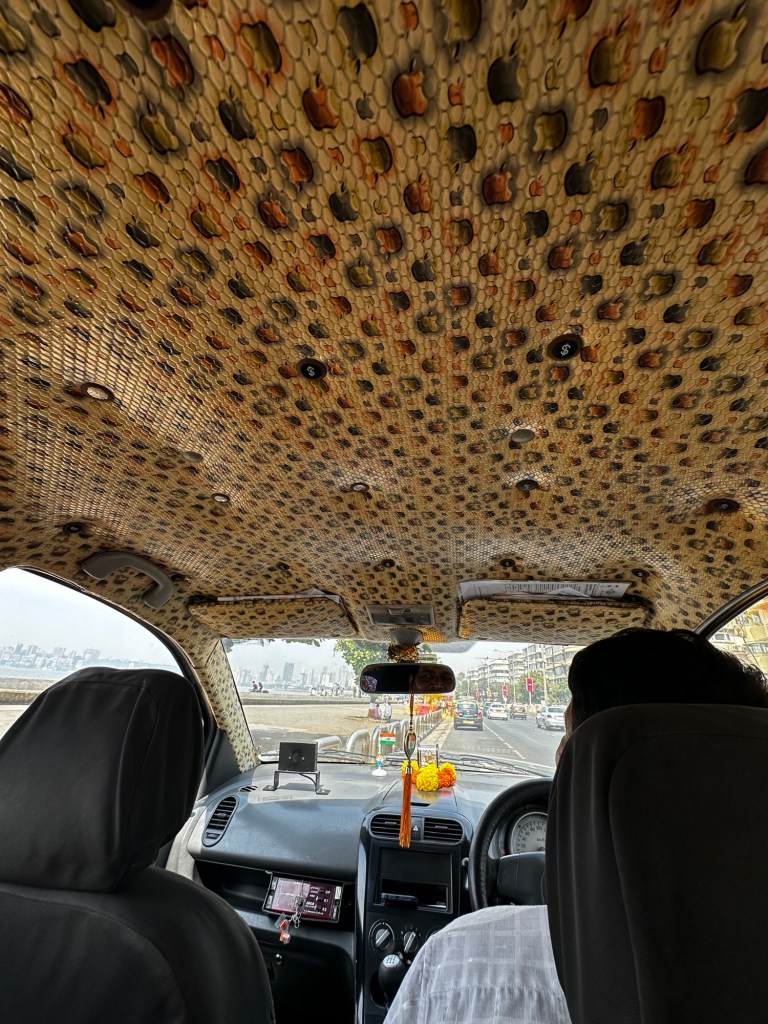
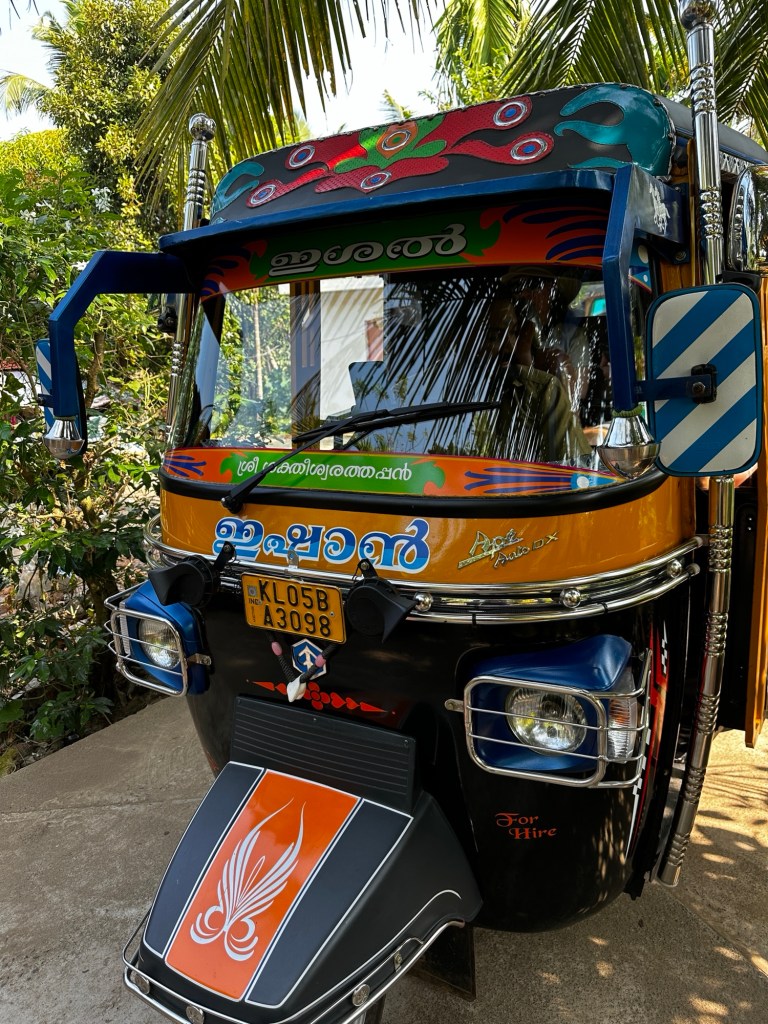
Colorful Taxi Victoria StationInside Victoria StationOutside Museum
Organizing our luggage for our last leg of the journey is next on the agenda, followed by dinner with friends of the Wortleys, who are our Seattle-area friends who lived and worked in India years ago.
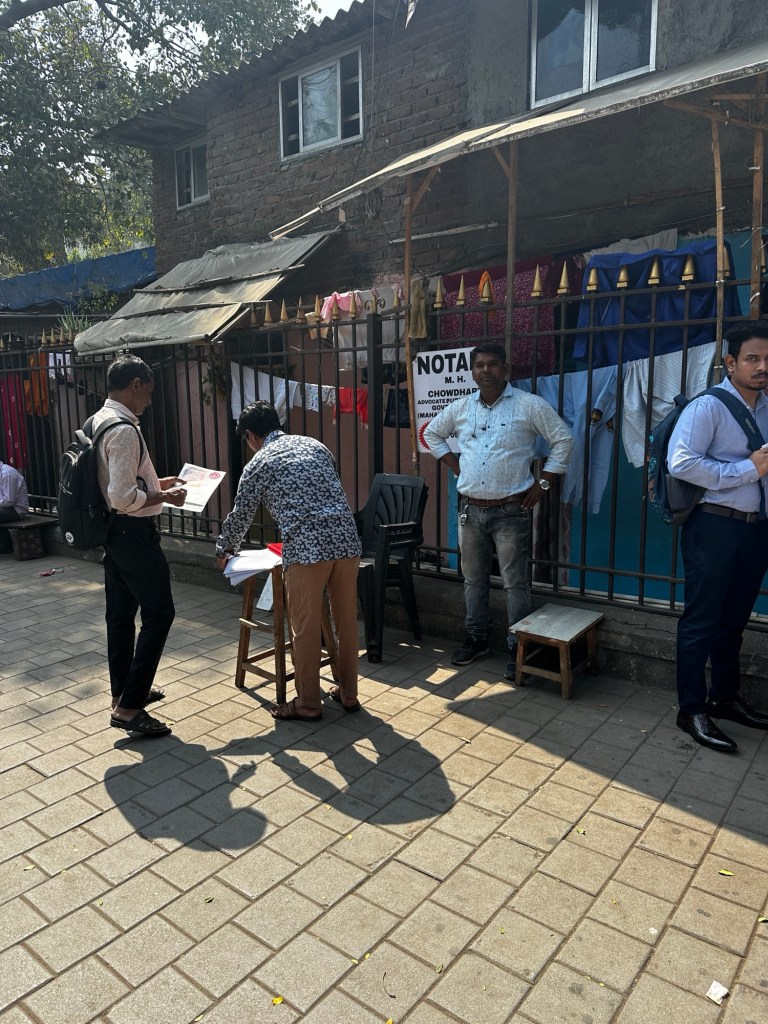
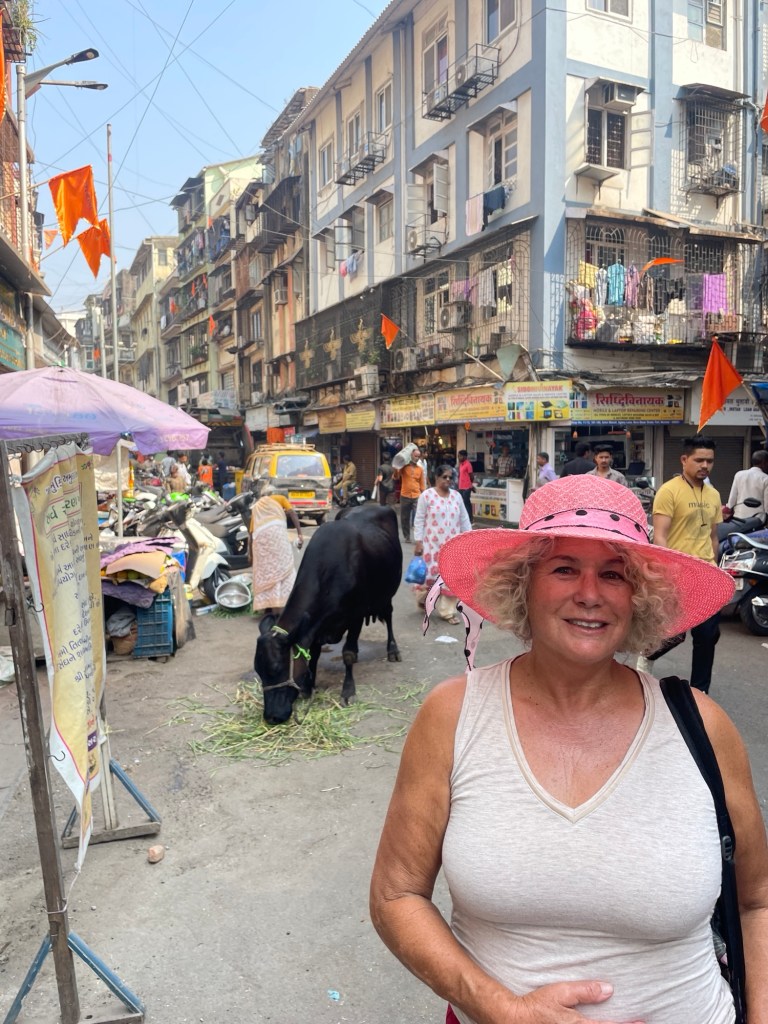
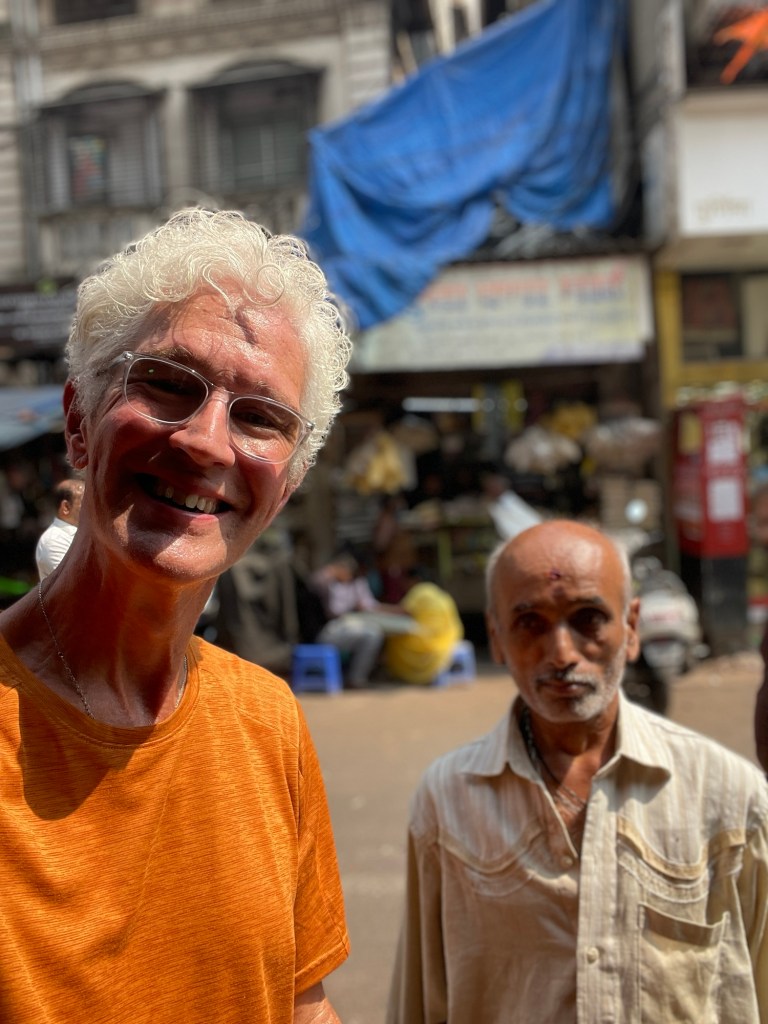
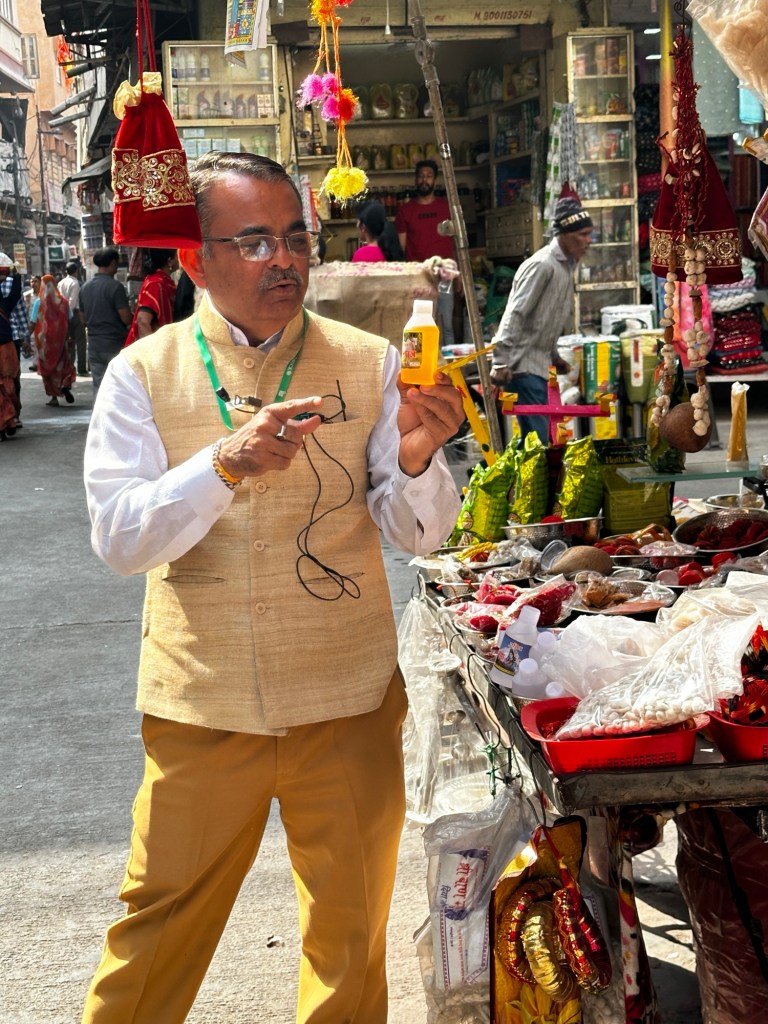
Our final day in Mumbai we woke up ready to find the big Jain Temple. Apple Maps said it wasn’t far, but we didn’t realize there were many Jain temples in the area. We wandered in areas of Mumbai that are very local: markets, local shops, cows, clothing, street side typists and more. We did find many small Jain temples, bought some sandals, laughed a lot and made it back to the hotel after about 3 hours of wandering.
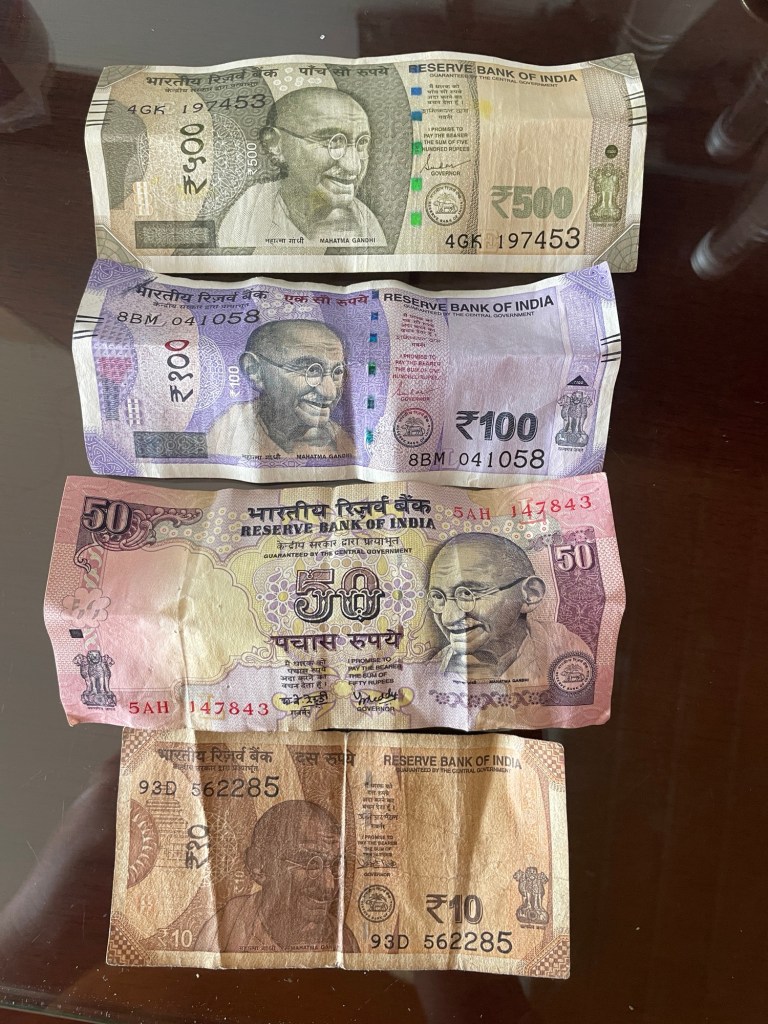
Notaries and typewritersSandel shoppingGandhi on all moneyFound the cowsPhoto with salesmanPhoto requestIndia VW Van
After we got back to the hotel, we realized the big Jain Temple was very close to our friends business who we were visiting later. So we rested a bit, got a snack, and then took a cab and successfully visited the beautiful Temple in a very different part of the city.
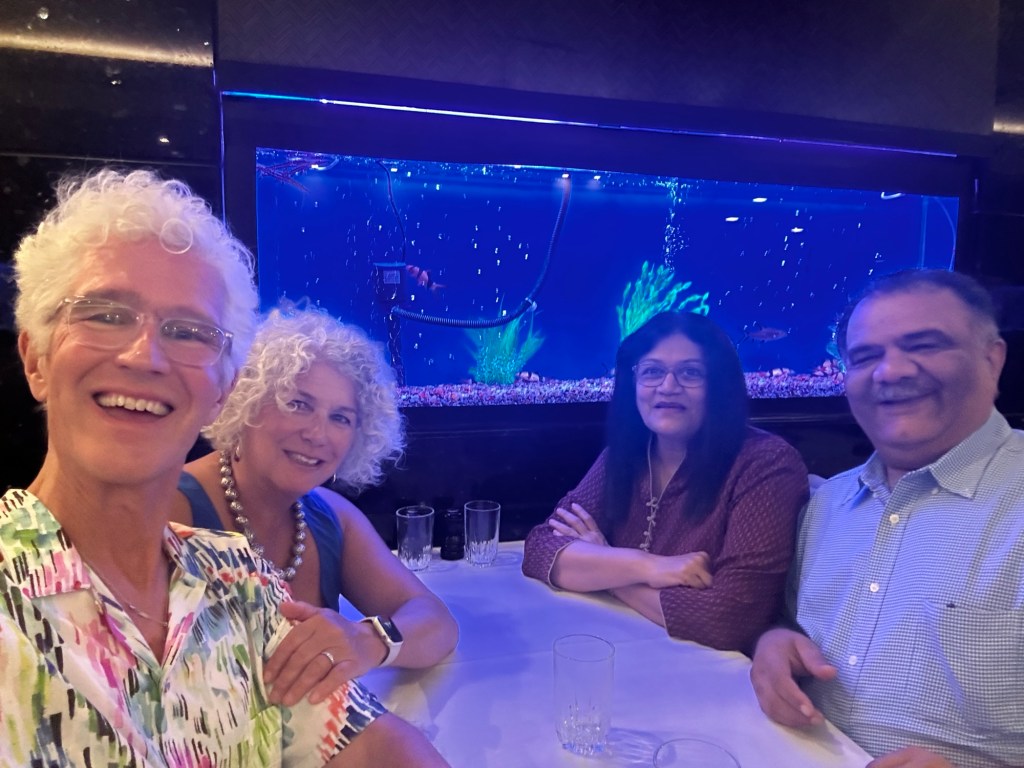
Then we had the joy of meeting Anand and Sujata. It’s so special in life to meet new people. They’re lovely people and they took us to a special dinner at the very popular Trishna fish restaurant in a lovely part of town we somehow missed on our walkabout earlier. We truly hope they will visit us in Seattle when they come to the states again.
As we write our final blog of India we are in Singapore and we fly home tomorrow. We don’t miss the honking. We are thrilled to have ice, salad, fresh vegetables and fresh air. But more on Singapore in the last blog.
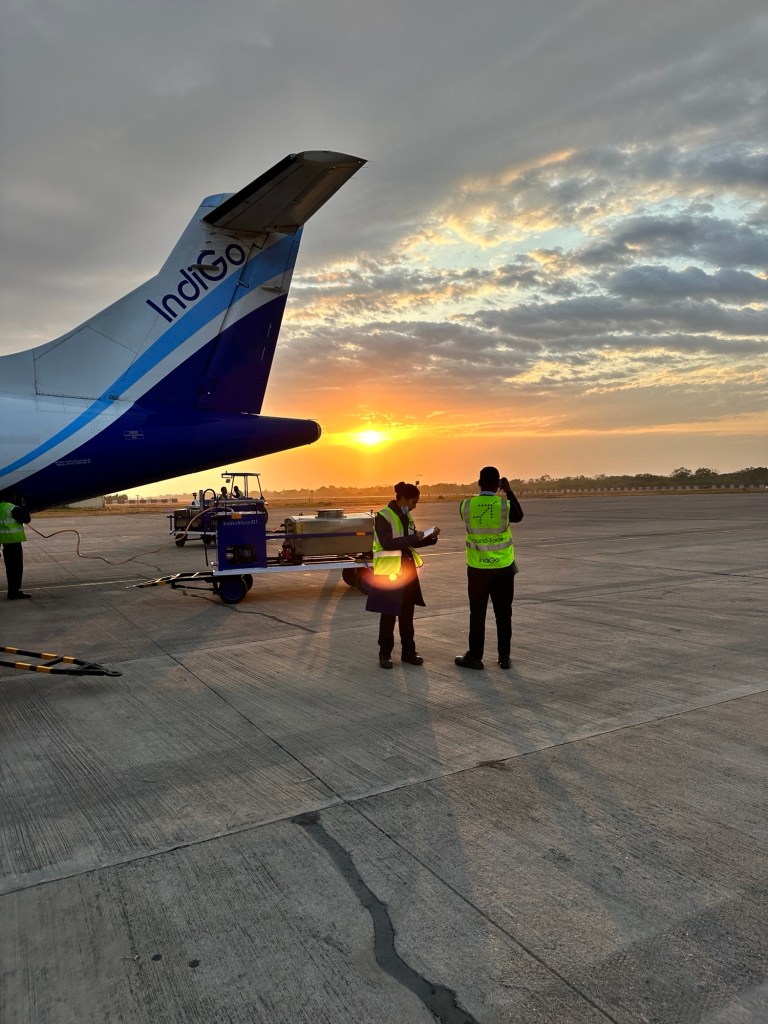
We left Udaipur for our early flight to Kochi. Flying within India is different. Security is extremely uneven and doesn’t always make sense. You cannot check ANY electronics or eletrically powered equipment; no cords, shavers, hair blowers, curling irons, ear pods, computers, iPads, travel speakers, anything that can possibly be an electronic item in any way. (Strangely, large water bottles are fine). So all of your electrical or electronic devices, wires and chargers must be in your carry on bags and pulled out for detailed screening when you go through security. Otherwise they will pull your checked bag and throw away any electronics/electrical item (if you are lucky), or just put your checked bag in the holding area for further inspection if you are not lucky. Sometimes they will contact Tina who can sometimes go into the bowels of the airport to rescue the bag. Tina spent a lot of time pre-airport trip reminding us of the rules. Jim and I passed the test every time.
There are different lines for screening men and women. Sometimes the women’s line is a distance from the scanner. But “no problem” it all worked out and we eventually became experts at getting through Indian airport security.
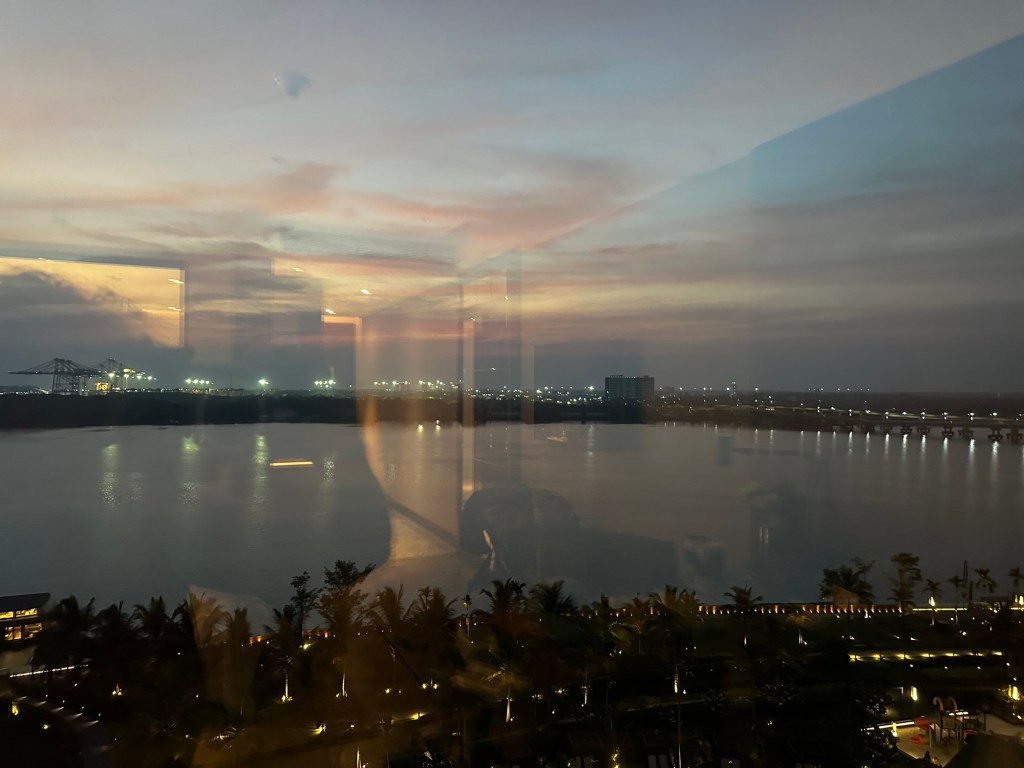
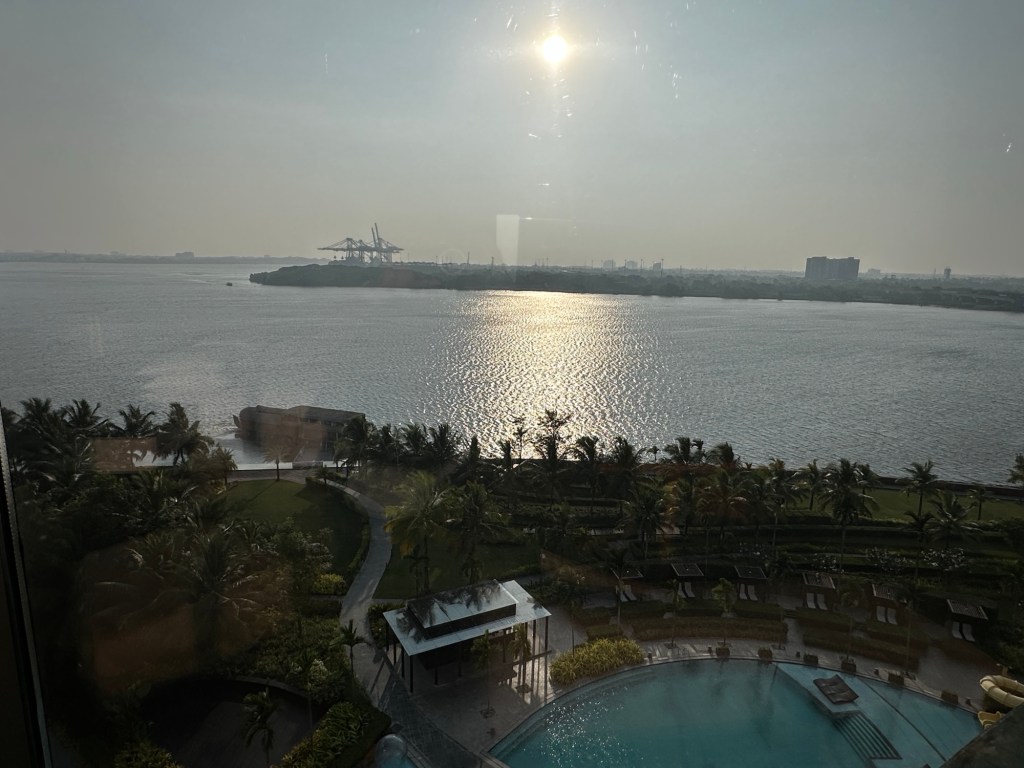
In Kochi we stayed at a Hyatt on the Arabian Sea, with a lovely pool which we used in the evening after our long day, and in the morning for a few laps before our day began.
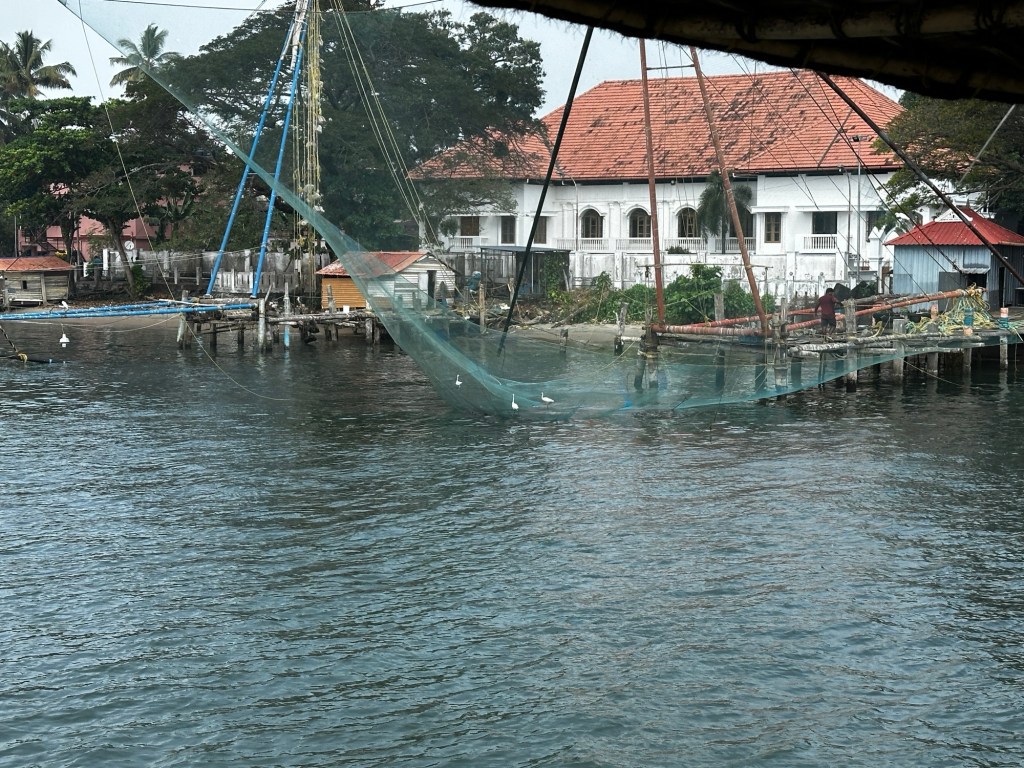
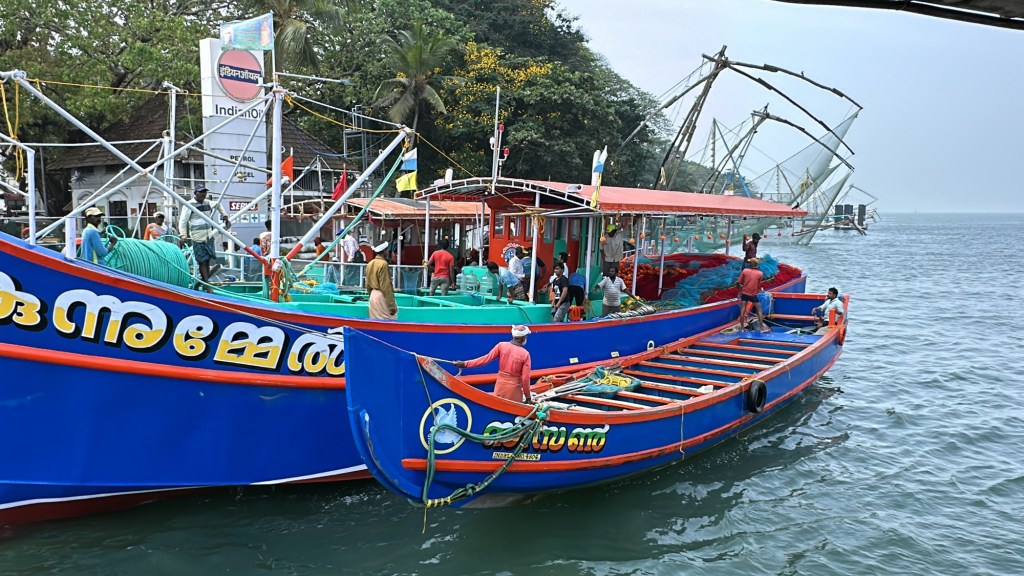
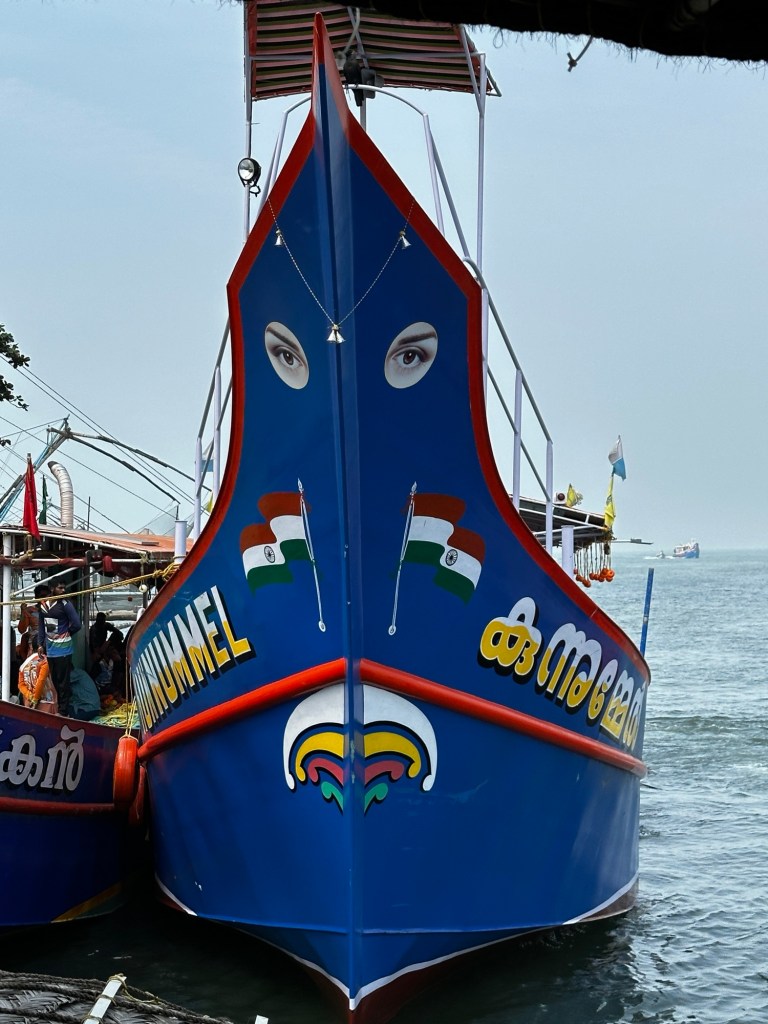
Our second day in Kochi included a boat tour of the bay complete with “Chinese” fishing nets and dolphins. Jim and I always love getting on the water. The south of India has a totally different vibe: it’s cleaner, slower, the roads are more orderly, and the traffic flows smoother. The bus driver’s good luck charms (usually Ganesh statues in the north) are replaced in the south by crosses and pictures of Jesus. Interestingly, the south has an almost 100% literacy rate due to its long history of Catholic education, beginning with the Portuguese in the 1600’s. The area also has a long history of a few large landowners and almost no property ownership for the people who worked the fields and the rice paddies. The Socialist/Communists saw an opportunity from that, supported land reform, and now control the local government in the Indian State of Kerala (of which Kochi is the Capitol). Fun fact: our bus team support person is named Stalin, which is not unusual in this area.
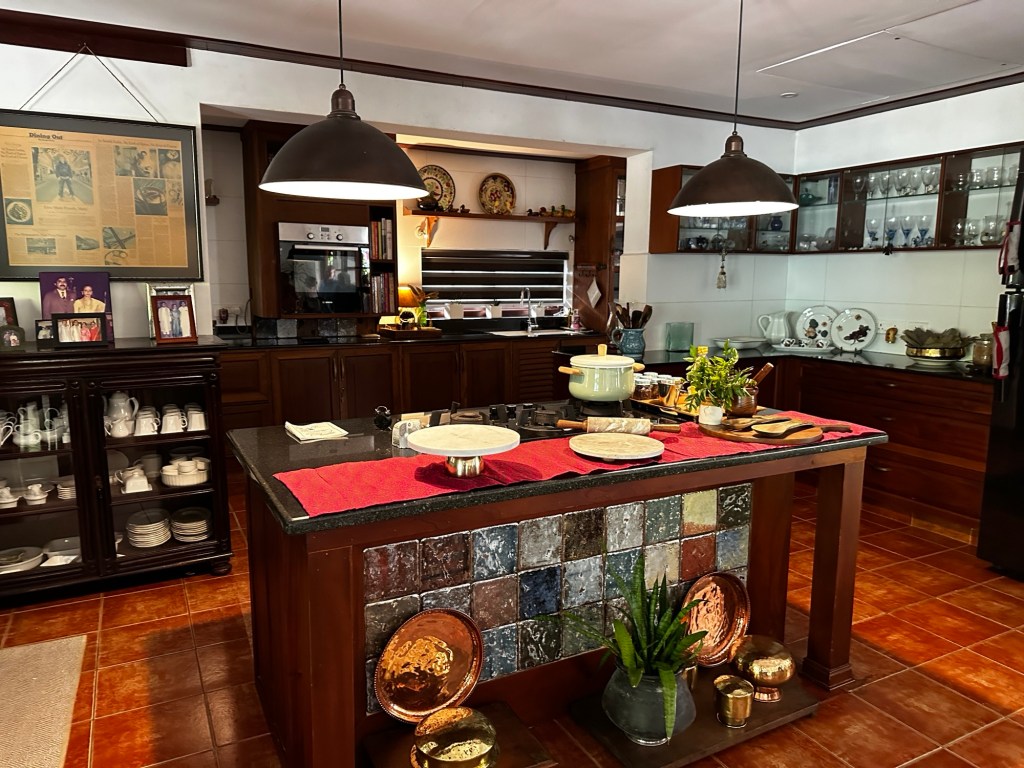
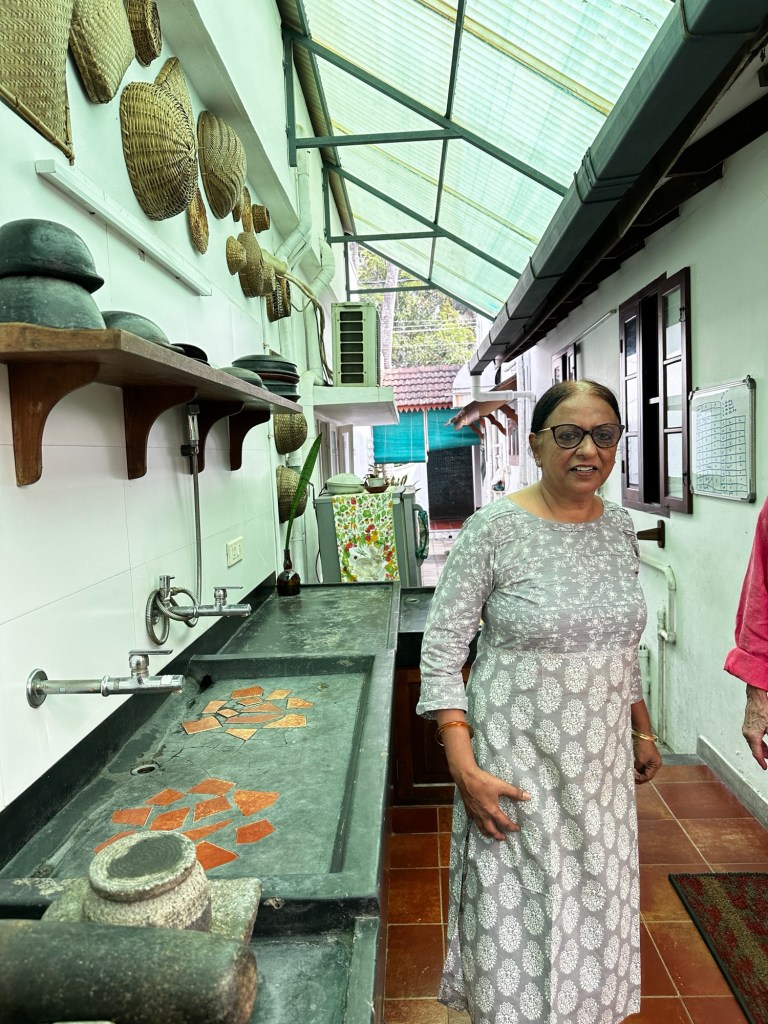
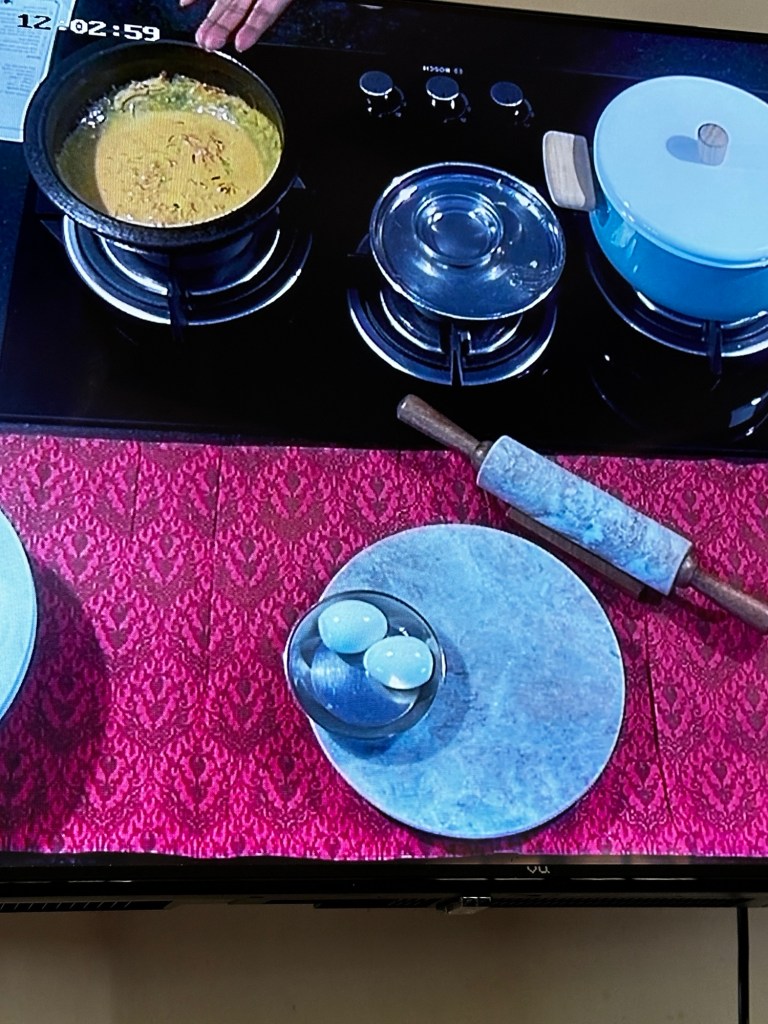
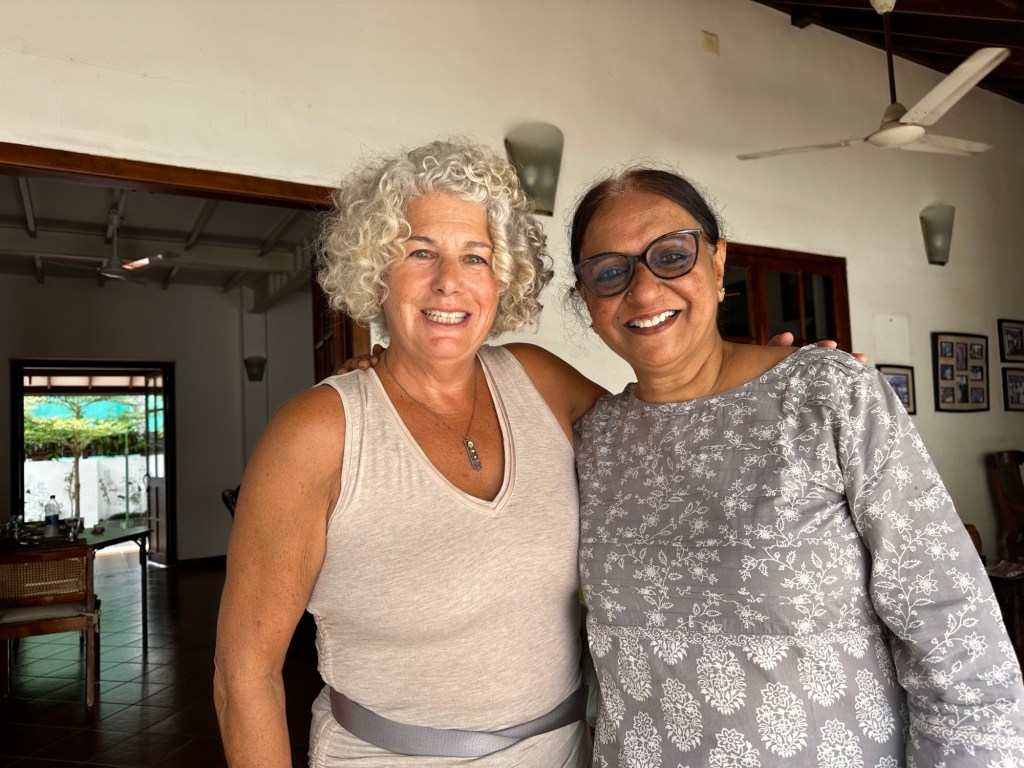
The excellent book “Covenant of Water” begins to come alive for us in Kochi and Kerala. We took a boat from our hotel to the other side of the bay where our bus was waiting for us to take us to Nimmy & Paul’s House. Nimmy is the Indian equivalent of Paula Deen or Julia Childs. She and her husband live in a house set up with a TV kitchen and we were treated to a lesson in Southern Indian cooking and a scrumptious lunch. Everything was delicious, but her Chicken Biryami was the best I’ve ever eaten. I can’t wait to cook it at home using her recipe. She was “discovered” 50 years ago by a NY Times travel writer and now does presentations for Tauck and a few other tour groups.
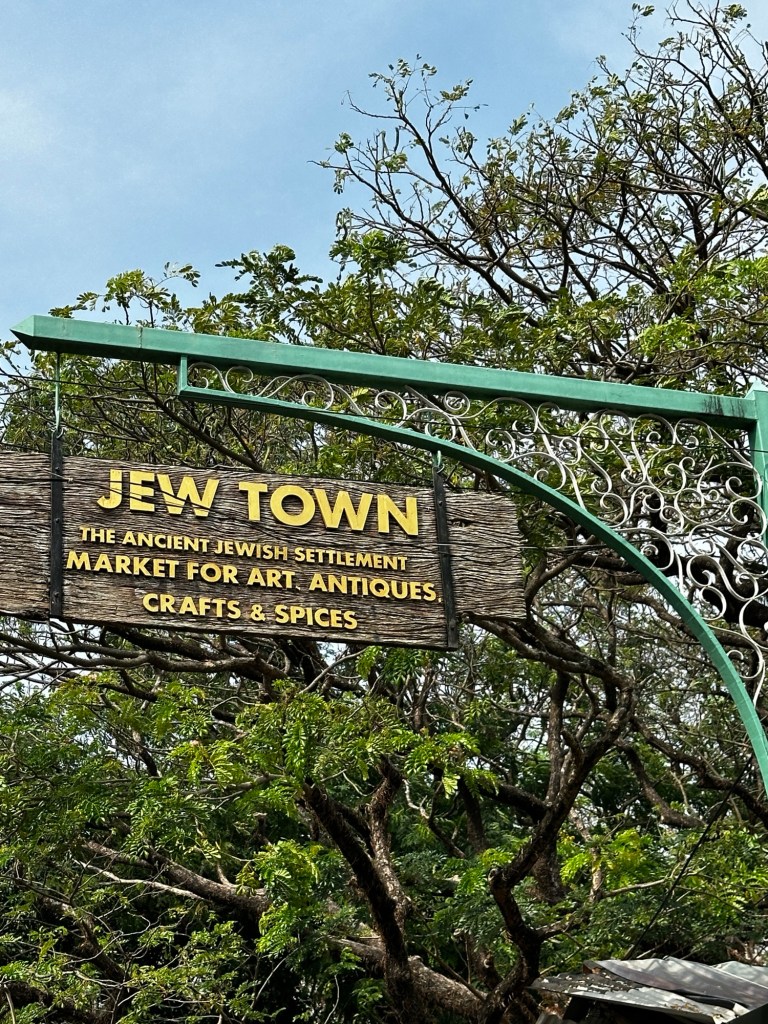
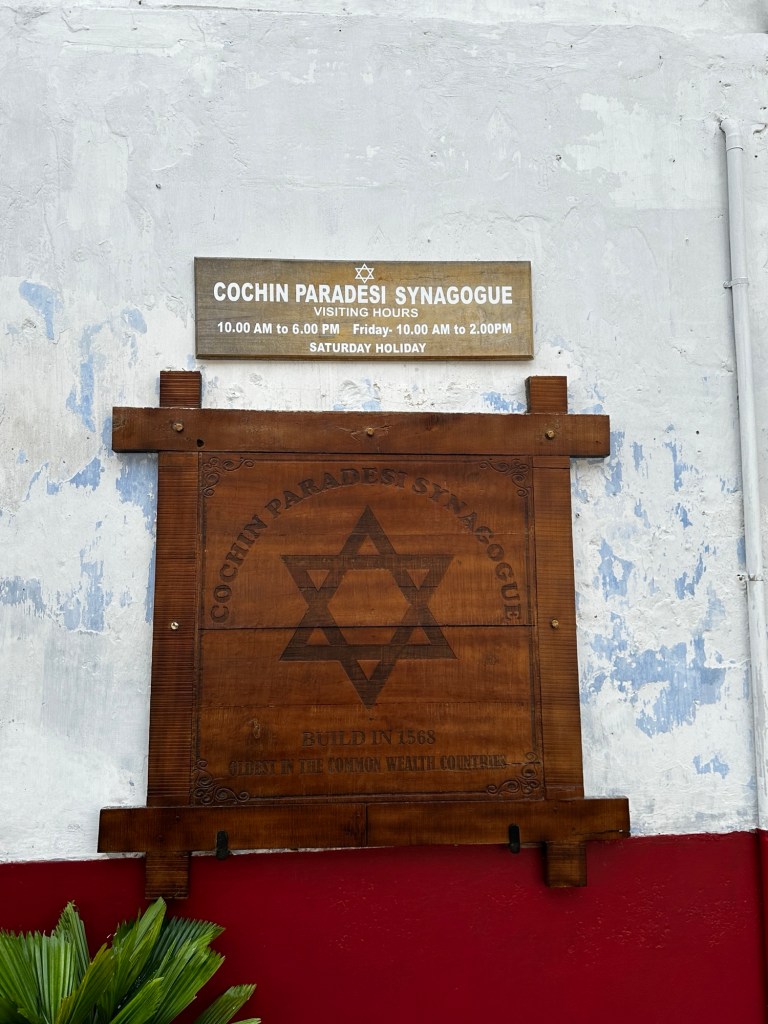
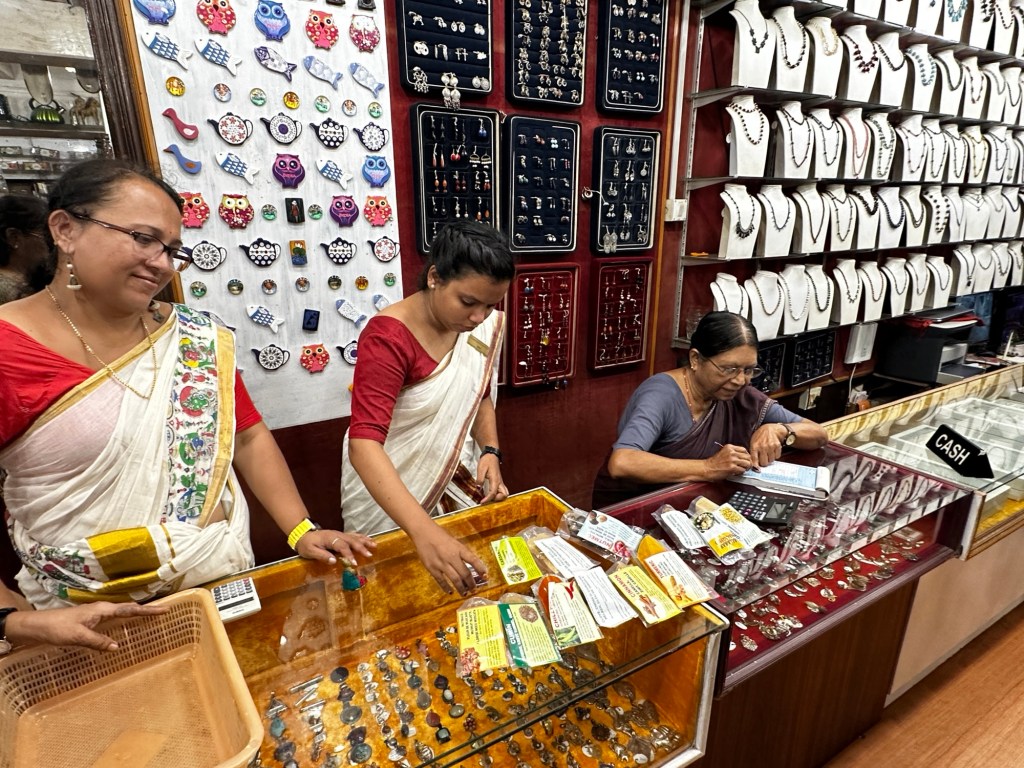
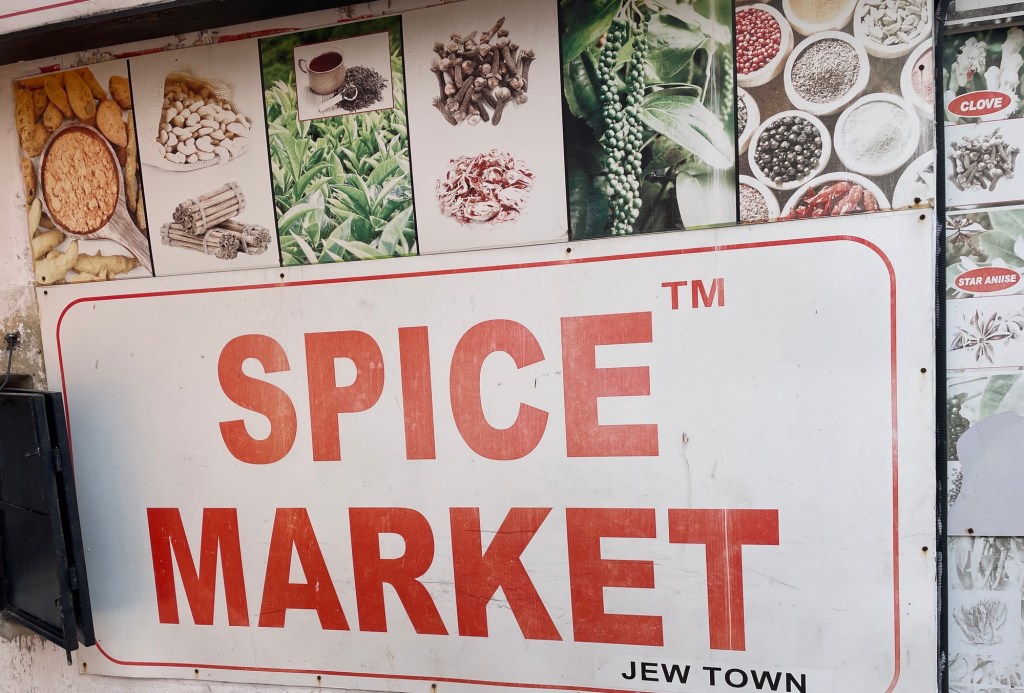
From there we headed to Kochi’s “Jew Town” and a fabulous old Synagogue. Interestingly, there were once a few thousand Jews in Kochi. A few families came as spice traders during Roman times, but most immigrated there after the Spanish Inquisition 500 years ago and lived under the protection of the local Maharaja in harmony with Hindus and Muslims for hundreds of years. Most immigrated to Israel after the State of Israel was created in 1947. Some historians even claim King Solomon visited Kochi to trade for spices 2,500 years ago.
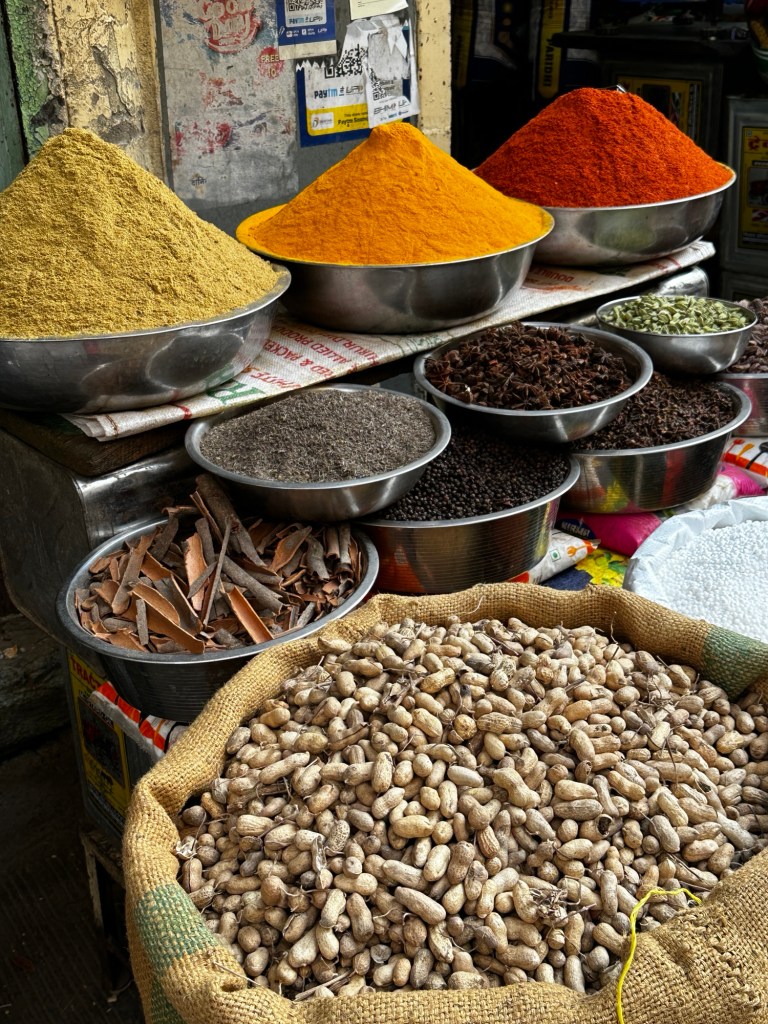
I did my spice shopping there because this area is still where a lot of spices are grown.
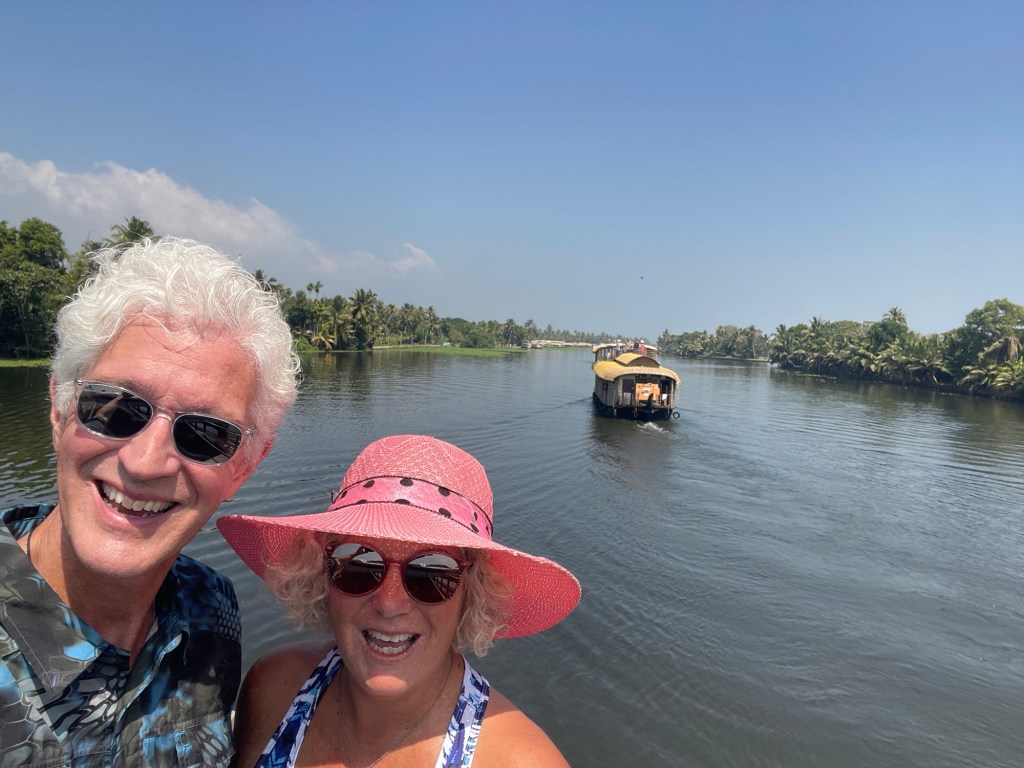
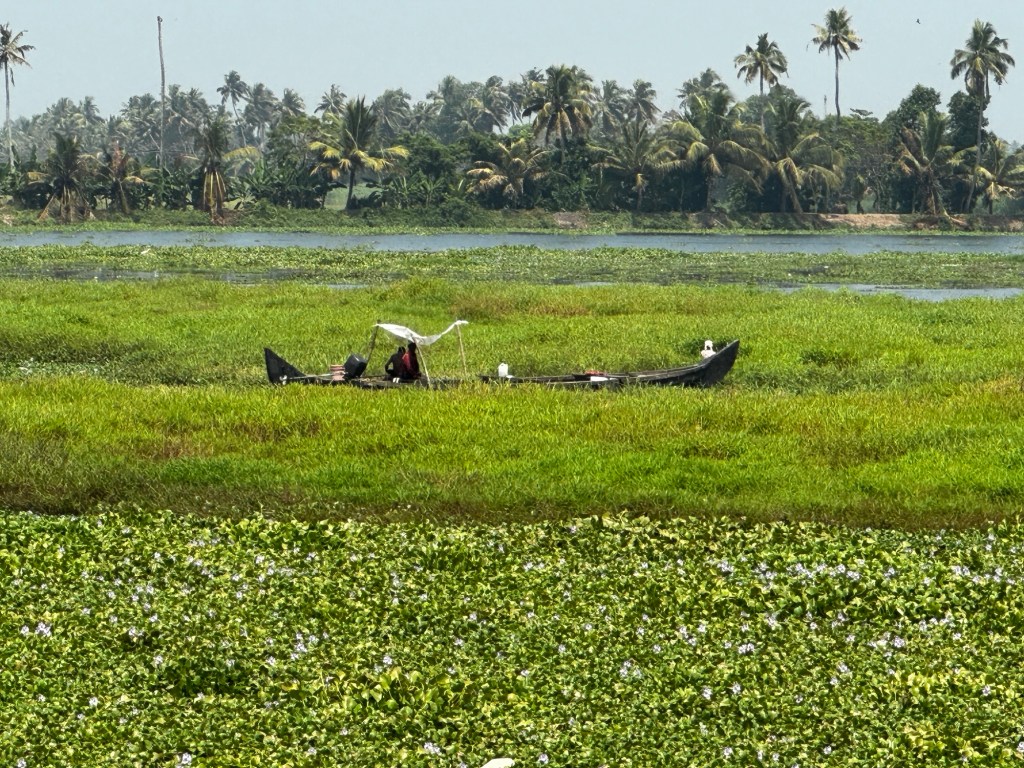
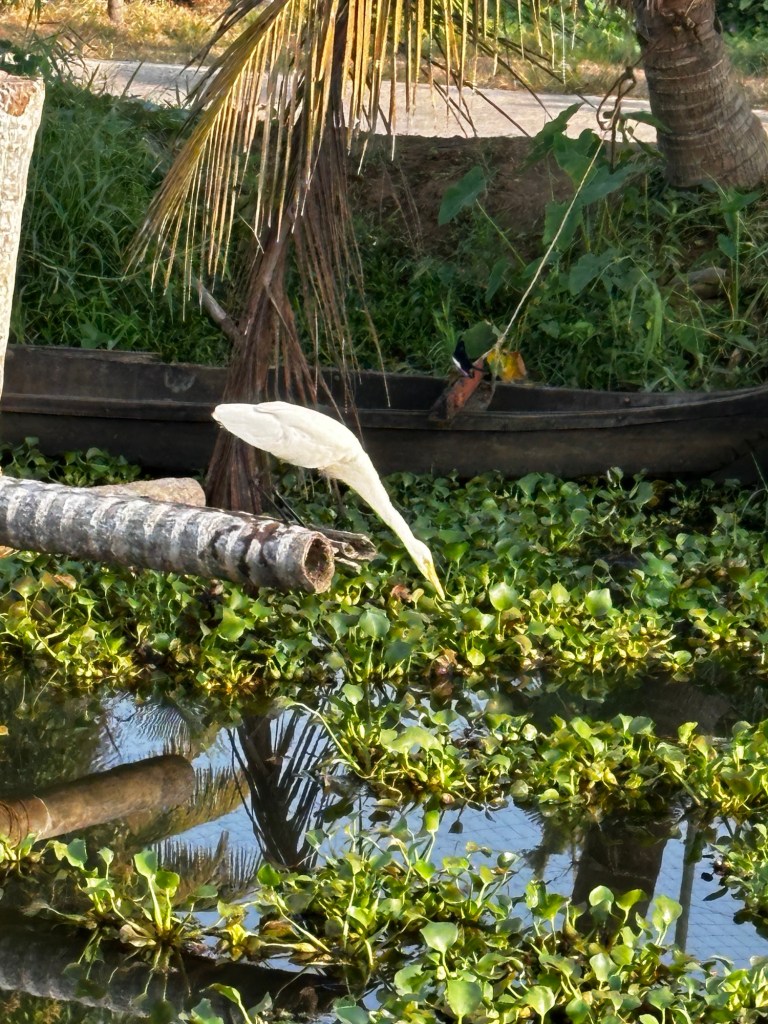
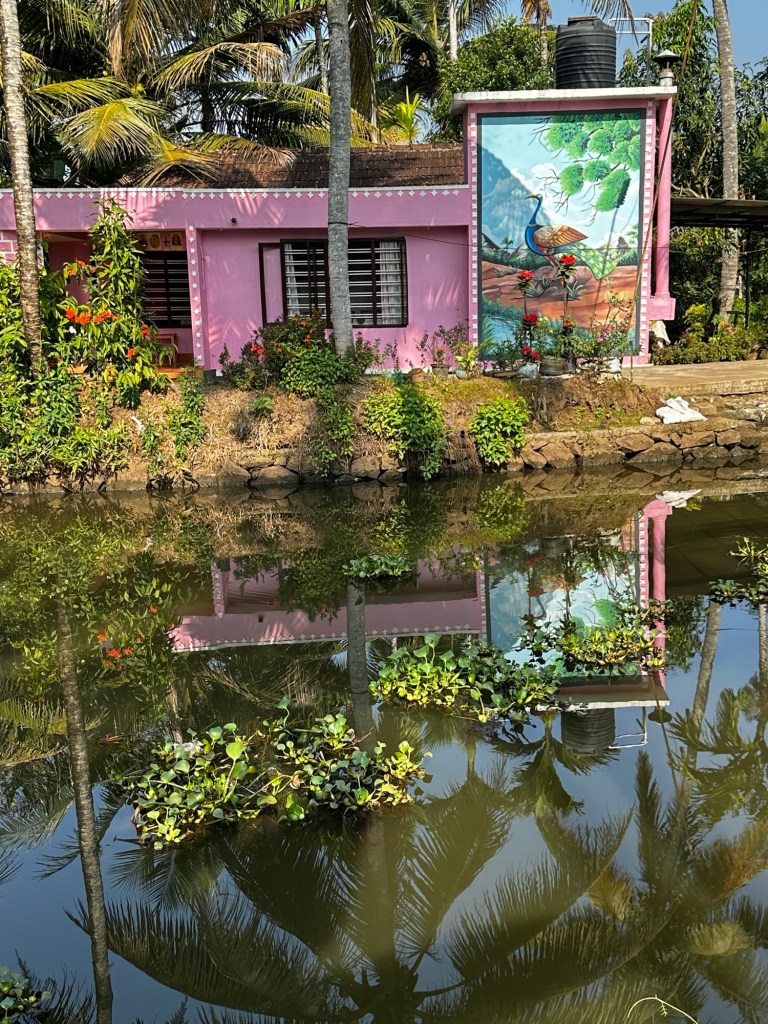
We left Kochi the next morning to head to the Kerala Backwaters. The Kerala Backwaters are a chain of brackish lagoons, canals and lakes south east of Kochi. We began with a 2 hour bus drive and then boarded a large kettuvallam house boat to journey to the Kumarakom Lake Resort. The house boat journey felt like something out of the old Bogart movie “The African Queen”. We slowly navigated the river to a giant lake, enjoyed a yummy lunch onboard, and then docked at the resort. Along the way we saw rice paddies, hawks that looked like bald eagles and lot of other birds of all kinds. These waters are home to many species. Many of the house boats are quite fancy to accommodate tourists, complete with nice bathrooms and bedrooms.
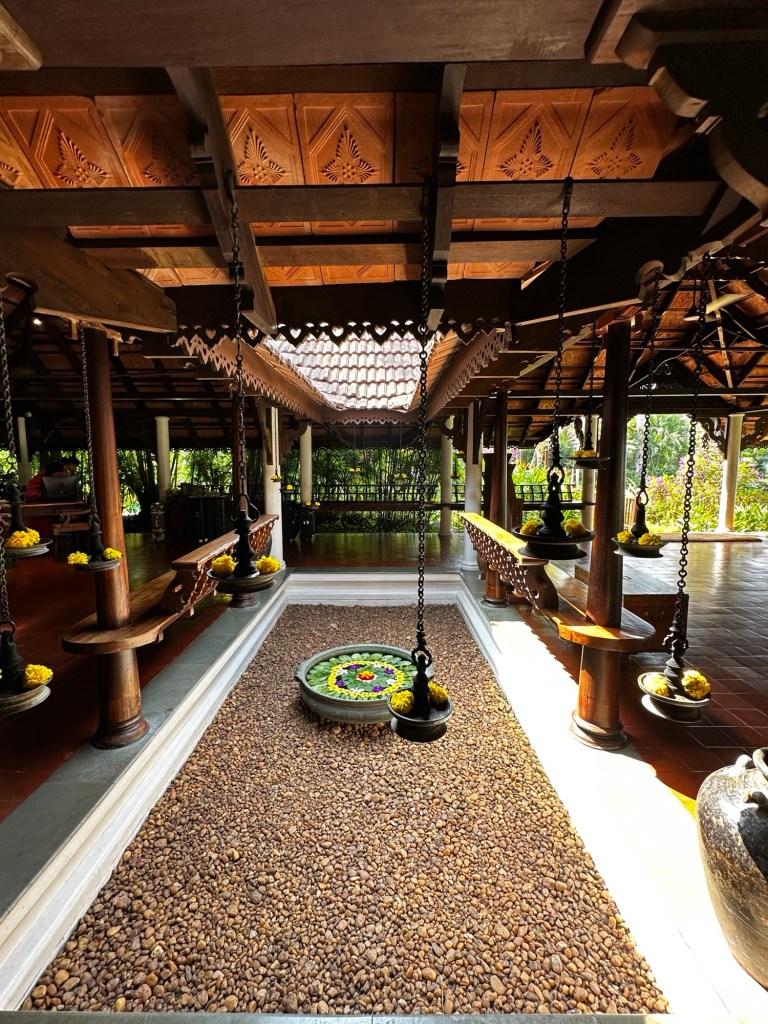
Kumarakom Lake Resort’s lovely grounds include views of the lake and a meandering “canal” swimming pool that twists and turns and allows you to swim to almost any other room. We took advantage of the “Ayurvedic” spa treatments and massages at the resort. The Rejuvenation Massage included lots of oil and two masseuses. The second day I did the Pathrapotala Swedam which is supposed to be good for arthritis. Here’s the description: leaves or powders of medicated herbs are fried in medicated oils bundled in a Muslim cloth, and then applied over the body in a rhythmic manner. The “rhythmic manner” (performed by two women) was part cupping, rug beating, and hot stones. But it only started after an “all over” Ayurvedic oil massage. What can I say, I felt great after.
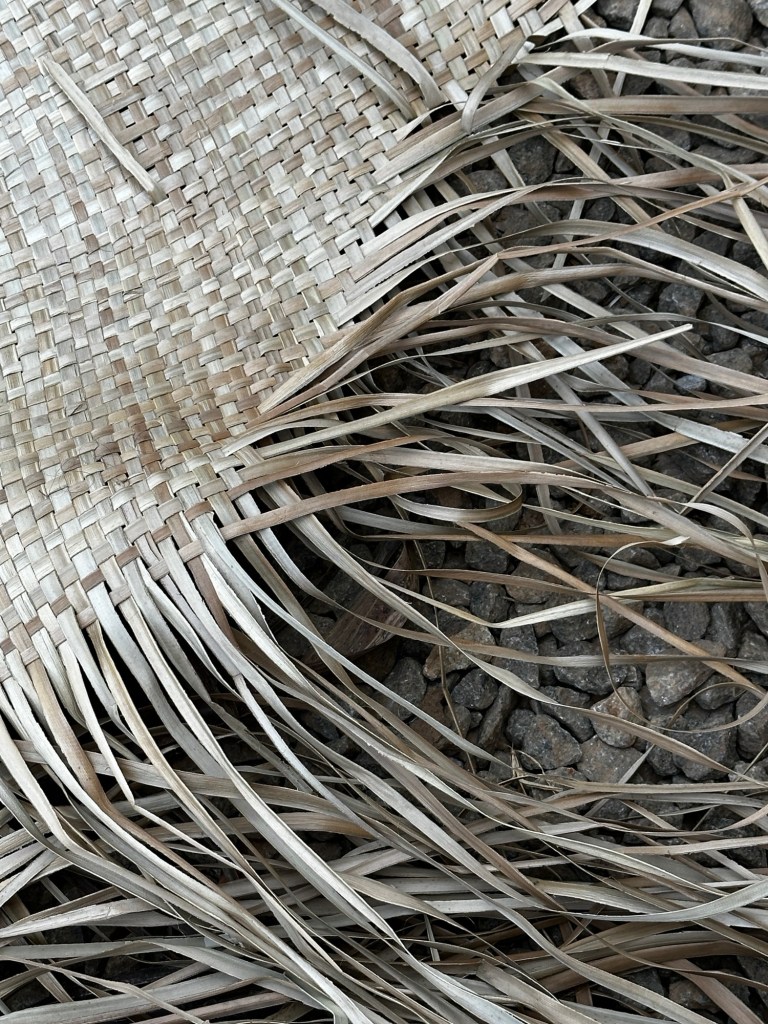
On our second morning we headed out early for a wonderful tour of a local village complete with two house visits. Whenever volunteers were needed to try something I was in, so I got to climb a coconut tree, make rope from coconuts, weave a fan from coconut leaves and dress in local saris, all of which were lovely experiences
The Kumarakum Resort had a different local presentation before dinner each night. Our first night we were entertained by two lovely folk dancers, while the second night we watched in awe as several young men recreated ancient battles with swords, spears, fire and the craziest extending whip sword you’ve ever seen. This was serious stuff.
All in all we couldn’t have asked for a better experience.
After two nights we left early in the morning to fly to Mumbai (India’s second largest city and the 10th largest in the world). Unfortunately, the Kochi airport is where we encountered our first big challenge with Indian airport security.
Although we had gone through security many times at many airports, the security people at Kochi confiscated our Garmin InReach device, which is a satellite security beacon that would allow us to give our GPS coordinates and send short texts in an emergency. We brought it with us just to be safe if something unexpected happened, but had never used it. At first the security people said it was e-cigarette (which are not allowed in either checked or carry-on luggage in India). I told them it wasn’t and showed them what it was online. Then they said, oh no, you can’t have that either because it’s a satellite phone. Tina tried to work her magic and we explained to them without success that we had gotten it through security in every other city. But in the end, there was no rational solution and they confiscated the $400 device. We keep it on our boat for emergencies so we’ll need to get a new one when we get back. Oh well. Security is extremely tight around India because of past terrorism and we did confirm online that the Garmin device is banned here. Of course it’s no different than any of our phones or watches. But that’s how it goes.
We made it to Mumbai (formerly Bombay) after another long flight delay, met up with our first local guides there and finally arrived at our last lovely Oberoi Hotel, which is located near the end of Mumbai Peninsula on beautiful Marine View Drive. Mumbia is a great city, and the last stop on our India Tour. I’ll tell you about our adventures there in the next blog. Thanks for reading!
I wish I was a poet then I could better capture the fullness of our journey in Agra, Jaipur and Udaipur. All are in “northern India, and yet very different. Our hotels there were all magnificent and the people and the food were amazing.
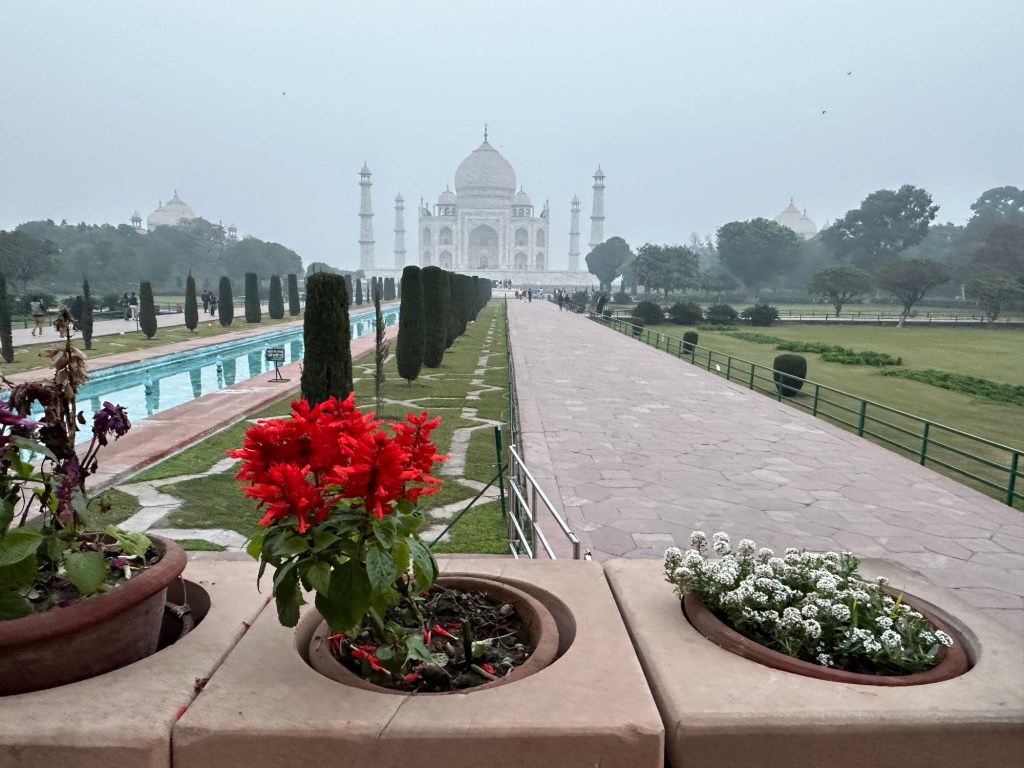
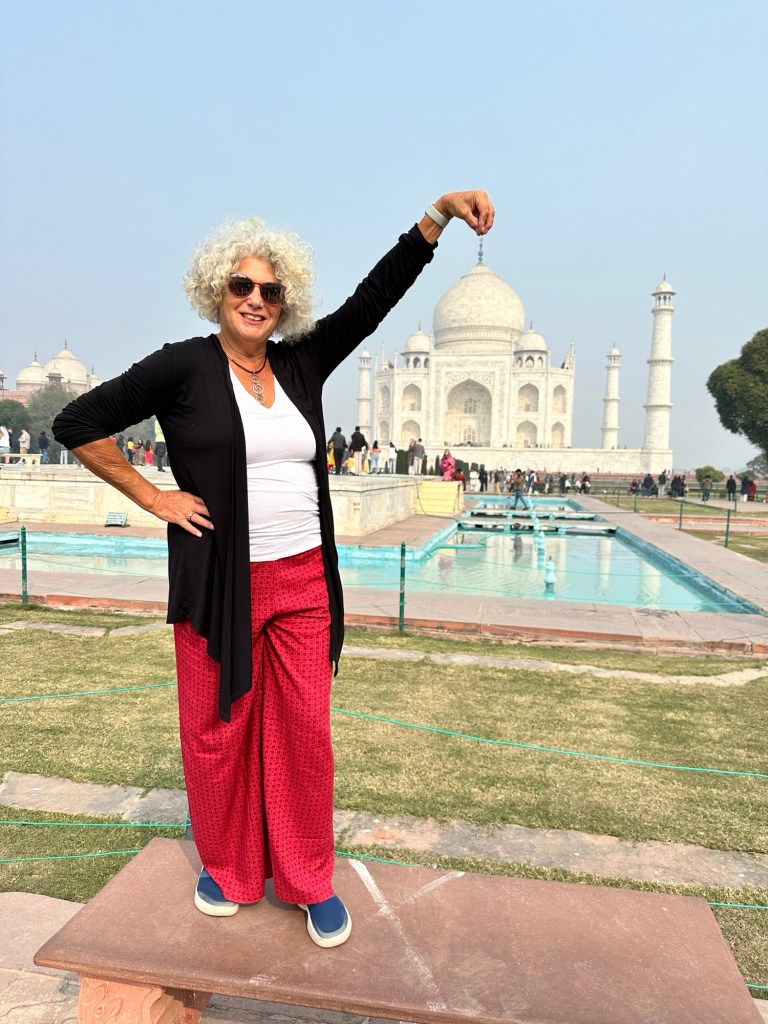
The Taj Mahal
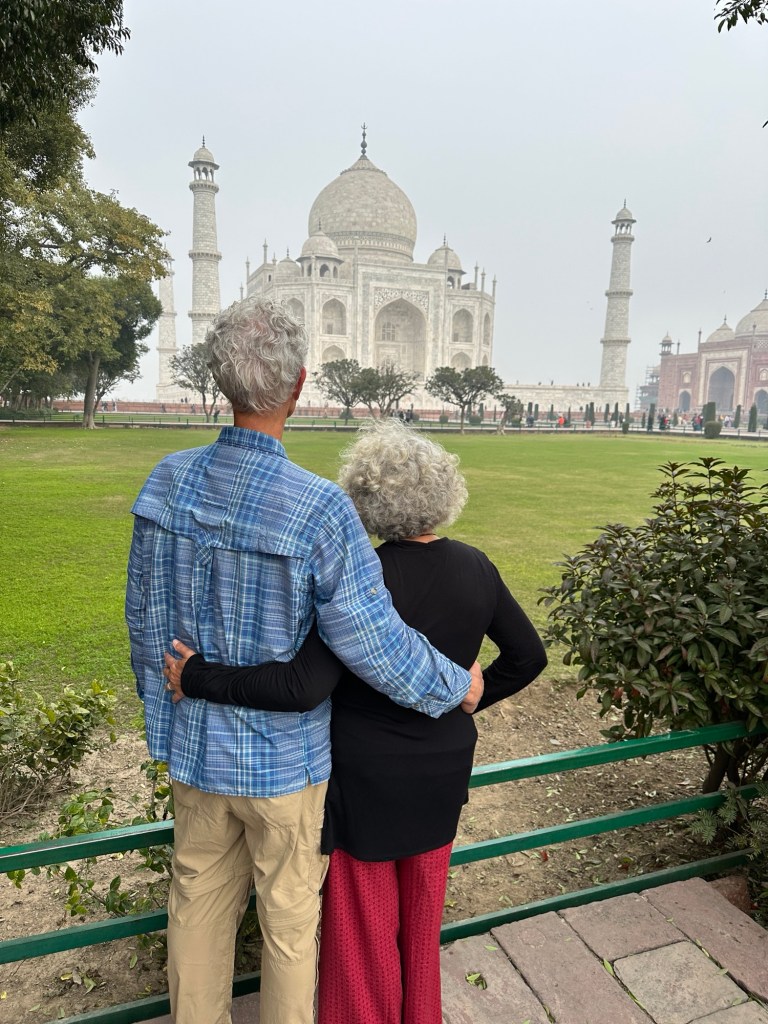
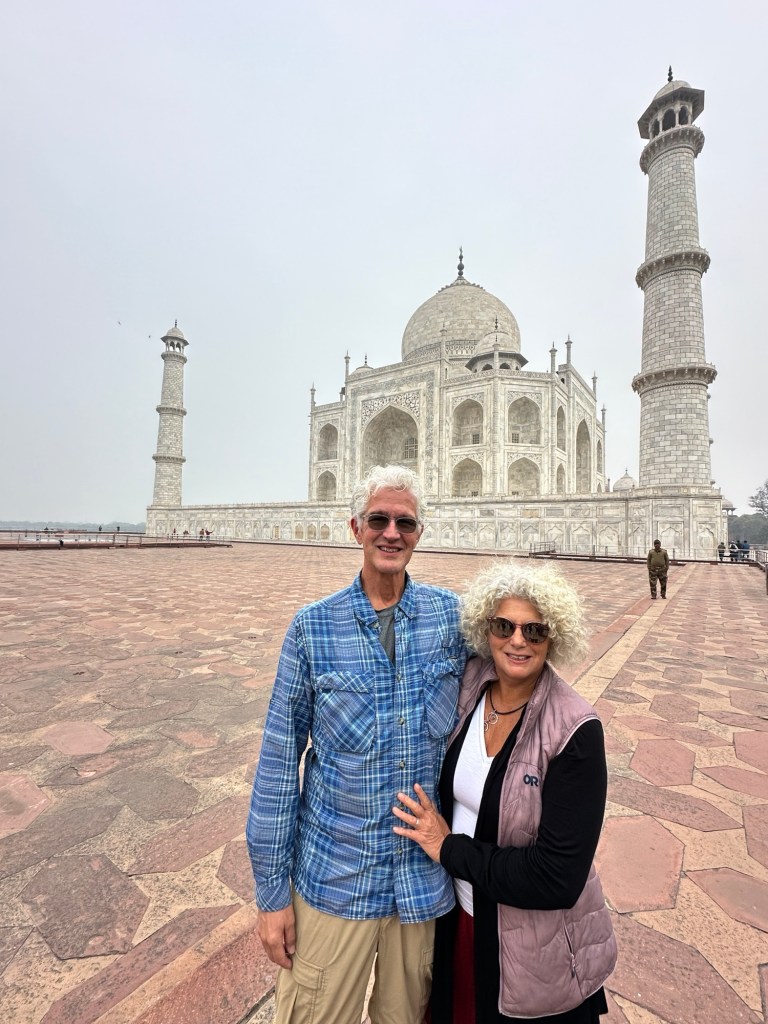
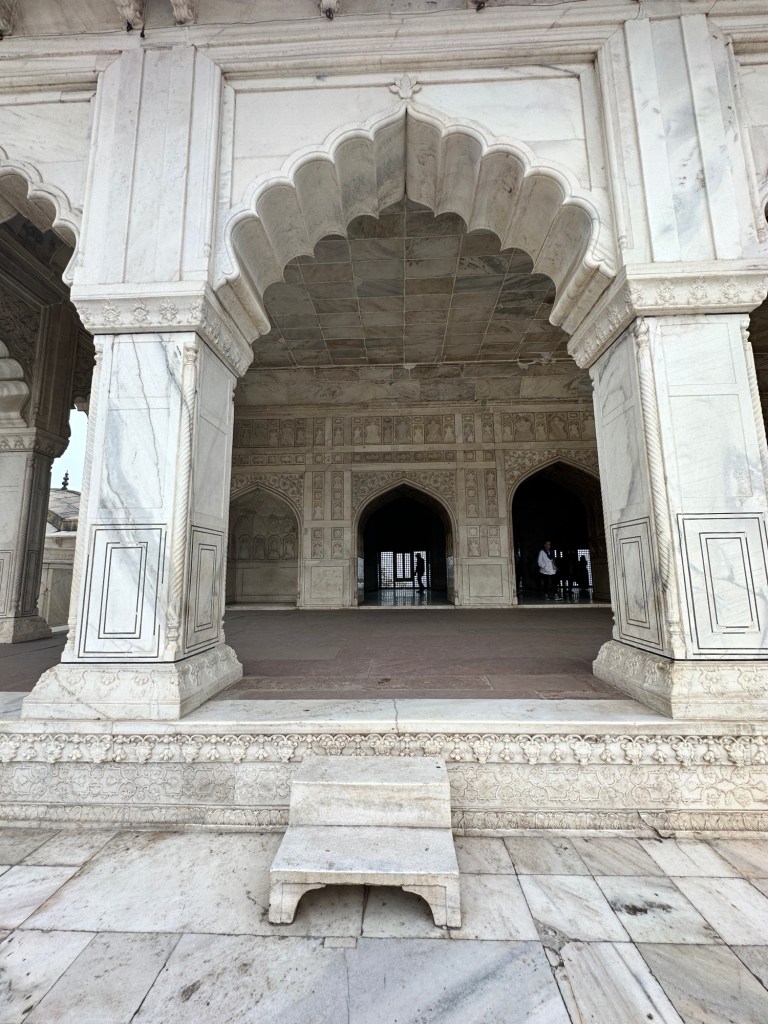
Truly the most spectacular building in the world we’ve ever seen, the Taj Mahal was built by a Moghul Emporer for his beloved wife who died giving birth to her 14th child. They are both entombed there in the center of the central dome, while other family members are entombed nearby. The grounds compliment the buildings perfectly and we got the opportunity to visit it twice: first at sunrise with spectacular morning light and almost no people, and second, later that morning. Although we had just finished an extremely exhausting travel day from Varanasi the day before (with an early start and long air travel delays due to thick fog), I took full advantage of the special morning tour opportunity. Jim was exhausted so he slept in and enjoyed the second tour. No one knew if the weather would be clear enough, and we were worried the fog would be a problem in the morning, but our tour group has good Karma and the early morning weather was beautiful!
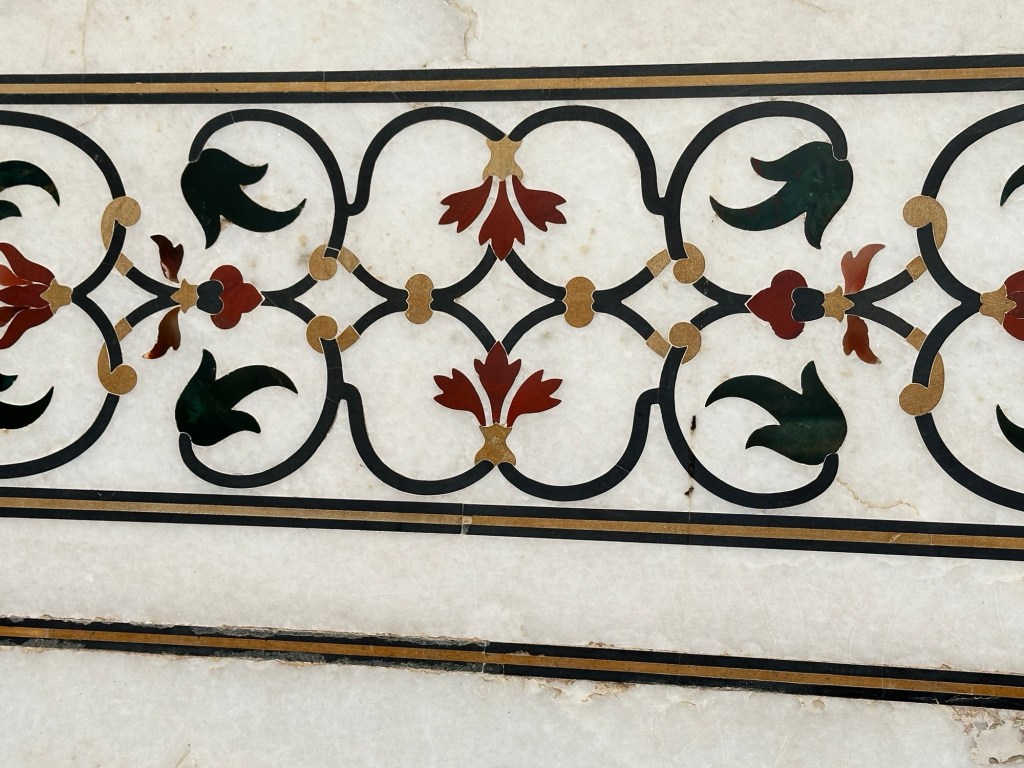
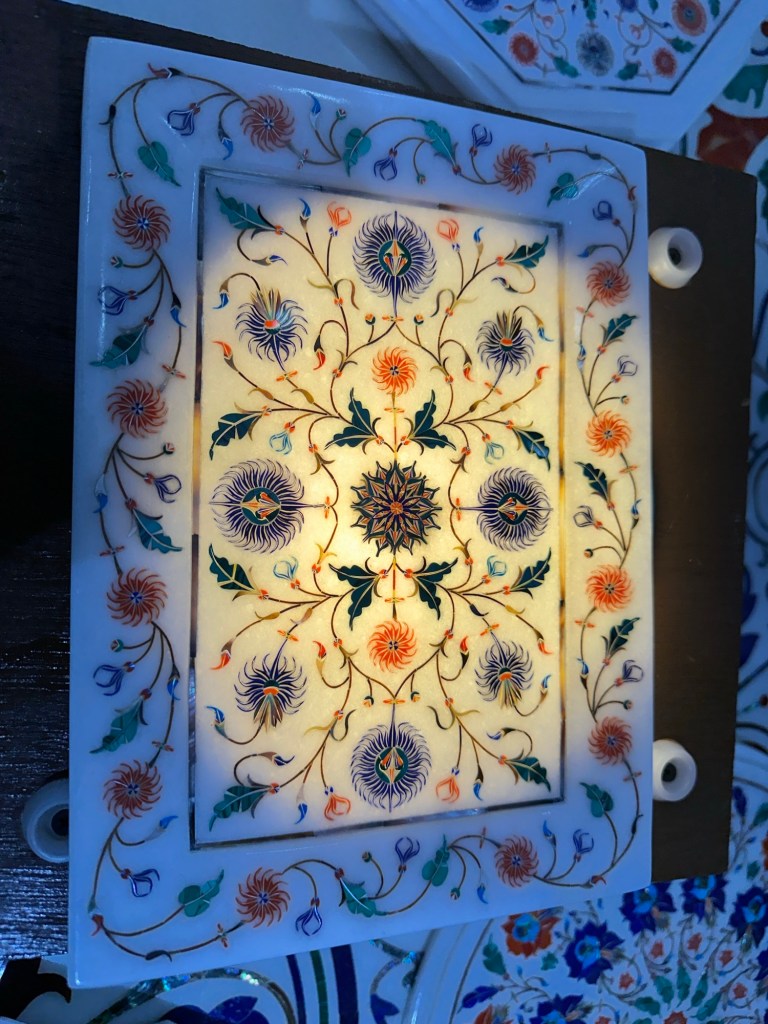
Marble and inlay work decorate every aspect of the Taj. After the tour, we went to see local artists train to create smaller marble creations with the same craftsmanship. The Indian government funds these programs to keep the ancient techniques alive for the future. We bought a small serving tray with the same incredibly fine detail to help us remember our visit.
Agra Fort
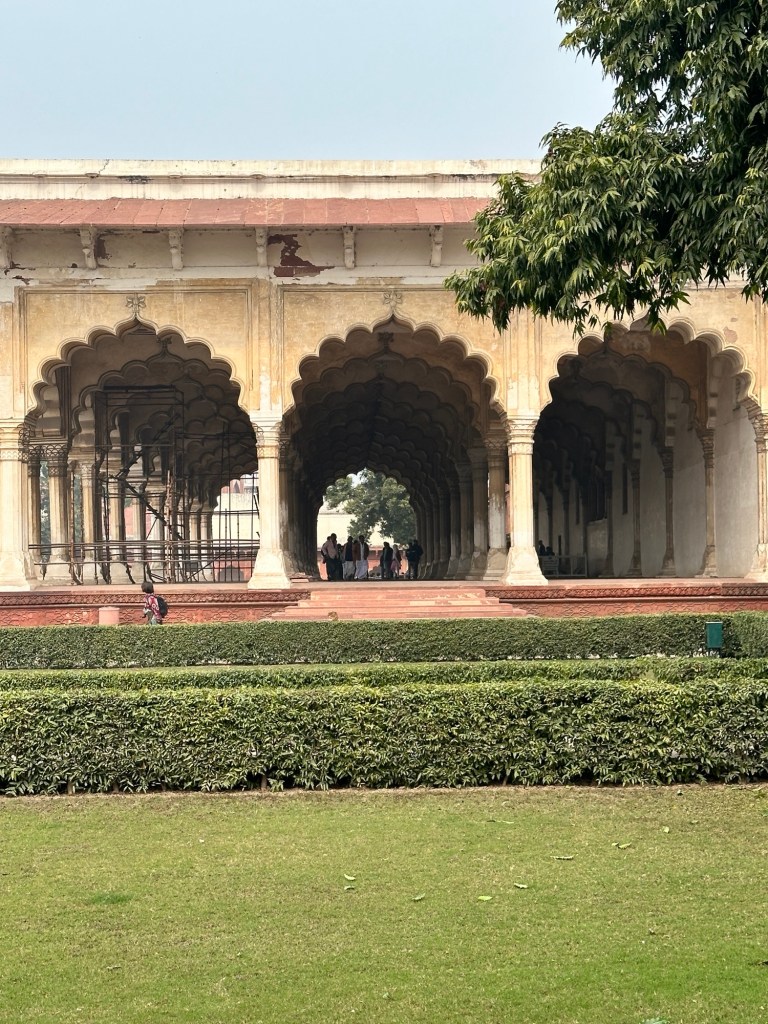
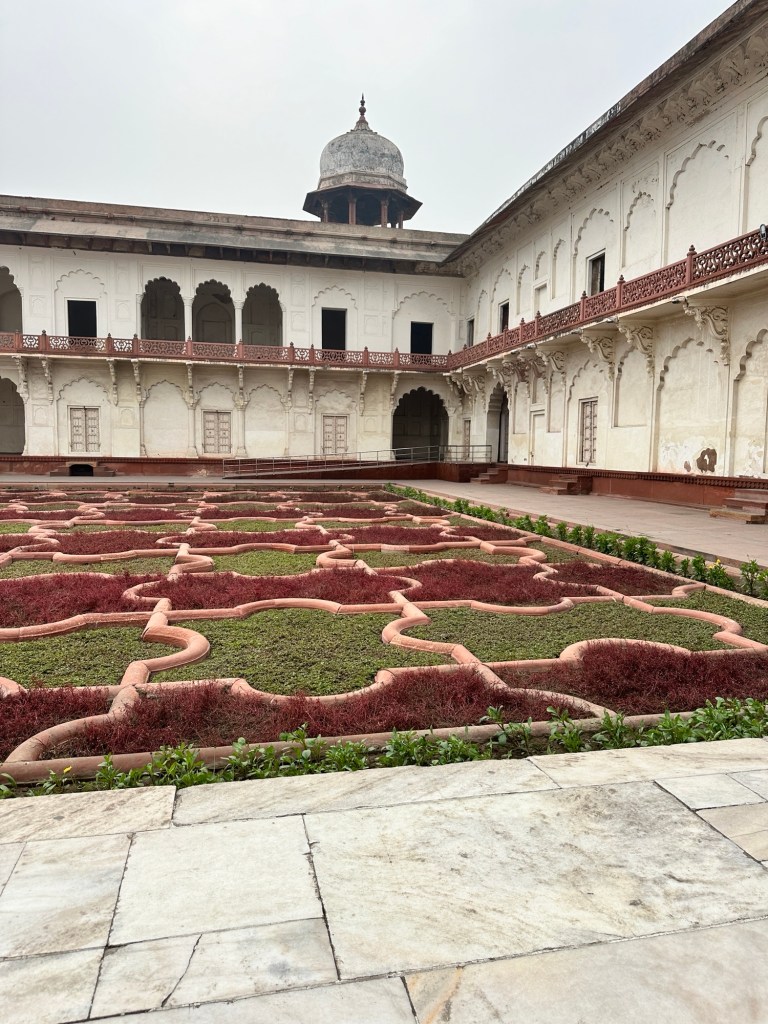
Red Forts are abundant in India. The Maharajas built them for protection from invaders but the Moguls captured almost all of them. Agra Fort is massive, built with the local red sandstone, and housed generations of Moguls and their harems. Eventually, the British took over the site and after India gained its independence in 1947, the site is now part museum and part military base. Agra Fort has multiple layers of defense, including two moats (one dry, the other flooded with river water and stocked with crocodiles), tall stone walls and a single, narrow, steep entrance that is flanked by tall stone walls.
The palace history includes some serious familial infighting, including siblings ousting their father (the King), and then murdering each other until only one was left (who became the new King).
Jaipur
From Agra we loaded onto our bus and headed for Jaipur, about 3 hours away in the State of Rajasthan (the largest of the 28 Indian States, but “lightly populated” with only about 70 million people). We met our new local guides Jai & Shailendra along the road.
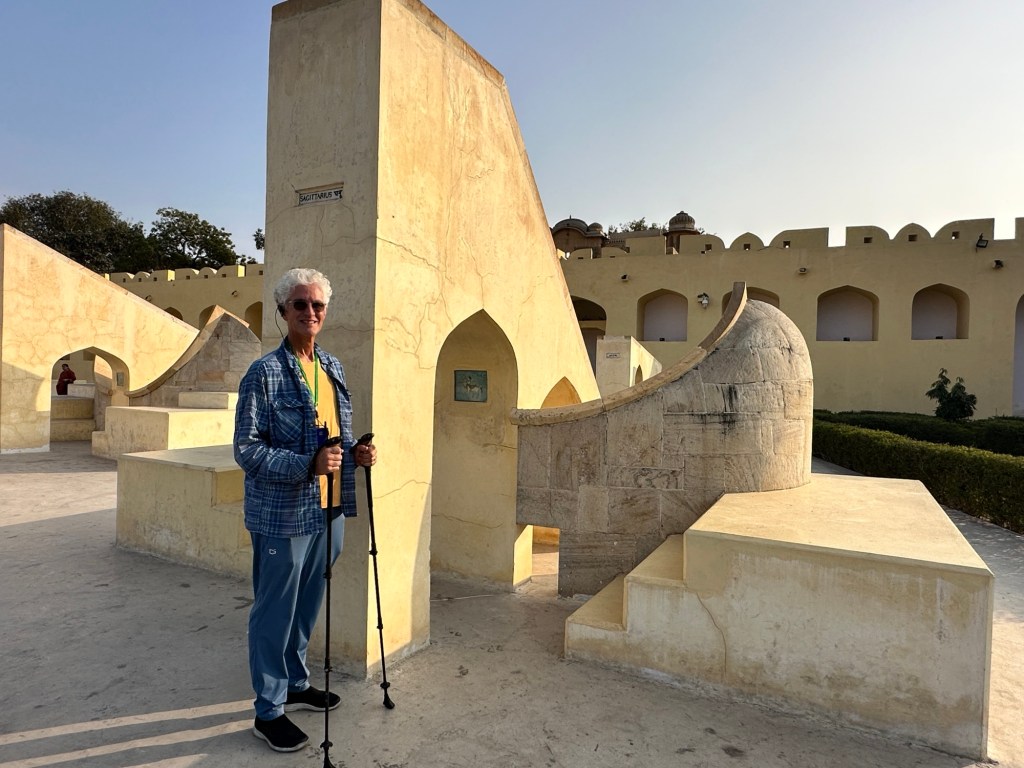
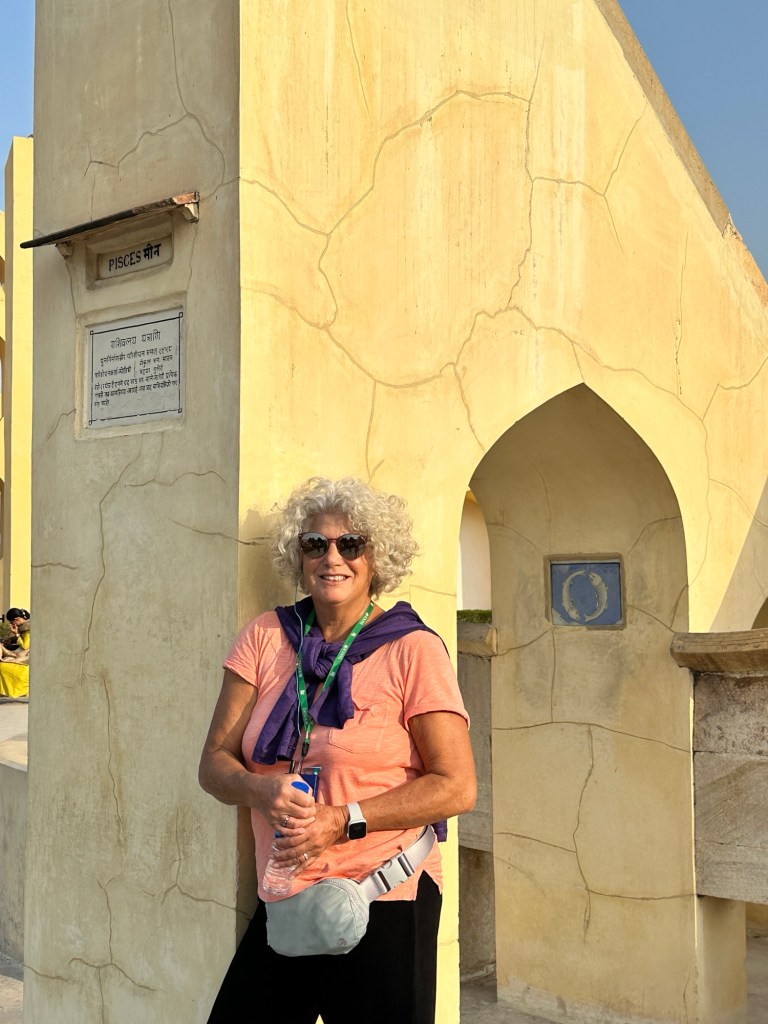
We began our tour of Jaipur by driving into its downtown for a quick tour of the area in the evening late, navigating the traffic and getting a first peak at the bus old town. From there it was off to visit a remarkable Astronomical Observatory built 300 years ago by its Maharaja (King). With a population of only 3 million, Jaipur is a tenth the population of Delhi, much cleaner, and with less poverty. The buildings are beautiful and the city interesting.
One of the old Maharaja’s fascinations and interests was with the zodiac, the stars and keeping time, so he created these ancient wonders. The “sky stairs” are accurate sundials. The bigger the sundial, the more accurate, with the largest sundial accurate to within 2 seconds. The other structures help find Zodiac stars and other cool stuff.
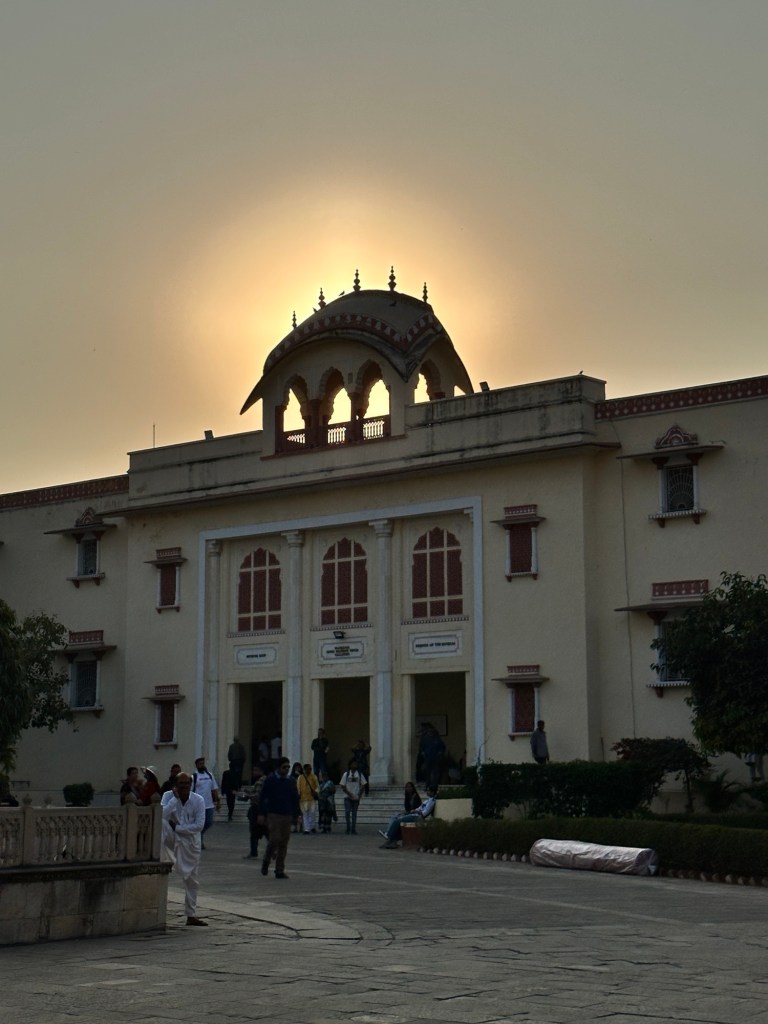
From the Observatory we walked to the nearby City Palace. Part of it houses the current descendants of the Maharajas but most of it is now a museum open to the public. One of the former Maharajas was an enormous man with gigantism disease. His clothing is huge. He commissioned lots of art, including giant silver vessels that he used to drink Jaipur water even when he traveled to England. A big private party was setting up for the night with beautiful flowers.
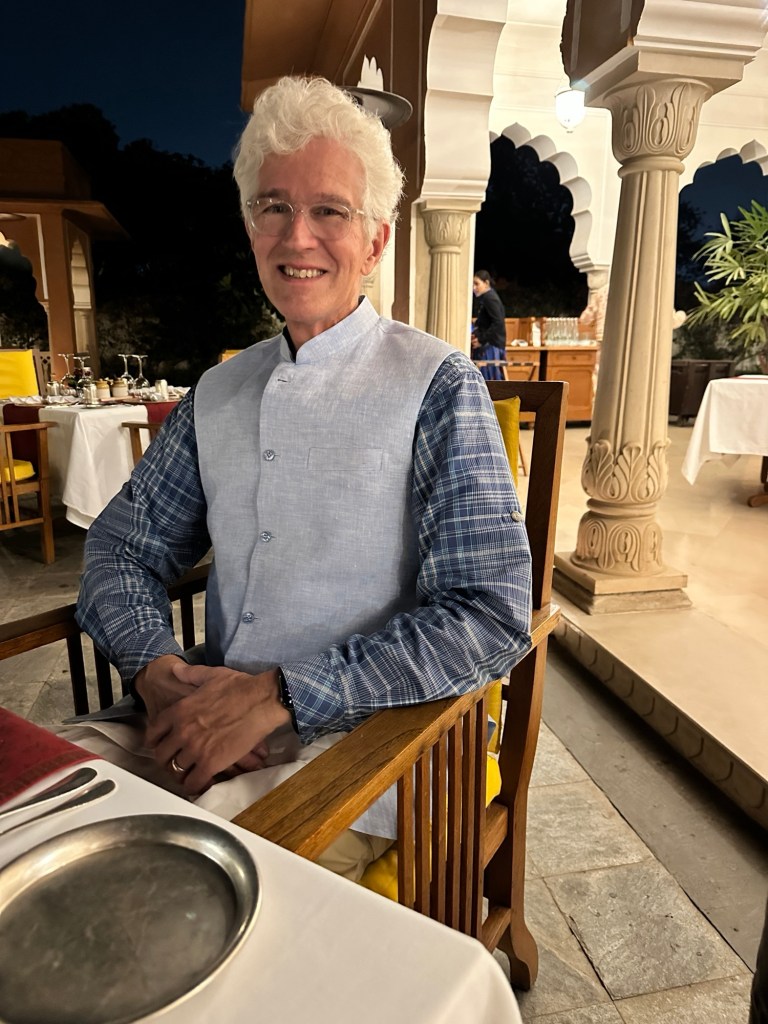
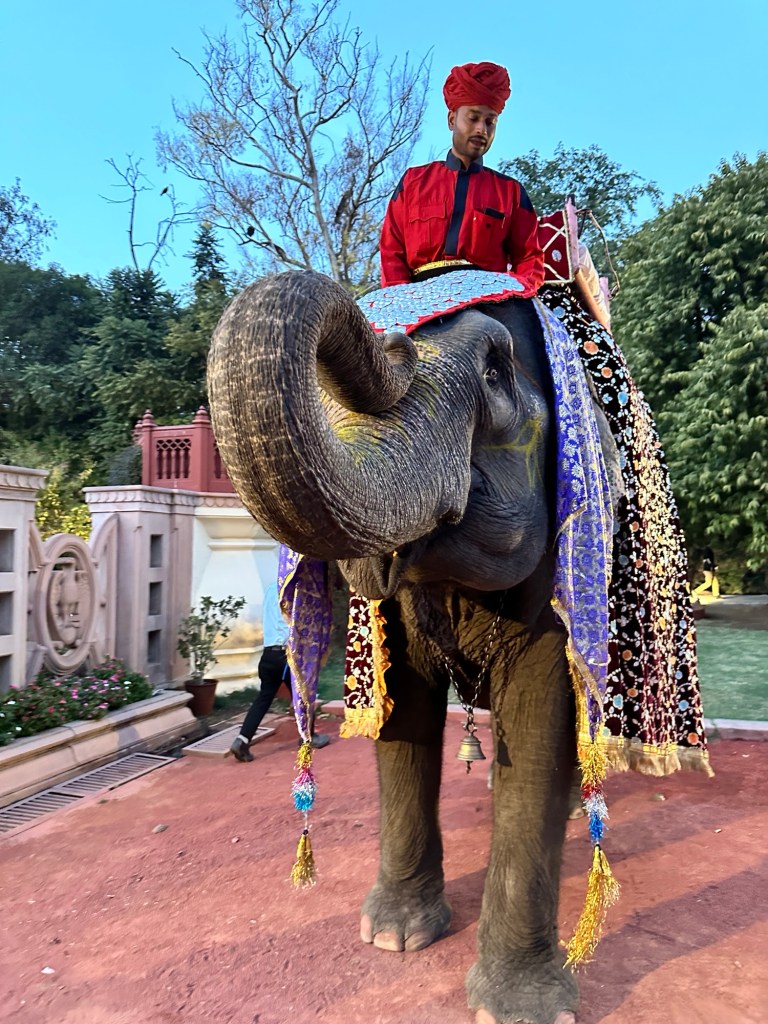
From the City Palace we rode our bus to the Ramba Palace Hotel, for a dining extravaganza part that began with a procession of elephants, camels, horses and included a traditional Indian folk dance.
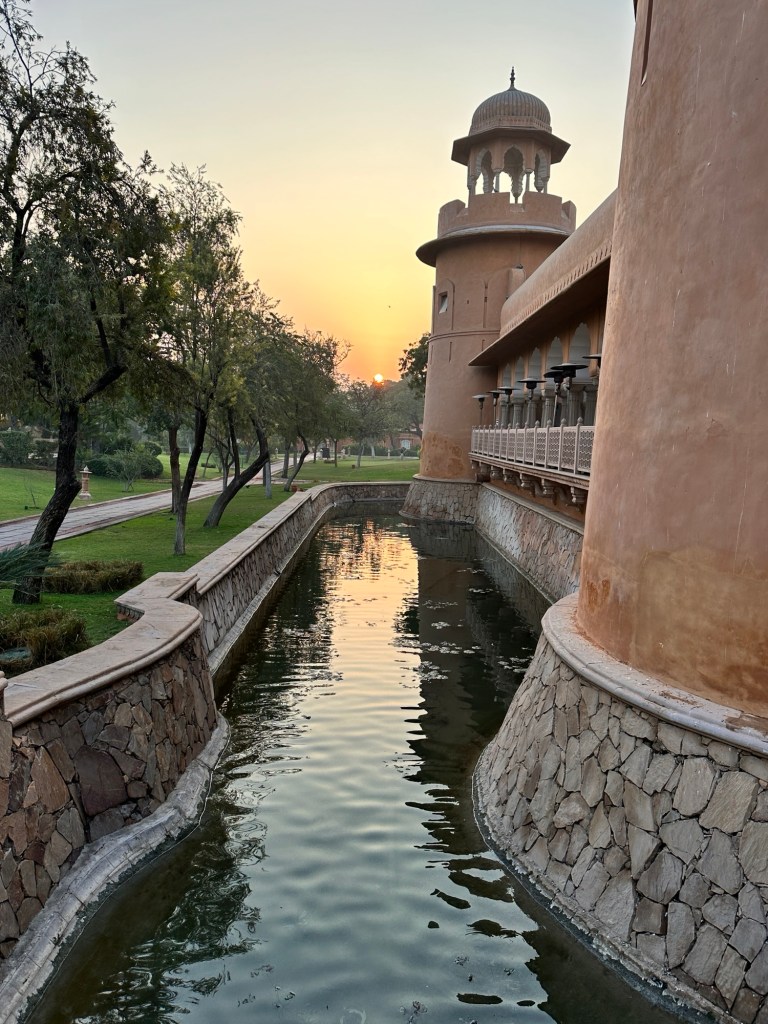
Needless to say we slept well that night at our hotel: the stunning Oberoi Raj Villas.
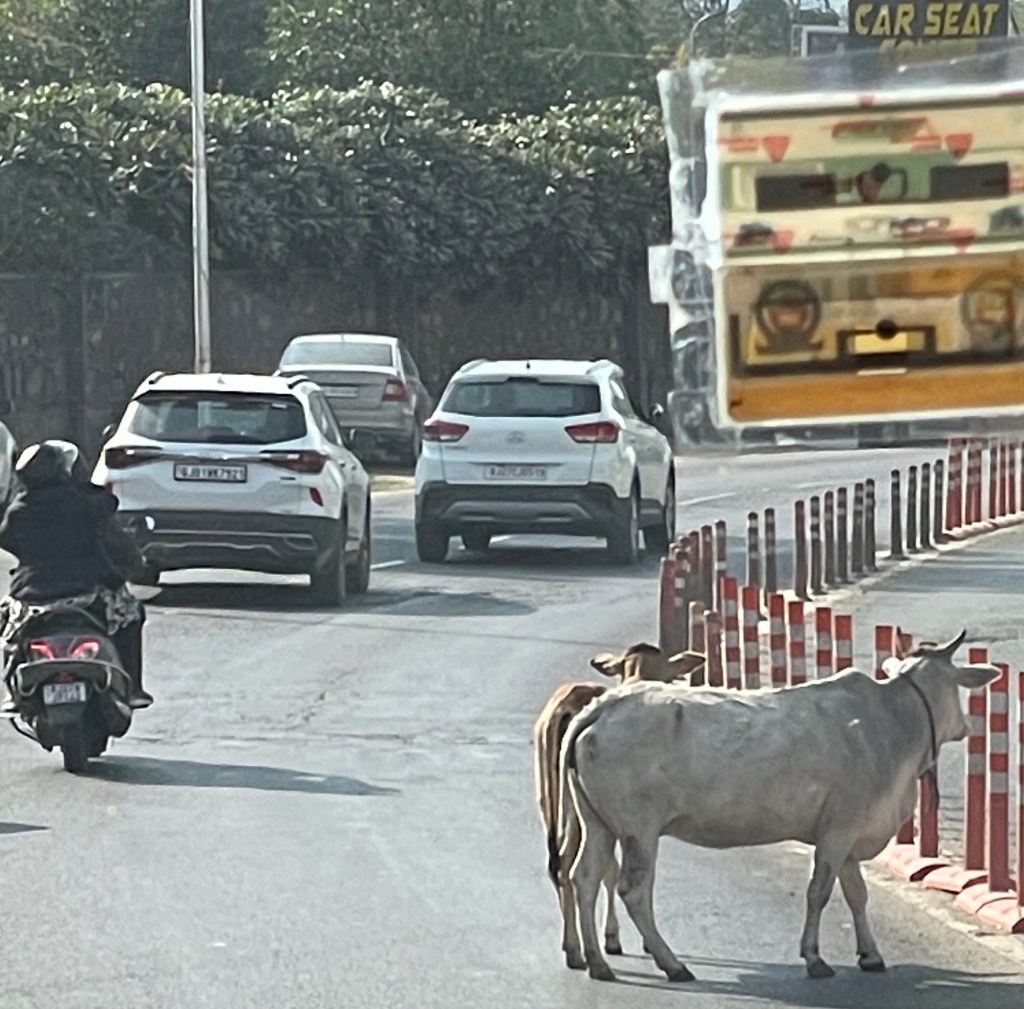
The next day we toured the the old town again in the morning light, crossed a crazy, very busy intersection. The key is to “walk like a cow”. Don’t run, don’t stop. Somehow the traffic weaves around you. Amazingly, in all the the chaotic Indian traffic we never saw an accident. It just works. But crossing the intersection wasn’t the craziest thing. A couple of us, including me, experience the snake charmer and his pet cobra. I’m assuming it was defanged, but strangely we didn’t ask.
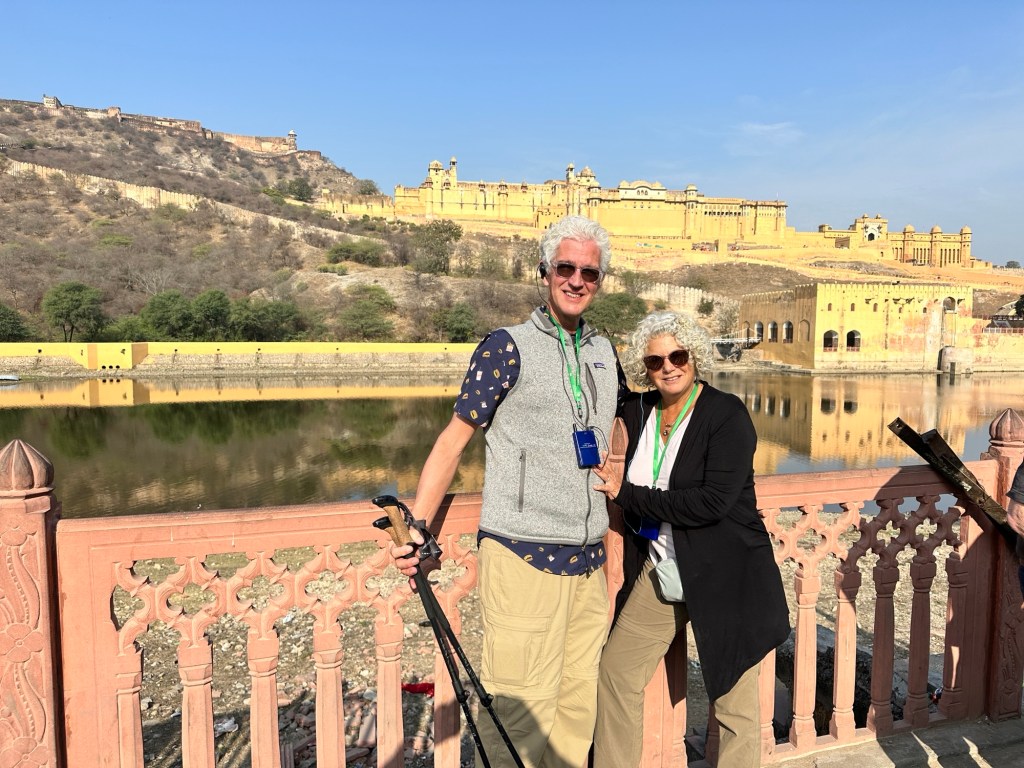
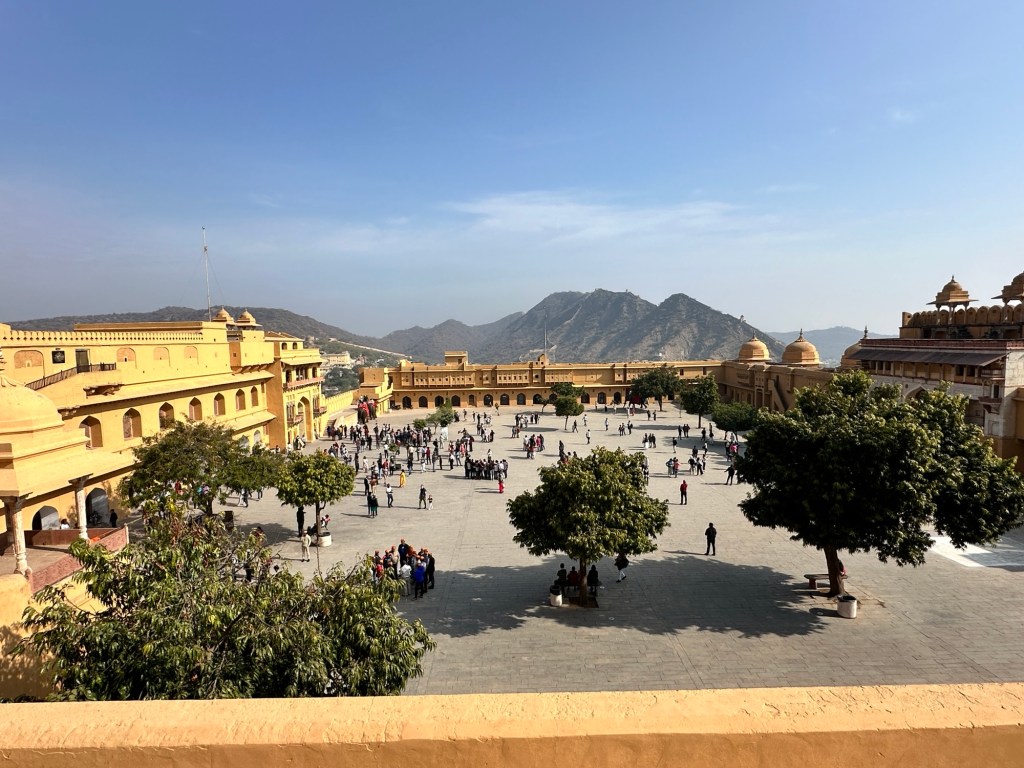
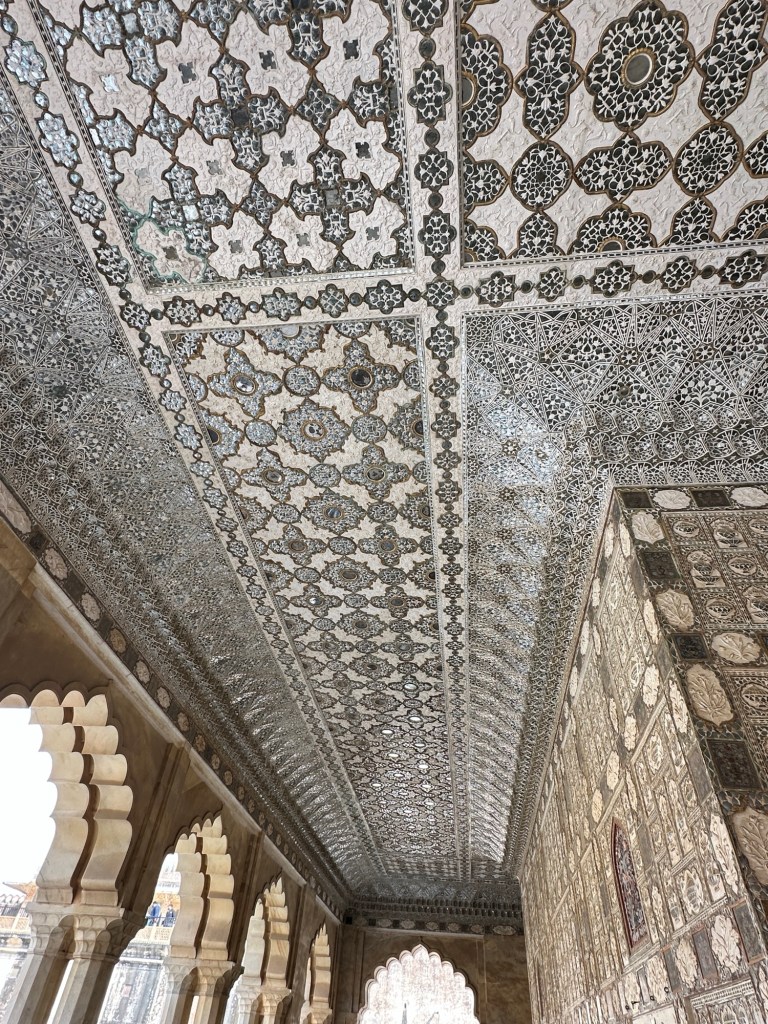
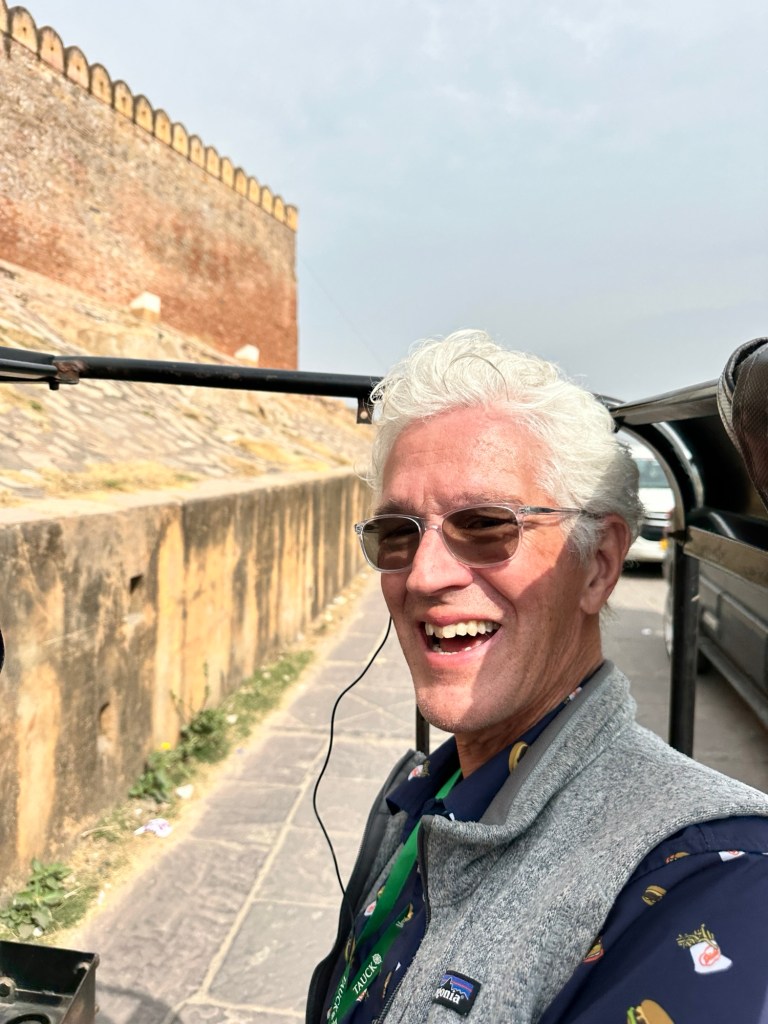
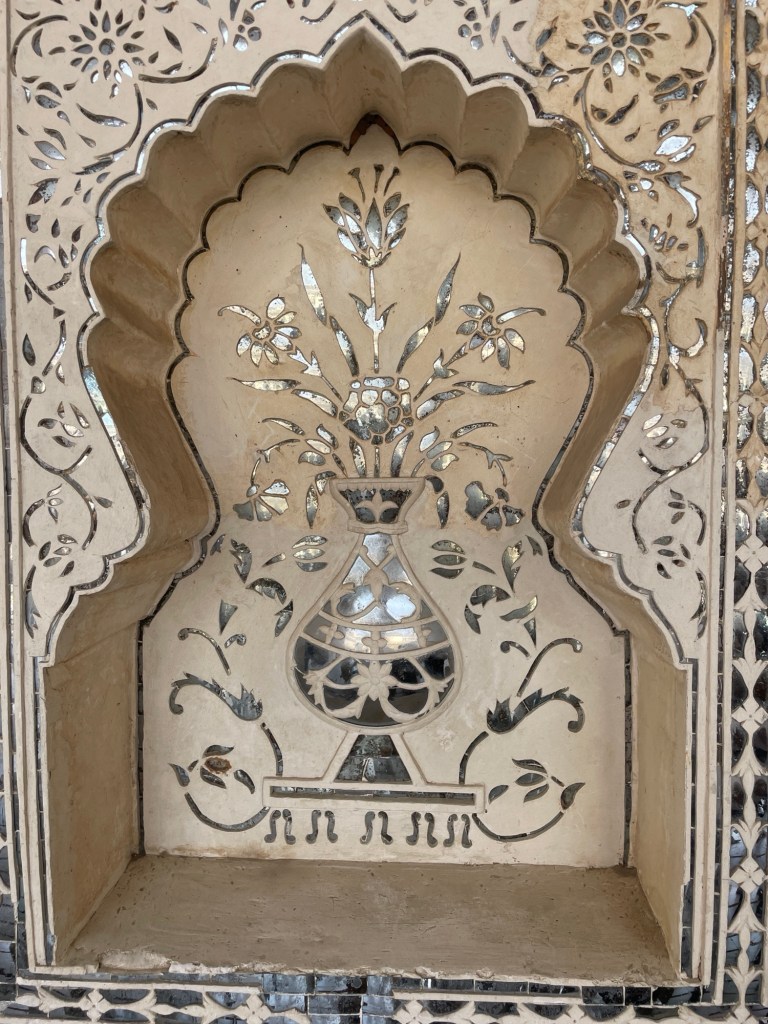
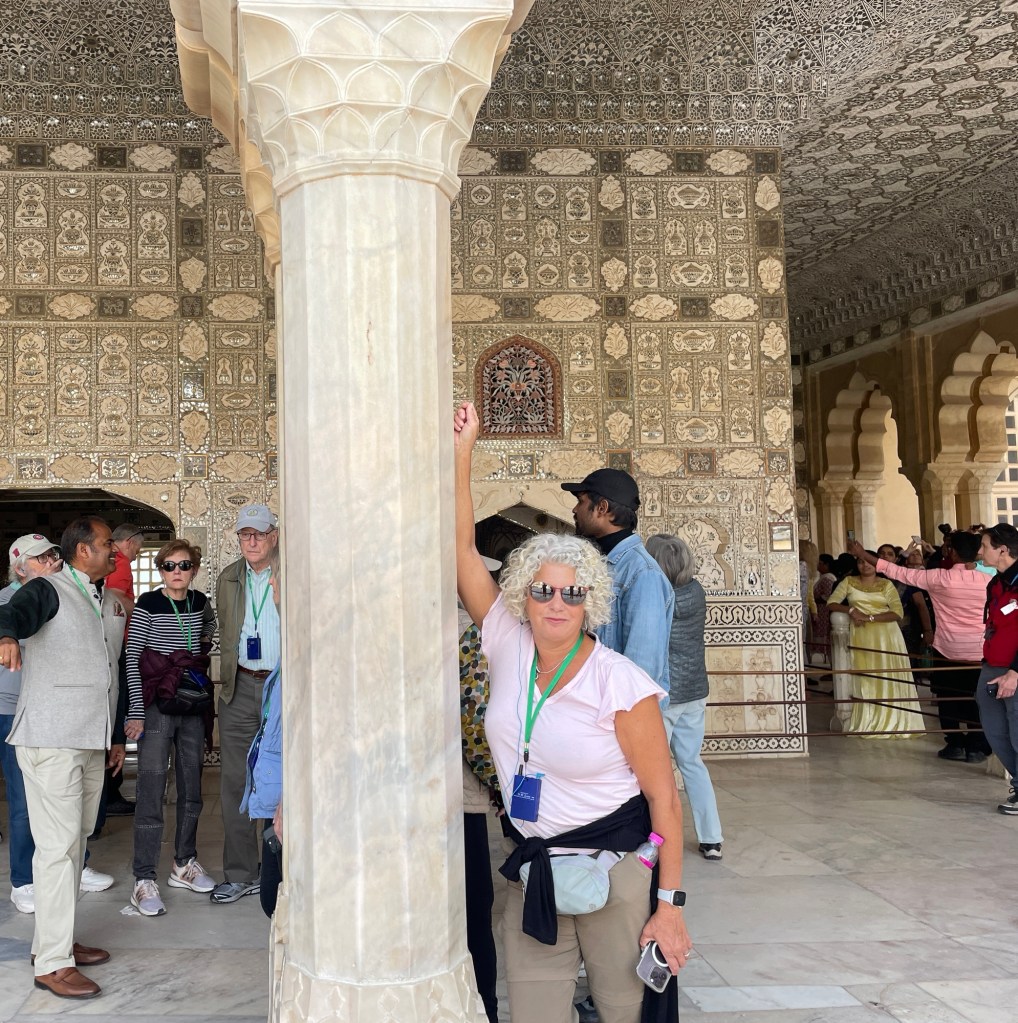
Then it was back across the traffic and on to our magic bus for our next stop, the Amber Palace, a much larger and older palace on the outskirts of Jaipur that was protected by a hilltop fortress and a long stone wall that was miles long.
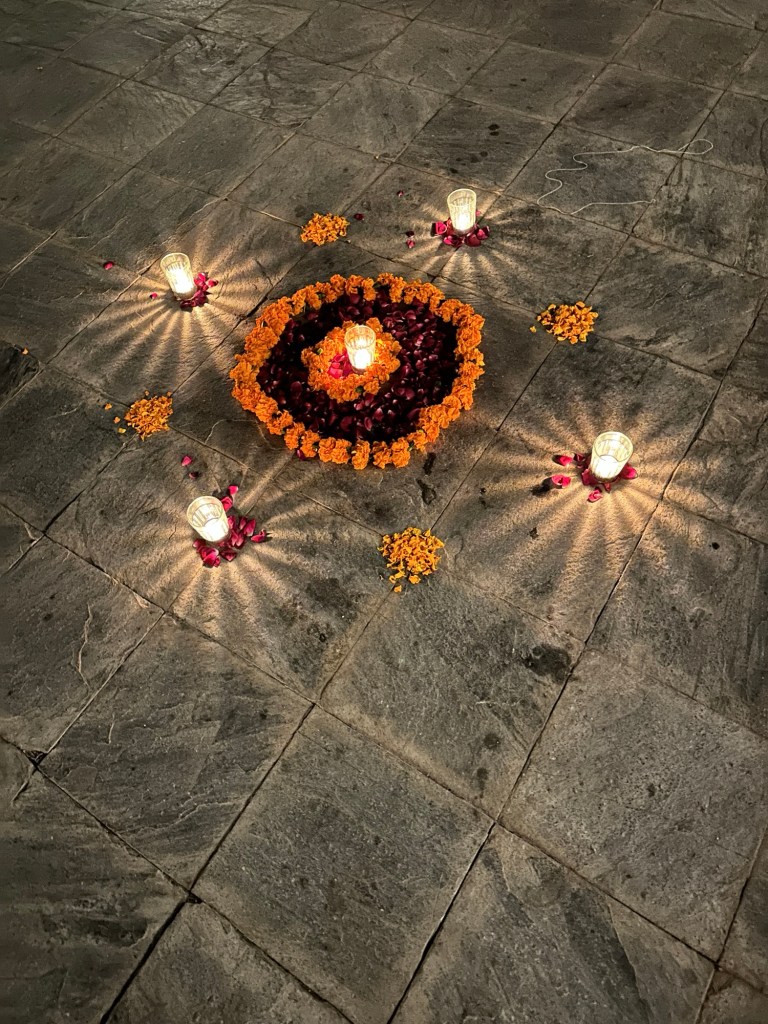
Back at our hotel, Jim napped while I walked the grounds and then we both enjoyed a truly delightful dinner under the stars at the hotel’s signature Indian Restaurant. We ordered a special chicken, wrapped in banana leaves, surrounded by dough, they buried and cooked for hours. It’s how the old hunting parties cooked and ate the game they caught when they were too far from the palace to bring it back. For dessert we had a delicious Kundalika cookie (warm crisp fennel cake steeped in sweetened extract and covered with edible silver foil referred to as “jalebi”), a traditional royal treat to end the meal.
We really wished we could have stayed here another night. The pace of the trip has been too fast for us up to this point, but when you travel in a group you have to follow the schedule.
Side note: Hotel laundry. We never pay for expensive hotel laundry, but we were pretty tired and decided to splurge. The laundry came back perfectly folded and wrapped, making repacking a breeze. I wouldn’t do it all the time, but it was definitely worth the splurge this time.
In Jaipur we had special packing instructions for our next adventure. Our bag pulls were the night before at 7:15 PM. The bags were going on the bus for an overnight 9 hour drive from Jaipur to Udaipur, while we would fly the next day. Our bus heroes were Arjune and our “Top Gun” bus driver Sarinder (who could weave our bus through the chaotic traffic, often with just an inch to spare on each side).
The next day began with a wake up alarm at 3:45 AM. We quickly got up, ate a few bites with our coffee and left the hotel for the airport at 4:30 AM.
Tina was nervous, because on her last tour the flight was delayed for two hours, then canceled (because of weather) and her group had no choice but to drive the 9 hours to Udaipur.
But our travel Karma was good again. We took off on time and landed in Udaipur two hours later without a problem.
Udaipur
With no delays in travel we headed to the Bougainvillea Art Gallery and restaurant for breakfast. The scenery here includes the oldest mountains in the world, the Aravali. The youngest are the Himalayas in northern India.
We picked up our local guides, Shakti and Jeevan along the road (it’s their way). Shakti’s wife needed the car. At the end of the Udaipur tour he used a scooter to drive home.
Although both are in Rajasthan, the scenery in Udaipur looked quite different from Jaipur. Udaipur has a lot more water, with lakes and green fields in the valleys, surrounded by small mountains and rolling hills that look like Northern California.
The Aravali’s art, trees, and background music created a “laid back” California vibe that we appreciated as we enjoyed our breakfast. The place is designed by a famous local who broke out of his “business caste” to successfully thrive in the art business. His family helps run and support the business side. The galleries also display stunning art from local artists.
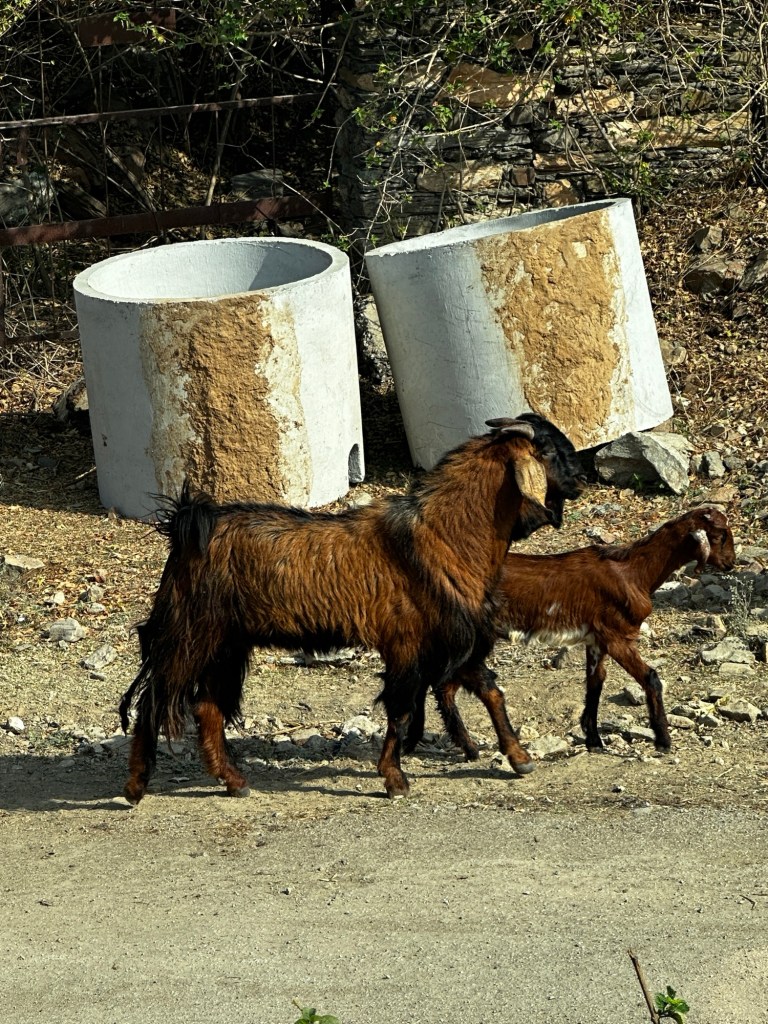
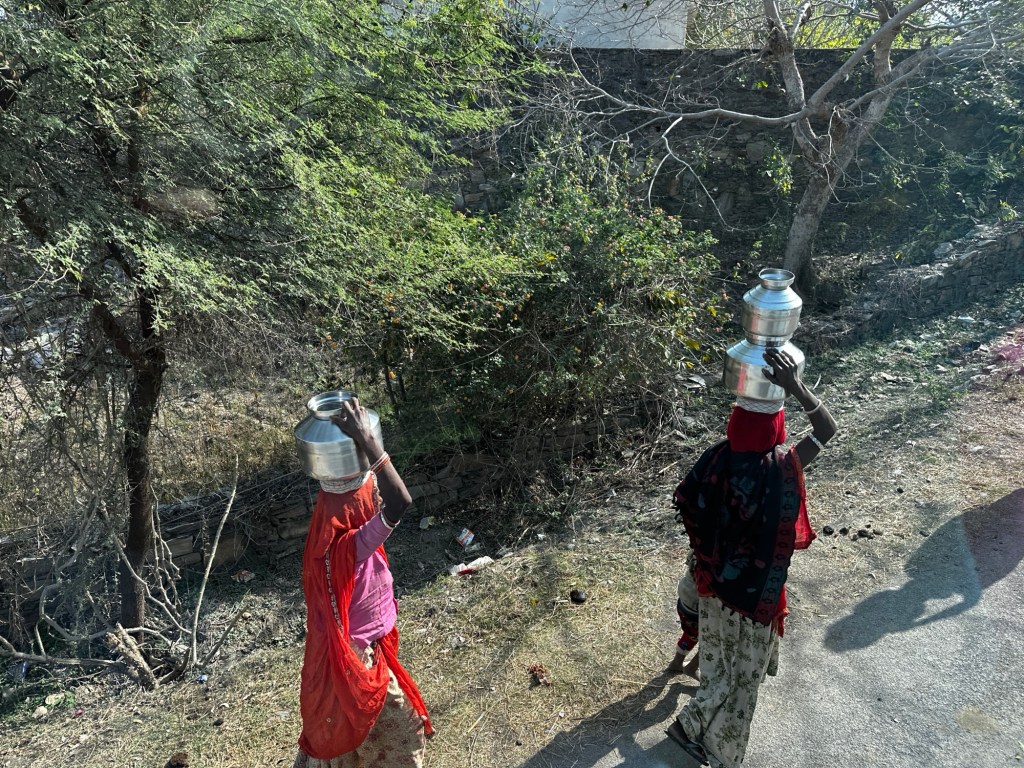
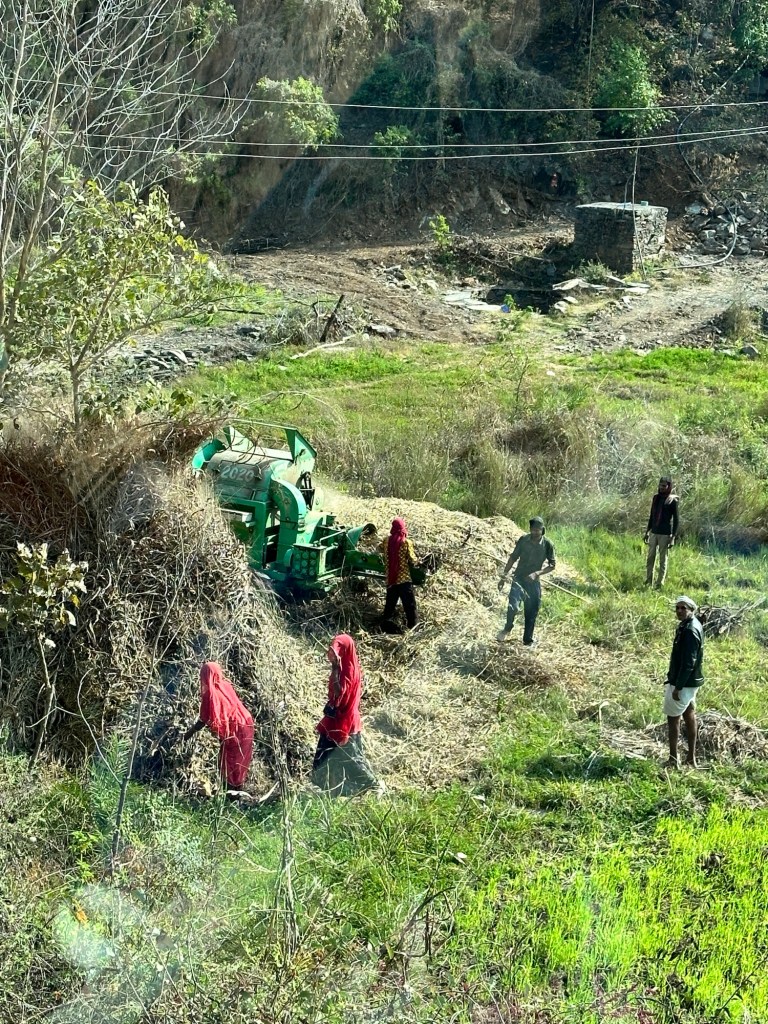
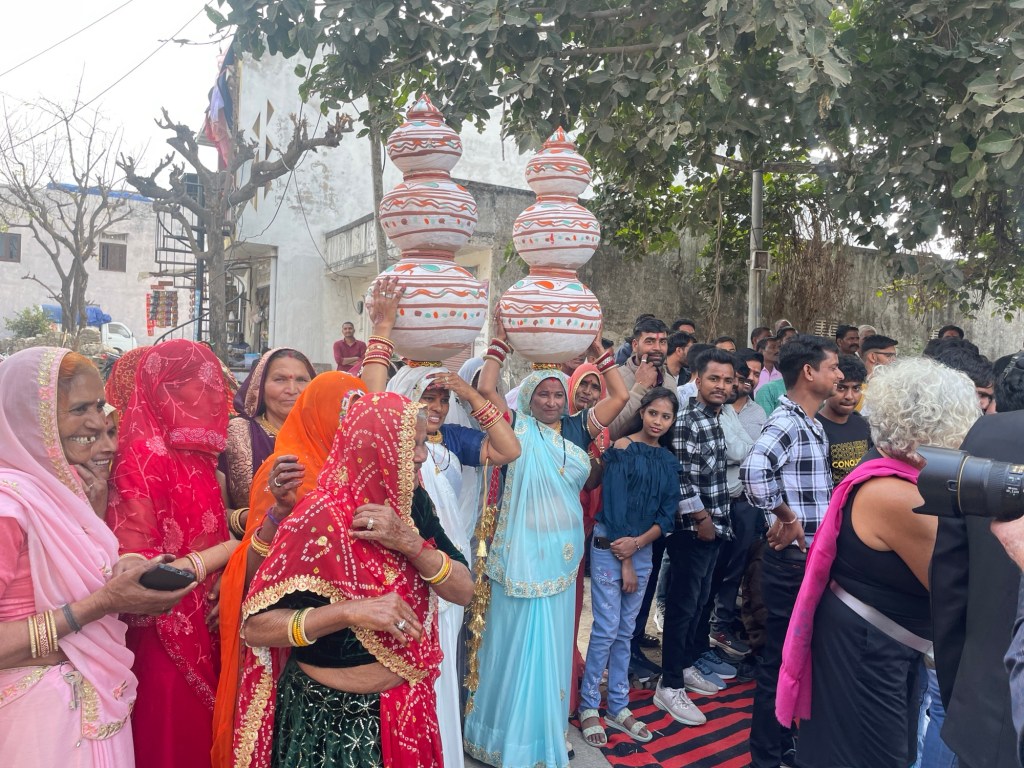
After the art gallery we were in for a truly amazing and authentic village experience when our bus entered a small village that was just starting to celebrate a wedding! Instead of taking the direct freeway journey, our local guide (Shakti) asked our bus driver (Sarinder) to take our bus on a backroad through local villages and farmland. This is not a place where large 40 person buses usually go. The people we passed along the way seemed as happy to see us as we were to see them, and they waved and smiled and watched as we journeyed passed wheat fields and through simple villages, where women cary containers of water on their heads and there are plenty of cows and water buffalos.
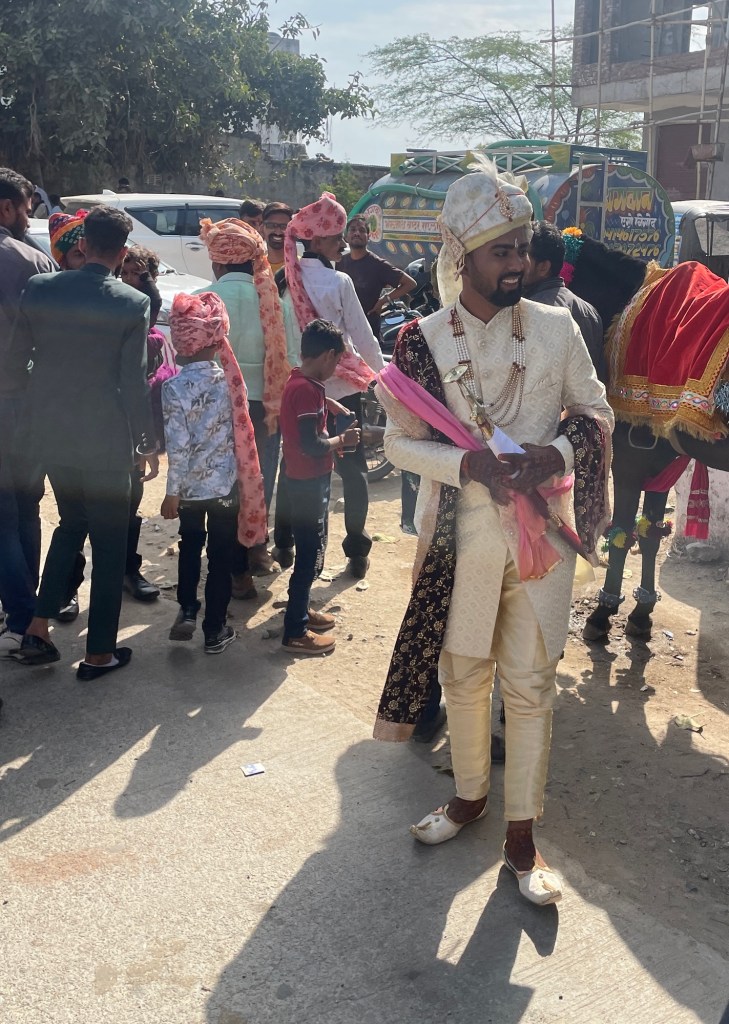
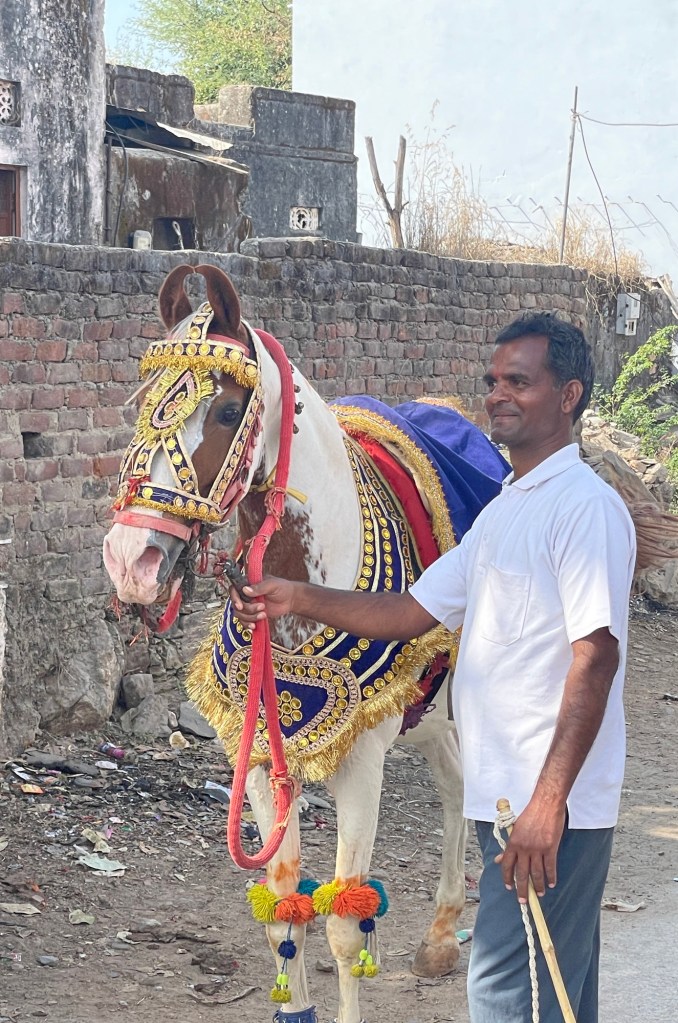
And then the magic happened . . . a local village wedding blocked our road. “No Problem” as our amazing guide Tina says. Shakti, suggested we all get out to see the groom on his decorated horse.
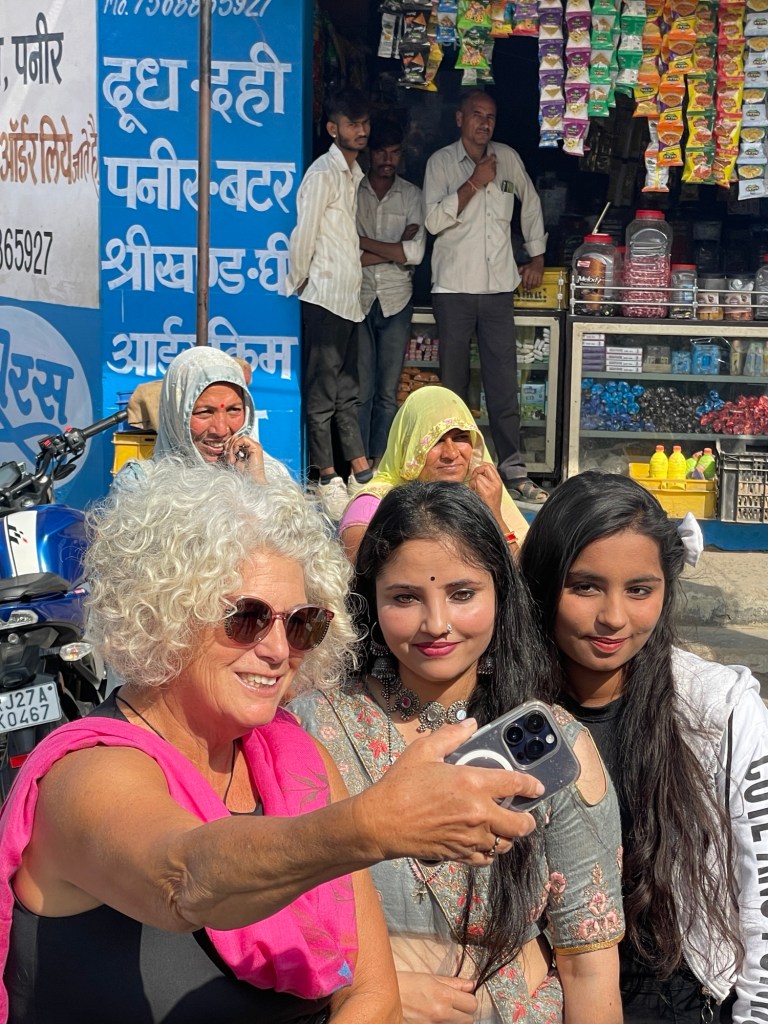
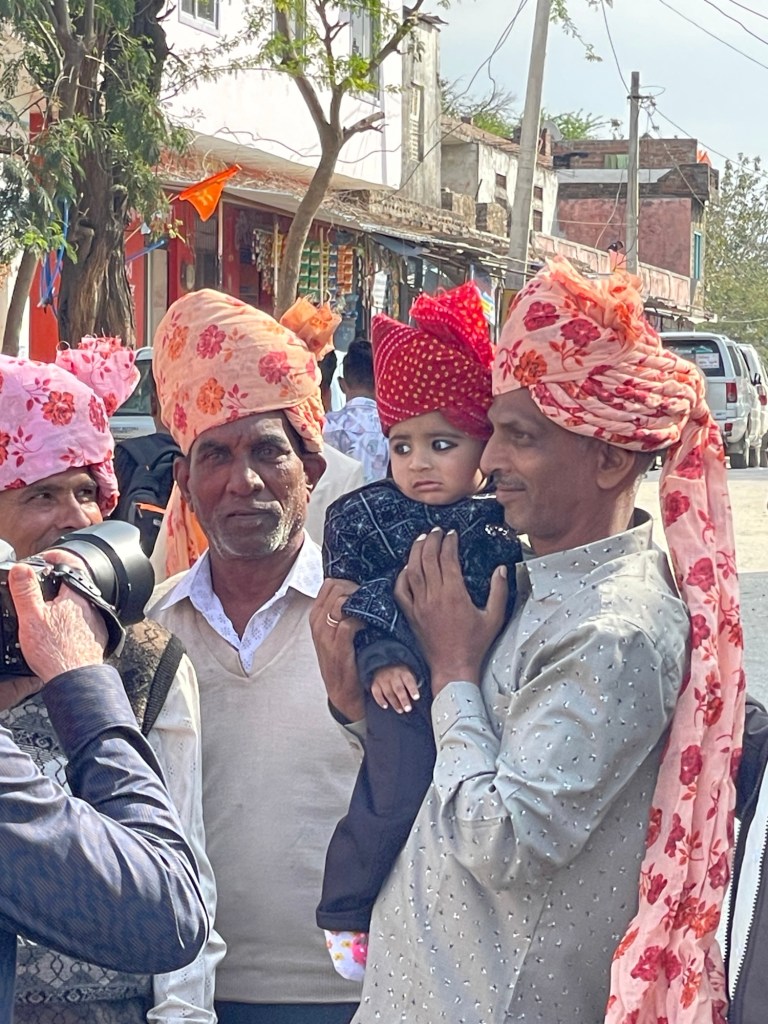
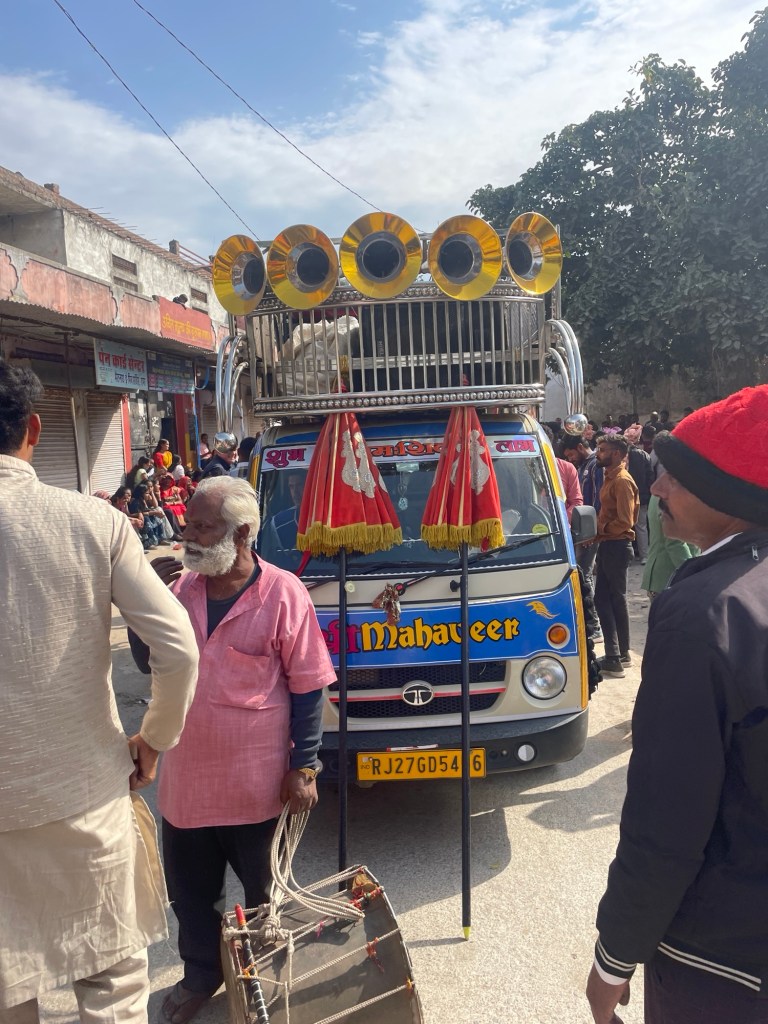
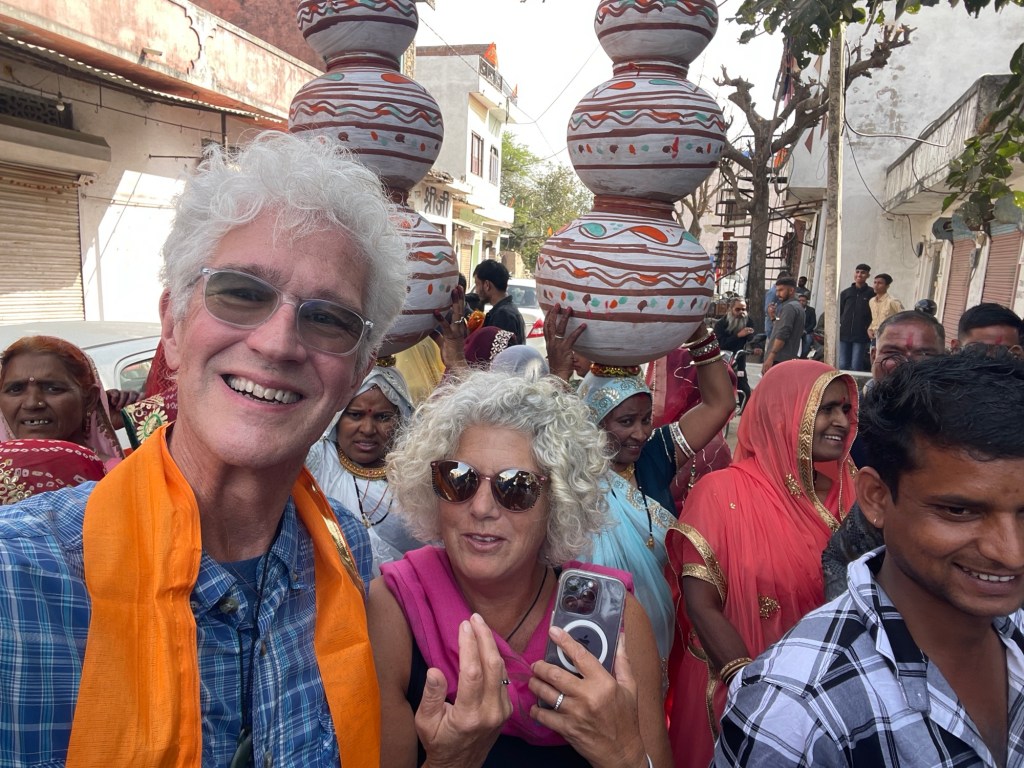
The groom looked regal and was preparing to ride a short distance down the main village road to a special location for a ceremony. When we got there, we were all invited to join the festivities and draped with ceremonial orange scarves. Then the music from the giant “boom box van” started and everybody started dancing. The villagers, dressed in their finest clothes, loved that we were there with them and they embraced us, danced with us, took tons of selfies and none of us wanted to get back on the bus. Instead, we joined the procession to the bride’s house. The women of the village surrounded me and wanted to touch me, take pictures with me and dance with me. It was an amazing experience!
I really don’t think that anything on this trip will top the village wedding. We all had a blast.
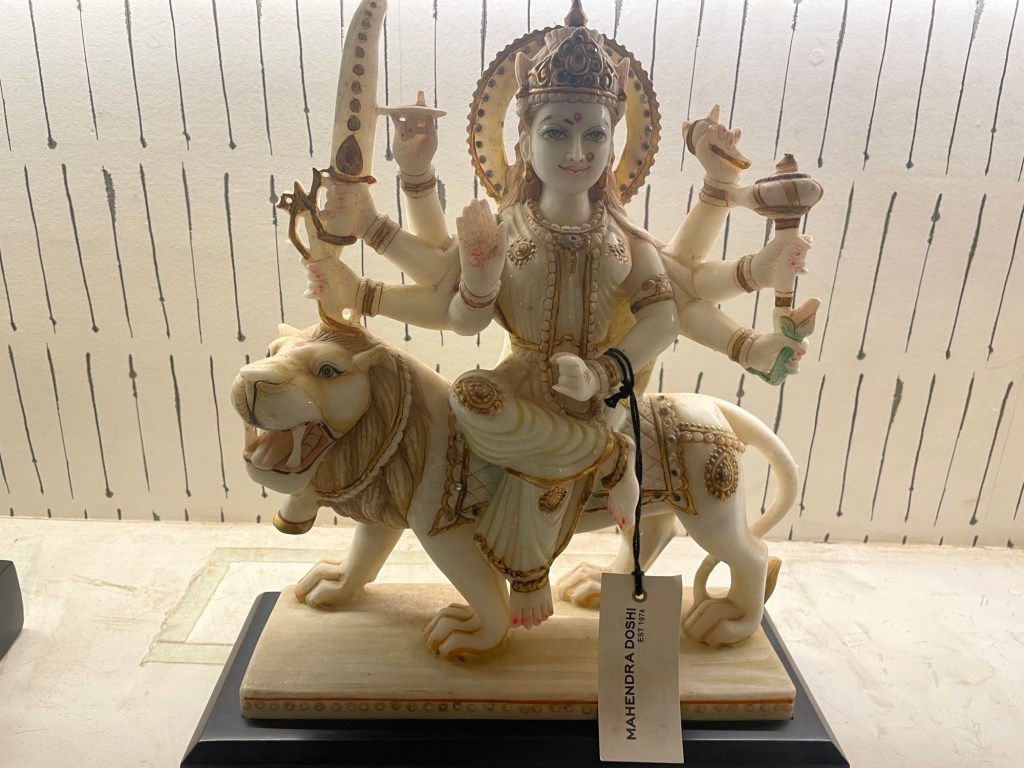
Overjoyed, but exhausted and hot, we loaded back on the bus, drank cold bottled water and settled in for a drive to a smaller refurbished palace/hotel for lunch. This place, Devigarh, was purchased by an entrepreneurial Indian business woman and offers stunning views and a delightful lunch. Apparently, the building was in a state of extreme disrepair when she bought it and it took vision and a lot of hard work to reopen it as a small hotel and restaurant. In gratitude for its success, she built a small temple there to one of the female goddesses.
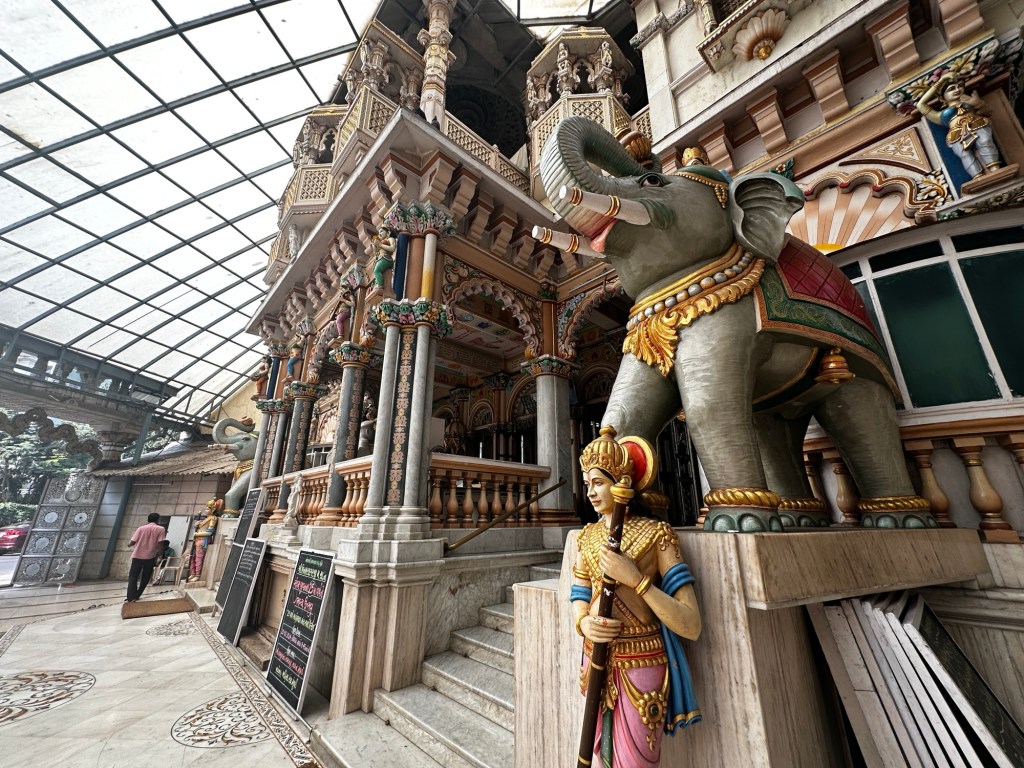
After Devigarh, it was on to a nearby 1,000 year old Hindu Temple that was filled with detailed carvings. Some of the carvings depict tantric acts that were supposedly designed to clear the mind of bad thoughts before praying. I’m not really sure that’s effective. However, many wedding couples come to the temple to take wedding pictures and we all enjoyed seeing the young couples, some very ornate, some more simple but all beautiful.
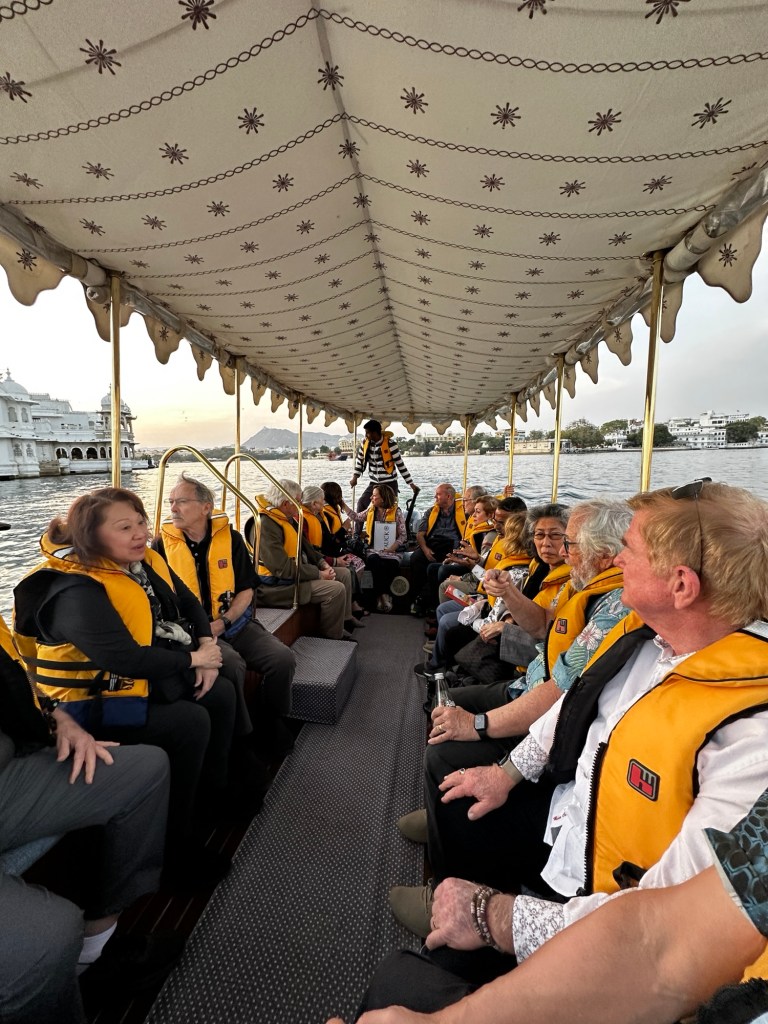
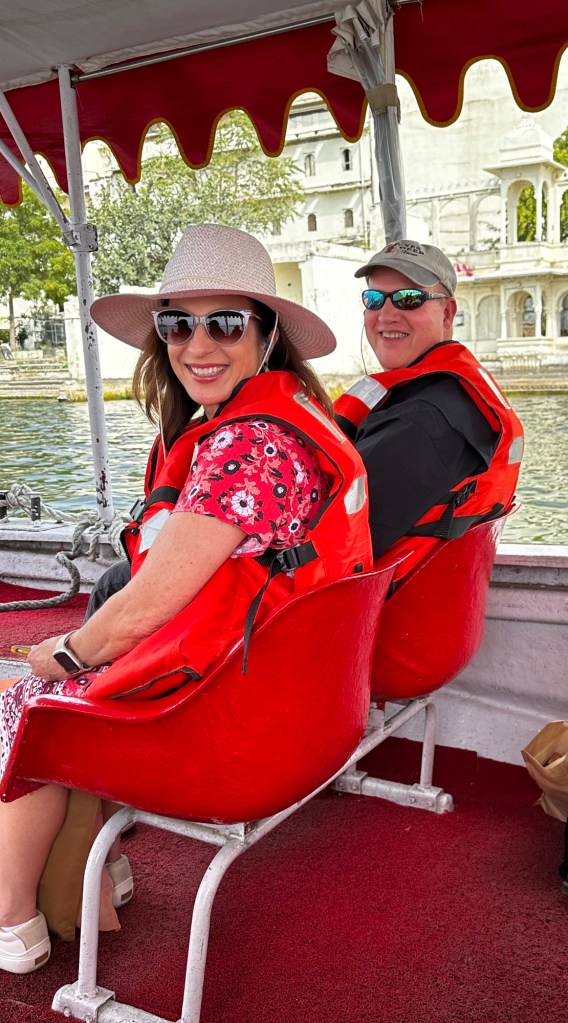
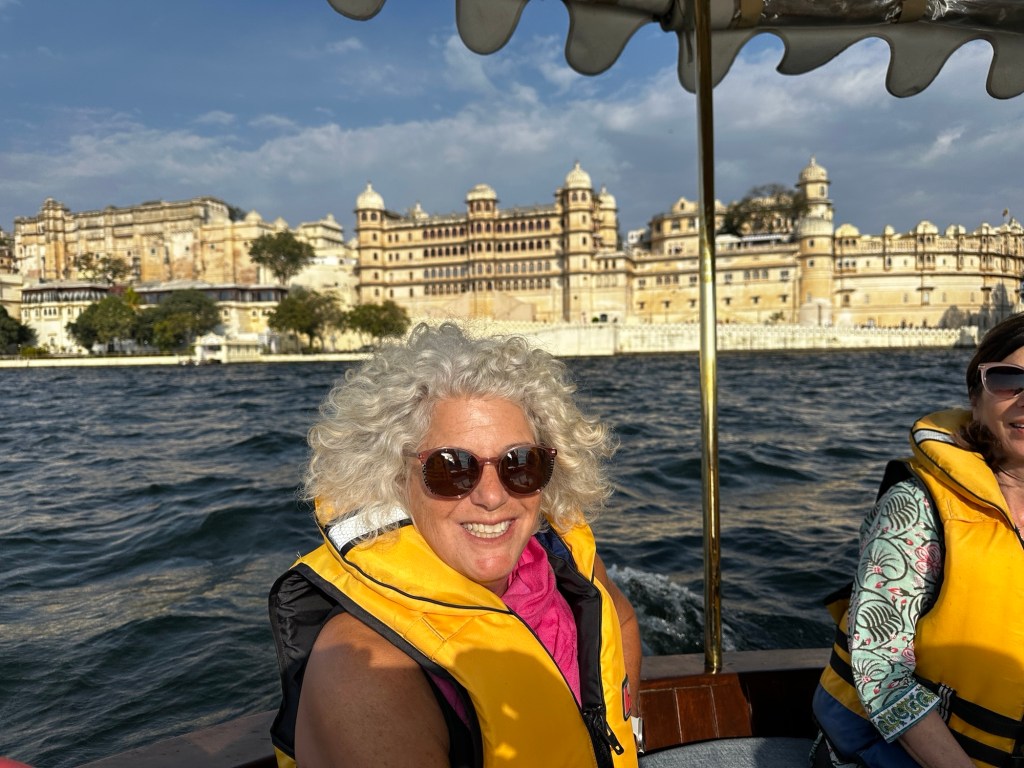
After that long fun day we finally reached the boat dock in Udaipur for the short boat trip to Lake Palace.
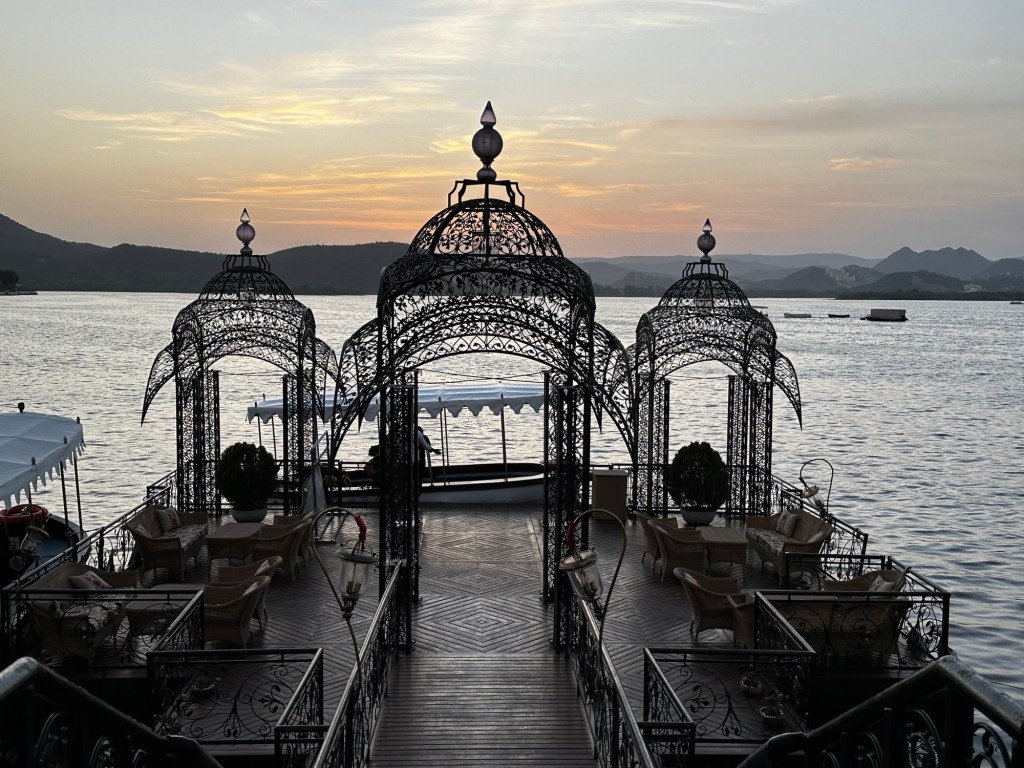
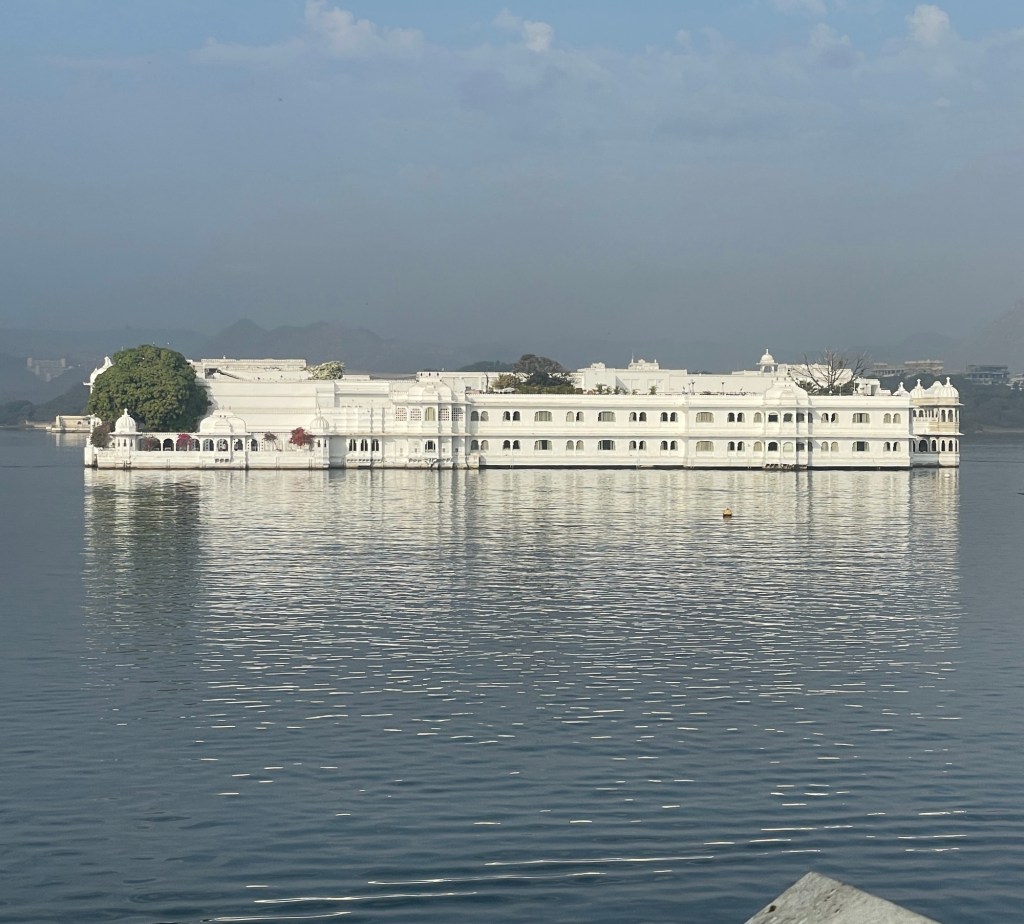
Normally, Tauck Tour groups stay at the lakeshore Oberoi, but it was booked for a big wedding so we got to stay at the Lake Palace. It’s all white marble, completely covering a small island so that it appears to “float” on the lake.
The Lake Palace epitomizes the paradox of India. Stunning, special, romantic and extremely quirky. The hotel rooms are all a bit different because the Lake Palace is over 250 years old. The staff is amazing. The boat ride to the hotel from the lake shore was delightful, and we really enjoyed the cooler temperature on the water and the fresh air. But once we got to our room, we were not allowed to open any of the windows. So sad! And then there are the birds. Tina told us a story about a past tour where a guest called her complaining that “she had to do something about the birds”. We laughed at her story, but that night after sunset and figuring out how to use the shower without flooding the bathroom (its a long story), the unbelievable cacophony of the birds started (and lasted for several hours). We cracked up. Check out the sounds in the video.
Instead of using roof nets to keep the birds out of the interior courtyard, large numbers of hotel staff constantly clean up the mess left by courtyard birds. We asked them why they don’t net, and they said, and I’m not kidding you, “we used to have nets, but the trees in the courtyard grew too tall, so we cut the nets down.” But no problem! The birds settle down around 9PM and we used our earplugs so they didn’t wake us at dawn.
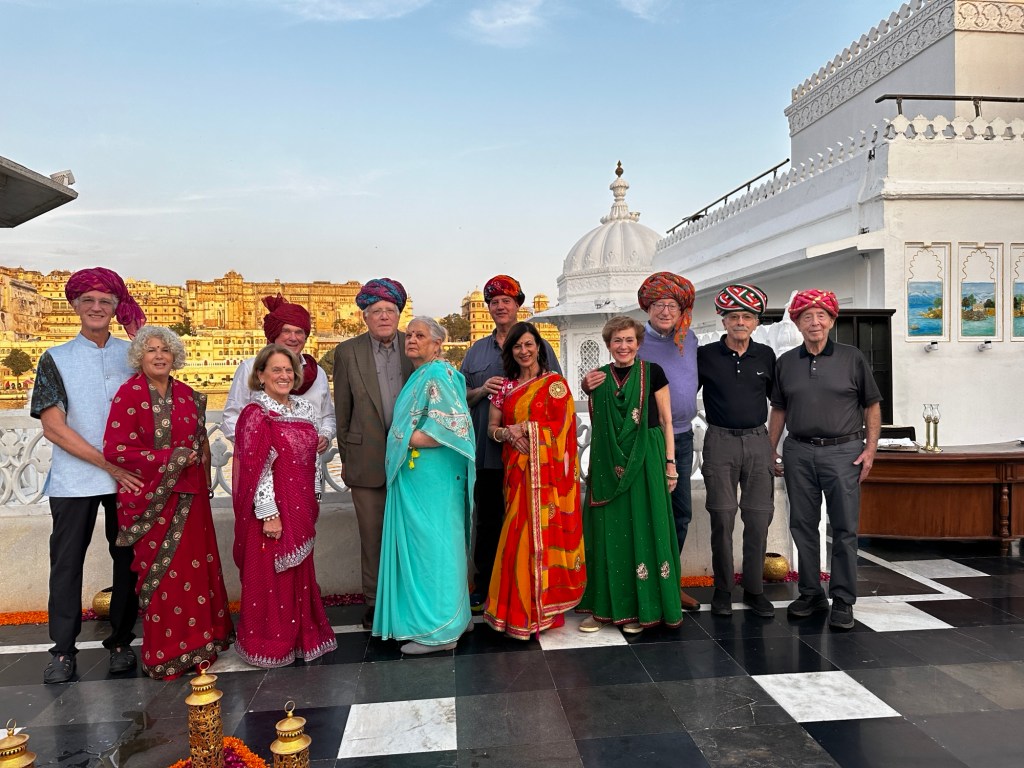
Sari & Turban Fashion Show.
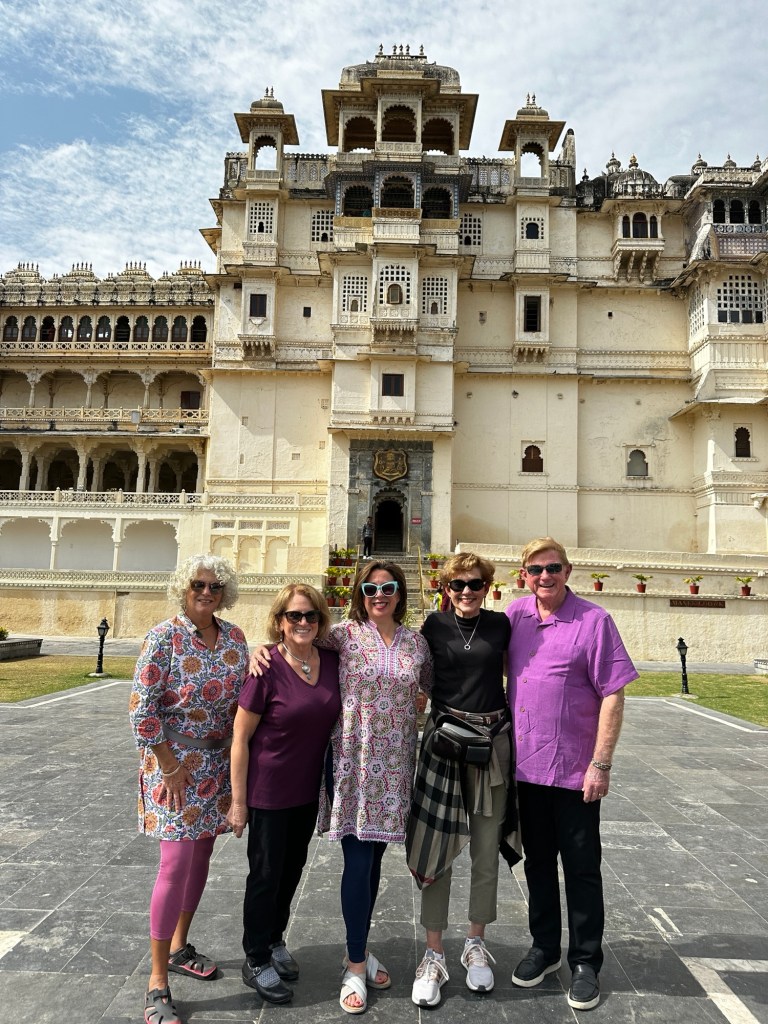
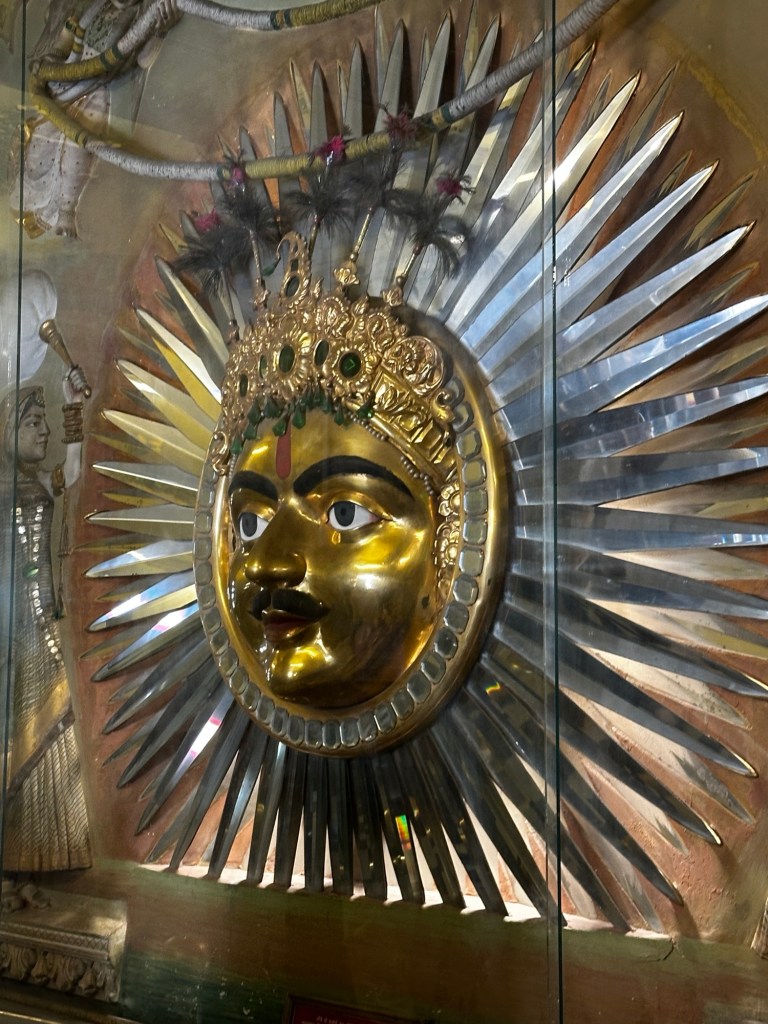
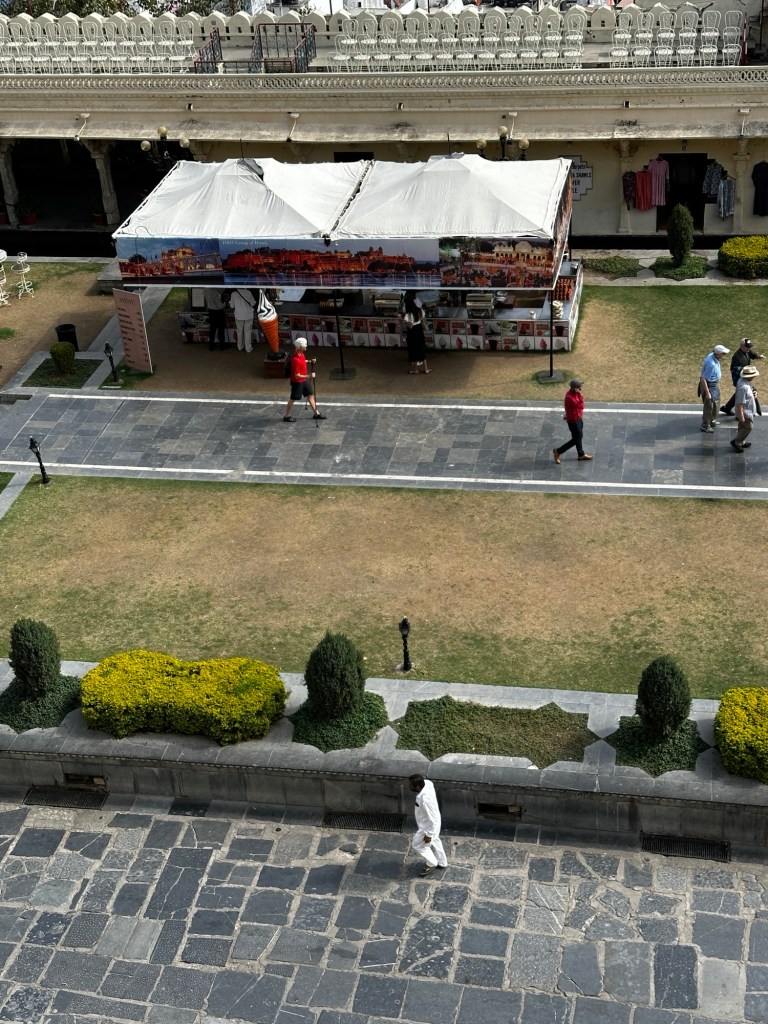
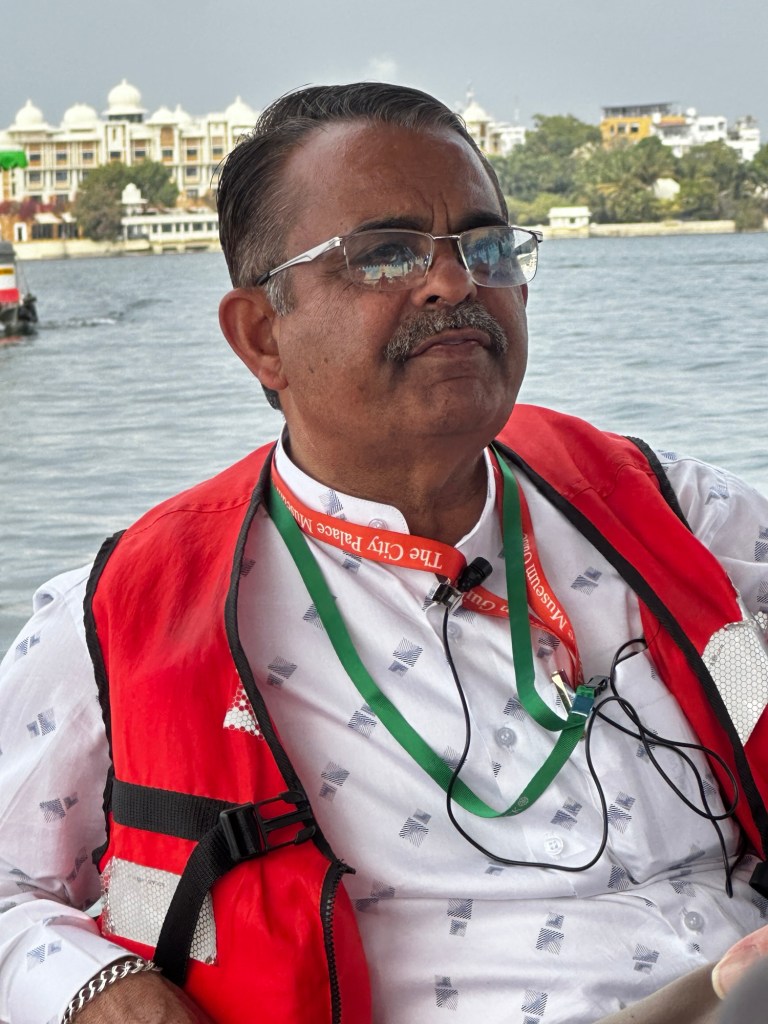
We loved Udaipur. The pace is slower, the town clean and safe, and the history interesting. We had a wonderful tour of the Udaipur City Palace, again part museum part home to the Maharana family. It was stunning as usual. Some of us did the long tour.
And we enjoyed another fantastic meal at a very nice local home owned by the descendants of a former high advisor to the last Maharaja of Udaipur. The experience is really special and they only do it a couple of months in the year, only for Tauck and Ambecrombie and Kent tours. The family sat with us in the foyer and chatted before we headed into the dining room where they served the most deliciuos and unusual meal, delicately seasoned and served family style.
Tuk Tuks in Jaipur and Udaipur.
Tuk Tuks in the city are just wild. The traffic in Jaipur moves with virtually no rules although there are traffic circles. Being on our big bus with our top gun driver feels a bit unsettling but we are safe, because we are the biggest vehicle out there. But Tuk Tuks are another story entirely.
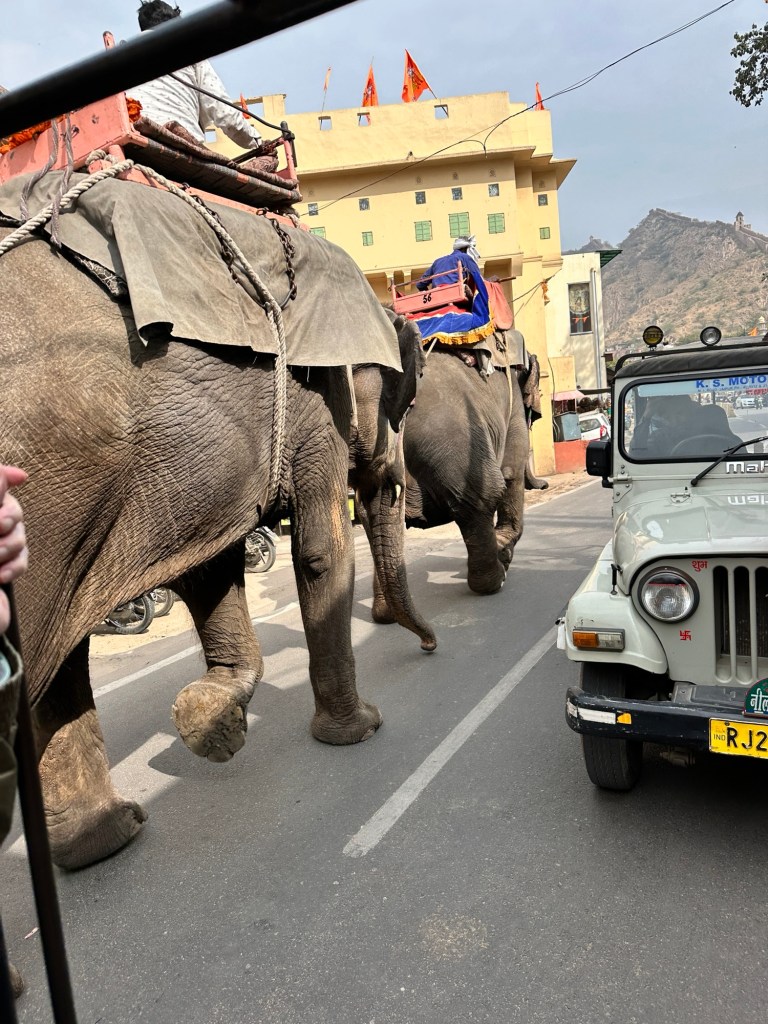
In Jaipur we took them from the Palace, past camels, horses, elephants, cars, vespas, and lots of motorcycles to get from the crowded part of town to the bus to get to our dinner in an other part of the city.
On our last day in Udaipur, the Tuk Tuks were ours for the day. Jim was overjoyed. They took us through the old town to the market. Walking through the market early in the morning really gave us an idea of life in the city for most locals. Then we rode them to a special garden with water fountains that increase and decrease with the water level in the lake. From there we headed to the jewelry and craft area where we did some shopping. I got a beautiful filigree silver necklace, learned about rainbow moonstones and then headed back by tuk tuk to the boat for our last evening in the Palace. Tuk Tuks in the calmer traffic of Udaipur feel much safer.
Next blog will share our travels south to Kochi and Kerala, what a different vibe and experience.















































































 True Love Adventures